

You travel in a straight line from north to south, flying into Hanoi and out of Ho Chi Minh City, and for every region you will find the swap if you would rather do Ha Long Bay, Sapa, Mui Ne or Phu Quoc instead.
| Duration | 3 weeks / 20 nights |
| Route | Hanoi → Ninh Binh → Ha Giang Loop → Hue → Hoi An → Da Lat → Ho Chi Minh City → Mekong Delta |
| Budget per day | €11-33 (₫330,000-1,000,000) budget · €37-70 (₫1,130,000-2,130,000) mid-range |
| Best time | February to April, the only window when north, centre and south are all dry |
| Book ahead | The Hanoi to Ha Giang night bus, your Ha Giang Loop easy rider, and the two domestic flights |
| Stippl tip | Hoi An is the stop travellers tend to overstay, so this route gives it four nights |
Plan Vietnam in Stippl
Day-by-day planning, stays and budget in one app, with every place from this guide already on the map.
Download the appIs 3 weeks enough time for Vietnam?
Yes, three weeks is enough for a classic north to south route with the main highlights, as long as you accept a few choices along the way. Travellers have planned 128,775 trips that include Vietnam with Stippl, and a typical one runs 31 days with nine stops, on average just over six of them in Vietnam itself. So with three weeks you are working with a shorter version of what most people plan: you will need to pick between some side trips, like Sapa or Ha Giang, and fly the longest legs.
Hanoi is the stop travellers add most often, with 151,019 planned stops, and it is the natural starting point. The country is roughly 1,600 km long with international airports at both ends, so an open-jaw ticket into Hanoi and out of Ho Chi Minh City saves you a full day of backtracking.
Vietnam travel itinerary at a glance
Here is the whole route with the nights per stop and how you get from one place to the next.
| Leg | Nights | How you get there | Travel time |
|---|---|---|---|
| Hanoi | 3 | Fly in to Noi Bai | 35-60 min to the Old Quarter |
| Hanoi → Ninh Binh | 2 | Limousine minivan or train | about 2h |
| Ninh Binh → Ha Giang Loop | 1 on the bus, 2 on the loop | Back via Hanoi, then the night bus | 2h + 6-8h |
| Ha Giang → Hue | 1 on the bus, 2 in Hue | Night bus to Hanoi, then a flight | 6-8h + 1h20 |
| Hue → Hoi An | 4 | Easy rider over the Hai Van Pass, or bus | about 4h by bike, 3.5-4h by bus |
| Hoi An → Da Lat | 2 | Flight from Da Nang, or the night bus | 13-14h by bus, far less by air |
| Da Lat → Ho Chi Minh City | 2 | Sleeper bus | 6-8h |
| Ho Chi Minh City → Mekong Delta | 1 | Bus or tour to Can Tho | Further than My Tho, which is 2h |
Vietnam map: reading the route
On a map, Vietnam is a long S, and this route follows it from the top to the bottom tip. The north is a cluster of stops around Hanoi, the centre is a short coastal stretch between Hue and Hoi An, and the south fans out from Ho Chi Minh City.
Week 1: Hanoi, Ninh Binh and the Ha Giang Loop
The first week is the north: the capital, the karst landscape everyone calls Ha Long Bay on land, and the mountain loop many travellers call the highlight of their whole trip.
Days 1 to 3Hanoi, lakes, temples and street food
Give yourself an easy first day. Walk to Hoan Kiem Lake, cross the red Huc Bridge to Ngoc Son Temple, €1 (₫30,000), and end the evening on Ta Hien Street, where bia hoi costs €0.15 to €0.35 (₫5,000 to ₫10,000) a glass from around 5 pm.
On Day 2, come back to Hoan Kiem at 5 or 6 am to see the city doing tai chi and badminton along the shore. Then head to the Temple of Literature, Vietnam's first university, for €2.30 (₫70,000), and Hoa Lo Prison, €1.65 (₫50,000). The Ho Chi Minh Mausoleum is open mornings only and closed on Mondays and Fridays, so check the day. Finish at Tran Quoc Pagoda on West Lake, about twenty minutes before sunset.
Day 3 is for eating: pho for breakfast, bun cha for lunch and an egg coffee, which Hanoi invented. Book the Thang Long Water Puppet Theatre a day ahead in high season; tickets start at €3.30 (₫100,000).
Sleep: the Old Quarter around Hoan Kiem, which every source agrees on. Everything in the quarter is within a twenty-minute walk.
Getting there: from Noi Bai airport, bus 86 takes 45 to 60 minutes, or a Grab 35 to 50 minutes.
Read more: things to do in Hanoi
Days 4 to 5Ninh Binh, river boats and Mua Cave
Ninh Binh is only two hours from Hanoi, and plenty of people do it as a day trip, but two nights let you see the valley at its quietest. Borrow a bicycle from your guesthouse: the roads are flat and every sight is within 12 km.
Pick one boat trip, not both. Trang An, €8.20 (₫250,000), is the UNESCO-listed route that rows through caves under the cliffs. Tam Coc, about €8.85 (₫270,000) all-in, is rowed by women who use their feet on the oars; tip your rower. Climb the roughly 500 steps of Mua Cave, €3.30 to €4.90 (₫100,000 to ₫150,000), at opening time or in the last two hours of light, because there is no shade. For dinner, try mountain goat with crispy rice at Father Cooking on the Tam Coc road.
Sleep: Tam Coc village, with the karst on your doorstep, rather than Ninh Binh town.
Getting there from Hanoi: a door-to-door limousine minivan takes about two hours; the train takes 2h15 to Ninh Binh station, 8 km from Tam Coc.
Swap: Ha Long Bay. If an overnight cruise is on your list, swap these two nights for one night on Ha Long Bay. Cruises leave from Hanoi with the transfer included (about 2.5 hours), and a two-day, one-night trip starts around €85 (₫2,590,000), more typically €130 to €260 (₫3,960,000 to ₫7,920,000). Book through a platform with reviews, not a street agent.

Read more: things to do in Ninh Binh
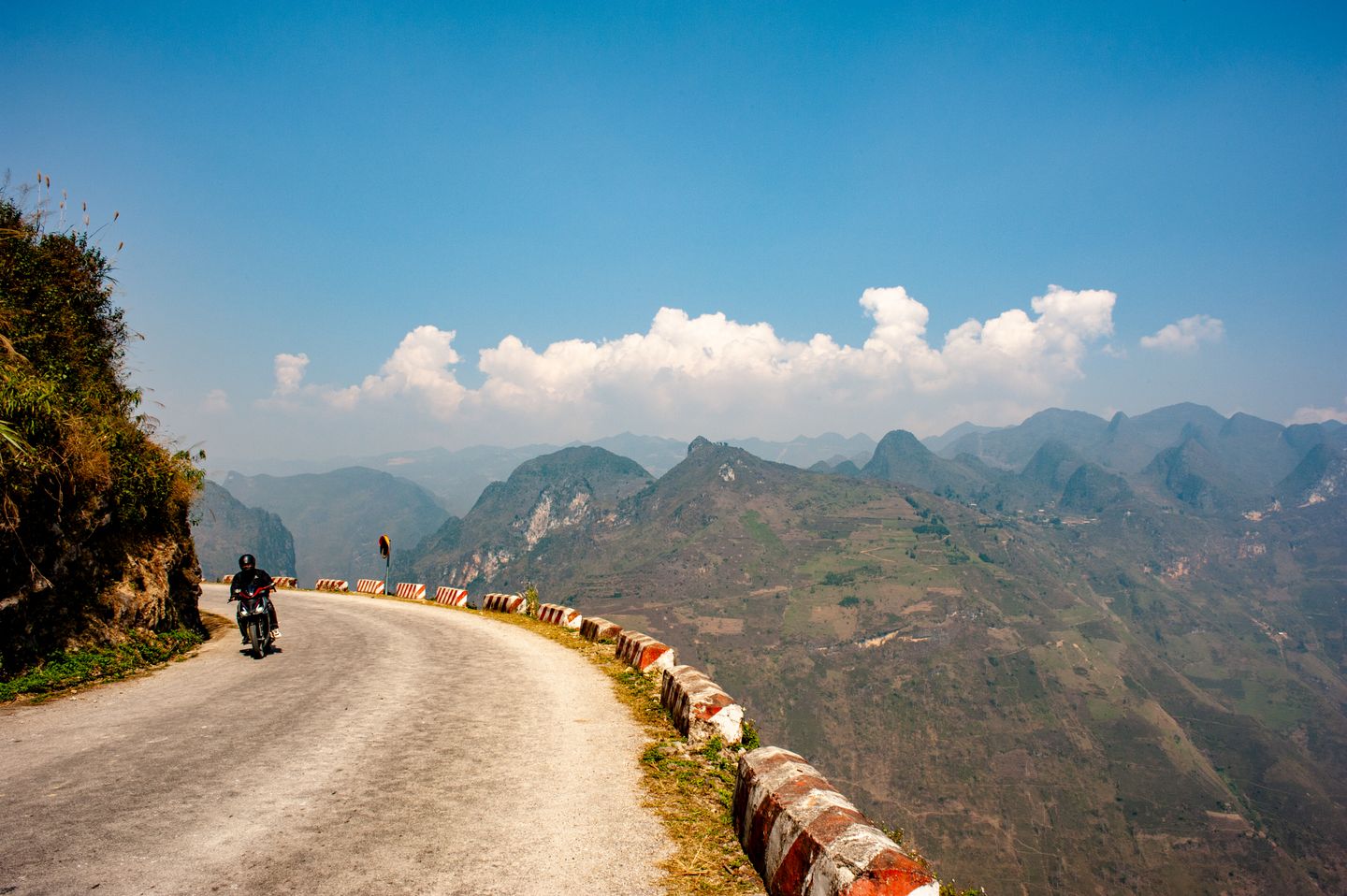
Days 6 to 9Ha Giang Loop by motorbike
This is the 3 week Vietnam itinerary with the Ha Giang Loop built in. On Day 6, head back to Hanoi and catch the night bus north. Sleeper buses leave around 8:30 pm and arrive between 3:30 and 4 am, for €8.20 to €14.80 (₫250,000 to ₫450,000); most hostels in Ha Giang let you sleep until morning.
Days 7 to 9 are the loop itself, about 350 km over three days with five to seven hours on the road each day. Day 7 climbs to the Quan Ba Heaven Gate, the first big viewpoint. Day 8 reaches Lung Cu, the flag tower at Vietnam's northernmost point, and Dong Van, the plateau's only town. Day 9 rides the Ma Pi Leng Pass above the jade-green Nho Que River before heading back down; a boat on the river costs €3.30 to €4.90 (₫100,000 to ₫150,000). If your loop falls on a weekend, sleep in Dong Van on Saturday night for the Sunday morning market, roughly 7 to 11 am.
A good all-in tour for three to four days costs €124 to €220 (₫3,780,000 to ₫6,700,000). Two things to sort before you go: the border-area permit, €6.55 to €8.55 (₫200,000 to ₫260,000), and your licence. You need an international driving permit with a motorcycle category under the 1968 convention, or you ride uninsured. The legal, insured way without one is pillion behind an easy rider, and that is what most travellers do.
Sleep: a hostel in Ha Giang town before the loop, then family homestays on the plateau, usually in a shared room. On a booked tour, the beds are part of the price.
Getting back: the night bus from Ha Giang to Hanoi on the evening of Day 9.
Swap: Sapa. Prefer walking to riding? Do two or three nights in Sapa instead: the bus from Hanoi takes 5.5 to 6 hours, and an all-in two or three night trek with transport and meals costs €55 to €100 (₫1,670,000 to ₫3,040,000). It saves a night on the bus, too.
Read more: things to do in Ha Giang
Week 2: Hue, the Hai Van Pass and Hoi An
The second week slows down on the central coast, with the best food density in the country and one of its most famous roads.
Days 10 to 11Hue, citadel and royal tombs
Land in Hanoi early, then fly to Hue: the flight takes about 1h20 to Phu Bai, against 14 hours on the train. Spend the first afternoon at the Imperial Citadel, €6.55 (₫200,000), the walled seat of the Nguyen emperors. On Thursdays it stays open until 10 pm, so you can see the grounds lit up.
On Day 11, hire a bicycle for the tombs. Tu Duc is the closest at 4 km, Khai Dinh is 7 km out with its wild glass mosaic interior, and Minh Mang is the furthest at 9 km. A combo ticket with the citadel costs €13.80 or €17.40 (₫420,000 or ₫530,000) and is bought at your first site. Arrive at Thien Mu Pagoda by dragon boat, €6.55 to €13.15 (₫200,000 to ₫400,000) per boat. In the evening, try the Hue tasting set at Madam Thu, or a bowl of bun bo Hue, spicier than anything you ate in the north.
Sleep: the south bank near Truong Tien Bridge, where almost all the beds are. Phu Hoi is the compact hostel quarter.
Getting there from Ha Giang: night bus to Hanoi, then a flight to Phu Bai.

Read more: things to do in Hue
Days 12 to 15Hai Van Pass, Hoi An and Da Nang
Day 12 is a travel day worth looking forward to. Ride pillion with an easy rider over the Hai Van Pass, about four hours from Hue to Hoi An for around €45 (₫1,370,000), with your luggage strapped on. The pass is 21 km of mountain road at 500 m and quiet since the trucks moved to the tunnel; leave early, before the cloud and heat build.
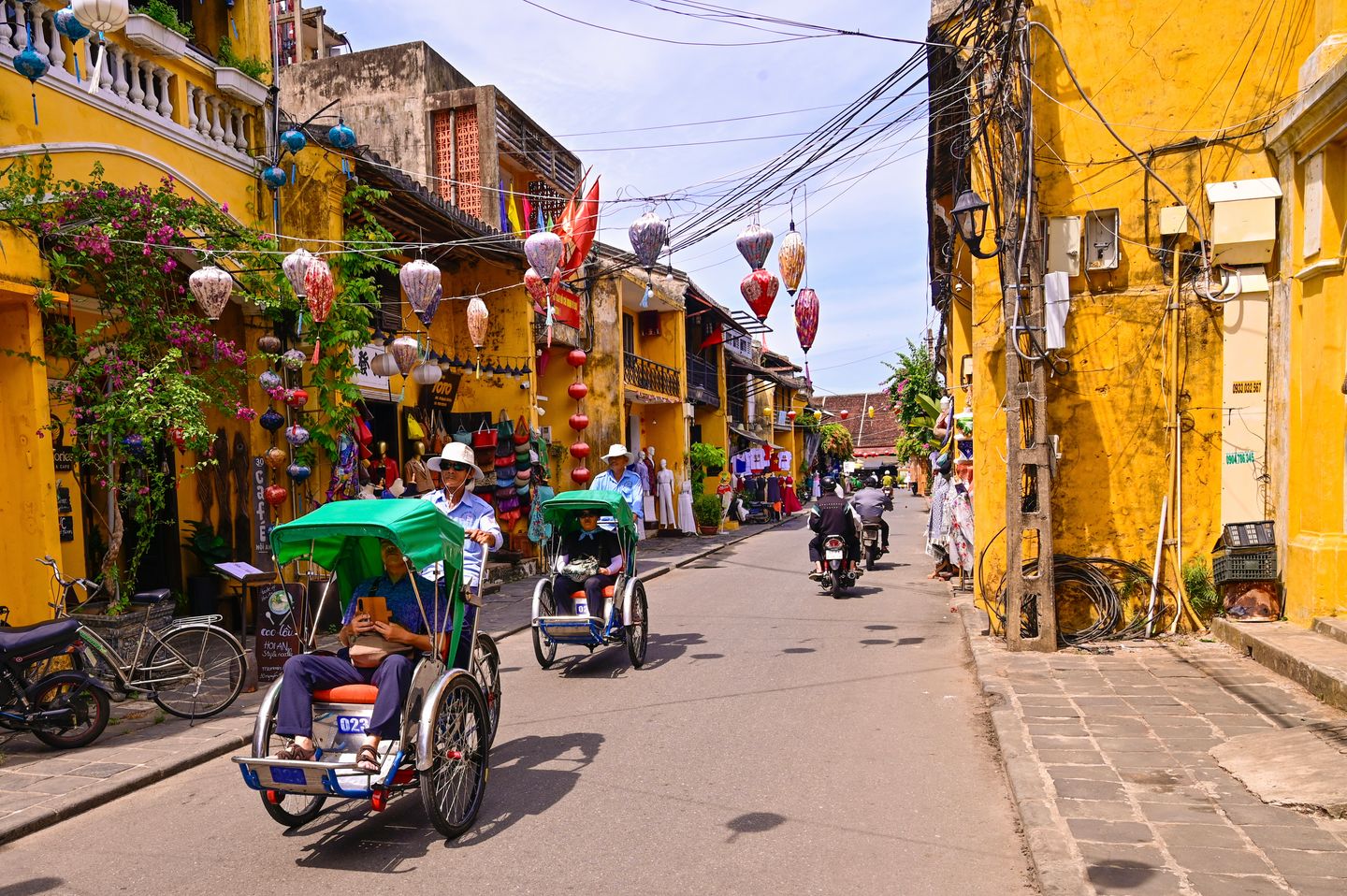
Hoi An deserves more nights than most routes give it. Buy the Ancient Town ticket, €3.95 (₫120,000), which covers five heritage sites, and see the Japanese Covered Bridge before 7 am or after 9 pm. Cycle 3 km through the rice paddies to An Bang Beach, and save a morning for the food court at the Central Market. If one of your evenings is the 14th of the lunar month, the old town switches off its electric lights for lantern night.
Use one day for Da Nang, 30 km north. The Marble Mountains, €1.30 (₫40,000) plus €0.50 (₫15,000) for the lift, fill up by 10 am, so go at opening. The LK02 public bus to Da Nang costs €1.15 (₫35,000). Want a beach night instead? Spend one of the four nights in Da Nang, whose My Khe Beach runs along the city's whole eastern edge.
Sleep: the Ancient Town or the riverfront, or just outside the old town for lower prices within walking distance. An Bang Beach is the quieter alternative.
Getting there from Hue: easy rider over the pass, or a bus or transfer in 3.5 to 4 hours.
Read more: things to do in Hoi An
Week 3: Da Lat, Ho Chi Minh City and the Mekong Delta
The last week trades the coast for the highlands, then drops into the busy, warm south.
Days 16 to 17Da Lat, lakes and waterfalls
The night bus from Hoi An to Da Lat takes 13 to 14 hours, so this is the leg most travellers replace with a flight from Da Nang. Da Lat sits at about 1,500 m, and after the coast it feels like spring: bring a jacket, because nights get cold.
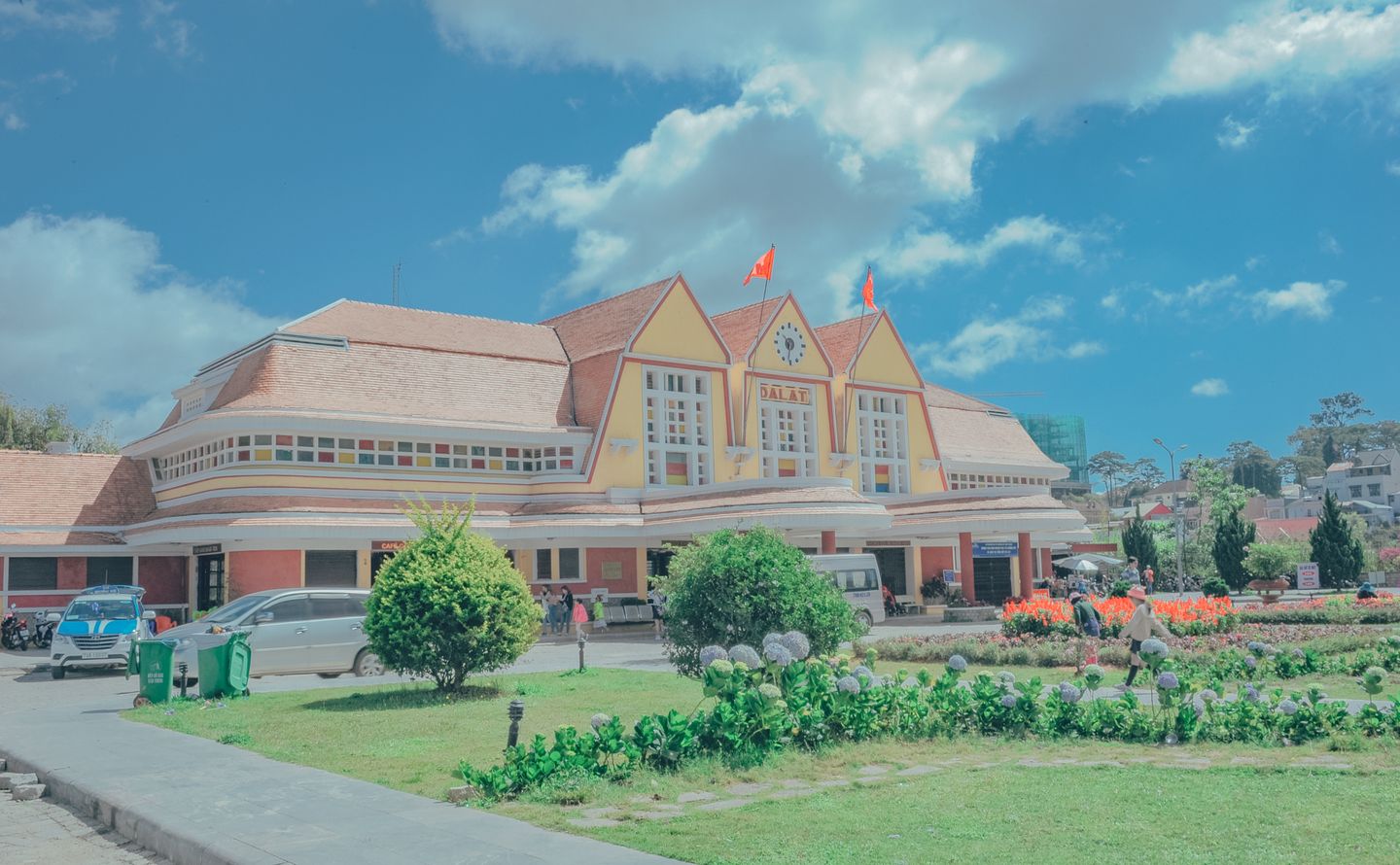
Walk the 5 km loop around Xuan Huong Lake, go early to the Crazy House before the walkways jam, and ride the heritage train from the 1938 railway station to Trai Mat, about 30 minutes each way. For the active day, book canyoning at Datanla Falls through an operator in town. In the evening, head to the night market for grilled rice paper, banh trang nuong, and hot soy milk.
Sleep: the centre around Xuan Huong Lake, walkable to the market, the station and the night market.
Getting there from Hoi An: fly from Da Nang, the airport for the whole central coast.
Read more: things to do in Da Lat
Days 18 to 21Ho Chi Minh City and the Mekong Delta
Take the sleeper bus down from the hills on Day 18, 6 to 8 hours. Spend Day 19 in the city: the War Remnants Museum, €1.30 (₫40,000), Reunification Palace, €2.65 (₫80,000), left as it was in April 1975, and the Central Post Office, still a working one. Walk one block east of Ben Thanh Market for local prices. After 7 pm, join the crowds on Nguyen Hue Walking Street. The Cu Chi tunnels are 1.5 to 2 hours away by tour or Grab, if you want to add a morning.
On Day 20, go to the Mekong Delta and stay the night in Can Tho. A rushed day tour from the city is the classic disappointment; an overnight lets you reach the Cai Rang floating market at sunrise, before the day trips arrive. On Day 21, head back to Ho Chi Minh City for your flight home.
Sleep: old District 1, now the Sai Gon and Ben Thanh wards since the 2025 reform, though every map still says District 1. In the delta, a waterside guesthouse in Can Tho.
Getting there from Da Lat: sleeper bus, 6 to 8 hours.
Swap: Mui Ne or Phu Quoc. For dunes instead of the delta, take the bus from Da Lat down to Mui Ne (about 4 hours, or two days with an easy rider via the waterfalls), then continue to Ho Chi Minh City in 3 to 4 hours on the expressway. For a beach finale, skip the delta and fly from Ho Chi Minh City to Phu Quoc in about an hour; flights run €34 to €70 (₫1,040,000 to ₫2,130,000) one way.

Read more: things to do in Ho Chi Minh City
3 week Vietnam itinerary south to north
The same route works in reverse: fly into Ho Chi Minh City, do the Mekong Delta and the city first, then Da Lat, fly to Da Nang for Hoi An and Hue, and finish in the north. Ticket prices are often what decides it, so check both directions with an open-jaw search.
The season can decide it too. In April, starting in the south gets you through Ho Chi Minh City before its hottest weeks and ends in the north while Ha Long Bay is still good. Going south to north also puts the War Remnants Museum and the Cu Chi tunnels early in the trip, which many travellers recommend, because they reframe much of what you see afterwards. In December or January, the classic north to south order works better: the north is dry, and the centre dries out by the time you reach it.
Vietnam itinerary variations: backpacking, 21 days, 4 weeks or 30 days
Vietnam backpacking route, 3 weeks. To save money, swap the flights for the overland options: the sleeper train or bus from Hanoi to Hue (12 to 14 hours), and the night bus or train instead of flying from Da Nang. Sleeper buses are the backpacker default, with near-flat berths and fierce air conditioning, so bring layers. You lose time, so drop Da Lat and go straight from Hoi An to Ho Chi Minh City.
Vietnam itinerary 21 days, slower. Prefer fewer moves? Drop the Ha Giang Loop, do Ninh Binh and one night on Ha Long Bay, and give Hoi An and Hue an extra night each. Only have a fortnight? Our 14 day route keeps five bases and trades the mountain loop for a night on Ha Long Bay.
Vietnam itinerary 4 weeks. An extra week lets you have it all: the four-day Ha Giang Loop with Du Gia village, Sapa, a night on Cat Ba Island for the quieter bays, the caves of Phong Nha between Ninh Binh and Hue, Mui Ne after Da Lat, and three nights on Phu Quoc to finish.
30 days in Vietnam or 2 months in Vietnam. A typical Vietnam trip planned with Stippl lasts 31 days, so a month is the length that lets the route breathe. With two months, add a neighbouring country: most travellers combine Vietnam with Cambodia, Laos or Thailand, and the 45-day visa-free stay most Europeans get still leaves room for a long Vietnam leg.
Describe your trip, get a Vietnam itinerary in seconds
Everything in this guide is already in Stippl. Tell the planner how long you have and what you like: it builds the route, the days and the travel times, and you edit whatever you want.
What month not to visit Vietnam?
There is no month that is bad everywhere, because the north, centre and south have different seasons. February to April is the only window when all three are dry, which is why this route is planned around it. The main thing to plan around is the autumn on the central coast: from September to December, Hue and Hoi An get heavy rain and floods, with October and November the worst. For every region month by month, see when to visit Vietnam.
The north is hot and wet from May to October, and the Ha Giang Loop is best avoided from May to August, when landslides close the passes. If you travel in summer, give the central coast more nights and the mountains fewer. Also check the date of Tet, the Lunar New Year (6 February in 2027): transport sells out and much of the country closes for several days. Travelling in the wet months anyway? Our guide to Vietnam's rainy season shows where it pours, region by region, and how to order your stops around it.
3 weeks in Vietnam budget
Vietnam is one of the cheapest major destinations in Southeast Asia, so daily costs are low. The big costs on a three-week trip are the things you book in advance:
- Domestic flights. This route has two, Hanoi to Hue and Da Nang to Da Lat, and they save you more than a day of buses. Note that a credit card is effectively required to book them.
- Tours. The Ha Giang Loop at €124 to €220 (₫3,780,000 to ₫6,700,000) and a Ha Long Bay cruise, if you add one, are the biggest single items.
- Your accommodation style. Dorms run €4.50 to €8.50 (₫137,000 to ₫259,000) and genuine luxury starts around €43 (₫1,310,000), with rice-field bungalows in between.
Food and local transport barely register: a street bowl of noodles costs €0.90 to €2.60 (₫27,000 to ₫79,000) and a Grab across town about the same. Cash is still king, so draw dong before the mountains, where ATMs thin out.
Budget
€11–33
dorm bed, street food, sleeper buses, free-to-cheap sights
Mid-range
€37–70
private rooms, restaurant meals, a Ha Long cruise, internal flight
High-end
€85+
boutique hotels, private transfers, guided caves and cruises
Travelling in Vietnam
Getting around is easy once you know the basics. Grab is the standard for city rides and needs a local SIM or an eSIM with data, sleeper buses and the Reunification Express cover the long distances, and the tap water is not drinkable anywhere. For every main route with times and options, read our guide to transport in Vietnam.
A short history of Vietnam for travellers
History shapes much of what you see on this route. Hue was the seat of the Nguyen emperors from 1802 to 1945, Hanoi has been the capital for a thousand years, and Ho Chi Minh City holds the story of the American War, as it is called here, from Reunification Palace to the War Remnants Museum. Visiting those places early makes the rest of the country easier to read.
Frequently asked questions about Vietnam
Yes, for a classic north to south route with the main highlights. You will still need to choose between some side trips, such as Sapa or Ha Giang, and fly the longest legs. A typical Vietnam trip planned with Stippl runs 31 days, so three weeks is a tighter version of that.
Start in Hanoi and the north, with Ninh Binh and the Ha Giang Loop or Sapa, travel down the central coast via Hue and Hoi An, and finish in the south with Da Lat, Ho Chi Minh City and the Mekong Delta. Fly the longest legs to save days.
There is no month that is bad everywhere, because the north, centre and south have different seasons. Autumn storms on the central coast, from September to December, are the main thing to plan around. February to April is the only time all three regions are dry.
It depends mostly on domestic flights, tours and your accommodation style. Daily costs run from about €11 to €33 (₫330,000 to ₫1,000,000) on a budget and €37 to €70 (₫1,130,000 to ₫2,130,000) mid-range, excluding flights. Food and local transport are cheap.
Ready to make this route your own? Open it as a Stippl trip, change the nights per stop, swap in Sapa or Phu Quoc, and share it with your travel partner. For more places to add along the way, browse our Vietnam guide.