

Bangkok
Bangkok is one of the cheapest big cities in the world to eat in, and one of the best. Half a million street vendors, a Michelin-starred stall, and the headline temples in a single day.
Bangkok in a nutshell
Bangkok: what to expect
We looked at how travellers actually plan Bangkok on Stippl, across 397,000+ planned stops in the city.
Bangkok rewards two nights and a plan, and the plan is what most people arrive without. The headline sights sit close enough to run in a day: the Grand Palace and Wat Phra Kaew, Wat Pho with its 46 m reclining Buddha, and Wat Arun from the east bank as the light goes. Add Chatuchak Weekend Market, a Chinatown food crawl and a longtail boat through the khlongs and you have filled a second day comfortably. The city gets 2 nights from most travellers on Stippl.
Bangkok is a bookend rather than a base, and the plans say so. 69.3% of the trips that include Bangkok on Stippl either open or close with it. Some travellers deliberately save it for the end of a Thailand trip instead, arriving acclimatised to the heat, the traffic and the noise rather than meeting all three jet-lagged on day one.
Give it two nights on the way in and keep a third for the way out. Two full days covers Rattanakosin and Chinatown at a pace that still leaves room for a rooftop at sunset and a Muay Thai night at Rajadamnern or Lumpinee, and the day at the end is where Bang Kachao by bicycle, a ride through the alleys or a second run at Chatuchak fit. Pair it with Ayutthaya or Kanchanaburi if you want a night outside the city without leaving the route.
Plan Bangkok in Stippl
Day-by-day planning, stays and budget in one app, with every place from this guide already on the map.
Download the appWho Bangkok is for
First-time Asia travellers
Everything is set up for independent travel: rail transport, English signage on the tourist trail, and a well-worn route between the sights.
Food-led travellers
Roughly half a million street vendors, a Michelin-starred street-food stall, and Chinatown as one of the world's great eating districts.
Budget travellers
One of the cheapest cultural city destinations in the world, with dorms from a few euros and street meals around a euro.
Anyone with one day
Bangkok is on 22.6% of Thai stops on Stippl, and the sights cluster tightly enough that a single well-planned day covers the headline temples.
Nightlife and rooftop seekers
More than fifty rooftop bars, plus a bar and club scene that is unusually broad for a city this size.
Families
Siam and Bang Kachao work well with children, canal tours break up temple days, and children under 120 cm enter the main temples free.
Maybe not for you: travellers who dislike heat, noise and crowds, since the city is relentless in all three; anyone hoping to walk everywhere, because traffic and pavements make that impractical; and visitors expecting Khao San Road to be authentic.
Best time to visit Bangkok
Cool and dry
November to February
The sightseeing window: the lowest humidity, the most comfortable temple days, and peak season with it.
Hot
March to May
Highs around thirty-five with heavy humidity, and March and April carry the worst air of the year from the burning season up north.
Rainy
June to October
Heavy but usually short afternoon downpours, with September the wettest month and flooding a real possibility in the low-lying districts.
- January is the month most travellers plan Bangkok for on Stippl, about 81 days ahead. Only 10.8% of Bangkok plans are made inside a fortnight, and January is the peak, so the river hotels go first.
- Late November to early December is the sweet spot. The rain has cleared, the temperature is down and the Christmas crowds have not arrived; the December royal holidays then stack on top of the peak.
- Songkran, 13 to 15 April, turns the city into a water fight. Khao San and Silom are the epicentres, central accommodation is worth paying for, and nothing dry stays dry.
- Heat sets the day's rhythm more than the season does. Temples and cycling early, malls or parks in the middle of the day, rooftops at sunset, markets and Chinatown after dark.
Add your Bangkok dates and we'll flag the weather
Stippl shows the season, crowds and prices for every stop on your route.

Describe your trip, get a Bangkok itinerary in seconds
Everything in this guide is already in Stippl. Tell the planner how long you have and what you like: it builds the route, the days and the travel times, and you edit whatever you want.
Top things to do in Bangkok
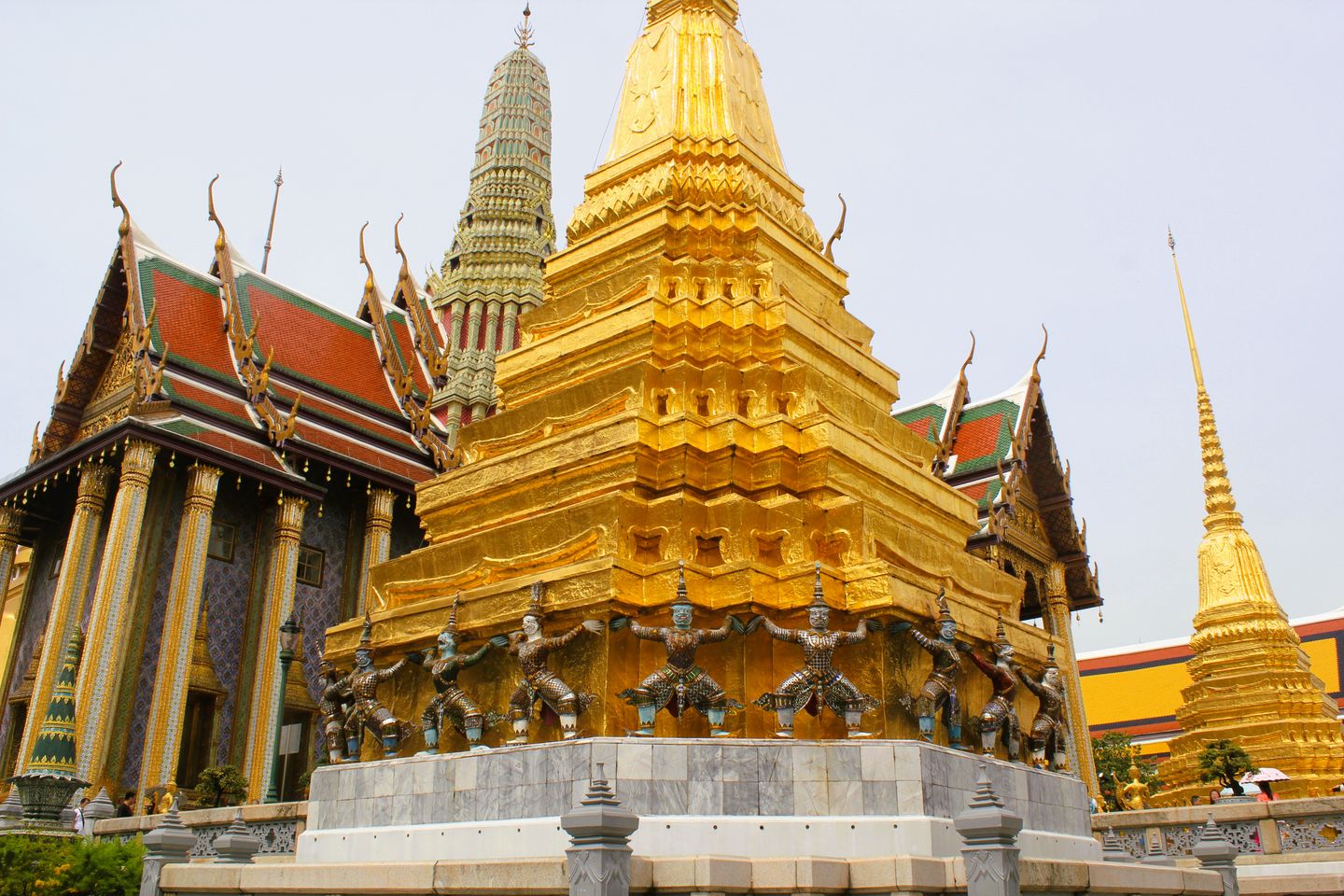

The Grand Palace and Wat Phra Kaew
Walk the royal complex used for ceremonies since 1782 and see the Emerald Buddha, a single piece of jade about sixty-six centimetres tall whose robes the King changes three times a year. About €13, open from half past eight, and covered shoulders and knees are enforced at the gate.
Wat Pho
See the forty-six-metre reclining Buddha in gold leaf and mother-of-pearl at the city's oldest temple, then have a massage at the school that invented the Thai version, about €8 for half an hour. Ten minutes on foot from the Grand Palace.
Wat Arun at sunset
Climb partway up the porcelain-mosaic prang on the west bank, about €5, then cross back by the €0.10 ferry and watch it light up from the east bank as the sky changes. The bars along the Tha Tien pier have the view.
A khlong tour by longtail
Take an hour or two through the canals of Thonburi, the counterweight to the temple circuit: stilt houses, vendor boats, monitor lizards and monks feeding the canal fish. About €25 for a private boat from the Tha Chang or Sathorn piers.
Chatuchak Weekend Market
Fifteen thousand stalls across twenty-seven sections, the largest market in Thailand, on Saturdays and Sundays from about nine. Quietest in the first hour, chaos by afternoon; the plant section runs on Wednesday and Thursday too.
A Chinatown food crawl
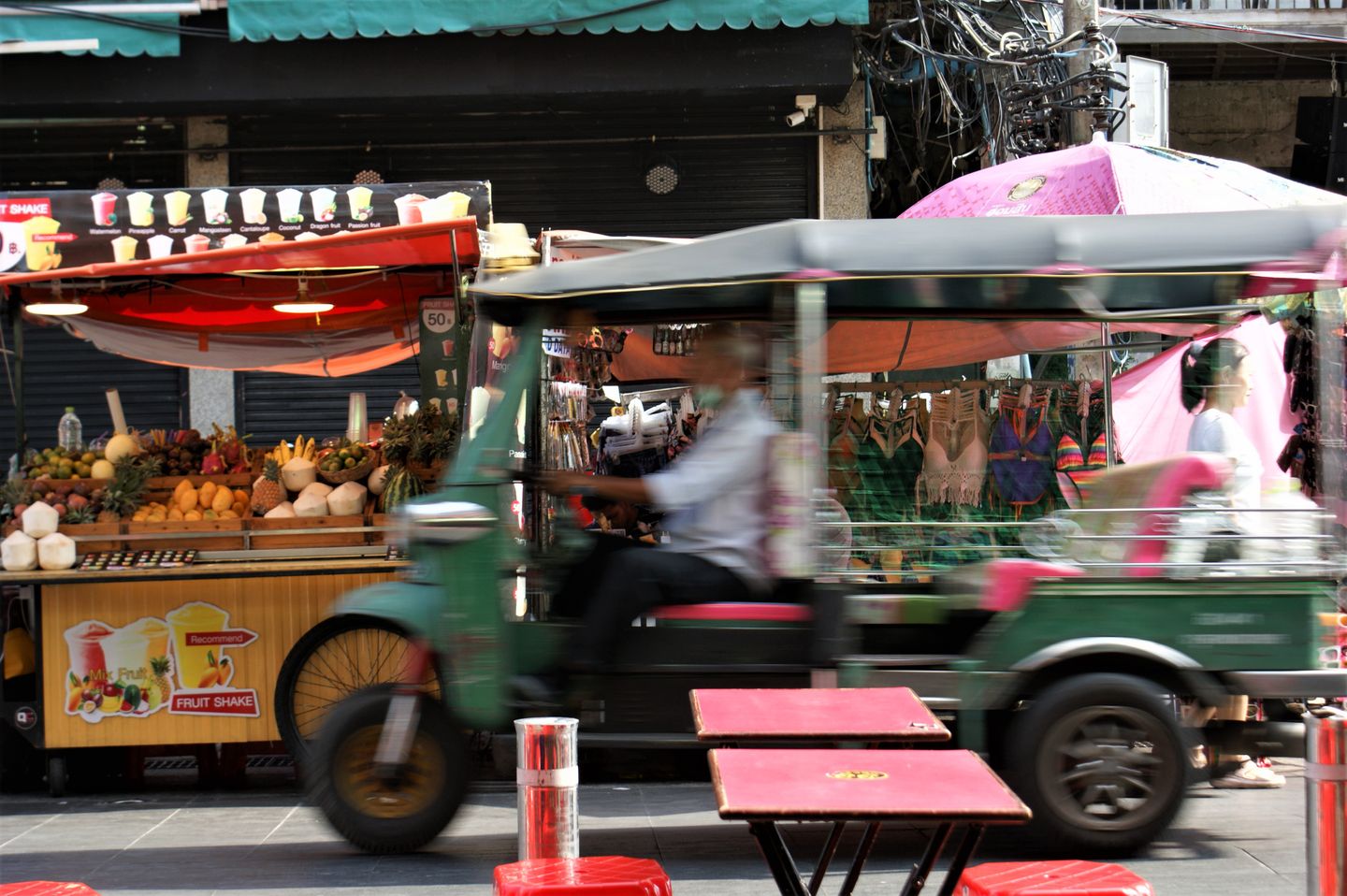
Eat your way down Yaowarat after dark, on foot or on a guided tuk-tuk tour, the single most recommended meal in the city. The stalls open from six; a guided evening runs about €40 with everything included.
The neighbourhoods of Bangkok
Banglamphu & Khao San
Backpacker strip, loud till late
Khao San is a kilometre of bars, agents and hawkers, with Soi Rambuttri the calmer street behind it and the Grand Palace a walk away. For backpackers and anyone doing the old town on foot.
The old town on your doorstep, and no metro within twenty minutes.
Yaowarat
Street food, loud after dark
One of the oldest Chinatowns anywhere and the street-food heart of the city from six until midnight, on the MRT since 2019. For people who came to eat; the hotels are few and the lanes are noisy until late.
The best food in the city outside your door, and a metro ride to everything else.
Silom & Sathorn
Offices by day, bars by night
The business spine, with Lumphini Park at one end, both rail lines through it and the bar strip at Silom Soi 4 after dark. For people who want balance: central, connected and quiet enough to sleep.
Everything within reach, and an office district's face by day.
Sukhumvit
International corridor, BTS on top
Hotels, global dining and rooftop bars strung along the Skytrain, with Nana to Asok the first-timer stretch. For first visits and anyone who wants a station outside the door.
Everything one BTS stop away, and the least Thai street in Bangkok.
Thonglor & Ekkamai
Moneyed, design-led, late nights
The creative quarter along the eastern BTS: design cafés, cocktail bars and the best Japanese food in Bangkok. For second visits and long stays; nothing here is a sight.
The city's best evenings, and forty minutes on the BTS to the temples.
Riverside & Charoen Krung
Five-star river views, slow ferries
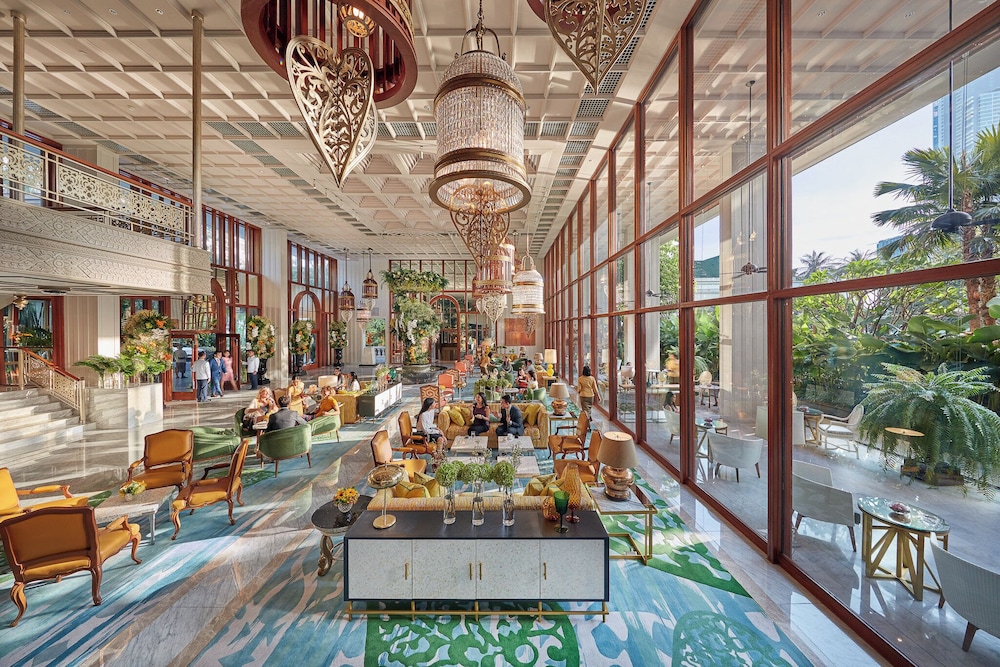
Where the grand hotels sit on the Chao Phraya, with the old town a boat ride upstream and the creative shophouses of Charoen Krung behind. For a splurge, for river views and for families who want a pool.
The river at breakfast, and a ferry or a taxi to reach anything else.
See every Bangkok neighbourhood on one map
Save the areas you like and Stippl plots your days so you're not crossing the city twice.
Where to stay in Bangkok
Sukhumvit is the first-timer's answer: a hotel within a five-minute walk of a BTS station beats any hotel feature, given the heat and the traffic. 28.4% of Bangkok stops planned on Stippl are a single night, so pick the area for what you can do on foot. Popular hostels near Khao San sell out in high season; book those ahead.
Banglamphu & Khao San
Hostels with air conditioning and lockers, dorms €8 to €15, doubles from €17; Chana Songkram road is the cheap street.
Yaowarat
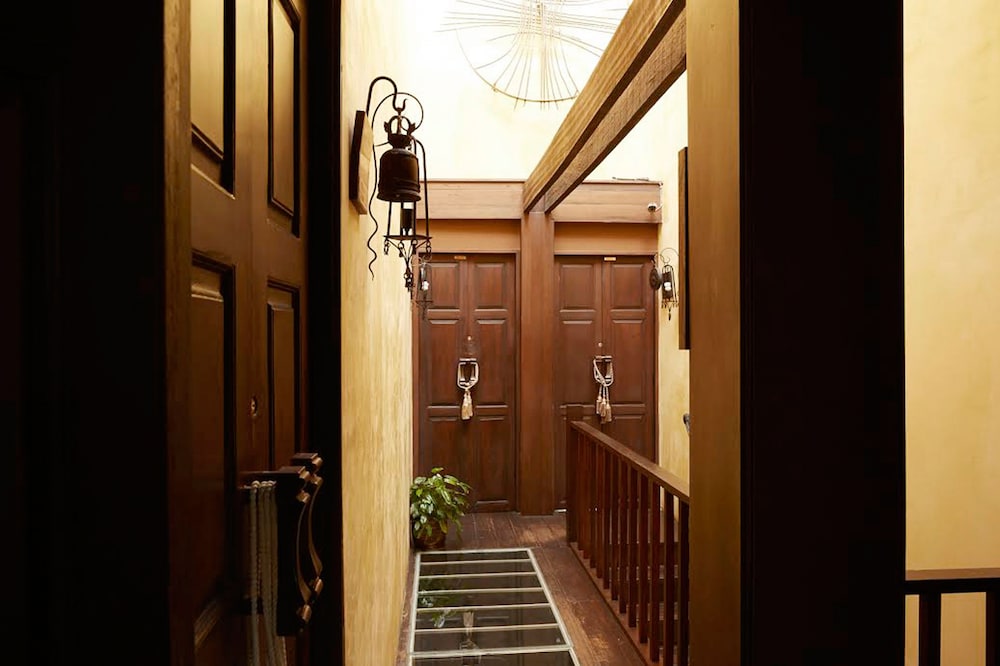
Restored shophouse hotels and a few hostels above the food streets, €25 to €70, close to the MRT.
Silom & Sathorn
Business hotels and serviced apartments, €40 to €90, with rooftop-pool towers from €75.
Sukhumvit
Mid-range hotels €25 to €45 and rooftop-pool hotels €43 to €75, stacked along the Skytrain from Nana to Asok.
Thonglor & Ekkamai
Serviced apartments and design hotels for longer stays, €50 to €120, with the cafés downstairs.
Riverside & Charoen Krung
The grand river hotels from €150, and boutique hotels in old shophouses on Charoen Krung from €60.


What to eat in Bangkok
wok-fried rice noodles with tamarind, egg and peanuts
minced meat with holy basil over rice, usually with a fried egg
small intense bowls of dark broth
crab omelette, the dish that earned a street stall a Michelin star
Chinese-Thai classic
coconut sticky rice with ripe mango
fried dough with sweetened condensed milk
pounded green papaya salad
Discover food spots in Stippl
Find restaurants and markets on the map, save them to your itinerary, works offline too.

Bangkok customs and what not to do
The Grand Palace is strictest
Shoulders and knees covered, no leggings, bike shorts, ripped denim or see-through fabric; a shawl over the shoulders is refused and sandals need a back strap.
Other temples lend cover-ups
The shoulders-and-knees rule holds everywhere, but wraps and trousers are sold and rented at the gates, and Wat Pho lends robes for free.
Shoes come off inside
Every temple building means slip-off shoes and nothing expensive left at the door; the pile outside Wat Pho is watched but not guarded.
Ask before you photograph
Close-up shots of people need a nod first, and some of the Chinatown community streets prefer no photography at all.
The flowers are offerings
At Pak Khlong Talat do not walk in front of someone mid-purchase or handle the stems before buying; the garlands are for the shrine, not the hotel room.
Say firm or gentle first
State it before a Thai massage starts, because firm is the default and can leave you sorer than you arrived.
Do
- Confirm the taxi meter is on before setting off, or take the next car
- Count your change deliberately at stalls and with drivers
- Carry a scarf or sarong; the Grand Palace refuses it as cover but every other temple accepts it
- Keep a cool head; visible anger costs you standing instantly
Don't
- Accept a "temple is closed" redirect from anyone, however official they look
- Buy gems, tailoring or souvenirs at a shop a driver took you to
- Leave your passport as a rental deposit
- Get involved in political demonstrations
What a Bangkok trip costs
Backpacker
€25–40
Dorm bed, street food, BTS and boats, one paid sight a day.
Mid-range
€60–90
Private room with pool, mixed street and restaurant meals, Grab, tours.
High-end
€180+
Riverside or five-star hotel, fine dining, private guide and driver.
Track what you actually spend
Set a daily budget per country and log expenses in any currency while you travel.
Fun facts about Bangkok
The Golden Buddha at Wat Traimit weighs 5.5 tonnes of solid gold. Its gold was found by accident when the plaster-covered statue was dropped during a move, and it is the largest solid-gold Buddha in the world.
Bangkok's ceremonial name is one of the longest place names on earth. It runs to 168 letters, which is why everyone in Thailand simply says Krung Thep, the City of Angels.
Durian is banned on the BTS, the MRT and in taxis. The smell is the reason, and the ban is posted on the same signs as the ones forbidding smoking and balloons.
Chinatown began when the Grand Palace was built in 1782. The Teochew merchants who had settled there since 1767 were moved off the land, and turned the swampy Sampheng area into the trading quarter it still is.
Vimanmek Mansion in Dusit is the largest golden-teak building in the world. It was built in 1900 for King Rama V, and the whole three-storey palace was assembled without a single nail.
Bangkok was the most-visited city in the world in 2016. About 21.5 million international arrivals that year, ahead of London and Paris, and the two airports still handle the traffic between them.
Wat Chakrawat is known as the Crocodile Temple. The name comes from crocodiles that were enclosed in its pond after, the story goes, eating young monks; their descendants are still in the pond.
Local tips for Bangkok
The BTS beats the traffic
The Skytrain and the MRT are the only reliable way around; a five-kilometre taxi ride can take half an hour in rush hour. Tap in with a contactless card, or buy a day pass.
Grab locks in the fare
The app removes the haggling and the meter argument, and the motorbike option beats everything in rush hour. Bolt is the fallback when no drivers are available.
Take the river, not the road
The Chao Phraya express boats are cheap, frequent and often faster than the road for the old town. Board at an official pier; the longtail touts in the alleys charge ten times the fare.
How long to stay
Most people give Bangkok 2 nights on Stippl, and nearly three in ten stay one. Two covers the temples and Chinatown; the third is Ayutthaya or the markets.
The palace is never closed
The tuk-tuk driver or the smart stranger who says it is, and offers a better temple, is starting the gem scam. Walk past, and take any taxi with a running meter.
Roads are the real danger
Pavements end mid-block and Thailand's road-death rate is among the highest in the world. Cross with the locals, wear the helmet on a motorbike taxi and do not drive yourself.
Bangkok questions, answered
Decide where Bangkok sits in the route before you pick a single sight, because that is what fixes everything else. Lay the stops out in Stippl and check what the days actually allow. Then put the route in front of people who have been, in subreddits like r/ThailandTourism or the Facebook groups, and say how you travel when you ask.
They do, by a wide margin: 43.0% of the trips that include Bangkok on Stippl open with it, and no other place in the country is planned more often. That is the flight map as much as a preference, since both of the city airports are the main long-haul gateways into Thailand.
For a lot of people one night is what happens rather than what they chose: 28.4% of Bangkok stops planned on Stippl are a single night, usually a landing or a departure. One night buys you the Grand Palace and Wat Pho, or a Chinatown dinner, and not both.
One of two, and they are not close together. Suvarnabhumi sits about 30 km east of the centre and takes most international flights, while the older, smaller Don Mueang is the one budget carriers use. Check which airport your ticket names before booking a hotel or an onward flight, because crossing the city between them costs an hour or more.
Go once, go late, and know what it is: a backpacker strip rather than a piece of old Bangkok, and the disappointment people report is almost always about having expected authenticity from it. For an evening that is actually the city, Chinatown's food streets or a rooftop bar above the river do more with the same hours.
Most travellers leave 81 days between planning a Bangkok stop on Stippl and turning up, which is roughly eleven weeks. Fix the flights and the first nights on that horizon and leave the rest loose, because the city is one of the easiest places in the country to arrange things once you are there.
Every guide is written by the Stippl editors and checked against the trips our travellers actually plan. Spotted something out of date? Let us know.

Plan Bangkok in Stippl
Day-by-day planning, stays and budget in one app, with every place from this guide already on the map.
Download the app
