

Ha Giang
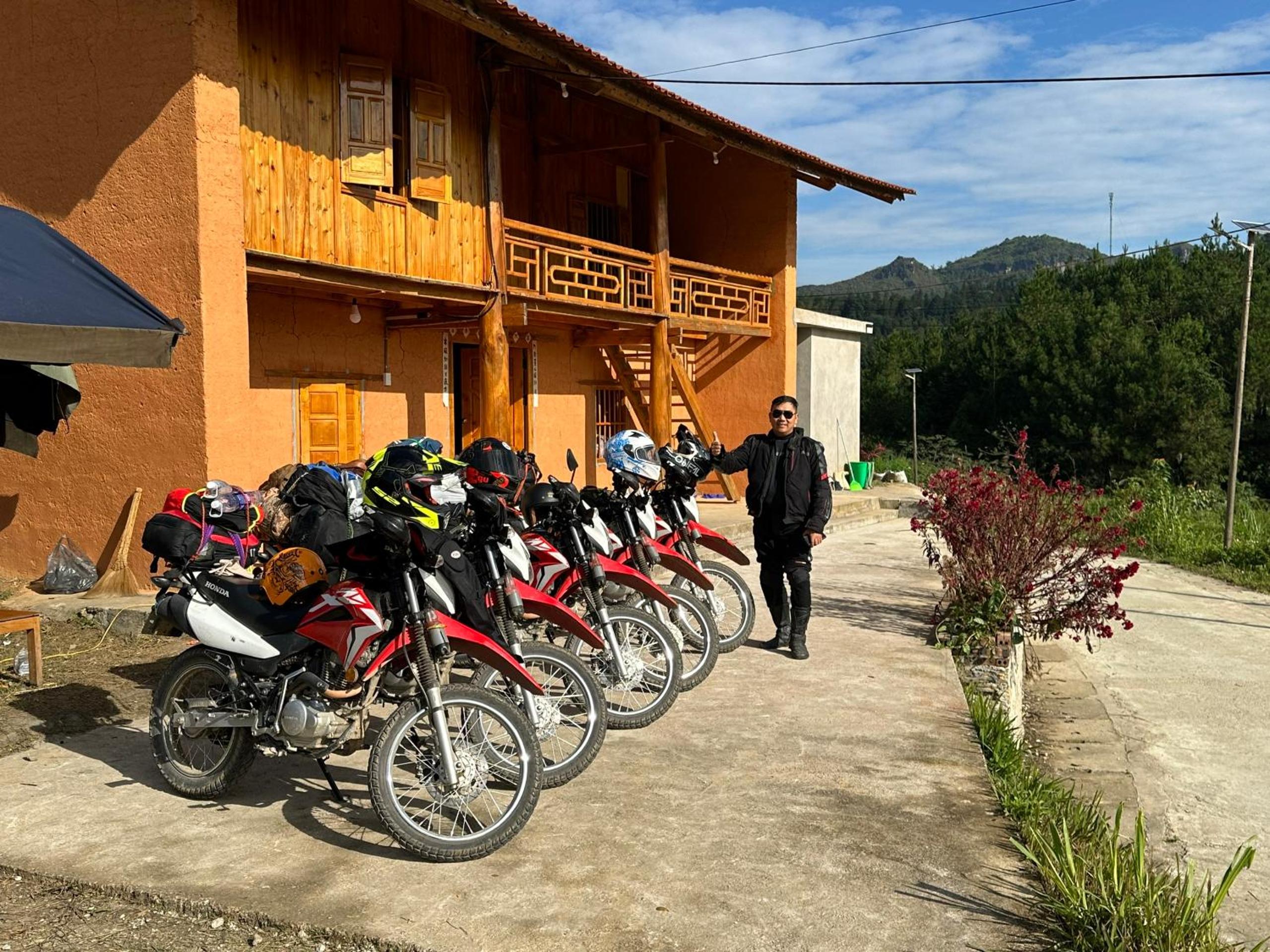
Ha Giang is the road people call the best thing they did in Vietnam, and a local rider will take you without a licence. Twenty kilometres of road cut into a cliff above a jade gorge.
Ha Giang in a nutshell
Ha Giang: what to expect
We looked at how travellers actually plan Ha Giang on Stippl, across 788,000+ planned stops in Vietnam.
Ha Giang is a road, not a town. What you come for is a 350 to 400 kilometre motorbike circuit through the Dong Van Karst Plateau, a UNESCO geopark, and the town itself is only the start line. The set piece is the Ma Pi Leng Pass, cut into a cliff above the Nho Que gorge, with a boat along the jade-green water at the bottom of it. Beyond that: the flag tower at Vietnam's northernmost point with China visible from the top, and the Sunday markets at Dong Van and Meo Vac. Most travellers give the loop 4 nights.
Three or four nights is not a preference here, it is the circuit. 42.2% of stays run four nights, and travellers reach Ha Giang around 27 days days, so it is almost never anyone's first stop in the country. People arrive with some Vietnam already behind them.
The paperwork is what catches people out. There is no airport and no railway, so it is a six to eight hour night bus from Hanoi, and nearly every Ha Giang trip carries Hanoi for that reason. You need a border permit and a motorcycle licence your insurance recognises, and without the licence you are not covered. People have been killed on this road, and riding pillion with a local driver is a normal choice rather than a failure. October to early December is the season.
Plan Ha Giang in Stippl
Day-by-day planning, stays and budget in one app, with every place from this guide already on the map.
Download the appWho Ha Giang is for
People with time
The typical trip carrying Ha Giang runs 60 days, half again longer than any other Vietnamese destination, and that is not a coincidence.
Mountain people
Ha Giang is the one Vietnamese destination that is neither, and the karst plateau is the whole point.
Riders, and passengers
The easy-rider option, where a local guide rides and you sit behind, is a genuine alternative rather than a consolation, and the legal one without a licence.
Photographers
Two visual seasons: buckwheat and golden rice terraces in October and November, canola and plum blossom in March and April.
Anyone after hill villages
The Hmong and Dao communities here are met on something closer to their own terms than on a Sapa day tour.
Maybe not for you: inexperienced riders who mean to ride themselves, since the road is hard and people die on it; anyone on a short Vietnam trip, because a fortnight with Ha Giang gives up something else; and anyone riding June to August, when most of the rain lands.
The best time to visit Ha Giang
Autumn
September to November
Rain falling away month by month, rice harvest then buckwheat: the best window of the year for the loop.
Spring
March and April
Warming, blossom and moderate rain: the first good window.
Monsoon
May to August
Green and dramatic, and the season in which the road is genuinely dangerous; most of the year's rain falls in these four months.
Dry and cold
December to February
Rideable and uncomfortable: little rain, very little sun, and fourteen degrees on the passes.
- The road is dangerous in the monsoon, May to August, and people die on it. Landslides and wet cliff bends on the Ma Pi Leng pass; ride in autumn or spring, and if it must be summer, sit behind a local rider.
- Ha Giang is planned about 64 days ahead on Stippl, and 20.7% of its plans are made inside a fortnight. People decide on the loop from Hanoi, which is fine in October and a gamble in July.
- Dong Van and Meo Vac markets run every Sunday morning, seven to eleven, and the loop should be timed so a Sunday lands on one. The two largest ethnic markets on the plateau, and the best single reason to plan the days rather than just ride them.
- The buckwheat flowers run late October to early December, and the festival falls in mid to late November. Pink fields across the plateau at the end of the harvest window; the homestays fill for the festival weekend.
Add your Ha Giang dates and we'll flag the weather
Stippl shows the season, crowds and prices for every stop on your route.
Describe your trip, get a Ha Giang itinerary in seconds
Everything in this guide is already in Stippl. Tell the planner how long you have and what you like: it builds the route, the days and the travel times, and you edit whatever you want.
Things to do in Ha Giang
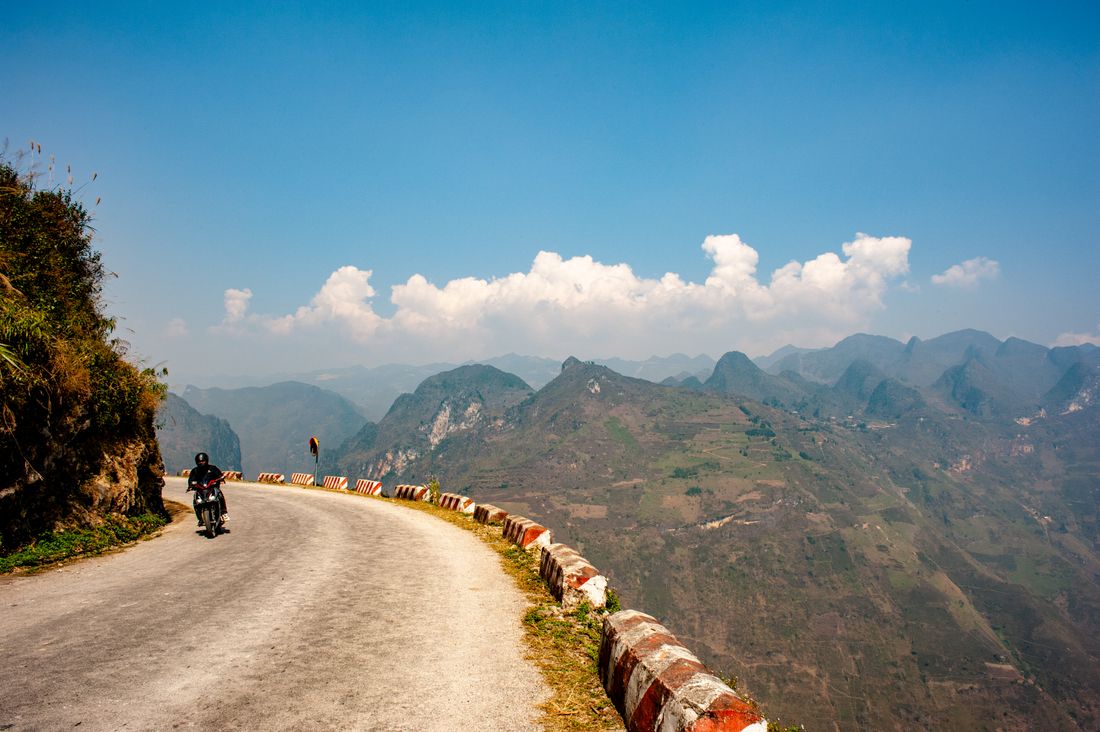
The Ma Pi Leng Pass
Ride the twenty kilometres of road carved into the cliff above the Nho Que gorge, the reason the loop exists and the most photographed stretch of tarmac in Vietnam. Day two of the loop, and the skywalk café at the top is the stop.
The Nho Que river by boat
Take the thirty-to-sixty-minute boat along the jade-green water at the bottom of the gorge you have just ridden above, through the Tu San canyon, about €4. The road down to the pier is steep; leave the bike at the top.
Lung Cu flag tower
Climb the hill to the flagpole at the northernmost point of Vietnam, with China visible from the top, about €1. Forty minutes off the loop and worth it for the empty road there.
The Sunday market
Plan the week around Dong Van or Meo Vac on a Sunday morning, when the Hmong and Dao come down from the villages with livestock and textiles. Both are worth it; Meo Vac is the less visited.
Quan Ba and Heaven's Gate
Stop at the viewpoint on the first day out of town, over the twin hills and the valley the loop drops into. Free, and the first place the plateau opens up.
The Vuong family palace
Walk the Hmong opium dynasty's compound at Sa Phin, built in the 1900s in Chinese style with the pine trees the king planted, about €1. Twenty minutes and an easy stop between Dong Van and Lung Cu.
The neighbourhoods of Ha Giang
Ha Giang town
Provincial capital, the start
The town on the Lo river where the loop starts: hostels, tour offices, bike rental, the permit office and a market. For the night before and the night after; nobody comes for the town.
The bikes and the permit, and a town with nothing to see.
Yen Minh
First night, pine hills
The market town a hundred kilometres in where most riders sleep the first night, with homestays and plain hotels among pine hills. For the first stop on the loop and for anyone breaking the ride early.
A sensible first night, and a town rather than a village.
Dong Van
Old town, plateau, Sunday market
The colonial-era market town on the karst plateau: the old quarter, the Sunday market and the homestays, with the pass and the gorge a morning's ride away. For the second night and for the market weekend.
The best town on the loop, and the busiest.
Meo Vac and Du Gia
Gorge villages, the last night
Meo Vac below the Ma Pi Leng pass and Du Gia in its valley of terraces, with the homestays and the family dinners the loop is remembered for. For the last night and for the corn wine.
The valley and the dinner, and the long ride out the next morning.
See every Ha Giang neighbourhood on one map
Save the areas you like and Stippl plots your days so you're not crossing the city twice.
Where to stay in Ha Giang
Sleep in Ha Giang town the night before the loop, in one of the hostels that double as bike-rental and tour offices, then in family homestays on the plateau: a shared room on mattresses under mosquito nets, with dinner. Most people give Ha Giang 4 nights on Stippl, which covers the full loop. Book October and November ahead; the buckwheat weeks fill the small homestay capacity.
Ha Giang town
Hostels with dorms €4 to €8 and doubles €12 to €30, most of them also the tour desk and the bike shop.
Yen Minh
Homestays and plain hotels among the pines, €6 to €20, where most riders sleep the first night.
Dong Van
Homestays in the old quarter and simple guesthouses, €6 to €25, with dinner around the family table.
Meo Vac and Du Gia
Family homestays with shared rooms and dinner, €6 to €15 a night; some ask for your border permit.


What to eat in Ha Giang
The H'Mông market stew, traditionally horse meat and offal simmered for hours with cardamom and mountain herbs
Porridge made from the aconite root, poisonous raw and rendered safe by long cooking
Steamed ground maize, the H'Mông staple where the valleys grow it instead of rice
Free-range hill pork with five-colour sticky rice, the standard homestay dinner
H'Mông corn wine fermented with medicinal herbs, often over 50% ABV, poured as hospitality and known on the loop as "happy water"
Steamed rice roll served with a bowl of hot broth to dip into rather than a cold sauce, unlike the Hanoi version
Discover food spots in Stippl
Find restaurants and markets on the map, save them to your itinerary, works offline too.
Ha Giang customs and what not to do
The first cup is hospitality
Accept the first cup of corn wine and set your own limit after that; refusing outright reads as refusing the house, and nobody expects a foreigner to keep pace.
Homestay hosts are not staff
You are in a family house: shoes off at the door, the meal is eaten together, and the karaoke afterwards is the evening, not an interruption to it.
Ask before every photograph
This is the most photographed minority region in Vietnam and the asking still matters, at markets and with children above all; buy something at the markets you photograph.
The permit stays on you
The Ha Giang travel permit is checked at the roadside; carry it in a pocket, not in a bag strapped to the bike, and keep the licence with it.
Do
- Accept the first cup of happy water, and set your own limit after that
- Ask before photographing people, particularly at markets and particularly children
- Bring layers you can take on and off; the temperature swings between valley and pass in an hour
- Buy something at the markets you photograph; textiles and spirits both travel
Don't
- Ride after the corn wine
- Ride without a licence you actually hold; it decides whether your insurance pays
- Treat homestay hosts as staff
- Plan the loop around a Sunday in the town; the markets that make the week are up on the plateau
What a Ha Giang trip costs
Self-ridden
€17
Bike, fuel, homestay dorm, meals, water.
Guided tour, all-in
€124–220 total for 3–4 days
Easy-rider or self-ride in a group, guide, all meals, homestays, entrance fees, rain gear.
Comfortable
€50+ per day
Private guide, private rooms, car instead of bike.
Track what you actually spend
Set a daily budget per country and log expenses in any currency while you travel.
Fun facts about Ha Giang
Ha Giang lost its own name in the 2025 provincial reform. The province was merged into Tuyen Quang and the merged province kept the other name, where Da Nang and Ninh Binh both kept theirs.
The Dong Van plateau's limestone records about 600 million years. It holds Cambrian marine fossils, which is why UNESCO listed it as a Global Geopark and why the landscape looks the way it does.
Chao au tau is made from a root that is poisonous raw. Aconite is detoxified by hours of cooking, and the porridge is eaten in the evening as a restorative against the mountain cold.
The Khau Vai Love Market runs one night a year. On the 26th of the third lunar month, and it was historically the night former sweethearts who had married other people were permitted to meet.
The border with China was fought over into the late 1980s. Skirmishes along this frontier continued well after the 1979 war, and the memory is local rather than national.
The Vuong family palace at Sa Phin was built on the opium trade. The H'Mong dynasty that ran this frontier under the French built it in 1919, with poppy-shaped carvings on the pillars.
The Ma Pi Leng Pass is about 20 km of road cut into a cliff. It runs several hundred metres above the Nho Que gorge and is routinely called the finest mountain road in Vietnam.
Local tips for Ha Giang
The night bus is the arrival
Every arrival is by road from Hanoi and the sleeper bus is the standard one, rough and arriving around half past three. Most hostels let you sleep until morning; book the loop before Hanoi.
Three days or four
The classic circuit is about 350 kilometres over three days; the fourth adds Du Gia and its waterfall and is the quiet day. Five gets Hoang Su Phi's terraces as well.
No IDP means illegal riding
You need a 1968-Convention permit with a motorcycle category or a Vietnamese licence, and insurers routinely decline claims without it. The easy-rider option exists precisely for this, about €150 for three days.
How long to stay
Most people give Ha Giang 4 nights on Stippl, the loop plus a night in town at each end. It comes about 27 days days into a trip, near the end of the north.
People are killed on this road
It is narrow, exposed and shared with construction traffic, with hairpins above long drops. Check the brakes and tyres before leaving town; the rentals come with little or no formality.
The monsoon is the danger
From May to August more than half the year's rain falls, and landslides and washouts are ordinary. October and November are the months to ride it.
Ha Giang questions, answered
At the northern end, after Hanoi and before or instead of Sapa. Lay the north out in Stippl and give the loop four nights of its own; three works and is harder riding. Then show the plan to people who have ridden it, in subreddits like r/VietnamTravel, and say whether you ride or sit behind an easy-rider.
Four nights, and that is what most people do: travellers give Ha Giang 4 nights on Stippl, the longest stay of any Vietnamese stop. Three is possible at five to seven hours a day in the saddle instead of four to five, and the Sunday markets at Dong Van and Meo Vac reward being on the plateau on a Saturday night.
38.4% of Vietnam trips planned on Stippl carry a Ha Giang stop, and it is planned 64 days ahead, so this is a fixture of a northern route rather than an add-on. The night bus from Hanoi takes six to eight hours and arrives around half past three in the morning; there is no airport and no train.
Both, if you ride yourself. The border-district permit is included by every tour and checked on the road. The licence is an International Driving Permit with a motorcycle category or a Vietnamese one; without it you are riding illegally and your insurer will very likely decline a claim. An easy-rider drives and you sit behind, legally, with the same view.
The road is narrow, exposed and shared with trucks, and there have been fatalities. Ridden slowly and soberly by someone competent it is a normal mountain road; ridden after the corn wine, or by someone who learned that week, it is not. Only 11.9% of Ha Giang stops planned on Stippl are a single night, so nobody is rushing it, and neither should you.
Ruou ngo, Hmong corn wine, often above fifty percent, and it appears at every homestay dinner as hospitality. Accept the first cup and set your own limit after that; refusing outright reads as refusing the house, nobody expects a foreigner to keep pace, and the next morning's road is the reason to stop.
Every guide is written by the Stippl editors and checked against the trips our travellers actually plan. Spotted something out of date? Let us know.
Plan Ha Giang in Stippl
Day-by-day planning, stays and budget in one app, with every place from this guide already on the map.
Download the app