
Plan Vietnam in Stippl
Day-by-day planning, stays and budget in one app, with every place from this guide already on the map.
Download the appWhen is the rainy season in Vietnam?
The north and the south get most of their rain from roughly May to October. The central coast is the odd one out: its rainy season runs from September to December, peaking in October and November. February to April is the only stretch when all three zones are dry at once, which is why March is the single best month for a trip from Hanoi to Ho Chi Minh City.
What rain means also changes by region. In Ho Chi Minh City the wet season arrives as short, heavy downpours rather than washed out days. In the mountains of the far north it means landslides on the passes. On the central coast around Hue and Hoi An it means floods, and that is the one to plan around.
Seasons in Vietnam: wet and dry by region
Think of the seasons in Vietnam as three calendars stacked on top of each other. The dry season in Vietnam runs from November to April in the north and the south, and from roughly February to August on the central coast, with fierce heat in high summer. The wet season fills the gaps. Here is what that looks like on the ground.
Northern Vietnam: Hanoi, Ha Long Bay, Sapa and Ha Giang
The north has four real seasons. Summer from June to August is hot and humid in Hanoi, around 33°C (91°F) by day, with heavy downpours. August is the wettest month of the year at about 338 mm, and July brings a flooding risk to the city's streets. Winter is dry and cool, and February is the driest month of all.

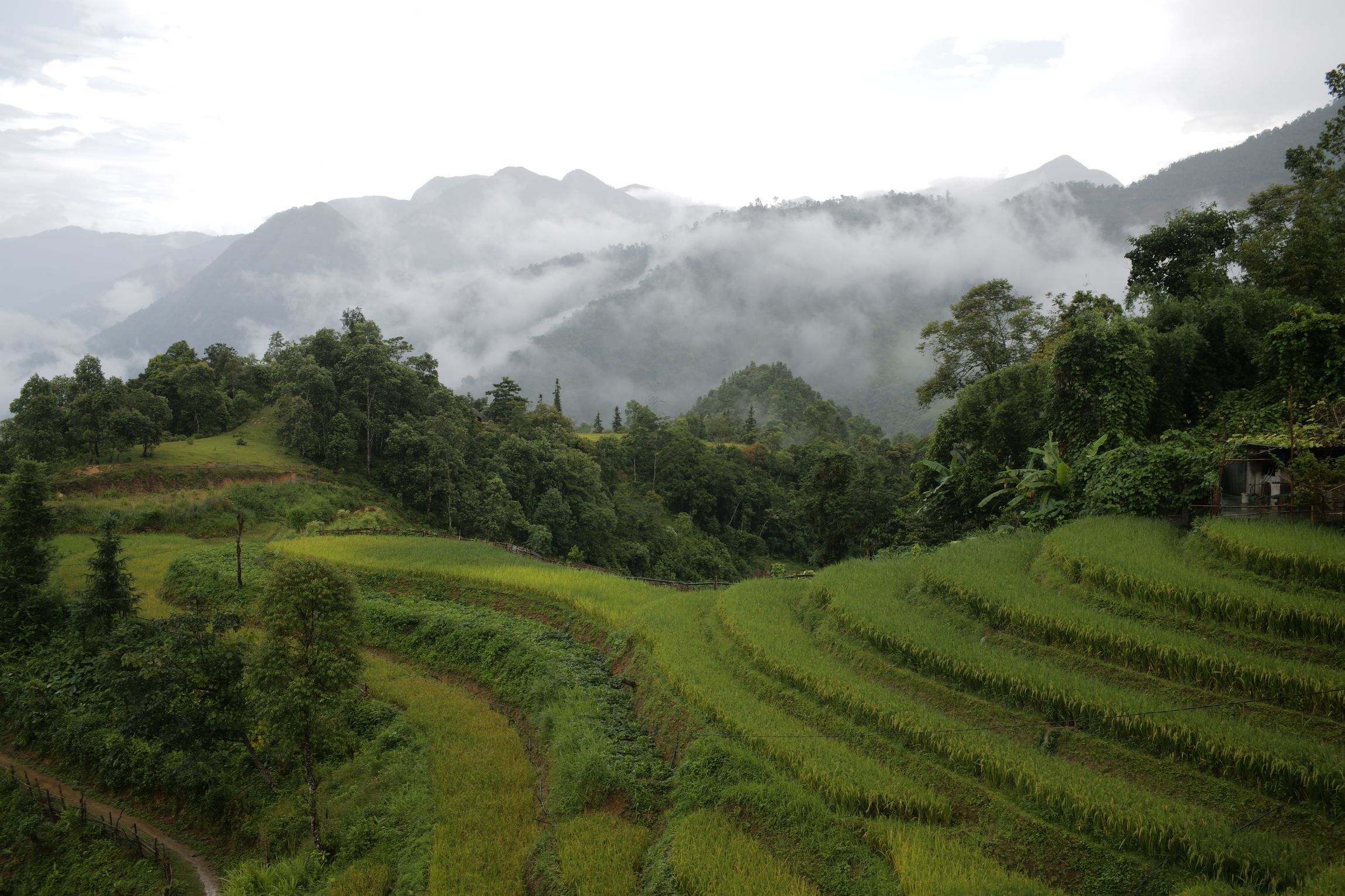
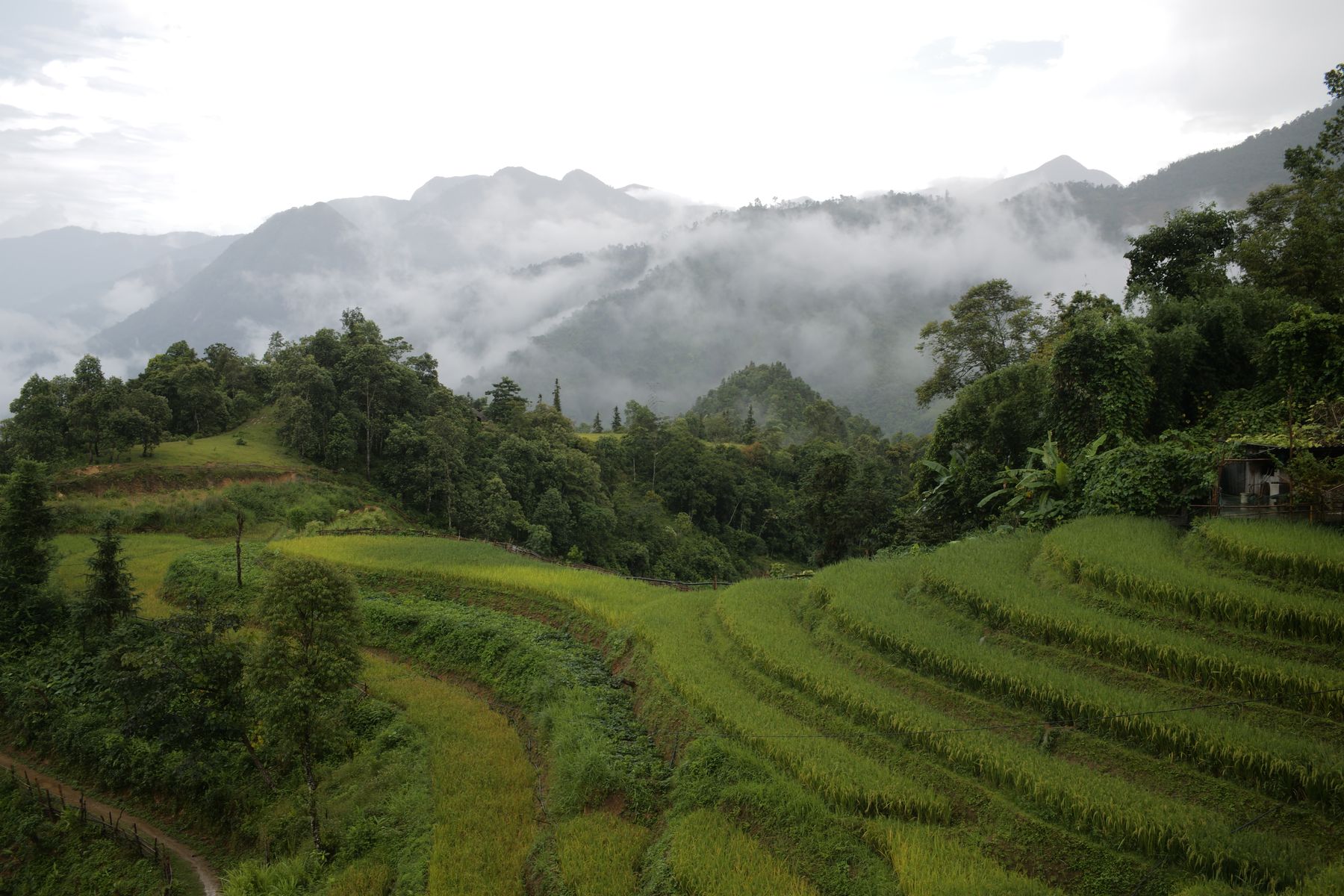
On Ha Long Bay, May to October brings 87% of the year's rain, and those are also the typhoon months. When a storm approaches, the provincial authorities suspend every tourist boat, sometimes with only a few hours' notice, so a booked cruise may simply not sail. Up in the mountains, Sapa takes 465 mm in July alone, and June to August is landslide season on the passes. The trade is that the terraces are at their greenest. The Ha Giang Loop is the most exposed of all: 57% of its annual rain falls between May and August, and that is when passes close.
October is the sweet spot for the north. The rain has gone, Ha Long Bay has the clearest air of its year, Sapa's terraces turn gold from mid September, and October and November are the best months to ride the Ha Giang Loop.
Central Vietnam: Hue, Hoi An and Da Nang
The centre runs on a different clock. From February to August it is the dry side of the country, and from June to August Da Nang has the best swimming of its year while the north and south sit in their monsoon. Then the north-east monsoon arrives. From September to December Hue takes 1,689 mm of rain, more than half its annual total in four months, and November alone brings Hoi An 459 mm.
This is not a shower season. Rivers rise and Hoi An's Ancient Town floods most years. In late October 2025 the Perfume River in Hue reached a record level and put water through the Imperial City itself. On the coast between Da Nang and Hoi An, rip currents turn dangerous in October and November, and swimming is restricted or banned. For beach time here, come from May to August, or from February to April if you want the heat turned down.
Southern Vietnam: Ho Chi Minh City, the Mekong Delta and Phu Quoc
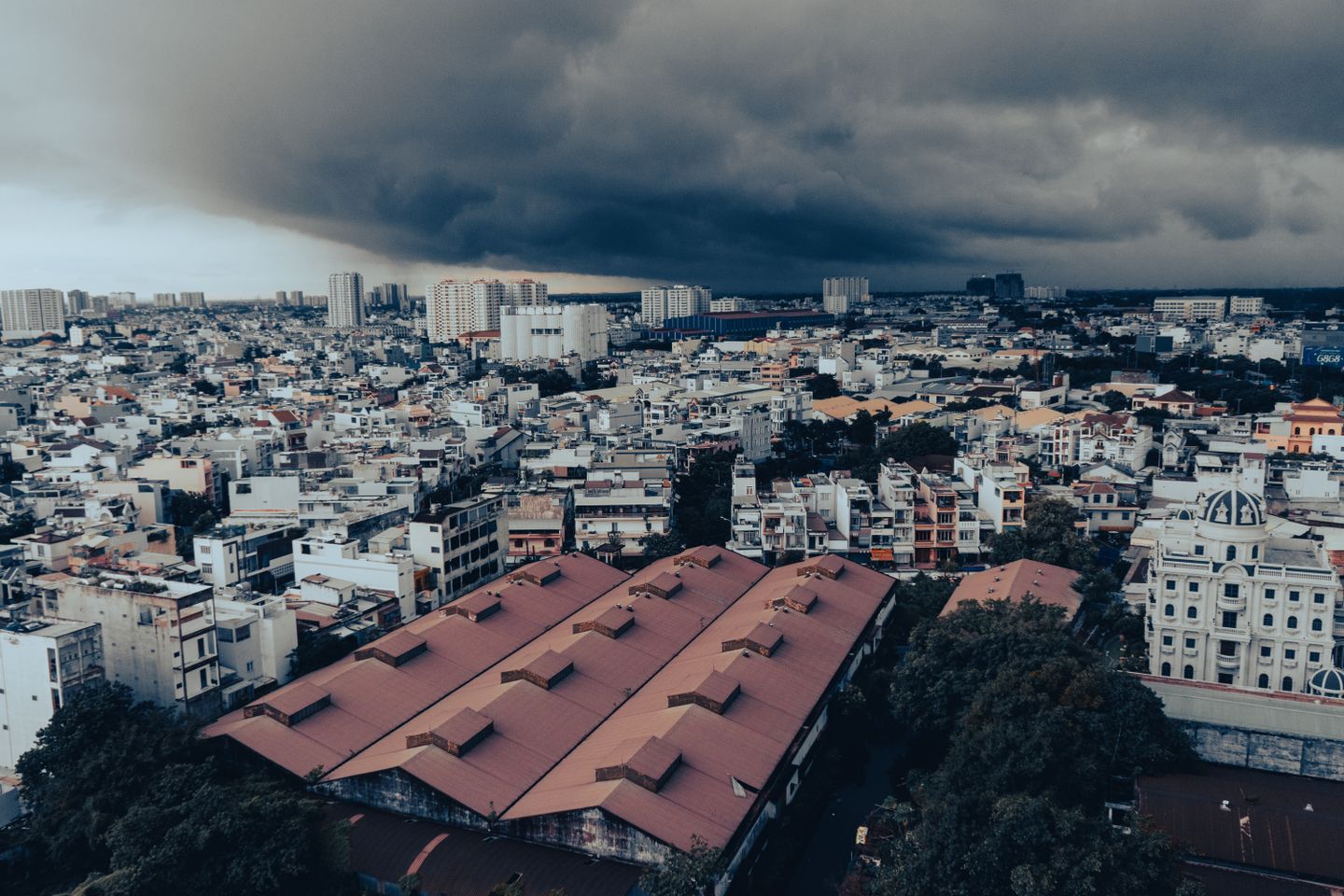
The south is tropical and hot all year: Ho Chi Minh City never averages much below 27°C (81°F) in any month. The only question is whether it is wet. The best time to visit Ho Chi Minh City is December to April, the dry season, with February the driest month at about 5 mm of rain. From May to October the rains come, peaking in September at 325 mm, but they fall in short, heavy bursts and rarely cost you a full day of sightseeing. The Mekong Delta follows the same calendar.
The best time to visit south Vietnam's islands follows that pattern too. Phu Quoc gets about 3,030 mm of rain a year, roughly 85% of it from May to October, when the west coast turns rough. November to April is its season, with peak prices to match. Even from July to September the rain there tends to come as two or three hours a day rather than all day, and rooms get cheaper. Mui Ne is the dry exception on this coast, with about 1,070 mm a year and two months close to zero.
One quirk further north: Nha Trang follows the central calendar, dry from January to August and wet from September to December, when boat trips get cancelled in the swell.
Da Lat and the Central Highlands
Da Lat sits high enough to stay mild all year, with monthly averages between about 17°C and 20°C (63°F and 68°F). Its dry season runs from December to March. From May to October the monsoon brings 16 to 24 rain days a month, September is the wettest at 280 mm, and fog settles in through September and October. The surprise is the nights: January lows average 11°C (52°F), so this is the one stop where a warm layer earns its space in the bag.
Read more: things to do in Vietnam
Vietnam rainfall and temperature by month
Here is Vietnam's temperature by month, with the rain picture for each zone. Temperatures are monthly averages: Hanoi stands in for the north, Hoi An for the centre and Ho Chi Minh City for the south.
| Month | North (Hanoi) | Centre (Hoi An) | South (Ho Chi Minh City) |
|---|---|---|---|
| Jan | Dry, 18°C (64°F) | Tail of the rains, 22°C (72°F) | Dry, 27°C (81°F) |
| Feb | Driest month, 19°C (66°F) | Dry, clearest skies, 23°C (73°F) | Driest month, 28°C (82°F) |
| Mar | Dry, 22°C (72°F) | Dry, 25°C (77°F) | Dry, 29°C (84°F) |
| Apr | Dry, 26°C (79°F) | Driest month, 27°C (81°F) | Dry and hottest, 30°C (86°F) |
| May | Rain building, 28°C (82°F) | Dry and hot, 29°C (84°F) | Rains begin, 30°C (86°F) |
| Jun | Wet, 28°C (82°F) | Low rain, hottest, 30°C (86°F) | Wet, short bursts, 29°C (84°F) |
| Jul | Wet, flood risk, 28°C (82°F) | Dry and humid, 30°C (86°F) | Wet, 28°C (82°F) |
| Aug | Wettest month, 27°C (81°F) | Rain building, 29°C (84°F) | Wet, cloudiest, 28°C (82°F) |
| Sep | Rain easing, 26°C (79°F) | Wet season starts, 28°C (82°F) | Wettest month, 28°C (82°F) |
| Oct | Dry, clear, 24°C (75°F) | Very wet, floods begin, 26°C (79°F) | Easing, 28°C (82°F) |
| Nov | Dry, clear, 22°C (72°F) | Wettest month, flood peak, 24°C (75°F) | Drier, 28°C (82°F) |
| Dec | Dry, cool, 19°C (66°F) | Wet, 22°C (72°F) | Dry, 27°C (81°F) |
Read it as a travel plan rather than a weather chart. March and April are green across the board. From May to August, the centre is your anchor while the north and south take the rain. In October and November, put the weight of the trip in the north and keep the centre short. In December and January the north and south are dry, while the central coast is still wet in December and only drying out in January.
February weather in Vietnam shows why it pays to look at the whole picture: all three zones are dry, Hanoi averages a mild 19°C (66°F), and Ho Chi Minh City has its driest month. The catch is Tet, the Lunar New Year, which falls on 6 February in 2027 and closes much of the country for a week while everyone travels home.
Typhoon season in Vietnam
Typhoons are the part of the wet season that can change your plans outright. Around Ha Long Bay they pass from June to early November. On the central coast typhoon landfall is normal from September to December, with October and November the riskiest months, and the south-central coast around Nha Trang and Mui Ne can still see one until about 20 December.
You do not get to decide whether a boat sails. When a storm approaches the northern bays, the authorities stop every tourist vessel until it passes; reputable cruise operators rebook or refund, and budget ones vary. So the practical plan is simple. Book the Ha Long cruise or the island boat with an operator that has a clear refund policy, never schedule anything tight for the day after, and skip ground floor rooms in Hoi An and Hue from October to December.
Is there a typhoon in Vietnam today?
The fastest answer is the people you have booked with. Cruise operators and hotels hear about port suspensions first, often only hours ahead, so check in with them every day of typhoon season and keep your phone online with a local SIM or an eSIM.
The 2025 typhoon season
2025 showed what a bad year looks like on the central coast. In late October the Thu Bon river upstream of Hoi An peaked 14 cm above its 1964 record, parts of the Ancient Town went under, and well over 100,000 houses flooded across central Vietnam. Typhoon Kalmaegi then made landfall on 6 and 7 November, and Hoi An flooded again later that month.
Hoi An weather

Hoi An is at its best from February to April, with April the driest month at 77 mm. October, November and December bring 1,232 mm between them, half the town's yearly rain in three months, and the flood window runs from late October into January. If your dates are fixed in that stretch, stay in Da Nang or near An Bang Beach rather than in the Ancient Town itself.
Which month not to visit Vietnam
There is no month that is bad everywhere, so the worst time to visit Vietnam depends on where you are going.
- The central coast (Hue, Hoi An, Da Nang): October and November. Peak rain, floods and rough seas. Phong Nha, just north, is worse: from September to November its caves close and the valley roads flood.
- The far north mountains (Sapa, Ha Giang): July and August. The wettest months, with landslides on the passes. Sapa has a second off season from December to February, which is dry but cold and fogged in, with bare terraces.
- Ha Long Bay: August. The wettest month at 445 mm, in the middle of typhoon season. February and March are misty, with about 1.5 hours of sunshine a day.
- The south: September is the wettest month, but the rain comes in bursts and it is not a reason to stay away.
- Everywhere: Tet week. It falls on 6 February in 2027, and transport books out and much of the country closes.
Notice the flip side. In October and November, the two months to skip on the central coast, the north is at its very best.
Is it worth going to Vietnam in rainy season?
Yes, if you plan for it. The wet months have real upsides.
- The landscape is at its greenest. Sapa's terraces are green from June to August, and around Ninh Binh the rain floods the paddies rather than the town, which lifts the river boats higher between the karsts.
- Lower prices. Phu Quoc and Mui Ne have their cheapest rooms of the year in the wet season.
- A dry escape inside the wet months. On the central coast, May to August brings the best swimming of the year, while the north and south sit in their monsoon.
And the downsides are just as real.
- Boats get cancelled. Ha Long Bay cruises in typhoon season, and the Cham Islands boats from Hoi An are suspended from October to February.
- Mountain roads get dangerous. On the Ha Giang Loop from May to August, landslides and washouts are ordinary.
- The centre floods. Hue and Hoi An in October and November, and Phong Nha's caves shut.
How to plan a Vietnam trip around the rain
Here is the part most weather guides skip. Across the more than 128,000 Vietnam trips planned with Stippl, a typical trip runs about a month with nine stops, so most travellers cross all three climate zones whatever month they pick. Fewer than one in four of those trips is Vietnam alone; the rest combine it with its neighbours. That makes the order of your stops the thing to get right, not the date. Both of our routes are built that way: the two week route from Hanoi to Ho Chi Minh City for a fortnight, and three weeks with the Ha Giang Loop if you have longer.
Use the month table to choose your direction. In October and November, start in the north while it is dry and move through the centre quickly. From December to April, the south is reliable, so it works as either your first or your last stop. From May to August, give the central coast the most nights.
If you are weighing the best time to visit Vietnam and Cambodia, or Vietnam and Thailand, run the same check for the neighbour. One practical change since 2025: the overland route from Bangkok to Ho Chi Minh City no longer runs after the border conflict between Thailand and Cambodia, so from Thailand you fly or go round via Laos. The crossing from Cambodia into Vietnam remains open.
Build the route in the Stippl itinerary planner: drop your stops on the map, drag them north to south or the other way round, add a buffer night after any boat trip and share the plan with whoever you are travelling with.
Then check the result against the table one last time. If a night on Ha Long Bay lands in September or Hoi An lands in November, it is cheaper to move it now than to be rebooking a boat later.
Rainy season tips and packing list
- A light rain jacket that packs down, rather than an umbrella. The downpours are warm and heavy.
- Quick dry clothes and sandals you do not mind soaking, plus one pair of shoes with grip for muddy trails in Sapa's valleys.
- A dry bag for cruises, kayaks and boat days.
- A warm layer for the mountains. Da Lat nights drop to about 11°C (52°F) in January, and the Ha Giang passes run 5 to 9°C colder than the town below.
- Do outdoor sights early, and keep a few indoor ones in reserve for the wet hours: a cooking class (each region teaches different dishes), the War Remnants Museum in Ho Chi Minh City, or a long coffee stop. Vietnam is the world's second largest coffee producer, and egg coffee is a Hanoi invention.
- Double every travel time. Road times on a map are optimistic in any season and worse in the wet. On mountain roads, skip riding yourself in the monsoon; our guide to transport in Vietnam covers the safer options per route.
Best time to visit Vietnam
If you can choose freely, February to April is the only window when the north, the centre and the south are all dry, and March is the pick of those months. Outside it, choose by region: October and November for the north, February to August for the centre, December to April for the south. Our month by month guide to the best time to visit Vietnam adds the beach, trekking and festival calendar on top.
Frequently asked questions about Vietnam
It depends on the region. In Hanoi and Ho Chi Minh City the wettest months fall in high summer and early autumn: August in Hanoi, September in Ho Chi Minh City. Hue and Hoi An get most of their rain in October and November, when the central coast also floods.
Avoid the central coast in October and November, when heavy rain and floods are most likely and caves around Phong Nha close. The rest of the country is still fine in those months, and the north is at its best, with the clearest skies of the year on Ha Long Bay and dry walking weather in Sapa.
March is the best single month for a trip from north to south: mild in Hanoi, dry in the centre and dry in the south. February and April come close, but plan around Tet, which falls on 6 February in 2027 and closes much of the country for a week.
Yes, if you plan for it. Rain often comes in short bursts, the landscape is greener and some islands are cheaper. Keep buffer days for boat trips and mountain roads, and steer clear of the central coast at its wettest in October and November.
The rain in Vietnam is predictable, which is the good news: it is a matter of which stop goes in which week. Map your route in a Stippl trip, move stops north or south until every region lands in its dry months, and add that spare night after the boat. It is free to plan.