


This guide gives you the answer first, then explains the three climates, goes region by region from Hanoi to Phu Quoc, and runs through the year month by month. You will also find the worst times, the beach and trekking calendar, how to pair Vietnam with Cambodia, and which direction to travel in for the month you have.
Plan Vietnam in Stippl
Day-by-day planning, stays and budget in one app, with every place from this guide already on the map.
Download the appThe best time to visit Vietnam, in short
February to April is the only stretch of the year when all three zones are dry at the same time. If your trip runs the length of the country, this is the window to aim for.
- March is the single best month: Hanoi averages 22°C (72°F), Hue and Hoi An are dry, and Ho Chi Minh City is in the heart of its dry season.
- February is just as good on the weather, but Tet (the Lunar New Year) usually falls in it and closes much of the country for a week. In 2027 Tet falls on 6 February.
- April is still dry everywhere. The south heats up, with afternoons in Ho Chi Minh City reaching 35°C (95°F).
Outside that window you simply pick your region. The north is at its best in October and November, the central coast from February to August, and the south from November to April.
Vietnam's three climates explained
Vietnam runs roughly 1,600 km from north to south, and the weather changes as much as the food does along the way. Think of it as three countries stacked on top of each other.
The north (Hanoi, Ha Long Bay, Sapa, Ha Giang, Ninh Binh) has four real seasons. It is dry from November to April, with genuine cold in the mountains in December and January, and wet from May to October, when the rice terraces are at their greenest.
The centre (Hue, Da Nang, Hoi An) runs the other way round. It is dry from roughly February to August, with fierce heat in high summer, and the monsoon arrives from September to December, bringing floods to Hoi An and rip currents to the beaches.
The south (Ho Chi Minh City, the Mekong Delta, Phu Quoc, Mui Ne) is tropical and warm all year. It is dry from November to April and wet from May to October, when the rain usually comes as a short, heavy downpour rather than a day-long washout.
On top of that sit the central highlands around Da Lat, about 1,500 m up, where it stays spring-like all year and nights get properly cool.
Best time to visit Vietnam by region
Here is how the seasons play out in the places you are most likely to visit, from the far north down to the islands.
Northern Vietnam: Hanoi, Ha Long Bay, Sapa and Ha Giang
The best month to visit Hanoi, Vietnam, is October, November, March or April: clear, mild and dry, with April days between 20°C and 28°C (68°F to 82°F). June to August is hot, humid and wet in the capital, around 33°C (91°F), and August is the wettest month of the year. Winter in Hanoi is cool and often grey rather than cold.
For a cruise on Ha Long Bay, October and November are the best weeks of the year: warm water, the clearest air and very little rain. April and May are the other good window. February and March look fine on paper, but they average only 1.5 hours of sunshine a day and the karsts sit in mist. From June to early November typhoons pass through, and the authorities suspend every tourist boat when a storm approaches, so cruises are cancelled rather than delayed.
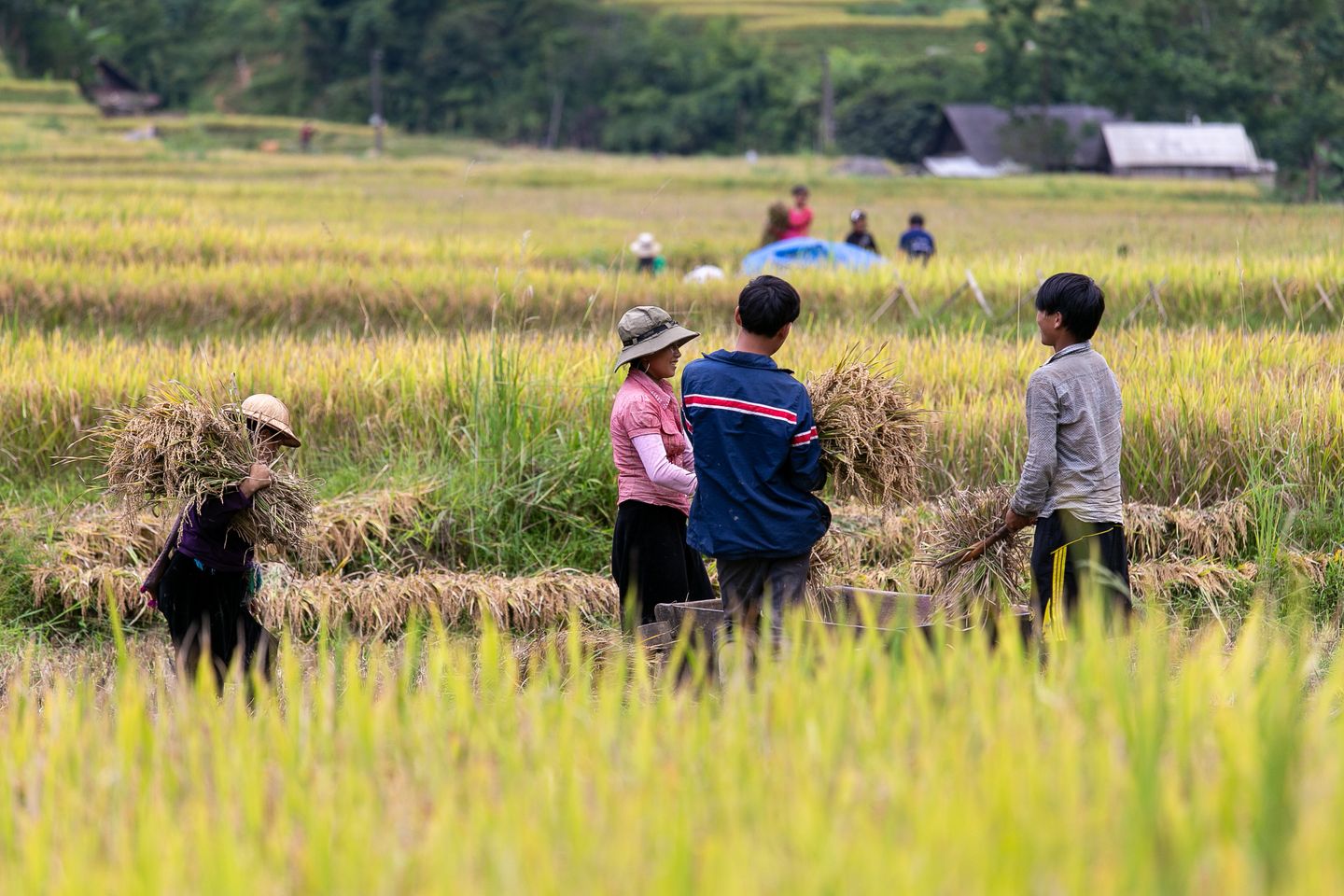
Trekking around Sapa is all about the rice calendar. September and October bring the golden harvest, with the terraces turning gold from mid September; March to May is the other window, with blossom and then flooded terraces in May. Skip December to February: January averages 9°C (49°F) in town, nights drop to 6°C (43°F) and the terraces are bare. There is more on routes and treks in our Sapa guide.
The Ha Giang Loop is best from October to early December, with November the pick: cool, clear and buckwheat flowers on the plateau from late October. March and April come second. Avoid May to August, when more than half of the year's rain falls and landslides close the passes. Remember the passes are 5 to 9 degrees colder than Ha Giang town, so pack warm layers for the Ha Giang Loop even in a good month.
Central Vietnam: Hue, Hoi An and Da Nang
February to April is the sweet spot for the whole central coast. Hue has the narrowest window of the three: February to April is dry and mild, and everything else is either hot or wet. It is the wettest city on the usual route, and November alone brings close to half a metre of rain.
Hoi An is at its best from February to April, with April the driest month. May to August stays dry-ish and is great for the beach, but daytime highs reach 33°C (92°F) in June. Plan the lantern evenings around the full moon: the old town switches off its electric lights on the 14th day of every lunar month.
Da Nang has the longest beach season on the coast, February to May for comfort and June to August for the best swimming of the year. That makes Da Nang the summer pick when the north and south are wet. October and November are the months to avoid: floods, typhoons and swimming restrictions on the beach.
Southern Vietnam: Ho Chi Minh City, Mekong Delta and Phu Quoc
The best time to visit Vietnam for Ho Chi Minh City is December to April, the dry season, with December to February the most comfortable. February is the driest month of all, with almost no rain. April is the hottest, at 35°C (95°F) by day. It is warm all year in Ho Chi Minh City: the monthly average never drops below about 27°C (80°F), and even in the wet months the storms are short bursts that rarely stop you sightseeing.
The Mekong Delta follows the same pattern as the city, dry from November to April. Go overnight from Can Tho rather than on a rushed day tour, and you will see the floating market at sunrise before the day trips arrive.
The best time to visit Vietnam for Phu Quoc is November to April, and that is the whole answer. The island gets far more rain than the mainland coast, most of it from May to October, with August the wettest month. The sea stays between 27.5°C and 30.5°C (82°F to 87°F) all year, so the question is rain and swell, not water temperature. Christmas and Tet are the busiest, priciest weeks on Phu Quoc.

The highlands: Da Lat
Da Lat sits on a plateau at about 1,500 m and keeps a mild, spring-like climate all year, which is why the French built a hill station here. The dry season runs from December to March, with clear days and cold nights: January lows average 11°C (52°F). From May to October the monsoon brings rain on most days and fog by September and October. Pack a jacket for Da Lat whatever the month, because it is the one stop on a Vietnam route that is cold at night. The Da Lat Flower Festival takes place every second December, so check whether your year is a festival year before booking.
Vietnam month by month
Every month has a region that works. Here is where to go and where to avoid, month by month.
Vietnam in January
January is dry almost everywhere and a good month to travel, especially in the south. Ho Chi Minh City, the Mekong Delta, Phu Quoc and Mui Ne are all in peak dry season. The centre is still shaking off the rains, so Hue and Hoi An can be damp and grey.
Is Hanoi too cold in January? Not by European standards. It is cool and dry, around 18°C (64°F) on average, but often overcast. Sapa and Ha Giang are a different story: nights in the mountains are properly cold, there can be frost, and Ha Long Bay is often misty.
What to wear in Vietnam in January: warm layers and a jacket for the north, a light rain jacket for the centre, and summer clothes for the south. For temples and pagodas, women and men alike should cover shoulders and knees, so pack something light that does both. Some years Tet falls late in January; check the date for your travel year before you book.
February
Dry in all three zones, and one of the best months on the weather. Plan around Tet: in 2027 it falls on 6 February, when transport sells out and many businesses close for several days.
March
The single best month for a north to south trip. Hanoi is warming, Sapa has blossom and the year's best light, the centre is dry and the south is sunny.
April
Still dry everywhere and a great month for Ha Long Bay and Ha Giang. The south gets very hot, so plan Ho Chi Minh City sightseeing for the mornings.
May
The rains begin in the north and the south. The centre is at its best for beaches: Da Nang's swimming season starts properly. Sapa's terraces are flooded for planting.
June
Go central. Hoi An and Da Nang are dry and hot, while Hanoi is humid and Ha Long's typhoon season opens.
July
The peak of the northern rains, with flooding risk in Hanoi. The central coast stays dry and calm, and it is the month to be on a beach near Da Nang.
August
The toughest month overall. It is the wettest month in Hanoi, Ha Long Bay and on Phu Quoc, and the mountains are too wet for trekking. The centre is still workable, though the rains start building late in the month.
September
The north turns gold as the rice harvest begins around Sapa and Ha Giang. The central monsoon starts, and the south is still wet but improving.
October
The best trekking month in the north, with clear skies over the terraces and the Ha Giang Loop. Avoid the central coast: the flood window opens in Hoi An and Hue. The south starts drying out.
November
The north is dry, cool and clear, and it is the best month on Ha Long Bay. The south enters its dry season. The centre has its wettest month, with peak flood risk and rip currents.
December
Dry in the north and the south, with mountain cold setting in. Phu Quoc and Mui Ne are in high season, and the centre is still wet.
Rainy season in Vietnam
There is no single rainy season in Vietnam. The north and south get their rain from May to October, while the central coast gets its heaviest rain from September to December, with floods most years in Hoi An and Hue. Southern rain usually arrives as a short afternoon storm, so a wet month in Ho Chi Minh City is far more travel-friendly than a wet month in Hue. For the wet months zone by zone, with the typhoon calendar and the weeks to keep clear, read our guide to the rainy season in Vietnam.
Vietnam weather by month in Fahrenheit
Prefer Fahrenheit? A few reference points to plan with: Hanoi averages about 64°F in January and 82°F in July, Ho Chi Minh City stays above 80°F all year, and Sapa's coldest month averages about 49°F.
Worst time to visit Vietnam
There is no month when the whole country is bad, so the worst time to visit Vietnam really depends on where you are going. Three things to plan around:
- The central coast in October and November. These are the wettest months in Hue, Hoi An and Da Nang, with river floods that reach the old towns and swimming restrictions on the beaches. Go north instead: it is the best season there.
- The north in high summer. June to August is hot, humid and wet in Hanoi, typhoons can cancel Ha Long Bay cruises, and the mountain roads see landslides. Head to the central coast instead, which is dry.
- Tet week. The Lunar New Year shuts much of the country for several days. Buses stop running, accommodation is scarce and prices spike as the whole nation travels home. If your dates overlap, stay put in one place for the holiday and enjoy the atmosphere.

Best time to visit Vietnam for beaches, trekking and festivals
Beaches. The best time to visit Vietnam for beaches depends on the coast. Phu Quoc and Mui Ne are best from December to April; Mui Ne is also kitesurfing country from roughly November to March, when the wind is in. Da Nang and Hoi An's An Bang Beach are best from May to August.
Trekking. For Sapa, go in September to November for the golden terraces, or March to May for blossom and flooded paddies. For the Ha Giang Loop, October and November are the best of the year. Ninh Binh has two rice harvests, in May to June and again from late September to early November, and November and December are its driest, brightest months.
Festivals. Tet is the biggest event of the year, best experienced from one base. The Mid-Autumn Festival, on the 15th day of the 8th lunar month (September or October), fills Hoi An and Hanoi's Old Quarter with lanterns and lion dances. On the Ha Giang plateau, the buckwheat flowers bloom from late October to early December, with a festival in mid to late November.
Best time to visit Vietnam and Cambodia
Most Vietnam trips include a second country, and Cambodia is the classic pairing. The overlap is easy: Cambodia's dry season runs from November to February, which lines up with southern Vietnam's dry season. Angkor is at its most comfortable in that window, because from March the temple days get very hot.
The simplest plan for November to February is to do Cambodia first and enter southern Vietnam, then travel north. The land crossing from Cambodia into Vietnam is open. Coming from Thailand, though, the overland route to Ho Chi Minh City stopped running after the 2025 border conflict, so you now fly or detour via Laos. For March and April, flip it: start in Vietnam's north while it is at its best and finish with a short Cambodia leg. More on the other side of the border in our Cambodia guide.
How Stippl travellers actually plan Vietnam
Travellers have planned 128,775 trips that include Vietnam with Stippl, and the way they do it says a lot about timing. A typical Vietnam trip runs 31 days with nine stops, and only about one in five carries Vietnam alone; most combine it with neighbours like Cambodia, Laos or Thailand. Hanoi is the stop travellers add most often, with 151,019 planned stops.
What that means for when to go: a month-long route almost always crosses all three climate zones. So the real question is not only which month to travel, but in which direction. A trip that starts in Hanoi in January reaches the central coast in February, exactly when it dries out, and the south in its best season.
North to south or south to north? Route your trip around the weather
Vietnam is long and thin, with international airports at both ends, so almost every trip is a straight line. Flying into one end and out of the other saves you a day of backtracking. The direction is where the weather comes in.
- Leaving in December or January: go north to south. The north is dry and cool, the centre dries out as you arrive, and you end in the south at its best.
- Leaving in February or March: either direction works, because everything is dry. Let flight prices decide.
- Leaving in April: start in the south before the heat peaks and finish in the north, where Ha Long Bay and Sapa are still good in May.
- Leaving between May and August: build the trip around the central coast and Da Lat, and keep the north and south short. The north in September is rewarding if you can handle some rain.
- Leaving in October or November: start in the north at its best, fly over the central coast to Da Lat or Ho Chi Minh City, and end on Phu Quoc as its season begins.
Between the regions, domestic flights replace the longest overland legs, and the sleeper trains and buses do the rest; our guide to transport in Vietnam covers every main route. In the Stippl itinerary planner you can drop your stops on the map, drag them into the right order for your month, set the nights per stop and share the route with your travel partner.
Want the route itself, stop by stop? Our three week route from Hanoi to the Mekong Delta gives every region its nights and its swaps, and if you have a fortnight, the Vietnam itinerary for two weeks keeps it to five bases and two flights.
Frequently asked questions about Vietnam
March is the safest single month for a trip from north to south: Hanoi is mild, the centre is dry and the south is still in its dry season. February and April are close behind, though February usually has Tet in it, which closes much of the country for several days.
There is no month when the whole country is bad, but the central coast is best avoided in October and November because of heavy rain and floods. During Tet, transport sells out and many businesses close for several days, so plan to stay in one place.
Yes, especially for the south, which is in its dry season with beach weather on Phu Quoc. The north is dry but cool and often grey, and the mountains around Sapa and Ha Giang get cold at night, so pack warm layers alongside your summer clothes.
Trying to see the whole country in too little time, which means more hours on buses and trains than at the places themselves. A typical Vietnam trip planned with Stippl runs 31 days with nine stops, so with two or three weeks it pays to choose a half or fly the long legs.
Ready to pick your months? Start a Stippl trip, add your stops for the season you are travelling in and reorder them until the weather works in your favour.
Read more: things to do in Vietnam