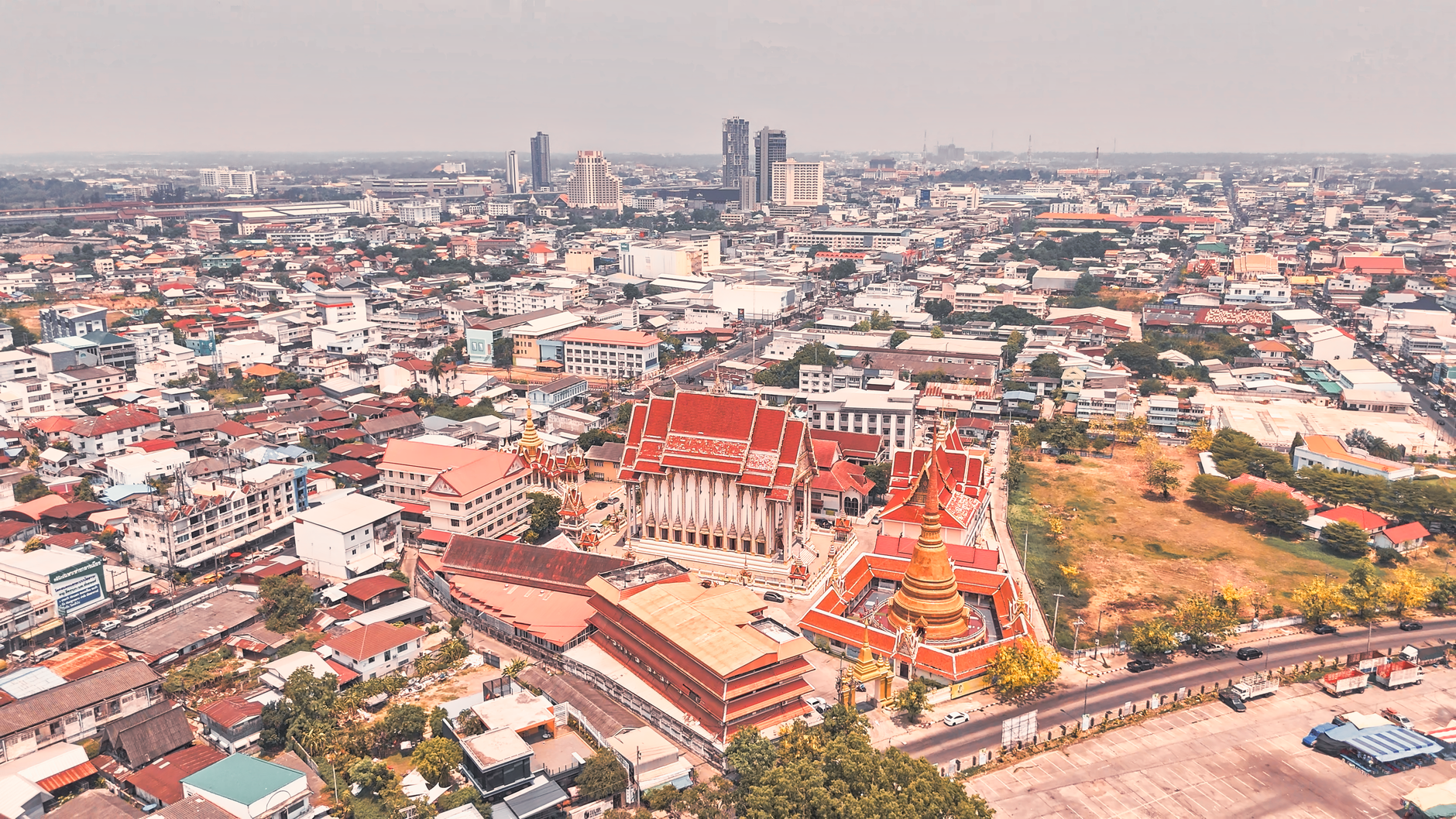

The pace comes from real trips. Across the more than 268,000 Thailand trips planned with Stippl, a typical stop gets three nights, and Bangkok is the stop travellers add most often. So this route gives every stop at least three nights, and the north gets four.
Plan Thailand in Stippl
Day-by-day planning, stays and budget in one app, with every place from this guide already on the map.
Download the appIs two weeks enough for Thailand?
Yes. Two weeks is enough for Bangkok, the north and one stretch of coast without rushing, as long as you pick a handful of stops and connect north and south by a domestic flight. That is the whole trick: the country is long, and the overland trip from Chiang Mai to the Andaman coast eats a day or more that a flight gives back.
What two weeks is not enough for is the whole country. The most common first timer mistake is squeezing Pai, Chiang Rai, Khao Sok, three islands and both coasts into fourteen days, and spending half of them on minivans. Travellers who plan Thailand with Stippl stay three nights per stop on average, which is exactly the rhythm this route follows.
One more thing decides the shape of your trip before anything else: the month. Thailand has two coasts with opposite monsoons, so the season picks which coast you end on. The main route below finishes on the Andaman side, which is at its best from roughly November to April. Travelling in summer? Skip ahead to the Gulf island variant.
Two weeks in Thailand itinerary at a glance
Here is the main route on one screen. Four stops, one flight from north to south, and a last day to get back to Bangkok for your flight home.
| Stop | Nights | How you get there |
|---|---|---|
| Bangkok | 3 | International flight into Suvarnabhumi or Don Mueang |
| Chiang Mai (optional Pai or Chiang Rai inside this block) | 4 | Overnight sleeper train or a short domestic flight |
| Krabi coast: Ao Nang or Railay | 3 | Flight from Chiang Mai, direct when a route runs, otherwise via Bangkok |
| One island: Koh Lanta, Koh Phi Phi or Koh Lipe | 3 | Ferry or speedboat from the Krabi coast |
| Back to Bangkok | Day 14 | Boat to the mainland, flight from Krabi or Phuket |
That is thirteen nights on the ground and a travel day at the end. If you have a little longer, add the spare nights to the island, not to a fifth stop.
Describe your trip, get a Thailand itinerary in seconds
Everything in this guide is already in Stippl. Tell the planner how long you have and what you like: it builds the route, the days and the travel times, and you edit whatever you want.
Bangkok
Three nights gives you time to land, shake off the jet lag and actually enjoy the city instead of dragging yourself around it on day one. This is where a 2 week Thailand itinerary from Bangkok starts for most people, and for good reason: it is the stop travellers add to a Thailand trip more than any other.
Day 1Land and find your base
Pick your neighbourhood before you pick your hotel. The single most repeated piece of advice about Bangkok is to stay within walking distance of a BTS Skytrain or MRT station, because the traffic is the real constraint here. Sukhumvit is the easiest first timer base, Banglamphu (a street or two back from Khao San Road, not on it) is the budget pick near the old town, and the riverside along Charoen Krung is where the big hotels sit with views over the Chao Phraya. Our guide to where to stay in Bangkok goes through each area.
Day 2Temples by the river
Spend your first full day in Rattanakosin, the old royal island, and get to the Grand Palace and Wat Pho at opening, before the coach groups. Then take the little cross-river ferry to Wat Arun. The river boats are often faster than the road for this part of town, and cheaper too.
Day 3Chinatown and the night train
Keep the last day loose: a market, a massage, a long lunch. If you are taking the sleeper train north tonight, leave plenty of time to reach the station. Before you go, eat dinner in Yaowarat (Chinatown), which only really comes alive after dark.

Read more: things to do in Bangkok
Chiang Mai and the north
The north belongs in a first trip because it shows you a completely different Thailand: temples in a moated old town, mountain air, northern food like khao soi, and a slower pace than Bangkok. Four nights here is the heart of the route.
Getting there: take the overnight sleeper train for the experience (and to save a night's room), or a short domestic flight to save most of a day.
Day 4Arrive and walk the Old City
Base yourself in the Old City or just outside its east wall around Tha Phae Gate. It is the cheapest area, dense with guesthouses, and walkable to the big three temples: Wat Chedi Luang, Wat Phra Singh and Wat Chiang Man. If you want a resort-style hotel with a big pool, look outside the walls, because the Old City has almost none.
Day 5Doi Suthep and the Monk's Trail
Head up to Wat Phra That Doi Suthep early, before the tour groups. A red shared songthaew from the Old City gets you there, or walk the Monk's Trail past Wat Pha Lat, a jungle temple most visitors never see. Back in town, Grab is the easiest way around; skip the tuk-tuks here, they are slower and dearer than both.
Day 6A cooking class or a day in the hills
A cooking class is Chiang Mai's best single activity: a market visit, your own wok, and a handful of northern dishes you picked yourself. You can compare cooking classes in Chiang Mai and book one before you arrive. Prefer the outdoors? A day at an observation-only elephant sanctuary such as Elephant Nature Park, or a trip to Doi Inthanon, Thailand's highest peak. The good sanctuaries book out well in advance, so they set your dates before your hotel does.
Day 7Markets and your flight south tomorrow
Keep a free day. If it is a Sunday, the Tha Phae Walking Street market along Rachadamnoen Road is the one to plan around. Book tomorrow's flight to Krabi now if you have not yet. If the north is the part that excites you most, our 10-day Thailand itinerary spends the whole trip up here.

Read more: things to do in Chiang Mai
Optional: swap two nights for Pai or Chiang Rai
You can fit one more northern stop inside the four night block, as long as the nights come out of Chiang Mai and not out of the beach.

Pai is a minivan ride from Chiang Mai over a long mountain road with hundreds of bends, and there are no scheduled flights. It is worth it for slow days, the valley views and a sunset at Pai Canyon. Book the minivan a day or more ahead in high season, and if you get carsick, sit near the front. Have a look at what Pai is like before you decide.
Chiang Rai is a bus ride north, best as a one night stop for the artist temples: the White Temple, the Blue Temple and the Black House. Most guides argue against doing it as a day trip from Chiang Mai, because the return leg eats the day. More on Chiang Rai.
Both cost travel time. Two nights in Chiang Mai plus two in Pai works; one night in each of three places does not.
the Krabi coast
Now for the sea. Krabi is a province, not a town: limestone cliffs, mangroves and dozens of islands, with a few very different places to sleep.
Getting there: fly from Chiang Mai to Krabi, direct when a route is running or with a change in Bangkok. Never backtrack by land: the bus from the north to the south is the day you would most regret.
Day 8Fly south and settle in
Choose your base for the three nights. Ao Nang is the convenient one, with a beach, restaurants and boat trips leaving from the sand. Railay is the dramatic one: a peninsula cut off by cliffs, with no road at all, so you arrive by longtail boat and every trip out is a boat too. The reward is having the beaches to yourself before the day boats land and after they leave.
Day 9Longtail boats and island beaches
Longtails are the local public transport out here, leaving from the beach when they fill up, cash only in small notes. Use them to reach Phra Nang Cave Beach, often called the most beautiful beach in the region, or go further on an island day: Koh Hong is a lagoon ringed by cliffs that you float into. You can line up island day trips from Krabi, though the same tours are often cheaper booked in town than through a hotel.
Day 10Tiger Cave Temple or a slow beach day
Climb the steps up to Tiger Cave Temple (Wat Tham Suea) early for the view over the whole province, or paddle the mangroves at Ao Thalane. Pack a dry bag for the boat trips: landings are wet, and at low tide you will wade.

Read more: things to do in Krabi
one island to finish
The last three nights belong on an island, and the best advice we can give is to choose one and stay put. In two weeks, three islands means three ferry days and three rounds of packing. One island means three slow mornings.
Getting there: ferry or speedboat from the Krabi coast. Book ahead in high season, because the boats sell out and harbour prices are no cheaper than online. And check the pier on your ticket: there is no single "Krabi pier". The big ferries to Koh Phi Phi and Koh Lanta leave from Klong Jilad near Krabi Town, the Ao Nang side uses Nopparat Thara, and the longtail jetty on Ao Nang beach is neither.
Day 11Ferry to your island
Which island suits you?
- Koh Lanta for space and families. It is long and laid back, with no high rises, and the coast gets quieter the further south you go. Klong Dao is the family beach, Long Beach the social middle. Passenger ferries run roughly November to April; the rest of the year a minivan plus car ferry gets you there. See Koh Lanta.
- Koh Phi Phi for a lively short stay. Everyone lands at Tonsai Pier, there are no cars or roads, and porters wheel your bags on carts while you walk. The bay you book decides the stay: Tonsai for logistics, Long Beach for a swimmable beach. More on Koh Phi Phi.
- Koh Lipe for the clearest water, but the longest journey: a bus to Pak Bara and a speedboat out, with the last boat leaving early in the afternoon. Getting there costs most of a day at each end, so only choose it if you can give it the full three nights. Read about Koh Lipe first.
Day 12Do very little
Snorkel, read, take a longtail to a beach on the far side. On Lanta, rent a scooter for the empty south (only with the right licence class, or your travel insurance will not pay out). On Phi Phi and Lipe, you walk everywhere.
Day 13Last full day by the sea
Book your ferry and flight for tomorrow if you have not yet, then give the day to the water. On Lanta, the national park at the southern tip, with its lighthouse, makes a good last outing.

back to Bangkok
Day 14Boat to the mainland, fly to Bangkok
Take the morning boat back to the mainland and fly from Krabi to Bangkok. From Koh Phi Phi, the ferry to Phuket is just as easy, and Phuket has its own international airport with plenty of flights north. From Koh Lipe, plan on the whole day.
Check which Bangkok airport your domestic flight uses: budget carriers fly into Don Mueang, while most long haul flights leave from Suvarnabhumi. If your flight home leaves the same day, keep a generous buffer, because ferries run late and sea conditions move landings. Safer still, sleep one night near the airport; you can compare hotels near Suvarnabhumi for that last night.
Which island should you pick?
The honest answer depends on two things: who you travel with and which month you go. Divers head to Koh Tao, party people to Koh Phangan or Phi Phi, families to Koh Samui or Koh Lanta, and anyone after quiet to Koh Lipe or Koh Kood. Then check the season, because half of those islands are on the wrong coast for the month you travel. We are putting together a full guide to the top islands in Thailand; until then, the shortlist in Days 11 to 13 covers the Andaman side of this route.

South Thailand itinerary 2 weeks: beaches only
Skipping the north? This variant stays on the Andaman coast the whole time, which works best from roughly November to April when that side is dry.
- Bangkok, two nights. Enough to land and see the old town.
- Khao Sok, two nights. Fly south, then continue by bus or minivan into the rainforest; Khao Sok is really two places, the village with its trails and the lake with its floating raft houses. Spend one night in each if you can. A raft house on Cheow Larn Lake is the stop travel writers most often say they would repeat.
- Krabi coast, three nights. A minivan from Khao Sok to Ao Nang or the pier for Railay.
- Koh Lanta, three nights. Ferry from the Krabi coast in season.
- Phuket or Koh Lipe, three nights. Phuket by speedboat or ferry from Lanta, with its airport for the flight home; Koh Lipe by ferry if you want the remote finish and can spare the long trip back.
That leaves Day 14 for the trip back to Bangkok. Swap Phuket for a second island if you would rather end on something quieter.
Summer variant: the Gulf islands instead of the Andaman coast
The Andaman coast is wet roughly May to October. The Gulf of Thailand runs on the opposite monsoon and is good from roughly January to September, so in summer you simply switch coasts.

- Bangkok, three nights, then Chiang Mai, three or four nights, exactly as in the main route. The north is green and fairly quiet in summer.
- Koh Samui, three nights. Fly to Koh Samui, the only Gulf island with its own airport, or take the train south and a boat across.
- Koh Phangan, two or three nights. A short ferry from Samui. Koh Phangan splits into a quiet west and the party beach of Haad Rin.
- Koh Tao, three nights. The ferry continues on from Phangan. Koh Tao is small, made for snorkelling and diving, and one of the cheapest places in the world to learn.
One warning: the Gulf is at its wettest around October to December, so this is not a winter route. Our 10-day Thailand islands itinerary covers Bangkok, Samui and Phangan if you have less time.
Thailand itinerary 12 days
Got twelve days instead of fourteen? Keep the same order of stops and trim, never squeeze:
- Drop the optional Pai or Chiang Rai stop and keep Chiang Mai at three nights.
- Take one night off the island, leaving two.
- Keep Bangkok at two or three nights and the Krabi coast at three.
The rule that matters: at least two nights everywhere, so you are not travelling every other day. If you only have ten days, pick one half instead, the north or the islands, rather than doing both at a run.
Adjusting the route for couples and families
Couples. For a Thailand itinerary 2 weeks for couples, do fewer stops and stay longer. Swap Ao Nang for Railay, where the cliffs and the lack of roads make the evenings feel like a private island. Then choose a quieter island: the far south of Koh Lanta, around Kantiang, or Sunrise Beach on Koh Lipe. A cheap private double usually beats two dorm beds anyway.
Families. Fly every long leg, including Bangkok to Chiang Mai, and skip the sleeper and the Pai minivan. Choose Koh Lanta for the island, with Klong Dao as the easy family beach. Avoid one night stops completely: with kids, every move costs half a day. Thailand works well for families, with short flights between stops and cheap private transfers.
When to do this route
Here is how each part of Thailand behaves through the year, in words:
- The Andaman coast (Krabi, Lanta, Phi Phi, Lipe, Phuket) is best roughly November to April, and wet roughly May to October.
- The Gulf islands (Samui, Phangan, Tao) are driest February to April and wettest around October to December.
- The north is cool and dry November to February, with genuinely cold nights in the mountains. It turns hot from March to May, and burning season haze settles over the valleys around February to April.
- Bangkok is hot March to May and wet roughly June to October, with short heavy showers rather than all day rain.
So the main route fits November to February best, when every stop is at its peak. In March and April, keep Chiang Mai short or swap it for a second southern stop. From May to October, take the Gulf island variant. Book well ahead for Christmas and New Year, when island rooms sell out months in advance. For the whole year region by region, see our guide to when to visit Thailand.
Getting around between stops
Every leg of this route uses a different kind of transport, and that is half the fun.
| Leg | How | Book ahead? |
|---|---|---|
| Bangkok to Chiang Mai | Overnight sleeper train or a domestic flight | Yes, the sleeper sells out |
| Chiang Mai to Pai (optional) | Minivan over the mountains | Yes, in high season |
| Chiang Mai to the Krabi coast | Domestic flight | Yes |
| Krabi coast to your island | Ferry or speedboat | Yes, in high season |
| Island back to Bangkok | Boat, then a flight from Krabi or Phuket | Yes |
A few things that make the legs smoother:
- Domestic flights are the standard long hop and often cheap, with several budget airlines on the trunk routes. A credit card is effectively required to book them.
- Trains, buses and ferries can all be booked online, or through your guesthouse a day before.
- In town, Grab removes the haggling. Agree the fare before you get into a tuk-tuk.
- Keep travel times in mind: a sleeper train is a full night, a minivan into the mountains is half a day, and a boat transfer plus a flight is most of a day. Plan nothing else on those days.
Turn these stops into a route
Pick your favourites and Stippl orders them, adds travel times and builds the day-by-day.
How much do 2 weeks in Thailand cost?
The question everyone asks about 2 weeks in Thailand cost has no single number, because three things decide most of the total.
- Domestic flights. This route has two or three, and booking them early is the easiest saving.
- Island rooms. Prices rise from north to south, and the same kind of room costs noticeably more on the islands than in Chiang Mai.
- The Christmas and New Year peak. Rooms sell out and rates jump; outside that window, the same trip costs far less.
A backpacker version (dorms or fan rooms, street food, the sleeper train and ferries) is genuinely cheap by world standards. A comfort version (pool hotels, restaurant meals, flights for every long leg, a couple of guided trips) costs several times more, mainly in rooms. Street food and local transport stay cheap at every level, so your accommodation choice decides most of the total.
Two small habits help. ATMs charge a fixed fee per withdrawal, so take out larger amounts less often. Book tours in town rather than through your hotel, which usually adds a markup. Then track what you spend per stop in the Stippl app, so you know by Chiang Mai whether the islands need a cheaper room.
Track what you actually spend
Set a daily budget per country and log expenses in any currency while you travel.
Plan your two weeks in the Stippl app
Turn this route into your own plan in the Stippl itinerary planner. Add Bangkok, Chiang Mai, the Krabi coast and your island on the map, set the nights per stop, and drop in the sleeper train, the flight south and the ferry between them. Add a budget, then share the trip with your travel partner so you are both looking at the same plan. Download it before you leave, and it opens on a ferry with no signal too.
When the plan is set, the rest is easy to fill in on the way: a cooking class in Chiang Mai, the boat to Railay, the hotel near the airport for the last night.
Frequently asked questions about Thailand
No, two weeks is the right length for Bangkok, the north and one stretch of coast without rushing. Travellers who plan Thailand with Stippl stay three nights per stop on average, which leaves room for every stop in this route.
They suit different parts of the trip: Chiang Mai for temples, food and cooler mountain air, Phuket for beaches and boat trips. With two weeks you can do both by flying between the north and the south.
Start in Bangkok, go north to Chiang Mai by night train or flight, then fly south to the Krabi coast and finish on one island. In the summer months swap the Andaman coast for the Gulf islands.
It depends mostly on domestic flights, island rooms and whether you travel in the Christmas and New Year peak. Food and local transport are cheap, so your accommodation choice decides most of the total.
Yes, drop the optional Pai or Chiang Rai stop and one island night. Keep at least two nights everywhere so you are not travelling every other day.
Ready to make this route your own? Start a free Stippl trip, add the four stops and the legs between them, and you will have your two weeks in Thailand on one map before you book a single flight.
Read more: things to do in Thailand