

At the end you get a real two week route to copy: Bangkok, the night train to Chiang Mai, a flight to the Krabi coast, and two ferries through Koh Phi Phi to Phuket, with the time, the price and the booking for every leg.
Plan Thailand in Stippl
Day-by-day planning, stays and budget in one app, with every place from this guide already on the map.
Download the appHow to plan a trip to Thailand: the short version
If you are travelling Thailand for the first time, here is the whole plan in one paragraph. Decide your month first, because Thailand has two coasts with opposite monsoons and the month picks the coast for you. Then choose four or five stops and give most of them three nights, which is what a typical Thai stop gets in Stippl. Link them with the night train or a domestic flight for the long hops and ferries for the islands. Set a daily budget in baht, book the legs that sell out, invite whoever you are travelling with, and download the trip so it opens on a ferry with no signal.
| Step 1 | Pick your month, then your coast (Andaman or Gulf) |
| Step 2 | Choose four or five stops, mostly three nights each |
| Step 3 | Add the legs: night train, domestic flights, ferries |
| Step 4 | Set a daily budget in baht and log what you spend |
| Step 5 | Book, share with your travel friends, go offline |
Plan your Thailand trip in five steps with Stippl
Start a new trip in the Stippl itinerary planner, name it, set your dates, and keep it open next to this guide. Each step below adds one layer to that trip.
Step 1: pick your season and your coast
This is the single most useful planning fact about Thailand: the two coasts have opposite monsoons. The Andaman side (Krabi, Phuket, Koh Phi Phi, Koh Lanta, Koh Lipe) is dry roughly November to April. The Gulf side (Koh Samui, Koh Phangan, Koh Tao) is dry roughly January to September, and gets its rain from October to December. So you never cancel Thailand for the weather, you switch coasts.
The north has its own clock. Chiang Mai and Pai are at their best from November to February, with genuinely cold nights in the mountains, while February to April brings burning season smog from crop fires. If you travel in that window, spend fewer nights up north and more on the coast.
In Stippl you see both coasts on one map the moment you drop in your first stops, which makes the choice easy to picture: if your dates fall in July, your island stops belong on the right hand side of the map; in January, the left. Our Thailand in November guide covers the month when both the north and the Andaman coast come good at the same time.
Step 2: choose your stops and nights per stop
Now add your stops. If you are wondering about the best places to visit in Thailand for first timers, the trip data answers it: the four places travellers add most often are Bangkok, the Krabi coast, Chiang Mai and Phuket, in that order. Across more than 268,000 Thailand trips planned with Stippl, a typical stop gets three nights, and that is the number to build around.
Some places hold people longer than others. Bangkok is the busiest stop in the country by far, yet travellers give it fewer than three nights: it is a gateway rather than a place people settle. Chiang Mai gets a good three nights. The Gulf islands hold travellers longest of all, with nearly four nights on Koh Samui and on Koh Tao, the longest stay anywhere in Thailand.
Two practical rules follow. Give the big stops three or four nights, and keep two nights as your minimum everywhere else. Then set those nights per stop in Stippl: the trip recalculates your dates as you drag them, so you see straight away whether the plan still fits your flights home.
Step 3: add the transport legs
Between every pair of stops sits a leg, and in Thailand the leg type is decided by distance. For the long hops there are two choices. The night train from Bangkok to Chiang Mai takes 13 to 15 hours, costs €25-35 (960-1,340 ฿) depending on the class, and saves you a night's room; long distance trains now leave from Krung Thep Aphiwat station, not the old Hua Lamphong. The flight takes about an hour from around €35 (1,340 ฿). AirAsia, Nok Air, Thai Lion and Bangkok Airways all fly the trunk routes, and a flight is the standard way to connect the north to the south.
The islands are ferry country. Boats from the Krabi coast reach Koh Phi Phi in about two hours, and Phi Phi to Phuket is another two. Most southern ferries run between roughly 8 am and early afternoon, so a late flight and an island bed on the same day rarely work.
Book trains, buses and ferries on 12Go, the platform almost everyone in Thailand uses, or through your guesthouse the day before outside peak season. Then add each one as a leg in Stippl with its departure time, so the whole route sits on one timeline.
Step 4: set your budget in baht
Planning a trip to Thailand on a budget works well, because the cheap things are the good things: street food, local buses, songthaews and ferries. As a rough guide, a budget day of dorm or fan room, street food and buses runs €20-30 (770-1,150 ฿). Mid-range, with a private room with a pool, restaurant meals and a domestic flight or two, runs €55-90 (2,110-3,460 ฿). Resorts, private transfers and diving start at €180 (6,900 ฿) a day.
Our own numbers help with the daily feel. Travellers who logged their Thai meals in Stippl spent €6.90 (265 ฿) on a typical dinner, €5.50 (210 ฿) on lunch and €5.10 (197 ฿) on breakfast, so three meals out come to about €17.50 (672 ฿) a day. Prices rise from the north to the islands, and ferries are the line item people forget.
In Stippl you set a daily budget for the trip, log every expense in baht at each stop, and see the total in your own currency. If you are travelling with friends, mark who paid and the budget planner works out who owes what at the end.
Budget
€20–30
dorm or fan room, street food, buses and ferries, occasional day trip
Mid-range
€55–90
private room with pool, restaurant meals, domestic flights, guided activities
High-end
€180+
resorts and boutique hotels, private transfers, diving and premium tours
Step 5: book, share and go offline
Book the things that sell out first: the night train sleeper (days ahead), island ferries in high season, and rooms around Christmas and New Year, when prices can double. Stays can be booked from inside your trip, so the booking lands on the right stop and the right night.
Then invite your travel friends to the trip. Everyone sees the same route, can add ideas and places, and you stop pasting screenshots into a group chat. Keep your tickets with each leg, and fill in the free Thailand Digital Arrival Card within 72 hours of landing; use only the official portal, as paid look alike sites exist.
Last, open the trip in the app before you fly. Your itinerary, notes, bookings and saved places stay on your phone, so the plan still opens on the Phi Phi ferry or a mountain road with no signal. Grab handles city rides once you land, and our guide to the best apps for Thailand covers the rest of your phone.
Track what you actually spend
Set a daily budget per country and log expenses in any currency while you travel.
Sample route: Bangkok to Phuket in 14 nights, as planned in Stippl
Wondering about the best way to travel Thailand in two weeks? This is it, as one trip in Stippl: Bangkok first, the north second, then a flight south and two ferries along the Andaman coast. It works best from November to April, when that coast is dry. Fourteen nights, five stops, one train, two flights and two boats.
| Stop and nights | Getting there | Time and price | Book with |
|---|---|---|---|
| Bangkok, 3 nights | Fly in, Airport Rail Link to the city | 26 to 30 min, €1.20 (45 ฿) | Ticket machine at the airport |
| Chiang Mai, 4 nights | Night train from Krung Thep Aphiwat | 13 to 15 hours, €25-35 (960-1,340 ฿) | 12Go, a few days ahead |
| Ao Nang (Krabi), 3 nights | Flight Chiang Mai to Krabi, then shared van | about 2 hours, van €2.90 (110 ฿) | The airline, van ticket inside the terminal |
| Koh Phi Phi, 2 nights | Ferry from Nopparat Thara pier | about 2 hours, €12-17 (475-650 ฿) | 12Go or the ferry operator online |
| Phuket, 2 nights | Ferry to Rassada pier | 1h45 to 2 hours, €12-18 (450-700 ฿) | 12Go or the ferry operator online |
That is how it looks planned in Stippl: five stops on the map, nights per stop set, and every leg on the timeline with its departure time. Want the day by day for a shorter version? Our 10 day Thailand itinerary does Bangkok and the north, and the 10 day Thailand islands itinerary does the beaches.
Bangkok and the north
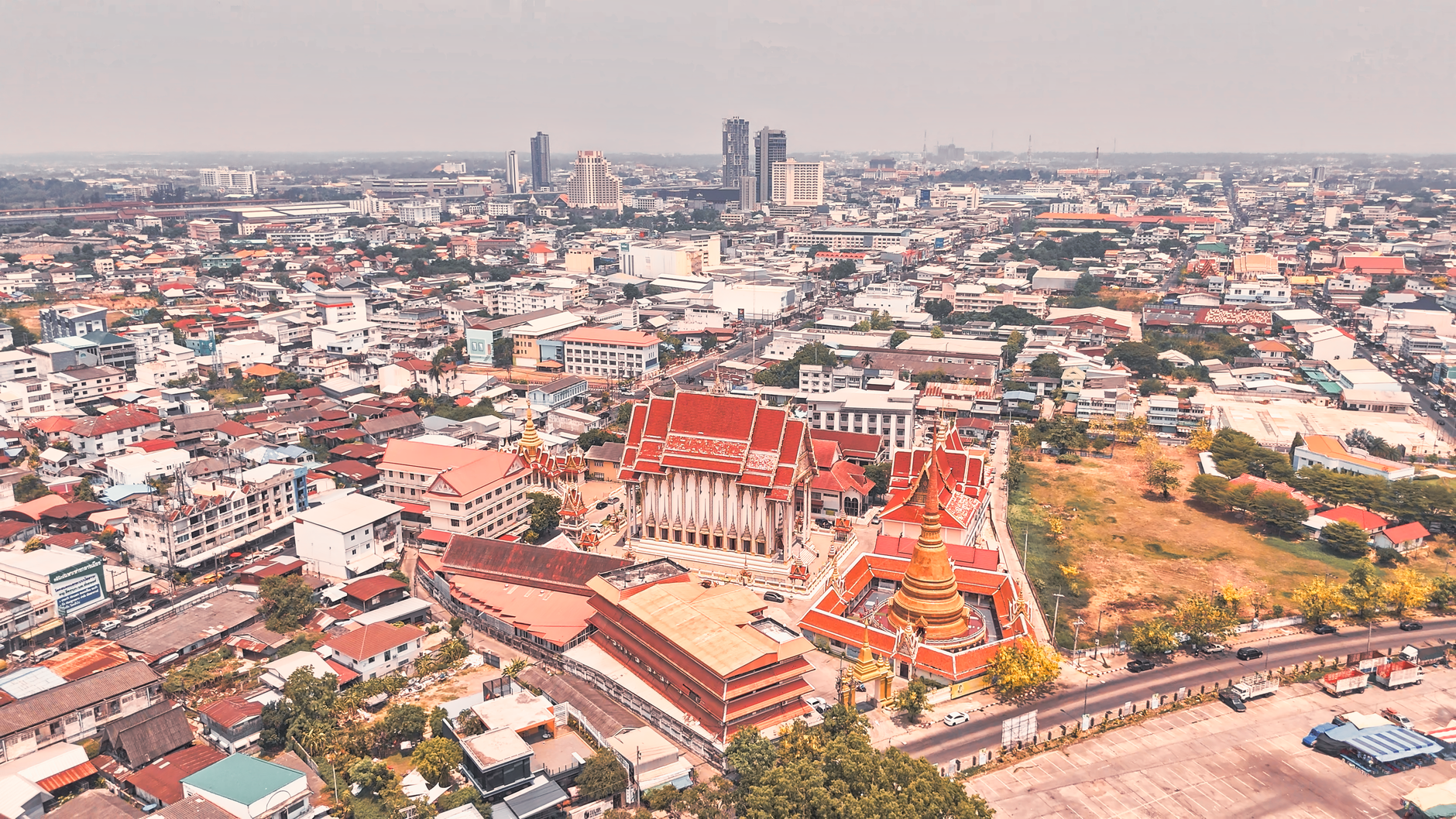
Three nights in Bangkok is one more than most travellers give it, on purpose: the first night goes to jet lag, and the third lets you leave on the evening train without a hotel checkout day lost. Base yourself near a BTS or MRT station, because traffic, not distance, is what eats the day; our guide to where to stay in Bangkok compares the areas.
The night train is the leg people remember. Book a sleeper berth rather than a seat, board in the evening and wake up in the north. Four nights in Chiang Mai matches what travellers actually plan there, and leaves room for a cooking class or a day in the mountains. Base yourself in the Old City, inside the moat, where the temples are walkable.
Want more of the north? Take nights from Chiang Mai rather than from the beach. The minivan to Pai takes three to four hours over 762 curves and costs €3.90-6.50 (150-250 ฿). Chiang Rai is three to three and a half hours by bus from about €6.50 (250 ฿), and it has the most one night stops in Thailand, because it is the north's through town on the way to Laos.

The islands in the south
Fly from Chiang Mai to Krabi in about two hours (if there is no direct flight on your date, connect through Bangkok), then take the shared van to Ao Nang in about 30 minutes. Three nights is right here: travellers give Ao Nang three nights on average, and fewer than one stop in seven is a single night. It is the easy base for the longtail hop to Railay, 10 to 15 minutes for €2.60 (100 ฿).

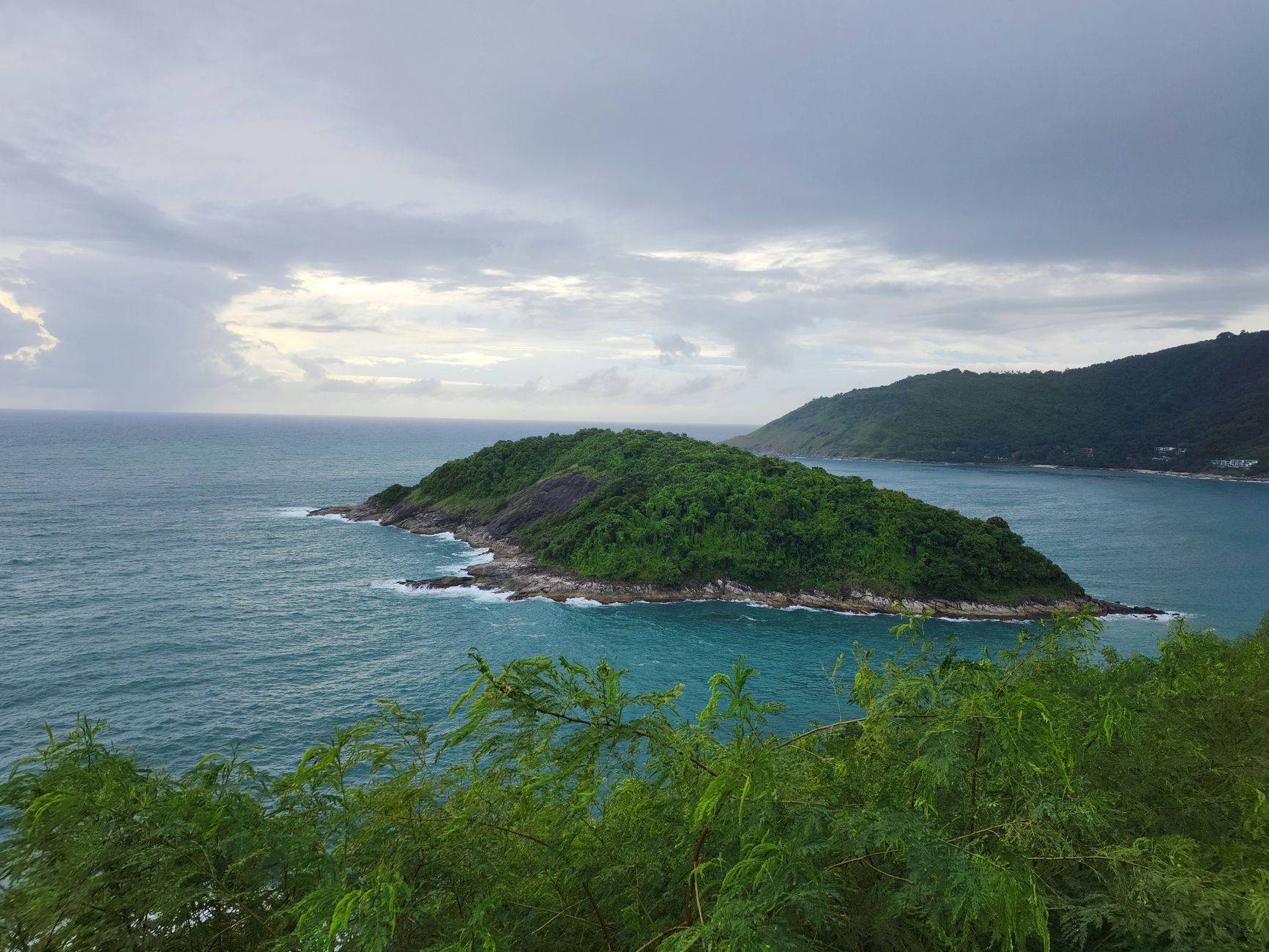
From Nopparat Thara pier, the ferry to Koh Phi Phi takes about two hours, with around ten departures a day between roughly 9:30 am and 3:30 pm. Everyone lands at Tonsai Pier, pays a 20 ฿ (€0.50) pier fee, and walks: there are no cars on the island. Two nights fits, and most travellers give Phi Phi two or three. Budget for the national park fee of €10.40 (400 ฿) if you visit Maya Bay, which closes every year from 1 August to 30 September. Want a quieter island instead of Phuket? Travellers who plan both usually put Koh Lanta after Phi Phi, 30 minutes away by speedboat or an hour to an hour and a half by ferry.

The last ferry runs to Rassada pier on Phuket, the only big Thai island with its own international airport, which makes it the natural place to finish. Travellers give Phuket three nights on average; two nights before a flight home works fine, as long as you allow an hour from most beaches to the airport in the far north. The Smart Bus runs to the west coast beaches for €2.60 (100 ฿). Prefer it the other way round? Two in three travellers who plan both Phuket and Phi Phi put Phuket first, and the route works just as well reversed.
Travelling between May and October? Keep Bangkok and Chiang Mai and swap the south for the Gulf: fly from Bangkok to Koh Samui in about 1 hour 10 minutes for €68-151 (2,600-5,800 ฿), or take the joint night train or coach and ferry ticket for €20-29 (750-1,100 ฿). Our Koh Samui vs Phuket comparison helps you choose.
Turn these stops into a route
Pick your favourites and Stippl orders them, adds travel times and builds the day-by-day.
How many days do you need for Thailand?
Two weeks is the sweet spot for a first trip, and three weeks is what most travellers actually plan: the typical Thailand trip in Stippl runs 21 days. Here is what each length buys you.
Seven days. Pick one region. Either Bangkok plus the north, or Bangkok plus one stretch of coast, with two or three stops in total.
Ten days. Three stops at three nights each, which is exactly the shape of the two 10 day itineraries linked under the sample route: one for the north, one for the islands.
Two weeks. The sample route above: Bangkok, the north and one stretch of coast, joined by one flight.
Three weeks. Room for both coasts, Khao Sok between them, or Pai and Chiang Rai up north, without dropping below three nights anywhere.
Describe your trip, get a Thailand itinerary in seconds
Everything in this guide is already in Stippl. Tell the planner how long you have and what you like: it builds the route, the days and the travel times, and you edit whatever you want.
How much does a trip to Thailand cost?
How much a trip to Thailand for two weeks costs depends on three things more than anything else: your room standard, how many domestic flights you take, and whether you travel around Christmas and New Year. Street food and local transport stay cheap everywhere; island rooms and ferries are where budgets stretch. As a reference point, three weeks including long haul flights lands around €1,100-1,500 (42,200-57,600 ฿) when you book it yourself.
The easiest way to know your own number is to track it. Set a daily budget in your Stippl trip, log what you spend in baht at every stop, and you see the running total per stop and for the whole trip.
Thailand travel tips for first timers
These are the planning mistakes that cost first timers the most, and how to avoid them.
Too many one night stops. More than one Thai stop in five is a single night, and those are the nights spent packing. Keep two nights as your floor.
Ignoring ferry times. Southern boats mostly sail in the morning and early afternoon, and in the rainy season they thin out or cancel on rough days. Never plan an island night before a flight home without a buffer.
The wrong coast for the season. Check Step 1 before you book a single room.
Withdrawing small amounts. ATMs charge a fixed €6.50-9.10 (250-350 ฿) per withdrawal, so take out the maximum each time, and carry cash for islands, markets and street food.
Forgetting the neighbours. More than half of Thailand trips planned with Stippl include another country, and Vietnam is on almost three in ten of them. Laos fits naturally from the north: nearly half of Chiang Rai trips continue across the border, and the two to three day slow boat to Luang Prabang is the classic way across. Cambodia works overland, so a Thailand and Cambodia trip needs no extra flight. In Stippl you simply add the next country as more stops and legs on the same trip.
Read more: things to do in Thailand
Ready to start? Open a new trip, drop in your first stop, and work through the five steps above.
Frequently asked questions about Thailand
Two weeks lets you combine Bangkok, the north and the islands without rushing. Across more than 268,000 Thailand trips planned with Stippl, travellers give a typical stop three nights, so two weeks means four or five stops.
It depends on your travel style and which islands you choose. A budget day runs €20-30 (770-1,150 ฿) and mid-range €55-90 (2,110-3,460 ฿). In Stippl you set a daily budget, log costs in baht at every stop and see the total for the whole trip.
Travellers who plan with Stippl stay fewer than three nights in Bangkok and just over three in Chiang Mai on average. Three and four nights, as in our sample route, gives each a little slack.
The monsoon hits the Andaman coast and the Gulf coast in different months. The Andaman side (Krabi, Phi Phi, Phuket) is dry roughly November to April, the Gulf side (Samui, Phangan, Tao) roughly January to September. Pick the coast that is dry in your travel month and plan the ferries in Stippl.
Yes, if you have the time. It takes 13 to 15 hours, costs €25-35 (960-1,340 ฿) and replaces a night's room. Book a sleeper berth a few days ahead, as it sells out.
Your Thailand trip is easier to plan when the map, the nights, the legs and the budget sit in one place. Open this route in Stippl, make it your own, and invite the people you are travelling with.