
At the end you get a real two week route to copy, from Tokyo down the Shinkansen line to the floating torii of Miyajima, with the train, the time and the booking for every leg.
Plan Japan in Stippl
Day-by-day planning, stays and budget in one app, with every place from this guide already on the map.
Download the appHow to plan a trip to Japan: the short version
Choose your month first, because spring blossom and autumn colour fill trains and hotels months ahead. Pick five or six stops on or near the Shinkansen line, give the big cities three or four nights, and turn Nara, Himeji or Kamakura into day trips unless you want them after dark. Put every train in as a leg with its fare, then decide on the JR Pass. Book in the order Japan opens its doors: hotels first, the pass before you fly, seats a month before each leg.
| Step 1 | Pick your season: blossom, autumn colour, summer or snow |
| Step 2 | Choose five or six stops, two to four nights each |
| Step 3 | Build the route on the rail network, then do the JR Pass sum |
| Step 4 | Set a daily budget in yen |
| Step 5 | Share the trip and take it offline |
Already planned and wondering what to put on your phone? Our guide to the best apps for Japan covers SmartEX, Suica, the entry QR code and the taxi after the last train.
Plan your Japan trip in five steps with Stippl
In Japan the order matters more than the wish list: the season sets the prices, the nights set the pace, and the trains set what fits. Open the Stippl itinerary planner with your travel dates and take them in that order.
Step 1: pick your season
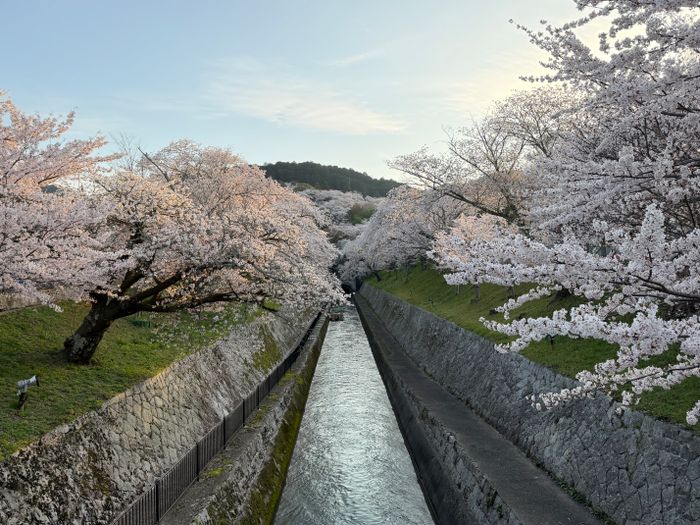
Japan has two peak seasons and they shape everything else, including how early you book. Spring runs from March to May, with cherry blossom opening in Tokyo and Fukuoka in late March and in Kyoto in the first week of April. Each place blooms for about a week, and it is the most expensive time to book. Autumn runs from October to November, with the leaves peaking in Kyoto and Tokyo in the second half of November. It is the longer window, with lower prices and fewer people than spring.
The in-between months have their own logic. The rainy season, tsuyu, runs from June to mid July everywhere except Hokkaido: drizzle, humidity and empty temples. July and August are hot and humid in the cities and the only window to climb Mount Fuji. Winter is cold, dry and clear on the Pacific side, buried in snow in the Alps and Hokkaido, and the cheapest season outside New Year.
Three dates to plan around: Golden Week (29 April to 5 May), Obon in mid August and the New Year week from 29 December, when the whole country travels and trains and beds sell out.
Step 2: choose your stops and nights per stop
Now add your stops. The places travellers add most to their Japan trips in Stippl are Tokyo, Osaka, Kyoto, Hiroshima and Nara, in that order. A typical Japanese stop gets two nights, and nearly a third of all stops are a single night. Japan is planned as a moving trip.
That makes the nights per stop the most important decision you take. Travellers give Tokyo three and a half nights on average, Kyoto just over three and Osaka just under three. Smaller places get less: Hakone about one and a half, Hiroshima just under two.
Then there are the places people visit and come back from the same day. Nara averages one night, Miyajima and Kamakura less than one, and Himeji only half a night. Plan those as day trips from a city you are already sleeping in, and you save yourself a check-out, a check-in and a luggage day.
Set the nights per stop in your trip and drag them around: the dates move with you, so you see at once whether Kyoto still gets its three nights before the flight home.
Step 3: build the route on the rail network
Between every two stops sits a leg, and in Japan almost every leg is a train. The Shinkansen is the spine of the trip: up to 320 km/h, departures every few minutes between Tokyo and Osaka, and punctuality measured in seconds. Tokyo to Kyoto takes about 2 hours 15 minutes for around €76 (¥14,000), Osaka to Hiroshima about 1 hour 30 minutes for around €57 (¥10,500). For the short hops, local lines do the job: Kyoto to Nara is about 45 minutes, Kyoto to Osaka 30 minutes on the JR special rapid for €3.10 (¥580).

So build the route on the line, not around it. A stop on the Shinkansen costs you minutes to reach; a stop off it, such as Nikko or Takayama, costs you a slower line and often half a day. Add each leg to your trip with its departure time and price, and the route shows you what the travelling really takes.
That is also how you answer the JR Pass question. The nationwide pass costs €270 (¥50,000) for seven days and €432 (¥80,000) for 14 when you buy it online. It pays off when you ride long Shinkansen legs on most days; on slow routes, two city trips or one way routes, single tickets plus an IC card often come out cheaper. If your trip stays in the west, compare JR West's Kansai Hiroshima Area Pass too: €92 (¥17,000) for five days, including the Sanyo Shinkansen between Shin-Osaka and Hiroshima. With the legs and their fares in Stippl, you add up the single fares and compare.
One more rule for the city trains: avoid them with luggage between roughly 7:30 and 9:30 am and 5 and 7 pm.
Step 4: set your budget in yen
As a rough guide, a budget day in Japan of dorms or capsule hotels, convenience store meals and regional trains runs €70-80 (¥13,000-14,800). Mid-range, with a business hotel, restaurant meals and Shinkansen legs, runs €100-150 (¥18,500-27,800). A ryokan with dinner, Green Car seats and guided days start at €250 (¥46,000). Those figures exclude the flight.
Our own numbers make it concrete. Travellers who logged their Japan spending in Stippl paid €14 (¥2,670) for a typical dinner and €11 (¥1,999) for lunch, and a typical hotel booking came to €233 (¥43,022). Lunch sets are the classic saving: near-dinner food at a lower price. Accommodation is the cost that decides the total, so book it early.
Set a daily budget in your trip and log each cost in yen at the stop where you spend it. Stippl adds it up per stop and shows the total in your own currency, so you see by Kyoto whether the ryokan night still fits.
Budget
€70–80
hostel dorm or capsule, konbini and cheap counters, regional trains and IC card
Mid-range
€100–150
mid-range hotel or business hotel, restaurant meals, shinkansen legs, an occasional tour
High-end
€250+
ryokan with kaiseki, Green-class rail, guided experiences, city-centre hotels
Step 5: share the trip and take it offline
Invite the people you travel with: everyone sees the same route, can add places and notes, and the screenshots stop flying around the group chat. Then open the trip in the app before you fly. The itinerary, bookings and saved places stay on your phone, so the plan still opens on the mountain railway in Hakone or deep under Shinjuku with no signal.
The Japan booking calendar: what to book when
Counted back from your departure day, this is the order Japan asks you to book in. Put each item as a note on the stop or leg it belongs to in Stippl, and the trip doubles as your to-do list.
| When | What to book | Why then |
|---|---|---|
| Six months or more ahead | Flights, and decide on spring or autumn | Nearly a third of Japan trips in Stippl are created this early |
| From mid December | Blossom dates, against the first forecast | The first cherry blossom forecast for the 2027 season is due from mid December; last season's came out on 18 December |
| Four to six months ahead | Hotels and ryokan, Kyoto first | Inventory opens then, and Kyoto sells out in blossom season and Golden Week |
| Before you leave home | The JR Pass, if the sum says so, and visitor domestic flights | The official site sells the pass online, and visitor fares to Hokkaido or Okinawa must be booked from abroad |
| One month before each leg | Shinkansen seats | Seats on the Tokaido, Sanyo and Kyushu Shinkansen go on sale one month before departure |
| The week before | Your apps, the entry QR code and offline maps | The apps guide linked above has the pre-flight checklist |
The one-month line is the one people miss, because it is the only window that cannot be done early. Set a reminder on each Shinkansen leg in your trip for the day its seats go on sale.
Editor's tip: Buying the JR Pass? Get it on the official japanrailpass.net site: €270 (¥50,000) for seven days online against €286 (¥53,000) through an agency abroad, and only online buyers can reserve seats before they pick the pass up in Japan.
And if you are late? About one Japan trip in eleven is planned two weeks or less before departure, and those trips still happen. Go for the shoulder months, base yourself in fewer cities, and lean on day trips rather than hotel moves.
Sample route: two weeks in Japan, as planned in Stippl
Our first-timer classic follows the Shinkansen from Tokyo to the Inland Sea: a night in the mountains at Hakone, the Kansai cities, Himeji's castle, Hiroshima and the island of Miyajima. Fourteen nights, eight stops, all by train, best in October and November.
| Stop and nights | Getting there | Time and price | Booking |
|---|---|---|---|
| Tokyo, 4 nights | Fly into Haneda, monorail to the city | 13 to 19 min, about €2.70 (¥500) | IC card at the gate |
| Hakone, 1 night | Odakyu Romancecar from Shinjuku | about 80 min, about €13 (¥2,470) | Odakyu, reserved seat |
| Kyoto, 3 nights | Hakone Tozan line to Odawara, then the Tokaido Shinkansen west | 15 min to Odawara, then the Shinkansen | Shinkansen seat, a month ahead |
| Nara, 1 night | JR Nara line or Kintetsu | 35 to 45 min, about €3.80 (¥700) by JR | IC card |
| Osaka, 2 nights | Kintetsu to Osaka Namba | about 35 min | IC card |
| Himeji, 1 night | Sanyo Shinkansen from Shin-Osaka | about 30 min | Shinkansen seat, a month ahead |
| Hiroshima, 1 night | Sanyo Shinkansen west | the same line | Shinkansen seat, a month ahead |
| Miyajima, 1 night | JR to Miyajimaguchi, then the ferry | 26 min, then 10 min, €1.10 (¥200) | IC card |
| Home | Ferry back, Shinkansen from Hiroshima | 1 hour 30 to Osaka for Kansai airport, about 4 hours to Tokyo | Shinkansen seat, a month ahead |
Open it in Stippl and the eight stops sit on one line across the map, the nights already set, with the three Shinkansen legs that open a month ahead easy to spot. Three of the stops get a single night where most travellers come for the day, and the sections below say when that night is worth it. Want it day by day for spring? Our two weeks in Japan in spring itinerary walks through every day.
Tokyo and Hakone
Four nights in Tokyo matches what travellers actually plan there, and the first night goes to jet lag anyway. Haneda is the easier airport: 13 to 19 minutes by monorail, against an hour on the Narita Express for about €16 (¥3,000). Base yourself on the Yamanote loop line; Shibuya suits a first visit, Asakusa has the cheapest central beds.



Use one of the four days for a day trip. Nikko is the classic, about 1 hour 50 minutes on the Tobu limited express from Asakusa for about €16 (¥2,920-3,050), and note that the JR Pass does not cover that line. Kamakura is the easy coastal alternative, about an hour on JR.
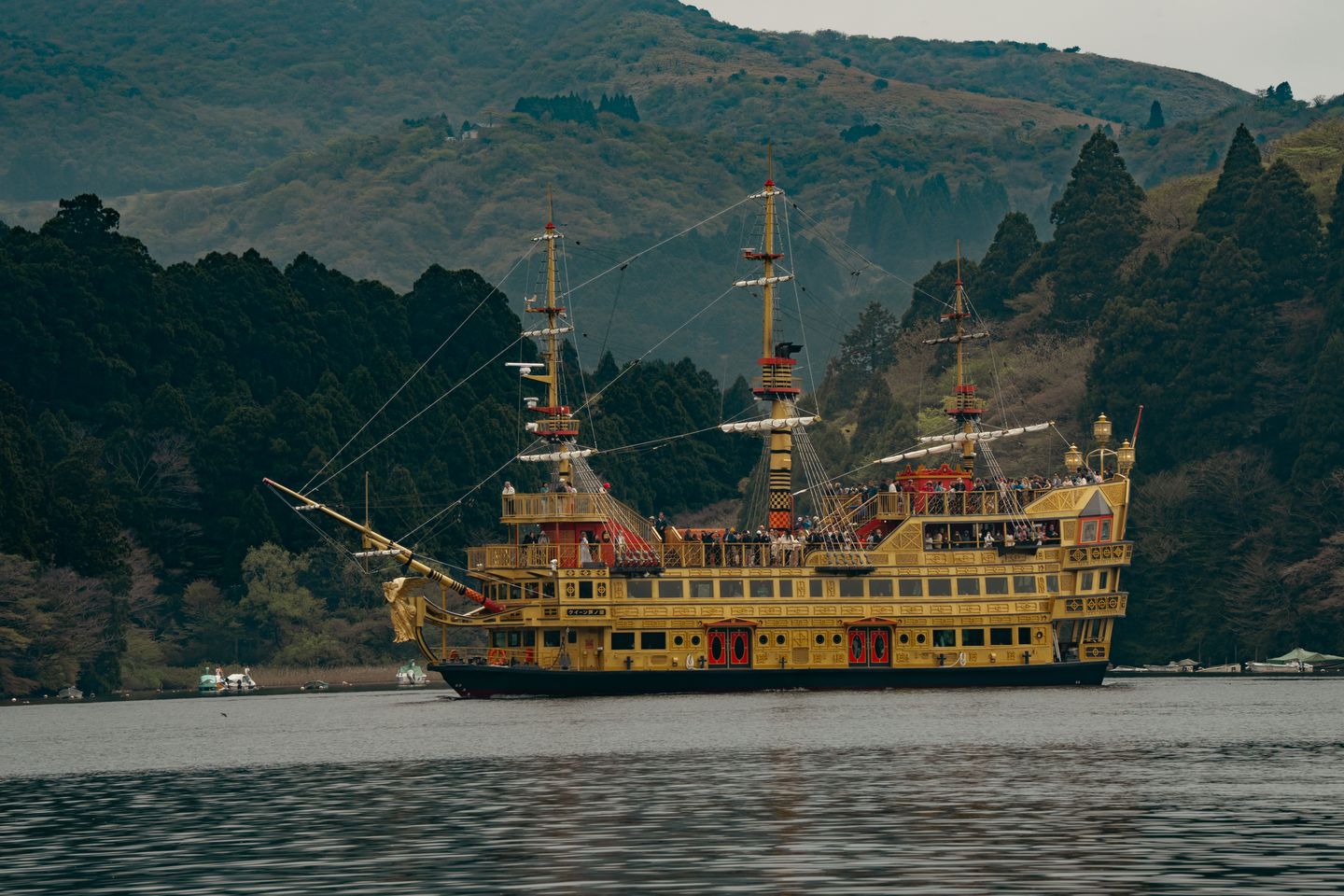
Then one night in Hakone, which earns its bed with an onsen evening. The Romancecar's €6.50 (¥1,200) supplement is not a fare: it buys a reserved seat and 80 minutes instead of two hours with changes. Do the loop clockwise from Hakone-Yumoto: mountain railway, cable car, ropeway over the steaming valley of Owakudani, a boat across Lake Ashi and a bus back. The Hakone Freepass covers all of it, from €32 (¥6,000) for two days bought in the area. Stay in Gora, halfway up the mountain, for the most practical base on the loop.
Kyoto, Nara and Osaka
From Hakone, ride the Tozan line down to Odawara and take the Shinkansen west to Kyoto. Base yourself in Southern Higashiyama for a first visit, downtown around Kawaramachi for eating, or by Kyoto Station if early trains are the plan. Our Kyoto guide covers what to see.
The route sleeps one night in Nara, where most travellers come for the day. The night buys you the deer park and Todai-ji before the tour groups arrive; if that does not tempt you, set Nara to zero nights and it becomes a day trip from Kyoto. Kintetsu-Nara station is closer to the park than JR Nara.
Osaka gets two nights on the Midosuji subway line: Namba for the food, Umeda if you want the trains on your doorstep. Torn between the two cities as a base? Our Osaka guide shows what the city adds.
Himeji, Hiroshima and Miyajima
Himeji is the night most travellers skip: the castle is a half day, about 30 minutes by Shinkansen from Shin-Osaka. Set Himeji to zero nights in the trip and it becomes a stop on the train day from Osaka to Hiroshima, with your case in a station coin locker for €1.60-4.90 (¥300-900).
In Hiroshima, Motomachi by the castle is the easy first base, and the Peace Memorial Park is free. Then the ferry to Miyajima, and the one single night on this route almost nobody regrets: the island empties when the day visitors take the last ferry back, and the shrine is yours at dusk.
Turn these stops into a route
Pick your favourites and Stippl orders them, adds travel times and builds the day-by-day.
From Miyajima the way home is the Shinkansen: 1 hour 30 minutes back to Osaka for a flight from Kansai, or about 4 hours to Tokyo. Flying into Tokyo and out of Osaka is standard practice and usually cheaper than a return.
How many days do you need for Japan?
Two weeks is the workable minimum for a first trip, and the typical Japan trip planned with Stippl runs 17 days with six stops. Here is what each length buys you.
One week. Pick one pair: Tokyo and Hakone, or Kyoto and Osaka. Or ride the corridor fast, as in our one week compressed classic: Osaka, Kyoto, a night at Mount Fuji and Tokyo.
Ten days. Tokyo, Hakone, Kyoto and Osaka, with Nara and Himeji as day trips. Drop Hiroshima and Miyajima from the sample route above.
Two weeks. The sample route above.
Three weeks. Room for the Alps and the countryside: Nikko, Fuji, Takayama and Koyasan, as in our three week consensus route. These are the stops off the fast line, so give them two nights each. Our list of traditional cities in Japan helps you pick the extras.
Describe your trip, get a Japan itinerary in seconds
Everything in this guide is already in Stippl. Tell the planner how long you have and what you like: it builds the route, the days and the travel times, and you edit whatever you want.
How much does a Japan trip cost?
Your Japan trip cost depends on three things more than anything else: your room standard, how many long Shinkansen legs you take, and whether you travel in blossom season or Golden Week. Food and sightseeing stay affordable, and many headline sights, such as Fushimi Inari and Hiroshima's Peace Memorial Park, are free. As a reference point, a realistic three week trip lands around €3,000 (¥555,000) per person excluding the flight, on budget hotels with the occasional ryokan.
For two people, rooms are where you save: two dorm beds often cost more than one private room in a guesthouse. Put both of you on the trip in Stippl and the stays, legs and meals add up to one running total in yen, which is the closest thing to a calculator for your own route.
Japan travel tips for first timers
Most first trips to Japan go wrong in the same five places, and none of them is the sightseeing.
Booking late for spring. Hotels open four to six months out and Kyoto sells out in blossom season. Planning in January for April is already late.
Too many hotel moves. Nearly a third of Japanese stops in Stippl are a single night, and every move costs half a day. Count your hotel moves before you count your sights: the sample route has seven, and turning Nara and Himeji into day trips brings that down to five.
Buying the JR Pass by reflex. Since the 2023 price rise it is a sum, not a given. Put every leg in your budget first.
Cash. Small restaurants, temples and rural buses take cash only, and convenience store ATMs (7-Eleven, Lawson, FamilyMart) are the ones that accept foreign cards. Switch your bank card to worldwide use before you go.
Entry rules. Most Western passports, including EU, UK, US, Canadian and Australian ones, enter visa free for up to 90 days, but check the official rules for your passport before you book.
Read more: things to do in Japan
Pick the season, and the rest of this list follows from the calendar above.
Frequently asked questions about Japan
Pick your season, choose stops with two to four nights each, build the route on the train lines and set a budget in yen. Across more than 100,000 Japan trips planned with Stippl, a typical stop gets two nights, and Stippl puts the whole plan in one trip you can share.
Four to six months for spring and autumn, when hotels open and Kyoto fills up. Shinkansen seats go on sale one month before each train. Travellers who plan Japan with Stippl start about three and a half months ahead, earlier than for any other country we measure.
It depends on your stays and train legs. A mid-range day runs €100-150 (¥18,500-27,800) per person, travellers in Stippl log about €14 (¥2,670) for dinner, and you can track the total in yen per stop.
For two weeks: Tokyo, Hakone, Kyoto, Nara, Osaka, Himeji, Hiroshima and Miyajima, all on the Shinkansen line. Open the route in Stippl and set Nara or Himeji to zero nights if you would rather see them as day trips.
That depends on your passport. Many nationalities enter visa free for up to 90 days, others apply online for an eVisa, so check the official entry rules for your nationality before you book.
Three and a half months is the head start most travellers give Japan, and the calendar above shows why. Open the first-timer classic in Stippl, set your dates, and the Kyoto hotels and the one-month Shinkansen windows line up in front of you.