

Miyajima
Miyajima's floating torii stands for all of Japan, and the island empties when the last Hiroshima ferry leaves. Stay the night, and you have the gate to yourself at dawn, close enough to touch at low tide.
Miyajima in a nutshell
Miyajima: what to expect
This sits on 562,000+ stops planned across Japan on Stippl.
Miyajima is an island where one object is two different sights, hours apart. The Great Torii at Itsukushima stands in the water and appears to float at high tide; at low tide you walk out and stand under it with the pillars close enough to touch. Two high and two low tides a day decide which one you get. Behind the shrine, Mt Misen is an hour's climb through old forest or a ropeway and a half-hour walk, with the Seto Inland Sea scattered below. Most travellers give it 1 night on Stippl.
Nine in ten people are gone by the end of the first evening, and the island's own advice is the opposite. 89.3% of Miyajima stops planned on Stippl are either a day trip or a single night. What the overnight buys is the walk out to the gate at dawn, before the first ferry from Hiroshima lands, and that is the one thing a day trip cannot reach.
Stay the night if the route allows it, and plan the day around the tide table. Check when high and low water fall before you fix the ferry, because the gate is a different object at each. Daishō-in at the foot of Mt Misen is quieter than the shrine, with ranks of small statues and a hall of icons, and Senjōkaku is the great unfinished hall beside the pagoda. The deer here are sacred and free-roaming as they are in Nara, and unlike Nara, feeding them is forbidden.
Plan Miyajima in Stippl
Day-by-day planning, stays and budget in one app, with every place from this guide already on the map.
Download the appWho Miyajima is for
First-time visitors to Japan
The floating torii is one of the two or three images that stand for the whole country, and people recognise it without knowing its name.
Photographers
The subject changes completely between high and low tide, and there is a dawn window before the first ferry from Hiroshima lands.
Families
The deer, on a small island you cannot get lost on, are the most reliable hour with children in western Japan.
Hikers
Mt Misen is a real hour's climb through old forest, with a ropeway as the escape route down.
Anyone wanting one inn night
Most people give Miyajima 1 night, and it is the most-recommended place in western Japan to spend it: the island empties when the last ferry goes.
Maybe not for you: travellers wanting nightlife or more than a day of variety. Miyajima pairs with Hiroshima rather than standing on its own for two days, and after dark there is the shrine and not much else.
The best time to visit Miyajima
Autumn
September to November
Typhoon risk in September, then the island's signature month: peak maple colour in Momijidani in November, and the busiest weeks of the year.
Blossom and green season
March to May
Cherry blossom on the island and in Momijidani, the shrine's hours lengthening from 1 March, and a mild green May with only Golden Week's first week crowded.
Rainy season and summer
June to August
The wettest weeks, then heat and humidity, and the island's principal festival, Kangen-sai, in July or August on the lunar calendar.
Winter
December to February
Cold, very quiet, oysters at their best, and the shrine on its shortest hours, closing at 17:00.
- Kangen-sai falls on the 17th day of the sixth lunar month, so the date moves every year between July and August. Court music is played from boats in the bay from late afternoon into the night, and it is the one evening the island does not empty.
- Miyajima is planned about 1 night on Stippl, and the ferries decide the day. The last Hiroshima ferry leaves early evening and the first lands mid-morning, so the gate at dawn and the shrine after dark belong to the people who stayed.
- The water fireworks are an October event now, not an August one. Revived in 2025 on a mid-October date after years of cancellation; check the year's date before you plan an August evening around them.
Add your Miyajima dates and we'll flag the weather
Stippl shows the season, crowds and prices for every stop on your route.
Describe your trip, get a Miyajima itinerary in seconds
Everything in this guide is already in Stippl. Tell the planner how long you have and what you like: it builds the route, the days and the travel times, and you edit whatever you want.
Things to do in Miyajima
The Great Torii at low tide
Walk out across the sand and stand under the gate; the pillars are close enough to touch. Check the tide table before the ferry: low water is a window of two or three hours.
The same gate at high tide
See the torii floating from the shrine's boardwalk, about €2 to enter, a few hours after you stood under it. These are two different experiences of one object, and a day trip can usually catch both.
Stay the night
Sleep on the island and walk to the gate at dawn, before the first Hiroshima ferry lands; the day trippers are gone by six in the evening and the lanterns on Machiya Street come on. One night, in a ryokan or the guesthouses behind the shrine.
Mount Misen
Climb an hour through old forest, or take the ropeway up and walk thirty minutes to the summit, for the Seto Inland Sea and its scattered islands below. The ropeway is about €11 return and the last car down is mid afternoon.
Daisho-in temple
Walk up to the temple at the foot of Mount Misen, quieter than the shrine: ranks of small statues in knitted hats, a hall of Buddhist icons and the spinning sutra wheels on the stairs. Free, and ten minutes from the ferry.
Senjokaku
Step into the great unfinished hall beside the five-storey pagoda, commissioned by Hideyoshi in 1587 and never completed. About €1, open sides, and the best place on the island to sit out a shower.
The neighbourhoods of Miyajima
The waterfront
Ferry, deer, shore path
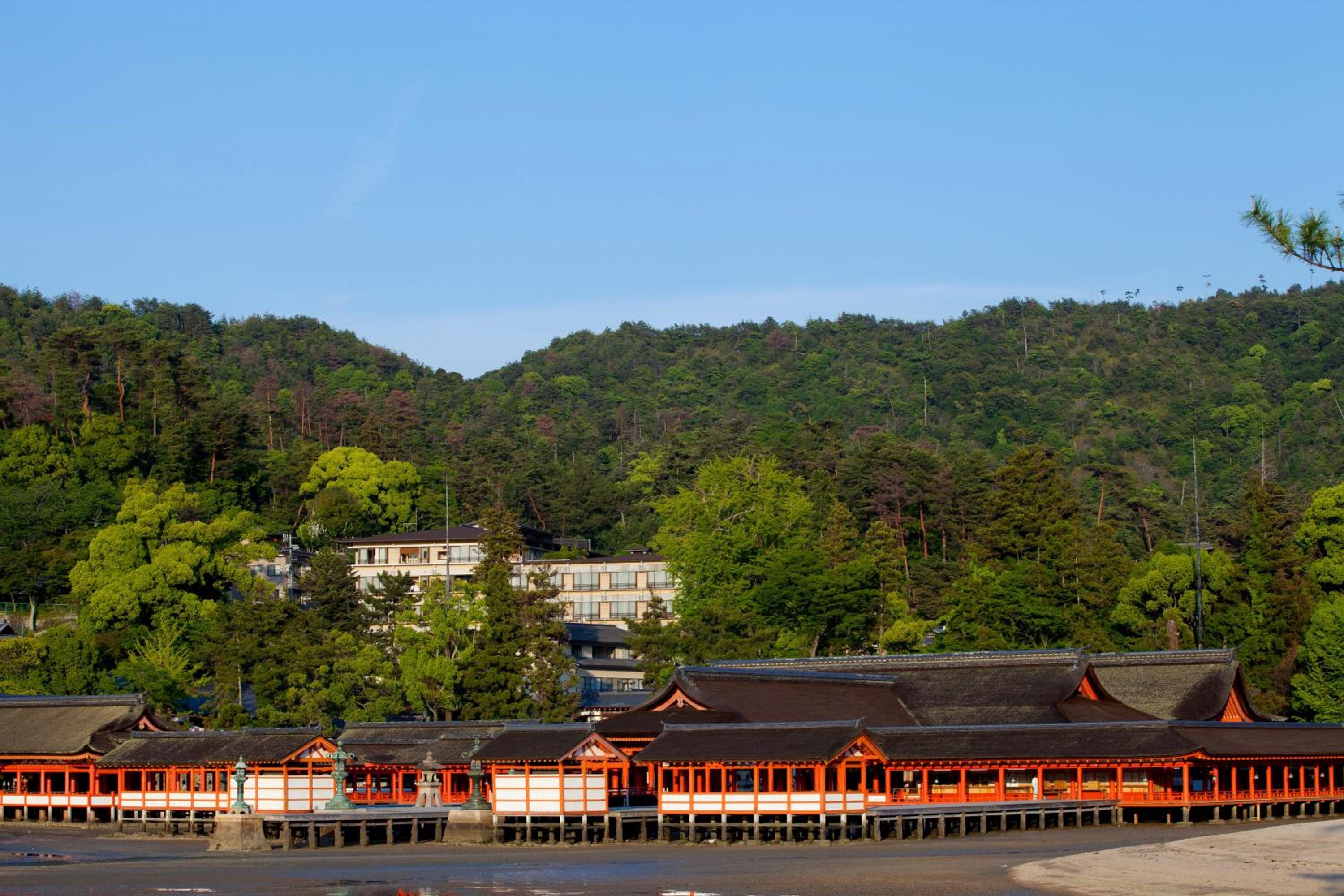
Where you arrive and where the deer are thickest, with the hotels along the shore path to the shrine and the torii in view from the rooms. For first visits and for the torii at high tide from the window.
The view from the room, and the ferry crowds under it until four.
Omotesando
Covered street, oysters, souvenirs
The covered shopping street: souvenirs, momiji manju makers, oyster counters and most of the island's eating, with ryokan behind the shops. For eating and for a base in the middle of it.
Dinner on foot, and a street that closes when the day-trippers leave.
Machiya Street
Townhouses, lanterns at dusk
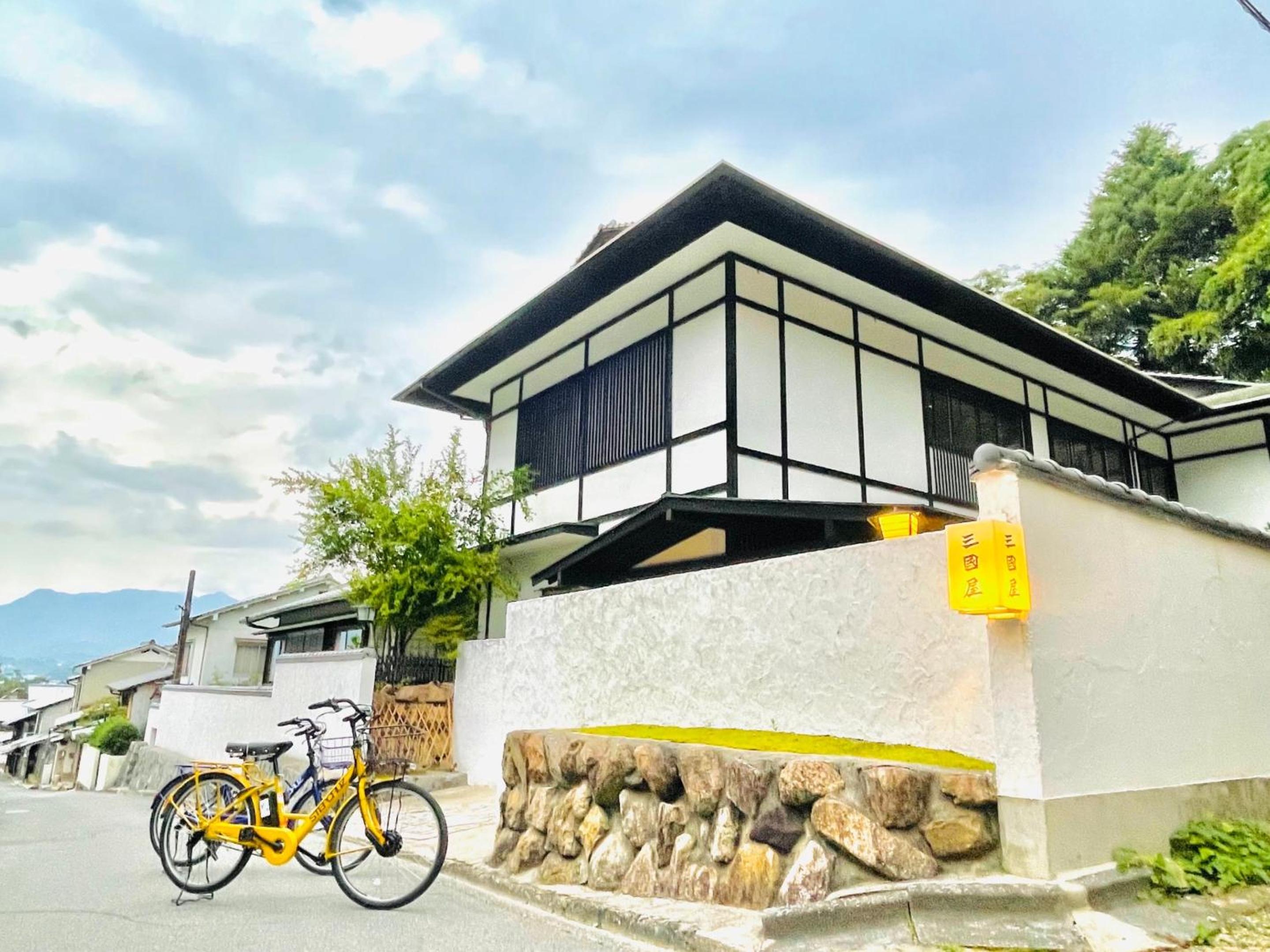
One street back from Omotesando: machiya townhouses, retro cafés, small galleries and fifty-one paper lanterns lit at dusk, with the island's prettiest guesthouses. For slow afternoons and for the evening the day boats miss.
The island after dark, and a five-minute walk to everything.
Momijidani
Maple valley, ropeway, quiet
The maple valley behind the town and the mountain above it: the ropeway base, the hiking trails and a few ryokan in the trees. For hikers and for a ryokan night in the valley in autumn.
The valley in November and the trail at dawn, and a walk down for every meal.
See every Miyajima neighbourhood on one map
Save the areas you like and Stippl plots your days so you're not crossing the city twice.
Where to stay in Miyajima
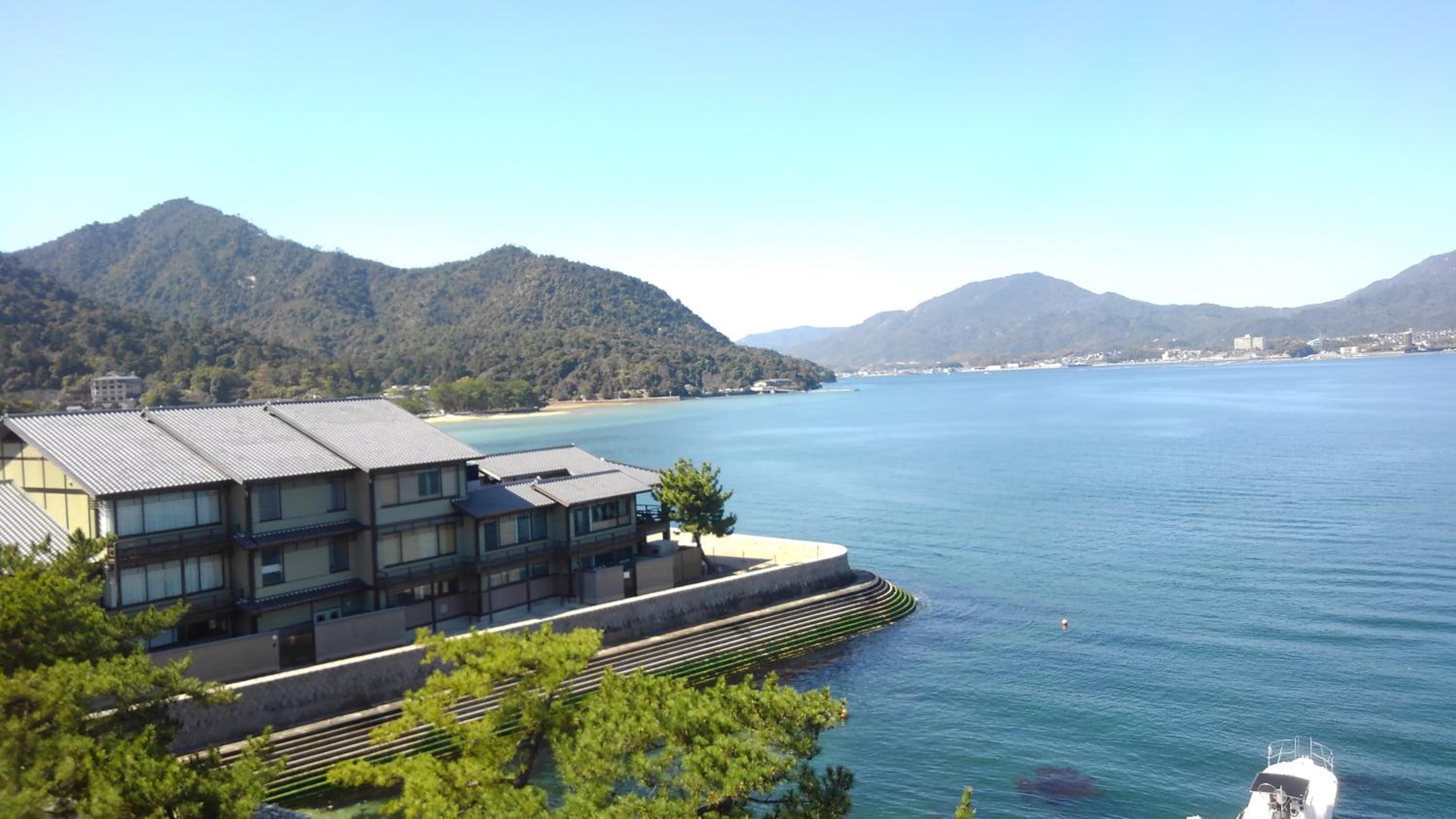
Stay on the waterfront, in a ryokan near the shrine: the day-trippers leave on the last ferries, the torii is lit after dark, and that quiet is the whole point of sleeping here. 54.0% of Miyajima stops planned on Stippl are a single night, and one is right. Island prices run well above the mainland; the budget alternative is the ferry-port side across the water.
The waterfront
Ryokan with dinner and torii views, €200 to €450, and the three with their own hot spring from €300.
Omotesando
Ryokan and small inns behind the shops, €120 to €250, with the island's dinner options downstairs.
Machiya Street
Townhouse guesthouses and a few small inns, €60 to €150, on the prettiest street after dark.
Momijidani
A few ryokan in the maple trees, €150 to €350, for hikers and for a night away from the pier.


What to eat in Miyajima
Hiroshima Bay oysters grilled in the shell and sold from counters along Omotesando; the bay is farmed for them
Conger eel, grilled and laid over rice, the regional dish most tied to the island and the ferry-port area
A maple-leaf-shaped cake filled with red bean or custard; the island's souvenir confection, made in view in automated machines in shop windows
Discover food spots in Stippl
Find restaurants and markets on the map, save them to your itinerary, works offline too.
Miyajima customs and what not to do
The whole island is a shrine
Itsukushima's buildings stand over water because the island itself was too sacred to build on; no births or burials happen here even now, and residents treat it accordingly.
The deer are not fed
The sharpest difference from Nara: feeding is forbidden because fed deer became dependent and aggressive, and they still take paper, maps and tickets from an open hand.
The floorboards have gaps
The shrine corridors are built with deliberate gaps to relieve the pressure of the sea at high tide, and the shrine's own site warns that heels get caught; flat shoes.
The tide decides the visit
At high tide the shrine floats and the torii stands in the sea; at low tide you walk out to it across the flats. Check the table and plan for both.
Do
- Check the tide before you go; it decides which of the two visits you get
- Wear flat shoes for the shrine corridors
- Come early or sleep over; the middle of the day at the gate is the crowded part
- Take your shoes off and keep your voice down inside Daisho-in's halls
Don't
- Feed the deer, or leave food, paper or tickets in reach
- Count on shops after the day-trippers leave; most of Omotesando closes
- Walk out to the torii at low tide in shoes you want to keep; the flats are mud
- Climb Misen for sunset without a torch; the ropeway's last car is before it
What a Miyajima trip costs
Budget
€70–80
A guest-house dorm bed from €31 (¥5,700), since there are no hostels on the island itself.
Mid-range
€100–150
A mainland Miyajimaguchi base, day-tripping in for the shrine and the ropeway.
High-end
€250+
A ryokan by the shrine from about €360 a night, the one-night splurge the island is built for.
Track what you actually spend
Set a daily budget per country and log expenses in any currency while you travel.
Fun facts about Miyajima
Births and deaths were historically not permitted on Miyajima. The island still has neither a hospital nor a cemetery, and the dying were taken to the mainland.
Itsukushima Shrine is built over the sea so worshippers never touch sacred soil. The corridors and halls stand on piles above the water, which is the one fact that explains the whole architecture.
A torii has stood on the site since 1168. The present gate was completed in 1875 of camphor wood, and it stands in the sea under its own weight rather than being fixed to the bottom.
Miyajima is one of the nihon sankei, Japan's three classic views. The canon dates from the 17th century, alongside Matsushima and Amanohashidate, and the shrine has been UNESCO-listed since 1996.
Miyajima means shrine island; the official name is Itsukushima. Both appear on maps and timetables, which is why the ferry and the shrine seem to be going to different places.
Senjokaku was left unfinished when Toyotomi Hideyoshi died. The hall of a thousand mats was commissioned in 1587 and never got its ceiling, and it stands that way beside the pagoda.
Local tips for Miyajima
Three hops, and they add up
Train, a two-minute walk, ferry: each leg is trivial, but allow an hour to an hour and a half from Hiroshima Station and do not start late. The tram is slower than the JR train.
Two ferries, one crossing
Both run the same ten-minute hop from the same pier for about €1.30 one way. The distinction that matters is the JR Pass, which covers the JR West boat only.
The ropeway stops short
From the top station it is thirty minutes on foot to the summit, and the last car down is half past four. Miss it and the way down is on foot with the light going.
Most people come for the day
54.0% of stops are a single night and a third are none at all. Stay the night and you get the gate at dawn, the lanterns on Machiya Street and the island empty after six.
The deer are wild animals
They push, butt and take things, and the feeding ban is partly a safety measure. Nothing loose in the hands, and keep the map in a pocket.
The tide decides the torii
Do not walk out on a rising tide, and know the last ferry if you are not staying; the island has no other exit and the shops close as the day trippers go.
Miyajima questions, answered
If the route allows it, yes. The overnight buys the walk out to the gate at dawn, before the first Hiroshima ferry lands, which is the one thing the day version cannot reach. Lay it into the route in Stippl as a night rather than an afternoon. Then ask people who stayed, in subreddits like r/JapanTravel.
Fewer than you would expect. 35.3% of Miyajima stops planned on Stippl carry no night at all, which is one of the highest day-trip shares in the country. The island runs an hour to an hour and a half from central Hiroshima door to door, so it is easy to treat as an afternoon.
Twice, at high tide and at low. The gate appears to float at high water and can be walked out to and touched at low, and there are two of each every day. Look at the tide table before you fix the ferry, because arriving at the wrong hour gets you half the sight.
No. The deer are free-roaming and sacred here as they are in Nara, but feeding them is forbidden on Miyajima rather than a paid attraction. Keep food and paper out of reach and out of open bags, because they will help themselves regardless of the rule.
A ten-minute crossing from Miyajimaguchi, about twenty-six minutes out of Hiroshima on the JR Sanyo line, so an hour to an hour and a half door to door. 0.53% of Japanese stops planned on Stippl are on the island, which is small for somewhere this famous.
For the view over the Seto Inland Sea and its scattered islands, yes. It is about an hour up through old forest on foot, or the ropeway plus a thirty-minute walk to the summit. 54.0% of Miyajima stops planned on Stippl are a single night, which covers the climb or the dawn gate rather than both.
Every guide is written by the Stippl editors and checked against the trips our travellers actually plan. Spotted something out of date? Let us know.

Plan Miyajima in Stippl
Day-by-day planning, stays and budget in one app, with every place from this guide already on the map.
Download the app