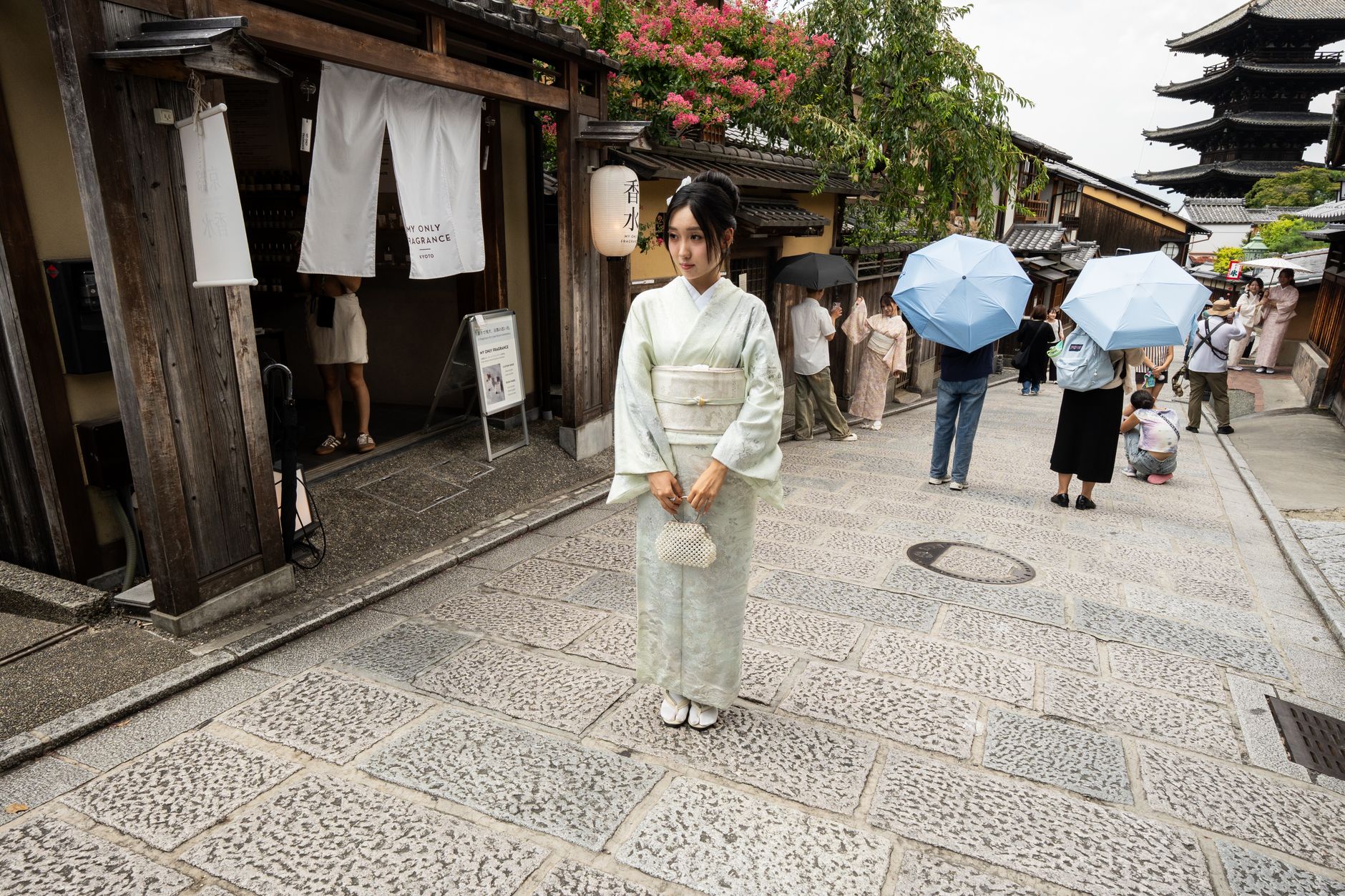

Here is what makes this particular spring route different from the standard Tokyo, Kyoto, Osaka run: it keeps four proper bases and does everything else as a day trip, and it finishes on Mount Koya and the Wakayama coast rather than looping back through the same three cities. It suits a first trip to Japan at a mid-range budget, on trains rather than a hire car, at a pace of roughly three nights per base.
| Duration | 15 days, 14 nights, ending back in Tokyo |
| Route | Tokyo → Kyoto → Osaka → Wakayama, with Hakone, Nara, Kobe and Shirahama as day trips |
| Budget per day | €70-80 budget · €100-150 mid-range, per person, flights excluded |
| Best time | Late March to early April for blossom in Tokyo and Kyoto. From 6 May to the end of the month is warmer, drier and far less crowded |
| Book ahead | Kyoto beds and the Koyasan temple stay. Both go months in advance in spring |
| Avoid | 29 April to 5 May 2027. Golden Week is when the whole country travels at once |
| Stippl tip | Most travellers plan around nine stops across a Japan trip and stay two nights in a typical one, which is why this route uses four bases and day-trips the rest |
About this data: planning patterns, stay lengths and spending in this guide come from real trips and expenses logged by travellers who planned their Japan trip with Stippl, cross-checked against the transport operators and official sources current as of September 2026.
Plan Japan in Stippl
Day-by-day planning, stays and budget in one app, with every place from this guide already on the map.
Download the appJapan in spring: what it is really like
Spring in Japan runs from March to May, and it is the country's most popular season: mild days, the cherry blossom, and gardens at their freshest green. Tokyo's average daytime high climbs from 12°C in March to 17°C in April and 21°C in May, so it is walking weather, with cold mornings, warm afternoons and the odd wet week.
It is really three different trips, depending on when you land:
- Late March to mid April: cherry blossom season. The famous one. Parks fill with hanami picnics, and it is also peak crowds and peak hotel prices, with Kyoto booked out months ahead.
- 29 April to 5 May: Golden Week. A run of national holidays when the whole country travels. This is the week to plan around, not into.
- Mid to late May: the quiet spring. Warm, dry and green, with the temples emptier again, and it ends before the June rainy season (tsuyu) sets in.
This two-week spring itinerary is built for the first window and works just as well in the third. The days below are timed for a late March or early April arrival; in May, the same route simply runs with fewer people on it. For the rest of the country, season by season, our Japan travel guide has the month-by-month picture.
Budget
€70–80
hostel dorm or capsule, konbini and cheap counters, regional trains and IC card
Mid-range
€100–150
mid-range hotel or business hotel, restaurant meals, shinkansen legs, an occasional tour
High-end
€250+
ryokan with kaiseki, Green-class rail, guided experiences, city-centre hotels
When spring actually happens in Japan
Spring in Japan is not one date, and this is the single thing most first-time planners get wrong. The blossom front moves from south to north over about six weeks, each place blooms for roughly a week, and the whole thing shifts by up to two weeks from one year to the next. Nobody, including the people who publish the forecasts, knows in December where it will land in April.
What is reliable is the sequence. Plum blossom starts in the south in February. Cherry blossom opens in Fukuoka and Tokyo in late March, reaches full bloom in Kyoto around the first days of April, and does not arrive in Sapporo until late April or early May. Between Kyushu in the far south and Hokkaido in the far north, the gap is about six weeks. This route sits in the middle of that: Tokyo first, Kansai a week later, which is roughly how the front moves anyway.
Cherry blossom 2027: when to expect it, city by city
The official 2027 forecasts are not out yet. The Japan Meteorological Corporation, the forecaster most sites quote, published its first forecast for the 2026 season in mid December 2025 and updated it every couple of weeks until the trees opened, so expect the first 2027 numbers around December 2026 and firmer ones from January. Until then, the best guide is what the Japan Meteorological Agency has actually recorded: its 30-year averages for the specimen trees in each city, and what happened in 2026.
| City | Blossom usually opens | Usually full bloom | Full bloom in 2026 |
|---|---|---|---|
| Fukuoka | 22 March | 31 March | 3 April |
| Tokyo | 24 March | 31 March | 28 March |
| Kyoto | 26 March | 4 April | 30 March |
| Osaka | 27 March | 4 April | 3 April |
| Nara | 28 March | 4 April | 31 March |
| Wakayama | 24 March | 3 April | 2 April |
| Sapporo | 1 May | 6 May | 24 April |
Full bloom is the moment to aim for, and the trees hold it for about a week before the petals fall. The spread is real: between 2021 and 2026 Tokyo's full bloom landed anywhere from 22 March to 4 April, and Kyoto's from 24 March to 5 April. Five of those six Tokyo seasons peaked before the average date, so for 2027 a Tokyo arrival around 25 to 28 March, with Kyoto the following week, gives you the best odds of catching both cities in flower.
So plan the season, not the date. Book your flights and your beds for late March into early April, accept that you might land a week early or a week late, and build the trip so it works either way. This one does: temples, food, onsen and a mountain monastery are all worth the trip with or without petals on them. If the blossom lands, it is a bonus rather than the plan.
Golden Week 2027: the week to plan around
Golden Week is fixed, and it matters more than the bloom. It is a cluster of national holidays when the entire country travels at once, and trains, hotels and flights sell out months ahead at spiked prices. In 2027 it starts with Showa Day on Thursday 29 April, and the main block runs from Saturday 1 May to Wednesday 5 May, with many people taking Friday 30 April off to join the two together. Treat 29 April to 5 May as one long holiday: if your two weeks touch it, move them earlier or start on 6 May.
The other date that catches people out is the booking window. Japanese accommodation opens earlier than most people expect: four to six months out is when inventory appears, so for a late March arrival that means booking from October or November, and Kyoto sells out completely during both sakura and Golden Week.
One honest note before you commit. Spring is Japan's most famous season and its most expensive, and travellers who plan with Stippl quietly favour a different one: October is our single busiest month for Japan trips, ahead of April, and autumn as a whole edges spring by a whisker. If your dates are flexible and the blossom is not the point, mid to late May gives you the same route in warm, dry, green weather at a fraction of the crush. Just start after Golden Week, on 6 May or later.
Describe your trip, get a Japan itinerary in seconds
Everything in this guide is already in Stippl. Tell the planner how long you have and what you like: it builds the route, the days and the travel times, and you edit whatever you want.
Tokyo, and a day in Hakone

Five nights in Tokyo sounds generous until you land. The city is not one place but a stack of centres strung along the Yamanote loop line, and the character changes every few stops, so you navigate by station rather than by street address. Streets here largely have no names.
Day 1Arrive and do very little
From Narita, the Narita Express runs into the centre in about an hour for roughly €16 (¥3,000), or the bus takes 90 minutes for about €5.41 (¥1,000). From Haneda, the monorail is 13 to 19 minutes and around €2.70 (¥500), which is the whole argument for paying more to fly into Haneda. Buy a Suica or Pasmo IC card at the airport before you do anything else: it taps you onto every train, subway and bus in the country and pays at convenience stores too. If you have an iPhone, load one into Apple Wallet and skip the physical card queue entirely.
Day 2Asakusa and Ueno
Senso-ji, Tokyo's oldest temple, is a completely different place at seven in the morning than at midday, and the Nakamise approach street in front of it is the argument for getting up. Then walk to Sumida Park behind it, where the cherry trees line the river with Tokyo Skytree rising out of them. Ueno Park in the afternoon is one of the city's great hanami spots and holds the Tokyo National Museum if the weather turns. If you want the picture everyone comes home with, it is Chidorigafuchi on the Imperial Palace moat, where rowing boats slide under the trees. In the evening, Shibuya Crossing, once by daylight and once after dark.
Day 3Harajuku, Meiji Shrine and Roppongi
Takeshita Street for street fashion, then straight into Meiji Shrine's forest immediately behind it, which is 70 hectares of planted woodland and the sharpest contrast the city offers. All 100,000-odd trees were donated from across Japan when the shrine was built in the 1920s. Afternoon in Roppongi's museum triangle. If blossom is the reason you came, swap the afternoon for the Meguro River promenade at Nakameguro, where the trees arch over the water between design-led cafes.
Day 4Toyosu, Odaiba and teamLab
The Toyosu market replaced the old Tsukiji wholesale auction in 2018, though the Tsukiji outer market still trades food and the two are genuinely different visits. Spend the afternoon on the bay. Book teamLab in advance: both sites sell out daily, entry runs €17 (¥3,200) to €21 (¥3,800), and teamLab PLANETS is scheduled to close permanently at the end of 2027.
Day 5Hakone, and the honest truth about Mount Fuji
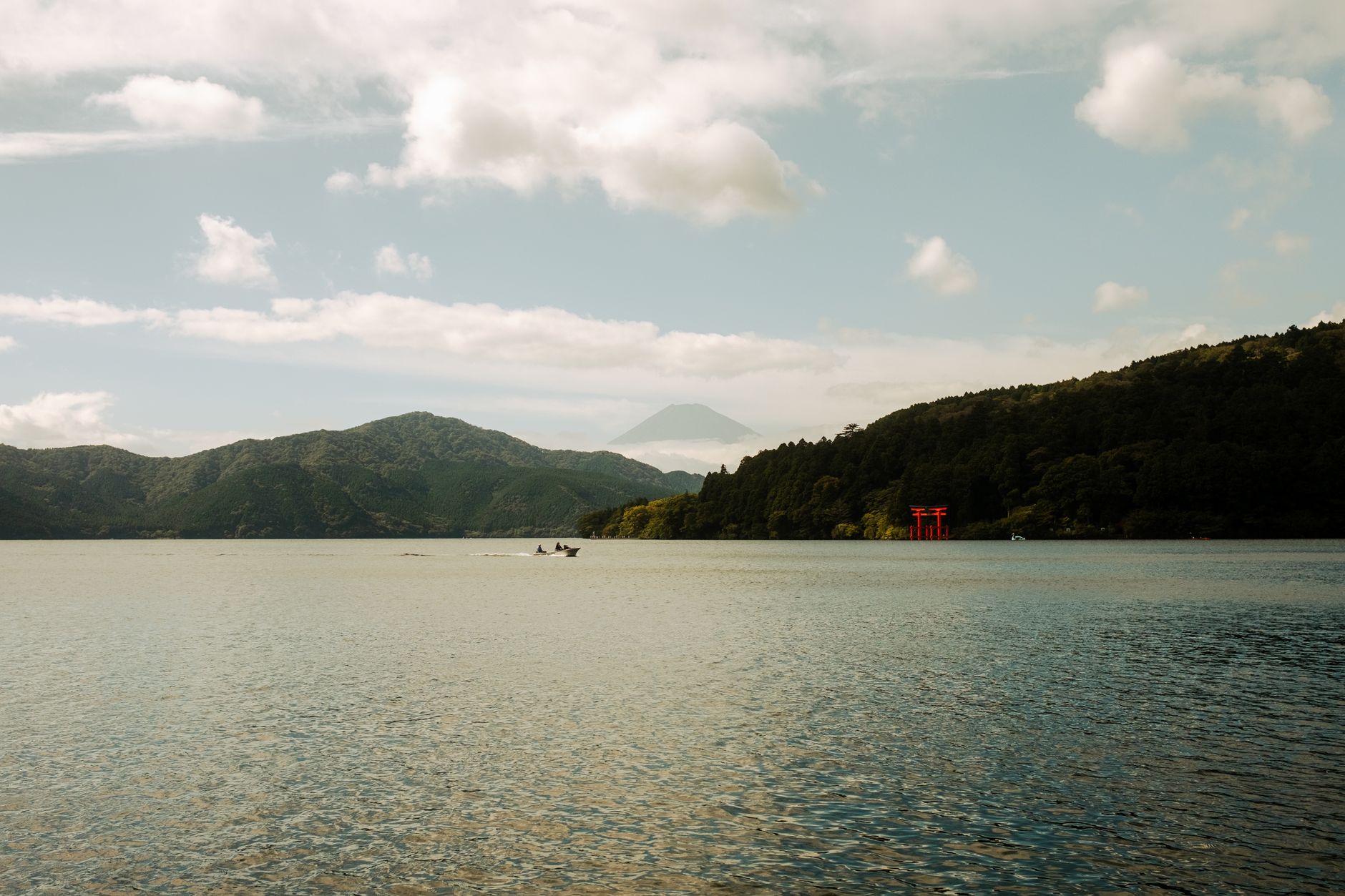
The Odakyu Romancecar runs from Shinjuku to Hakone-Yumoto in about 80 minutes. The €6.49 (¥1,200) on top of the fare is a reserved-seat supplement, not a ticket, and it buys you 80 minutes instead of two hours with changes. Hakone is a volcanic caldera wired together as one loop: mountain railway, then funicular, then ropeway over the steaming Owakudani valley, then a boat across Lake Ashi, then a bus back. The Hakone Freepass covers all five and costs €38 (¥7,100) for two days from Shinjuku including the round trip, or €32 (¥6,000) bought inside the area. Do the loop in one direction, clockwise from Yumoto, which is what every sensible itinerary does.
Two things to know. The ropeway closes without notice on volcanic gas readings, taking the Owakudani section and its trails with it, and substitute buses run when it does. And Fuji is visible from Lake Ashi on clear days and hidden on most: April to August is the worst window of the year for it, and mornings before 10:00 give the best odds. Go for the caldera, the onsen and the walking weather, which is at its best from late March to May. Treat the mountain as a lottery ticket.
Nearly nine in ten Hakone stays logged with Stippl are one or two nights, and one in ten carries no night at all. It is the highest day-trip share anywhere in our data, which is exactly why this route does it from Tokyo rather than moving your bags for a night. There is more on Hakone if you would rather give it the night.
Where to stay in Tokyo. Three areas, and they split cleanly. Shinjuku puts everything within reach and has the best transport, which matters on a five-night stay. Shibuya is the energy, good for a first visit and a short one. Asakusa is the cheapest central option and the last district where Edo-era Tokyo is still legible. Rooms are small at every price point, so a "double" at 12 to 15 m² is normal rather than a mistake. Do not base yourself near Narita to save money: the airport is about 60 km out and the transfers eat the saving twice a day.
Read more: things to do in Tokyo
Kyoto, and a day in Nara

The shinkansen from Tokyo to Kyoto takes about 2 hours 15 minutes and is the busiest tourist leg in the country. Individually the ticket runs around €76 (¥14,000). On a rail pass it costs nothing extra, which is the calculation in the cost section below.
Kyoto inverts the usual city layout, and this one fact explains everything else about visiting it. The temples sit on the wooded hillsides ringing the basin, and the centre is where you sleep and eat. There are roughly 1,600 Buddhist temples, 400 Shinto shrines and 17 UNESCO World Heritage Sites inside the city limits, and the city escaped wartime bombing entirely, which is why the historic fabric is still standing.
Day 6Higashiyama
Kiyomizu-dera and the Sannen-zaka and Ninen-zaka stone lanes below it are the single most rewarding walk in Japan. Then Gion after dark, the machiya lanes and the lantern-lit Shirakawa canal. Photography is banned on Gion's private alleys, a restriction brought in because of visitor pressure and enforced with signage and fines. The public streets are fine. Do not follow or photograph maiko: they are people going to work, and that behaviour is why the ban exists.
Day 7West Kyoto and the Philosopher's Path
Kinkaku-ji, the Golden Pavilion, is €2.70 (¥500) and open 09:00 to 17:00, and the visit is short because the crowds are constant. The Arashiyama bamboo grove is free, open ground and open 24 hours, and it is packed all day, so the answer is genuinely before sunrise. In the afternoon, walk the Philosopher's Path from Nanzen-ji up to Ginkaku-ji: a canal lined with cherry trees, and in the first week of April it is the reason people book Kyoto in spring at all. Finish at the Ginkaku-ji end, where Omen has its original shop: thick udon you dip into a rich broth with sesame and a plate of seasonal Kyoto vegetables. Omen often gets filed under Gion, but it has no shop there: its second Kyoto branch is on Pontocho, just across the Kamo River, which makes it an easy dinner before an evening walk through Gion.
Day 8Fushimi Inari at dawn, then Nara

Fushimi Inari's torii tunnel is free and open around the clock, which is the whole argument for going at 06:00 or after 20:00. Then take the train to Nara: the Kintetsu line is 35 minutes and drops you nearer the park, the JR Nara line is 45 minutes and is covered by a rail pass. That is the only real transport decision in Nara.
Everything in Nara is inside one walkable park. Todai-ji opens at 07:30, the earliest major opening in Kansai, and the first half hour is quiet before the coaches arrive. Its Great Buddha was cast in 752 and the hall built to house it is among the largest wooden buildings on earth. Deer crackers are €0.81 (¥150) for about ten, and the deer bow for them: hold one overhead, then behind your back, then overhead again. The older deer do it reliably, the young males nip and snatch. Keep the crackers out of sight until you are ready, and do not eat your own lunch anywhere near them. Our Nara page has the rest of the park, for anyone tempted to stay past the afternoon train back.
Where to stay in Kyoto. Southern Higashiyama for a first visit and the best morning access to the temples. Downtown, around Kawaramachi and Shijo, for eating and walkability. Central Kyoto for the cheapest central beds. Kyoto Station is convenient and characterless, so it is worth one night and not three. Two things specific to spring: every area books out months ahead in blossom season, and Kyoto now adds a nightly lodging tax that scales with your room rate, usually collected at check-in. If Kyoto is full or priced beyond you, sleep in Osaka instead. It is 15 minutes away by shinkansen and you are going there anyway.
Kyoto is also the one city where it pays to spend on an experience rather than a room: a tea ceremony, a kaiseki dinner, or one night in a ryokan.
Read more: things to do in Kyoto
Track what you actually spend
Set a daily budget per country and log expenses in any currency while you travel.
Osaka, and a day in Kobe
Kyoto to Osaka is 15 minutes on the shinkansen, 30 minutes on the JR special rapid at around €3.14 (¥580), or 40 minutes on the local at around €2.22 (¥410). The slow train costs a third of the fast one and you will not notice the difference.
Osaka is Japan's second city by function and its first by appetite. Every guide to it leads with food and none of them leads with a sight, which is the reverse of Kyoto and of Tokyo. The local word for the local philosophy is kuidaore, "to eat oneself into ruin", and it is a genuine expression rather than a tourist-board slogan.
Day 9Castle, tower, canal
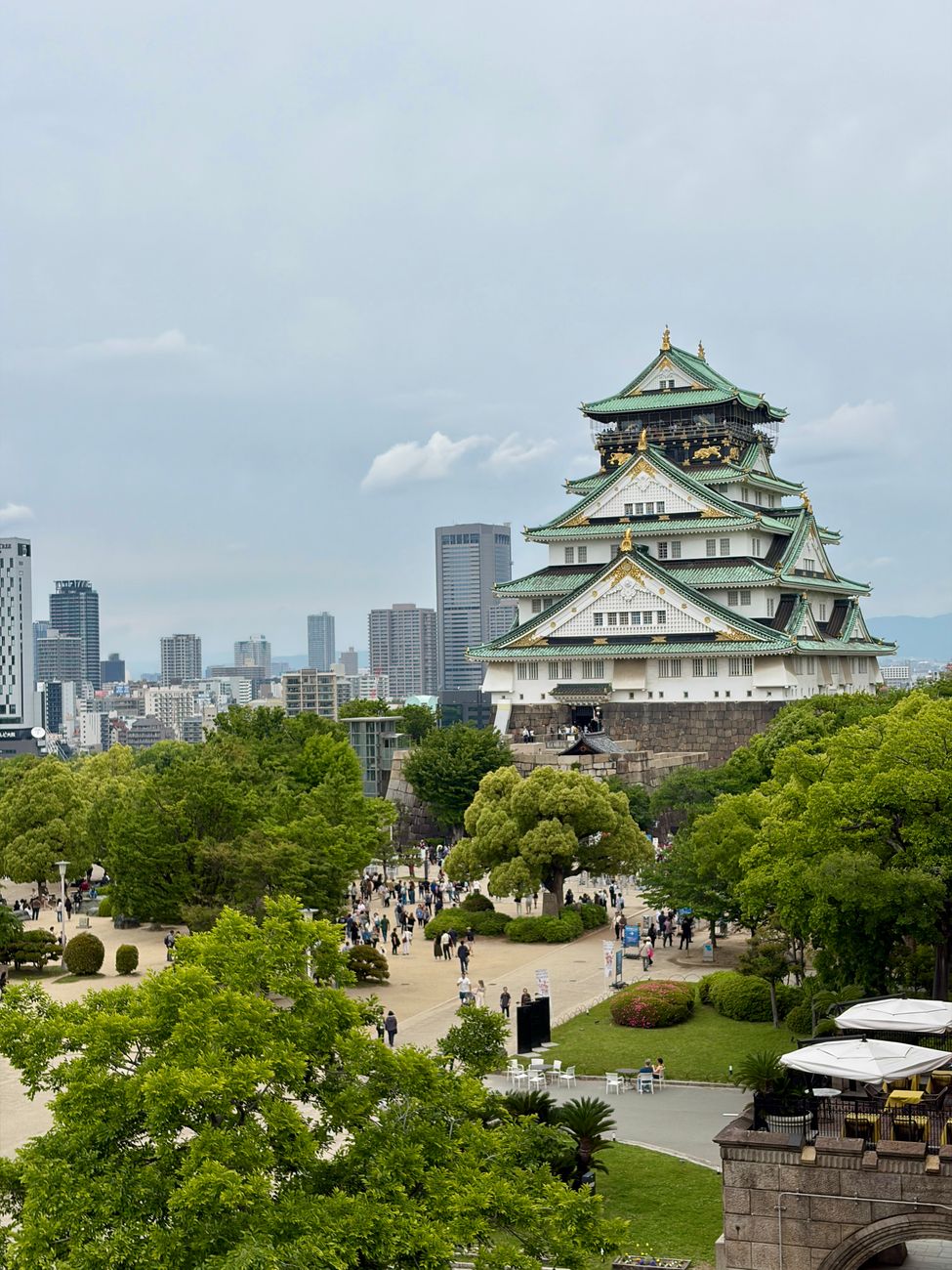
Osaka Castle's park is among the best cherry blossom spots in the city, which makes the timing here work in your favour if the front has reached Kansai. The keep itself is a reconstruction, having been taken by war, fire, earthquake and typhoon in turn. In the afternoon, the Umeda Sky Building's Floating Garden Observatory, reached by a see-through escalator crossing open space between the two towers. Then Dotonbori after dark, where the Glico Man sign has been running above the canal since 1935.
Day 10Markets, Shinsekai and a choice
Kuromon Ichiba market has more than 170 stalls with most vendors cooking on the spot, and it is the city's kitchen in the literal sense. In the early evening, Shinsekai, a retro working-class district that missed the post-war boom, where the kushikatsu counters fill up. One dipping-sauce rule and it is enforced: no double-dipping. If you are travelling with children, swap the day for Universal Studios Japan. If you want the aquarium instead, know that its tank sizes and crowd noise have drawn genuine welfare criticism, which is worth weighing before you buy.
Day 11Kobe
The JR special rapid gets you there in about 20 minutes for €2.27 to €3.14 (¥420 to ¥580), or the shinkansen in 15 minutes for around €18 (¥3,280) if you have a pass covering it. Beef, a Chinatown and a harbour, and it is a comfortable half-day rather than a full one.
Where to stay in Osaka. The rule that matters more than any neighbourhood preference: stay on the Midosuji subway line. It runs north to south through Umeda, Honmachi, Shinsaibashi, Namba and Tennoji, which is most of what a visitor wants. Namba puts you inside the nightlife rather than near it and has the highest hostel density in the city. Umeda is the transport-first choice if you are day-tripping daily. Tennoji has the cheapest central beds. Osaka undercuts Kyoto at nearly every rung of the ladder, which is why the Kyoto overflow trick works.
One small thing that will catch you out on day one: in Osaka you stand on the right of the escalator and walk on the left. That is the opposite of Tokyo and of most of Japan.
Read more: things to do in Osaka
Wakayama and Mount Koya

This is the part of the route almost nobody else writes, and it is why the trip is worth doing this way round. From Osaka, the JR Limited Express Kuroshio reaches Wakayama in about an hour. Mount Koya, or Koyasan, is reached on the Nankai line and a cable car, roughly two hours in total, with the cable car itself at €2.11 (¥390).
Day 12Koyasan, and a night in a monastery
Temple lodging, shukubo, is its own category of Japanese accommodation and Koyasan is where you do it: a room in a working monastery, the evening ceremony, morning prayer you will not entirely follow, and shojin ryori, Buddhist temple vegetarian cooking, for dinner and breakfast. It is one of the few places in Japan where eating vegetarian is the point rather than a problem. It books out well ahead, so this is the reservation to make first when your dates are set. Spend the day at Okunoin, the cemetery among the cedars, and Kongobu-ji.
Day 13Wakayama city
The restored castle in the morning, then Wakaura Bay and a walk along the coast in the afternoon. After a week of Kansai crowds this is a quiet day, and that is its function in the route as much as anything it contains.
Day 14Shirahama
About an hour down the coast on the JR Kuroshio line: a white-sand beach, Engetsu Island offshore, and Shirahama Onsen, one of Japan's oldest hot-spring resorts. In late March and April this is not swimming weather, so come for the onsen and the coastline rather than the sand.
Day 15Back to Tokyo
Roughly four hours via Shin-Osaka, which is a comfortable last morning if your flight is in the evening. Flying out of Kansai instead of Tokyo is a standard open-jaw and would save you the leg entirely, and it is usually cheaper than a return into one airport. Worth checking before you book.
Where to stay in Wakayama and Koyasan. Two different answers. On the mountain, take the temple lodging: it is the reason to be there and there is no meaningful alternative. Down in Wakayama city and Shirahama, ordinary hotels and guesthouses, and neither books out the way Kyoto does, so this is the leg you can leave until later.
Getting between stops
| From | To | Best option | Time | Cost |
|---|---|---|---|---|
| Narita airport | Tokyo | Narita Express | 60 min | ~€16 (¥3,000) (bus 90 min, ~€5.41 (¥1,000)) |
| Haneda airport | Tokyo | Monorail | 13-19 min | ~€2.70 (¥500) |
| Tokyo | Hakone | Odakyu Romancecar from Shinjuku | ~80 min | ~€13 (¥2,470) including the reserved-seat supplement |
| Tokyo | Kyoto | Tokaido Shinkansen | ~2h15 | ~€76 (¥14,000), or free on a rail pass |
| Kyoto | Nara | JR Nara line, or Kintetsu (35 min, not on the pass) | ~45 min | ~€3.78 (¥700) |
| Kyoto | Osaka | JR special rapid, or the local at 40 min | ~30 min | ~€3.14 (¥580) (local ~€2.22 (¥410)) |
| Osaka | Kobe | JR special rapid | ~20 min | €2.27-3.14 (¥420-580) |
| Osaka | Koyasan | Nankai line and cable car | ~2h | cable car €2.11 (¥390) |
| Osaka | Wakayama | JR Limited Express Kuroshio | ~1h | on the pass |
| Osaka | Tokyo | Tokaido Shinkansen | ~2h30 | ~€81 (¥15,000) |
The shinkansen is the spine of the whole thing: up to 320 km/h, departures every few minutes on the Tokyo to Osaka corridor, and punctuality measured in seconds. Book seats in advance for the spring peak, because they genuinely sell out. If you are travelling with a large case, use luggage forwarding: hand a bag to your hotel or a convenience store for roughly €12-19 and it meets you at the next one, usually the following day. Shinkansen luggage space is limited and crowded stations punish big cases.
Turn these stops into a route
Pick your favourites and Stippl orders them, adds travel times and builds the day-by-day.
What two weeks in Japan costs in spring
The rail pass question, which is the one everyone asks. The nationwide JR Pass costs €270 (¥50,000) for 7 days, €430 (¥80,000) for 14 and €540 (¥100,000) for 21 in ordinary class, and €380 (¥70,000), €595 (¥110,000) and €755 (¥140,000) in Green class, the first-class carriages. Children aged 6 to 11 pay half. The yen prices are the ones JR sets; the euro figures move with the exchange rate, so check it on the day you buy. The pass rose by roughly 60 to 70 per cent in October 2023, which turned it from an automatic purchase into a calculation, so ignore any older guide that still calls it a no-brainer. You order a voucher before you arrive and exchange it at a JR office in Japan: it can no longer be bought inside the country at all.
Whether it pays off depends entirely on your route, and on this one it is genuinely close. The two big legs are Tokyo to Kyoto at around €76 (¥14,000) and the return from Wakayama at a similar order. Add the Kansai day trips and you are still well short of €430 (¥80,000). Add up your own legs before you buy, and look at the regional passes too: JR West's Kansai and Kansai-Hiroshima passes frequently beat the national one, and unlike it they let you ride the fastest Nozomi and Mizuho services.
Where the money actually goes. Accommodation is the block that decides your total. Food and sightseeing can be compressed almost indefinitely, beds cannot. A well-rated double runs €70-100 a night, hostel dorm beds start around €17 (¥3,200) and rarely dip under €26 (¥4,800) in high season, and a top-end ryokan with a private onsen reaches around €280. Expect all of that to sit higher through the blossom window, and how much higher depends on the city and how early you booked.
The one line nobody budgets for is the train. Across travellers who log their Japan spending with Stippl, transport comes up more often than sights, tours and culture combined, and a typical train expense is the third-largest recurring cost of the trip after a hotel booking and a flight. In Thailand transport means a taxi fare. In Japan it is a real line in the budget, and a guide that treats it as a footnote has the shape of the trip wrong.
Everyday prices, so you can sanity-check the rest: ramen or curry €4-9, an izakaya dinner €7-18, a convenience-store meal €1.60-2.70 (¥300-500), a beer €1.35 (¥250) at a konbini or €2.70-3.80 (¥500-700) in a restaurant, a metro ride €0.76-1.70 (¥140-314), temple or garden entry €2.15-5.40 (¥400-1,000). Many of the headline sights are free, including Fushimi Inari, most shrine grounds and the Arashiyama bamboo grove, which keeps a full sightseeing day well under €20.
Two things that changed recently. The international departure tax tripled to €16 (¥3,000) per person on 1 July 2026 and is collected inside your ticket price rather than at the airport. And tax-free shopping above €27 (¥5,000) is moving from a discount at the till to a refund at the airport, so keep your receipts.
Japan is also still genuinely cash-heavy despite its reputation. Small restaurants, temples and rural buses take nothing else, and convenience-store ATMs at 7-Eleven, Lawson and FamilyMart are the reliable way to withdraw where bank machines often refuse foreign cards.
Five practical tips for this route in spring
Book Kyoto and Koyasan first, everything else after. Japanese inventory opens four to six months out and those two sell out completely in blossom season. The Tokyo and Osaka legs have far more beds and can wait.
Do not fly into and out of the same airport. Landing at Haneda or Narita and leaving from Kansai saves you the four-hour return leg from Wakayama and is usually cheaper than a return into one city. It is the standard move and almost nobody plans it in from the start.
Pack for two temperatures and one wet week. Spring runs 12°C in March to 21°C in May, mornings are genuinely cold and afternoons are not, and spring showers are common enough that a compact umbrella is worth the space. You will also walk 10 to 16 km a day, so broken-in shoes matter more here than almost anywhere.
Build a spare morning into the Hakone day. Fuji hides on most days between April and August, and if the ropeway closes on gas readings you lose a chunk of the loop. Neither is a disaster if you have not built the whole day around one view.
Plan around Golden Week rather than into it. If your dates touch 29 April to 5 May, shift them. Prices spike, trains and hotels sell out months ahead, and the country's entire population is on the move at the same time as you.
Frequently asked questions about Japan
Yes, it is the most popular season of the year: March to May brings mild weather, from about 12°C in March to 21°C in May in Tokyo, plus the cherry blossom in late March and early April. The trade off is crowds and prices, which peak with the blossom and again in Golden Week. For the same weather with fewer people, go from 6 May to the end of the month.
The 2027 forecasts are not published yet; the first usually appears in December and is updated through January to March. On the Japan Meteorological Agency's averages, blossom opens in Tokyo around 24 March and Kyoto around 26 March, with full bloom around 31 March in Tokyo and 4 April in Kyoto and Osaka. In 2026 both cities peaked a few days early, so arriving in Tokyo in the last week of March is the safest bet.
Two weeks is the workable minimum and three is the ideal. Fourteen nights covers Tokyo, Kyoto and Osaka properly with a mountain and a coast added, which is what this spring route does, and it follows the blossom front from Tokyo to Kansai as it moves. One week would mean choosing either Tokyo and Hakone or Kyoto and Osaka, not both.
Golden Week 2027 runs from Thursday 29 April to Wednesday 5 May, with the main block from Saturday 1 May. Avoid it if you can: the whole country travels at once, so trains and hotels sell out months ahead and prices spike. Finish your trip by 28 April or start it on 6 May.
Work it out rather than assuming. The 14-day pass is €430 (¥80,000) and this route's individual fares land comfortably below that, so a regional pass like JR West's Kansai one is often the better buy. The national pass wins on itineraries with long shinkansen legs on most days, which this one is not. Budget roughly €70-80 a day at the budget end and €100-150 mid-range per person on top, flights excluded.
Ready to build this route properly? Add Tokyo, Hakone, Kyoto, Nara, Osaka, Kobe and Wakayama, and the trains between them, to a Stippl trip, and the app orders the days and fills in the travel times for you. If you would rather describe the trip and let it draft the days, the AI trip planner does exactly that. Free forever.
Looking for other ways into Japan? Our guide to the most beautiful traditional cities in Japan covers nine towns this route leaves out, the top tourist attractions in Japan puts a duration and an entry price on every big sight this route passes, and the 20 best photo spots in Japan is worth a look before you pack a camera.