 EuropeSpain
Spain
Spain is three or four countries with one railway: the dry south with its Moorish palaces, the wet green north with its pintxo bars, the capital and Barcelona in between, and two archipelagos with climates of their own. Most stops get two nights, and the trains beat the car between the cities.
SpainSpain in a nutshell
Where to go in Spain




Turn these stops into a Spain route
Pick your favourites and Stippl orders them, adds travel times and builds the day-by-day.
Plan your adventure in Spain
Our travel routes through Spain
Spain is loved by culture seekers and backpackers alike. We recommend several routes through this country, here they are in full!
5 nights5 days, Basque Country and Rioja
Bilbao · San Sebastian · La Rioja
Bilbao and San Sebastián need dry weather; Rioja wine harvest and green northern coast shine mid-summer onwards.
7 nights1 week: Costa Brava, the Empordà and the Garrotxa volcanoes
Sant Feliu de Guíxols · Girona · La Garrotxa
Costa Brava coastal town crowds thin in June and September; Garrotxa volcanoes best hiked in warm, dry months.
7 nights1 week, the last 100 km of the Camino
Sarria · Santiago de Compostela
Sarria to Santiago suits mild weather; spring and autumn avoid summer pilgrim crowds on the Camino.
9 nights10 days: Andalusia loop from Seville, car ideal
Seville · Cordoba · Granada
Seville, Córdoba, and Granada are pleasant without summer heat; Córdoba's patios bloom in May.
12 nights10–12 days, Balearic island hop
Mallorca · Ibiza · Formentera
Mallorca and Menorca stay warm; Ibiza's club season peaks June but crowds and heat peak July–August.
13 nights14 days: the rail classic, Seville to Barcelona, no car
Seville · Cordoba · Granada
Madrid's inland heat and Barcelona's crowds peak in summer; spring and autumn offer warmth without extremes.
13 nights2 weeks: Andalusia fly-drive, Málaga in and out
Malaga · Ronda · Seville
Málaga and Granada avoid peak heat; spring blooms and autumn warmth suit the route's mix of coast and mountains.
16 nights16 days, Andalusia road trip with the white villages and the coast
Seville · Cordoba · Granada
White villages of Setenil and Zahara stay cool; coast near Nerja and Málaga avoids summer crowds.
Updated September 2026 · 14 min read · Written by the Stippl editorsWe looked at how travellers actually plan Spain on Stippl, across 246,000+ planned stops in Spain.
Spain is planned as two or three regions rather than one route, and most stops get 2 nights. Barcelona takes 21.7% of every Spanish stop planned on Stippl, with Madrid, Seville and Valencia behind it, and the named things are the Alhambra in Granada, the Mezquita in Córdoba, the Real Alcázar in Seville, Gaudí's Sagrada Família, a pintxo crawl in San Sebastián and the Caminito del Rey above the Gaitanes gorge. A typical Spain trip runs 11 days on Stippl.
Spain is a short-hop country, and a late-decided one. 39.5% of Spanish stops planned on Stippl are a single night, the highest one-night share of the big European countries, and most travellers plan Spain only about 60 days ahead, the shortest lead of the big European countries. July is the month most people plan for, which is the one month to avoid inland.
So split a first visit across two regions, take the high-speed trains between the cities, and hire a car only for the white villages, the coasts and the islands. Book the Alhambra, the Sagrada Família and the Alcázar weeks ahead, because they sell out daily. Skip inland Andalusia in July and August, when Seville and Córdoba average the mid-thirties, and use the north or the Canaries instead, which hold 18 to 24 degrees all year.
Plan Spain in Stippl
Day-by-day planning, stays and budget in one app, with every place from this guide already on the map.
Download the appWho Spain is for
First-time Europe travellers
The big cities link by high-speed train faster than by car, so a two-week trip needs no rental, and a Spain trip runs 11 days on Stippl.
History travellers
The Moorish and Christian layers sit on the same ground: a Gothic cathedral inside an eighth-century mosque in Córdoba, a Christian court in the Nasrid palace at Granada.
Food travellers
The Basque Country concentrates Michelin stars and invented the pintxo crawl, Andalusia makes tapas cheap enough to eat out daily, and Granada adds a free plate per drink.
Families
Tenerife's flat promenades, water parks and animal parks, Mallorca's resorts and self-catering Costa Blanca bases with pools are all well covered, on direct flights.
Road-trippers
Andalusia's canyons and white villages, the Balearics and Tenerife are all car-first, because public transport does not reach the villages or the coves.
Walkers
The Camino, the Caminito del Rey, Teide, Anaga, the Picos de Europa and the Pyrenees run from easy boardwalks to multi-week routes.
Winter-sun travellers
The Canaries hold 18 to 24 degrees and three hundred sunny days a year, and the Costa del Sol stays mild in December, so both work in winter.
Maybe not for you: anyone heat-sensitive doing inland city sightseeing in July and August, when Seville and Córdoba average the mid-thirties; anyone who needs shops and kitchens on northern European hours; and nervous drivers on Tenerife's Masca and Anaga mountain roads
The best time to visit Spain
Mainland shoulder
mid-April to June and September to October
The window everything converges on: warm without the extremes, every sight open, prices below the peak, and Córdoba's patios in flower from late April.
Mainland high summer
July and August
Andalusia and the inland cities become unusable for sightseeing, Spaniards take their own holidays so the coasts and islands fill, and fares peak. The green north is the counter-programme.
Mainland winter
November to March
Cool and wet inland, mild in the south, the cheapest and emptiest months of the year, with the Sierra Nevada ski season and the Canaries' high season inside it.
The islands
late March to early November on the Balearics
May, June and September are the sweet spot on Mallorca, Menorca and Ibiza; after October many hotels and restaurants close outright, while the Canaries run all twelve months.
- July is the month most travellers plan Spain for on Stippl, and June to September takes 56.2% of the plans. That is the one inland month to avoid, so the two shoulders hold both the room and the bearable temperatures.
- Most travellers plan Spain about 60 days ahead on Stippl, and 19.1% inside a fortnight. That is the shortest lead of the big European countries, and it collides with the Alhambra's Nasrid Palaces, which sell out weeks to months ahead.
- The Canaries run the other way round. Eighteen to 24 degrees and three hundred sunny days all year, with winter as their high season while the mainland is in its low, and crowd peaks that follow the European school holidays rather than the weather.
- Andalusian summer is not a matter of taste. Seville and Córdoba are among the hottest places in Europe, with July and August highs in the mid-thirties and no rain, and the locals leave for the coast.
- Córdoba is the one city where the dates matter. The patios bloom from April to June and open to visitors in early May, and the Generalife gardens at the Alhambra peak in the same weeks.
- Whale and dolphin watching off Tenerife runs all year, and December to April is the window for the larger species. Look for the Barco Azul certification when choosing a boat.
Add your Spain dates and we'll flag the weather per stop
Stippl shows the season, crowds and prices for every place on your route.
Festivals, and when to avoid them
Las Fallas
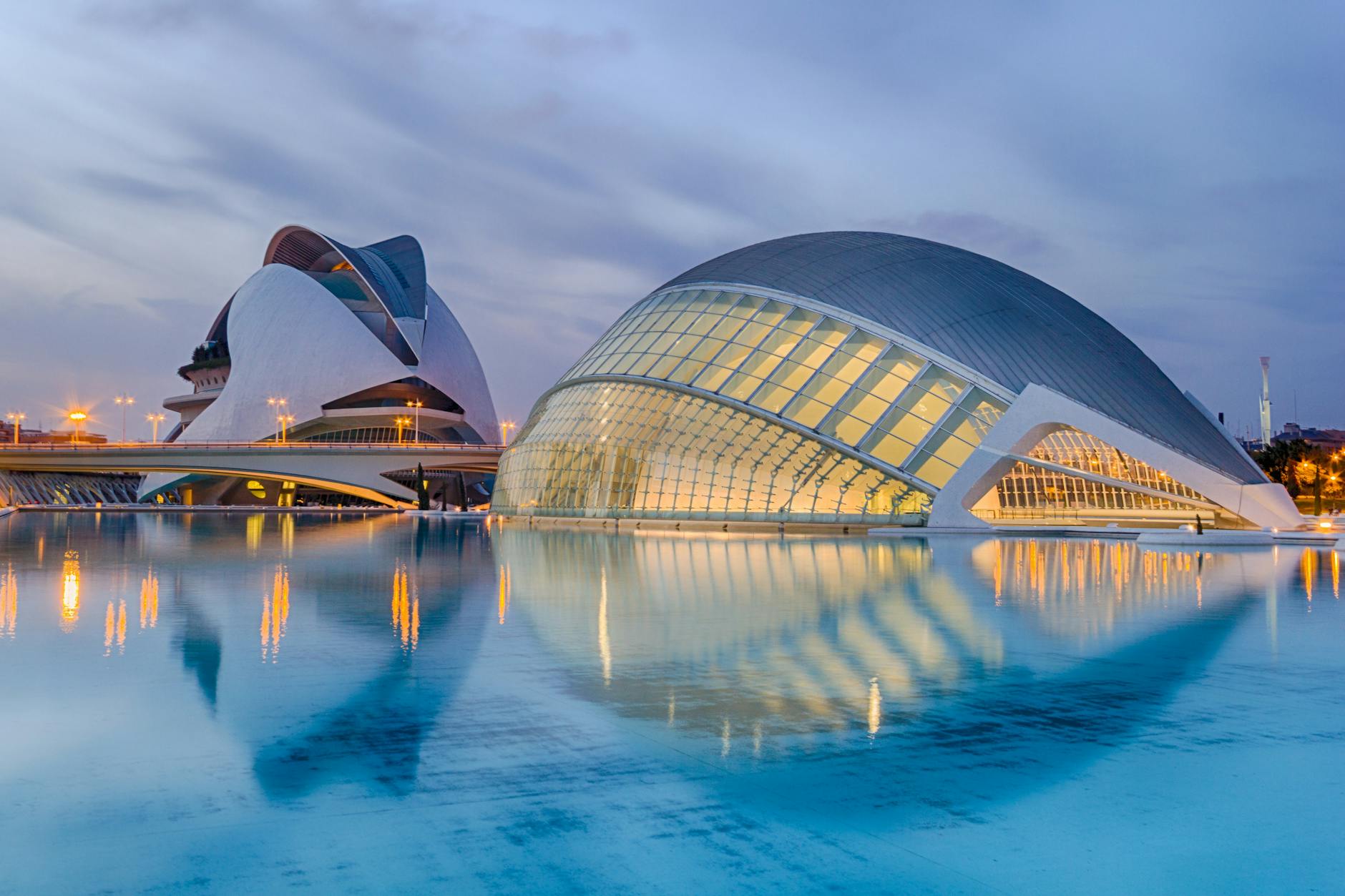
Valencia's districts each build a giant sculpture and burn it on the final night, with fireworks and street parties into the early hours. Come for it and book by January, or give Valencia a miss that week.
Semana Santa
Holy Week processions fill Seville, Málaga and Granada every evening and the hotels for the whole week, at the year's highest rates outside the Feria. Book months ahead, or see Andalusia the fortnight before.
Feria de Abril
Seville's own fair, two weeks after Easter: a week of casetas, horses and flamenco dress on the fairground, with the city's rooms booked out and the sights half-empty. Come for it with a booking, or avoid the week.
Patios de Córdoba
Private courtyards open free to visitors for two weeks, on UNESCO's intangible heritage list, and the small city fills. Book far ahead, since accommodation is scarce and dearer, and see the Mezquita early.
San Fermín
Pamplona's bull-running week: the city's rooms go a year ahead at several times the normal rate, and the rest of Navarre fills with the overflow. Avoid Pamplona that week unless it is the point of the trip.
La Tomatina
Buñol's tomato fight, ticketed and capped, on the last Wednesday of August; day trips from Valencia sell out and the town has almost no beds. Buy the ticket early or skip it.
Carnival of Santa Cruz
Tenerife's carnival, frequently ranked the world's second biggest after Rio, fills Santa Cruz's hotels and the island's flights for three weeks. The south of the island is unaffected.
Describe your trip, get a Spain itinerary in seconds
Everything in this guide is already in Stippl. Tell the planner how long you have and what you like: it builds the route, the days and the travel times, and you edit whatever you want.
Things to do in Spain
 Photo by D Jonez via Unsplash
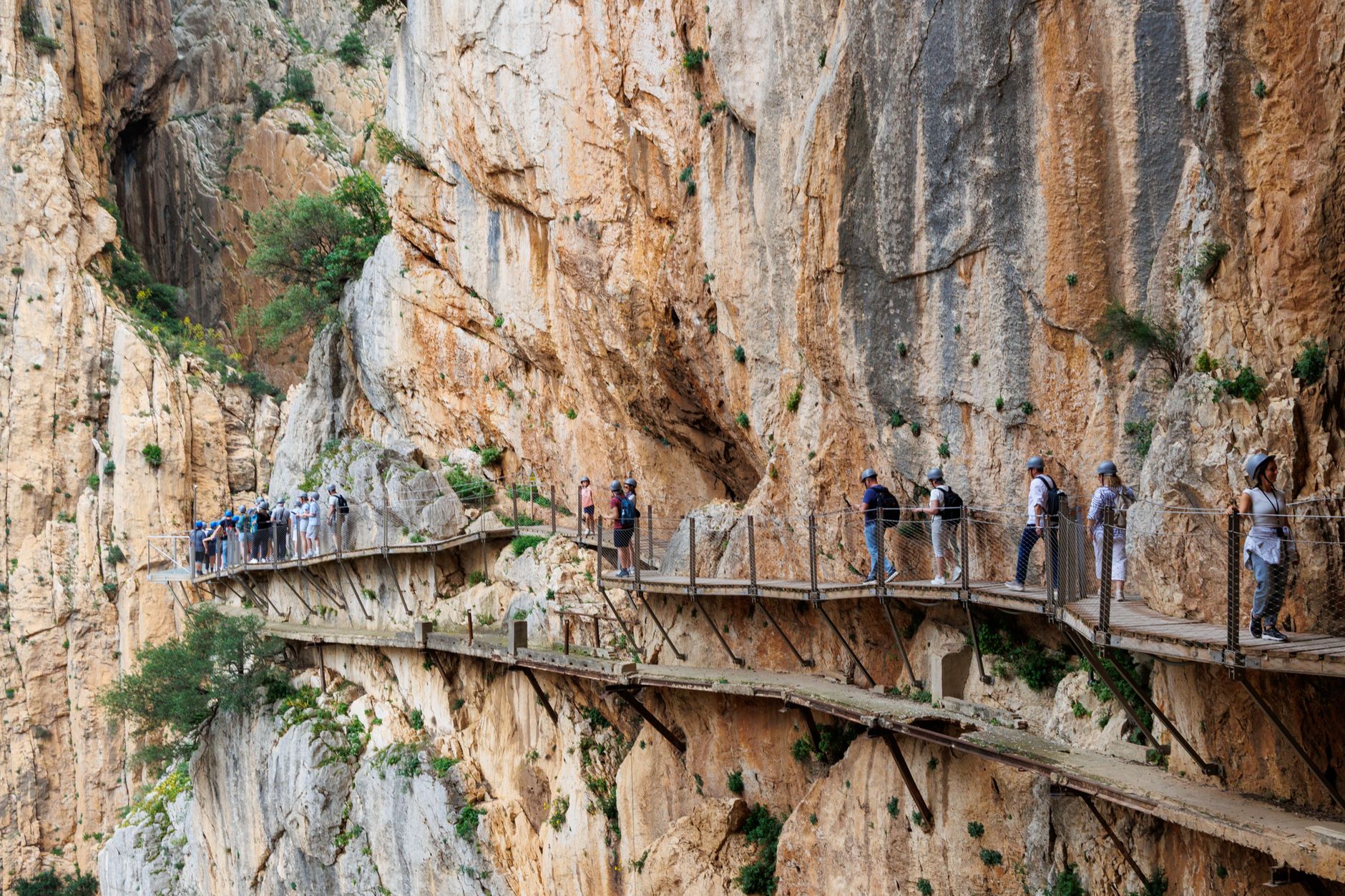 Photo by Igor Passchier via Pexels
The Alhambra
The best-preserved palace complex of the historic Islamic world, above Granada; the Nasrid Palaces carry their own timed slot that sells out weeks to months ahead, and photo ID is checked against the ticket.
The Mezquita of Córdoba
A Gothic cathedral built inside an eighth-century mosque that the conquerors converted rather than demolished, under 860 red-and-white striped arches; go at opening, before the coaches.
Gaudí's Barcelona
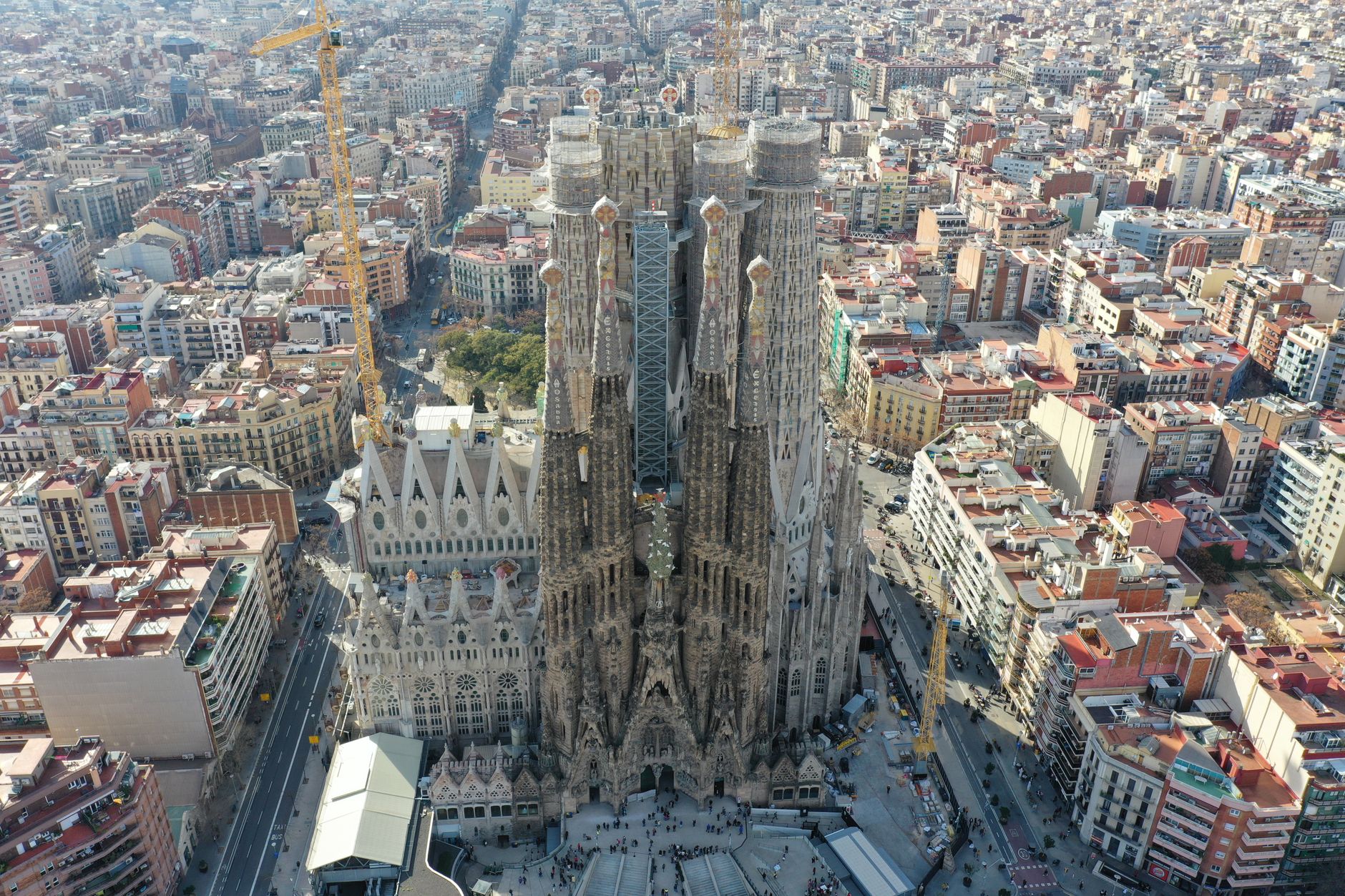
The Sagrada Família, unfinished since 1882 and worth the tower upgrade, Casa Batlló, Park Güell and Casa Milà, seven UNESCO-listed buildings in one city, all on timed tickets booked ahead.
Flamenco in Andalusia
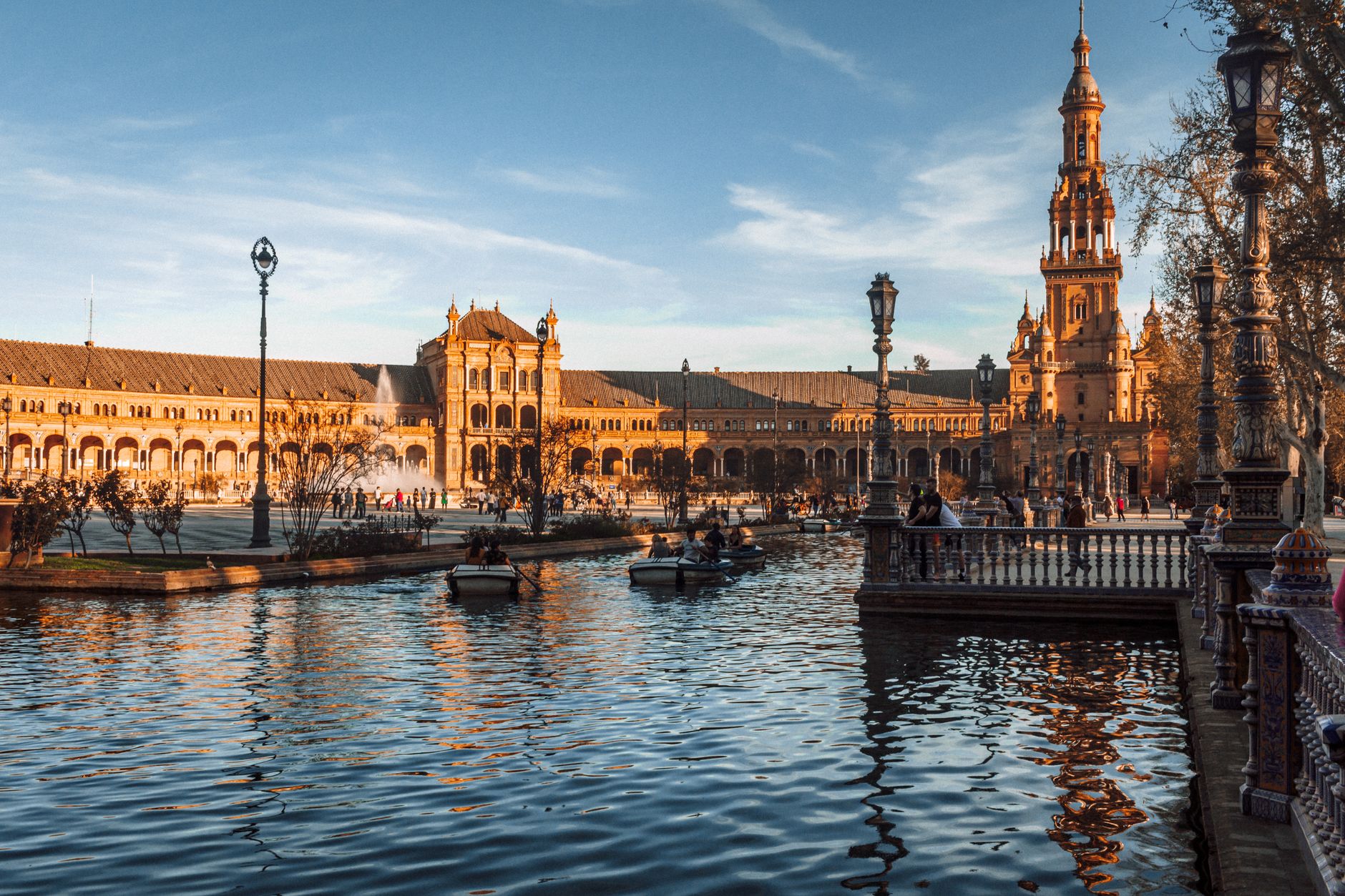
Triana in Seville and the Sacromonte caves in Granada both claim the roots; a small tablao beats a dinner show, and Seville's Plaza de España has a free evening performance.
A pintxo crawl
One pintxo and one drink per bar in San Sebastián's old town or Bilbao's Casco Viejo, then move on, and finish with a sit-down dinner; the burnt Basque cheesecake at La Viña ends it.
The Caminito del Rey
A boardwalk pinned to the cliffs a hundred metres above the Gaitanes gorge near Málaga, railed, helmeted and capped by timed slot: 7.7 km one way, two to three hours and nearly flat.
What to eat in Spain
small plates ordered alongside drinks, several shared across a table
the Basque version: one at a time, on bread, with a drink, then move bar
the rice dish our sources name as the national dish
acorn-fed cured ham, sliced to order
thick potato omelette, served in wedges at any hour
cold thick tomato-and-bread soup, heavier than gazpacho
sardines skewered and grilled over an open fire on the beach
anchovies cured in vinegar
bread rubbed with tomato and oil, the Catalan table default
custard under a burnt sugar crust
salt-crusted wrinkled potatoes with red or green mojo sauce
fried dough with thick drinking chocolate
Asturian cider, poured from overhead to aerate it, drunk in one go
burnt-top Basque cheesecake, called the best in Spain
red wine with lemon soda, what locals drink instead of sangría
Discover food spots in Stippl
Find restaurants and markets on the map, save them to your itinerary, works offline too.
Spanish customs and what not to do
Bilbao is also Bilbo
Spain's languages are languages, not dialects: Catalan is co-official in Catalonia and the Balearics, Basque runs alongside Spanish in Euskadi, and an attempt at the local one is appreciated.
Dinner starts at nine
The meal clock governs the day: lunch cannot start before one, and rarely before half past in the north, and dinner runs from eight or nine until late.
The siesta has no fixed hours
Shops close somewhere between two and five, later in an Andalusian summer, and the window changes by region and by town, so check the specific opening hours rather than a rule.
Gitano is not a slur here
Flamenco originated with the gitanos who crossed the Pyrenees in the fifteenth century, and in Spain the word is a term of self-identification; Sacromonte's cave style has its own name, zambra.
The bars fill on match day
Football is a social institution rather than a niche: Real Madrid and Barcelona fill the bars, and a park game is an easy way into local life.
Shorts do not enter
Cover knees and shoulders at religious sites; shorts and revealing clothing are considered disrespectful in the cathedrals, and the big ones enforce it at the door.
Do
- Book the Alhambra, the Sagrada Família, Park Güell, the Real Alcázar and the Caminito del Rey online, weeks to months ahead
- Bring photo ID to the Alhambra; it is checked against the ticket
- Eat the big meal at lunch and treat the menú del día as the default
- Carry cash for village restaurants and market stalls, even though the cities are card-first
- Sightsee early and late in the Andalusian summer, and drink more water than feels necessary
Don't
- Assume a national siesta window; check the specific opening hours instead
- Plan dinner for seven and expect a kitchen to be open
- Put a phone or a bag on a table in Barcelona, or carry one you cannot see
- Rent a car for a city-only trip; it will sit in a paid garage
- Eat on La Rambla; the restaurants are poor and the pickpocketing is worst there
What a Spain trip costs
Budget
€25–85
A hostel dorm or a cheap guesthouse, the menú del día and supermarket picnics, buses and metro, free and low-cost sights.
Mid-range
€60–200
A central three-star double with breakfast and often a pool, restaurant meals, all the ticketed headline sights, a rental car for the villages.
High-end
€200–420
Boutique hotels in converted palaces, destination restaurants, private guides, peak-season island resorts.
Track what you actually spend
Set a daily budget per country and log expenses in any currency while you travel.
Visas, SIM cards and getting around
Entry & visa
Schengen, and the clock is shared
EU citizens travel on a national ID card. UK, US, Canadian and Australian passports get 90 days in any 180, counted across the whole Schengen area, not per country.
Money
Euro, and the village wants cash
Cards work everywhere in the cities, but small restaurants, village businesses and market stalls are frequently cash-only. Switch a Dutch or Belgian card's region to Europe before flying.
Connectivity
Free for EU, eSIM for others
EU residents roam on their own plan. Everyone else buys an eSIM before landing, since the airport SIM counters charge about double what a town shop does.
Getting around
Three train operators, one app each
Renfe, Ouigo and Iryo compete on the high-speed lines, so compare all three and book about three months out. A car is for the villages, the coasts and the islands.
Health
Nothing to arrange
No vaccinations are required. EU residents carry the EHIC, UK residents the GHIC, everyone else travel insurance, and the summer heat inland is the one real health risk.
Water
Safe, and it tastes of chlorine
Tap water is safe nationwide, including Barcelona, Andalusia and Tenerife. The taste is noticeably chlorinated in the south and on the islands, which is the only real objection.
Tipping
Round up, nothing more
Tipping is not expected the way it is elsewhere. Rounding up or leaving a euro or two for good service is the whole custom.
Power & plugs
Type C and F, 230 volts
Sockets take the standard European two-pin plug, so nothing is needed from mainland Europe. UK and US travellers need an adapter, and 112 is the emergency number.
Language
Less English than you expect
Spanish nationally, with Catalan, Basque and Galician alongside it in their regions. English works in the tourist hubs and thins out fast in rural areas and along the Camino.
Spanish worth knowing
Nobody expects you to speak the language, which is exactly why a handful of words goes so far.
O-la
Hello, at any hour · hola
BWE-nos DEE-as
Good morning, until lunch · buenos días
por fa-VOR
Please · por favor
GRA-thyas
Thank you, with the lisped c of mainland Spain · gracias
per-DO-ne
Excuse me, or sorry · perdone
la KWEN-ta, por fa-VOR
The bill, please · la cuenta, por favor
me-NOO del DEE-a
The fixed weekday lunch, the budget default · menú del día
TEEN-to
Red wine, never rojo · tinto
OO-na ka-NYA
A small draught beer · una caña
AH-bla een-GLES
Do you speak English? · habla inglés
Spain questions, answered
Across two regions, not one. Pick Andalusia plus Madrid or Barcelona plus the Basque coast, lay the stops out in Stippl with the trains between them, and see what 11 days allow, which is what a Spain trip runs on Stippl. Show the route to people who have been, in subreddits like r/travel or r/spain.
Just enough for Madrid, Barcelona and the Andalusian highlights, and you will be moving fast: most stops get 2 nights on Stippl and 39.5% are a single night. Adding places without adding days is the standard mistake, so the second week goes to one region rather than a third city.
Not for a city-hopping trip, since the high-speed trains beat driving on most legs and the historic centres are restricted. Yes for the white villages, the Caminito del Rey, Tarifa, the Basque coast, the Balearics and Tenerife, where public transport does not reach the villages or the coves.
No: only 35.5% of the Spain trips planned on Stippl stay inside the country, so two in three cross into Portugal, France or Morocco on the way. Decide the neighbours before fixing the Spanish leg, because it changes which airport you fly out of.
Compare all three operators, Renfe with its cheaper Avlo, Ouigo and Iryo, on the same route and date, and book the long legs about three months out, where fares tend to be cheapest. Regional trains have fixed fares and are bought on the day.
The Alhambra's Nasrid Palaces, the Sagrada Família, Park Güell, Casa Batlló, Seville's cathedral and Alcázar, Córdoba's Mezquita, the Royal Palace of Madrid, the Caminito del Rey and Tenerife's Teide cable car. Most travellers plan Spain only 60 days ahead on Stippl, which is inside the sell-out window for the first two.
Every guide is written by the Stippl editors and checked against the trips our travellers actually plan. Spotted something out of date? Let us know.
Plan Spain in Stippl
Everything in this guide, ready to drop into your Spain route, with planning and bookings in one app.