

Cordoba
Cordoba is the capital of Al-Andalus with four UNESCO inscriptions and one building that justifies the journey: a cathedral inserted into an eighth-century mosque. One night for most, the free hour at half past eight, and nothing outdoors on a July afternoon.
Cordoba in a nutshell
Cordoba: what to expect
What follows sits on 246,000+ stops planned across Spain on Stippl.
One night is what Cordoba gets, and one full day covers the monuments. The Mezquita, begun in 785 and with a cathedral inserted into the middle of its prayer hall after 1236, is the reason the city is on itineraries at all, and the rest clusters within a few hundred metres of it: the Judería's whitewashed lanes and synagogue, the Roman bridge with the view back at the Mezquita, the Alcázar's gardens, the Palacio de Viana's twelve courtyards and Medina Azahara eight kilometres out. Most travellers give Cordoba 1 night on Stippl.
Cordoba is planned as a day rather than a stay, more than any other Spanish city. 54.0% of Cordoba stops planned on Stippl are a single night and about one in nine carries no bed at all, because the city sits on the Madrid to Seville high-speed line, 45 minutes from Seville, and most people do exactly that.
Stay the night if you can, sleep in the Judería or San Basilio, and take the free Mezquita hour at half past eight. The second day is Santa Marina, the patios quarter and eating where residents do, which is the difference between seeing the Mezquita and seeing the city. Skip Cordoba's afternoons in July and August, when the old town empties between two and six for a reason, and skip the Patios fortnight in May unless the courtyards are the point, because the rooms go months ahead.
Plan Cordoba in Stippl
Day-by-day planning, stays and budget in one app, with every place from this guide already on the map.
Download the appWho Cordoba is for
One-building travellers
The Mezquita is the reason the city is on itineraries at all, and it does not disappoint the people who came for it.
Day-trippers
The AVE makes Cordoba a comfortable single day from Seville or Madrid, and 54.0% of Cordoba stops on Stippl are a single night, most people doing exactly that.
Patio people
The Patios festival in May opens private courtyards for a fortnight, on UNESCO's intangible heritage list, and the Palacio de Viana holds twelve of them all year.
Al-Andalus history travellers
The capital of the caliphate, with Medina Azahara's ruined palace city eight kilometres out and the Mezquita's 856 columns in the centre.
Slow second-day travellers
Santa Marina and San Basilio, the tapas streets residents use and the quiet plazas, which is the city the day-trippers never reach.
Cold-soup eaters
Salmorejo, flamenquín, rabo de toro and the Montilla-Moriles wine drunk here instead of sherry, at prices below Seville's.
Maybe not for you: anyone here in July or August for the afternoons, since the province holds the Spanish temperature record and the old town has no shade; and anyone who arrives without a Patios booking in May.
The best time to visit Cordoba
Cool and quiet
November to February
Mild days, some rain, the cheapest rooms and the Mezquita's free hour to yourself; the orange trees in the courtyard are in fruit.
The spring window
March to early June
The best of the year, with the patios blooming from April and open to visitors for a fortnight in May, when the small city fills and the rooms go months ahead.
The unusable afternoons
July and August
Thirty-six or 37 degrees and rainless in a shadeless old town that empties between two and six; the free hour and the bridge after dark are the day.
The second window
September and October
The heat breaks, the light is at its best on the bridge, and October brings the first rain in short bursts.
- Most travellers give Cordoba 1 night on Stippl, and 54.0% of stops are a single night. One full day covers the monuments; the night is what turns it from a day trip into the city.
- The Mezquita is free from half past eight to half past nine, Monday to Saturday. No photography and no tour groups in that hour, far fewer people than at any paid time, and it is treated as time for worship and quiet visiting.
- The Patios festival runs the first two weeks of May. Private courtyards open free, the practice is on UNESCO's intangible heritage list, and accommodation is scarce and dearer, so book far ahead or come in April.
- Cordoba holds the Spanish national temperature record. The danger in July and August is straightforward dehydration in a shadeless old town, so carry water and plan around the afternoon.
- Medina Azahara is eight kilometres out and the shuttle bus is the way in. About €3 return, with the ruined caliphal city UNESCO-listed and the museum at the entrance the place to start.
- The Alcázar's palace and towers have been closing for restoration while tickets are still sold. Check the official site the day before, and give the gardens the visit if the interior is shut.
Add your Cordoba dates and we'll flag the weather
Stippl shows the season, crowds and prices for every stop on your route.
Describe your trip, get a Cordoba itinerary in seconds
Everything in this guide is already in Stippl. Tell the planner how long you have and what you like: it builds the route, the days and the travel times, and you edit whatever you want.
Things to do in Cordoba
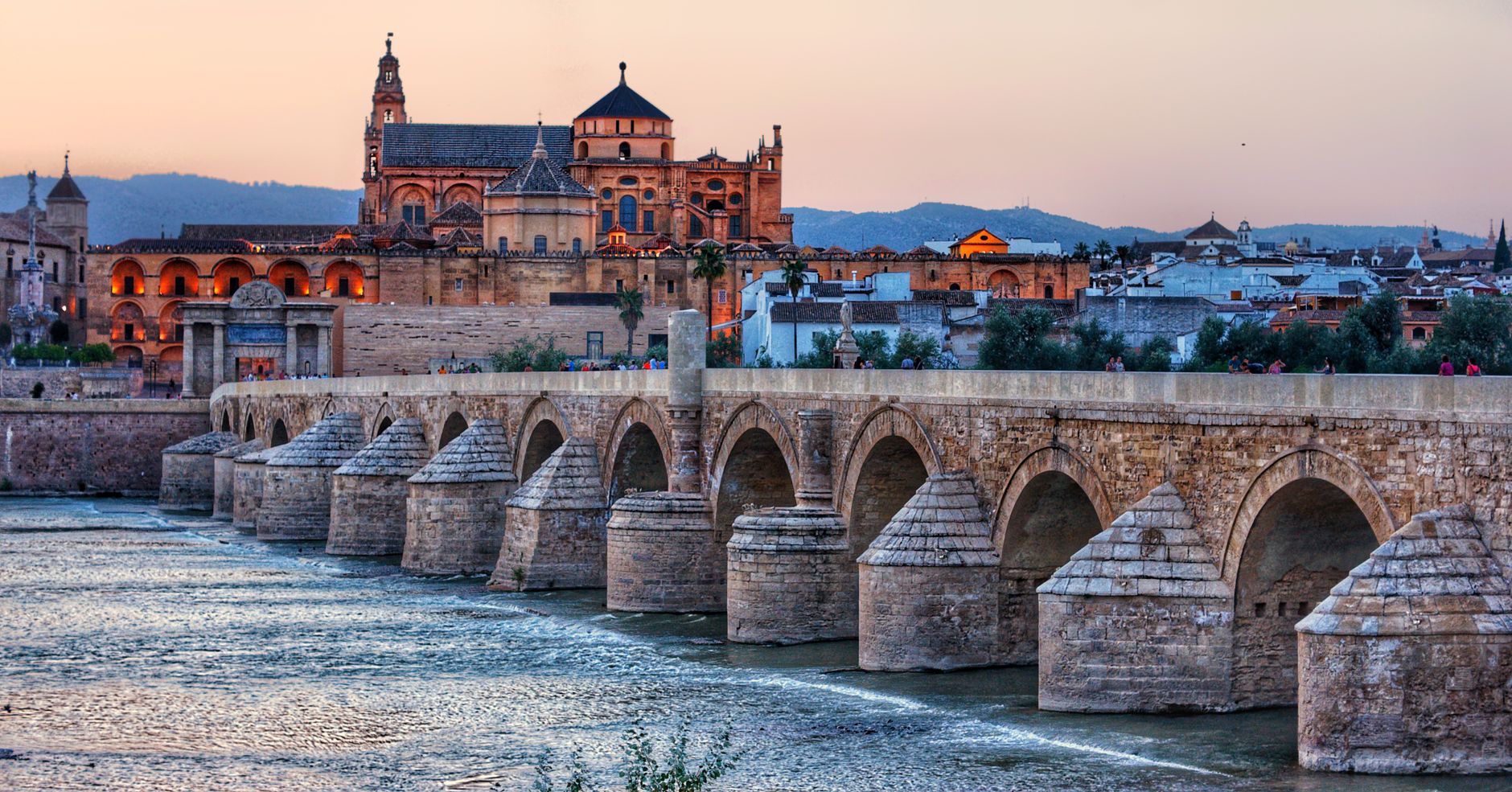 Photo by Antonio Guirado Rivas via Pexels
The Mezquita in the free hour
Half past eight to half past nine, Monday to Saturday, no photography, no tour groups, and the 856 striped arches with far fewer people than at any paid time.
The Roman bridge at sunset
Looking back at the Mezquita's silhouette from the far bank, which is the photograph the city is known by, with the Calahorra tower at the end of it.
The Patios in May
Private courtyards open free for a fortnight in San Basilio and the Judería, hung with geraniums, on UNESCO's intangible heritage list and with orderly queues at every door.
Medina Azahara
The ruined caliphal palace city eight kilometres out, UNESCO-listed, reached on the shuttle bus from the museum at its entrance.
The Palacio de Viana
Twelve courtyards in one aristocratic house in Santa Marina, away from the crowds, and the patios festival available all year for the price of a ticket.
The Judería before the day-trippers
The whitewashed lanes, one of Spain's three surviving medieval synagogues, the Casa de Sefarad and the Calleja de las Flores, empty before ten.
The neighbourhoods of Cordoba
La Judería
The old Jewish quarter
UNESCO-listed lanes north-west of the Mezquita, with the synagogue, the Casa de Sefarad and the flower-hung alleys the city is photographed for. For first visits and one night.
The Mezquita at the door, on the most expensive and most visited ground in the city.
San Basilio
The patio quarter
A tightly packed medieval quarter south-west of the Mezquita, with the densest concentration of the competition patios that open each May, quieter than the Judería. For patios and value.
A few minutes further from the monuments, for lower prices and more courtyards.
San Andrés and La Corredera
The commercial heart
Around Andalusia's only Castilian-style arcaded square, a seventeenth-century rectangle with a morning market under the arches, and the tapas streets residents actually use. For food and a second day.
Where the city eats, ten minutes from the monuments and away from the menus in four languages.
Santa Marina
The local north
Cobbled lanes and quiet plazas holding the Palacio de Viana and its twelve courtyards, residential, with a neighbourhood tapas scene and almost no visitors. For local pace.
Twelve courtyards and no crowds, at a fifteen-minute walk from the Mezquita.
Ribera
The riverside
The southern edge along the Guadalquivir, dominated by the Roman bridge, the Calahorra tower and the view back at the Mezquita, a walking route more than a place to sleep. For the view.
The bridge at sunset, and a hot exposed walk back up in summer.
See every Cordoba neighbourhood on one map
Save the areas you like and Stippl plots your days so you're not crossing the city twice.
Where to stay in Cordoba
Sleep in the Judería or the streets around the Mezquita for atmosphere and pay for it, or in San Basilio a few minutes further for lower prices and more patios; the patio hotel built round a courtyard is the local form. Most travellers give Cordoba 1 night on Stippl, and the Patios fortnight in May books out months ahead.
La Judería
€70–130
Patio hotels and converted houses in the lanes, €90 to €200 a double.
San Basilio
Guesthouses and small hotels built round their own courtyards, €70 to €150 a double.
San Andrés and La Corredera
Mid-range hotels and apartments near Plaza de las Tendillas, €70 to €140 a double.
Santa Marina
€55–95
A few small hotels and apartments in the quiet north, €60 to €130 a double.
Ribera
A handful of hotels on the riverfront, €80 to €160 a double, with the walk uphill every evening.

What to eat in Cordoba
The thick, cold, bread-and-tomato soup that is Córdoba's own, heavier than gazpacho and topped with egg and ham
Pork rolled around ham, breaded and fried, a Córdoba invention
Slow-cooked oxtail, the city's standard rich dish
Fried aubergine with cane honey, shared across Andalusia
The local fortified wine, drunk instead of sherry here
Discover food spots in Stippl
Find restaurants and markets on the map, save them to your itinerary, works offline too.
Cordoba customs and what not to do
Midday is not for walking
In July and August the old town empties between roughly two and six, and visitors who ignore that suffer for it; the afternoon is for a shuttered room.
The patios are homes
During the May festival people open their own courtyards; they are lived in, not exhibits, and the queues are orderly for that reason.
The free hour is a service
No photography and no guided groups in the Mezquita's free hour, which is treated as time for worship and quiet visiting rather than a tour slot.
Dinner is late
Kitchens fill from nine, lunch runs from two, and the tapas bars around La Corredera are where the city eats rather than the lanes by the Mezquita.
Montilla, not sherry
The local fortified wine from Montilla-Moriles is what is poured here, and asking for it rather than fino marks the visitor who read something.
Cover up in the Mezquita
It is a working cathedral as well as a monument, shoulders and knees are covered, and the same applies in the synagogue.
Do
- Take the free Mezquita hour at half past eight, Monday to Saturday
- Walk the Roman bridge at sunset and look back
- Book months ahead for the Patios fortnight in May, or come in April
- Eat around La Corredera and in Santa Marina rather than beside the Mezquita
- Carry water in summer and plan the day around the afternoon
Don't
- Walk the old town between two and six in July or August
- Photograph or join a group in the Mezquita's free hour
- Book south of the river or outside the core; the walk back is long and hot
- Trust the Alcázar ticket without checking the palace is open
- Expect the patios outside May without a ticket to the Palacio de Viana
What a Cordoba trip costs
Budget
€45–75
A hostel bed in the centre, market tapas, the free Mezquita hour, the bridge.
Mid-range
€100–170
A patio hotel in the Judería, sit-down meals, the paid monuments, the Medina Azahara shuttle.
High-end
€220–400+
A converted palace, booked restaurants, a private Medina Azahara trip.
Track what you actually spend
Set a daily budget per country and log expenses in any currency while you travel.
Fun facts about Cordoba
Four UNESCO inscriptions make Cordoba the most listed city on earth. The Mezquita, the historic centre, the Patios festival as intangible heritage and Medina Azahara, inscribed between 1984 and 2018.
The Mezquita began in 785 on the site of a Visigothic church. It was expanded over two centuries, and after 1236 a cathedral was inserted into the middle of the prayer hall rather than replacing it.
The province of Cordoba holds the Spanish national temperature record. Just under 48 degrees, which is why the old town empties every summer afternoon.
Cordoba was the largest city in western Europe around the year 1000. The caliphate's capital had libraries, street lighting and Medina Azahara's palace city eight kilometres out.
Salmorejo is a Cordoba dish, not an Andalusian one. Thicker than gazpacho, made with bread, and topped with egg and ham, it is the city's own cold soup.
Andalusia's only Castilian-style arcaded square is Cordoba's Corredera. A seventeenth-century rectangle with a morning market under the arches, built like the plazas of the north.
Local tips for Cordoba
On the high-speed line
Cordoba sits on the Madrid to Seville AVE, 45 minutes from Seville and under two hours from Madrid, which is the whole reason it works as a day trip.
Medina Azahara by shuttle
It is eight kilometres out and the shuttle bus from the museum is the way in, about €3 return with a child fare.
Heat is the real risk
The province holds the Spanish national record, and the danger in July and August is straightforward dehydration in a shadeless old town.
Ordinary precautions otherwise
Cordoba is a small, calm provincial capital with no particular crime problem and no recurring tourist scam, unlike the bigger Andalusian cities.
The bridge is busy after dark
It is the standard evening walk and stays populated well into the night, and the walk back from the river is exposed in daytime.
One night, or a day
Most travellers give Cordoba 1 night on Stippl and 54.0% of stops are a single night; the night is what gets you the free hour.
Cordoba questions, answered
One full day covers the monuments, and that is what most people give it: most travellers give Cordoba 1 night on Stippl and 54.0% of stops are a single night. Staying the night buys the free Mezquita hour, the bridge after dark and a second morning in Santa Marina, which is the difference between the monument and the city.
Monday to Saturday from half past eight to half past nine, except on days of extraordinary celebration, with no photography and no guided groups in that hour. It is the emptiest the building ever is, and the reason to sleep in Cordoba rather than arrive on the ten o'clock train.
Between Seville and Madrid or Granada, as a night on the AVE line: 11.2% of Cordoba stops planned on Stippl carry no bed at all, the day-trippers. Put it into Stippl as one night between Seville and Granada, then ask people who have done the loop, in subreddits like r/spain, whether to keep the night.
No, and May is the busiest and most expensive fortnight of the year. The patios open free for two weeks then, 34.6% of Cordoba stops planned on Stippl are two nights, and the Palacio de Viana holds twelve courtyards all year, and April, early June, September and October give the same city without the crowd.
About 37 degrees in July and August in a shadeless old town, and the province holds the Spanish national temperature record. The old town empties between two and six, so the day is the free hour, a shuttered room and the bridge after dark.
The palace and towers have been closing for restoration while tickets were still being sold, so check the official site the day before rather than the guidebook. The gardens and the mosaics are the visit if the interior is shut, and the Mezquita next door is the reason you came.
Every guide is written by the Stippl editors and checked against the trips our travellers actually plan. Spotted something out of date? Let us know.

Plan Cordoba in Stippl
Day-by-day planning, stays and budget in one app, with every place from this guide already on the map.
Download the app