 North AmericaMexico
Mexico
Mexico's beaches are the least interesting thing about it. Thousands of limestone sinkholes over an underground river, pyramids at eight in the morning with the balloons still up, masked wrestling for eight euros, cemeteries lit with candles on the second of November. Nobody covers this country in one trip, and everybody tries.
MexicoMexico in a nutshell
Where to go in Mexico


Turn these stops into a Mexico route
Pick your favourites and Stippl orders them, adds travel times and builds the day-by-day.
Routes that work
Mexico itineraries, one week to three
Mexico is loved by culture seekers and backpackers alike. We recommend several routes through this country, here they are in full!
6 nights1 week: the capital, Puebla and Oaxaca
Mexico City · Puebla · Oaxaca City
Mild highlands weather in Mexico City and Oaxaca; dry season avoids jungle rains and crowds thin after Easter.
6 nights8 days, Baja California Sur
Loreto · La Paz Baja · Todos Santos
Grey whale season peaks; cooler water temperatures and calm seas ideal for Loreto and Cabo San Lucas.
12 nights2 weeks, the classic Yucatán loop
Cancún · Tulum · Bacalar
Clear Caribbean waters, calm seas around Tulum and Holbox, and dry weather across Valladolid and Bacalar.
13 nights2–3 weeks: beaches and islands, ending on the coast
Cancún · Holbox · Valladolid
Extended Caribbean time benefits from calm seas, clear water, and dry conditions across Holbox, Bacalar, and Tulum.
14 nights2 weeks, Yucatán with the colonial inland
Cancún · Holbox · Valladolid
Combines dry Caribbean coasts with inland colonial towns; Holbox whale sharks arrive June but seas are rougher and sargassum builds.
17 nights3 weeks, Yucatán and Chiapas
Cancún · Valladolid · Merida
Avoids Chiapas wet season (May–Oct) and Caribbean hurricane risk; dry spell crosses Palenque and San Cristóbal.
19 nights2–3 weeks, Yucatán into Belize
Cancún · Isla Mujeres · Holbox
Dry season suits boat travel to Belize; Holbox and Bacalar have clearest water and best visibility before May storms begin.
24 nights4 weeks: Yucatán, Oaxaca and the capital
Cancún · Holbox · Valladolid
Links Caribbean dryness with highland Mexico City weather; Oaxaca and Holbox both optimal before May heat and rains.
26 nights3–4 weeks, the southern route
Mexico City · Oaxaca City · Puerto Escondido
Spans Mexico City, Pacific coast, and Caribbean; dry season suits all three climates and avoids Oaxaca rains and hurricane season.
Updated October 2026 · Written by the Stippl editorsThis is what 133,000+ planned stops in Mexico on Stippl say about the country.
Mexico gets planned as two trips that barely touch, and most travellers give a stop 2 nights. One is a Yucatán loop entered at Cancún: cenote swimming, Chichén Itzá at eight in the morning from Valladolid, the Bacalar lagoon, whale sharks off Holbox and the reef off Cozumel. The other is a southern corridor running from the capital through Oaxaca to the Pacific, with Teotihuacán at opening and the balloons overhead, Lucha Libre in Mexico City, and Oaxaca's mezcal and market circuit. The two rarely appear on the same trip.
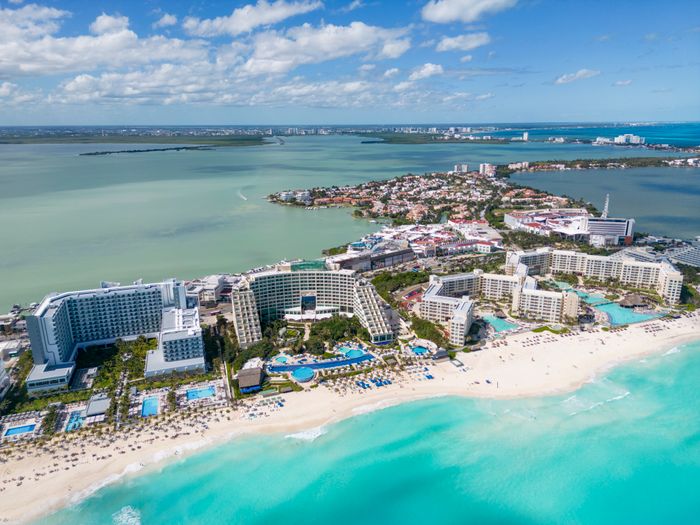
Cancún is a door rather than a destination. Cancún appears on more Mexican trips than anywhere else in the country, and yet 52.1% of stays there last a single night, against 30.5% nationally. Travellers land, sleep once and move along the coast. The airport is doing the work the city gets the credit for.
So pick a half and give it the whole trip. A typical Mexican trip runs 18 days and carries around twelve stops, of which only about five are in Mexico, so the country is usually one leg of something longer rather than the whole of it. Mexico is also eaten rather than ticketed: travellers log three and a half meals for every tour or sight. Skip the Caribbean coast if untouched is what you came for, because Cancún, Playa del Carmen and Tulum are heavily developed and Tulum now gets compared to Bali.
Plan Mexico in Stippl
Day-by-day planning, stays and budget in one app, with every place from this guide already on the map.
Download the appWho Mexico is for
First-timers to Latin America
The Yucatán loop is short-hop, bus-served, English-friendlier than the rest of the country and low on surprises, and 18 days is the typical trip.
Foodies
Oaxaca, Puebla and Mexico City are three distinct national-class kitchens within a week of each other, and the Yucatán has a cuisine of its own.
History and ruins travellers
Chichén Itzá, Teotihuacán, Palenque, Monte Albán, Uxmal and Ek Balam are all reachable on standard routes, and the Maya sites are still in living cultural use.
Mid-range backpackers
Dense hostel network, cheap street food and a first-class bus system; more expensive than Asia, far cheaper than the US.
Divers and snorkellers
The Mesoamerican Barrier Reef off Cozumel, cenote diving in the Yucatán, whale sharks off Holbox and La Paz, and mobula-ray aggregations in the Sea of Cortez.
Families
Mérida, Bacalar and Cozumel work with young children; short drives, calm water and easy food.
Wildlife people, fixed dates
The calendar is unusually specific here: grey whales, whale sharks, mobula rays, monarch butterflies and turtle releases each have their own weeks.
Maybe not for you: travellers who want only untouched places, since Cancún, Playa del Carmen and Tulum are heavily developed; and travellers who need a settled security picture, because six tourist-relevant states carry a US do-not-travel rating, which rules out large parts of the map rather than the country.
The best time to visit Mexico
Dry season
December to April
Sunny, low humidity, calm sea, everything open and everything booked. The default answer for a first trip, and the reason to reserve hotels months out.
Shoulder
November, and May to early June
The value window: dry enough, materially cheaper, and November is the clearest Caribbean water of the year before Christmas pricing starts.
Rainy season
May to October
Afternoon downpours, lush landscapes, the lowest prices and the fullest festival calendar. Also the sargassum and hurricane window on the Caribbean side.
- Día de Muertos, 1 and 2 November, is the one date to plan a whole trip around. Oaxaca City and Pátzcuaro are the famous ones and both book out; the observances run from 31 October, and the flights and rooms go months ahead.
- January is the month most travellers plan Mexico for on Stippl, about 82 days ahead. Only 13.6% of Mexico plans are made inside a fortnight, and January is inside the dry-season peak, so the coast is not a place to arrive without a room.
- Easter week is the domestic travel peak. Beaches, buses and prices all spike as the country goes on holiday at once; book the Yucatán and the Pacific coast ahead or travel the week after.
- Hurricane and sargassum season runs June to October on the Caribbean side. The seaweed varies by year and by beach, Holbox usually escapes it, and a Pacific or inland route in those months avoids both.
- The equinox in March and September draws the year's biggest crowds to Chichén Itzá. The serpent shadow on El Castillo is the reason; go the week before or after for the same site with a tenth of the people.
- Cinco de Mayo is a Puebla event, not the national party visitors expect. It marks a battle at Puebla and is celebrated there with re-enactments; Independence Day is 16 September, and that one spikes prices.
Add your Mexico dates and we'll flag the weather per stop
Stippl shows the season, crowds and prices for every place on your route.
Festivals, and when to avoid them
Christmas to Three Kings
The peak fortnight on every coast: Cancún and the Riviera at their highest rates, the domestic families on the Pacific and the flights from Europe full. Book by the autumn.
Carnaval
Veracruz and Mazatlán run the big ones, Mérida's is among the country's largest and Holbox's takes over the whole island. Rooms in those towns go months ahead; the rest of the country is normal.
Spring Break
The American college crowd takes Cancún's Hotel Zone for the month, and the beach clubs turn the music up. A family stay in March goes to the Riviera or the downtown hotels.
Equinox at Chichén Itzá
The serpent shadow on El Castillo draws the year's biggest crowds to the site, and the gates queue from dawn. Visit the day before or after, or on a Valladolid morning in any other week.
Semana Santa
The domestic travel peak: beaches, buses and prices all spike, and Mexico City empties for the coast. Book the coast months ahead; the capital is quiet and half its museums run reduced hours.
Guelaguetza
Indigenous dance and music in the hillside amphitheatre above Oaxaca City, one of North America's largest folk festivals. The main-show tickets need booking in spring and the city's rooms go with them.
Independence Day
The Grito on the Zócalo on the night of the 15th draws massive crowds, and the 16th is a national holiday with another price spike. Rooms around the Zócalo are booked; the rest of the country has a long weekend.
Día de Muertos
Oaxaca City and Pátzcuaro are the famous stagings, the Yucatán keeps its own Hanal Pixán around Mérida, and Mexico City's parade is on the Saturday before. Oaxaca's rooms are booked by the summer and prices climb everywhere.
Virgin of Guadalupe
The largest religious observance of the year: millions walk to the basilica in Mexico City in the days before, and the roads north of the centre close. A day to be elsewhere in the capital or to watch from the edge.
Describe your trip, get a Mexico itinerary in seconds
Everything in this guide is already in Stippl. Tell the planner how long you have and what you like: it builds the route, the days and the travel times, and you edit whatever you want.
Things to do in Mexico
 Photo by Annalise Tingler via Pexels
 Photo by Mikhail Nilov via Pexels
 Photo by Elianne Dipp via Pexels
Cenote swimming
Swim in the limestone sinkholes over the Yucatán's underground river, thousands of them, which the Maya treated as portals to the underworld, from about €5 to €25 each. Go at opening; expect genuinely cold water and a compulsory rinse before you enter.
Chichén Itzá at eight from Valladolid
Stay in Valladolid, forty minutes away against two hours from Cancún or Mérida, and be inside at opening before the coaches land at midday, about €35. El Castillo is thirty metres with 365 steps, one per day of the year, and no climbing.
The Bacalar lagoon
Sail, kayak or paddleboard the lagoon of seven colours at sunrise, float the Los Rápidos channel and paddle over the hundred-metre cenote inside the lake, from about €25 for a three-hour sail. No sunscreen; the stromatolites lining the shore are living rock.
Whale sharks off Holbox
Snorkel beside the world's largest fish in the summer aggregation from 1 June to 15 September with a licensed operator, about €130, with two swimmers and a guide per drop and never a touch. Mid season the odds are close to certain.
Teotihuacán at opening
Take the hour from Mexico City to the Pyramids of the Sun and Moon and be at the gate at eight, about €5, with the sunrise balloon flights still in the air overhead. Climbing is banned; a balloon is about €150.
Lucha libre in Mexico City
Take a Tuesday or Friday night at Arena México for the masked wrestling, about €8 from the window, with the street scene outside half the event. Fridays sell out weeks ahead; cameras are banned inside.


What to eat in Mexico
achiote-marinated pork, slow-cooked in banana leaf; the Yucatán's signature
spit-roasted pork carved off a vertical trompo, a Lebanese shawarma descendant
the deepest of the Oaxacan moles, dozens of ingredients including chocolate
Puebla's own mole; the city also claims chiles en nogada
a large crisp tortilla loaded with beans, cheese and meat
toasted grasshoppers with chilli and lime
fried tortilla stuffed with refried beans, topped with meat and pickled onion
Yucatecan lime-and-turkey soup
crisp rolled crepe, sweet or filled with Edam cheese
grilled corn with mayonnaise, lime, cotija and chilli
slow-confited pork, born in Michoacán
the Baja fish taco, battered and fried
the island's own invention and its most-ordered dish
Discover food spots in Stippl
Find restaurants and markets on the map, save them to your itinerary, works offline too.
Mexican customs and what not to do
Your guide is a descendant
Maya culture is present, not historical: the guides at Chichén Itzá are Maya descendants, most residents of San Cristóbal wear traditional dress, and the Yucatán runs its own Day of the Dead.
English stops past the hubs
A few words of Spanish change the interaction completely; English is reliable only in the Caribbean tourist hubs and thin in Mérida, the highlands and every small town.
Say yes to the invitation
Hospitality is warm and family-centred, and accepting a spontaneous invitation to a table or a fiesta is how the country opens up; nobody describes Mexican vendors as pushy.
Sunday belongs to families
The zócalo is the main square of every town and the default meeting point; Sunday is when families take it over, and Mérida closes its streets to traffic for it.
A drink comes with food
Cantina etiquette: a drink buys free botanas, live music runs from about six, and the night ends early because most close around ten.
Markets only, not food stalls
Markets are the place to haggle and it is played as a friendly exchange; food stalls, taxis with a posted rate and supermarkets are fixed-price.
Do
- Ask before photographing people, and especially in indigenous communities
- Dress modestly in churches and rural towns; beach towns are entirely casual
- Tip ten to fifteen percent in cash pesos at restaurants and bars, and small amounts for bag packers and housekeeping
- Shower before entering a cenote and apply sunscreen only afterwards
- Photograph a rental scooter or car at pickup so a false damage claim has nothing to stand on
Don't
- Drink alcohol on the street; it is illegal and enforced
- Accept dynamic currency conversion at a card terminal or ATM; always choose pesos
- Touch the stromatolites at Bacalar or crowd the flamingos on Holbox
- Hail a taxi off the street, and never at an airport; use an authorised rank or an app
- Assume the $ on a price tag means dollars; it is almost always pesos
What a Mexico trip costs
Budget
€34–60
Hostel dorm or a simple double, market and street-stall meals, ADO buses; achievable in Bacalar, Oaxaca, Chiapas and inland Yucatán.
Mid-range
€85–155
Boutique colonial hotel or apartment, restaurant meals, a tour or two, a shared rental car.
High-end
€220–450
Tulum beach strip, Holbox or Los Cabos, private guides, fine dining.
Track what you actually spend
Set a daily budget per country and log expenses in any currency while you travel.
Visas, SIM cards and getting around
Entry & visa
Up to 180 days, at discretion
EU, UK, US, Canadian and Australian passports enter visa-free, but the automatic 180 days is gone: officers grant days to match the trip and may ask for bookings.
Money
Pesos outside the corridor
The peso is the currency. Cards work in cities and tourist zones, but markets, street food, colectivos, most cenotes and small guesthouses are cash-only, so carry pesos.
Connectivity
Telcel covers the most
A local SIM or eSIM is standard and cheap: a Telcel SIM is about €4 (80 pesos) and a month of data about €10 (200 pesos). Download offline maps.
Getting around
ADO coaches, then colectivos
ADO coaches run the south and east, modern and punctual, booked online. Colectivos are the cheap layer between towns, and a rental car suits the Yucatán loop and Baja.
Health
Hepatitis A for everyone
Nothing is mandatory; hepatitis A is recommended for all and bite prevention is the whole defence against dengue. Mexico City's altitude of 2,240 m is felt on the first day.
Water
The ice counts as well
Tap water is not safe to drink anywhere in Mexico. Bottled or purified water only, avoid ice of unknown origin, and a filter bottle pays for itself in a week.
Tipping
10 to 15%, in cash
Tipping is expected and usually not included: 10 to 15% at restaurants and bars, more at upscale places, in cash pesos. Free walking tours run on tips too.
Power & plugs
American plugs, 127 V
Sockets are types A and B at 127 V, the North American standard. Europeans need an adapter, and a single-voltage hairdryer needs a converter as well.
Language
Not the Spanish of Spain
Spanish is the working language and Mexican usage differs from Castilian in vocabulary. A handful of words changes how you are treated, and Yucatec Maya explains the odd place names.
Spanish worth knowing
Nobody expects you to speak the language, which is exactly why a handful of words goes so far.
OH-lah / BWEH-nohs DEE-ahs
hello / good morning · Hola / buenos días
BWEH-nahs TAR-dehs / NOH-chehs
good afternoon / good evening · Buenas tardes / buenas noches
por fah-VOR / GRAH-syahs
please / thank you · Por favor / gracias
deh NAH-dah
you're welcome · De nada
see / noh
yes / no · Sí / no
per-DOHN / dees-KOOL-peh
sorry / excuse me (to get attention) · Perdón / disculpe
AH-blah een-GLEHS
do you speak English? · ¿Habla inglés?
KWAN-toh KWEHS-tah
how much is it? · ¿Cuánto cuesta?
lah KWEN-tah
the bill, please · La cuenta, por favor
DOHN-deh ehs-TAH el BAH-nyoh
where is the bathroom? · ¿Dónde está el baño?
OO-noh, dohs, trehs, KWAH-troh, SEEN-koh
1–5 · uno, dos, tres, cuatro, cinco
says, SYEH-teh, OH-choh, NWEH-veh, dyehs
6–10 · seis, siete, ocho, nueve, diez
MAHN-deh
the Mexican courtesy reply to being called, or to not having heard, where a Spaniard says *¿Qué?* · ¿Mande?
bwehn proh-VEH-choh
said to others when entering or leaving a place where people are eating; ordinary courtesy, not a formality · (Buen) provecho
ah-oh-REE-tah
the dictionary itself defines it elastically: "now, in a short while, or when possible", so it is not a promise of immediacy · ahorita
Maya *dzonot*, "abyss"
freshwater sinkhole; the Maya treated them as portals to the underworld · cenote / dzonot
shared minibus between towns; leaves when full, cheapest intercity option · colectivo
unmarked speed bumps, the single most-warned-about road hazard · topes
the small street plates that make up most street eating · antojitos
free snacks that come with a drink in a cantina · botanas
the local bar institution; music from 18:00, closes around 22:00 · cantina
the main square of every Mexican town · zócalo
an authorised taxi rank, the safe way to take a cab · sitio
a family mezcal distillery in Oaxaca (also a Maya city in Chiapas) · palenque
the official designation for towns of recognised character · Pueblo Mágico
crisp rolled crepe sold on Yucatán plazas at night · marquesita
the Yucatán's own Day of the Dead observance · Hanal Pixán
Maya, "where the sky is born"
the biosphere reserve south of Tulum · Sian Ka'an
"hole-bosh"
the island's name is Maya, not Spanish, pronounce it accordingly · Holbox
"bah-ya-do-leet"
the town's name is not read as it looks to an English speaker · Valladolid
Mexico questions, answered
By picking one region rather than the country. A Mexico trip runs 18 days on Stippl, which is the Yucatan loop and not much more; three or four weeks lets you add Oaxaca or Chiapas. Lay the loop into Stippl, then show it to people who have done it, in the Mexico subreddits.
Puerto Escondido gets four; Mexico City, Tulum, Oaxaca, Bacalar and Holbox three; Valladolid, Merida and Playa del Carmen two; Cancun one. That is across the 133,000+ stops planned in Mexico on Stippl, and it tells you plainly that Cancun is a door rather than a destination.
In Cancun, overwhelmingly. It is the first stop on 57.6% of the trips that include it on Stippl, and Mexico City opens most of the rest. Which of those two you fly into decides the shape of everything after it: the Yucatan loop east, or the highlands and the Pacific.
ADO buses for the Yucatan loop: cheap, comfortable, punctual, and they run centre to centre rather than airport to airport. A car earns its keep for the cenote belt, the pink lakes, Baja and the Pacific coast, where the good stops are strung out between towns rather than inside them.
It depends entirely on the state, and treating the country as one answer is how people get this wrong. Yucatan and Campeche carry the lowest official warning level; Quintana Roo, Mexico City and Oaxaca one step up; several northern and Pacific states carry do-not-travel ratings. Check the advice state by state.
Yes, more than you expect. Cards work in the cities and the tourist zones, but cenotes, markets, colectivos and small towns are cash only, and the machines on Holbox and in Bacalar fail often enough to plan around. Draw pesos in a city before you head anywhere small.
Every guide is written by the Stippl editors and checked against the trips our travellers actually plan. Spotted something out of date? Let us know.

Plan Mexico in Stippl
Everything in this guide, ready to drop into your Mexico route, with planning and bookings in one app.