

Merida
Mérida is the capital of Yucatecan cooking, from the pit-oven cochinita benchmark to market-stall lunches, with free events on the plaza every night. Uxmal, the yellow town of Izamal and Celestún's flamingos are each a day out.
Merida in a nutshell
Merida: what to expect
The numbers below come from 133,000+ planned stops in Mexico on Stippl, and the rest from the guides we cross-check.
Mérida is the white colonial capital of the Yucatán, and the day-trip ring is half of what you come for. Uxmal and the Puuc route sit an hour south, Izamal's mustard-yellow streets east, Celestún's flamingos west and the Cuzamá cenotes out along old plantation rails. The city itself runs a free cultural programme every night on the plaza, from Pok-ta-Pok under floodlights to the Palacio murals, and the food is the peninsula's benchmark: cochinita from a pit oven, and Lucas de Gálvez market at its overwhelming best.
Mérida belongs to the completists. Trips that carry it hold more Mexican stops than any other destination's, roughly half again the national picture, so nobody flies in for Mérida alone. It is also the hinge between the two Mexicos: every beach destination in the country avoids Mexico City and every southern stop over-selects it, and Mérida is the only place that carries the capital at exactly the ordinary rate.
Two nights is what most travellers give it, and October is the month to want. That peak is shared only with Mexico City and Oaxaca, which is the Día de Muertos corridor showing up in the plans. Between April and June the heat is a schedule-changer rather than a complaint, so build the afternoons around shade, water and the siesta hours. Skip Mérida if you came for a Caribbean beach, because Progreso is a local's beach and nothing like one.
Plan Merida in Stippl
Day-by-day planning, stays and budget in one app, with every place from this guide already on the map.
Download the appWho Merida is for
Food pilgrims
Yucatecan cuisine's capital: the pit-oven cochinita benchmark, market-stall lunches, and taquerías that have made it onto television.
History and architecture lovers
Conquistador mansions on Maya foundations, the hacienda belt, and the Puuc ruins within a day.
Families
Safe, calm, plaza-centred evenings, and cenote day trips with shallow ends for the ones who cannot swim yet.
Culture-calendar travellers
Free events nightly, Mérida Fest in January, one of Mexico's biggest Carnavals, and Hanal Pixán in November.
Completists
Mérida is the city the longest, fullest Mexico itineraries on Stippl run through, though most give it 2 nights.
Maybe not for you: beach-first travellers, since Progreso is a local's beach rather than a Caribbean one; heat-sensitive visitors from April to June, when 36° changes the schedule; and nightlife seekers, because evenings here are plazas and salsa, not clubs.
The best time to visit Merida
The comfortable half
October to March
The visit window, with warm days, cool nights and the flamingos at Celestún at their peak from November to February. Mérida Fest in January and Carnaval in February are the city's two big weeks.
The furnace
April to June
Hot beyond comfort before the rains, and sightseeing becomes a mornings-only sport. The cenotes are the afternoon plan and the prices are at their lowest.
Wet season
June to October
Afternoon storms, September the wettest month and the hurricane season the whole peninsula shares. The city keeps working; the beach at Progreso empties.
- October is the month most travellers plan Mérida for on Stippl, about 78 days ahead. 14.0% of Mérida plans are made inside a fortnight, and the city's hotel stock takes that in every month; Hanal Pixán week is the exception.
- Hanal Pixán in early November is the Yucatecan Day of the Dead. The altars go up across the city and the Paseo de las Ánimas fills the streets from the cemetery to the centre; it is a family observance first and a spectacle second.
- The Plaza Grande has a free programme every night and Paseo de Montejo closes to cars on Sunday mornings. Pok-ta-Pok reenactments, music and light shows through the week; the Biciruta on Sunday is the way to see the mansions.
- Celestún's flamingos are a winter thing. The boats from the village run all year, but the birds are there in numbers from November to February and gone by the wet season; a summer trip sees mangroves and a handful of stragglers.
Add your Merida dates and we'll flag the weather
Stippl shows the season, crowds and prices for every stop on your route.
Describe your trip, get a Merida itinerary in seconds
Everything in this guide is already in Stippl. Tell the planner how long you have and what you like: it builds the route, the days and the travel times, and you edit whatever you want.
Things to do in Merida
 Photo by Ritchie Soto via Pexels
 Photo by David Hernandez via Pexels
The free nightly plaza programme
Watch the Pok-ta-Pok ball game under floodlights on Saturdays, the music on other nights and the Palacio murals open till evening, all free; Mérida's culture is deliberately free. The confidante chairs are for the people-watching.
Uxmal early
Take the hour south to the Puuc masterpiece at opening, about €25, for the Magician's rounded pyramid and the climbable side structures, with no vendor gauntlet and jungle quiet. The evening light show is the other slot.
A market-day food crawl
Eat at the Lucas de Gálvez market at its overwhelming best, cochinita at the Santa Ana stalls and lechón where the lines are, about €5 a plate. Mornings, and the Sunday market on the plaza.
Izamal
Drive an hour to the yellow town, every wall the same mustard, and the 1561 convent with its vast atrium, free. Half a day, and the locals are genuinely surprised to see you.
Celestún's flamingos
Take a lancha from the village ninety minutes west into the biosphere, about €20 a boat shared, for the flamingos in their thousands from November to February, the mangrove tunnels and the freshwater spring. Fish lunch on the beach after.
The Cuzamá cenotes
Ride the horse-drawn cart along the old plantation rails to three wildly different sinkholes, about €20 for the cart, half a day of pure Yucatán. An hour east, and mornings.
The neighbourhoods of Merida
Centro
Plaza Grande, colonial heart
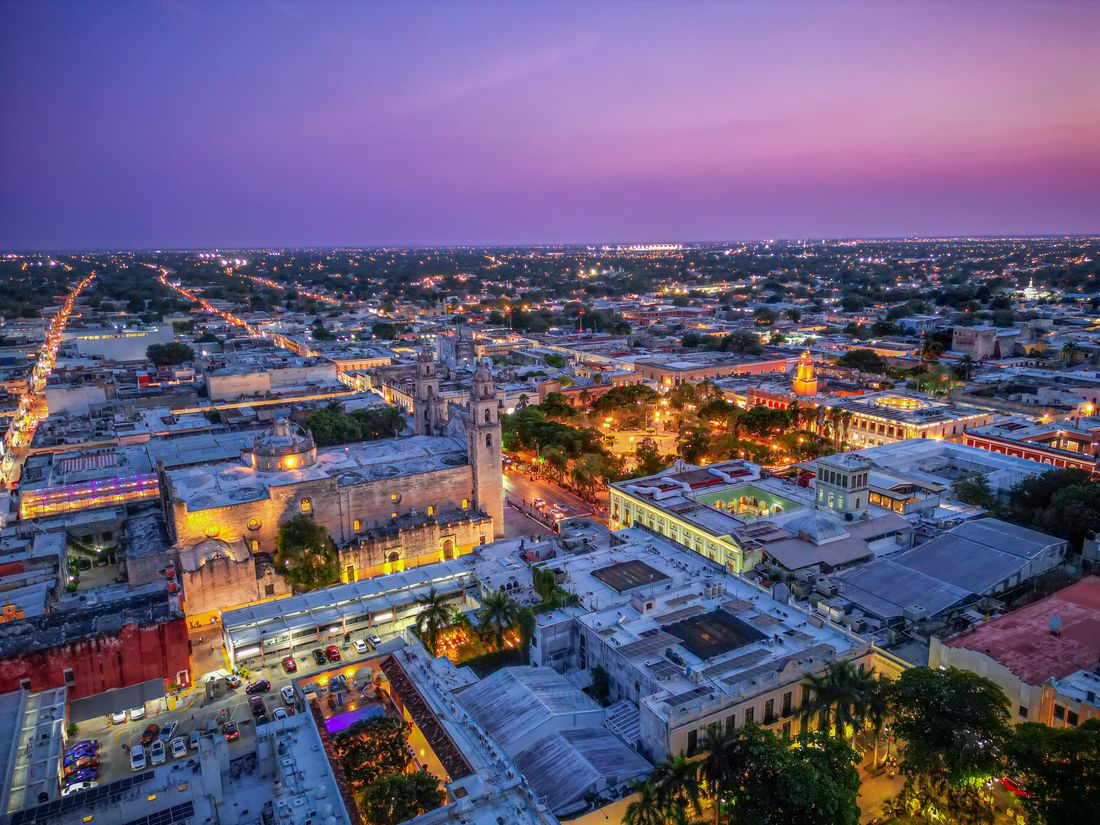
The colonial heart: the cathedral, Casa de Montejo, the Palacio murals, nightly free events on the square and both ADO terminals close. For first visits; loud and busy.
Everything on foot, and the noise of the square until late.
Santa Ana
Hip cafés, galleries, cheapest beds
The budget-cool quarter just north: hip cafés, galleries, street art and the cochinita stalls at the market, with the cheapest beds in town. For budget travellers.
The best cheap food and the cheapest rooms, and a ten-minute walk to the plaza.
Santiago
Old barrio, taquerias, salsa
One of the oldest barrios: a neoclassical-colonial mix, few tourists, the city's best taquerias and Saturday-night salsa in its park. For families and for local evenings.
The taquerias and the park, and a walk to the plaza.
Paseo de Montejo
Mansion boulevard, upscale
The French-style mansion boulevard: quieter, upscale stays, mansion museums and the spine of the Sunday cycle route. For calm and architecture; a long walk from the plaza.
The boulevard and the calm, and a taxi to the centre.
La Ermita
Quiet southern edge, local
The quiet southern old-town edge around La Ermita and San Sebastián: safe, local and still walkable to the plaza, with guesthouses in the old houses. For long stays.
A local corner at local prices, and a twenty-minute walk to the square.
See every Merida neighbourhood on one map
Save the areas you like and Stippl plots your days so you're not crossing the city twice.
Where to stay in Merida
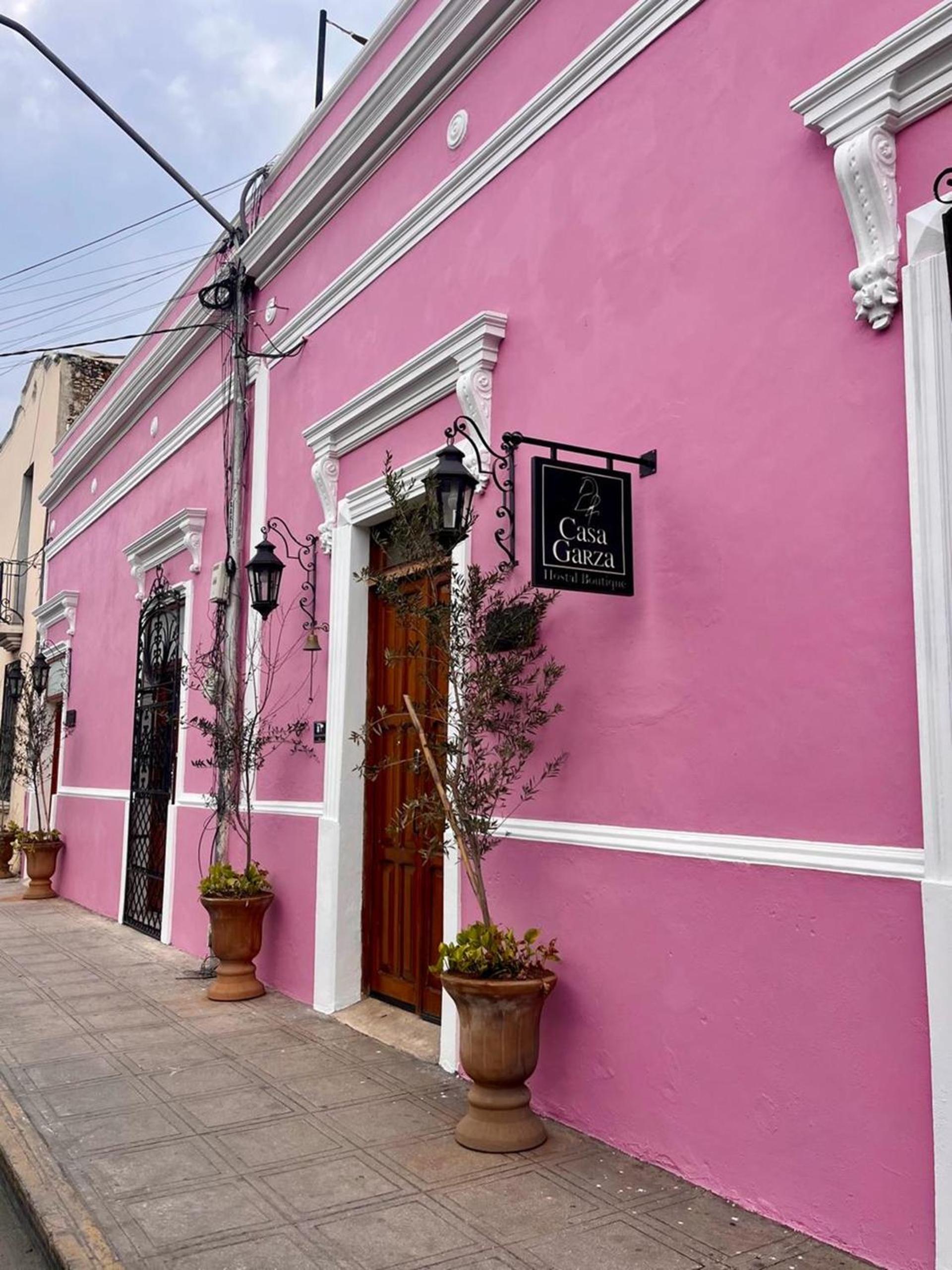
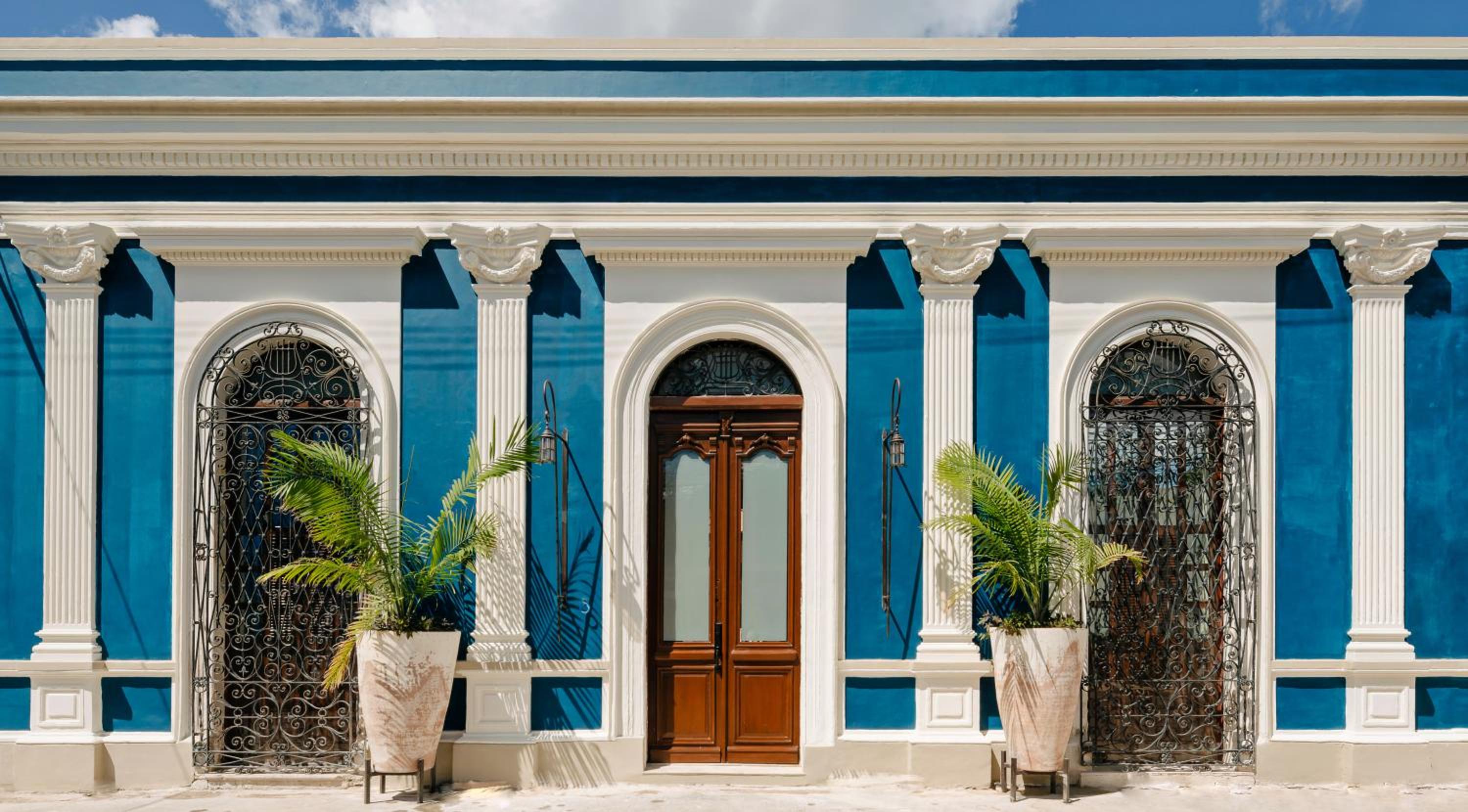
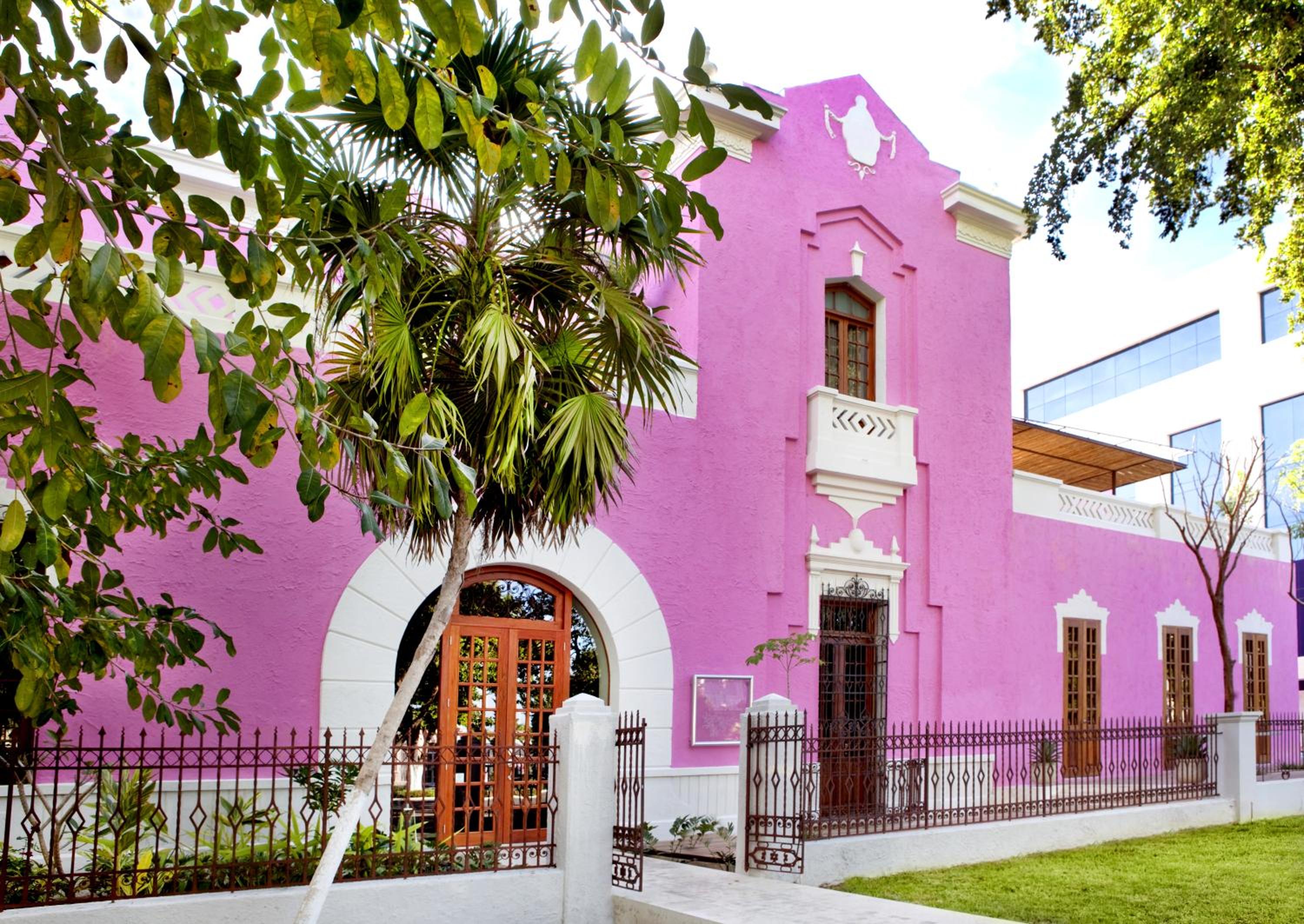
Stay in Centro for a first visit, in a restored colonial house with a patio and a plunge pool: it is the Merida form, and both bus terminals and the nightly free events on the square are on foot. Most people give Merida 2 nights on Stippl. Air conditioning and a pool are functional requirements half the year, not luxuries; check the listing for both.
Centro
Colonial houses with pools run as boutique hotels, €60 to €150, and mid-range hotels near the plaza, €40 to €80.
Santa Ana
Hostels with garden hammocks and free breakfast, €8.50 to €16 a bed, and guesthouses €30 to €60.
Santiago
Family guesthouses and rented colonial houses, €35 to €80, with the taquerias downstairs.
Paseo de Montejo
Upscale hotels in the mansions and the chains, €90 to €200, and the hacienda hotels outside town from €250.
La Ermita
Guesthouses in the old houses at the quiet southern edge, €30 to €70, still a walk to the plaza.


What to eat in Merida
achiote pork from the underground pit oven
lime-turkey soup, the Yucatecan starter
oven suckling pig, the taqueria crown
charred-chile black turkey stew
the fried-tortilla street canon
the rolled-crêpe dessert cart
Discover food spots in Stippl
Find restaurants and markets on the map, save them to your itinerary, works offline too.
Merida customs and what not to do
Maya culture is the frame
A majority-Maya city with Yucatec Maya audible in the markets and the ballgame replayed weekly on the plaza; engage with it as contemporary culture, not heritage theatre.
Dress for church and heat
The cathedral is a working one and it is hot at the same time; light cotton with covered shoulders solves both, and the shorts stay for the pool.
The plaza is the contract
Evenings on the squares belong to families and the free concerts; join at their volume, and Sunday's closed streets on Paseo de Montejo are for bicycles and strollers.
Buy from the cooperatives
Fixed-price craft cooperatives under the Palacio arches beat the pushy showrooms on the drive out; the hammock you are shown in a hotel lobby costs double.
Do
- Front-load every day: sights at eight, siesta at two
- Book air conditioning and a pool from April to September
- Take the free morning walking tour and tip the guide
- Carry small cash; parking lots and market stalls are cash-only
Don't
- Plan Chichén Itzá from here; Valladolid is the better base
- Eat on the plaza fronts; walk two blocks
- Schedule Celestún outside November to February expecting the postcard flocks
- Underestimate May; thirty-six degrees reorganises a day
What a Merida trip costs
Budget
€26–43
Dorm (€8.50–16), market meals, free plaza culture, a colectivo day trip.
Mid-range
€60–105
Colonial-pool double (€39–82), restaurant dinners, a car day.
High-end
€130–260
Restored-hacienda five-stars (about €270).
Track what you actually spend
Set a daily budget per country and log expenses in any currency while you travel.
Fun facts about Merida
The confidante chairs on the Plaza Grande date from 1915. The paired white S-seats were invented, the story goes, so courting couples could talk face to face without touching.
Progreso's pier runs about 6.5 km into the Gulf, the longest on earth. The shallow shelf forced the port that far out, and the cruise ships dock at the end of it, half an hour north of Mérida.
Izamal is painted one shade of yellow, convent included. The whole town east of Mérida was repainted for a papal visit in 1993 and has kept the colour since.
Mérida's mansions were built on sisal. The green gold of the henequen boom paid for the Paseo de Montejo, and the hacienda ruins around the city are that boom's fossil record.
About 60% of Mérida's residents are of Maya origin. The culture shows in the food, the nightly ball-game reenactments and the market stalls rather than in museum cases.
Mérida belongs to the completists on Stippl. Its trips carry more Mexican stops than any other destination's, and Campeche is planned with it three and a half times more often than chance predicts.
Local tips for Merida
Know the bus station map
First-class ADO CAME and second-class TAME across the street, TAME for Uxmal and Campeche, Noreste for Celestún and Izamal, Auto Progreso two blocks south for the beach. Chichén Itzá is about €12 on ADO.
Uber at night, walk by day
The centre walks and Uber is cheap after dark. Driving the Yucatán is easy; driving Mérida is a parking hunt where the bigger car goes first, so use the guarded cash lots.
How long to stay
Most people give Mérida 2 nights on Stippl: the centro and a museum one day, Uxmal or a cenote circuit the next. Sunday closes Paseo de Montejo to cars for the bike ride.
Siesta is the safety rule
Months above thirty-five degrees make dehydration and sunstroke the city's actual risk. Sights before eleven, indoors from one to four, and the plazas from six.
Among Mexico's safest cities
People walk at night here and the street life is everywhere. The usual baseline still applies: pickpockets in plaza crowds and Uber rather than walking home late.
No night driving
Rural roads are good by day; after dark the topes, the speed bumps, are unmarked and the wildlife is out. Book late-summer stays refundable; hurricane season applies to the whole peninsula.
Merida questions, answered
At the western end of the loop, and as a day-trip base. October is the busiest month in the Merida stops planned on Stippl, which is when the heat has finally broken. Put Uxmal, Izamal and Celestun into Stippl as day trips and let the city have the evenings.
Two nights for the city itself. Travellers planning Merida on Stippl give it 2 nights, which covers the Paseo de Montejo, the plaza on a weekend evening and two very good meals. Add nights only if you are using it as a day-trip base.
It works as both, and a quarter of visits are the short version: 25.1% of Merida stops planned on Stippl are a single night. The city on its own is a two-night town. As a base for Uxmal, Celestun and Izamal it comfortably justifies four.
No. Merida is marketed as a base for it and it is two hours away, which means arriving with the coaches rather than before them. Valladolid, forty minutes from the gate, is the right base, and Merida's own city guides say as much. Do Uxmal from here instead: better, and quieter.
April to June, unless you genuinely enjoy the mid-thirties with no sea breeze to take the edge off. The city sits inland and holds the heat. October to March is Merida at its best, and November brings Hanal Pixan, the Yucatecan Day of the Dead, and flamingos at Celestun.
Two blocks off any plaza rather than on it. The stalls at Santa Ana for cochinita pibil in the morning, the taquerias around Santiago for lechon, and Mercado 60 in the evening. Eat lunch early: the places with a reputation sell out and shut in the early afternoon.
Every guide is written by the Stippl editors and checked against the trips our travellers actually plan. Spotted something out of date? Let us know.
Plan Merida in Stippl
Day-by-day planning, stays and budget in one app, with every place from this guide already on the map.
Download the app