

Holbox
Holbox sits where the Gulf of Mexico meets the Caribbean, and only a tenth of it is inhabited: the rest belongs to the birds. No cars, and whale sharks from June.
Holbox in a nutshell
Holbox: what to expect
Our own data here is 133,000+ stops planned across Mexico on Stippl.
Holbox is a car-free sandbar thirty kilometres long and never two wide, with sand streets and golf-cart taxis on it. Three natural shows carry the island: whale sharks through the summer, bioluminescence on moonless nights at Punta Cocos, and the wade out to Punta Mosquito at low tide with flamingos between the sandbank and the shore. The village is one avenue from the pier to the square, and the mangrove kayak at dawn brings frigate birds, rays and crocodiles.
Nobody day-trips Holbox. One stay in eight here is a single night, the lowest share of any big Mexican destination against roughly one in three nationally, because a bus and a ferry turn every visit into a real stay. It is also where the loop ends rather than where it starts: a trip finishes on the island five times as often as it begins there.
Plan on 3 nights, and do not plan them around the whale sharks. The season runs June to September and those are the months our travellers plan Holbox least, with June the quietest of the year; the planning peak is the dry winter instead. Bring repellent for the dusk swarm at Punta Cocos and leave before full dark. Skip the island if you need to work, because the signal is thin and the wifi thinner.
Plan Holbox in Stippl
Day-by-day planning, stays and budget in one app, with every place from this guide already on the map.
Download the appWho Holbox is for
Wildlife travellers
Whale sharks in season, flamingos, crocodiles and frigate birds on the mangrove kayak, and water that glows at night.
Slow-beach couples and families
Shallow calm water, no traffic, village evenings, and 3 nights the norm.
Anyone fleeing the sargassum
Holbox is the one Caribbean-adjacent beach the seaweed skips, which some years is the whole reason to come.
Photographers
Murals, sandbanks, sunsets at Punta Cocos, and near-zero light pollution once the generators go quiet.
Maybe not for you: nightlife-first travellers, since there is one loud corner and otherwise beach-bar quiet; workers who depend on connectivity, because the wifi is weak and the signal spotty; the mosquito-intolerant; and tight budgets in high season, when the island premium is real.
The best time to visit Holbox
Dry season
December to April
The beach-weather window, with the sand streets dry, the flamingos in the lagoon and the island at its fullest. The northerly fronts in January and February can close the ferry for a day.
Whale shark season
June to mid September
The regulated window, 1 June to 15 September, with sighting odds near certain in the middle of it and every licensed boat under the same rules. Hot, wet in the afternoons and mosquitoes at their worst.
Wet season
June to November
Rain turns the sand streets to mud, sometimes sewage-tinged, and the hurricane watch applies; the island empties in September and October and the prices fall with it.
- February is the month most travellers plan Holbox for on Stippl, about 75 days ahead. 13.4% of Holbox plans are made inside a fortnight, and on an island with no big hotels that share is the one sleeping in Chiquilá.
- The whale-shark season is regulated: 1 June to 15 September and not a day either side. Every licensed boat follows the same rules on distance and numbers; mid-window the odds of a sighting are close to certain, and the boats leave early.
- Holbox's streets are sand, and after rain they are mud. A recent-rain check matters in any month; the golf carts get through and the flip-flops do not, and the drainage on the main street is the island's known weakness.
- The Punta Cocos sunset is the island's daily event. The walk or the cart to the western point every clear dusk, and the gathering at the village letters after it; there is no ticket and no schedule, and everyone goes.
Add your Holbox dates and we'll flag the weather
Stippl shows the season, crowds and prices for every stop on your route.
Describe your trip, get a Holbox itinerary in seconds
Everything in this guide is already in Stippl. Tell the planner how long you have and what you like: it builds the route, the days and the travel times, and you edit whatever you want.
Things to do in Holbox


Swimming beside a whale shark
Go out with a licensed boat from 1 June to 15 September, about €130, in a vest with two swimmers and a guide per drop and never a touch. Mid season the odds are about ninety-five per cent.
The Punta Mosquito sandbank
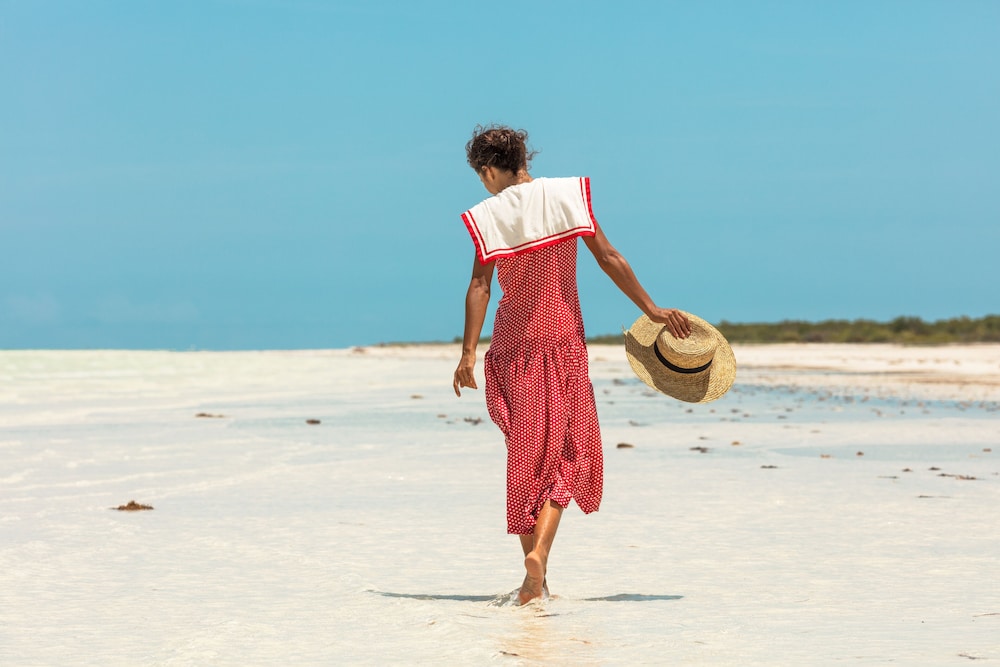
Wade the ankle-to-waist shallows at low tide from Las Nubes, not Google's pin, with flamingos between the sandbank and the shore and stingrays underfoot; shuffle your feet. Free, and the tide table decides.
Glowing water on a moonless night
Swim or kayak in the bioluminescence at Punta Cocos on a dark night from May to August, on foot for free or with a buggy tour for about €35. A full moon washes it out.
The three-island lagoon tour
Take the boat to the Yalahau freshwater spring and the bird islands for pelicans, flamingos and the chance of dolphins, about €25, booked at the stalls on the square. Mornings for the birds.
A dawn kayak in the mangroves
Paddle the Yum Balam mangroves on the lagoon side at first light, about €30 with a guide, for frigate birds, rays and, yes, crocodiles. Stay in the kayak.
Walking the Refugio's dogs
Borrow a rescue dog from the animal sanctuary for a beach walk between ten and six, free, one dog per person, and they pull. The island's most disarming hour.
The neighbourhoods of Holbox
The village
Sand streets, murals, food row
The square, the letters, the food row on Calle Tiburón Ballena, the murals and most of the budget beds, ten minutes' walk from the pier. For first visits and budget travellers.
Everything on sand streets, and the all-night bar by the square.
The beachfront strip
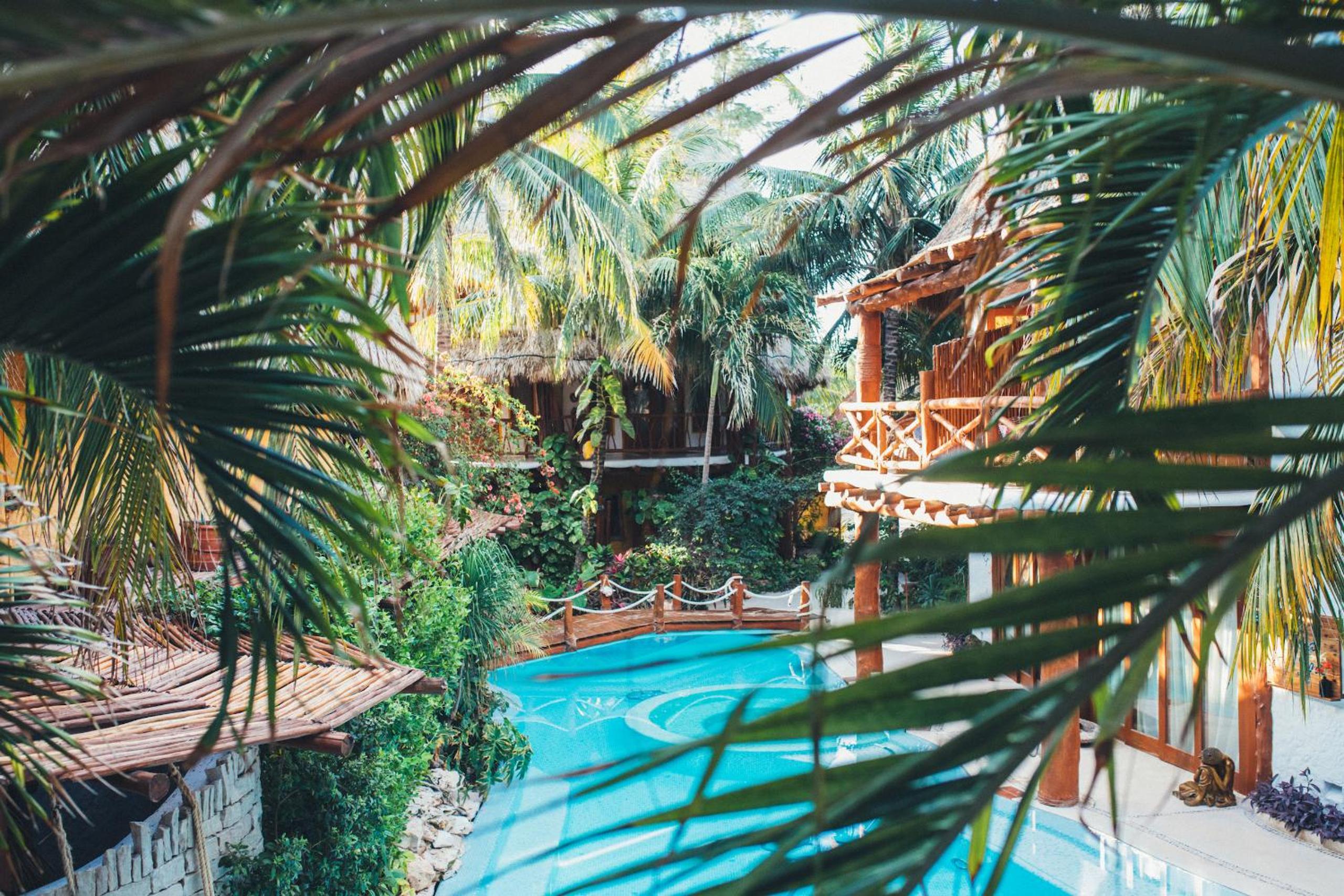
Boutique hotels, sea hammocks
The boutique-hotel beachfront east of the village: the island's version of luxury, beach clubs with minimum spends and sea-hammock frames on sargassum-free sand. For honeymoons and comfort.
The best sand and the hammocks, and the minimum spends.
Toward Punta Cocos
Quieter, the sunset point
The in-between western strip: quieter boutique stays and the sunset point at its end, with hammocks, no shade and one bar. For sunset people and for quiet.
The sunset and the bioluminescence, and mosquitoes at dusk.
Punta Mosquito side
Wild, sandbank, flamingos
The wild north-east toward the reserve fence: the sandbank walk, stingrays, flamingos and a few resorts on the edge of the mangrove. For wildlife mornings and for the island's quiet end.
The sandbank at low tide from the door, and a golf cart for the village.
See every Holbox neighbourhood on one map
Save the areas you like and Stippl plots your days so you're not crossing the city twice.
Where to stay in Holbox
Stay in the village for a first visit, with the restaurants, the bars and the pier on foot, and sleep away from the all-night Hot Corner; the beach hotels east toward Punta Mosquito are the quiet answer with a cart into town. Most people give Holbox 3 nights on Stippl. Book ahead for December to April and whale-shark weekends, and plan around the island's weak Wi-Fi.
The village
Hostels with dorms €15 to €25 and small guesthouses, €40 to €90, in the grid behind the square.
The beachfront strip
Boutique beach hotels with hammocks and beach clubs, €150 to €400, the island's version of luxury.
Toward Punta Cocos
Quieter boutique stays and cabañas on the western strip, €90 to €220, with the sunset at the end.
Punta Mosquito side
A few resorts on the edge of the mangrove, €120 to €300, for wildlife mornings.


What to eat in Holbox
the two-seas catch
the island's signature, with an ethics asterisk (see below)
the Yucatán cart canon
the island's drink pair
Discover food spots in Stippl
Find restaurants and markets on the map, save them to your itinerary, works offline too.
Holbox customs and what not to do
The rules are conservation
Distance from the flamingos, nothing touched underwater, the Punta Mosquito fence respected and reef-safe-only sunscreen on the sandbanks; the reserve is why the island is worth visiting.
Everyone knows everyone
The village is small enough that the turtle sanctuary, the bakery and the bars all know each other; behave like a guest in a town of fifteen hundred, because you are one.
Lobster pizza is the question
The island's dish is served through a closed season it is meant to respect; ask when the lobster was caught, and order the fish in the closed months.
The infrastructure is outgrown
The streets flood after rain and the puddles can carry sewage; tread lightly, literally, and the refill station beats a case of bottles the island cannot take away.
Do
- Bring pesos from the mainland; plan as if the island has no ATM
- Shuffle your feet on the sandbanks; stingrays
- Book whale-shark boats with licensed operators only
- Wear repellent at every dusk, everywhere
Don't
- Pass the bird-protection fence at Punta Mosquito
- Buy ferry tickets on the bus
- Take a golf-cart taxi for the ten-minute pier walk unless it is dark or pouring
- Count on Wi-Fi for anything time-critical
What a Holbox trip costs
Budget
€80–160 a week base
Hostel dorm (€15–25), taco dinners, bike, sandbank walks.
Mid-range
€170–260
Boutique double (€43–170), a boat tour, beach-club days.
High-end
€280–380
Beachfront boutique + private tours.
Track what you actually spend
Set a daily budget per country and log expenses in any currency while you travel.
Fun facts about Holbox
Holbox sits where the Gulf of Mexico meets the Caribbean. The mixing of the two currents is the local explanation for the green-tinged water and the whale sharks that feed in it.
The famous over-water hammocks were removed in 2020. They went as a conservation measure, and the postcards outlived the props; the frames in the sea are what is left.
The name Holbox is pronounced hol-BOSH. The x is a sh, as everywhere in Yucatec Maya, which is also why Xcaret and Xel-Há sound the way they do.
Only about 10% of the island is inhabited. The rest of the 30 km sandbar belongs to the Yum Balam reserve, and the sand streets carry golf carts because there are no cars.
Nobody day-trips Holbox, and the ferry is why. The bus and ferry to reach it convert everyone into a real stay; on Stippl it has the lowest one-night share in Mexico.
The whale-shark season is when the fewest people plan Holbox. The sharks feed offshore from June to September, and June is the island's quietest month on Stippl.
Local tips for Holbox
Tickets at the port only
Two ferry companies alternate every half hour from Chiquilá at about €12. The tickets sold on the bus lock you to one company and can cost you an hour on the dock.
A bike, not a cart
There are no cars: golf carts, bikes and walking are the whole system, and the village needs none of them. A bike is about €8 a day; the pier cart-taxis price like a monopoly.
How long to stay
Most people give Holbox 3 nights on Stippl, the lowest one-night share of Mexico's main stops. A sandbank walk, a bioluminescence night and a whale shark boat from June to September.
Sandbanks at low tide
The north beach is calm and family-shallow. The walk out along the sandbank to Punta Mosquito needs low tide and daylight; check the times before you wade.
Repellent, year round
Mosquitoes are notorious here, worst in June and after rain, and the streets flood after a storm. Sandals rather than bare feet in the puddles; they can carry sewage.
Card and cash
There are two ATMs and both run out at weekends, so bring pesos from Cancún. Beach bars take cards; the bag lifted at a beach bar is the island's only crime story.
Holbox questions, answered
As a three-night block, because getting there eats most of two days: bus or colectivo to Chiquila from Cancun, then a short ferry, and the same in reverse. February is the busiest month in the Holbox stops planned on Stippl. Put the arrival and departure into Stippl as travel days.
Three nights. Holbox gets 3 nights in the trips people plan on Stippl, and the bus-and-ferry arrival makes anything shorter a waste of the journey. There are no cars, the sand streets take ten minutes to cross, and the days go slowly on purpose.
You can, and almost nobody does: 12.5% of Holbox stops planned on Stippl are a single night, the lowest share in Mexico, and same-day visits are rarer still. The ferry and the bus make three nights the natural unit here, and the island repays it.
The regulated season runs from the start of June to the middle of September, and the odds peak in the middle of it. Licensed boats only, life vests compulsory, two swimmers in the water at a time and no touching. Book with an operator who states the licence, not with whoever is on the beach.
No, and it is the Yucatan's exception: the currents carry the sargassum past the island rather than onto it. The honest caveats here are different ones. Mosquitoes are serious at dusk, and the sand streets turn to mud after rain, which is why everybody ends up in the same rubber sandals.
Barely. The official machine fails often and the informal ones dispense dollars at poor rates, so bring pesos over from the mainland and bring more than you think you need. Plenty of places take cards now, and the connection drops as often as it works. Cash is the island's default.
Every guide is written by the Stippl editors and checked against the trips our travellers actually plan. Spotted something out of date? Let us know.

Plan Holbox in Stippl
Day-by-day planning, stays and budget in one app, with every place from this guide already on the map.
Download the app