
Holbox
Holbox ligt waar de Golf van Mexico de Caribische Zee ontmoet, en slechts een tiende is bewoond: de rest behoort tot de vogels. Geen auto's, en walvishaien van juni.
Holbox in het kort
Holbox: wat je kunt verwachten
Onze eigen gegevens hier zijn 133.000+ stops gepland in Mexico op Stippl.
Holbox is een autovrije zandbank dertig kilometer lang en nooit twee breed, met zandstraten en golfwagentaxi's erop. Drie natuurlijke shows dragen het eiland: walvishaien door de zomer, bioluminescentie in maanloos nacht bij Punta Cocos, en de waadtocht naar Punta Mosquito bij laag tij met flamingo's tussen de zandbank en de kust. Het dorp is één laan van de pier naar het plein, en de mangrove kajak bij dageraad brengt fregatvogels, roggen en krokodillen.
Niemand dagtrippt Holbox. Een op de acht verblijven hier is slechts één nacht, het laagste aandeel van enige grote Mexicaanse bestemming tegen ongeveer één op de drie nationaal, omdat een bus en een veerboot elk bezoek tot een echt verblijf maken. Het is ook waar de lus eindigt in plaats van waar het begint: een reis eindigt vijf keer zo vaak op het eiland als het daar begint.
Plan op 3 nachten, en plan ze niet rond de walvishaien. Het seizoen loopt van juni tot september en dat zijn de maanden waarvan onze reizigers Holbox het minst plannen, met juni het rustigste van het jaar; de planningspiek is de droge winter in plaats daarvan. Breng insectenwering mee voor de duskzwerm bij Punta Cocos en ga weg voor volledige duisternis. Sla het eiland over als je moet werken, omdat het signaal zwak is en het wifi zwakker.
Plan Holbox in Stippl
Planning per dag, verblijven en budget in één app, met elke plek uit deze gids al op de kaart.
Download de appVoor wie is Holbox
Dierenleven-reizigers
Walvishaien in seizoen, flamingo's, krokodillen en fregatvogels op de mangrove kajak, en water dat 's nachts gloedt.
Rustige strand-koppels en gezinnen
Ondiep kalm water, geen verkeer, avonden in het dorp, en 3 nachten de norm.
Iedereen die uit de sargassum vlucht
Holbox is het ene strand in de Caribische buurt dat de zeewier overslaat, wat sommige jaren de hele reden is om te komen.
Fotografen
Murals, zandbanken, zonsondergangen bij Punta Cocos, en vrijwel geen lichtvervuiling als de generatoren stil zijn.
Misschien niet voor jou: reizigers voor wie nachtleven voorop staat, omdat er één luid hoekje is en verder alleen beach-bar rustig; werknemers die afhankelijk zijn van connectiviteit, omdat het wifi zwak is en het signaal onregelmatig; mug-intolerant reizigers; en strakke budgetten in het hoogseizoen, wanneer de eilandpremie echt is.
Het beste moment om Holbox te bezoeken
Droog seizoen
December tot april
Het mooie-weer-seizoen, met droge zandstraten, flamingo's in de lagune en het eiland op zijn drukst. De noordelijke fronten in januari en februari kunnen de veerboot voor een dag stilleggen.
Walvishaaienseizoen
Juni tot half september
Het gereglementeerde seizoen, 1 juni tot 15 september, met waarnemingskansen bijna zeker in het midden ervan en elke vergunninghouder aan dezelfde regels gebonden. Heet, 's middags nat en muggen op hun ergst.
Natte seizoen
Juni tot november
Regen maakt van de zandstraten modderpaadjes, soms met rioolelucht, en orkaanarenaswaarschuwing geldt; het eiland leegt in september en oktober en de prijzen vallen mee.
- Februari is de maand waarop de meeste reizigers Holbox plannen op Stippl, ongeveer 75 dagen van tevoren. 13,4% van de Holbox-plannen worden binnen twee weken gemaakt, en op een eiland zonder grote hotels is dat aandeel degenen die in Chiquilá slapen.
- Het walvishaaienseizoen is gereglementeerd: 1 juni tot 15 september en geen dag eerder of later. Elke vergunninghouder volgt dezelfde regels op afstand en getallen; halverwege het seizoen liggen de waarnemingskansen bijna zeker, en de boten vertrekken vroeg.
- De straten van Holbox zijn zand, en na regen zijn ze modder. Een vers-regen-controle is in elke maand belangrijk; de golfkarretjes komen erdoor en de teenslipper niet, en de afwatering op de hoofdstraat is de bekende zwakheid van het eiland.
- De zonsondergang bij Punta Cocos is het dagelijkse evenement van het eiland. De wandeling of de kar naar het westelijke punt bij elke heldere zonsondergang, en de verzameling bij de dorpsletters daarna; er is geen kaartje en geen schema, en iedereen gaat.
Voeg je data voor Holbox toe en wij waarschuwen je voor het weer
Stippl laat het seizoen, de drukte en de prijzen zien voor elke stop op je route.
Beschrijf je reis en krijg in seconden een reisroute voor Holbox
Alles in deze gids staat al in Stippl. Vertel de planner hoeveel tijd je hebt en wat je leuk vindt: hij bouwt de route, de dagen en de reistijden, en jij past aan wat je wilt.
Dingen om te doen in Holbox


Zwemmen naast een walvishaai
Ga met een vergunninghouder van 1 juni tot 15 september, ongeveer €130, in een zwemvest met twee zwemmers en een gids per drop en nooit aanraken. Halverwege het seizoen liggen de kansen op ongeveer vijfennegentig procent.
De Punta Mosquito zandbank
Wade de enkels tot heup diepe ondiepe wateren bij laag tij vanuit Las Nubes, niet Google's aanwijzing, met flamingo's tussen de zandbank en de kust en roggen onder je voeten; schuifel je voeten. Gratis, en de getijdentabel bepaalt het.
Glimmend water op een maanloze nacht
Zwem of kajakken in de bioluminescentie bij Punta Cocos op een donkere nacht van mei tot augustus, te voet gratis of met een buggy-tour voor ongeveer €35. Een volle maan spoelt het weg.
De drieëilanden-lagunetour
Neem de boot naar de Yalahau zoetwaterbron en de vogeleilanden voor pelikanen, flamingo's en de kans op dolfijnen, ongeveer €25, geboekt bij de stalletjes op het plein. 's Ochtends voor de vogels.
Een dageraad-kajak in de mangroven
Pagaai door de Yum Balam mangroven aan de lagoonzijde bij eerste licht, ongeveer €30 met een gids, voor fregatvogels, roggen en ja, krokodillen. Blijf in de kajak.
Met de honden van het Refugio wandelen
Leen een reddingshond uit het dierenasiel voor een strandwandeling tussen tien en zes, gratis, één hond per persoon, en ze trekken. Het meest onwapende uur van het eiland.
De wijken van Holbox
The village
Zandstraten, muurschilderingen, eetstraatje
Het plein, de letters, het eetstraatje op Calle Tiburón Ballena, de muurschilderingen en de meeste goedkope bedden, tien minuten lopen van de pier. Voor eerste bezoeken en budgetreizigers.
Alles op zandstraten, en de nachtbar bij het plein.
The beachfront strip
Boutique hotels, zeehangstoelen
De boutique-hotelkust ten oosten van het dorp: de eilandversie van luxe, strandclubs met minimale bestedingen en zeehangstoelen op sargassumvrij zand. Voor huwelijksreizen en comfort.
Het beste zand en de hangstoelen, en de minimale bestedingen.
Toward Punta Cocos
Rustiger, het zonsondergangpunt
De tussense westelijke strook: rustiger boutique verblijven en het zonsondergangpunt aan het einde ervan, met hangstoelen, geen schaduw en één bar. Voor zonsondergangmensen en voor rust.
De zonsondergang en de bioluminescentie, en muggen bij zonsondergang.
Punta Mosquito side
Wild, zandbank, flamingo's
Het wilde noordoosten richting het reservaathek: de zandbank-wandeling, roggen en flamingo's en een paar resorts aan de rand van het mangrove. Voor wildernisochten en voor het rustige einde van het eiland.
De zandbank bij laag tij vanuit de deur, en een golfkarretje voor het dorp.
Bekijk elke wijk van Holbox op één kaart
Bewaar de buurten die je leuk vindt en Stippl plant je dagen zodat je de stad niet twee keer doorkruist.
Waar te overnachten in Holbox
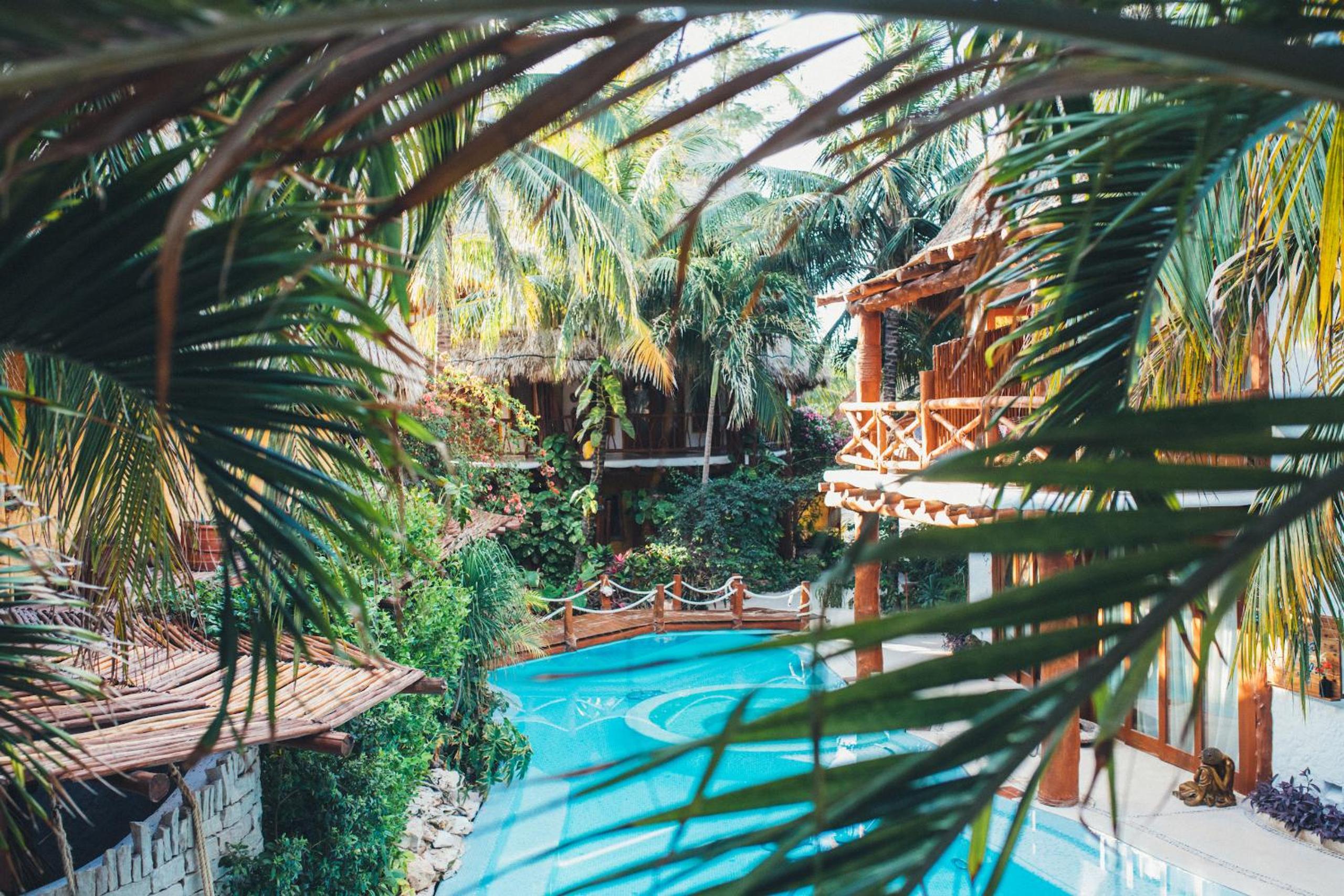
Blijf in het dorp voor een eerste bezoek, met restaurants, bars en pier te voet, en slaap weg van de nachtbar Hot Corner; de strandhotels ten oosten richting Punta Mosquito zijn het rustige antwoord met een kar naar de stad. De meeste mensen geven Holbox 3 nachten op Stippl. Boek vooruit voor december tot april en walvishaai-weekenden, en plan rond de zwakke Wi-Fi van het eiland.
Het dorp
Hostels met slaapzalen €15 tot €25 en kleine gastehuizen, €40 tot €90, in het raster achter het plein.
De strandstrook
Boutique strandhotels met hangstoelen en strandclubs, €150 tot €400, de eilandversie van luxe.
Richting Punta Cocos
Rustiger boutique verblijven en cabañas op de westelijke strook, €90 tot €220, met de zonsondergang aan het einde.
Kant van Punta Mosquito
Een paar resorts aan de rand van het mangrove, €120 tot €300, voor wildernisochten.


Wat je moet eten in Holbox
de twee-zeevaangst
de handtekening van het eiland, met een ethiek-sterretje (zie hieronder)
de Yucatán-cartscannon
het drankenpaar van het eiland
Ontdek eetadresjes in Stippl
Vind restaurants en markten op de kaart, bewaar ze in je reisroute, werkt ook offline.
Holbox-gebruiken en wat niet te doen
De regels zijn conservering
Afstand van de flamingo's, niets aangeraakt onder water, het hek van Punta Mosquito gerespecteerd en alleen reef-safe zonnebrandcrème op de zandbanken; het reservaat is waarom het eiland een bezoek waard is.
Iedereen kent iedereen
Het dorp is klein genoeg dat het zeeschildpaddenopvangcentrum, de bakkerij en de bars elkaar allemaal kennen; gedraag je als gast in een stad van vijftienhonderd, want dat ben je.
Kreeftenpizza is de vraag
De schotel van het eiland wordt in een gesloten seizoen geserveerd dat het moet respecteren; vraag wanneer de kreeft gevangen is, en bestel de vis in de gesloten maanden.
De infrastructuur is overgroeid
De straten overstromen na regen en de plassen kunnen riolering bevatten; zet voorzichtig neer, letterlijk, en het vulstation is beter dan een krat flessen die het eiland niet weg kan brengen.
Wel doen
- Breng peso's mee van het vasteland; plan alsof het eiland geen geldautomaat heeft
- Schuifel je voeten op de zandbanken; roggen
- Boek walvishaiboten alleen bij erkende operators
- Draag insectenwerend middel bij elke zonsondergang, overal
Niet doen
- Ga niet langs het vogelbeschermingshek bij Punta Mosquito
- Koop veerbootkaartjes in de bus
- Neem een golfkartaxi voor de tien minuten durende pier-wandeling tenzij het donker of erg regenachtig is
- Reken op Wi-Fi voor alles wat tijd kritisch is
Wat een Holbox-trip kost
Begroting
€80–160 per week basis
Hostelslaapzaal (€15–25), taco-diners, fiets, zandbank-wandelingen.
Middenklasse
€170–260
Boutique tweepersoons (€43–170), een boottour, strand-clubdagen.
Luxe
€280–380
Strandboutique + privétours.
Houd bij wat je echt uitgeeft
Stel per land een dagbudget in en log uitgaven in elke valuta terwijl je reist.
Leuke weetjes over Holbox
Holbox ligt waar de Golf van Mexico de Caribische Zee ontmoet. De menging van de twee stromingen is de lokale verklaring voor het groenig water en de walvishaaien die erin voeden.
De beroemde hangstoelen boven het water werden in 2020 verwijderd. Ze gingen als conserveringsmaatregel; de ansichtkaarten bleven langer dan de voorwerpen; de frames in zee zijn wat ervan over is.
Holbox wordt uitgesproken als hol-BOSH. De x is een sh, zoals overal in Yucatec Maya, wat ook verklaart waarom Xcaret en Xel-Há zo klinken.
Slechts ongeveer 10% van het eiland is bewoond. De rest van de 30 km zandbank behoort tot het Yum Balam-reservaat, en de zandstraten berijden golfkarretjes omdat er geen auto's zijn.
Niemand bezoekt Holbox voor een dagtrip, en de veerboot is de reden. De bus en veerboot ervoor zorgen dat iedereen een echt verblijf maakt; op Stippl heeft het het laagste aandeel eenachtverblijven van Mexico.
Het walvishaaienseizoen is wanneer de minste mensen Holbox plannen. De haaien voeden zich van juni tot september in zee, en juni is de stilste maand van het eiland op Stippl.
Lokale tips voor Holbox
Kaartjes alleen aan de haven
Twee veerbootmaatschappijen wisselen elkaar elk half uur af vanuit Chiquilá voor ongeveer €12. De kaartjes die in de bus worden verkocht binden je aan één maatschappij en kunnen je een uur op de kade kosten.
Een fiets, geen kar
Er zijn geen auto's: golfkarretjes, fietsen en lopen zijn het hele systeem, en het dorp heeft er geen van nodig. Een fiets kost ongeveer €8 per dag; de kade-karttaxi's prijzen als een monopolie.
Hoe lang je moet blijven
De meeste mensen geven Holbox 3 nachten op Stippl, het laagste aandeel eenachtverblijven van Mexicanen's belangrijkste haltes. Een zandbank-wandeling, een bioluminescentienacht en een walvishaaitboot van juni tot september.
Zandbanken bij laag tij
Het noordstrand is rustig en familiegezegd-ondiep. De wandeling langs de zandbank naar Punta Mosquito vereist laag tij en daglicht; controleer de tijden voor je gaat waden.
Insectenwerend middel, het hele jaar door
Muggen zijn hier berucht, ergst in juni en na regen, en de straten overstromen na een storm. Sandalen in plaats van blote voeten in de plassen; ze kunnen riolering bevatten.
Kaart en contant geld
Er zijn twee geldautomaten en beide raken op in het weekend, dus breng peso's mee vanuit Cancún. Strandбарetten accepteren kaarten; de gestolen tas op een strandbar is het enige misdaadverhaal van het eiland.
Holbox-vragen, beantwoord
Als een drienachtblok, omdat er aankomst twee dagen uit eet: bus of colectivo naar Chiquila van Cancun, daarna een korte veerboot, en hetzelfde terug. Februari is de drukste maand in de Holbox stops gepland op Stippl. Zet aankomst en vertrek in Stippl als reisdagen.
Drie nachten. Holbox krijgt 3 nachten in de reizen die mensen op Stippl plannen, en de bus-en-veerbootaankomst maakt alles korters een verspilling van de reis. Er zijn geen auto's, de zandstraten duren tien minuten om over te steken, en de dagen gaan opzettelijk langzaam.
Je kunt het, en bijna niemand doet het: 12,5% van de Holbox stops gepland op Stippl zijn één nacht, het laagste aandeel in Mexico, en dezelfde-dag bezoeken zijn nog zeldzamer. De veerboot en de bus maken drie nachten de natuurlijke eenheid hier, en het eiland beloont het.
Het gereglementeerde seizoen loopt van het begin van juni tot het midden van september, en de kansen pieken in het midden ervan. Alleen erkende boten, reddingsvesten verplicht, twee zwemmers tegelijk in het water en geen aanraken. Boek met een operator die de licentie vermeldt, niet met wie dan ook op het strand.
Nee, en het is de uitzondering van de Yucatán: de stromingen voeren de sargassum langs het eiland in plaats van erop. De eerlijke kanttekeningen hier zijn andere. Muggen zijn ernstig bij zonsondergang, en de zandstraten worden na regen modder, daarom eindigen allemaal in dezelfde rubberen sandalen.
Nauwelijks. De officiële machine faalt regelmatig en de informele geven dollars uit tegen slechte tarieven, dus breng pesos mee vanuit het vasteland en breng meer mee dan je denkt dat je nodig hebt. Veel plaatsen accepteren nu kaarten, en de verbinding valt net zo vaak weg als hij werkt. Contant geld is de standaard van het eiland.
Elke gids is geschreven door de Stippl-redactie en getoetst aan de reizen die onze reizigers echt plannen. Iets verouderds gezien? Laat het ons weten.

Plan Holbox in Stippl
Planning per dag, verblijven en budget in één app, met elke plek uit deze gids al op de kaart.
Download de app