

Puno
Puno is the Peruvian port of Lake Titicaca at 3,830 metres, higher than Cusco and the last city before Bolivia. A night or two around a lake day: the Uros reed islands in the morning, Taquile or a homestay on Amantaní, Sillustani's towers before sunset, and the Copacabana bus.
Puno in a nutshell
Puno: what to expect
The numbers below come from 98,000+ planned stops in Peru on Stippl, and the rest from the guides we cross-check.
Puno gets a night or two, and the lake is the whole point. The Uros islands are built and rebuilt from totora reed a short boat ride into the bay, Taquile is a terraced Quechua island whose textiles are UNESCO-listed and whose knitting is men's work, Amantaní takes overnight guests in family houses, Sillustani's funeral towers stand on a lagoon peninsula half a day from town, and the Copacabana road along the shore is the prettiest bus in the region. Most travellers give Puno 2 nights on Stippl.
Puno is the border as a city, and the highest bed on the circuit. 44.3% of stops here are a single night, of everyone who plans it on Stippl, and only 3.3% run to four or more, the lowest long-stay share of any Peruvian stop, while 23.3% of Puno trips stay inside Peru, which is the data's way of saying most are on their way to Bolivia.
Arrive acclimatised via Arequipa or Cusco, ask about heating before booking the bed, take the Uros boat early and add the Taquile day or the Amantaní night if the lake is the reason, and cross to Copacabana by the lakeside road rather than Desaguadero. Skip Puno straight from Lima, since 3,830 metres inverts the whole acclimatisation ladder, and skip the bus terminal district on foot after dark.
Plan Puno in Stippl
Day-by-day planning, stays and budget in one app, with every place from this guide already on the map.
Download the appWho Puno is for
Border crossers
The Copacabana and La Paz buses leave every morning, and only 23.3% of Puno trips on Stippl stay inside Peru.
Culture travellers
The Uros, the Taquile and Amantaní homestays and the Candelaria festival are the reason to add a second night rather than pass through.
Photographers
Altiplano light on the highest navigable lake in the world, and dawn from the piers earns the cold.
One-night planners
44.3% of Stippl stops here are a single night, and the lake day fits inside it if the boat leaves early.
Slow lake travellers
The Amantaní homestay night is the slow version everyone defends, with the evening dance, the family kitchen and the sunrise from the temple hill.
Acclimatised trekkers
Anyone who has done Cusco or Colca first finds the altitude a shrug, and the mirador climb above the bay is the town's redeeming view.
Maybe not for you: anyone still fighting the altitude, because this is the circuit's highest bed at 3,830 metres and arriving before acclimatising inverts the whole ladder; and anyone who wants the town to be the destination, since the lake is the point and Puno is its port.
The best time to visit Puno
The dry season
May to October
Clear skies, sharp light on the lake and nights well below zero, with the boats running every morning and September the busiest month on Stippl.
The peak weeks
July and August
The Cusco crowds arriving on the Ruta del Sol, the heated rooms booked a few days ahead and the Uros boats fuller, in the same cold, clear weather.
Candelaria
The first fortnight of February
Two weeks of dance, brass bands and streets that turn Puno into the folklore capital of the Andes, with the rooms gone months out and Juliaca the overflow.
The wet season
December to March
Afternoon rain, the lake grey and the islands muddy underfoot, but milder nights, fewer people and the festival in the middle of it.
- Most travellers give Puno 2 nights on Stippl, and 44.3% of stops are a single night. The Uros fit in a morning, Taquile takes the day, and Amantaní adds a night on the island rather than in town.
- Only 3.3% of stops here run four nights or more, of everyone who plans it on Stippl. That is the lowest long-stay share of any Peruvian stop, because the lake is done in a day and Bolivia is next.
- Candelaria runs from the second of February for a fortnight. The Andes' biggest folklore festival fills every bed, so the trip either books far ahead or visits from Juliaca for the day.
- The dry-season nights drop well below zero. Heating is not universal at the budget tier, so the room is chosen on the radiator rather than the view.
- The Bolivia buses leave in the morning. Copacabana takes about three and a half hours along the lake and La Paz via Desaguadero five to six, so the crossing day is a whole day.
- September is the busiest month on Stippl, and October is quieter with the same weather. The boats run the same schedule, and the heated doubles are easier to find.
Add your Puno dates and we'll flag the weather
Stippl shows the season, crowds and prices for every stop on your route.
Describe your trip, get a Puno itinerary in seconds
Everything in this guide is already in Stippl. Tell the planner how long you have and what you like: it builds the route, the days and the travel times, and you edit whatever you want.
Things to do in Puno
 Photo by Ed Wingate via Unsplash
The Uros in the morning
The reed islands' springy ground underfoot, the families showing how totora becomes land, houses and boats, and the reed-boat ride across the channel for a few soles more.
A Taquile day or an Amantaní night
The far islands: terraced, Quechua-speaking and UNESCO-listed for their textiles, with the homestay night on Amantaní the slow version everyone defends.
Sillustani before sunset
The chullpa funeral towers on their lagoon peninsula, half a day from town, at their best in the low light with the wind off the water.
The mirador climb
Kuntur Wasi's condor statue over the bay, the town's redeeming view, earned slowly at 3,830 metres and best at the end of the afternoon.
Candelaria in February
The festival that turns Puno into the folklore capital of the Andes, with brass bands, dance troupes and two weeks of streets, if the dates line up.
The border day itself
The Copacabana road along the lake is the prettiest bus in the region, and the crossing is part of the trip rather than an interruption of it.
The areas of Puno
The port and the malecón
The lake edge
The piers, the boat desks and the morning bustle where the Uros boats leave, steps from the departures and a short walk up to the centre. For early boats.
Steps from the boats, but the least sheltered rooms in a cold town.
The centre and Jirón Lima
The pedestrian spine
The cathedral, the restaurants, the agencies and the banks within five blocks along the pedestrian street, where nearly everyone sleeps and eats. For everyone.
Every desk, menú and bank within five blocks, though the rooms need checking for heating.
The mirador slopes
The view
Kuntur Wasi and the condor-statue hillsides above the town, with the lake panorama that redeems Puno and a climb to get home. For the view.
The lake panorama, and a climb at 3,830 metres every time you come back.
The lakeside road to Chucuito
The out-of-town hotels
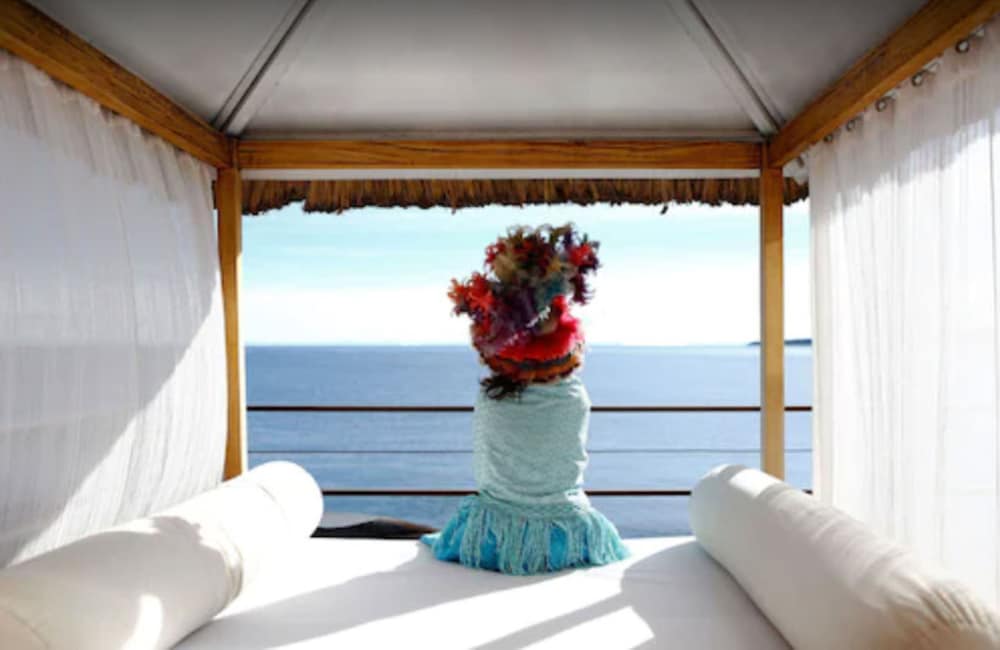
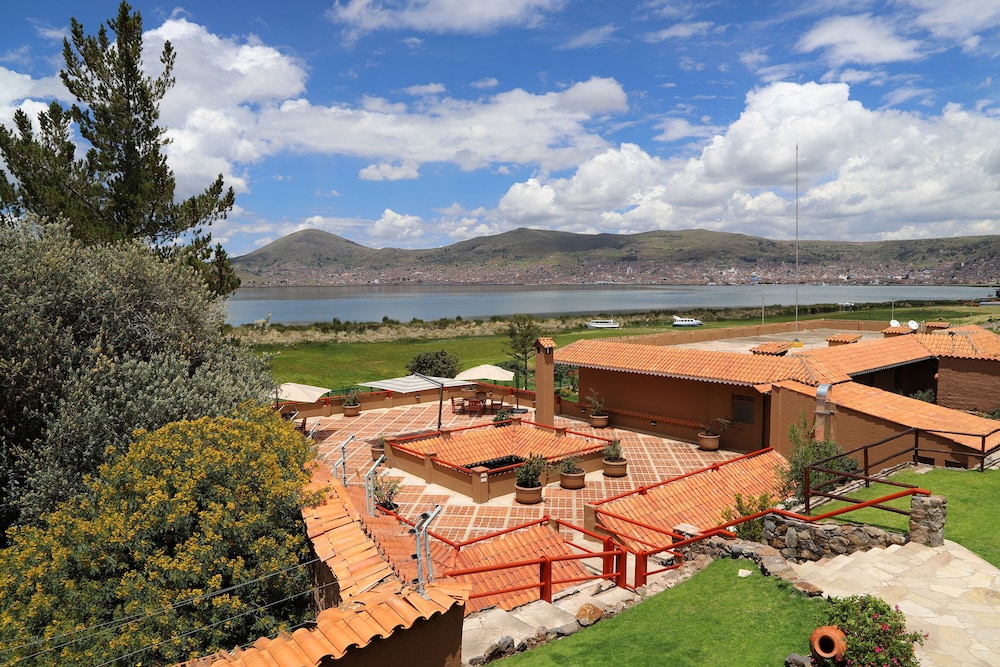
The lake-view hotels along the shore south of town, with heating, gardens and the water at the window, a taxi from the centre. For a warm, quiet night.
Warm rooms and the lake at the window, but a taxi from the boats and the restaurants.
See every Puno neighbourhood on one map
Save the areas you like and Stippl plots your days so you're not crossing the city twice.
Where to stay in Puno
Ask about heating first, because it is the single question that separates Puno's beds and radiators and real blankets are not universal at the budget tier; then choose the centre for the boats and the restaurants or the lakeside hotels for the warmth. Most travellers give Puno 2 nights on Stippl, and the Amantaní night is spent on the island.
The port and the malecón
Budget hostels and a few mid-range hotels by the piers, €10 to €50 a night.
The centre and Jirón Lima
Hostels and heated doubles along the pedestrian street, €12 to €60 a night.
The mirador slopes
€13–43
A handful of guesthouses with the view, €15 to €45 a night.
The lakeside road to Chucuito
Lake-view hotels with heating and gardens, €60 to €200 a night.


What to eat in Puno
Lake trout, the table's default
The altiplano's daily warmth
Slow-roast lamb, the regional feast dish
Hearty chuño-and-meat soup shared with Bolivia
Hot purple-corn drink with fried pastry
Discover food spots in Stippl
Find restaurants and markets on the map, save them to your itinerary, works offline too.
Puno customs and what not to do
The Uros visit is hosted
The families present their islands themselves, buying crafts and taking the reed boat are the visit's economics, and photographing people still asks first.
Homestay norms are real
Modest dress for the evening dance on Amantaní, small gifts of staples over money, and helping in the kitchen reads as respect.
Two languages share the lake
Taquile speaks Quechua and the Uros' roots are Aymara, and a greeting in either lands warmly on the boat.
Heating is a question to ask
Dry-season nights fall well below zero and the budget rooms are not all heated, so the question is asked before the booking rather than after the first night.
The lake sun burns
High-altitude ultraviolet off the water burns through the cold, and the boat day needs real sunscreen and a hat rather than a jacket alone.
The islands are homes
Taquile's terraces and Amantaní's houses are working villages under a UNESCO listing, and the paths run through people's yards.
Do
- Arrive via Arequipa or Cusco, never straight from Lima
- Ask about heating before booking the bed
- Take the Uros boat early and add Taquile if the lake is the reason
- Bring a small gift of staples for the homestay family
- Cross to Bolivia by the Copacabana road along the lake
Don't
- Sleep here as the first high stop of the trip
- Walk the bus terminal district after dark; take a taxi
- Photograph the Uros families without asking
- Skip the sunscreen because it is cold
- Expect the town to be the destination; the lake is
What a Puno trip costs
Budget
€19–34
A hostel with real blankets, menú lunches and the Uros boat.
Mid-range
€39–70
A heated double, restaurant dinners and the full-day lake trip.
Comfortable
€95+
The lake-view hotels out of town and a private boat to the islands.
Track what you actually spend
Set a daily budget per country and log expenses in any currency while you travel.
Fun facts about Puno
Lake Titicaca at Puno is the highest navigable lake in the world. It sits at 3,812 metres and Puno is its Peruvian port, with Bolivia's Copacabana across the water.
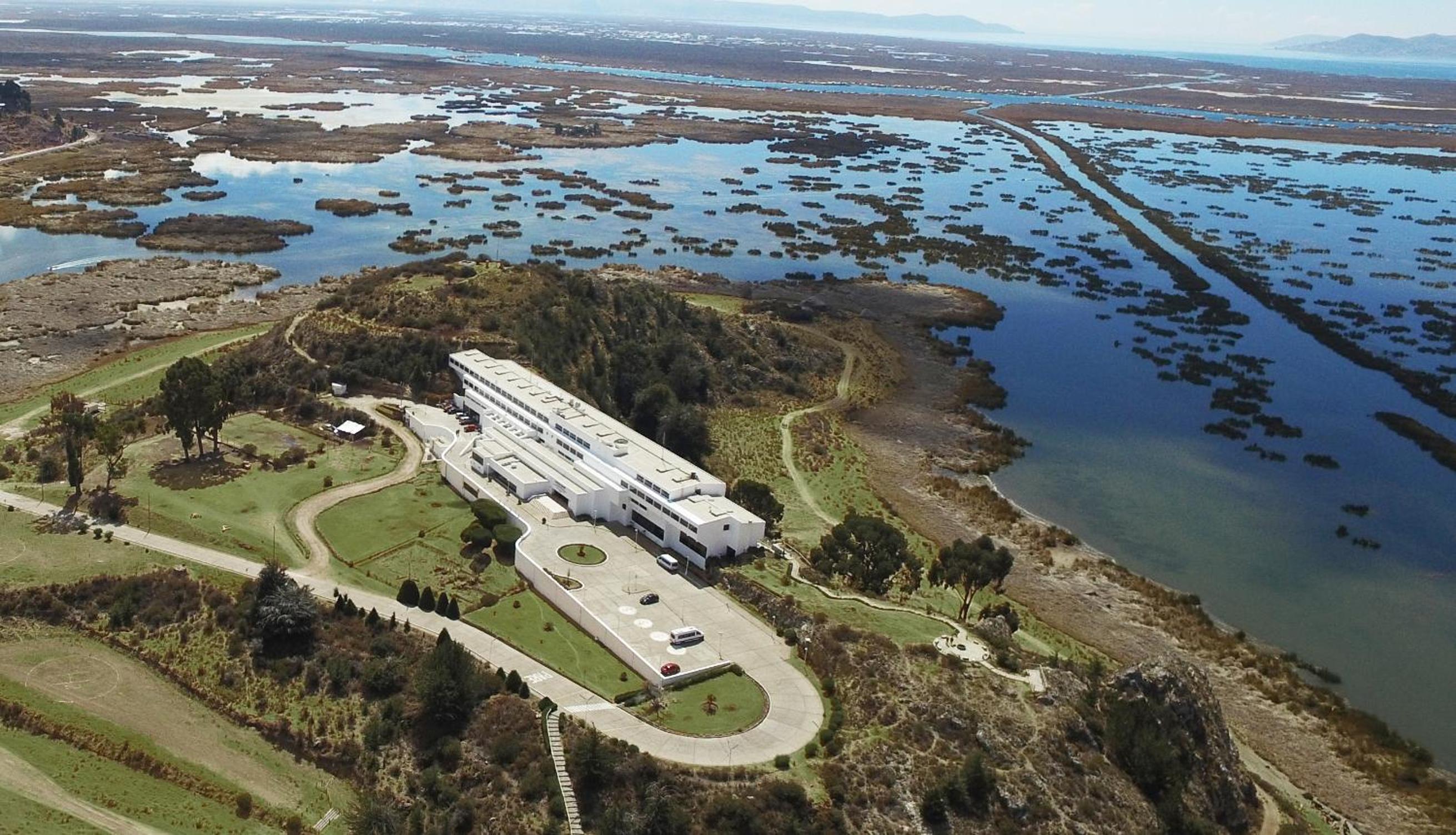
The Uros islands off Puno are built and rebuilt from totora reed. The ground, the houses and the boats are all reed, and a new layer goes on top as the bottom rots away.
Taquile's textile tradition near Puno is UNESCO-listed, and the knitting is men's work. A man's hat tells his marital status, and the women weave the belts.
Puno calls itself the folklore capital of Peru. The Candelaria festival every February is the annual proof, with tens of thousands of dancers and brass bands over two weeks.
Puno sits more than 400 metres higher than Cusco. At 3,830 metres it is the circuit's true altitude summit for anyone sleeping in a bed rather than a tent.
Only 3.3% of stops in Puno run four nights or more on Stippl. The lowest long-stay share of any Peruvian stop, because the lake takes a day and Bolivia is next.
Local tips for Puno
Puno is a bus city
Every arrival and exit is overland, and the border at Copacabana or Desaguadero is the defining connection, so the terminal is where the trip is really planned.
The Ruta del Sol is a day out
The tourist bus from Cusco stops at Andahuaylillas, Raqchi and the La Raya pass on the way, and turns a transfer into a day out.
Altitude is hazard number one
3,830 metres punishes the unacclimatised harder than anywhere on the circuit, so arrive via Arequipa or Cusco and never straight from sea level.
Cold is hazard number two
Dry-season nights well below zero make the heating question a health question for anyone badly bedded, so the radiator is checked before the bags come in.
The terminal zone after dark
The bus zone is the one part of town every safety note flags for taxis rather than walking at night, and the ride to the centre costs almost nothing.
One night, on the way through
44.3% of Stippl stops here are a single night and only 23.3% of Puno trips stay inside Peru, so the lake day is planned with the Bolivia bus.
Puno questions, answered
The lake is the point and Puno is its port, and the data says exactly that: most travellers give Puno 2 nights on Stippl and only 3.3% of stops run to four or more, the lowest long-stay share in Peru. Come for the Uros, stay a second night for Taquile or Amantaní, and leave for Bolivia in the morning.
Both, honestly. The islands are genuinely inhabited and genuinely reed, rebuilt layer by layer as the bottom rots, and the visits are also the families' economy, with the crafts and the reed-boat ride as its currency. The homestay islands, Amantaní above all, are the deeper version for anyone who wants it.
Better not. At 3,830 metres it is the circuit's highest sleep, noticeably above Cusco, and acclimatised via Arequipa or Cusco it is fine; direct from sea level it is the mistake the acclimatisation ladder exists to prevent. Only 1.1% of the trips through Puno start here, of everyone who plans it on Stippl.
By morning bus: Copacabana in about three and a half hours along the lake, the scenic one, or La Paz via Desaguadero in five to six. Only 23.3% of Puno trips on Stippl stay inside Peru, so put the crossing into Stippl as the next day and ask people who have done it in subreddits like r/peru which border they took.
The first fortnight of February, starting around the second, for two weeks of dance troupes and brass bands, the Andes' biggest folklore festival. The rooms go months ahead and the town is full, so the trip books far out or visits for a day from Juliaca; the rest of the wet season is quiet and mild by comparison.
Yes, and it matters. The dry-season nights fall well below zero, heating is not universal at the budget tier, and the room is chosen on the radiator rather than the view; the lake sun burns through the cold by day, so the boat needs sunscreen and the evening needs every layer in the bag.
Every guide is written by the Stippl editors and checked against the trips our travellers actually plan. Spotted something out of date? Let us know.

Plan Puno in Stippl
Day-by-day planning, stays and budget in one app, with every place from this guide already on the map.
Download the app