

Machu Picchu
Machu Picchu is the citadel the Spanish never found, entered by timed ticket on one of three one-way circuits with a hard daily cap, a thousand metres lower than Cusco. One night in Aguas Calientes, the first bus up, the longest circuit the ticket allows, and the train back to the valley.
Machu Picchu in a nutshell
Machu Picchu: what to expect
98,000+ stops in Peru are planned on Stippl, and this is the shape they make for Machu Picchu.
One timed morning, and the night before it in Aguas Calientes, is the Machu Picchu plan. The postcard view is taken from the upper terraces first thing with Huayna Picchu behind, the Temple of the Sun curves its royal masonry over a cave, the Intihuatana stone marks the citadel's high point, the Sun Gate is where the Inca Trail arrives and where day visitors walk out to, and Huayna Picchu is the capped hour of steep stairs to the vertigo view. Most travellers give Machu Picchu 2 nights on Stippl.
Machu Picchu is the most planned-ahead stop in Peru, and nearly half the stays are a single night. A typical plan for it on Stippl is made 107 days ahead, the longest lead in the country, 44.9% of stops are one night, which is the town below the gate doing its job, and it opens only 0.7% of the trips it appears on, of everyone who plans it on Stippl, because Cusco and the valley come first for the altitude.
Buy the ticket on the state portal months ahead for a peak date and weeks ahead for a shoulder one, sleep in Aguas Calientes for the dawn slots, and take the longest route the ticket and the legs allow. Skip improvising, since this is the one place in Peru where spontaneity reliably fails, and skip the wet-season afternoon slots, because the storms arrive as lightning on an exposed ridge.
Plan Machu Picchu in Stippl
Day-by-day planning, stays and budget in one app, with every place from this guide already on the map.
Download the appWho Machu Picchu is for
First-timers in the Andes
Machu Picchu is the reason many trips to the continent exist, and the trains, timed entries and guides make it the most manageable famous place in the mountains.
History travellers
The best-preserved Inca royal estate there is, with the Temple of the Sun, the Intihuatana and the terraces all on the routes.
Trekkers
The Inca Trail and the Salkantay arrive here on foot, through the Sun Gate at dawn if the permits worked out.
Early planners
A typical Machu Picchu plan on Stippl is made 107 days ahead, the longest lead in Peru, and the ticket calendar is why.
One-night travellers
44.9% of Stippl stops here are a single night, the town below the gate, the dawn bus and the train back the same afternoon.
Photographers
The terraces at first light with the cloud lifting off Huayna Picchu, on the upper circuits, before the mid-morning slots fill the frame.
Maybe not for you: the unbooked and the schedule-averse, because this is the one place in Peru where spontaneity reliably fails; and visitors with mobility limits, who should book the shortest lower-terrace route deliberately, since the routes are one-way and the stairs are steep.
The best time to visit Machu Picchu
The dry season
May to October
Clear mornings, the citadel visible from the first bus and the trails open, with September the busiest month on Stippl and the peak-date cap of 5,600 running from June.
The peak weeks
June to August
The same weather with every slot sold, the trains full and the Sun Gate crowded by nine, so the ticket, the train and the bed are fixed months out.
The wet season
November to April
Afternoon storms, the terraces slick and the citadel frequently fogged in the morning, at its worst in January and February, but the slots are easier and the cloud lifts.
February
The trail's closed month
The Inca Trail shuts for maintenance for the whole month while the citadel stays open, in the middle of the wettest weeks, so the trekkers go elsewhere and the site is quiet.
- Most travellers give Machu Picchu 2 nights on Stippl, and 44.9% of stops are a single night. The night before in Aguas Calientes, the dawn bus, the circuit, and the afternoon train back.
- A typical Machu Picchu plan on Stippl is made 107 days ahead, and 30.2% half a year out. Peak dates and the mountain add-ons need months, and the shoulder standard tickets need weeks.
- The cap rises on the peak dates and sits lower outside them. From June to early November and at New Year and Easter the citadel takes 5,600 a day, and the shoulder dates have fewer tickets and sell out sooner.
- The train sells out before the entry slots do in peak weeks. Capacity and prices move with the season and the class, so the rail ticket is booked with the entry rather than after it.
- The morning slots are the safety advice as well as the view advice. Wet-season afternoon storms arrive as lightning on an exposed ridge, and the cloud usually lifts by mid-morning.
- The Inca Trail closes for all of February. The Ministry of Culture shuts the road network for maintenance and reopens it on the first of March, and the citadel itself stays open throughout.
Add your Machu Picchu dates and we'll flag the weather
Stippl shows the season, crowds and prices for every stop on your route.
Describe your trip, get a Machu Picchu itinerary in seconds
Everything in this guide is already in Stippl. Tell the planner how long you have and what you like: it builds the route, the days and the travel times, and you edit whatever you want.
Things to do in Machu Picchu
 Photo by Ed Wingate via Unsplash
The classic terrace view
The postcard angle from the upper agricultural terraces with Huayna Picchu behind, on the longer circuits, first thing in the morning before the cloud and the crowd.
The Temple of the Sun
The curved royal masonry over its cave, the finest single wall on the routes, with the solstice window cut into it.
The Intihuatana
The carved astronomical stone at the citadel's high point, roped off since a crane fell on it, and still the centre of the site.
The Sun Gate
Inti Punku, the Inca Trail's arrival point above the citadel, which day visitors can walk out to where their circuit allows, for the view the trekkers get at dawn.
Huayna Picchu
The capped add-on climb behind the citadel, an hour of steep stairs to the vertigo view, booked with the entry and not for anyone who dislikes heights.
The Inca Bridge path
The short, level walk to a cliff-cut Inca causeway, the quiet corner of the mountain and the one most visitors never reach.
The areas around Machu Picchu
Aguas Calientes centre
The rail-head town
Restaurants, hostels and the artisan market maze packed into three streets by the station, where everything is five minutes from everything and the bus queue at half past five is the morning ritual. For the night before.
Everything five minutes away and the first bus at the door, but a captive market with prices to match.
Along the Vilcanota
The quieter edge
The upper edge of town toward the hot springs, with river noise instead of plaza noise and the thermal baths at the top of the street. For a quieter bed.
River noise instead of plaza noise, though the walk to the bus is longer.
The sanctuary gate hotels
Beside the entrance
The handful of beds next to the gate itself, first through without the bus, priced like a monopoly because it is one. For dawn obsessives.
First through the gate without the bus, but the dearest rooms in Peru.
Ollantaytambo
The valley rail-head
The living Inca town in the Sacred Valley where the trains leave, an hour and a half by rail below the citadel, with its own fortress and cheaper beds. For the night before the night before.
A real town with its own ruins and cheaper rooms, though it adds a train to the morning.
See every Machu Picchu neighbourhood on one map
Save the areas you like and Stippl plots your days so you're not crossing the city twice.
Where to stay for Machu Picchu
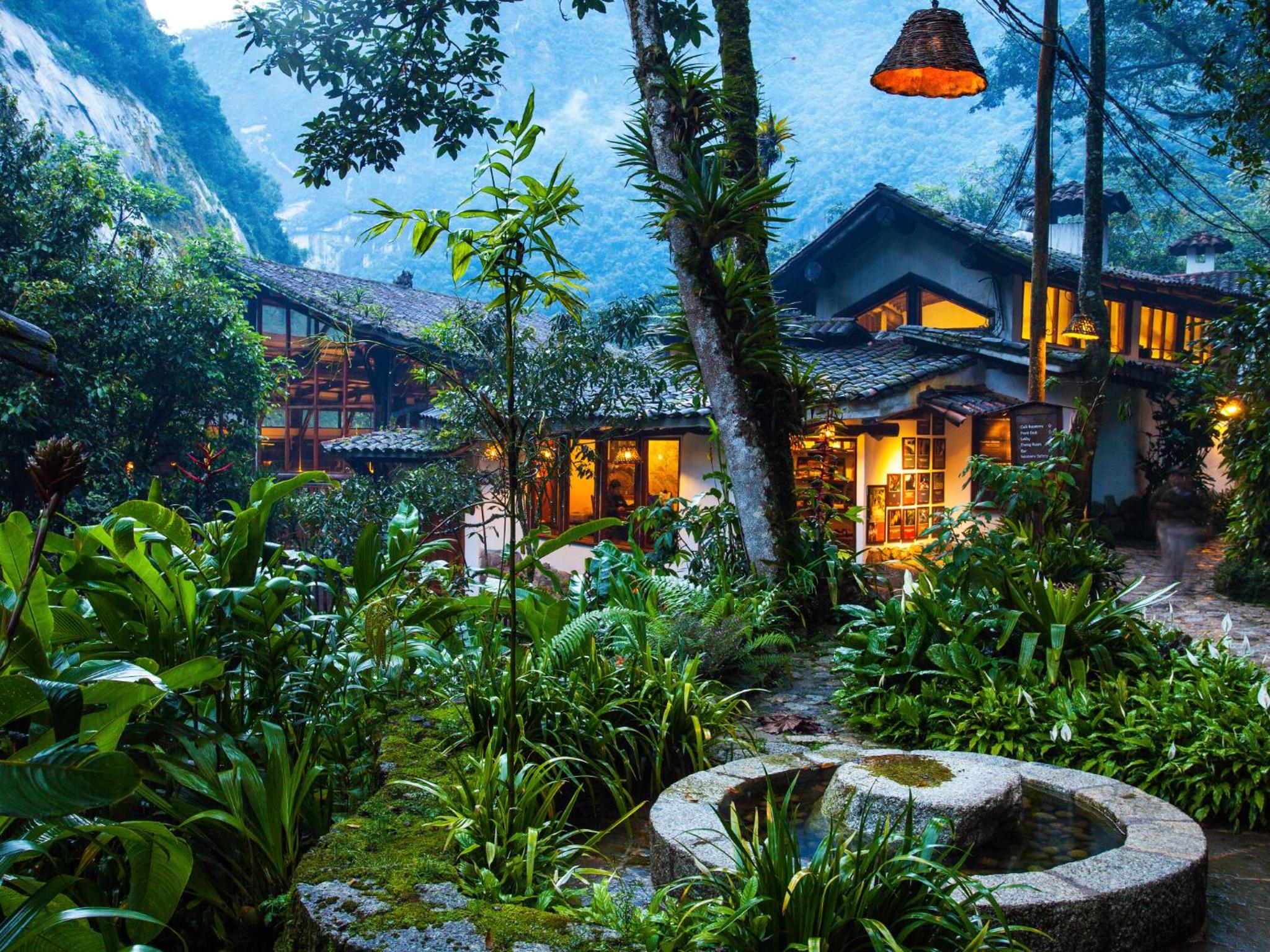
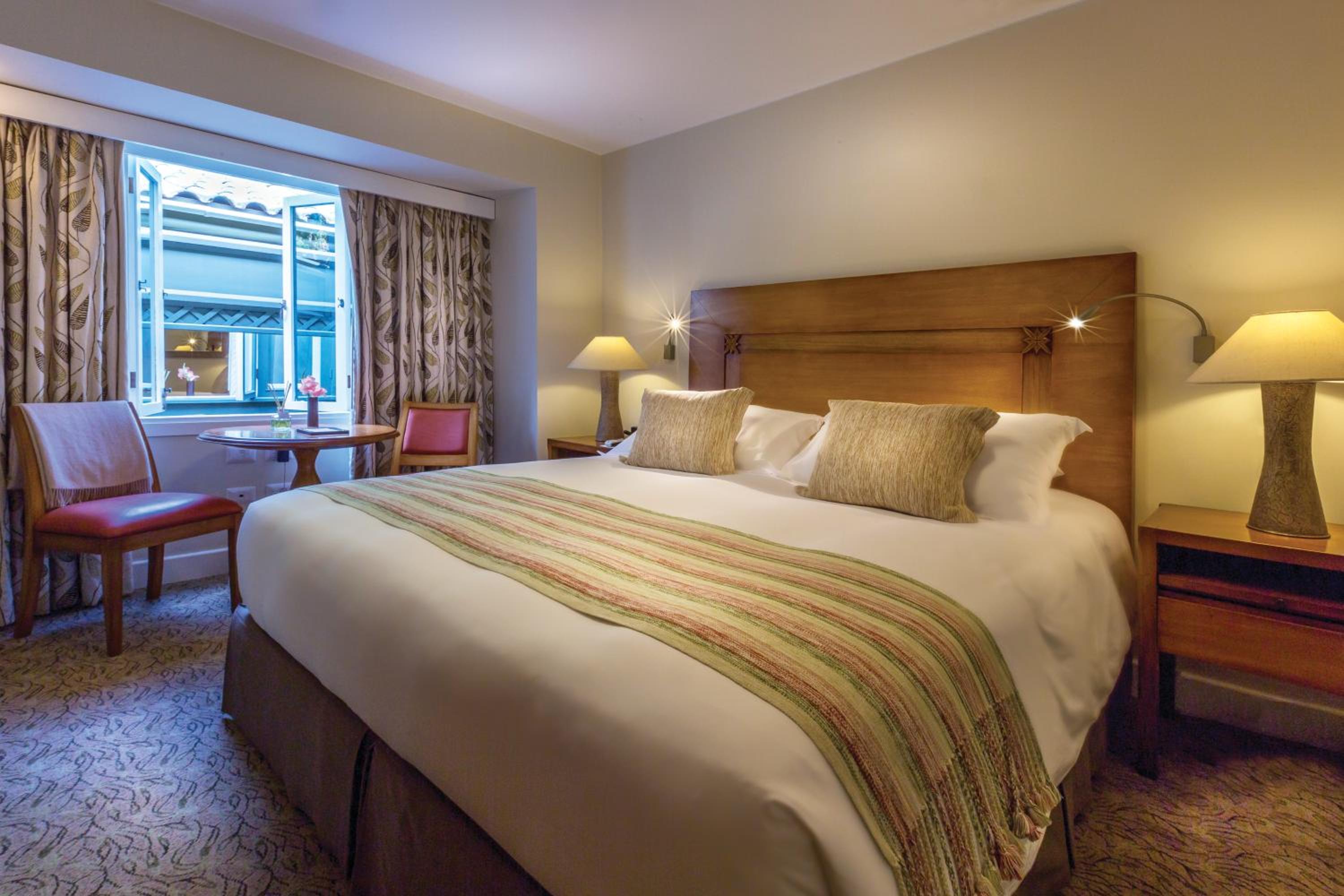
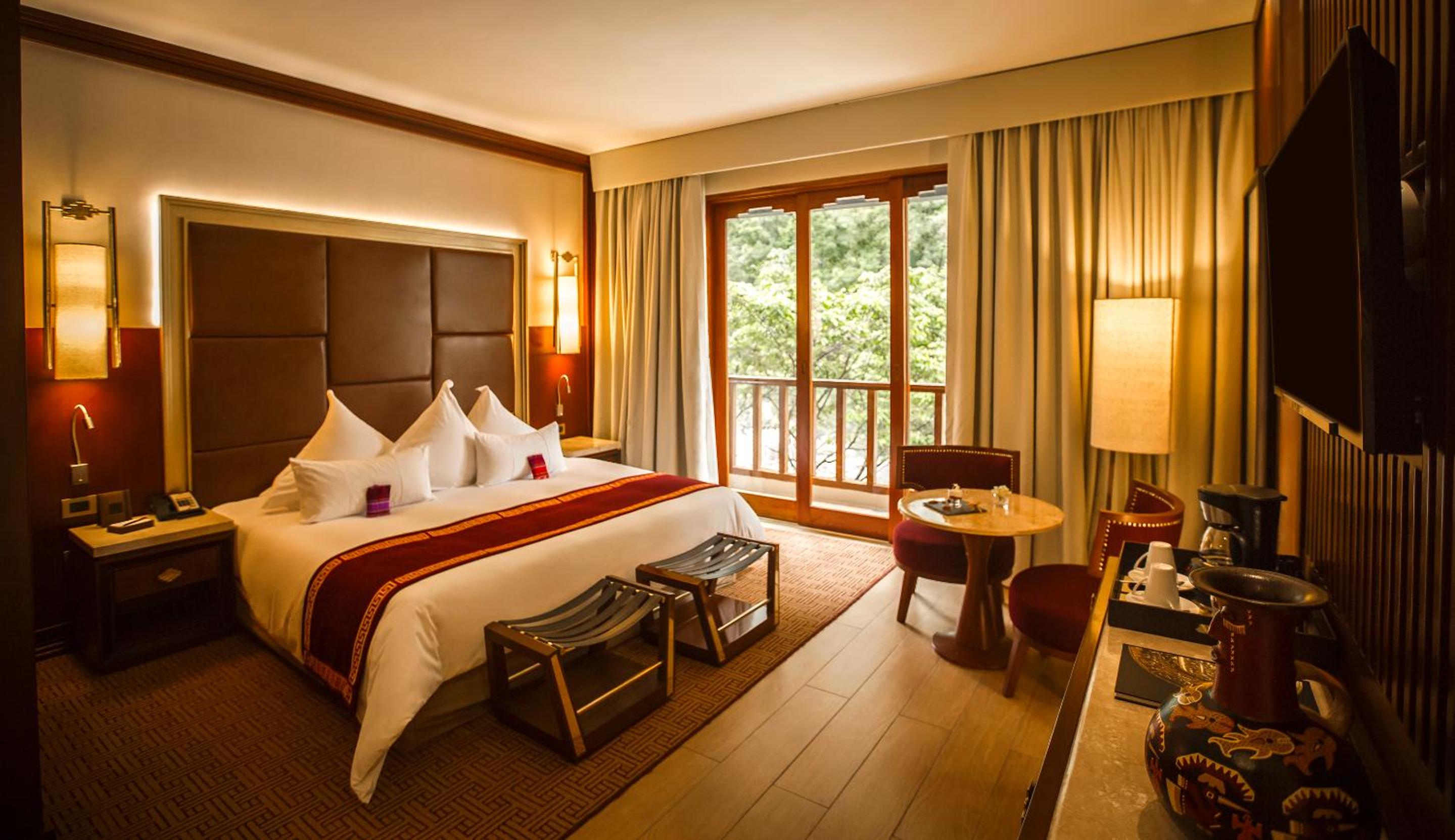
Aguas Calientes is hostels to boutique in three streets, and almost every bed there is booked as part of the Machu Picchu stack rather than on its own, so sleep in the centre for the bus queue or by the river for the quiet. Most travellers give Machu Picchu 2 nights on Stippl, and the second is usually spent in Ollantaytambo.
Aguas Calientes centre
€22–105
Hostels, mid-range hotels and the market-side guesthouses, €15 to €150 a night.
Along the Vilcanota
€26–85
Quieter hotels toward the hot springs, €30 to €170 a night.
The sanctuary gate hotels
€260+
One or two lodges beside the entrance, €400 to €1,200 a night.
Ollantaytambo
Guesthouses and small hotels in the Inca town, €15 to €120 a night.


What to eat at Machu Picchu
The set lunch that feeds the town
Grilled river trout, the valley staple
The national stir-fry, everywhere here
Giant corn and cheese for the bus queue
Andean mint tea, the local digestif
Discover food spots in Stippl
Find restaurants and markets on the map, save them to your itinerary, works offline too.
Machu Picchu rules and what not to do
The routes are one-way
No backtracking, no re-entry and no leaving the marked circuit, and the rangers enforce it politely and completely.
Nothing big goes in
No tripods, drones, large bags or food inside, and the storage booths at the gate exist because everyone learns this on arrival.
Passports get stamped
The souvenir stamp at the exit is a genuine tradition, and the actual passport is needed for entry anyway, checked against the ticket.
Guides are paid, not shared
Attaching yourself quietly to a paid guide's group is noticed and resented, and a shared guide at the gate costs little.
The stone is not for sitting
The walls, the terraces and the Intihuatana are roped and watched, and a hand on the stone is the fastest way to a ranger's whistle.
The town is the gate's
Aguas Calientes exists because of the entrance, and its prices, its bus queue and its hours all follow the citadel's timetable.
Do
- Buy the ticket on the state portal and the train with it
- Sleep in Aguas Calientes for the dawn slot
- Take the longest circuit the ticket and the legs allow
- Bring the passport, the ticket and a small bag only
- Walk out to the Sun Gate if the circuit permits
Don't
- Turn up without a dated ticket
- Book an afternoon slot in the wet season
- Take Huayna Picchu with a fear of heights
- Attach yourself to someone else's guide
- Expect to re-enter once you have left the circuit
What a Machu Picchu trip costs
Backpacker
€70–105
The Hidroeléctrica van, the rail walk, a hostel bed, the standard ticket and the walk up.
Standard
€155–220
The Ollantaytambo train, a mid-range hotel night, the bus up and the standard ticket.
High-end
€430+
Panoramic or luxury rail, the gate-side hotel, a private guide and the mountain add-on.
Track what you actually spend
Set a daily budget per country and log expenses in any currency while you travel.
Fun facts about Machu Picchu
Machu Picchu was never found by the Spanish, which is why it survived. Abandoned within a century of its building and reintroduced to the world in 1911, with the cloud forest grown over it.
Machu Picchu sits a thousand metres lower than Cusco. In cloud forest rather than altiplano, and most visitors feel better on the citadel than they have in days.
The dry-stone masonry of Machu Picchu has ridden out every earthquake in the region. The stones are cut to move and settle back, and the colonial buildings around Cusco fell twice.
Travellers misspell Machu Picchu so often that one wrong spelling accounts for 852 planned stops. The stops here were merged from nine different strings on Stippl.
The Sun Gate at Machu Picchu frames the June solstice sunrise over the citadel. The Temple of the Sun's window catches the same light, which is how the site was aligned.
A typical Machu Picchu plan on Stippl is made 107 days ahead. The longest lead of any Peruvian stop, and the ticket calendar is the reason.
Local tips for Machu Picchu
The train is the bottleneck
Capacity and prices move with the season and the class, and the rail tickets sell out before the entry slots do in peak weeks.
Rail walk: the honest budget
A van day from Cusco to Hidroeléctrica plus a flat three-hour walk along the tracks, arriving at the same town and the same gate as everyone else.
Stairs, edges and weather
Wet stone steps and unfenced drops on the mountain climbs demand actual attention, and the people are not the danger here.
Huayna Picchu is the hard one
Steep, exposed and not for vertigo sufferers, and the tickets say so and mean it.
The altitude was Cusco's
At 2,430 metres most visitors feel better than they have in days, so the breathlessness on the stairs is the stairs.
One night, planned early
44.9% of Stippl stops here are a single night and only 9.9% of plans are made inside a fortnight, because the ticket calendar sets the trip.
Machu Picchu questions, answered
Peak dates and the mountain add-ons need months, shoulder standard tickets need weeks, and the data says people know it: a typical Machu Picchu plan on Stippl is made 107 days ahead, the longest lead in Peru, and only 9.9% are made inside a fortnight. The state portal is the only place tickets are sold at face value.
Yes: the earliest train down and the latest back put you at the gate by late morning, but sleeping in Aguas Calientes buys the dawn slots instead, and 44.9% of stops here on Stippl are exactly that single night. Most day-trippers never appear in the stays at all, which is the data's way of saying the night is worth it.
The longest route the ticket and the legs allow, because the upper-terrace circuits carry the postcard view and the routes are one-way with no backtracking. Mobility-limited visitors book the shortest lower route deliberately. Put the circuit into Stippl with the train times around it, then ask people who have walked it in subreddits like r/peru whether the Sun Gate path was open.
Huayna Picchu for the drama and the vertigo, an hour of steep exposed stairs to the view straight down onto the citadel; Machu Picchu Mountain for the height, the longer climb and fewer stairs per view. Both are capped add-ons booked with the entry, and both sell out before the standard tickets on the same date.
The stack rather than the ticket: the entry, the shuttle bus, the train from Ollantaytambo and the captive-market prices of the town below add up to well over a hundred euros a person on the standard route. The rail walk from Hidroeléctrica is the honest budget version, a van day from Cusco and a flat three-hour walk to the same town and the same gate.
No. The Inca Trail is, for the whole month, while the Ministry of Culture maintains the road network; the citadel itself stays open in the middle of the wettest weeks, with the morning cloud lifting late and the afternoon storms arriving as lightning on the ridge. the busiest month here on Stippl is September, 12.8% of plans, at the dry end of the year.
Every guide is written by the Stippl editors and checked against the trips our travellers actually plan. Spotted something out of date? Let us know.

Plan Machu Picchu in Stippl
Day-by-day planning, stays and budget in one app, with every place from this guide already on the map.
Download the app