

Huacachina
Huacachina is a real oasis, a lagoon ringed by palms and one street of hostels in dunes that run to the horizon, ten minutes from Ica. One night: the dune-buggy circuit at sunset with sandboard stops, the walk round the water at dusk, and the bus south in the morning.
Huacachina in a nutshell
Huacachina: what to expect
Before writing this we counted 98,000+ planned stops in Peru on Stippl.
A single night is the Huacachina dose, and everyone agrees. The buggy circuit is a rollercoaster over the ridges with sandboard stops, timed to put you on a crest as the sun drops, sandboarding face-down is the beginner's method and the fast one, the dune climb on foot earns the same sunset without the engine in twenty sweating minutes, the lagoon loop takes ten minutes when the palms light up, and the Tacama and Vista Alegre bodegas in Ica are an afternoon away, with the Ballestas boats at Paracas the same morning and Nazca or Arequipa the next day. Most travellers give Huacachina 2 nights on Stippl.
Huacachina is the fixed overnight of the southbound loop, and the longest itineraries in the country pass through it. 42.1% of stops here are a single night, of everyone who plans it on Stippl, only 5.0% run to four or more, and it opens only 0.3% of the trips it appears on, because Paracas comes first in the morning and the oasis takes the sunset the same day.
Pick the bed by pool and noise tolerance, since that one choice sets the whole night, book the buggy at the desk with a licensed driver, and do Paracas in the morning and the dunes at sunset as one southbound day. Skip a second night unless the pool is the point, because the village is loud and small, and skip swimming in the lagoon, which the people who live around it discourage.
Plan Huacachina in Stippl
Day-by-day planning, stays and budget in one app, with every place from this guide already on the map.
Download the appWho Huacachina is for
Circuit backpackers
The Lima-to-south loop's fixed overnight, and the plans that carry Huacachina on Stippl are the longest itineraries in Peru at about twenty-five stops.
Adventure-lite travellers
The buggy is a rollercoaster that needs no skills, and sandboarding face-down needs even fewer.
Photographers
Dune ridges at golden hour with an oasis in the frame; the cliché exists because it works, and dawn is the empty version.
One-night planners
42.1% of Stippl stops here are a single night, and the sunset circuit fits inside it with the morning bus out.
Pisco drinkers
The bodegas of Ica, from industrial to artisanal, are a ten-minute taxi away for a tasting afternoon before the dunes.
Families with teenagers
The buggy, the sandboards and the pool make a day that needs no persuading, and the village is small enough to let them loose.
Maybe not for you: travellers seeking quiet nature or more than one day of programme, because the village is loud at night and a single night is the right dose; and anyone hoping to swim in the lagoon, since the residents discourage it.
The best time to visit Huacachina
The desert summer
December to March
Hot, dry and bright, with the sand too hot to touch by noon and the buggies running late, and the coast's own high season filling the pools.
The mild months
April, May, September and October
The dunes at their most comfortable, the sunsets sharp and the village calmer, with September the busiest month on Stippl and the nights still warm.
The grey winter
June to August
Cooler days under the coastal fog that sometimes reaches inland, the buggies unaffected and the peak crowds from Cusco passing through.
Holiday weekends
Fiestas Patrias and Easter
Peruvians fill the pool hostels and the buggy fleet for the long weekends, so the bed is booked ahead rather than found on arrival.
- Most travellers give Huacachina 2 nights on Stippl, and 42.1% of stops are a single night. Arrive from Paracas at midday, buggy at sunset, bus south in the morning.
- Only 5.0% of stops here run four nights or more, of everyone who plans it on Stippl. That is one of the lowest long-stay shares in Peru, because the village has one product and it takes two hours.
- The buggy runs at sunset, and the slot fills first. The desks sell the late-afternoon circuit from midday, so the tour is booked on arrival rather than after the pool.
- Paracas and Huacachina are one southbound day. The Ballestas boats run at eight in the morning and the buggies at sunset, ninety minutes apart, which is exactly how people sequence them.
- September is the busiest month on Stippl, and the dunes are at their mildest. The summer heat makes the sand untouchable by noon, so the winter and the shoulders are the walking months.
- Everything routes through Ica. The oasis has no bus terminal, Peru Hop drops at the hostel doors, and everyone else changes to a ten-minute taxi in the city.
Add your Huacachina dates and we'll flag the weather
Stippl shows the season, crowds and prices for every stop on your route.
Describe your trip, get a Huacachina itinerary in seconds
Everything in this guide is already in Stippl. Tell the planner how long you have and what you like: it builds the route, the days and the travel times, and you edit whatever you want.
Things to do in Huacachina
 Photo by Ed Wingate via Unsplash
The sunset buggy circuit
A rollercoaster over the ridges with an areneros driver and sandboard stops, timed to put you on a crest as the sun drops, two hours from the desk to the lagoon.
Sandboarding face-down
The beginner's method and the fast one, with the board waxed at the top of each dune; standing runs are for the confident few and the clinic in Ica.
The dune climb on foot
Free, twenty sweating minutes from the village to the high ridge for the same sunset without the engine, and the way down is the fun part.
The lagoon loop at dusk
The ten-minute walk around the water when the palms light up and the buggies are still out on the ridges.
A pisco bodega afternoon in Ica
Tastings at the source, from the industrial houses to the artisanal ones, a ten-minute taxi from the oasis.
Dawn on the dunes
The village sleeps in after the bars, and sunrise is the empty-desert hour for anyone who climbs before breakfast.
The areas of Huacachina
The lagoon front
The single street
Hostels, pools, tour desks and restaurants around the water, which is the whole village, with the bed picked by pool and noise tolerance. For everyone.
It is the whole village and everything is at the door, but the bar noise runs late.
The dune edge
The quieter margins
The last lanes before the sand starts, the same village minus the bar noise and with the dunes at the door for the dawn climb. For light sleepers.
The same village without the noise, though the pools are back on the front.
Ica city
The working city
The regional city ten minutes out with the bus terminals, the cheaper beds and the bodegas, where the transport actually happens. For bus-schedule stays.
Cheaper beds and the actual transport hub, but you trade the sunset walk home.
The bodega road
The pisco countryside
The vineyards and distilleries on the roads out of Ica, with tasting rooms, a few haciendas that take guests and the desert behind the vines. For a tasting afternoon.
The pisco at its source and a hacienda bed, and a taxi from the dunes.
See every Huacachina neighbourhood on one map
Save the areas you like and Stippl plots your days so you're not crossing the city twice.
Where to stay in Huacachina
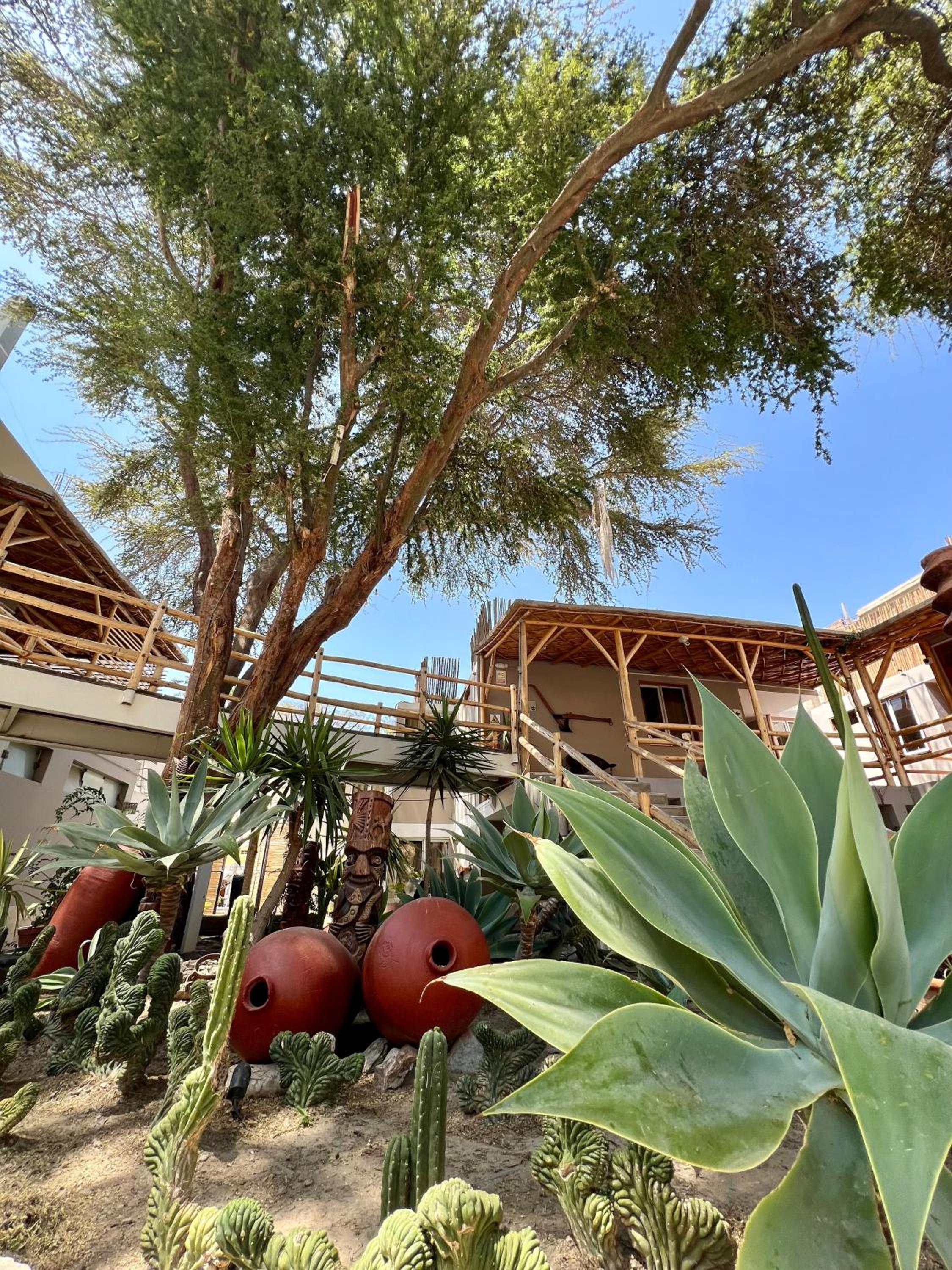
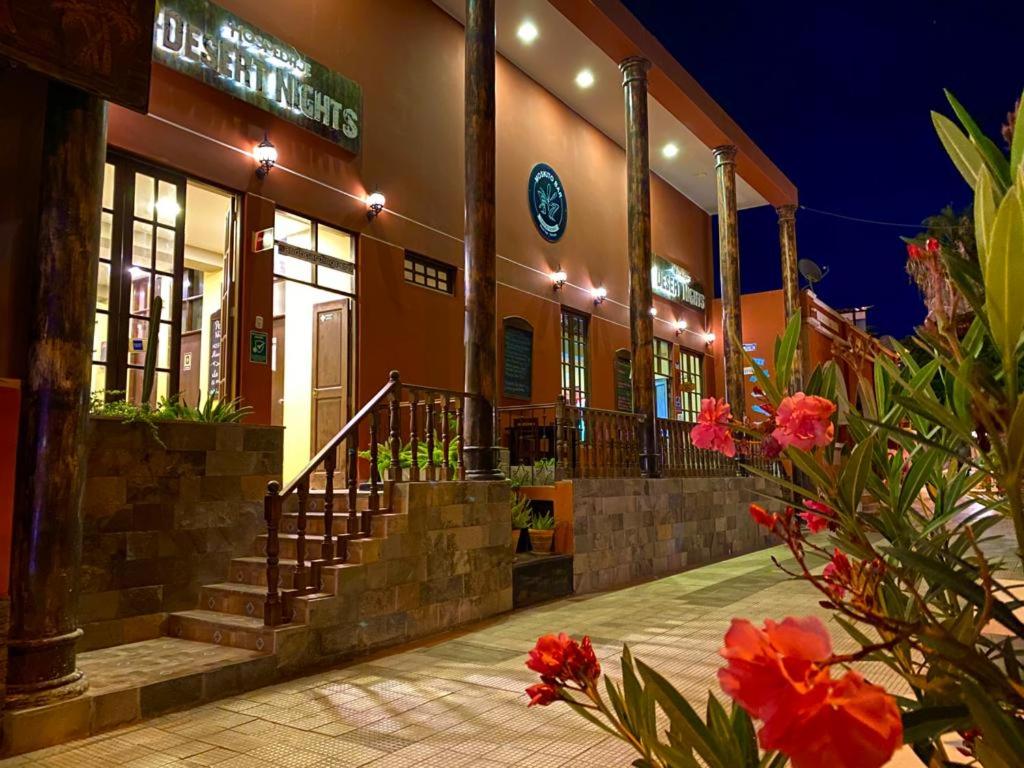
The bed is the itinerary decision here, a party hostel with a pool and a bar or a quieter pool hotel, because the village is small enough that this one choice sets the whole night, and Ica is the cheaper fallback. Most travellers give Huacachina 2 nights on Stippl, and the pool is what earns the second.
The lagoon front
€8.50–80
Party hostels and pool hotels on the water, €9 to €80 a night.
The dune edge
€22–60
Quieter guesthouses at the sand line, €15 to €60 a night.
Ica city
€13–43
Budget and chain hotels near the terminals, €12 to €50 a night.
The bodega road
Haciendas and vineyard guesthouses among the pisco vines outside Ica, €40 to €120 a night.


What to eat in Huacachina
The set lunch/dinner that feeds the circuit
Ica's manjar-filled sweets, pecan or fig
The national drink AT its source region
Ica's butter beans, the regional staple
The Ica-region party plate: dried-potato stew with noodles
Discover food spots in Stippl
Find restaurants and markets on the map, save them to your itinerary, works offline too.
Huacachina customs and what not to do
A village, not a resort
Around a hundred people live around the tourists, the lagoon is their front yard, and swimming in it is discouraged.
Licensed drivers only
The buggy fleet is regulated and the municipal fee funds the dunes' upkeep, so the tour is booked at the desk with an areneros licence rather than a man by the road.
Sand gets into everything
The local etiquette of every camera bag and phone pocket, and the hostels sell the zip bags for a reason.
The lagoon is national
The oasis is on the fifty-sol note and is a Peruvian icon before it is a backpacker one, so the weekend crowd is local.
Pisco is the region's
Ica is the spirit's home, the bodegas are family businesses as much as tourist stops, and the tasting is a sit-down rather than a shot.
The night belongs to the bars
The hostels run the evening and the village is loud until late, so the quiet bed is chosen deliberately at the dune edge.
Do
- Book the sunset buggy at the desk on arrival
- Sandboard face-down until it stops being scary
- Climb the dune on foot for the sunset without the engine
- Do Paracas in the morning and the dunes at sunset
- Strap the camera in before the buggy moves
Don't
- Swim in the lagoon
- Take a buggy from an unlicensed driver
- Walk into the dunes at night without the village lights in view
- Stand up on the sandboard on the first run
- Expect a second day of programme
What a Huacachina trip costs
Budget
€22–34
A dorm, menú dinners and the group buggy tour.
Mid-range
€43–80
A pool-hotel double, a restaurant dinner, the tour and a board rental.
Comfortable
€105+
The best pool in the village and a private buggy at sunrise.
Track what you actually spend
Set a daily budget per country and log expenses in any currency while you travel.
Fun facts about Huacachina
A village of a hundred residents is the fifth most planned place in Peru. Huacachina holds 6.43% of every Peruvian stop planned on Stippl, more than Puno or Paracas manage.
The Huacachina lagoon appeared on Peru's fifty-sol note. The oasis is a national icon rather than only a backpacker one, and the weekend crowd is Peruvian.
Huacachina is South America's only natural desert oasis of its kind. The lagoon's level is now maintained by pumping, but the palms and the dunes are exactly as advertised.
The dunes around Huacachina are among the highest in the Americas. Which is what makes the buggy circuit possible, and the ridge climb on foot a twenty-minute effort.
Local legend has the Huacachina lagoon born of a bathing princess. Surprised mid-bathe, she fled, and the mirror she dropped became the water and her cloak the dunes.
The plans carrying Huacachina on Stippl run about twenty-five stops each. The longest itineraries in Peru pass through a village you can walk around in ten minutes.
Local tips for Huacachina
Everything routes through Ica
The oasis has no terminal, Peru Hop drops at the hostel doors, and everyone else changes to a ten-minute taxi in the city.
Paracas pairs with Huacachina
The two southern stops sit ninety minutes apart, and travellers treat them as one unit with the boat in the morning and the buggy at sunset.
The buggy is the real risk
A fairground ride on real terrain, so belts on, cameras strapped, and the operator picked by the vehicle rather than the price.
Wrists and faces
Face-down runs are the beginners' insurance, and standing falls at speed are how the clinic in Ica meets tourists.
The lagoon is not for swimming
The people who live around it discourage it and every guide repeats it, and the hostel pools exist for the purpose.
One night, mid-loop
42.1% of Stippl stops here are a single night and only 0.3% of trips start here, because Paracas comes first and Nazca or Arequipa comes next.
Huacachina questions, answered
For one night, almost unarguably: it is the fifth most planned place in Peru on Stippl and holds 6.43% of every Peruvian stop, and the sunset circuit costs the price of a pizza. For two nights, only if the pool is the point, because the village has one product and it takes two hours.
One night. 42.1% of stops here are a single night on Stippl and only 5.0% run to four or more, one of the lowest long-stay shares in the country, which is the data agreeing with every guide: arrive at midday, buggy at sunset, bus in the morning.
Around ten to thirteen euros for the standard two-hour group run plus a small municipal fee for the dunes, with private and sunrise runs costing more. The desk sells the sunset slot from midday and the licensed areneros drivers are the ones to ride with, picked by the state of the vehicle rather than the price.
Yes: a natural lagoon in the dunes, though its level is now maintained by pumping, and the palms and the ridges are exactly as advertised. Around a hundred people live around it, it is on the fifty-sol note, and swimming in it is discouraged by the people whose front yard it is.
By bus to Ica, four to five hours from Lima or seventy-five minutes from Paracas, then a ten-minute taxi to the oasis; Peru Hop drops at the hostel doors. Put it into Stippl as the night after Paracas, then ask people who have done the loop in subreddits like r/peru whether Nazca or Arequipa comes next.
Paracas first: the Ballestas boats run at eight in the morning and the buggies at sunset, and the two fit in one southbound day, which is exactly how travellers sequence them. Only 0.3% of the trips through Huacachina start here, of everyone who plans it on Stippl, because the coast comes first.
Every guide is written by the Stippl editors and checked against the trips our travellers actually plan. Spotted something out of date? Let us know.

Plan Huacachina in Stippl
Day-by-day planning, stays and budget in one app, with every place from this guide already on the map.
Download the app