
Puglia
Puglia is a 400 km drive down the heel of Italy, from the Gargano to Santa Maria di Leuca, with the interest spread along the road rather than in one town. A week, a car, a masseria, and the longest lead time in Italy.
Puglia in a nutshell
Puglia: what to expect
715,000+ stops across Italy have been planned on Stippl, and this is what they show.
Puglia is a drive, not a base, and a week is what the drive takes. The region runs 400 km from the Gargano promontory to Santa Maria di Leuca at the tip of the heel, with the interest strung along it: Alberobello's trulli and the white towns of the Valle d'Itria, Polignano a Mare on its cliff, Ostuni above the olive plain, Lecce's baroque in the Salento and two coasts within half an hour of each other at the bottom. Most travellers give Puglia 3 nights on Stippl, and the trips that name its towns run longer.
The region has the deepest stays in Italy, and almost nobody writes its name down. 40.3% of Puglia stops planned on Stippl run to four nights or more, the highest share in the country, while the trips that log Bari, Lecce, Alberobello or Ostuni by name almost never use the word Puglia at all. Ninety-nine in a hundred plan it town by town, as a route.
Fly into Bari, out of Brindisi, hire the car one way and sleep in a masseria in the Valle d'Itria for the first half. Trains reach the bigger towns slowly and none of the coast, so the car is not optional. Skip Puglia between November and March, when the coastal towns shut, and skip July and August unless the sea is the point, because inland it is hot, flat and shadeless and the hill towns have no cover.
Plan Puglia in Stippl
Day-by-day planning, stays and budget in one app, with every place from this guide already on the map.
Download the appWho Puglia is for
Drivers
The region only works with a car: trains connect the bigger towns slowly and reach none of the coast, the masserie or the beaches.
Travellers fleeing Amalfi
Puglia is framed against the Amalfi Coast on price and on space, with the same sea, a fraction of the crowd and roads that move.
Slow travellers
40.3% of Puglia stops planned on Stippl run to four nights or more, the highest share in Italy, so this is a week rather than a stop.
Food travellers
Orecchiette made by hand in a Bari alley, burrata eaten the day it is made, focaccia barese for breakfast and Primitivo with dinner.
Warm-season planners
86.2% of Puglia plans on Stippl start between May and September, the most concentrated season of any Italian place we hold.
Early bookers
Most travellers plan Puglia about 113 days ahead on Stippl, the longest lead in Italy, because the good masserie are small.
Maybe not for you: anyone without a car, since the trains miss the coast, the masserie and the beaches; anyone with three days, because the interest is spread along 400 km; and anyone inland in August, when the plain is hot, flat and without shade.
The best time to visit Puglia
Closed
November to March
Wet by local standards, the coastal towns and beach clubs shut, the inland towns unaffected and empty. The masserie that stay open are the winter base.
The good months
April to June
Warm, dry, open and not yet crowded: the window every source recommends, with the sea swimmable from late May and the white towns still quiet in the afternoon.
Peak
July to August
Hot, full and expensive, with the sea as the reason to be there, the coast roads congested and inland Puglia flat, shadeless and best seen before ten.
The second window
September to October
The sea still warm, the crowds gone, the harvest under way and the olive mills opening in October, when the inland season is at its best.
- 72.1% of Puglia plans on Stippl start between June and September, and 86.2% between May and September. That is the most concentrated season in Italy, so the spring and autumn windows the advice names are the empty ones.
- Most travellers plan Puglia about 113 days ahead on Stippl, the longest lead of any Italian place we measure. The masserie are small and August fills months out, so the room comes before the flights.
- Ferragosto on 15 August is the Italian peak, and the coast is at its fullest. The beach clubs are booked, the coast roads jam and the inland towns empty out to the sea for the week.
- La Notte della Taranta in late August is the Salento's pizzica festival. It ends in a very large free concert at Melpignano, and the villages of the Grecìa Salentina fill for the fortnight around it.
- San Nicola in Bari on 7 to 9 May is the city's patronal festival. A procession, a sea pilgrimage and the translation of the relics, on a weekend when the old town is at its most itself.
- The olive harvest runs October to November inland. The working season of the plain, when the mills open and the masserie press, and the one reason to plan the inland half of the trip late.
Add your Puglia dates and we'll flag the weather
Stippl shows the season, crowds and prices for every stop on your route.
Describe your trip, get a Puglia itinerary in seconds
Everything in this guide is already in Stippl. Tell the planner how long you have and what you like: it builds the route, the days and the travel times, and you edit whatever you want.
Things to do in Puglia
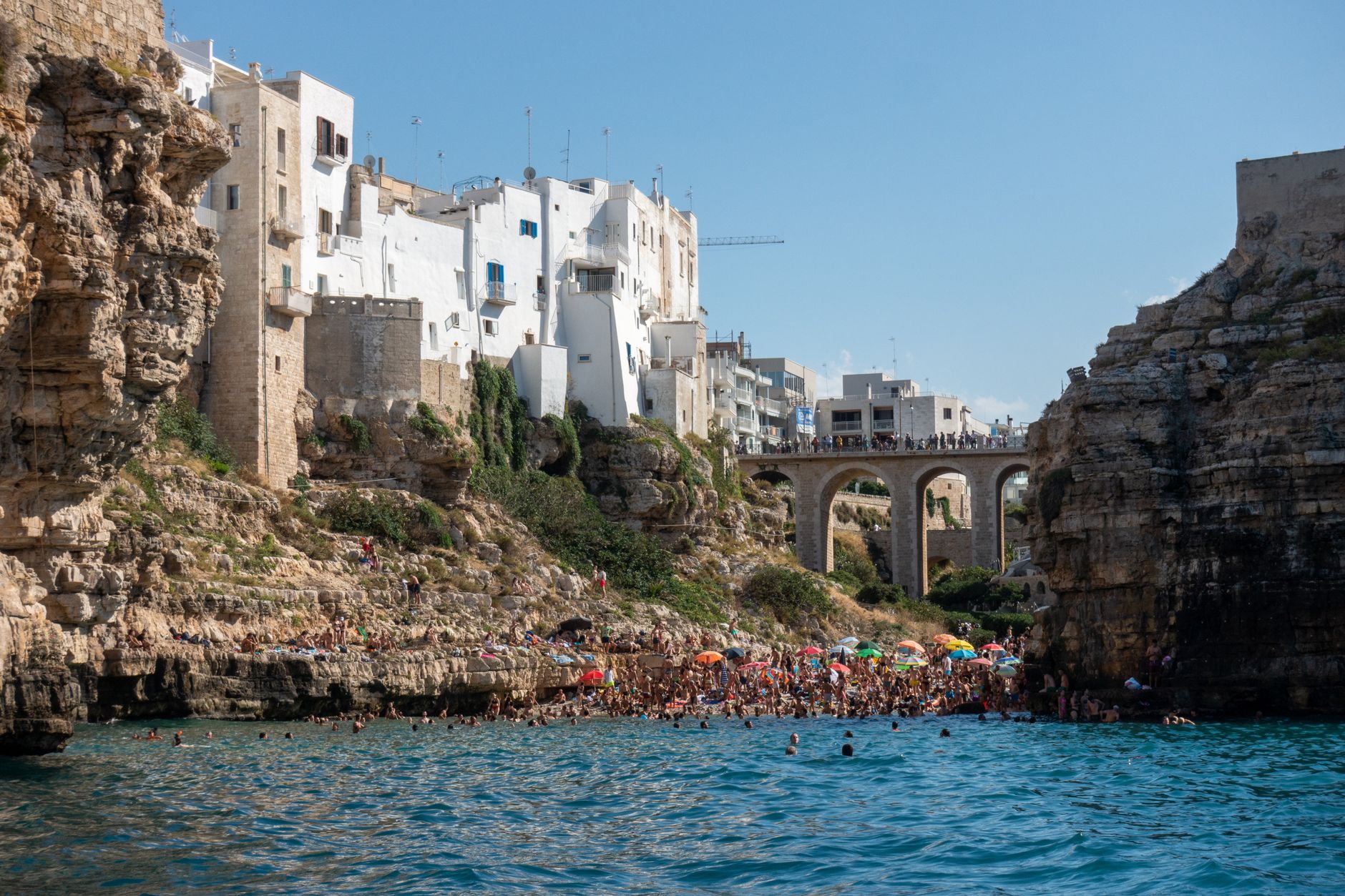 Photo by Masi via Pexels
 Photo by Gabriella Clare Marino via Unsplash
 Photo by Photo Wallpapers via Pexels
Alberobello's trulli
The UNESCO district of conical dry-stone houses, best walked early before the coach groups, with the Rione Monti the busy half and Aia Piccola the lived-in one.
Polignano a Mare
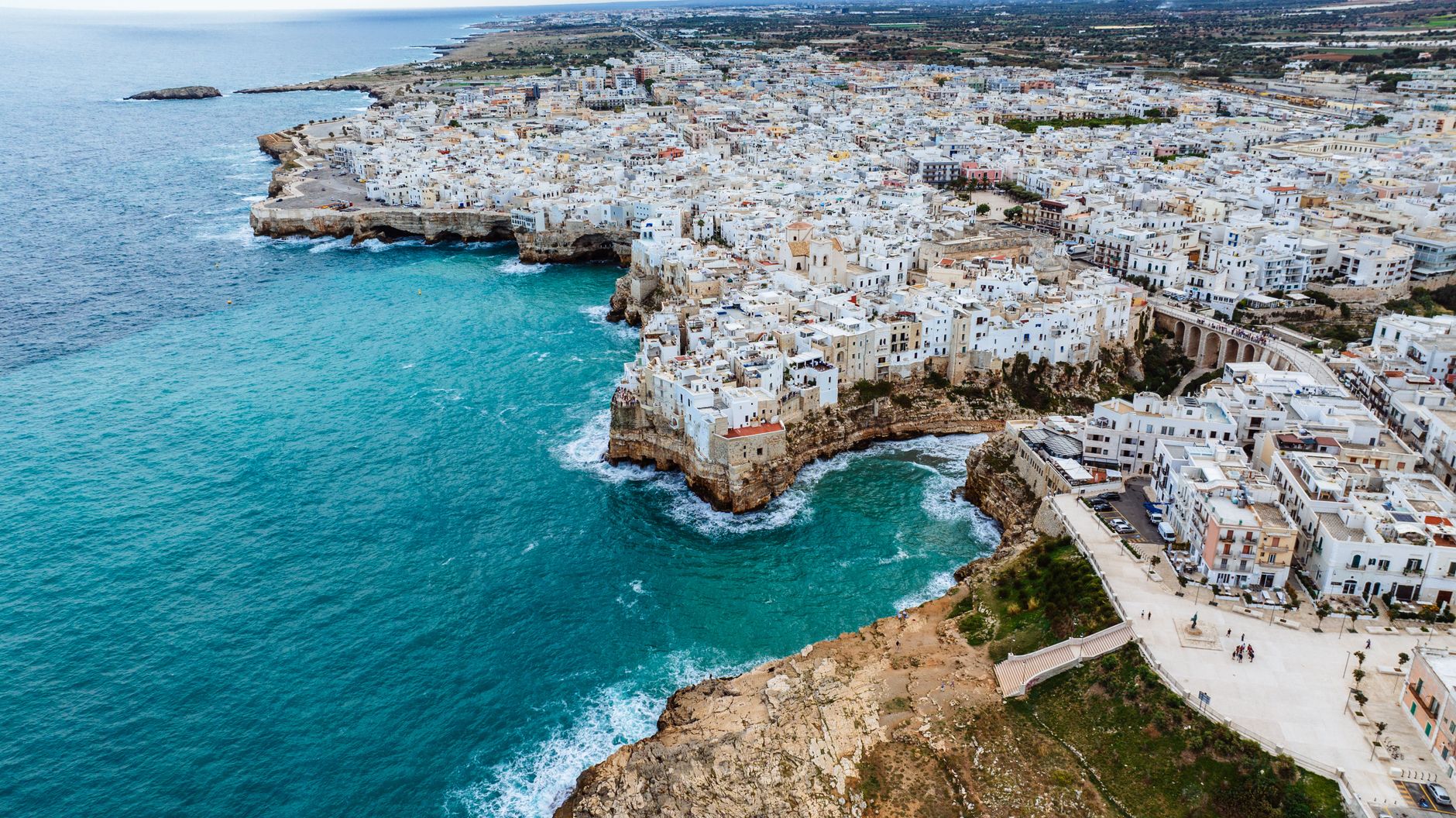
The town on the cliff, with Lama Monachile beach reached by a staircase from the bridge in the middle of the old town, half an hour from Bari.
Lecce's baroque
The Basilica di Santa Croce and the soft pietra leccese that made the carving possible, in a city built on the stone it is decorated with.
Ostuni
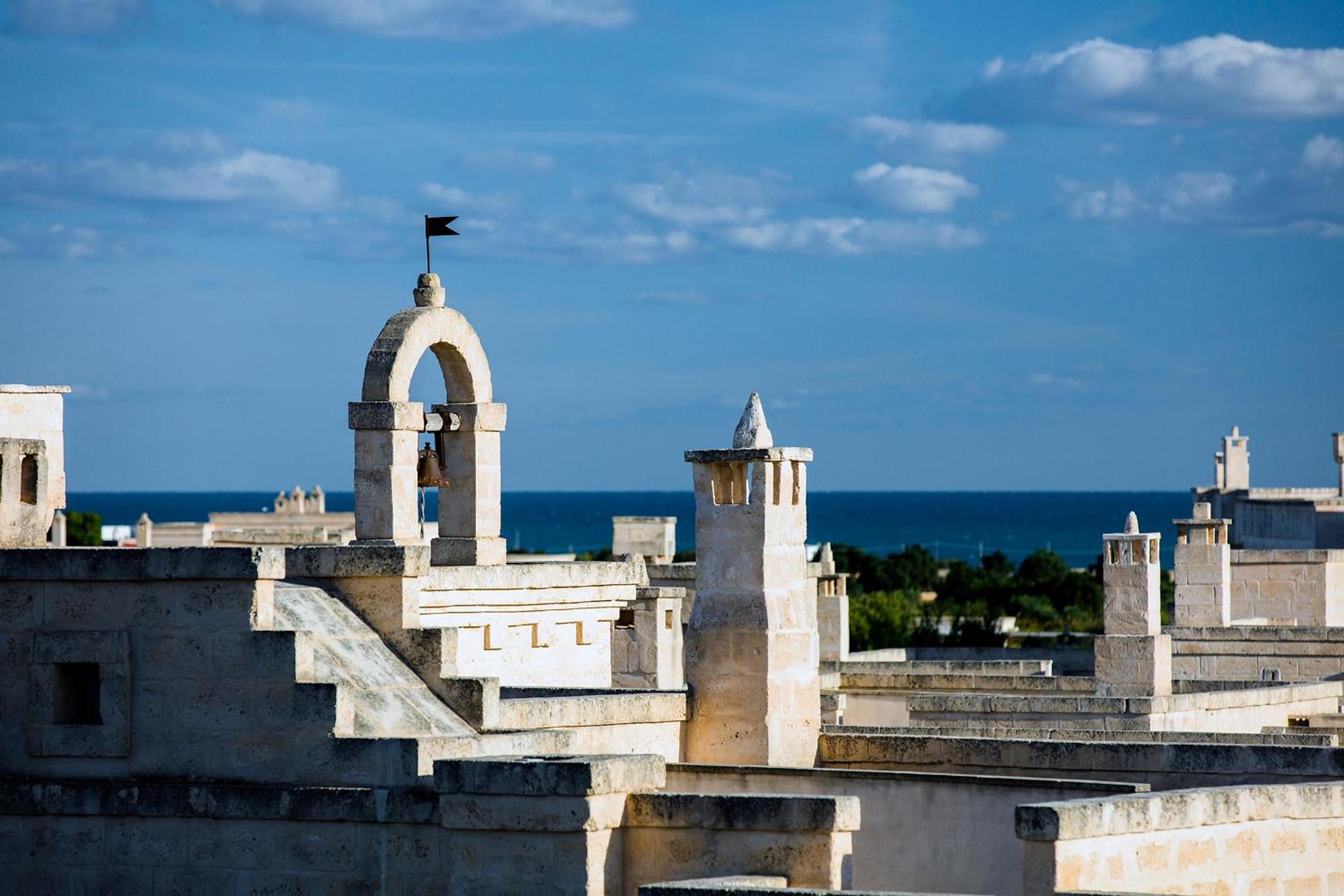
The white city, a whitewashed hill town above the olive plain, with the coast fifteen minutes below and the Valle d'Itria behind.
Grotte di Castellana
Three kilometres of caves on a guided tour, ending at the White Grotto, and the region's one big sight that works in the August heat.
Castel del Monte
Frederick II's octagonal castle on the Murgia, octagonal in every element, with no kitchens, stables or defences and a purpose never established.
The regions of Puglia
Bari
The arrival city
The regional capital and main airport, with the ferries to Greece and Albania and an old town worth a day, where orecchiette are made by hand on Via Arco Basso. For arrivals, city time and the ferries.
An old town worth a day and the airport, and a base most itineraries skip.
Polignano a Mare and Monopoli
The cliff towns near Bari
The Adriatic coast half an hour from the airport, with Polignano on its cliff, Monopoli's harbour and the easiest sea to reach on arrival. For short stays and the first night.
The first sea of the trip and the easiest coast to reach, at the highest prices on the Adriatic.
Valle d'Itria
Trulli, white towns, masserie
Alberobello, Locorotondo, Ostuni and Martina Franca, where most first visits base because both coasts are inside an hour and the masserie sit between the towns. For first visits and a first base.
Both coasts inside an hour and the trulli at the door, and a car for every meal out.
Lecce
The baroque city
The Salento's capital, a city of soft limestone facades, cartapesta workshops and a student evening, an hour south of Ostuni and 45 minutes from Brindisi airport. For the south's city base.
Baroque at every corner and the Salento within reach, without a sea.
Salento coast
Otranto, Gallipoli and two seas
The southern tip, with the Adriatic and the Ionian half an hour apart, Otranto's cathedral, Gallipoli's island old town and the beaches at Santa Maria di Leuca. For beaches and a second base.
Two coasts and the best beaches, shut between November and March.
Gargano
The northern spur
The promontory above Bari with Vieste, the Foresta Umbra and the Tremiti islands, a two-and-a-half-hour drive north and a separate trip. For forest, sea and a second visit.
Forest and sea nobody else on the route reaches, at a long drive from everything.
See every Puglia neighbourhood on one map
Save the areas you like and Stippl plots your days so you're not crossing the city twice.
Where to stay in Puglia
Sleep in a masseria in the Valle d'Itria for the first half, where both coasts sit inside an hour, and move to Lecce or the Salento coast for the second. The masseria is the reason to book early: the good ones are small, and most travellers plan Puglia about 113 days ahead on Stippl. Coastal towns largely close from November to March; the inland masserie stay open.
Bari
City hotels and B&Bs in the old town and around the station, €80 to €160 a double.
Polignano a Mare and Monopoli
Cliff-top rooms and harbour B&Bs, €130 to €280 a double in season.
Valle d'Itria
Masserie with pools and trulli stays around Alberobello, €120 to €250 a double.
Lecce
Palazzo B&Bs and boutique hotels in the centro storico, €90 to €200 a double.
Salento coast
Beach hotels and apartments in Otranto and Gallipoli, €100 to €240 a double, shut in winter.
Gargano
Hotels and campsites around Vieste, €80 to €180 a double, summer only.


What to eat in Puglia
hand-made ear-shaped pasta, still made in the street
cream-filled mozzarella, eaten fresh within a day of being made
tomato-and-olive topped focaccia, a street-food breakfast and lunch
regional red wine, cheap and much improved over the last two decades
regional red wine, the region's other signature grape
raw seafood, prepared and eaten uncooked
Discover food spots in Stippl
Find restaurants and markets on the map, save them to your itinerary, works offline too.

Puglia customs and what not to do
The south keeps its own hours
Later meals, longer closures and an afternoon when nothing is open, so the day is built around the morning and the evening.
Lunch closing is real
The inland towns shut from roughly 13:00 to 17:00, and a white town at three in the afternoon in July is empty for a reason.
Cover up in the churches
They are working churches and frequently in use, so shoulders and knees are covered before the baroque is looked at.
Griko is still spoken
A Greek dialect from Byzantine settlement survives in a handful of Salento villages, the Grecìa Salentina, and the road signs there are in two scripts.
Pizzica is not a show
The region's own dance and music, and the Notte della Taranta is its festival rather than a tourist performance, so dance or watch, but do not film from the front.
Do
- Book the masseria before the flights; the good ones are small and go months out
- Fly into Bari and out of Brindisi with a one-way rental between them
- Eat lunch at one, because the town closes at half past
- Walk Alberobello and Ostuni before ten in summer
Don't
- Plan Puglia by train; the coast, the masserie and the beaches are off the network
- Drive into the historic centres; they are ZTL-restricted, so park outside the walls
- Swim off unpatrolled beaches outside the concessioned stretches; rip currents are real
- Expect the coast open in winter; the towns shut from November to March
What a Puglia trip costs
Budget
€70–120
A B&B in Bari or Lecce, focaccia and orecchiette from the street, the shared hire car, the free beaches.
Mid-range
€150–280
A masseria or a trullo double, trattoria dinners with Primitivo, the car, a paid sight a day.
High-end
€300+
A luxury masseria with a pool, a private cooking class, the Salento's beach clubs, dinner in Lecce's best rooms.
Track what you actually spend
Set a daily budget per country and log expenses in any currency while you travel.
Fun facts about Puglia
The trulli of Alberobello were built without mortar so they could be taken down fast. The standing account is that a removable keystone let owners collapse a roof to avoid a tax on permanent dwellings.
Xylella fastidiosa has killed on the order of 21 million olive trees in the Salento. Across roughly 183,000 hectares of the southern region since 2013, changing the landscape of the southern drive permanently.
The baroque of Lecce exists because of the stone. Pietra leccese is soft enough to carve like wood and hardens on exposure, which is why the facades are as intricate as they are.
Cartapesta, papier-mâché, became a craft of Lecce when carved stone was too dear. Cartapesta became the city's craft as the affordable substitute and is still made in workshops off the main squares.
Castel del Monte is octagonal at every level. An octagonal plan, eight octagonal towers and an octagonal courtyard, with no kitchens, stables or defences, and a purpose Frederick II never wrote down.
A Greek dialect is still spoken in the Grecìa Salentina. Griko survives in a cluster of Salento villages from Byzantine settlement, with bilingual signs and its own songs.
Local tips for Puglia
The car is not optional
Trains connect the bigger towns slowly and reach almost none of the coast, the masserie or the beaches, so the hire car is the first booking after the room.
Two airports, one way
Bari in the north and Brindisi in the south are 110 km apart, and a one-way rental between them is a normal, inexpensive booking that saves a day of backtracking.
The Sud Est train is a day out
The Ferrovie del Sud Est reaches Alberobello and Martina Franca from Bari and is a real car-free day out, but not a way to do the region.
Park outside the walls
The historic centres of Ostuni, Lecce and Polignano are ZTL-restricted, as everywhere in Italy, and the cameras post the fine to the rental company.
The heat is the risk
Puglia is a low-crime region by Italian standards, and the real hazard is July and August inland, hot, flat and shadeless, with no cover in the hill towns.
Plan it long and early
Most travellers give Puglia 3 nights on Stippl and 40.3% give it four or more, planned about 113 days out, so the week and the masseria come first.
Puglia questions, answered
A week to drive it properly, five for the Salento alone. Most travellers give Puglia 3 nights on Stippl and 40.3% of stops run to four or more, the highest share in Italy, because the interest is spread along the whole heel rather than gathered in one town.
Not as a trip. Trains reach a few of the bigger towns slowly and almost none of the coast, the masserie or the beaches, and the Ferrovie del Sud Est to Alberobello is a day out rather than a way round. Fly into Bari, hire the car there, and drop it at Brindisi at the other end.
May, June and September: warm, dry, open and not yet or no longer full. 86.2% of Puglia plans start between May and September, of everyone who plans Puglia on Stippl, and the coastal towns shut from November to March, so the window is a real one at both ends.
Puglia for space, price and driving, the Amalfi Coast for the single famous view. Puglia is planned about 113 days ahead in the Italy trips people build on Stippl, the longest lead in the country. Build the drive in Stippl from Bari to Lecce with a night count per town, then ask people who have driven it, in subreddits like r/ItalyTravel, where they would add a day.
It is on almost every Puglia itinerary and it is not in Puglia: Matera sits in Basilicata, about 65 km from Alberobello, and the cave city fits as a night between Bari and the Valle d'Itria. Give it its own evening rather than a lunch stop, since the Sassi are at their best after the day-trippers leave.
Both, in one trip. Bari in the north is the main arrival with most rentals starting there, Brindisi in the south is 45 minutes from Lecce, and the two are 110 km apart with cheap one-way hire between them. Fly into one, drive the region south, and fly out of the other.
Every guide is written by the Stippl editors and checked against the trips our travellers actually plan. Spotted something out of date? Let us know.
Plan Puglia in Stippl
Day-by-day planning, stays and budget in one app, with every place from this guide already on the map.
Download the app