

Amalfi Coast
The Amalfi Coast is sixty kilometres of cliff road with towns on it, and the road is the constraint. Three nights in one town, moved by ferry rather than bus or car, and the longest lead time in Italy.
Amalfi Coast in a nutshell
Amalfi Coast: what to expect
We work from 715,000+ planned stops across Italy on Stippl.
The Amalfi Coast is a road with towns on it, and the base decides the trip. The SS163 runs sixty kilometres from Vietri sul Mare to Positano, cut into the cliffs, single-lane in places and slow at every hour of the day in season, which is why the towns are reached by ferry and the trip is planned from one of them: Amalfi for the transport, Positano for the view, Praiano for the price, Ravello up above for the gardens. Most travellers give the Amalfi Coast 3 nights on Stippl, in one base rather than a town a night.
Its partners are the Bay of Naples and nothing else, and it is planned earlier than anywhere in Italy. Capri, Sorrento, Pompeii and Naples sit on the same trips far above the odds while Florence and Venice sit below them; most travellers plan the coast about 125 days ahead on Stippl, and 34.7% book it half a year out.
Come in June or September, take the ferry wherever a ferry goes, and leave the car in Naples. June is the month most travellers plan it for, and August is only the fourth. Skip the coast between November and March, when the ferries stop and most of it closes, and skip Positano if steps are a problem, because everything there is up or down about 1,700 of them.
Plan Amalfi Coast in Stippl
Day-by-day planning, stays and budget in one app, with every place from this guide already on the map.
Download the appWho the Amalfi Coast is for
One-base travellers
The coast punishes anyone changing hotel every night, so it suits people who pick a town and move by boat for three days.
First-timers to Italy
The coast is on almost every first-Italy itinerary as the view after Rome, and it delivers it, at a price and a pace.
Early planners
Most travellers plan the Amalfi Coast about 125 days ahead on Stippl, the longest lead of any Italian place we measure.
Bay of Naples builders
Capri, Sorrento, Pompeii and Naples sit on the same trips far above the odds, so the coast works as one leg of a Naples week.
June and September people
June is the month most travellers plan the coast for on Stippl, and August is only fourth, which is the right way round.
Walkers with a head for heights
The Path of the Gods from Bomerano to Nocelle is the best view on the coast, two to three hours, mostly downhill and without shade.
Maybe not for you: anyone on a budget, since this is the dearest coast in Italy; anyone who wants to drive, because the road is slow, the parking punishing and the plate rule enforced; and anyone with bad knees in Positano, where the town is a staircase.
The best time to visit the Amalfi Coast
Closed
November to March
Most of the coast shut, the ferries stopped and the coast bus-and-car only, with Amalfi and Sorrento the exceptions that keep hotels and restaurants open through the winter.
Opening
April to May
Everything reopens, the ferries restart, the sea is still cold and the alternating plate rule begins on the road; May is already the third month of demand.
The good months
June and September
The two peaks of demand on Stippl and the recommendation of every source: warm sea, full ferry timetable, and a road that still moves.
Peak and the tail
July to October
July and August hot, full, expensive and at capacity on the road and the boats; October warm and open early in the month, then closing week by week.
- June is the month most travellers plan the Amalfi Coast for on Stippl, and August is only the fourth. That is unusual for Italy, and it is the coast's own visitors reading the road, the prices and the heat correctly.
- The alternating plate rule on the SS163 runs 10:00 to 18:00 in the listed periods, and Meta on the Sorrento side runs it inverted. The dates are re-issued each season, so a hire car on the coast road needs that year's ordinance, and the fine runs from €87.
- Most travellers plan the coast about 125 days ahead on Stippl and 34.7% book half a year out. That is the longest lead in Italy, so a June room in Positano is a winter booking.
- The Ravello Festival runs roughly June to September on a stage built out over the cliff in the Villa Rufolo gardens. Concerts at dusk with the coast below, and the one reason to sleep in Ravello rather than visit it.
- Ferragosto on 15 August is the single worst day to be on the road. The buses cannot board at Positano, the ferries are full and the beach clubs are booked, so stay put in the base and swim early.
- Sant'Andrea in Amalfi on 27 June and 30 November carries the silver bust up the cathedral steps at a run. The June date lands in the best month, and the November one is the winter reason to be in the town that stays open.
Add your Amalfi Coast dates and we'll flag the weather
Stippl shows the season, crowds and prices for every stop on your route.
Describe your trip, get a Amalfi Coast itinerary in seconds
Everything in this guide is already in Stippl. Tell the planner how long you have and what you like: it builds the route, the days and the travel times, and you edit whatever you want.
Things to do on the Amalfi Coast
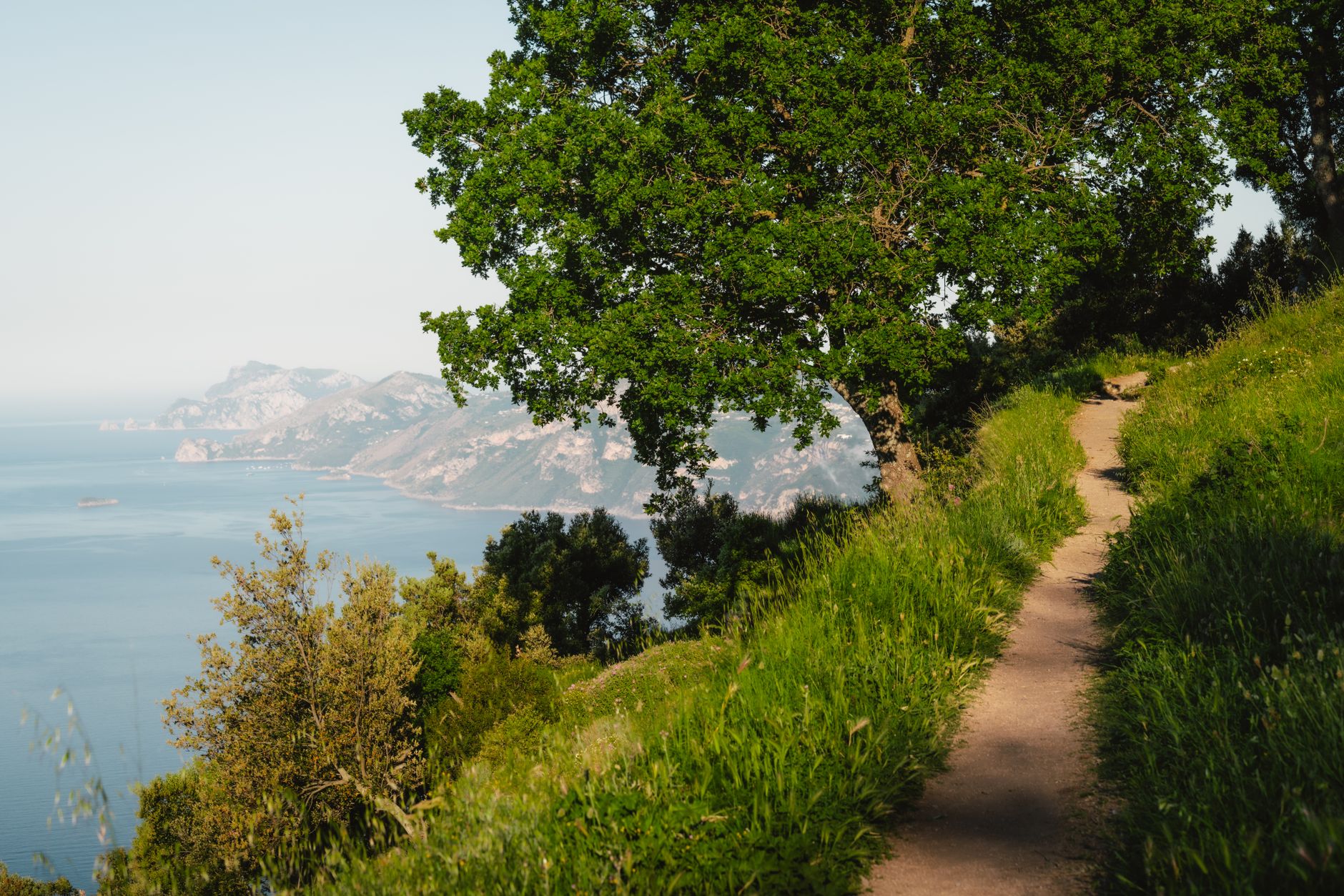 Photo by Ahmet Yüksek ✪ via Pexels
 Photo by Cole Ciarlello via Unsplash
The Path of the Gods
Bomerano to Nocelle, about 6 km with a little over 200 m of climb, mostly downhill, two to three hours, and the best view on the coast, with no shade for long stretches.
The ferry between the towns
Amalfi to Positano in 15 to 25 minutes, transport and sightseeing at once, and the way the coast was built to be seen; it runs April to October only.
Villa Rufolo and Villa Cimbrone
Two cliff-edge gardens in Ravello, 350 m above the sea, the second with the Terrace of Infinity, reached by the SITA switchbacks from Amalfi.
Capri as a day trip
About 30 minutes by ferry from Positano, including the landing tax, and the coast's strongest partner on Stippl by a wide margin.
The Emerald Grotto
At Conca dei Marini, reached by boat or by lift from the road, and closed by sea conditions without notice, so never the whole day's plan.
Pompeii and Herculaneum
Both within an hour of Sorrento on the Circumvesuviana, on a named ticket, and the reason the coast pairs with the Bay of Naples rather than with the north.
The towns of the Amalfi Coast
Positano
The view, and the steps
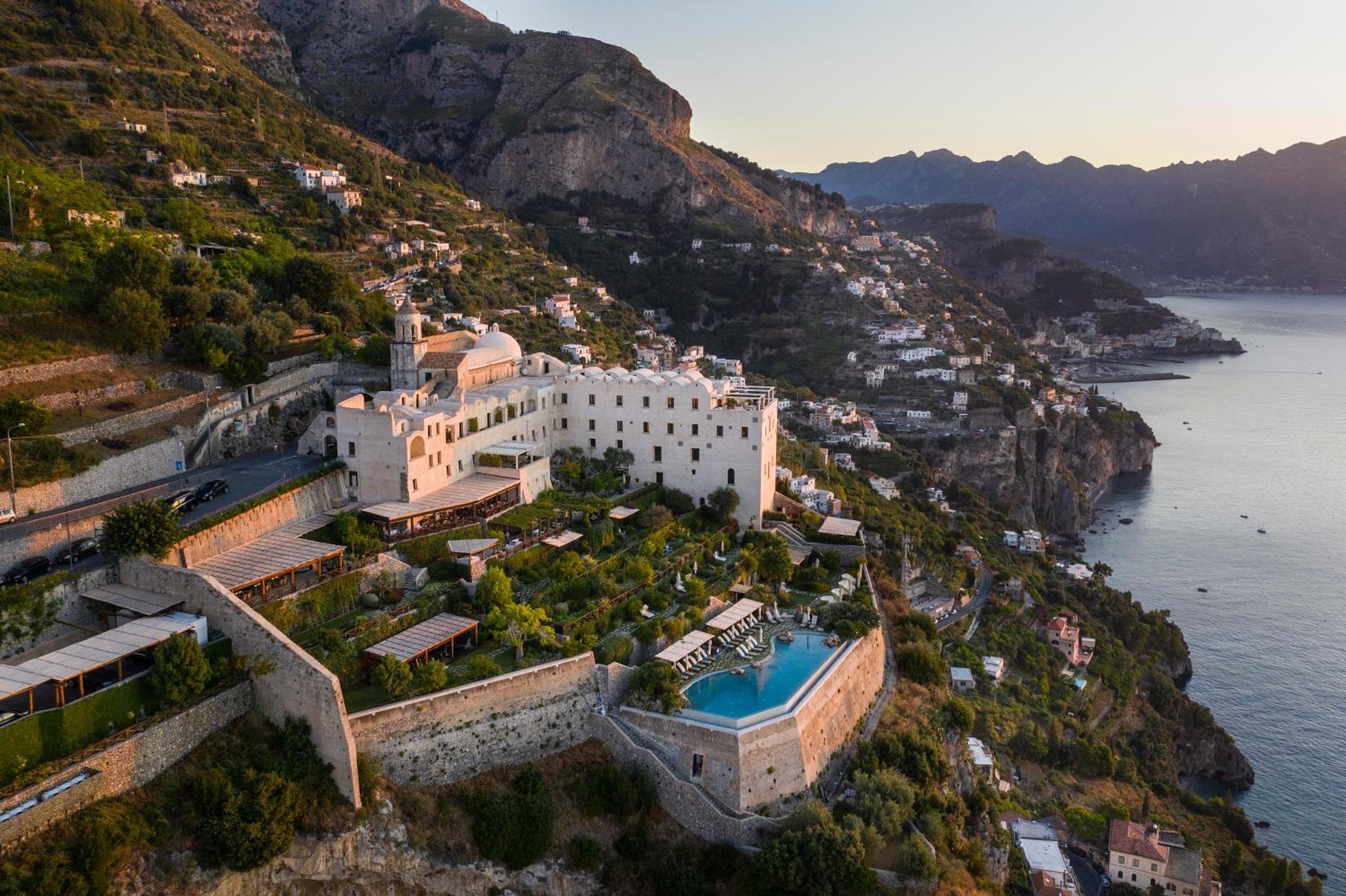
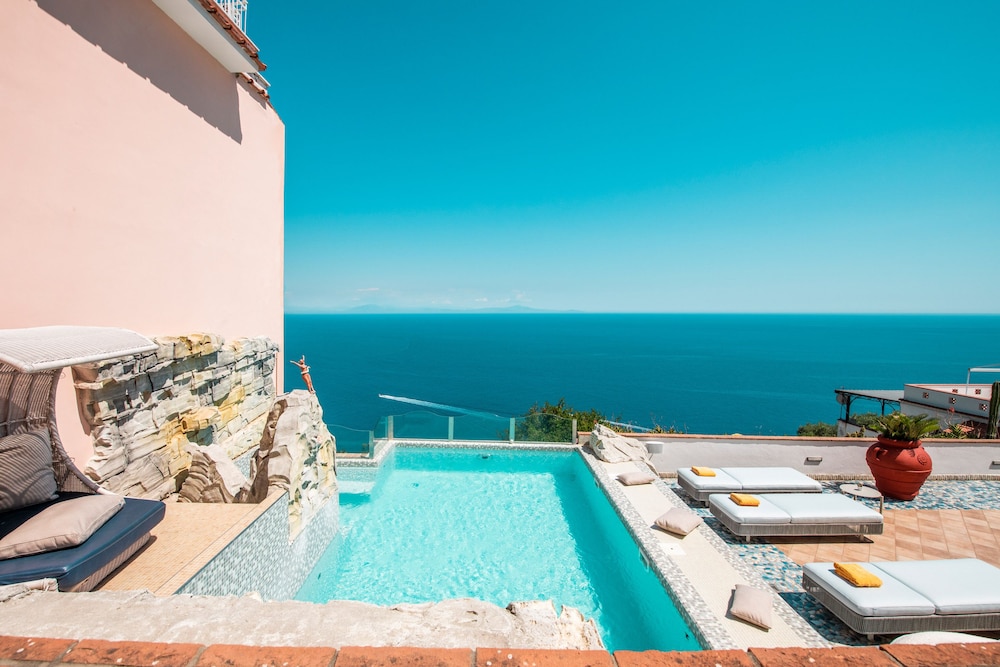
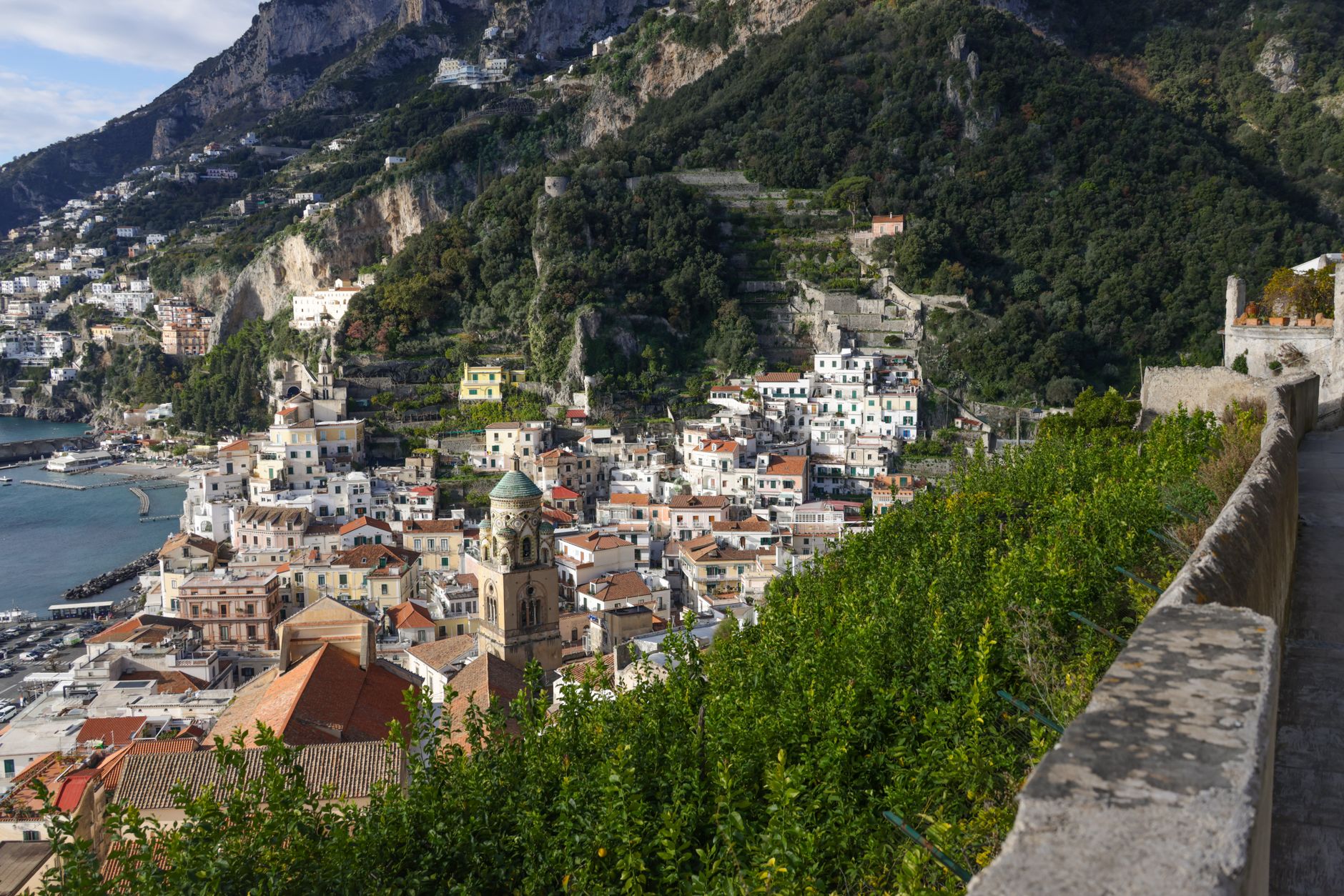
The pastel town stacked above Spiaggia Grande, the most expensive base and the hardest to stay in, with everything up or down about 1,700 steps and porters and taxis a real running cost. For couples and the picture.
The picture from the window and the Capri ferry, at the highest price and the most steps.
Amalfi
The practical base
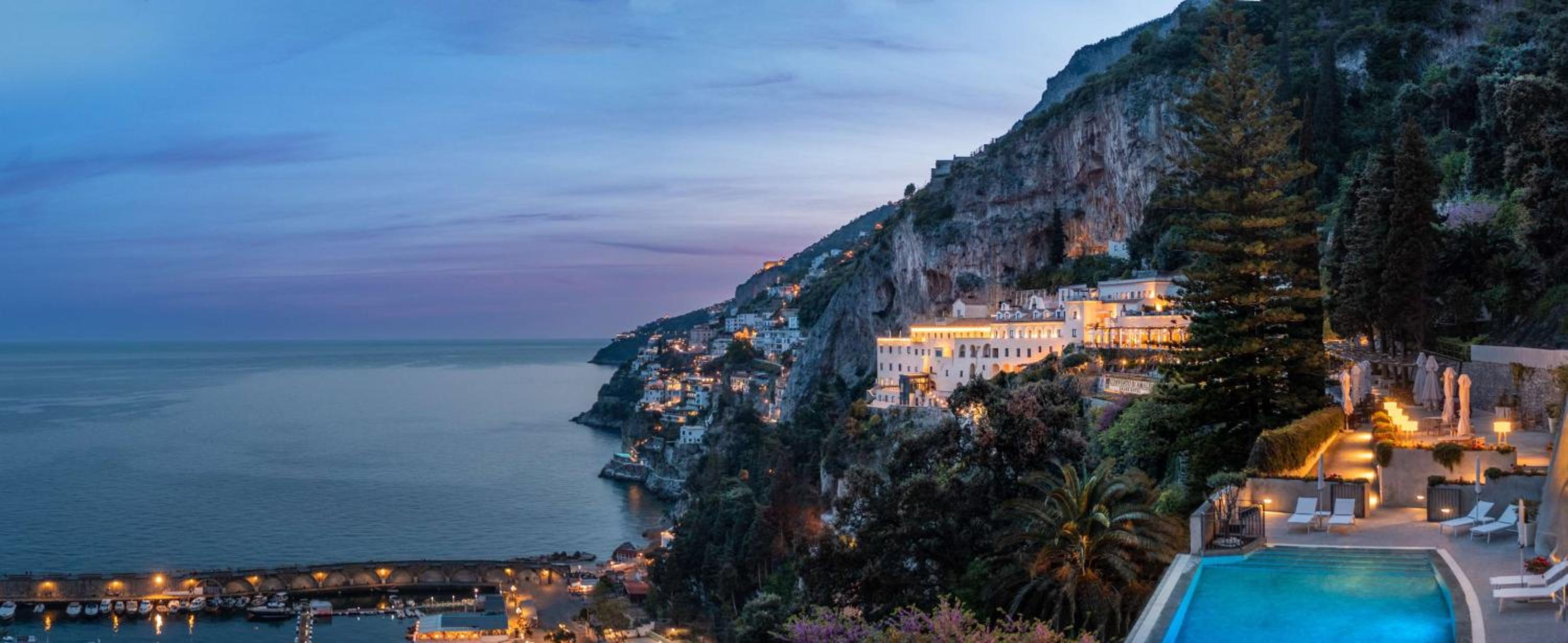
The old maritime republic with the cathedral, where both the ferries and the SITA buses converge, which no other town on the coast can say. For first visits and anyone moving around.
Every boat and bus from one quay, in the busiest square on the coast.
Ravello
Above the coast
Gardens, views and quiet 350 m up, with Villa Rufolo, Villa Cimbrone and the summer festival, at the cost of a bus down to everything else. For couples and the festival.
The gardens and the quiet, and a switchback bus to every beach and boat.
Praiano
The value town
Between Positano and Amalfi, markedly cheaper than both, with the sunset the two famous towns do not get and the Path of the Gods above it. For budget-conscious couples.
Cheaper than its neighbours and the sunset, with a bus or a boat to anything else.
Cetara and Vietri sul Mare
The eastern end
The fishing village of the colatura di alici and the ceramics town at the Salerno end of the road, quieter, cheaper and closer to the Salerno trains. For food travellers and a second visit.
Real villages and the Salerno station, at the far end from Positano.
Sorrento
The base outside the coast
Not on the Amalfi Coast but the best-connected base for it: the Circumvesuviana to Naples and Pompeii, ferries along the coast, and cheaper rooms. For budgets and day trips.
The trains and the cheaper rooms, with every coast town a commute away.
See every Amalfi Coast neighbourhood on one map
Save the areas you like and Stippl plots your days so you're not crossing the city twice.
Where to stay on the Amalfi Coast
Choose the town before the hotel, because with a slow road and expensive taxis the base decides the trip more than anywhere else in Italy: Amalfi for the transport, Positano for the view, Praiano for the price. Ask how many steps, since in Positano a hotel's height above the beach is a daily cost. Most travellers give the coast 3 nights on Stippl.
Positano
Cliff hotels with sea views and rooms up the steps, €200 to €500 a double in season, the dearest on the coast.
Amalfi
Hotels by the harbour and B&Bs in the lanes, €140 to €300 a double.
Ravello
Villa hotels and garden B&Bs on the ridge, €150 to €400 a double.
Praiano
Family-run hotels and rooms above the sea, €110 to €220 a double.
Cetara and Vietri sul Mare
Small hotels and apartments at the eastern end, €90 to €180 a double.
Sorrento
Three-stars on the cliff and B&Bs in the centre, €120 to €300 a double, open all year.


What to eat on the Amalfi Coast
short, thick ribbon pasta made here and eaten with seafood
fermented anchovy sauce descended from Roman garum, used a few drops at a time
lemon-cream dome dessert made with the sfusato amalfitano lemon
Discover food spots in Stippl
Find restaurants and markets on the map, save them to your itinerary, works offline too.
Amalfi Coast customs and what not to do
The coast lives on tourism
It knows it, which makes service transactional in the busy towns and warm in the quiet ones, so Praiano and Atrani get the smiles Positano does not.
Cover up away from the beach
Amalfi cathedral and Ravello's churches enforce it, and beachwear on the steps into town is noticed.
Dinner is late
From about 20:00, and the kitchens in the small towns close early by Italian standards, so the walk-in table is at half past seven.
Beach rows are priced
The concessioned beaches have rows and the front rows cost more, so the free strip is the far end and the sunbed is booked.
Amalfi was a republic
An independent naval power before Venice, Genoa or Pisa, and the town treats that history seriously; the regatta and the cathedral are both about it.
Do
- Take the ferry wherever a ferry goes; the coast is designed to be seen from the water
- Book the room in winter for June; the lead here is the longest in Italy
- Walk the Path of the Gods early, with water; there is no shade for long stretches
- Buy the SITA 24-hour pass if the bus is the plan for the day
Don't
- Drive the SS163 in season without that year's plate ordinance
- Build a day around the Emerald Grotto or a ferry; sea conditions cancel both
- Book Positano without asking how many steps to the room
- Come in August expecting to board a bus at Positano; it arrives full
What an Amalfi Coast trip costs
Budget
€80–140
A room in Sorrento, Praiano or Cetara, the SITA pass, a focaccia lunch, the free strip of beach and the Path of the Gods.
Mid-range
€180–350
A three-star in Amalfi or Praiano, ferries between the towns, a Ravello afternoon, trattoria dinners with scialatielli.
High-end
€450+
A cliff hotel in Positano or Ravello, a private boat to Capri, the front row at Spiaggia Grande, tasting menus above the sea.
Track what you actually spend
Set a daily budget per country and log expenses in any currency while you travel.
Fun facts about the Amalfi Coast
Amalfi was one of Italy's four maritime republics. An independent naval power before Venice, Genoa or Pisa, and the rotating regatta between the four still reaches Amalfi every fourth year.
The sfusato amalfitano lemon of Amalfi carries a protected name. It grows on stone terraces under chestnut-pole pergolas that are themselves part of the UNESCO listing, and it is the fruit in the delizia al limone.
The colatura di alici of Cetara descends directly from Roman garum. Salted anchovies are pressed and the liquid collected, then used a few drops at a time on pasta.
Atrani is the smallest comune in southern Italy by area. It is a ten-minute walk from Amalfi that almost nobody makes, and the value bed next to the famous town.
Wagner found Klingsor's garden at Villa Rufolo in Ravello. He said so in the visitors' book, which is why the festival on the cliff is built around his music.
The Path of the Gods was a mule track between the high villages. It was how Bomerano and Nocelle reached each other before the coast road existed, not a scenic route, which is why it stays high.
Local tips for the Amalfi Coast
Take the ferry
It is faster than the bus, incomparably more comfortable than bus or car, and Amalfi to Positano is 15 to 25 minutes, so wherever a ferry goes, take it.
The SITA bus is grim in season
Cheap and frequent, but standing, hot and often unable to board at Positano because it arrives full, so start at Amalfi where it begins.
Ferries stop for the winter
From roughly November to March the coast is bus-and-car only, which changes the whole calculation and is why the winter bases are Amalfi and Sorrento.
The road is the risk
The SS163 is narrow, blind-cornered and shared with buses that need the full width, and motorbike and scooter accidents are the recurring warning on the coast.
The steps are the second
Positano's roughly 1,700 steps in the heat catch out people who did not plan for them, so ask the hotel's height above the beach before booking.
Three nights, one town
Most travellers give the Amalfi Coast 3 nights on Stippl and 27.1% give it four or more, in one base rather than a town a night, because the road is too slow for more moving.
Amalfi Coast questions, answered
Three in one base. Most travellers give the Amalfi Coast 3 nights on Stippl and 27.1% of stops run to four or more, while only a quarter are a single night, because the road is too slow for a town a night and the ferries reach every town from one quay anyway.
Amalfi for transport, since both the ferries and the SITA buses converge there; Positano for the view, at the highest price and up the most steps; Praiano for value between the two; Ravello for gardens and quiet up above; and Sorrento outside the coast for the trains to Naples and Pompeii and cheaper rooms.
With the Bay of Naples: Capri, Sorrento, Pompeii and Naples sit on the same trips far above the odds, of everyone who plans the Amalfi Coast on Stippl, while Florence and Venice sit below them. Put Naples, Pompeii and the coast into Stippl as one southern leg, then ask people who have done it, in subreddits like r/ItalyTravel, which town they based in.
Mostly no. Parking is scarce and expensive, the road is slow at every hour in season, and the alternating plate rule on the coast road runs through the daytime in the listed periods and catches people out. The ferries and the SITA buses cover the coast from April to October, and a hired driver covers the rest.
Go in June or September instead. June is the month most travellers plan the coast for in the Italy trips people build on Stippl, and August is only the fourth, because the road and the ferries are at capacity, the beach rows are booked and the Path of the Gods has no shade. The sea is the only thing August does better.
The Amalfi Coast is grander, dearer and harder to move around, with buses and boats in place of a railway and the towns spread along sixty kilometres of cliff road. Cinque Terre is compact, walkable and cheaper, five villages on fifteen kilometres and a train every twenty minutes. The coast is planned about 125 days ahead on Stippl.
Every guide is written by the Stippl editors and checked against the trips our travellers actually plan. Spotted something out of date? Let us know.

Plan Amalfi Coast in Stippl
Day-by-day planning, stays and budget in one app, with every place from this guide already on the map.
Download the app