
Naples
Naples is the loudest, cheapest and least tidied of Italy's big cities, and the only one that opens the south. Pizza where it was invented, Pompeii an hour away, and Vesuvius over everything.
Naples in a nutshell
Naples: what to expect
What follows sits on 715,000+ stops planned across Italy on Stippl.
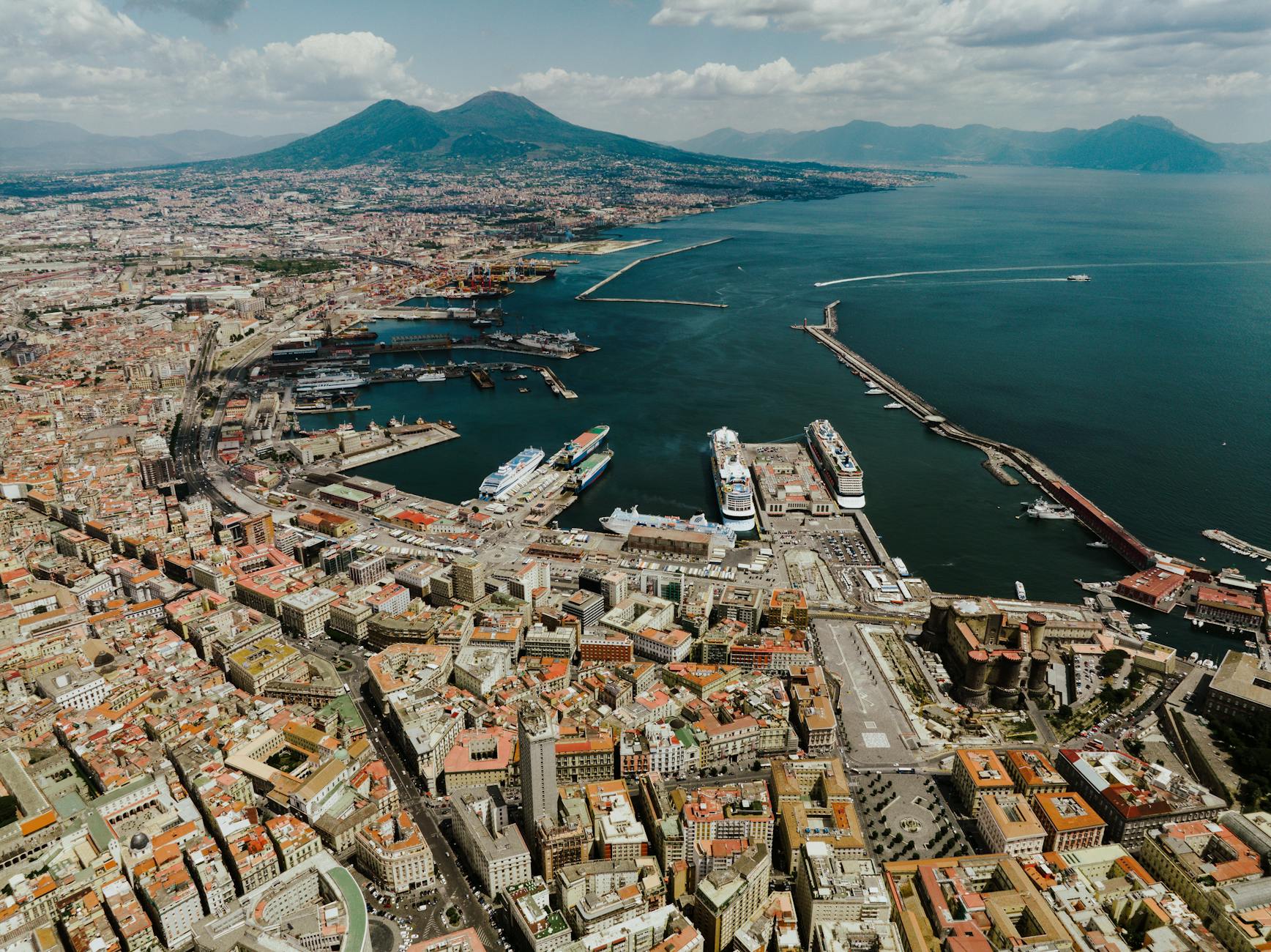
Naples is worth two nights as a base, and most people give it one. It is the loudest, cheapest and least sanitised of Italy's big cities, and the reason to come is the bay around it as much as the city: Pompeii and Herculaneum an hour out on the Circumvesuviana, Vesuvius on an online ticket, the MANN holding what came out of the ash, and the underground city forty metres below the centre. Pizza was invented here and the famous pizzerias take a number, not a booking. Most travellers give Naples 2 nights on Stippl.
Naples is the only Italian city that opens the south, and its satellites are on most of its trips. Vesuvius, Procida and Herculaneum sit on seven or eight Naples trips in ten, the highest day-trip signatures we measure anywhere, and Naples opens 18.2% of the Italy trips it appears on, planned on Stippl. 40.9% of Naples stops are a single night, the shortest commonest stay of the big four despite having the most to reach from it.
Sleep in the Centro Storico to be in it or in Chiaia to be out of it, and never next to the station to save twenty euros. Book Pompeii and Vesuvius on the official sites ahead, do Herculaneum as well, and ride Metro Line 1 to Toledo for the station itself. Skip Naples if you want a city that has tidied itself up: it has not, and the noise, the scooters and the washing lines are the point.
Plan Naples in Stippl
Day-by-day planning, stays and budget in one app, with every place from this guide already on the map.
Download the appWho Naples is for
Anyone using the bay
Naples trips carry more Italian stops than any other destination we measure, and Vesuvius, Procida and Herculaneum are recorded on seven or eight Naples trips in ten.
Eaters on a budget
Pizza, fried street food and coffee cost a fraction of what they do in Florence or Venice, and the cuoppo is eaten walking.
Roman-archaeology travellers
Pompeii, Herculaneum, the MANN and the underground city are within an hour of each other, and the museum holds what the two sites lost.
Travellers heading south
Naples is the only Italian city that opens the south: Bari and Matera pair with it and with nowhere else, and every route into Puglia starts here.
One-night stoppers
40.9% of Naples stops planned on Stippl are a single night, the shortest commonest stay of Italy's big four, and one night covers the centre and a pizza.
Anyone who likes a city raw
Naples has not tidied itself up, and the scooters, the shrines and the washing lines across Spaccanapoli are the reason to come rather than a caveat.
Maybe not for you: anyone who wants a city that performs for visitors, since Naples is a working city that has not tidied itself up; and anyone planning the archaeology for an August afternoon, when Pompeii is hard work and the Circumvesuviana is at its worst.
The best time to visit Naples
Mild and empty
November to February
The wettest and cheapest months, with the archaeological sites almost to yourself and the Christmas cribs of Via San Gregorio Armeno making December the one crowded street.
The good months
March to June
Warm and open before the peak heat, with Maggio dei Monumenti in May opening buildings that are shut the rest of the year. The best months for Pompeii.
Peak
July and August
Hot, humid, partly shut around Ferragosto, and hard work at the sites; do Pompeii at opening and Herculaneum in the shade, and give the afternoons to the sea.
The second window
September to October
The heat breaks, the sea is still warm, the crowds thin, and San Gennaro on 19 September packs the cathedral.
- Pompeii runs on named tickets with a cap of 20,000 a day, and the good slots go first. Book on the official site before the room, get off at Pompei Scavi rather than Pompei, and take the first train in summer.
- July is the month most travellers plan Naples for on Stippl, and June to September takes 63.6% of the plans, the sharpest summer of the big four. The advice says spring and autumn for the sites; the plans say high summer, so the shoulder rooms are the empty ones.
- Vesuvius is an online-only ticket, with crater access in groups of sixty. Nothing is sold at the gate and the summit closes in bad weather, so book the slot and keep a spare morning to move it.
- San Gennaro on 19 September fills the cathedral for the liquefaction of the saint's blood. It happens three times a year, but September is the one that takes over the centre, and the rooms around the Duomo go with it.
- Via San Gregorio Armeno is impassable in December. The year-round nativity workshops become the city's Christmas street, so a December visit walks it in the morning or not at all.
- The Campania Express, the air-conditioned tourist train on the Circumvesuviana, is suspended from October 2026. The ordinary Circumvesuviana still runs to Pompeii and Sorrento, crowded and cheap, so the bag goes in front and the early train is the one to take.
Add your Naples dates and we'll flag the weather
Stippl shows the season, crowds and prices for every stop on your route.
Describe your trip, get a Naples itinerary in seconds
Everything in this guide is already in Stippl. Tell the planner how long you have and what you like: it builds the route, the days and the travel times, and you edit whatever you want.
Things to do in Naples
 Photo by Cole Ciarlello via Unsplash
 Photo by Skyler Smith via Unsplash
 Photo by Meina Yin via Unsplash
Pompeii
A whole Roman town under the ash, an hour out on the Circumvesuviana to Pompei Scavi, on a named ticket with a 20,000-a-day cap. Book ahead and start at opening; the site is bigger than a morning.
The MANN
The archaeological museum holds the mosaics, frescoes and bronzes taken out of Pompeii and Herculaneum, which is why the sites look empty and the museum does not. Do it after the sites, not before.
Herculaneum
Smaller than Pompeii, better preserved, with wooden beams and upper floors still standing, and a fraction of the visitors. Twenty minutes further on the same line, and the better half-day.
The summit of Vesuvius
An online-only ticket to the crater rim, in groups of sixty, looking down into the volcano and out over the whole bay. The last stretch is a steep gravel path; wear shoes with grip.
Napoli Sotterranea
Forty metres under the centre through Greek quarries, Roman aqueducts and wartime shelters, on a guided walk that narrows to a candlelit squeeze. Not for the claustrophobic.
The Catacombs of San Gennaro
Early Christian tombs under the Sanità hill, run by the neighbourhood co-operative that revived the quarter, with the ticket funding local work. Pair them with a walk down through Sanità.
The neighbourhoods of Naples
Centro Storico
The Greek grid, loud
The Greek-Roman grid: Spaccanapoli and Via dei Tribunali, with churches, street shrines, the underground city and the pizzerias everybody queues at, loud, dense and the reason to come. For first-timers and food travellers.
In the middle of it all, but the noise never stops.
Chiaia
Seafront and money
The elegant seafront quarter west of the palace: designer shops, quiet streets, the best restaurants and none of the noise. For couples, families and anyone who wants calm after the centre.
Calm streets and the best restaurants, and twenty minutes' walk from the grid.
Vomero
The hill, by funicular
The hill above the city, reached by funicular: residential, breezy, with Castel Sant'Elmo and the Certosa on top and the view the whole bay is photographed from. For second visits and hot summers.
The view and the breeze, and a funicular ride to reach anything below.
Quartieri Spagnoli
Steep, murals, scooters
The steep grid above Via Toledo, built for Spanish garrisons: washing lines, scooters, murals and the cheapest beds in the centre, much improved and still the area to read before booking. For budget travellers.
The cheapest central beds and the murals, but read the street before you book it.
San Ferdinando
Palace, Galleria, port
Around the royal palace and the Galleria: grand nineteenth-century Naples, the opera house, and easy access to the ferry port. For families and anyone taking a boat to Capri or Procida.
The grand end of the city and the ferries at the door, at grand-end prices.
Sanità
Catacombs and comeback
North of the centre, below Capodimonte: the catacombs, the Totò streets and a neighbourhood that has turned itself around through its own tourism co-operatives. For second visits and anyone who wants the story.
The catacombs and a real neighbourhood, but a walk uphill from the centre.
See every Naples neighbourhood on one map
Save the areas you like and Stippl plots your days so you're not crossing the city twice.
Where to stay in Naples
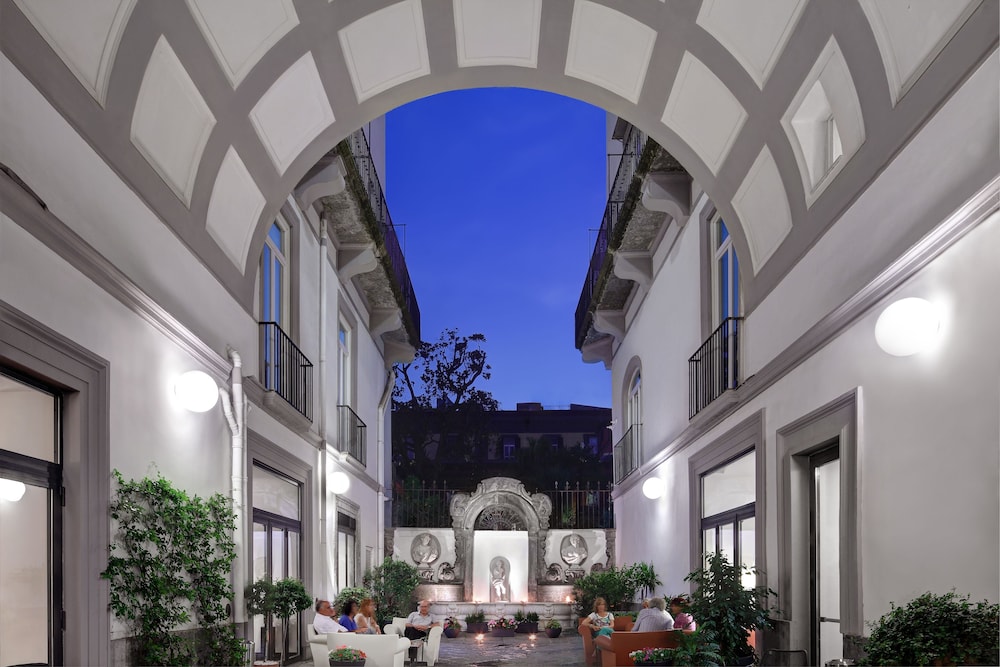
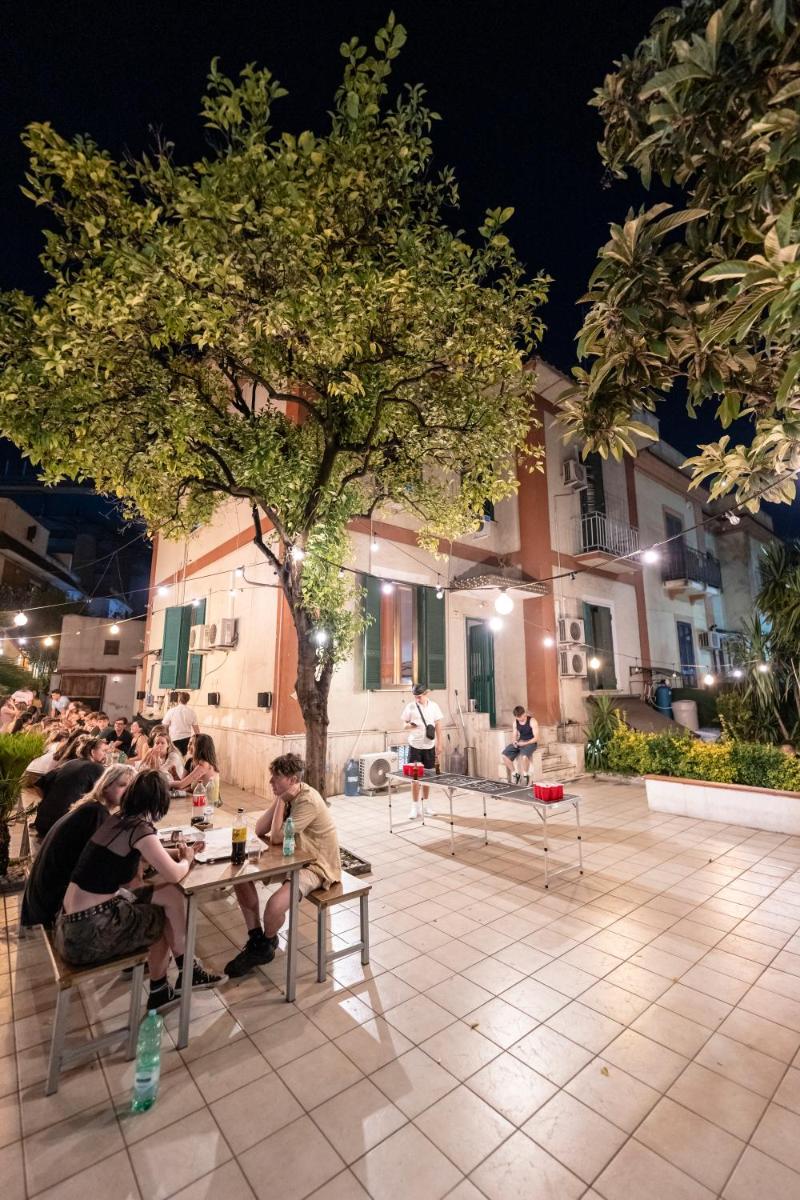
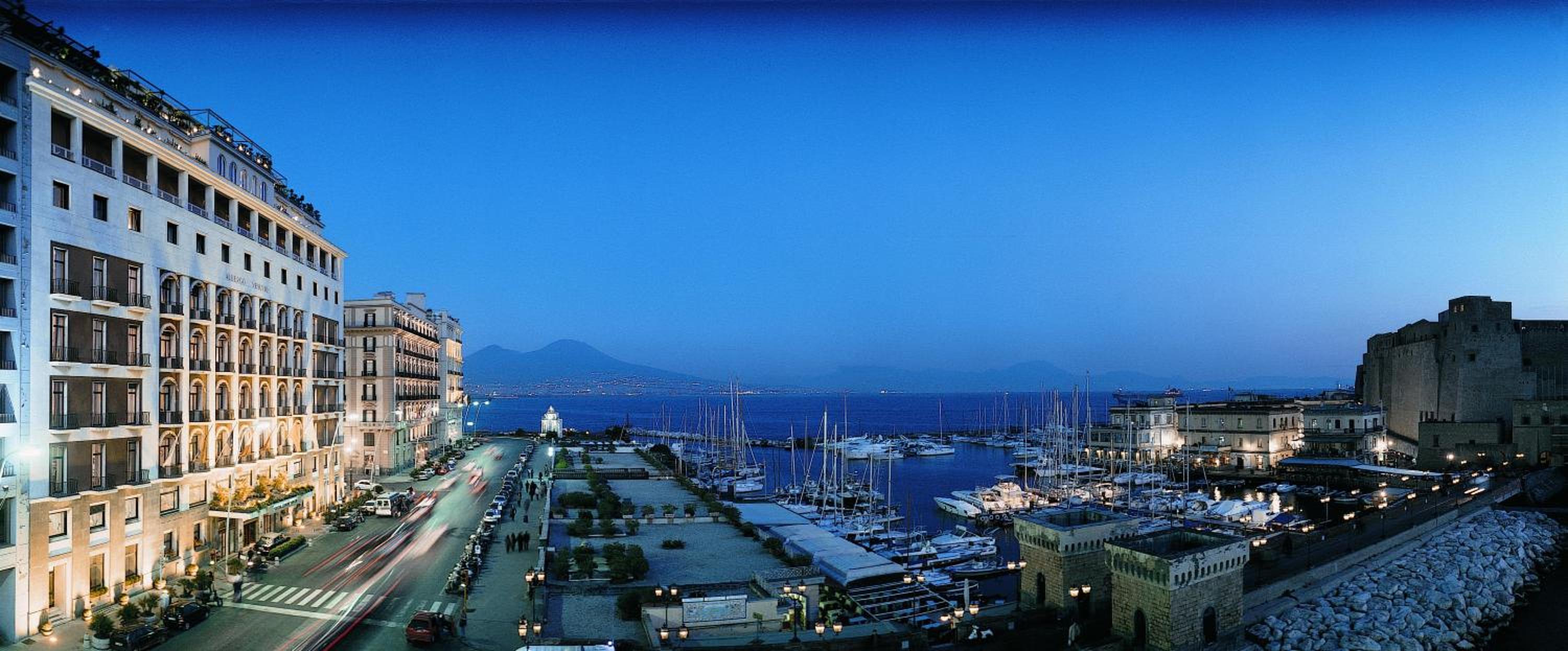
Sleep in the Centro Storico to be in the noise and the food, or in Chiaia to be out of it, twenty minutes' walk away; never next to Napoli Centrale to save twenty euros. Most travellers give Naples 2 nights on Stippl, and the second night is what turns the city from a stop into the base for Pompeii, Herculaneum and the islands.
Centro Storico
B&Bs in old palazzi and hostels in the grid, from €25 a dorm bed to €120 a double.
Chiaia
Boutique hotels and seafront rooms, €120 to €300 a double.
Vomero
Apartments and small hotels on the hill, €80 to €150 a double, by the funicular.
Quartieri Spagnoli
The cheapest central rooms and guesthouses, €50 to €100 a double.
San Ferdinando
Grand hotels by the palace and the seafront, €150 to €400 a double.
Sanità
Guesthouses and B&Bs run by the neighbourhood, €60 to €110 a double.


What to eat in Naples
Soft, wet-centred, blistered at the edge, cooked in under ninety seconds. The margherita and the marinara are the two originals
A shell of hundreds of pastry layers filled with sweet ricotta: riccia for the crisp version, frolla for the soft
A paper cone of fried things: anchovies, courgette flowers, arancini, potato croquettes, eaten walking
Meat braised in tomato for the better part of a day, the sauce eaten with pasta and the meat afterwards
Pasta and potato cooked to a thick cream with melted provola through it
Yeast cake soaked in rum, sold everywhere and taken seriously
Short, strong and already sugared unless you say otherwise, and the caffè sospeso, paid forward for a stranger, started here
From the Campanian plains north and south of the city, eaten the day it is made
Discover food spots in Stippl
Find restaurants and markets on the map, save them to your itinerary, works offline too.
Naples customs and what not to do
Take a number, not a table
The famous pizzerias queue and do not take bookings, the turnover is fast, and the two-pizza purist houses serve the margherita and the marinara and little else.
Coffee is short and sugared
Espresso comes already sugared unless you say otherwise, is drunk standing, and paying at the till before ordering is normal in a busy bar.
Coperto, not a tip
The per-person cover charge on the bill goes to the restaurant and is neither a tip nor a service charge; coins for good service are enough.
Churches are parishes
The churches here are working parish churches more than monuments, so dress modestly and step out of a service rather than through it.
Neapolitan is a language
It is not an accent, and signage and menus sometimes use it; buongiorno still works, and so does a smile at the counter.
Do
- Buy Pompeii and Vesuvius tickets on the official sites, ahead
- Ride Metro Line 1 and get out at Toledo for the station itself
- Go to Herculaneum as well as Pompeii; it is smaller, better preserved and empty
- Carry your bag in front of you on the Circumvesuviana
Don't
- Get off at Pompei; you want Pompei Scavi, one stop on
- Drive in the city, or rent a car until you leave it
- Visit Pompeii in the middle of an August afternoon
- Sleep next to Napoli Centrale to save twenty euros
What a Naples trip costs
Budget
€45–75
A hostel bed in the centre, pizza and fried street food, the metro, one site.
Mid-range
€110–170
A three-star or B&B, sit-down meals, Pompeii and the MANN.
High-end
€300–600
A Chiaia or seafront hotel, booked restaurants, a private guide and a driver.
Track what you actually spend
Set a daily budget per country and log expenses in any currency while you travel.
Fun facts about Naples
Pizza was invented in Naples, and the margherita is named after a queen. Queen Margherita of Savoy was served it in 1889, in the colours of the flag, and the marinara is the older of the two originals.
Eleven stations on Metro Line 1 hold more than 150 commissioned artworks. Toledo is regularly named among the most striking metro stations in Europe, and the fare to see it is an ordinary ticket.
The caffè sospeso, paying for a stranger's coffee in advance, is a Neapolitan invention. It is still practised in the city's bars: you pay for two, drink one, and the second goes to whoever asks for it.
The Sanità district revived itself through community-run catacomb tours. The co-operative that runs the Catacombs of San Gennaro funds neighbourhood work with the tickets, and the quarter went from no-go to a visit.
Via San Gregorio Armeno makes nativity figures all year round. The workshops include satirical figures of that year's public figures beside the shepherds, and the street is impassable in December.
Mozzarella di bufala comes from the plains north and south of Naples. It is eaten the day it is made, from the Campanian buffalo herds, and the difference from the supermarket version is the reason to order it here.
Local tips for Naples
Pompei Scavi, not Pompei
The Circumvesuviana stop for the ruins is Pompei Scavi Villa dei Misteri; Pompei is the modern town and the wrong station. About thirty-five minutes from the centre.
The Circumvesuviana is not nice
Crowded, hot, and the most-warned-about place for pickpockets in the region, especially the tourist-hour services to Pompeii and Sorrento. Bag in front, early train.
Ride Line 1 for the stations
Metro Line 1 is worth riding for the stations themselves, Toledo above all, and the fare is an ordinary ticket of about €1.50.
Worse reputation than record
Naples is safe for visitors with ordinary precautions; the violent-crime reputation does not apply to tourists, and the theft risk is concentrated and predictable around Centrale and on the trains.
The Alibus does the airport
The Alibus from Capodichino runs to the station and the port for about €5, and it is the only sensible arrival; a taxi is a fixed fare, agreed before you get in.
Two nights, if you use the bay
Most travellers give Naples 2 nights on Stippl, and 40.9% of Naples stops are a single night, which is a pizza and a walk; the second night is Pompeii and the islands.
Naples questions, answered
Not a waste, but a stop rather than a base: 40.9% of Naples stops planned on Stippl are a single night, the shortest commonest stay of Italy's big four, and most travellers give the city 2 nights. One night is the centre and a pizza; the second is Pompeii, Herculaneum or a boat to Procida.
Safer than its reputation, for visitors, with ordinary precautions. The violent-crime reputation does not apply to tourists; the real risk is pickpocketing, concentrated on the Circumvesuviana and around Napoli Centrale, and it is predictable. Carry the bag in front on the trains, sleep away from the station, and walk the centre the way you would any big city at night.
Yes, and the only city that is: Naples opens 18.2% of the Italy trips it appears on, of everyone who plans Naples on Stippl, and it is the one big city that pairs with Bari and Matera rather than with the north. Lay Naples, the bay and the south out in Stippl in that order, then show the route to people who have been, in subreddits like r/ItalyTravel.
Both, if you have a day, because they are twenty minutes apart on the same line: Pompeii for scale, Herculaneum for preservation and quiet, with wooden beams and upper floors still standing. If you have half a day, Herculaneum, and see what Pompeii lost at the MANN in the city afterwards.
Da Michele for the two-pizza purist version, margherita or marinara and nothing else, and Sorbillo for the modern one; both queue and neither takes bookings, so take a number and wait. Any pizzeria with a wood oven and a queue of Neapolitans is the real thing, and the margherita costs a few euros everywhere.
Yes: ferries leave from Molo Beverello, forty-five to fifty minutes across the bay, several a day, and Procida and Ischia leave from the same quays. Naples closes 12.4% of the Italy trips it is on, in the Italy trips people build on Stippl, so the islands are usually the next stop rather than the last day trip.
Every guide is written by the Stippl editors and checked against the trips our travellers actually plan. Spotted something out of date? Let us know.
Plan Naples in Stippl
Day-by-day planning, stays and budget in one app, with every place from this guide already on the map.
Download the app