
This list ranks ten winter sun spots by what the national weather services actually measure, not by brochure promises. You get the daytime high, the sea temperature where there is an official one, what is open, and which month each place is best in, from November to March.
Plan it in Stippl
Day-by-day planning, stays and budget in one app, with every place from this guide already on the map.
Download the appThe warmest places in Europe in winter at a glance
Ranked by the average daytime high in January, the coldest month almost everywhere on this list.
| Place | January high | January sea | Best winter month | Best for |
|---|---|---|---|---|
| Tenerife (south), Spain | 21.7°C | about 20°C | November to March | Beach days and a volcano |
| Gran Canaria, Spain | 20.8°C | about 20°C | November to March | Dunes, carnival, city beach |
| Madeira, Portugal | 20.0°C | too cold for most | New Year | Hiking and fireworks |
| Paphos, Cyprus | 17.1°C | about 17°C | November | Ruins and a warm south coast |
| Málaga, Spain | 16.8°C | too cold for most | December | A city break with a beach walk |
| Seville, Spain | 16°C | no sea | November | Palaces without the queues |
| Faro and the Algarve, Portugal | 16°C | too cold for most | February | Quiet coast and almond blossom |
| Sicily, Italy | 13 to 16°C | too cold for most | March | Food, baroque towns, Etna in snow |
| Malta | 15.7°C | 15.8°C | November | A walkable capital and carnival |
| Crete, Greece | 15.4°C | 17.1°C | November | Open cities, empty sites |
If you want to swim, only the Canaries are a safe bet all winter. If you want mild days for walking and sightseeing, everything on this list works.
The 10 warmest places in Europe in winter
1. Tenerife, Spain: the warmest place in Europe in January

Tenerife's south coast is as close to summer as Europe gets in January: 21.7°C by day, 15°C at night, and only about 17 mm of rain in the whole month at Tenerife South airport. Base yourself around Costa Adeje or Los Cristianos for sun. The north, around Puerto de la Cruz and La Laguna, is greener, cooler at about 16°C, and gets most of the island's rain.
The best part of a winter trip is the contrast. On the same day you can sit on the beach and drive up to El Teide, where the Izaña observatory averages 7.5°C in January and snow is possible. The cable car costs €42 return for visitors, runs 09:00 to 17:00 in winter and stops in high wind or ice. To walk the last stretch to the summit, book the €15 permit in advance.
Across the more than 100,000 Spain trips planned with Stippl, Tenerife is the Canary Island travellers add most often, typically for four nights.
Good to know: winter is high season here, so flights and rooms cost the most from December to March. Carnival in Santa Cruz runs 19 to 28 February 2027, two weeks later than usual.
Read more: things to do in Spain
2. Gran Canaria, Spain: dunes, carnival and a real city beach

Gran Canaria runs a fraction cooler than Tenerife, at 20.8°C by day in January, and is just as dry, with about three rain days a month. The south is the resort coast: Maspalomas and its dunes, Playa del Inglés and Puerto de Mogán. Stay in the south for guaranteed sun.
Las Palmas, the capital in the north-east, is the reason to pick this island over its neighbour. It is a real city of about 400,000 people with the old quarter of Vegueta and Las Canteras, a 3 km city beach sheltered by a natural reef. Its carnival is the long one: 22 January to 28 February 2027, with the big parade on Saturday 20 February.
Good to know: the mountains in the centre are another climate. Pico de las Nieves rises to 1,949 m and can freeze on January nights, so pack a jacket for a Roque Nublo hike.
3. Madeira, Portugal: 20°C and New Year fireworks over the bay

Funchal holds around 20 to 21°C by day from December to March, measured at Portugal's weather service station above the city. That makes Madeira the warmest option outside Spain. It is a hiking island rather than a beach one: the few beaches are pebble or imported sand, and the sea is cool for swimming in winter.
What Madeira does better than anywhere on this list is New Year. The Christmas lights run through December and the year ends with fireworks over the bay, watched from the hillsides. That week is as busy as high summer and has the year's highest room prices, so book early or come in January, when it is quiet and cheap again.
Good to know: December is the wettest month, with about 95 mm in Funchal, and the mountains can be 15°C colder than the coast. Since 1 January 2026, access to the levada trails is booked and paid online.
4. Paphos, Cyprus: Roman mosaics and the mildest winter in Cyprus

Paphos has the mildest winter on Cyprus: 17.1°C by day in January and February at the airport, and above 8°C at night, the warmest winter figures of any station the Cyprus weather service runs. November is the month to pick, at 22.5°C with the sea still at about 21°C.
Winter is the season for what Paphos does best. The whole town is on the UNESCO list for its Roman villas, mosaics and the Tombs of the Kings, all walkable from the harbour in Kato Paphos, and the sites are open and quiet. Aphrodite's Rock, where legend puts the goddess's birth, is about twenty minutes east along the coast. On 6 January, Epiphany, a cross is thrown into the harbour.
Good to know: January is wet, with about 94 mm of rain over 13 days, and the sea drops to 16 or 17°C. Many of the big hotels around Coral Bay close in winter, so stay in Kato Paphos. In January and February snow can bring skiing to the Troodos mountains, a day trip from the coast.
5. Málaga, Spain: the mildest big city in Spain
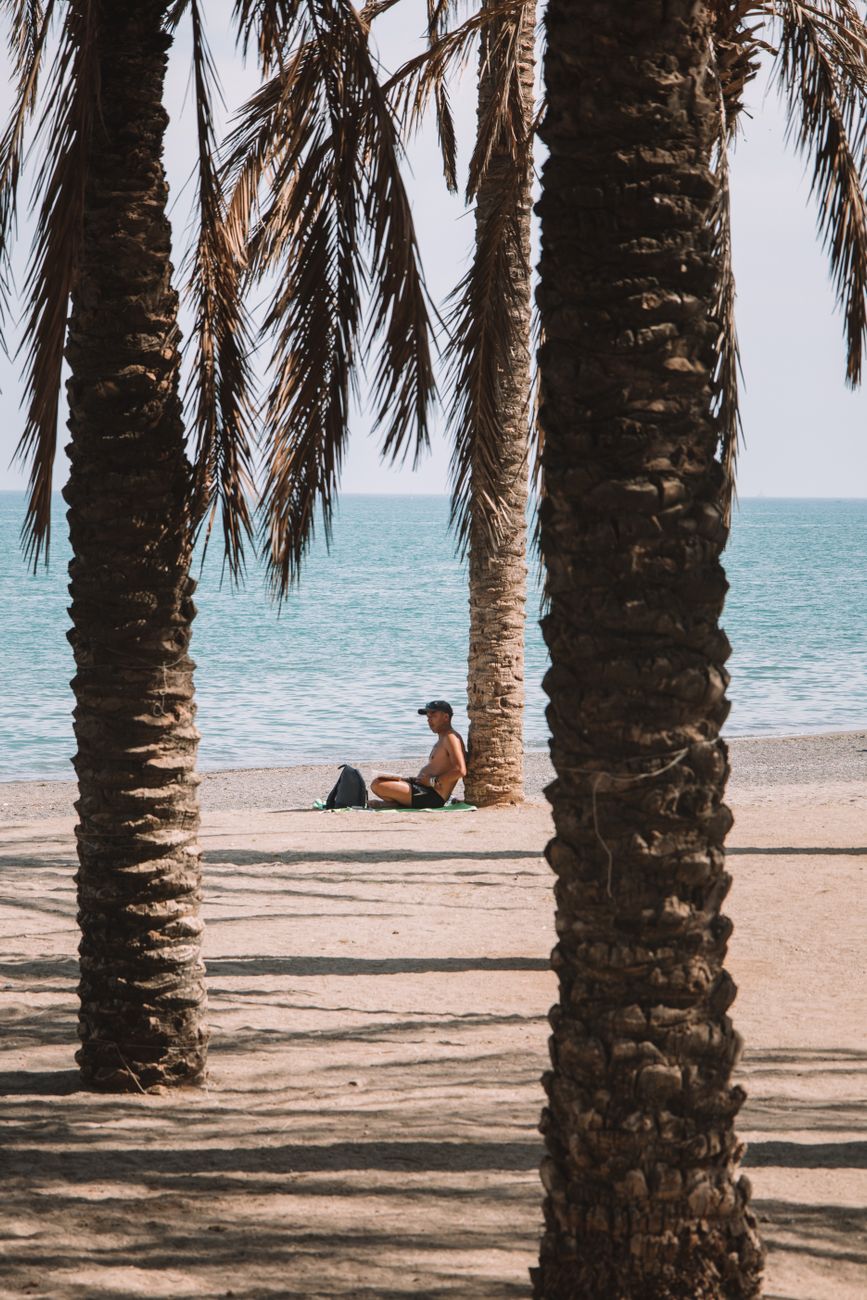
Málaga has the mildest winter of any big Spanish city: 16.8°C by day in January and 20.1°C in November, with 2,905 hours of sunshine a year. It is not beach weather, but it is lunch-on-a-terrace weather, with the Alcazaba, the cathedral and the Picasso museum for the rainy hours.
December is the month to pick. Calle Larios, the main shopping street, is dressed as a cathedral nave and runs a light show to music several times a night from late November to early January.
Good to know: November and December are the wettest months, at about 100 mm each, and the rain comes in heavy bursts. Check the AEMET warnings before a mountain or gorge day.
Describe your trip, get a Europe itinerary in seconds
Everything in this guide is already in Stippl. Tell the planner how long you have and what you like: it builds the route, the days and the travel times, and you edit whatever you want.
Read more: things to do in Málaga
6. Seville, Spain: palaces without the summer heat
Seville is the place to go in winter precisely because summer here is brutal, with July highs around 36°C. In November it is still 21°C by day and empty, which makes it the value month. In January it drops to 16°C by day and 6°C at night, with short queues and the year's lowest prices.
Plan for indoor sights on the damp days. The Cathedral and the Giralda are one ticket, €20 online since January 2026, which also covers the Church of El Salvador. Older guides still quote €11 to €13.
Good to know: nights drop to 6°C in January and about 38 mm of rain falls that month, so pack a warm layer for the evenings.
Read more: things to do in Seville
7. Faro and the Algarve, Portugal: quiet coast and almond blossom

Faro sits at 16°C by day in January and 17°C in February, mild and quiet, and it is the cheapest month of the year in December. Pick Faro over the western Algarve in winter. It is a working town that stays open, while Lagos and the boat-trip coast largely close.
The reason to stay is the Ria Formosa, a 60 km lagoon with barrier-island beaches you reach only by boat. February adds almond blossom inland and the Loulé Carnival, the biggest in the Algarve, twenty minutes away.
Good to know: the Atlantic is cold in winter and the lagoon channels have strong tidal currents. Walk the barrier beaches rather than swim them.
8. Sicily, Italy: oranges, baroque towns and Etna in snow
Sicily is mild rather than warm in winter: 13 to 16°C by day in January in Catania and Palermo, wet, and cheap. Its draw is everything that isn't the beach: the street markets, the food and quiet cities. March is the pick, pleasant and cheap before most of the season opens.
In Catania, the Festa di Sant'Agata on 3 to 5 February is the biggest event of the year, with the patron saint carried through the centre for three days. Expect full beds that week. Above the city, Etna turns into a ski slope, with lifts at Rifugio Sapienza, though snow and ice cancel the summit tours from November.
Good to know: in Palermo some restaurants and hotels close for part of the winter, and there is no beach in the centre. Mondello is about 30 minutes away on bus 806.
Read more: things to do in Italy
9. Malta: a walkable capital and February carnival

Malta reaches 15.7°C by day in January and 20.8°C in November, measured at Luqa airport. January and February are the quietest months of the year, with the cheapest rooms. That suits Valletta, a whole city of the Knights' baroque that you can walk end to end in a day: St John's Co-Cathedral, the Grandmaster's Palace and the Upper Barrakka Gardens above the Grand Harbour.
Il-Karnival ta' Malta runs 5 to 9 February 2027, with floats and costumed parades in Valletta and Floriana. In January, the Valletta Baroque Festival fills the churches and palaces with concerts.
Good to know: windy days in February can stop the boats to Gozo and Comino, and the sea is at its coldest, about 15°C. Most outdoor pools close in November.
10. Crete, Greece: the Greek island that stays open

Most Greek islands shut for winter. Crete doesn't, because Chania, Rethymno and Heraklion are real cities with universities, year-round flights and ferries. Heraklion averages 15.4°C by day in January, and the south coast is warmer: Ierapetra reaches 16.1°C with fewer rain days.
Winter Crete is for walking the Venetian harbours, the Minoan palace of Knossos and the villages, not for the beach. The sea is 17°C in January, and the beach resorts close from November to March. November is the sweet spot: 20.4°C by day and a sea still at 21°C.
Almost nobody plans Greece in winter, so you will have the sites largely to yourself.
Read more: things to do in Greece
Month by month: the warmest place in Europe from November to March
The answer changes through the winter. The Canaries win every month, but the gap to the mainland is smallest at the start and end of the season.
Warmest place in Europe in November
November is the last warm month across the Mediterranean, and the cheapest one before Christmas. Tenerife's south reaches 24.8°C by day with the sea at about 23°C, so it is still proper beach weather. On the mainland, Seville holds 21°C and Málaga 20.1°C, Paphos in Cyprus reaches 22.5°C, and Malta and Crete both sit above 20°C, all three with the sea at about 21°C. For a city trip with warm afternoons and empty sites, this is the month.
Warmest place in Europe in December
In December, look south and west. The Canaries stay at 22 to 23°C, and Madeira at 21°C makes the strongest case of the month with its Christmas lights and New Year fireworks. On the mainland, Málaga leads at 17.5°C, with its light show on Calle Larios. If you want proper heat over Christmas, it means a long-haul flight; our guide to Australia in December covers the southern summer.
Warmest place in Europe in January
January is the coldest month nearly everywhere, which makes the gap the biggest. Tenerife's south leads at 21.7°C, Gran Canaria follows at 20.8°C and Madeira at 20.0°C. Málaga at 16.8°C is the warmest big city on the European mainland. Once New Year is over, prices fall: January brings Malta's cheapest rooms of the year, and Madeira turns mild and cheap again.
Warmest place in Europe in February
February is carnival month. Las Palmas runs its carnival through the whole month, Santa Cruz de Tenerife from 19 to 28 February 2027, Malta from 5 to 9 February, and Madeira and Loulé in the Algarve have their own. The Canaries hold 21 to 22°C. The Algarve reaches 17°C, with almond blossom inland.
Warmest place in Europe in March
March is when the mainland catches up. Tenerife reaches 23.1°C and Gran Canaria 22.3°C, but Seville is already at 21°C and Málaga at 19.6°C, warm enough for a terrace lunch. Malta turns green, with wildflowers on the hills and rain falling to 45 mm, and Paphos reaches 18.6°C with orchids in the Akamas. Limassol in Cyprus holds its carnival from 4 to 14 March 2027. In 2027, Easter Sunday is 28 March, so Holy Week fills Seville and Málaga in the last week of the month. Looking for warmth at the other end of the year? Our guide to warm fall destinations in Europe covers September and October.
Can you swim in Europe in winter?
Only in the Canary Islands, if you like your sea cool. The water around Tenerife and Gran Canaria is about 20°C from January to April and 22 to 23°C in November and December. That is swimmable for most people, and winter is the islands' main beach season.
Everywhere else, the sea drops below what most people want to swim in. Crete's water falls to 17°C in January and about 16°C in February and March. Malta's falls to about 15°C. Madeira and Málaga are rated poor for swimming from December to March in our destination guides, and the Atlantic off the Algarve is cold all winter.
If you would rather have snow than sun, our guide to the best winter destinations goes the other way, from Zermatt to Tromsø, and Europe's best Christmas markets covers the cosy side of December.
Frequently asked questions about Warmest Places in Europe in Winter: 10 Sunny Spots From November to March
The Canary Islands. The south of Tenerife averages 21.7°C by day in January and Gran Canaria 20.8°C. Madeira is next at about 20°C, then Cyprus and the south coast of Spain.
The Canary Islands, at 22 to 23°C by day, and Madeira at 21°C. On the European mainland, Málaga is the warmest big city at about 17.5°C, which is mild rather than hot.
Spain, thanks to the Canary Islands. On the mainland, Andalusia leads: Málaga averages 16.8°C by day in January. Of the Mediterranean islands, Cyprus is the warmest, with Paphos at 17.1°C.
In the Canaries, yes: 21 to 22°C air and a sea around 20°C. Everywhere else, the beaches are for walks rather than swimming from December to March.
November and March give the best balance of warmth and price. November is still 20°C or more across the southern Mediterranean, and March warms the mainland up again. December to February is warmest in the Canaries, which is also why it is their high season.
Save these to your trip in Stippl and they are on your map before you land.
Found your winter sun? Plan your winter trip in Stippl and put the flights, the island days, the carnival dates and the budget in one place, shared with everyone coming along.