
Plan Indonesia in Stippl
Day-by-day planning, stays and budget in one app, with every place from this guide already on the map.
Download the appWhen is the rainy season in Bali?
Bali's rainy season runs from November to March, and peaks in December and January. January is the wettest month of the year, with about 296 mm falling on the south coast and 410 mm inland around Ubud across 21 rain days. The rain arrives as heavy bursts of thirty to sixty minutes, usually morning and evening, rather than as all day drizzle.
November and March are the softer edges of it. November brings the wet season in properly at 154 mm on the coast, and by late March the rains are tapering. December, January and February are the middle of it, and they are the months this article is really about.
What does the rain actually do to a day?

Less than the rainfall numbers suggest, and more than the reassurance articles admit. Both halves matter.
A typical wet season day gives you a bright, humid morning, a heavy burst somewhere around lunch or late afternoon, and a clear evening. You will still get beach hours, temple hours and pool hours. Daytime highs barely move all year and sit between about 27°C and 29°C in the wet months, so it is warm rain, not cold rain, and it is over quickly.
The number that changes the picture is not the millimetres but the rain days: 21 of them in January and 20 in December and February. At that frequency the rain stops being an event you plan around and becomes a thing you plan with. One washed out afternoon in a fortnight is bad luck. Five is the forecast.
And the island is not one climate. The interior takes about 2,400 mm of rain a year against the south coast's 1,642 mm, it turns wet a month earlier and it dries a month later. In January the coast is on 296 mm while Ubud is on 410 mm. If your booking is inland and green, expect a wetter trip than the beach crowd is having.
What does the wet season actually change?
Five things, and only one of them is the weather itself.
The boats
This is the big one, and it is the thing most reassurance pieces skip. The crossings to Nusa Penida, Nusa Lembongan and the Gili Islands get rough between November and March, cancellations are a real possibility rather than a theoretical one, and underwater visibility drops with them. The Sanur to Nusa Penida run is a comfortable 35 to 45 minutes in May and a lottery in January. If an island night is in your plan, take the earliest boat of the day in both directions, because the seas roughen as the day goes on, and leave a spare day either side of a flight home.
The west coast beaches
Bali's south west coast has an annual trash season from December to February. Monsoon winds and currents push large volumes of plastic ashore along the strip that includes Seminyak and Kuta, and a January clean up in 2025 was described by one of the organisers as the worst yet. It is seasonal and wind driven rather than a permanent state, it is an enjoyment problem rather than a danger, and almost nothing published before 2024 warns you about it. The east coast does not get it, which is the single most useful thing to know when choosing where to sleep in January.
The roads, and the driver bill
Southern Bali's traffic is the constraint on any itinerary in any month, and rain makes it worse: the roads flood, journeys stretch, and private drivers charge more in the rainy season for exactly that reason. Budget the same €27 to €73 (550,000 to 1,500,000 IDR) for a ten hour day, then expect to be quoted toward the upper half of it. The practical fix is not a bigger budget, it is a shorter driving day. Two bases at four nights each beats four bases at two nights in the wet season by a wide margin.
The waterfalls

More water, worse swimming. The falls in the interior run hard in the wet season, which is the photograph people want, and the plunge pools underneath them run muddy, which is the swim people wanted. The paths down are steep and slippery in the dry season and worse after rain, so this is the one activity where good shoes stop being optional.
The surf, which swaps coasts
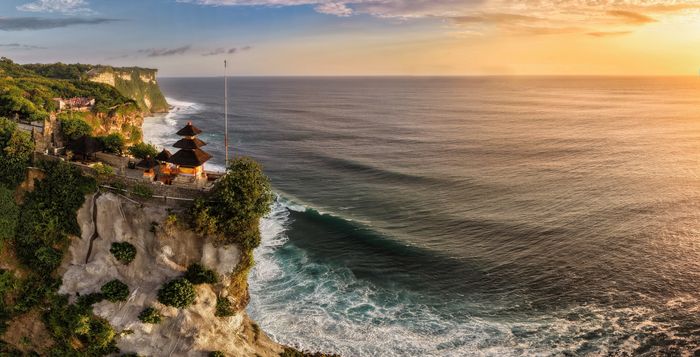
Bali's two coasts run opposite seasons. The west and south west, meaning Canggu, Kuta and the Bukit, are dry season coasts: from December to February the wind at Uluwatu turns onshore and the swell goes flat. The east coast works in the wet. And if you are learning rather than charging, the wet season is genuinely your season, because Kuta's beach break is more consistent from October to April. A January surf trip is a good idea for a beginner and a poor one for anybody chasing the Bukit's reefs.
What still works in the rainy season?

More than you would guess from the paragraph above.
Sanur keeps its swimming. Sanur faces east, which is the whole story: a reef sits offshore the length of the beach and takes the swell, leaving flat shallow water behind it. It is the one beach town on Bali where a January trip still gets you properly into the sea, and the monsoon drift that lands plastic on the west coast does not reach it. It is also the ferry port for the Nusas, which matters more in the wet season than the dry.
The prices drop, and February drops furthest. February has the cheapest rooms of the year on Bali. The trade is honest: it is the second wettest month. But an island where a private pool villa is already good value gets noticeably better in the months nobody wants.
The island is quiet. July, August and the Christmas fortnight are when the roads are worst and the rates highest. February and March are the opposite, and the difference at the viewpoints and the temples is not subtle.
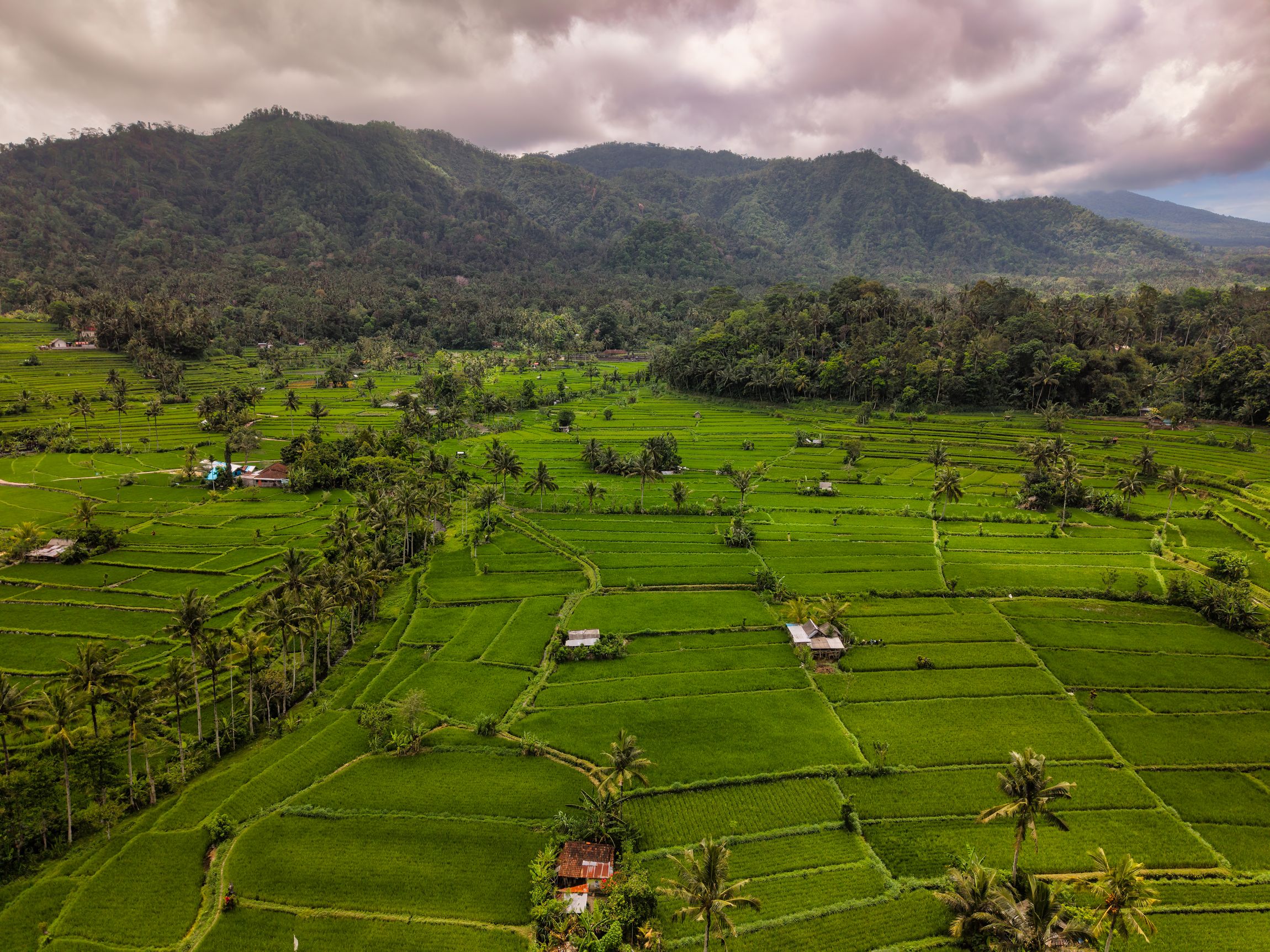
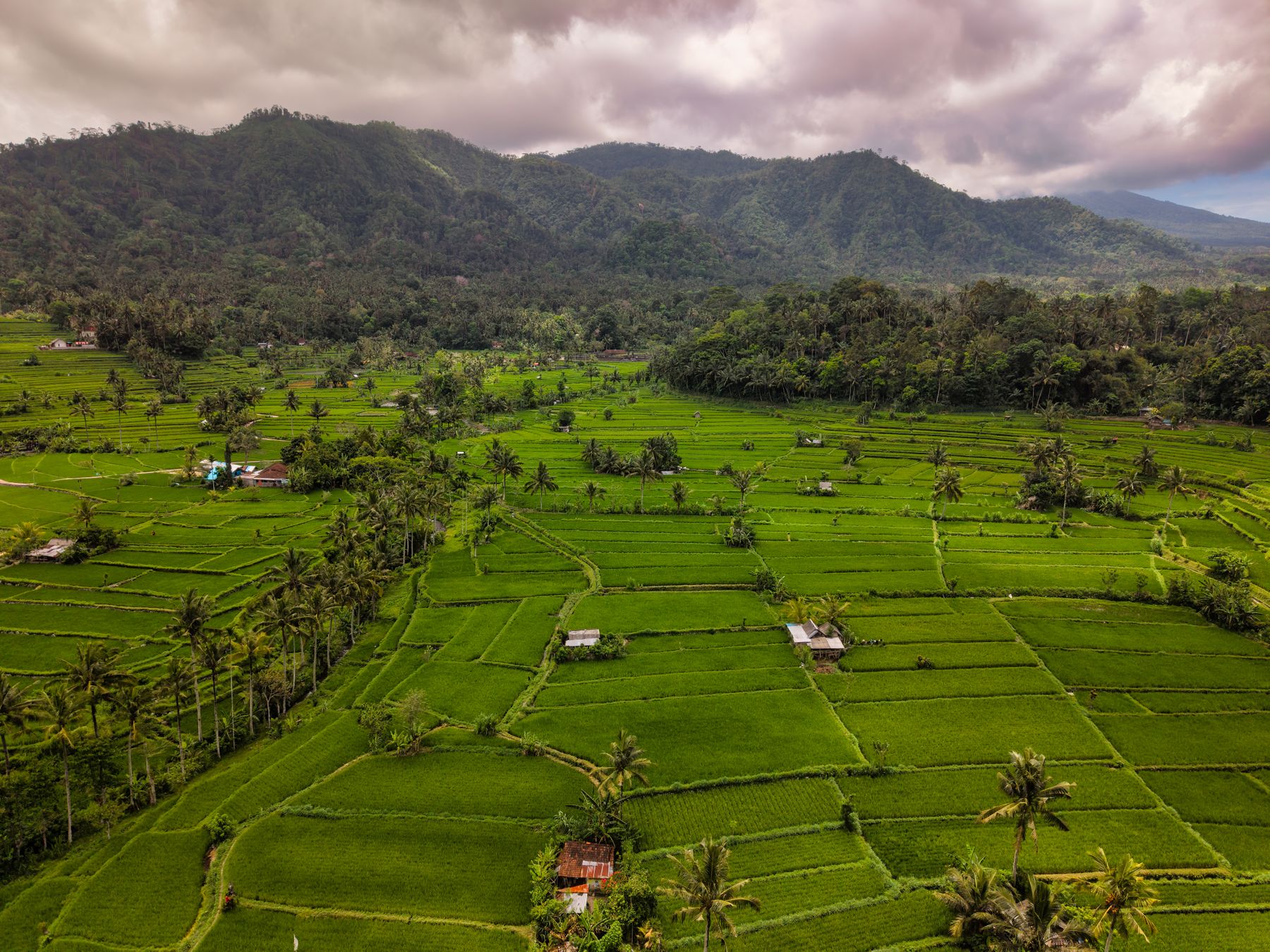
The interior is at its greenest, and stays green. Bali harvests rice about three times a year, so there is no brown season to worry about, but the wet months are when the terraces and the river gorges look the way the photographs promise.
What if you have already booked for January?
Then you are in very good company, and the numbers are worth knowing. Across the Indonesian trips planned in Stippl, January is the second most planned month of the whole year, and January is also Bali's wettest month. December, the other month with school holidays attached to it, is the least planned month of all twelve, by a distance.
Read those two together and the picture is clear: people are buying the summer school break rather than the season, and enough of them do it that January outranks ten drier months. That is a completely rational trade if you know what you are trading, which is a wetter island, rougher crossings and a west coast beach that is not at its best, for the only fortnight the family can actually go.
So plan for the season rather than around it. Three decisions do most of the work.
Sleep on the right coast. If swimming matters and January is fixed, Sanur is the answer for the reasons above. If it does not, the interior gives you the greenest version of the island and the rain is the reason it looks like that.
Move less. Three to four nights per base, two bases rather than four, and no long transfer on a day you also need to be somewhere. Bali is 145 km end to end with no useful public transport, and every hour you are not in a car in the rain is an hour of holiday.
Leave slack around the boats. If the Nusas or the Gilis are in the plan, put them in the middle of the trip and never on the day before your flight.
What should you pack and budget for?
Pack for warm rain, not cold rain. A light rain jacket that packs down, sandals you do not mind soaking, proper shoes with grip for anything involving a waterfall path or a volcano, a dry bag for the boat crossings, and a power bank, because power cuts are more common in the wet months. Skip the umbrella and take the jacket: it is the wind that gets you, not the drops.
On the money side, the fixed costs are the same in every month. Bali's tourism levy is €7.30 (IDR 150,000) per person, cashless, paid at the official Love Bali portal before or during your stay, and visa on arrival is €24.40 (IDR 500,000) for 30 days. What moves is the room, which is at its cheapest in February, and the driver, which is at its dearest in the rains.
Track what you actually spend
Set a daily budget per country and log expenses in any currency while you travel.
The one thing worth over budgeting is the contingency day. A cancelled boat, a flooded road or a wet morning that eats a plan costs you a day somewhere in a wet season fortnight, and the trips that come back happy are the ones that had a spare day to give.
Read more: things to do in Indonesia
Frequently asked questions about Indonesia
November to March, peaking in December and January. January is the wettest month of the year at about 296 mm on the south coast and 410 mm inland, across 21 rain days. November and March are the mild edges of the season.
No. Rain comes as heavy bursts of thirty to sixty minutes, most often around the middle of the day and again in the evening, with bright hours either side. What makes January hard is the frequency rather than the length: 21 days in the month with rain somewhere in them.
Yes, with three adjustments. Sleep on the east coast if you want to swim, move between bases less often, and leave slack around any boat crossing. In return you get the cheapest rooms of the year in February, the quietest roads, and an island at its greenest. The whole year comparison is here.
Usually, but not reliably. Crossings get rough from November to March, cancellations happen, and underwater visibility drops. Take the first boat of the day in both directions, and never schedule the return for the day before you fly home.
Because of the monsoon drift. From December to February, wind and currents push plastic onto the south west coast, including the Seminyak and Kuta strip. It is seasonal rather than permanent, and the east coast around Sanur does not get it.
A wet season Bali trip lives or dies on the order of things: which base first, how many nights each, and which day you leave free for the weather to take. Build the route as a Stippl trip and you can shuffle a stop and watch the travel times redo themselves, then log what you actually spend in the budget tracker as you go. Free forever.