

Plan Indonesia in Stippl
Day-by-day planning, stays and budget in one app, with every place from this guide already on the map.
Download the appThe 14 best beaches in Bali at a glance
If you read one section, read this one. The list runs south to north, then crosses to Nusa Penida.
| Beach | Where | Best for |
|---|---|---|
| Nyang Nyang | Bukit peninsula | Emptiness, once you have done the descent |
| Padang Padang | Bukit peninsula | A first surf, before 10 in the morning |
| Bingin | Bukit peninsula | A warung on the sand under a cliff village |
| Balangan | Bukit peninsula | Space, and the best sunset viewpoint on the Bukit |
| Suluban (Blue Point) | Bukit peninsula | Watching the wave the peninsula is named for |
| Jimbaran Bay | South of the airport | Grilled fish at a table on the sand |
| Sanur Beach | East coast | The only reliably calm swimming on the south coast |
| Batu Bolong | Canggu | Learning to surf on black sand |
| Seseh and Mengening | North of Canggu | A beanbag and no scene at all |
| Seminyak and Double Six | West coast | Sunset, beach clubs, and a divided reputation |
| Kuta Beach | West coast | The best beginner break on the island |
| Kelingking | Nusa Penida | The photograph. Not the swim |
| Crystal Bay | Nusa Penida | Where the island actually swims |
| Atuh and Diamond Beach | Nusa Penida | Cliff staircases down to white sand |
Which of these you can actually swim at

This is the part most Bali beach round-ups skip, and it is the most useful thing on this page.
The Bukit is not a swimming coast. Every beach on the peninsula is reef, current and heavy shore-break at the bottom of a cliff, and there are no lifeguards on most of them. Two publishers describe Balangan as too rough to swim. The drownings are on the public record: a British visitor found unconscious in the water at Nyang Nyang, and an Australian surfer whose body was recovered off Padang Padang. There is no phone signal on several of these beaches either, which matters more when there is also nobody watching. Look at the water for a few minutes before you decide, and do not swim where nobody else is.
Canggu, Seminyak and Kuta are one continuous west-facing break with real rips and documented drownings. Lifeguards patrol the main Kuta stretch and put out flags. Swim between them, and treat the black sand at Canggu as a surf beach rather than a swimming one, which is what it is.
Sanur is the exception, and it is the only one. A reef sits offshore along its whole length, takes the swell, and leaves flat shallow water behind it. It is the one stretch of Bali's south coast calm enough for young children to swim safely year-round, and the reef holds through the wet season too.
Nusa Penida is the serious one. People have died at its beaches. A group was swept out to sea at Kelingking with one death and two injured, a man was killed there by a wave, and national coverage counted five tourist deaths on the island. Kelingking's descent is known locally as the stairway of death. Crystal Bay and Atuh are where people actually swim, and even Crystal Bay has strong currents, so go in with a guide or a dive operator.
When to go
Bali's calendar is unusually simple: the dry season and the surf season are the same season, April to October, which falls across the southern-hemisphere winter. The south-east trades blow offshore into the west-facing reefs, and the Indian Ocean swell is at its most consistent.
- May, June, September and October are the shoulder pair, and they are the best of it. Dry, offshore and either side of the peak. Uluwatu gets 76 mm of rain in May and 52 mm in September.
- July and August bring the biggest waves and the biggest crowds together. That is a genuine trade rather than a scheduling accident, and the room prices go with it.
- December to February is the wet season. Uluwatu takes 210 to 265 mm a month, the wind swings onshore and flattens the famous breaks. Rooms are at their cheapest in February.
- Kuta runs the other way. Its beginner shore break is more consistent from October to April, so a surf trip and a beach holiday want opposite halves of the year there.
- The trash season is real and it is local. From December to February the monsoon drift lands plastic on the west coast beaches, and a January 2025 clean-up was described as the worst yet. Sanur, on the east coast, does not get it.
Two dates that will strand you if you miss them. Nyepi in March closes the entire island for 24 hours, airport included, and the date moves each year. Nyepi Laut, the sea version, stops every boat to and between Nusa Penida, Lembongan and Ceningan for a day, and bans diving and snorkelling with it. Check both before you book a crossing.
The 14 beaches, one by one
Each one below carries the how: where to park, what it costs to get in, and the hour that makes the difference.
1. Nyang Nyang (Bukit peninsula)

Around 1.5 km of white sand, a handful of huts, no music and almost nobody on it. Two separate publishers who know Bali well call it the best beach on the island, and it stays empty for one reason: the descent is very steep, and the track back up defeats small scooters.
How to do it: ride to the top from Pecatu, park, and walk down. It is about 15 minutes on a scooter plus 10 minutes on foot, and parking is about €0.24 (5,000 IDR) handed to whoever is sitting there. Take water. There is nothing to buy at the bottom.
2. Padang Padang (Bukit peninsula)

A small bay entered through a gap in the rock, with a beginner-friendly break and a car park above it. It is famous outside surfing because of Eat Pray Love, and that fame is the whole problem: one small cove fills by 10 in the morning while a far better beach 20 minutes away stays empty all day.
Come at first light or do not come. Boards are hired on the sand at €2.40 to €4.90 (50,000 to 100,000 IDR), and the price is negotiable, which is how beach hire works here.
3. Bingin (Bukit peninsula)

A cliff village above a reef break, reached by steps, with warungs on the sand and small rooms on the cliff above them. There is no road down to the beach at all, which is exactly why it is the most complete version of the old Bukit still standing.
It is also a beginner-friendly break, which Uluwatu itself is emphatically not.
4. Balangan (Bukit peninsula)

The wide one. Balangan sits north of the other Bukit beaches with a long sweep of sand, warungs behind it and a sunset viewpoint on the north headland that is the best on the peninsula. It is the most spacious beach the Bukit has.
It is also the one two publishers name as too rough to swim, so treat it as a place to sit and watch the water rather than get into it.
5. Suluban, or Blue Point (Bukit peninsula)

The cliff cluster directly above the Uluwatu break, entered through a maze of buildings and a cave passage that only opens at low tide. It is less a beach than a viewing gallery for the wave the whole peninsula is named for.
The famous bar up here charges accordingly. The warungs stacked beside it have the identical view at a fraction of the price, and the money stays in the village. Two publishers make that point independently, which is usually a sign it is true.
Nusa Penida is on 26.6% of Indonesian trips planned with Stippl and opens only 3% of them: almost nobody starts there, and a quarter of everyone ends up going. Uluwatu is the second-most-planned destination in the whole country in our data, and it is where a Bali trip tends to finish, which makes sense once you know the airport is 45 minutes away. If you are building a beach trip, that is the shape it wants: the west coast first, the Bukit last, and Penida somewhere in the middle.
6. Jimbaran Bay
Off the plateau, about 25 minutes north-east of Uluwatu, and the one beach on this list you come to for dinner rather than for the sand. There is a working fish market at one end and a line of grills along the beach: you pick the fish, they cook it over coconut husk, and you eat it at a table on the sand at sunset.
It is the single meal no other part of Bali replicates, and it has been running that way for two decades.
7. Sanur Beach

One fact organises everything about Sanur: it faces east. It is the only significant beach town on Bali that does, so the event of the day here is sunrise, not sunset, and every other beach town on the island sells you the opposite.
The reef offshore does the rest. It takes the swell and leaves a flat, shallow lagoon behind it, which is why this is the safest swimming on Bali's south coast and why it suits families in a way the west coast never will. A paved promenade runs the full 5 km, the town is one street deep, and rooms sit between €25 and €150.
Sanur is also the ferry port for the Nusa islands. A new terminal has replaced the old wade-out-to- the-boat launches, and the crossing to Nusa Penida is now about 30 minutes. Older guides still describe the beach launch. They are out of date.
8. Batu Bolong, Canggu

Black volcanic sand, and nobody pretends otherwise. Canggu's beaches are surf beaches rather than swimming beaches, and the waves are the compensation.
Batu Bolong is a forgiving beach break with a wall of surf schools behind it, and more people catch their first wave here than anywhere else in Bali. Echo Beach, a few minutes along, is the step up: a more consistent wave and a quieter road behind it.
The format worth knowing is the beach warung. A beanbag, an umbrella and a young coconut for about €2.40 (50,000 IDR), on the same sand as the beach clubs that carry a minimum spend. Rooms in Batu Bolong run €25 to €90, and staying one street back from the beach road cuts both the price and the traffic noise.
9. Seseh and Mengening
Keep going north-west past Pererenan and the scene simply stops. Seseh and Mengening are black-sand beaches with a few warungs, some beanbags and very little else.
There is nothing to do here, which is the entire recommendation. It is 10 minutes from Canggu's gridlock and feels like a different island.
10. Seminyak and Double Six

Bali's upscale beach strip, and the one place on this list where honest sources disagree with each other. One publisher spent a week here and found the beach run down and covered in rubbish. Another calls it the island's most cosmopolitan area with the best beach clubs on Bali. Both are describing the most developed strip on the island accurately, and which one is right depends entirely on what you came for.
What is not in dispute is the orientation. Double Six at the southern end faces almost due west, which gives a clear ocean sunset every evening of the dry season, and that sunset is what the entire hospitality economy here is built on. The beach clubs are the economy rather than an amenity, and the loungers are gone by three in the afternoon, so come early or book. Rooms run €40 to €200 in the centre and €60 to €300 at the Petitenget end.
11. Kuta Beach
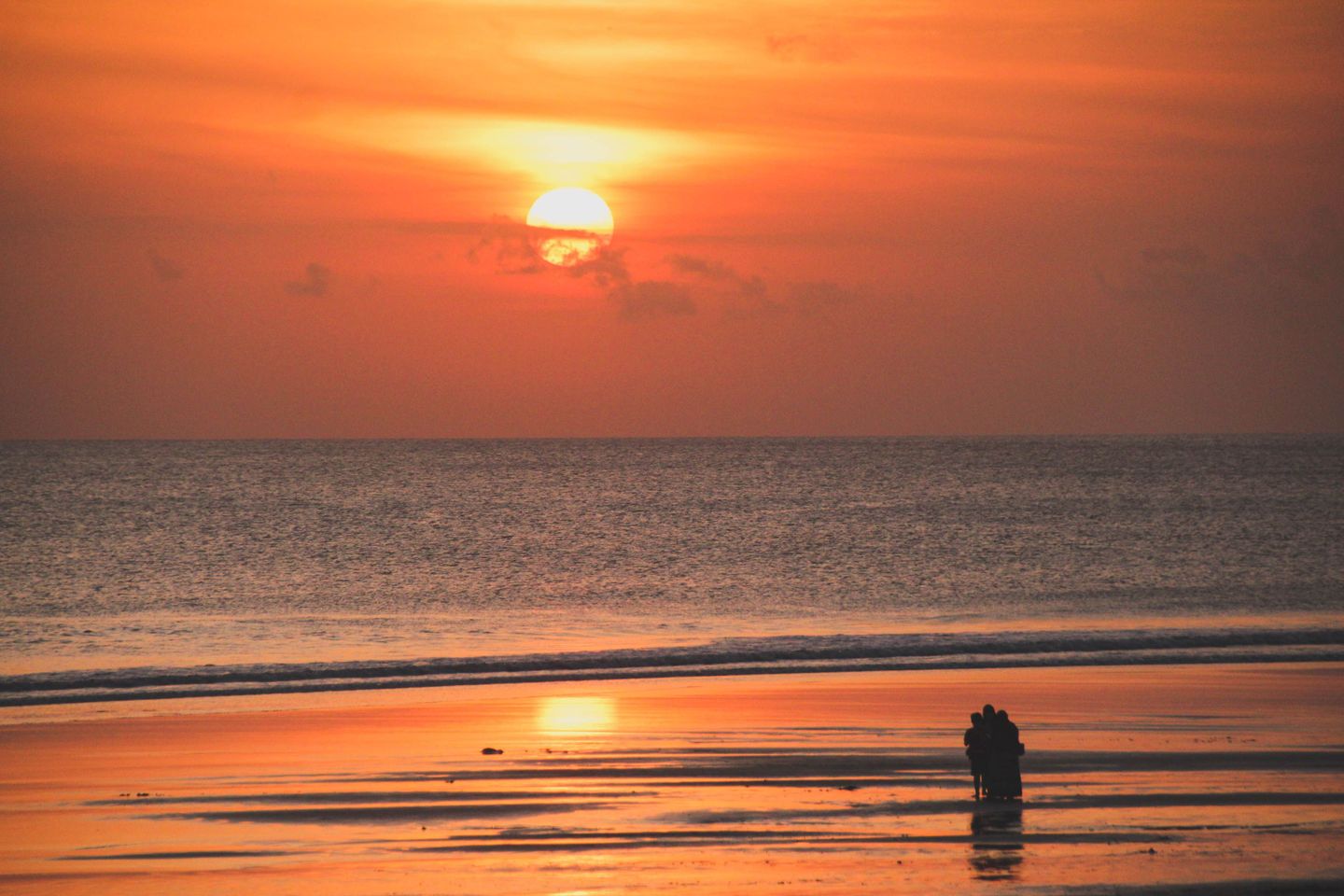
Bali's original tourist beach, going since the 1970s, and still the best place on the island to learn to surf. Two kilometres of grey sand with a sand-bottom shore break, boards and instructors hired directly on the sand with no booking needed.
The beach faces south-west, which produces a beginner-friendly break year-round, and that is what made Kuta one of Asia's first recognised surf destinations. Lifeguards patrol the main stretch and set flags out. Swim between them.
Two honest caveats. Touts are constant on the sand and on Jalan Legian, and a firm, polite no is the normal answer rather than a rude one. And in January the monsoon trash arrives. If you want the walking version of this coast, you can walk the beach north from Kuta through Legian into Seminyak, which is the only continuous beach route on Bali.
12. Kelingking Beach, Nusa Penida

The T-rex headland, one of the most photographed viewpoints in Indonesia, and the reason most people get on the boat.
Here is what the photographs do not tell you. The viewpoint is at the top. The beach is a 45-minute near-vertical descent on an exposed path and considerably longer coming back up, the sea at the bottom has killed people, and there is no lifeguard and no help within an hour. Go between 7 and 9 in the morning, before the day-trip boats land, take the picture from the top, and be honest with yourself about the climb.
13. Crystal Bay, Nusa Penida

The island's swimming beach, its best snorkelling and where Penida goes to watch the sun go down. After the last ferry leaves in the late afternoon the whole island empties, and this is the best place to be when it does.
Currents run here too, even though it is the calm one, so the local advice is to snorkel with a guide or a dive operator rather than alone. Manta rays are at Manta Point year-round, which is the single best reason to come to this island at all, and a manta snorkel trip runs about €40 booked through your accommodation. Mola mola, the ocean sunfish, come up to cleaning stations between July and October.
14. Atuh and Diamond Beach, Nusa Penida

The east coast, and the quiet half of the island. Two coves at the bottom of limestone staircases cut into the cliff, with the Thousand Islands viewpoint five minutes away on the same headland looking out over 200-metre cliffs and a scatter of islets. One ticket at €3.70 (75,000 IDR) covers that whole headland including the treehouses.
Diamond Beach was unreachable until late 2018, when the stairs were cut. They take about 20 minutes going down. The harbour is a full hour away by road, which is precisely why the east is a separate day from the west and why trying to do both in one day is the standard mistake here.
Getting between them
Distances on Bali are meaningless and journey times are everything. The south of the island is gridlocked most afternoons, and Google Maps is optimistic about all of it.
| Leg | Time | What it costs |
|---|---|---|
| Canggu or Seminyak to Uluwatu | About 1.5 hours | Around €15 by Grab car |
| Uluwatu to the airport | About 45 minutes | The shortest airport run of any Bali beach town |
| Sanur to Nusa Penida | About 30 minutes | Fast boat from the new terminal |
| Harbour to Diamond Beach, Nusa Penida | About 1 hour | The reason east is its own day |
On the Bukit a scooter is effectively compulsory, because there is no walkable centre and Grab bikes thin out on the cliff lanes. Indonesia requires a valid motorcycle licence plus an International Driving Permit, police check both at roadside stops, rental shops do not, and riding without them voids most travel insurance.
Nusa Penida is the one place where I would not ride. Three separate publishers advise against renting a scooter there at all unless you already ride confidently in Asia, and the warning is about the road surface rather than the traffic. Your three options on the island are a scooter at €3.90 to €4.90 (80,000 to 100,000 IDR) a day, a shared van tour covering one coast at about €24.40 (500,000 IDR), or a private car with driver, boat, transfers and entry fees from €36.60 (750,000 IDR), which is the best value of the three once there are three or four of you.
Turn these stops into a route
Pick your favourites and Stippl orders them, adds travel times and builds the day-by-day.
Where to base yourself
You will not sleep at most of these beaches. You will sleep in the town behind them, and the four towns are genuinely different products.
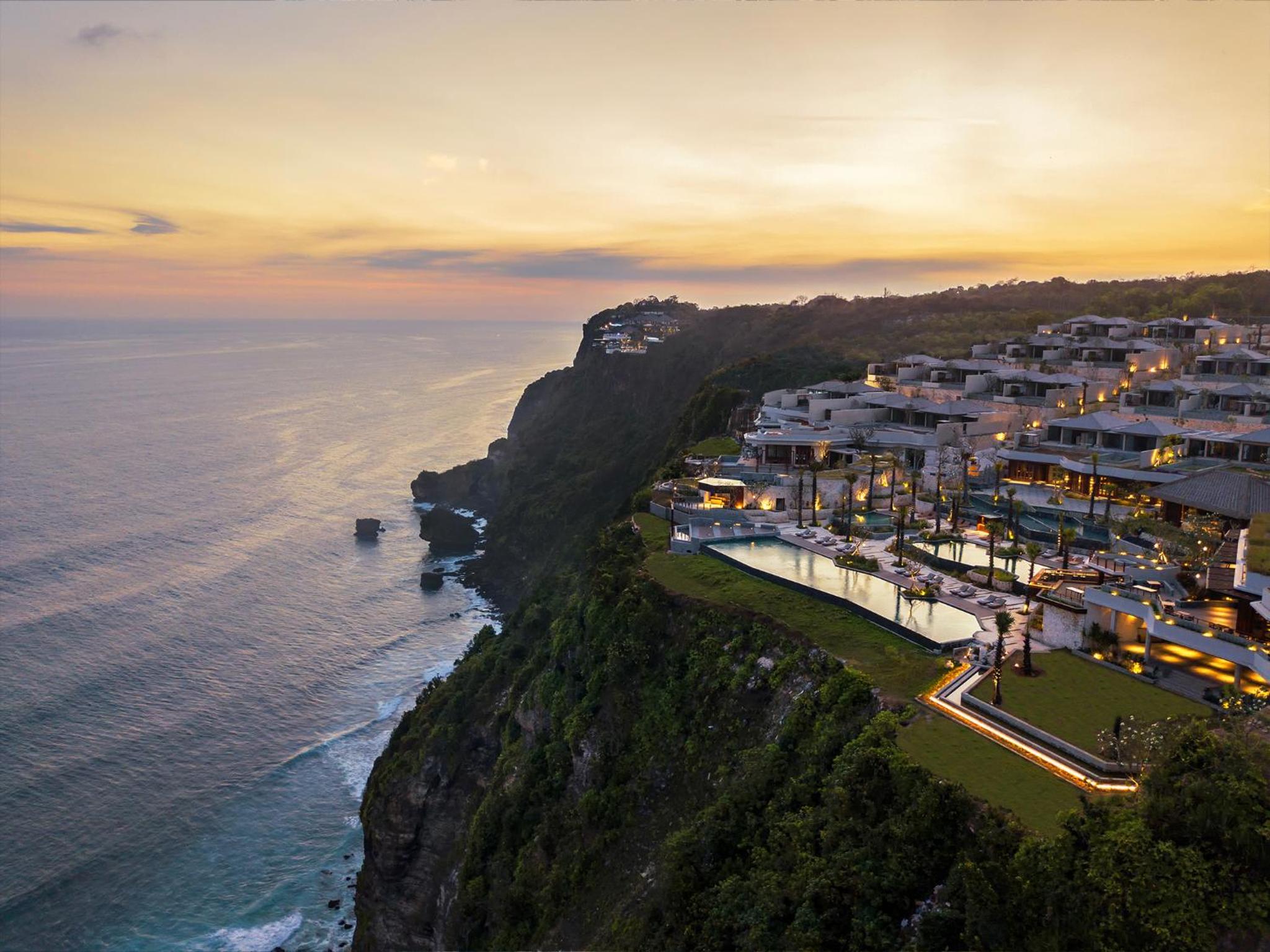
- Uluwatu and the Bukit for the cliff coves, the surf and the sunsets. Choose your area by which beach is at the bottom of your steps: Pecatu is the practical centre at €20 to €70, Bingin is the cliff-village version at €25 to €90, and Ungasan is the clifftop resort south from €120.
- Canggu for surf lessons, the café scene and black sand, at €25 to €90 in Batu Bolong.
- Seminyak for beach clubs and restaurants, at €40 to €200.
- Sanur for calm water, a promenade and an early boat to the Nusas, at €25 to €150.
- Nusa Penida itself for two or three nights in one place on the west or north coast. Every publisher who has done both a day trip and an overnight recommends staying, and a good guesthouse with a pool and breakfast runs about €45.


Three charges to budget for that most older guides predate. Bali's own tourism levy is €7.30 (150,000 IDR) per person. Nusa Penida added a separate entry charge on 21 April 2026 at €1.20 (25,000 IDR) per adult and €0.73 (15,000 IDR) per child, and on top of that a daily permit for snorkelling and diving reported at €4.90 (100,000 IDR). Penida runs on cash, and the ATMs are reliable only on the north coast, so bring rupiah with you from Bali.
Still deciding between Bali and Thailand's islands? Our 10-day Thailand islands itinerary is the closest comparison we have, and the short version is that Thailand's islands give you calmer, warmer swimming water while Bali gives you better surf and a far shorter list of ferries.
Save these to your trip in Stippl and they are on your map before you land.
Pick the ones you want and drop them into a Stippl trip, and the journey times between them get worked out for you, which on this island is the whole planning problem. If you would rather describe the trip and have a route come back, the AI trip planner will build one from a sentence.
Read more: things to do in Bali
Frequently asked questions about Indonesia
Nyang Nyang, on the Bukit peninsula, if you are willing to earn it: around 1.5 km of white sand, a handful of huts, no music and almost nobody there, at the bottom of a very steep descent. If you want something you can walk onto, Sanur on the east coast is the calmest water on the south coast.
Sanur, and it is not close. A reef sits offshore along its whole length, takes the swell and leaves a flat, shallow lagoon behind it, which makes it the one stretch of Bali's south coast reliably safe for young children year-round. On Nusa Penida, Crystal Bay and Atuh are the swimming beaches.
April to October, which is the dry season and the surf season at once, because the south-east trades blow offshore into the west-facing reefs. May, June, September and October are the pick: dry, offshore and either side of the July and August peak. December to February is wet, windy and brings monsoon rubbish onto the west coast.
No. The famous beaches on Nusa Penida are for looking at. People have been swept out to sea at Kelingking and there have been deaths, the descent takes about 45 minutes down an exposed near vertical path, and there is no lifeguard and no phone signal in places. Crystal Bay and Atuh are where the island actually swims.
Uluwatu, for the beaches themselves: white sand, cliff coves, and materially quieter because the geography spreads people out. Canggu is better for learning to surf and for eating, and its beaches are black sand and rougher. Neither is a swimming coast. If swimming is what you want, go to Sanur and day-trip to the others.
Fourteen beaches, four coasts and one small island that is a great deal more serious than it looks in photographs. Build the ones you want into a Stippl trip and you will see the journey times before you commit to them, which on Bali is the difference between a beach week and a week in traffic.