

Bali
Bali puts a surf break, a wreck dive, a volcano at sunrise and a retreat within two hours of the airport. Most people give it 4 nights, enough for a coast and the interior.
Bali in a nutshell
Bali: what to expect
This is what 688,000+ planned stops in Indonesia on Stippl say about Bali.
Bali is one island and you plan it as two or three bases, never one. The island runs 145 kilometres end to end with no useful public transport, so a private driver is how you actually move. Uluwatu's clifftop temple stages the Kecak fire dance at sunset, Tanah Lot sits on its rock at low tide, Mount Batur is the pre-dawn climb, the Liberty wreck lies a few metres off the beach at Tulamben, and the manta rays are off Nusa Penida. Ten to fourteen nights is a first island trip.
Plans that just say Bali usually say nothing else. Bali opens about seven in ten of the trips it appears on and closes about six in ten, which is the shape of an itinerary with one line in it. Four in five of those trips never name Ubud, and the island's own towns are the last thing they name. A trip written that way carries roughly half as many Indonesian stops as one built around the towns themselves.
So write the places down rather than the island. The south gives you surf, food and the beach clubs, Ubud gives you the interior and the temple day trips, and Amed, Sidemen or Munduk give you the quiet half nobody books. Travellers here start planning 85 days out. Skip Bali if you expected somewhere undiscovered, or if you can only travel December to February, when the wettest months land on the most expensive weeks.
Plan Bali in Stippl
Day-by-day planning, stays and budget in one app, with every place from this guide already on the map.
Download the appWho Bali is for
First-time Asia travellers
Bali is set up for visitors like nowhere else in Indonesia: English works, the roads are signed, ride-hailing runs, and most of the draw is near the airport.
Surfers
Reef breaks on the Bukit for the experienced, beach breaks at Canggu and Kuta for everyone else, and a season that runs opposite between the two coasts.
Digital nomads
Canggu is one of the most established remote-work bases in the world, with co-working, monthly villa rates and an Indonesian visa route built for it.
Divers and snorkellers
Amed's shore diving, the Liberty wreck at Tulamben, and manta rays off Nusa Penida are all reachable from one island.
Wellness and yoga travellers
Ubud is the centre of an industry rather than a scattering of studios, and most people give Bali 4 nights, enough for a retreat and a coast.
Families
Sanur and Nusa Dua for calm water and the interior for everything else; both exist because the south's surf beaches are not swimming beaches.
Maybe not for you: anyone expecting an undiscovered island, since the south is crowded and the traffic bad; anyone who wants to move fast, because 145 km can take a day; anyone travelling December to February, when the wettest months land on the priciest weeks; and one-beach fortnights.
The best time to visit Bali
Dry season
May to September
The whole island works, with April and October as the shoulders. August is the driest month on both coasts, and the peak weeks in July and August are the worst for traffic and prices.
Wet season
November to March
Afternoon downpours rather than all-day rain, but the interior takes three to four times the coast's rainfall and the roads flood. Drivers charge more, because the roads congest.
- Nyepi closes the airport for 24 hours, and the date moves with the Balinese calendar. From 06:00 nobody leaves their accommodation and no flight lands or leaves, so a flight booked across it is not flyable. The parades the night before jam every road.
- January is the month most travellers plan Bali for on Stippl, not the dry season the guidebooks sell. It is the northern-hemisphere winter holiday, and people go for the escape rather than the weather. Book about 84 days ahead.
- The two coasts surf in opposite seasons. Canggu, Kuta and the Bukit work in the dry season; the east coast works in the wet, so a surf trip is never off the table, it just changes side.
- Galungan and Kuningan fall twice in most years and fill the island with penjor poles. Not a closure, but the temples are full and the ceremonies are the best reason to be here in an otherwise ordinary week.
Add your Bali dates and we'll flag the weather
Stippl shows the season, crowds and prices for every stop on your route.
Describe your trip, get a Bali itinerary in seconds
Everything in this guide is already in Stippl. Tell the planner how long you have and what you like: it builds the route, the days and the travel times, and you edit whatever you want.
Things to do in Bali
 Photo by Ismail Hamzah via Unsplash
 Photo by Juan Cruz Mountford via Unsplash
 Photo by Michaela Böhm (Římáková) via Unsplash
Uluwatu at sunset with the Kecak
Watch the fire-and-chorus dance in the clifftop amphitheatre beside the temple at six every evening, about €9 on top of the temple entry. Sit on the western side for the sun behind the dancers.
Tanah Lot
See the sea temple on its rock at low tide and at sunset, one of the most photographed places in Indonesia, about €4. Thirty minutes from Canggu and a queue by five; the coast path north is empty.
Mount Batur at sunrise
Take the guided climb from three in the morning, two hours up in the dark to the rim of the volcano for sunrise and breakfast cooked in the steam, about €35 with the pickup. The hot springs on the lake afterwards are the reward.
The rice terraces
Walk Tegallalang at sunrise on the Ubud tourist route, or drive to Jatiluwih in the west, larger, quieter and on the UNESCO subak system. Jatiluwih is about €3 and a two-hour loop.
A day of interior temples
Hire a driver for about €45 for Tirta Empul's purification springs, Besakih on Agung's slope and Pura Lempuyang's gates, where the mirror reflection means a queue of hours. Start at seven.
Diving at Amed and Tulamben
Shore-dive the USAT Liberty wreck and the reefs a few metres off the black-sand beach, about €60 for two dives, on the quiet east coast. Snorkellers see the wreck from the surface.
The neighbourhoods of Bali
Canggu
Surf, cafés, traffic
The surf-and-café coast north-west of the airport: black sand, beach clubs, co-working and traffic that is now genuinely bad. For digital nomads, surfers and first visits that want the scene an hour from the plane.
The island's best café scene and easiest landing, and the worst traffic on it.
Ubud
Rice terraces, temples, yoga
Inland among the terraces and river gorges: temples, yoga, galleries and the island's cultural centre, with the countryside starting at the edge of town. For first visits, culture and anyone who wants the interior as a base.
Bali's cultural heart on foot, and an hour of traffic to any beach.
Sidemen
Terrace valley, quiet, Agung
The rice-terrace valley east of Ubud under Mount Agung, with a fraction of Ubud's visitors and homestays among the fields. For rural quiet, walkers and couples on a second visit.
Ubud's landscape with none of its traffic, and four warungs to eat in.
Amed
Black sand, shore diving, one road
The dry black-sand coast in the far east: a diving and snorkelling village strung along one road, with the Liberty wreck up the coast. For divers and for roads quiet enough to ride.
The best shore diving on the island, and three hours from the airport.
Munduk
Cloud forest, waterfalls, cool nights
The highlands in the north: waterfalls, coffee, mountain lakes and cool nights, with homestays on the ridge. For hikers and for a break from the heat.
Cool air and the best waterfalls, and rain most afternoons.
Uluwatu and the Bukit
Cliffs, reef breaks, temple sunset
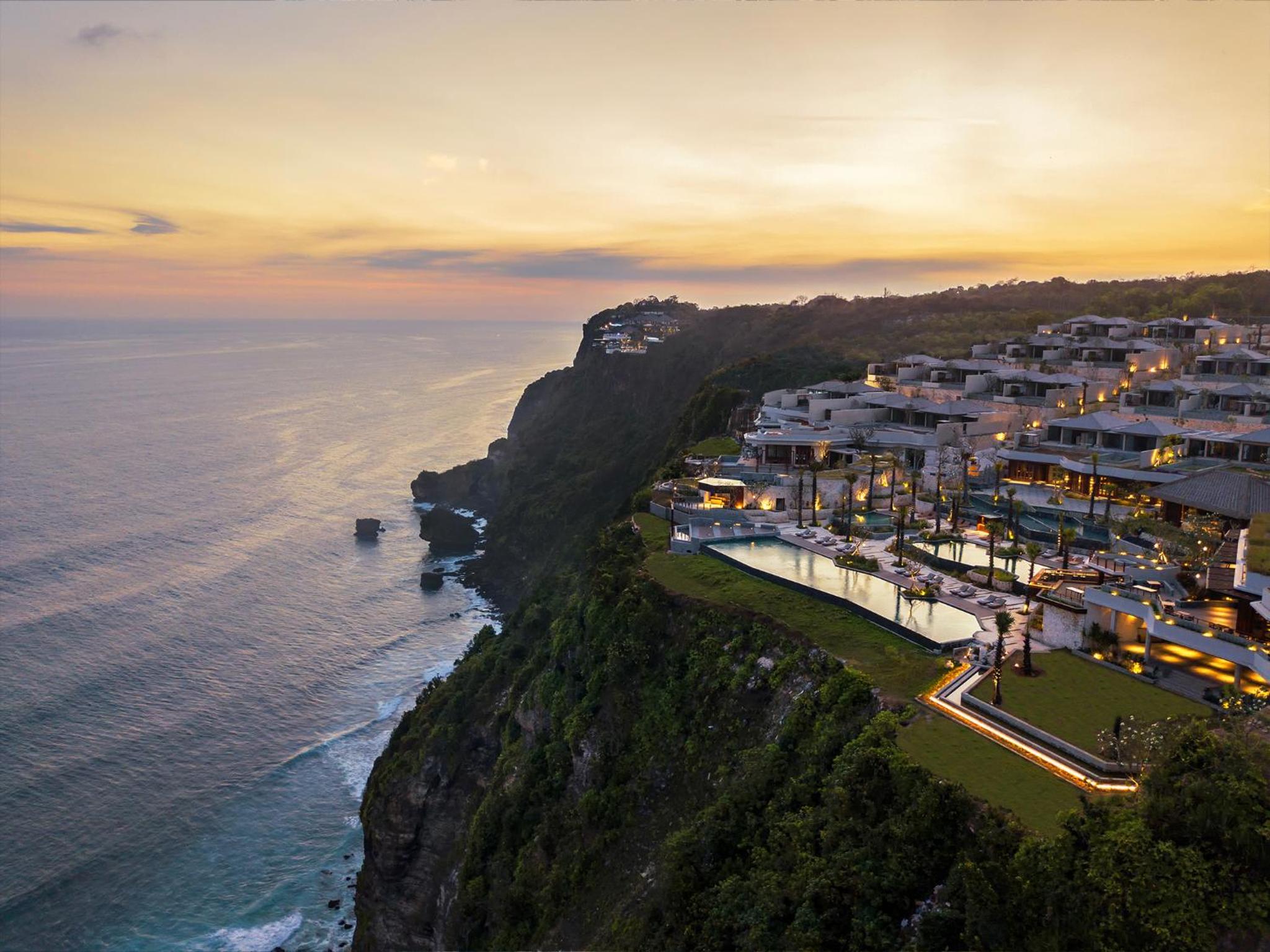
The limestone peninsula in the far south: cliffs, world-class reef breaks, the sunset temple and resorts spread thin along dirt roads. For surfers, couples and anyone who came for the beaches.
The best beaches on Bali and the sunset, and a scooter for everything.
See every Bali neighbourhood on one map
Save the areas you like and Stippl plots your days so you're not crossing the city twice.
Where to stay in Bali
Split the stay into two bases: four nights on the coast in Canggu, or Uluwatu if you surf, then three in Ubud, with one ninety-minute transfer between them. Most people give Bali 4 nights on Stippl per stop, and the private-pool villa is the room the island is built on. Book July, August and Christmas well ahead, and never book into Nyepi; nobody checks in or out that day.
Canggu
€25–120
Coworking hostels from €8.50, pool guesthouses €30 to €70, and private-pool villas €80 to €200.
Ubud
€20–200
Family homestays with breakfast €15 to €40, boutique hotels in the gorges €70 to €200, and the jungle resorts from €250.
Sidemen
€15–90
Homestays and small pool hotels among the terraces, €20 to €80, with the mountain outside the window.
Amed
€15–90
Dive resorts and bungalows along the one road, €25 to €90, most with their own house reef.
Munduk
€15–80
Ridge homestays and a few eco-lodges, €20 to €70, with cool nights and no air conditioning needed.
Uluwatu and the Bukit
€30–250
Surf camps and guesthouses €20 to €60, cliff villas €100 to €300, and the big cliff resorts from €350.


What to eat in Bali
Whole suckling pig, spice-rubbed and spit-roasted, served with rice, crackling and lawar: the island's ceremonial dish, and impossible in Muslim Indonesia
Duck packed with spice paste, wrapped in banana leaf and steamed or buried for hours until it falls apart
Minced meat, grated coconut, and vegetables bound with spices, and, in the traditional version, blood
Minced fish or chicken with coconut and lemongrass, moulded onto a lemongrass stalk rather than a skewer
Rice with a spread of small dishes chosen at the counter, the everyday warung meal
Grilled fish and prawns eaten at tables on the sand at sunset
Discover food spots in Stippl
Find restaurants and markets on the map, save them to your itinerary, works offline too.
Balinese customs and what not to do
The offerings are live objects
Canang sari on pavements and doorsteps are religious offerings placed that morning; do not step on them, move them or photograph someone placing them without asking.
The 2025 code has teeth
The provincial circular requires modest dress in public places and at sacred sites, respect for temples and statues, helmets and licences on scooters, and it comes with fines and deportation.
Inner courtyards have a rule
Menstruating women are traditionally asked not to enter a temple's inner courtyard; the sign at the gate says so, it is observed, and sightseers stay out of the inner courtyard regardless.
Right hand, heads untouched
Give and receive with the right hand and never touch anyone's head, including a child's; general Indonesian etiquette that is observed strictly here.
Bargain in markets only
Not in shops, restaurants or with a driver who has quoted a day rate; at a market, start at about half and settle with a smile.
Do
- Pay the tourism levy online before you land; it takes two minutes
- Book a driver for any day that crosses the island
- Carry an IDP and wear the helmet if you ride at all
- Cover up at temples, and take the sarong they give you
- Check whether Nyepi falls in your dates before you book flights
Don't
- Step on the offerings
- Enter a temple's inner courtyard as a sightseer; the 2025 circular makes it explicit
- Plan a day around a sixty-kilometre drive in the south
- Learn to ride a scooter in Canggu
- Assume you can fly on Nyepi; the airport is closed
What a Bali trip costs
Budget
€22–34
Hostel or homestay, warung meals, a shared scooter, temple entries.
Mid-range
€50–105
Guesthouse or small hotel with a pool, café and restaurant eating, a shared driver day.
High-end
€170+
Private-pool villa, beach clubs and fine dining, a driver on call.
Track what you actually spend
Set a daily budget per country and log expenses in any currency while you travel.
Fun facts about Bali
Bali has around 20,000 temples, roughly one for every hundred residents. Every village keeps at least three, every house compound has its own shrine, and the daily offerings outside every door are for all of them.
About 83% of Balinese are Hindu, in a country that is nearly 90% Muslim. The Majapahit court retreated here in the fifteenth century rather than convert, and the religion still sets the island's calendar.
Nyepi is the only day an international airport closes for a religious observance. The Day of Silence shuts Ngurah Rai for 24 hours in March, and nobody on the island, visitors included, leaves the house.
Bali's rice water has been shared by the same co-operatives since the ninth century. The subak irrigation system is a UNESCO World Heritage listing in its own right, and the temple water priests still set the schedule.
Babi guling exists on Bali and almost nowhere else in Indonesia. The spit-roast suckling pig is the island's ceremonial dish because Bali is the archipelago's one Hindu island.
Bali is 145 km end to end with no useful public transport. Traffic in the south turns a 30 km hop into two hours, which is why the island is planned as two or three bases rather than one.
Local tips for Bali
There is no public transport
The options are Grab or Gojek in the south, a metered Bluebird taxi, a scooter or a driver. Sanur is the ferry port for the Nusa islands and the Gilis.
A driver for the day
A private driver is the island's real transport system, about €35 to €50 for ten hours with the car, and the way to do the interior temples. Book through the guesthouse the evening before.
Grab and Gojek set the price
Both do cars and motorbike taxis, and opening the app for the quote even where you cannot use it tells you what the taxi should cost. Where the cars are blocked, the bikes get through.
How long to stay
Most people give Bali 4 nights on Stippl in any one place, and the island's practical radius from a base is ninety minutes. Beyond that, move the bags.
Rabies is endemic
The island has had continuous transmission since 2009, and the monkeys at Ubud and Uluwatu bite. Do not touch the dogs or the monkeys; a bite means the clinic the same day.
Do not learn to ride here
Scooter accidents are the commonest way visitors get hurt, most rentals check nothing, and without the motorcycle class on your IDP the insurance will not pay. Canggu's traffic is the wrong classroom.
Bali questions, answered
Two bases for a week, three for a fortnight, and never one. The island's towns are each a stop in their own right: Ubud alone carries 73,000+ planned stops on Stippl, more than the whole of South Korea. Lay the bases into Stippl and the drives between them will explain themselves.
Ten to fourteen nights for a first trip, across two or three bases; seven works with two. Each base wants three nights: travellers planning Ubud on Stippl give it 3 nights, and Canggu, Uluwatu and Seminyak all land in the same place.
Only if you came for one thing. Just 12.08% of Ubud stops planned on Stippl are a single night, and the pattern repeats across the island: people settle for three nights at a time and then move. The south, the interior and the east are ninety minutes and a world apart.
Yes, a one-off provincial levy per person, paid online through the official Love Bali portal before or on arrival. It is not collected at immigration, which is why so many visitors still miss it, and enforcement is tightening at temples and attractions. Pay on the government site, not a third party.
In the south, yes, and every guide says so: Canggu, Seminyak and the Bukit are busy and the traffic is genuinely bad. The north and the east are not, and they are ninety minutes away. Amed, Sidemen, Munduk and the Lovina coast are the island people say has disappeared.
Get a driver for anything crossing the island: a day with one costs less than most people expect and takes the traffic off you. If you ride, carry an international permit with a motorcycle entitlement and wear the helmet, and do not learn here. Balinese traffic is not the place to start.
Every guide is written by the Stippl editors and checked against the trips our travellers actually plan. Spotted something out of date? Let us know.

Plan Bali in Stippl
Day-by-day planning, stays and budget in one app, with every place from this guide already on the map.
Download the app
