Plan Australia in Stippl
Day-by-day planning, stays and budget in one app, with every place from this guide already on the map.
Download the appThe 13 best beaches in Australia at a glance
If you read one section, read this one. The list runs roughly north to south down the east coast, then jumps west.
| Beach | Where | Best for |
|---|---|---|
| Whitehaven Beach | Whitsunday Island, QLD | The famous one, by boat only |
| Palm Cove | 30 min north of Cairns, QLD | Netted swimming in the tropics |
| Lake McKenzie | K'gari, QLD | Freshwater, no sea hazards at all |
| Noosa Main Beach | Noosa Heads, QLD | Calm water and a walkable town |
| Alexandria Bay | Noosa National Park, QLD | Empty sand, and no lifeguard |
| Broadbeach | Gold Coast, QLD | Families, patrols and playgrounds |
| Burleigh Heads | Gold Coast, QLD | Surf, a headland walk and a café strip |
| Wategos Beach | Byron Bay, NSW | The calmest swim in Byron |
| The Pass and Main Beach | Byron Bay, NSW | Learning to surf, then graduating |
| Bondi Beach | Sydney, NSW | The clifftop walk more than the sand |
| Shelly Beach | Manly, Sydney, NSW | Calm water inside a city |
| Cottesloe Beach | Perth, WA | Sunset over the ocean |
| Rottnest Island | 25 min by ferry from Perth, WA | Bays you cycle between |
Two names people expect and will not find here: Cairns and Airlie Beach. Both are on this coast, both are wonderful, and neither has a swimming beach of its own. More on that next.
Which of these you can actually swim at, and when
This is the part most beach round-ups skip, and in Australia it decides your trip.
Marine stingers, November to May. In tropical Queensland, which means Cairns and the Whitsundays, box jellyfish and Irukandji are in the water from November through May, and stings do happen outside those months. Irukandji syndrome starts about 30 minutes after a sting you may barely feel, and it is serious: severe pain, whole-body cramping, vomiting, lasting anywhere from four to 30 hours. Vinegar on the sting for 30 seconds, then call 000. Irukandji pass straight through stinger nets, which is exactly why boat operators hand you a full-body suit even inside a netted area.
Crocodiles, all year, in the far north. Cairns fronts an estuary, not a beach. The rule from Queensland's own material is blunt and worth repeating: never swim where nobody else is swimming, and the absence of a warning sign is not the absence of a crocodile.
Rips, everywhere. Swim between the flags. In Perth, Trigg has currents cutting through it and a permanent rip at the Blue Hole, and Scarborough's rips can be bad. In Sydney, patrols stop over winter and resume in late September, so an unpatrolled September morning at an ocean beach is a different beach from the same sand in January.
Sharks. New South Wales runs SharkSmart, an active programme rather than a warning sign: drum lines deployed daily as both mitigation and research, tagged-shark alerts, drone patrols and listening stations. Ballina was the first NSW beach to get them. In Queensland, swimming at Cid Harbour on Whitsunday Island is prohibited after a cluster of attacks in 2018 including a fatality, and the signs are still up. Boats moor there overnight. Nobody gets in the water.
When to go
There is no single beach season for a country this wide.
- Tropical Queensland (Cairns, the Whitsundays): June to September. Dry, mild, calm water, the best visibility of the year and outside stinger season. The reasons stack.
- Sydney and the NSW coast: December to May. The sea lags the air by months, warmest in February at 23 to 24°C and coldest in August and September at 17 to 19°C. December to February is peak, with school holidays running to late January.
- Byron Bay: June to November if you want whales. They pass the cape on migration, and you can watch them free from the lighthouse, Captain Cook Lookout and Tallow Beach with binoculars.
- Perth: summer. Hot and reliably dry, which makes it excellent beach weather and poor walking weather inland.
1. Whitehaven Beach, Whitsunday Island (Queensland)
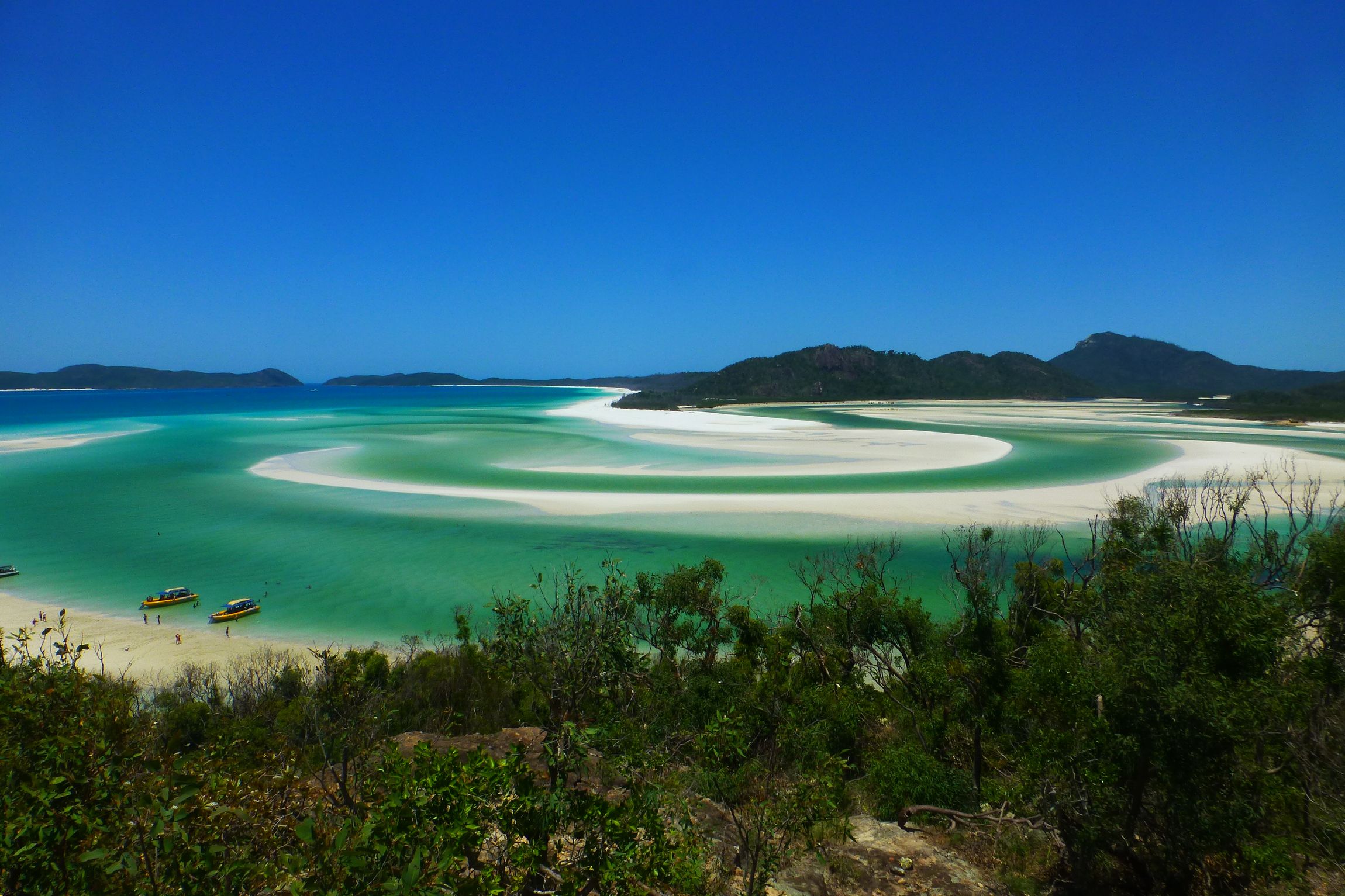
The one on every list, and it earns it. Whitehaven's sand is almost pure silica, fine enough to squeak underfoot and clean enough that people polish jewellery with it. Walk up to the Hill Inlet lookout at the northern end and you get the shot everyone comes for: sandbars swirling into the tide as the water moves.
How you get there: by boat or seaplane from Airlie Beach, and no other way. The standard trip is two nights on a sailing boat with snorkel stops, and there is a one-day version for the time-poor. Take the stinger suit the operator gives you between November and May.
2. Palm Cove, Cairns (Queensland)
Cairns has no natural swimming beach. The city fronts Trinity Inlet, an estuary of mudflats and river silt, which is the whole reason the free Esplanade Lagoon exists: saltwater, lifeguarded, open roughly 06:00 to 21:00 with a Wednesday morning closure for maintenance, and the only stinger-free and crocodile-free swim in the city all year.

For actual beach time you go north. Palm Cove is about 30 minutes up the coast: paperbark trees along the esplanade, day spas, and a netted patrolled area. Trinity Beach, a little closer in, is the family pick, about a kilometre of calm shoreline between two headlands with the most beachfront dining of the northern beaches. Nets also sit at Kewarra, Clifton and Four Mile Beach in Port Douglas. Read a net as a reduction of risk, not a removal of it.
3. Lake McKenzie, K'gari (Queensland)
Not the sea, and that is the point. K'gari is the world's largest sand island, about 120 km long, World Heritage listed for a rainforest that grows on sand and for perched freshwater lakes that sit above sea level on compacted organic matter, holding rainwater rather than groundwater. That is why the water is so clear.

You swim in the lakes and creeks here and never in the sea. Lake Birrabeen is a few kilometres from McKenzie with similar water and a fraction of the people, and Eli Creek is a clear freshwater creek you float down, usually on a ring the tour hands out. Getting around is 4WD only on soft sand tracks and on the beach itself, and 75 Mile Beach is a legal road that is only a road around low tide, so driving times here are set by the tide table rather than by distance.
One practical thing worth more than any photograph: do not book onward transport for your last day. The return ferry is tide-dependent and the time moves.
4. Wategos Beach, Byron Bay (New South Wales)
A small clifftop enclave under the Cape Byron lighthouse, and the calmest swim in Byron. It is also the town's priciest real estate, which you will feel in the accommodation and not at all on the sand, because there are free public barbecues and showers here and at Main Beach.

Do the lighthouse walk at sunrise and come down to Wategos after. And skip Tallow Beach for swimming: the sea there is rough, and for once every source agrees about it.
A typical Australia trip planned with Stippl runs 29 days, and the ten most-added stops are Sydney, Brisbane, Melbourne, Cairns, Byron Bay, Airlie Beach, Perth, the Gold Coast, Noosa and Rainbow Beach. Read that as a line, not a spread: with Perth as the one exception, it is the east coast in geographic order. Nobody hops between these beaches. They drive past all of them.
5. The Pass and Main Beach, Byron Bay (New South Wales)
Two beaches, one progression. Main Beach is where the lessons happen, with a wall of surf schools behind it. The Pass, next to Clarkes Beach, is the point break you graduate to once you can hold your own, and it is the prize on this stretch of coast.

If surfing is not your thing, sea kayaking leaves from Main Beach on a two and a half to three hour trip with dolphins and turtles, and only two operators are licensed in the bay, so book rather than turn up.
6. Burleigh Heads, Gold Coast (Queensland)
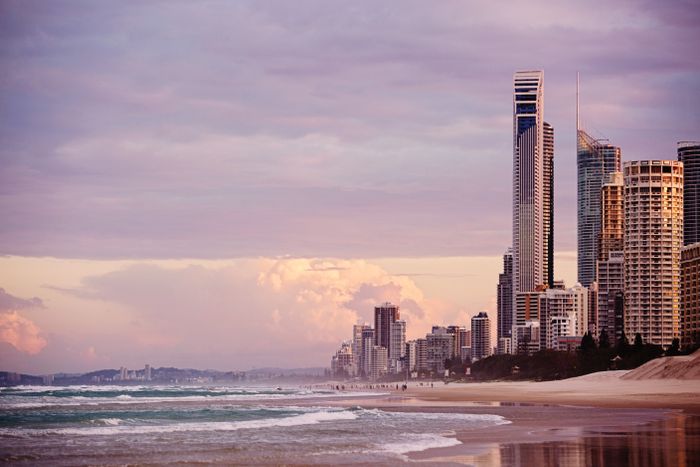
The Gold Coast is 57 km of east-facing surf beach with a skyline behind it, and Surfers Paradise is not the whole of it. Burleigh is the southern, better half: a headland walk, a café strip that locals actually eat on, and sunrise over the surf from the point.

It also sits on the Gold Coast Oceanway, 36 km of continuous beachfront path you can walk or ride any part of. The G:link tram runs the strip, and Queensland's flat public transport fare of €0.31 (AUD 0.50) makes moving between beach suburbs almost free.
7. Broadbeach, Gold Coast (Queensland)
Ten minutes north of Burleigh and a different proposition. Broadbeach's water is warm, clear and patrolled, and it is the family consensus pick on this coast: playgrounds, public barbecues and the Kurrawa strip behind the sand. The waves can be erratic, so it is not the one to book a surf lesson at.

8. Bondi Beach, Sydney (New South Wales)
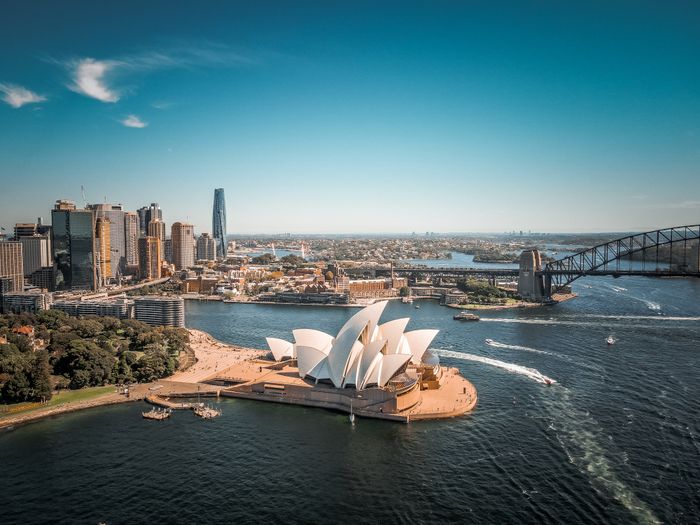
Sydney has over 100 beaches, from ocean surf to calm harbour coves, and Bondi is a kilometre of sand with a café strip and a lot of very fit people behind it. The honest verdict is that the walk beats the beach. Bondi to Coogee is 6 km and takes two to three hours past ocean pools and a clifftop cemetery, and it is one of the best urban hikes anywhere. Start early: the path is narrow and crowded by mid-morning.

Getting there is the 333 bus from the CBD, about 45 minutes.
9. Shelly Beach, Manly (New South Wales)
Manly sits at the end of the harbour's best ferry ride, and it is the closest thing Sydney has to a proper seaside town, described by people who live there as Byron Bay beach life 20 minutes from the CBD. Shelly Beach, tucked around the corner from Manly's ocean side, is one of the city's calm-water swims, along with Clovelly and Balmoral.

If you are staying five days or more, Manly is the base insiders keep naming. For a short first visit the ferry commute eats too much of the day.
10. Noosa Main Beach (Queensland)
Noosa Main Beach faces north. That sounds like trivia and it is the single most useful fact about it: on a coast where almost everything takes the southerly swell head on, Noosa is sheltered, and the water is unusually calm as a result. Hastings Street runs directly behind the sand with the restaurants and the beachfront hotels on it.

The coastal walk into Noosa National Park starts at the eastern end, and the best of Noosa is free: the park, the walk, the beaches, the river foreshore and the lookouts.
11. Alexandria Bay, Noosa National Park (Queensland)
Twenty minutes on from Sunshine Beach, or about 3 km along the coastal walk, and almost nobody is there. Golden sand, open ocean, and no lifeguard at all.

That last part matters more than it sounds, because Sunshine Beach on the other side of the headland is open ocean too and behaves nothing like Noosa Main Beach. If you have small children or weak swimmers with you, walk to Alexandria Bay for the view and swim back at Main Beach.
12. Cottesloe Beach, Perth (Western Australia)
Perth's coast faces west, which makes it the Australian capital where the sun sets over the ocean, and Cottesloe treats that as a civic event rather than a nice evening. The beach is about 20 minutes from the CBD on public transport, with a pub at the top of the sand that has been there long enough to be a landmark.
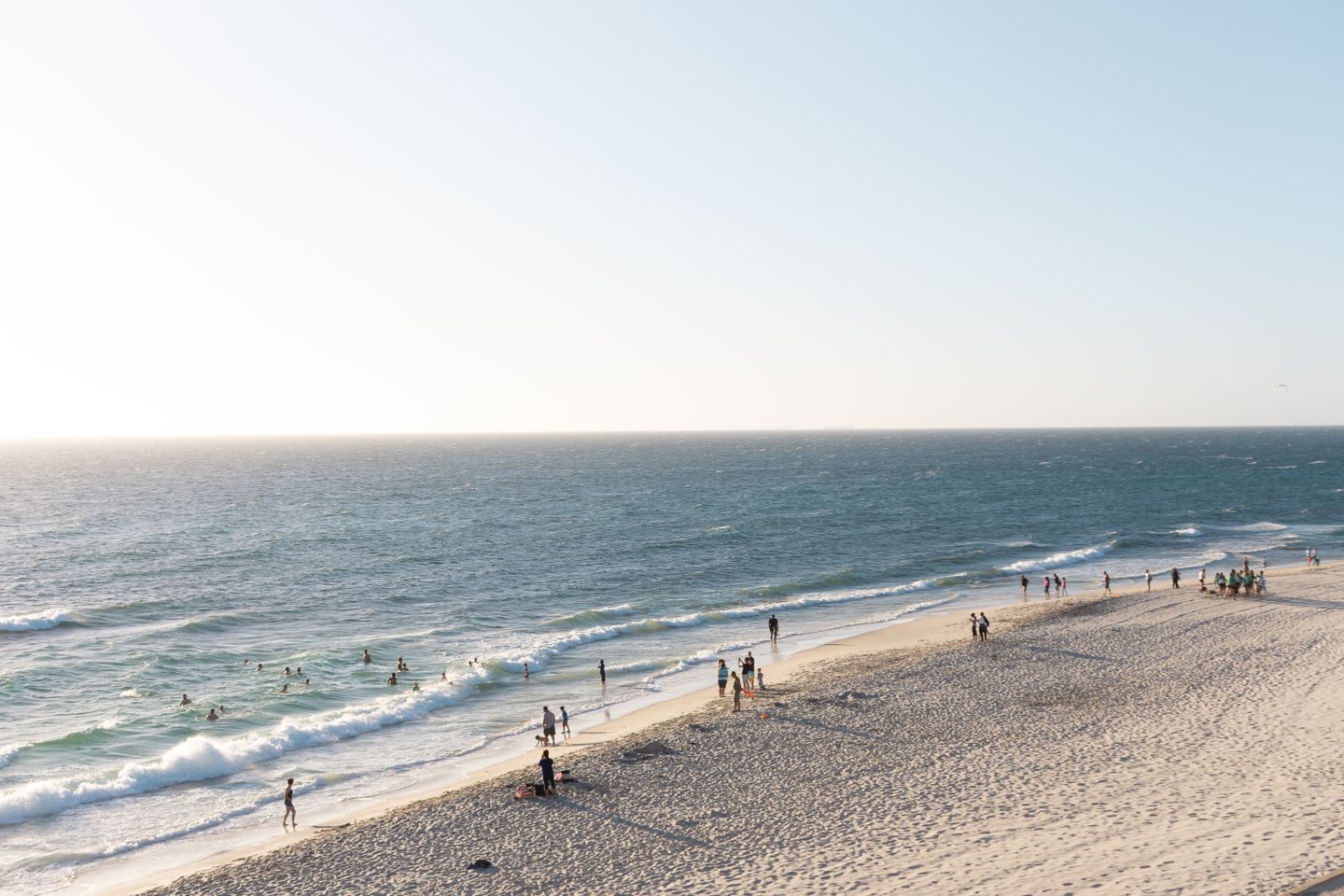
Scarborough, 14 km out, does the same thing on a rebuilt beachfront strip with more surf. Perth's beaches are long, white and far less crowded than the east coast's, which is the trade for being 4,000 km from everything else on this list.
13. Rottnest Island (Wadjemup), Western Australia
About 25 minutes by ferry from Perth, and the beaches here are the ones Australians reach for when they are arguing about the national top ten. You cycle between them, which is the whole shape of the day: no cars, a lot of small bays, and quokkas that will walk up to you.

If you are doing several national parks in Western Australia, a WA Parks Pass at €37 (AUD 60) a month beats paying about €9.30 (AUD 15) at each gate after four visits.
Getting between them
The east coast beaches are one drive, not thirteen separate trips. Sydney to Cairns is roughly 4,000 to 4,300 km, and three to six weeks is the comfortable window. Two weeks is rushed.
| Option | What it costs | Good for |
|---|---|---|
| Rental car | About €55 to €65 a day with full insurance | Two people, flexible dates |
| Campervan | From about €75 to €100 a day, and booking six to eight months ahead can nearly halve that | Cheaper than car plus hostel, once you are two |
| Greyhound east coast pass | From about €205 (AUD 330) | Solo travellers who do not want to drive |
Perth is the exception and it is not a detour. It is 4,000 km from the east coast and it needs its own flights and its own days.
Turn these stops into a route
Pick your favourites and Stippl orders them, adds travel times and builds the day-by-day.
Where to base yourself
You will not sleep at most of these beaches. You will sleep in the town behind them, and the towns price very differently.
- Whitsundays: Airlie Beach, and know what you are buying. The town is the marina you sail from, not a beach in itself. Every famous stay in the region is on an island.
- Sunshine Coast: Noosa Heads for a first visit and Noosaville for value.
- Byron Bay: Wategos for the splurge, Fletcher Street for hostels within walking distance of the sand.
- Tropical north: Trinity Beach or Palm Cove rather than Cairns itself, unless you have an early boat.
- Perth: Cottesloe or Scarborough if the sunset is the point, the CBD or Fremantle if it is not.
Expect motels and hotels at €62 to €124 (AUD 100 to 200), rising above €186 (AUD 300) in Noosa, Byron and the Gold Coast in season. Hostel dorms run €12 to €43 (AUD 20 to 70). Camping is the country's great accommodation asset at €6 to €25 (AUD 10 to 40) for a well-equipped ground, with free designated camps too, but wild camping outside designated sites is banned and the fines are around €248 (AUD 400).

Australia is not a cheap beach country, and the cost creeps up through activities rather than accommodation, because a reef day or a sailing trip is a different order of spend from an entry ticket. If you are working to a number, our guide on how to create a travel budget is the place to start, and the budget planner lets you set a daily figure per country and log what you actually spend as you go.
Save these to your trip in Stippl and they are on your map before you land.
Pick the beaches you want, drop them into a Stippl trip, and the driving times between them get worked out for you. If you would rather start from a shape and edit it, our free travel itinerary template does the same job on paper.
Read more: things to do in Australia
Frequently asked questions about Australia
Whitehaven Beach in the Whitsundays, for silica sand fine enough to squeak underfoot and the Hill Inlet lookout above it. It is also the least convenient on this list, reachable only by boat or seaplane from Airlie Beach. If you want a beach you can walk to, Noosa Main Beach and Wategos in Byron Bay are the calmest answers.
Not everywhere. Tropical Queensland has a marine stinger season from November to May, so Cairns and the Whitsundays are a winter swim rather than a summer one. Cairns has no natural swimming beach at all and uses a free patrolled lagoon instead. Sydney's ocean swimming is realistic from December to May.
September, if you only get one window. Tropical Queensland is dry, calm and out of stinger season, Sydney's patrols have resumed, and the Christmas and July crowds are both gone. For the far north specifically, June to September is the season and the reasons stack: dry, mild, calm water and the best underwater visibility of the year.
For the east coast, a car or campervan makes it a single trip rather than a series of separate ones, and a campervan works out cheaper than a rental car plus hostels once you are two people. A Greyhound east coast pass from about €205 (AUD 330) is the alternative. Within cities you do not need one.
Yes, and the response is more organised than most visitors expect. New South Wales runs SharkSmart, with drum lines set daily, tagged-shark alerts, drone patrols and listening stations. In Queensland, swimming at Cid Harbour on Whitsunday Island has been prohibited since 2018. The everyday rule matters more: swim at patrolled beaches, between the flags.
Thirteen beaches, five stretches of coast and one country that is a great deal wider than it looks on a map. Build the ones you want into a Stippl trip and you will see the driving times before you commit to them, which is the difference between an east coast route that works and one that spends its second week in the car.