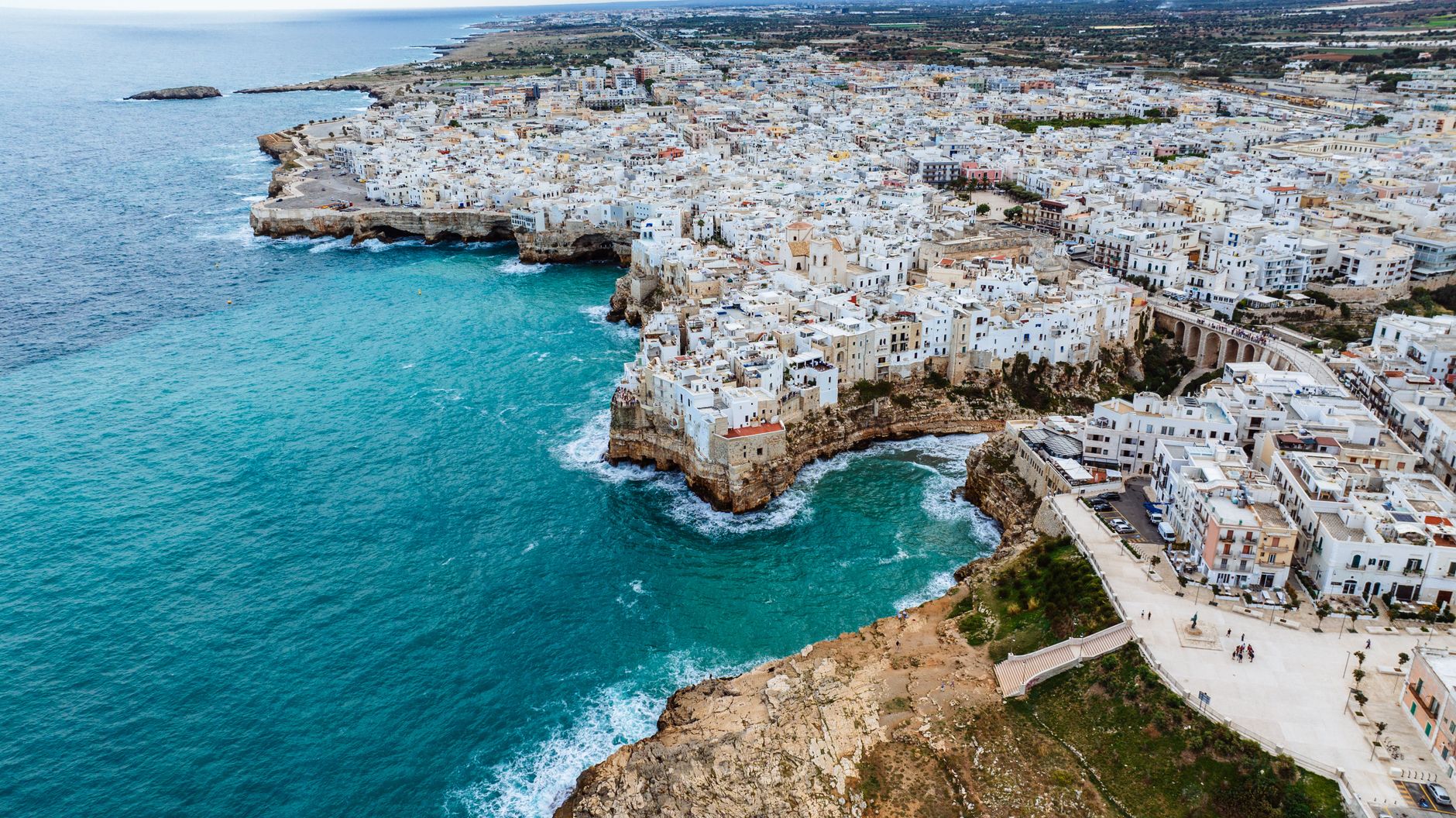

That trip is the backbone of the route below, and we have rebuilt it here as something you can actually copy: eight stops in thirty days, with the ferry days, the flight legs and the costs written in. It is not the most efficient line on a map, and the reason is worth knowing before you plan yours. The detour to Southern Leyte for the whale sharks costs you the better part of two travel days, and the trip took it deliberately rather than doing the easy version at Oslob. If you would rather not, we have said where to cut it.
| Duration | 30 days, 8 stops |
| Route | Coron to El Nido by boat, then Port Barton, Southern Leyte, Siargao, Siquijor and Moalboal |
| Budget per day | €19 to €48 backpacker, €55 to €100 mid-range, excluding international flights |
| Best time | February to April for Palawan and the Visayas. Note Siargao runs the opposite calendar |
| Book ahead | The Coron to El Nido expedition, months. Domestic flights, months, for the price |
| Stippl tip | Siargao is the longest-staying destination in the country in our data, at nearly five nights on average. Give it more room than you think |
Plan Philippines in Stippl
Day-by-day planning, stays and budget in one app, with every place from this guide already on the map.
Download the appCoron

Coron is a base rather than a beach town, and knowing that changes what you book. The town has no beach at the door and the nearby ones are weak, so the single most useful piece of local advice is to book somewhere with a pool, or find a hotel that sells day passes to its own.
What you come for is under the water. Coron's harbour holds more than ten well-preserved Japanese wrecks at depths from 10 to 43 metres, all of them sunk in a single US air raid in September 1944 and now working as artificial reefs. Above the surface, Kayangan Lake is the one everybody photographs, and it has a genuine curiosity to it: the water is roughly 30% saltwater and 70% freshwater, which makes you noticeably more buoyant than you expect. Twin Lagoon is the other standard stop.
The trip also went snorkelling with dugongs here, which was its highlight, and we would frame that honestly rather than sell it: sightings are not a scheduled product and no operator can promise you one.
Getting around town, a habal-habal, the motorbike taxi with the extended seat, is the fastest point-to-point option and the drivers double as informal guides. Agree the price first and have a rough idea how long the ride should take.
Sleep: in Coron town, with a pool. There is no beach base worth choosing here.
Getting there: fly Manila to Coron, about an hour, several daily, then a minivan from Busuanga airport into town. The overnight ferry from Manila also runs, 11 to 13 hours, but only a few departures a week.
Describe your trip, get a Philippines itinerary in seconds
Everything in this guide is already in Stippl. Tell the planner how long you have and what you like: it builds the route, the days and the travel times, and you edit whatever you want.
The Coron to El Nido expedition

This is the part of the route people remember, and it is the single most-cited highlight of the whole country. Instead of taking the ferry between Coron and El Nido, you sail the archipelago in between over two to four nights, sleeping in bamboo huts on a different island each night, with meals cooked on board and no phone signal for the duration. It runs €295 to €590 depending on the operator and the length, and it books out months ahead.
Two things to understand before you plan around it. The route is decided by the weather, not by a schedule, so the islands you stop at are not the islands the brochure showed. And the departure day itself can move, which means you cannot book a tight onward connection off the back of it.
Day 1Lagoons and the first island camp
The first day usually works the reef and lagoon stops closest to Coron before running out to a beach camp for the night. Expect snorkelling in the morning, a swim through a lagoon in the afternoon and a beach you have to yourself by dark.
Day 2Sandbars and open water
The longest water day of the four, crossing between islands with sandbar and reef stops in between and a picnic lunch on the sand. This is the day the group turns into a group.
Day 3Turtles, a village and a camp with karaoke
Snorkelling with turtles, a stop at a local village, and an overnight camp on Linapacan. Karaoke is a national institution rather than a novelty, and it will find you here.
Day 4Into El Nido
The last morning runs the northern beaches into El Nido, so you arrive by sea rather than by pier, which is much the better way to see the place for the first time.
Sleep: on the boat's islands, in bamboo huts with a few hours of generator power a night. Bring a head torch and a power bank.
Getting there: the expedition replaces the Coron to El Nido crossing. If you skip it, the fast ferry takes three and a half to four hours for about €26, or the flight takes 40 minutes but only runs on certain days.
El Nido

Three nights is the right number here, and that is not a guess: three nights is the typical El Nido booking among travellers who plan with Stippl, and 54% of El Nido stops are exactly three or four. The town itself is not the attraction and every source says so plainly. Everything is out on the water or up the coast.
The boat tours are standardised as A, B, C and D, and every operator runs the same four routes. Tour A is the famous one, the Big Lagoon and the Small Lagoon, and it is also the most crowded; take a kayak into the Big Lagoon rather than staying on the boat. Tour C is the pick for snorkelling and the one to book when A is full. Whichever you take, book it at least two days ahead, because a daily visitor cap on Bacuit Bay has been in force since 2019 and the good operators fill. Do not book the cheapest boat: the low-priced ones fill by merging groups.
Off the water, rent a motorbike for €5 to €7 a day (₱350 to ₱500) and ride 45 minutes north to Nacpan, four kilometres of golden sand splitting into Calitang at the tip. Do not ride back after dark. Taraw Cliff at sunrise is the other one, a 30 to 40 minute scramble up sharp limestone, and a guide is effectively mandatory: the start is hard to find and the guides bring the gloves, helmets and headlamps.
Two local rules that are not general Philippine advice. El Nido has an ongoing freshwater problem, and food cooked in tap water is repeatedly reported to cause stomach upsets, so check recent reviews before eating somewhere new. And there is effectively one working ATM in town, so arrive with cash. The Eco-Tourism Development Fee is €5.60 (₱400), paid once and valid for ten days across every tour.
Sleep: El Nido town for the tour desks and the bar street, Corong-Corong 1.5 km south for sunsets and quiet, Lio by the airport if you want the resort version. Corong-Corong faces west and the town does not, which is the whole reason to choose it, and a beach cottage there runs around €37 a night against roughly €70 for a town hotel with a pool. The beach is the cheaper side of this town, not the dearer one.
Getting there: you arrive by expedition boat. Otherwise it is the ferry or the flight from Coron.
Port Barton

Port Barton is the antidote to El Nido, and on this trip it was the surprise favourite. No big hotels, a handful of restaurants on one street, and island hopping that costs about a third of what the Bacuit Bay tours do.
Come with the infrastructure in mind rather than discovering it: the village has had electricity only in the evening hours, and the wifi is slow when it works at all. That is the trade for a beach town that still feels like a village, and it is why people either love it or leave after a night.
Sleep: anywhere in the village. It is small enough that location barely matters, and the guesthouses are family-run rather than branded.
Getting there: shared minivan down the coast road from El Nido, four to five hours. Onward to Puerto Princesa is another minivan, and the sources disagree on whether that leg is two and a half hours or three to four, so treat it as a half day and go straight to the airport if you are flying.
Padre Burgos, Southern Leyte

This is the detour, and it is the reason the route is shaped the way it is. The trip went to Southern Leyte to snorkel with whale sharks and to dive, and the instinct behind it is right even though the logistics are brutal.
Here is the reasoning, which matters more than the itinerary line. Oslob on southern Cebu is the easy version and it is the one to avoid: the whale sharks there are hand-fed daily about 50 metres off the beach, which breaks their migration and makes them dependent on people, with hundreds of boats a day crowding them. The encounters worth travelling for are the ones where the animals pass through naturally, and Donsol in Bicol and Sogod Bay in Leyte are the two the sources name. Donsol runs November to May, with no feeding, no scuba and no flash photography.
Be realistic about the cost of getting here. It is a chain of flights and buses back through Manila or Cebu, and it eats the better part of two days in each direction. If you have four weeks and want beach time more than you want this, cut it and give the days to Siargao and Siquijor. If the whale sharks are the trip, keep it and build a buffer day around it.
Sleep: dive resorts along the coast rather than a town with a choice of beds. Book before you travel, because there is no walk-in market here.
Getting there: no direct route exists from Palawan. Expect a flight to Manila or Cebu, a second flight east, and a long bus at the far end.
Siargao
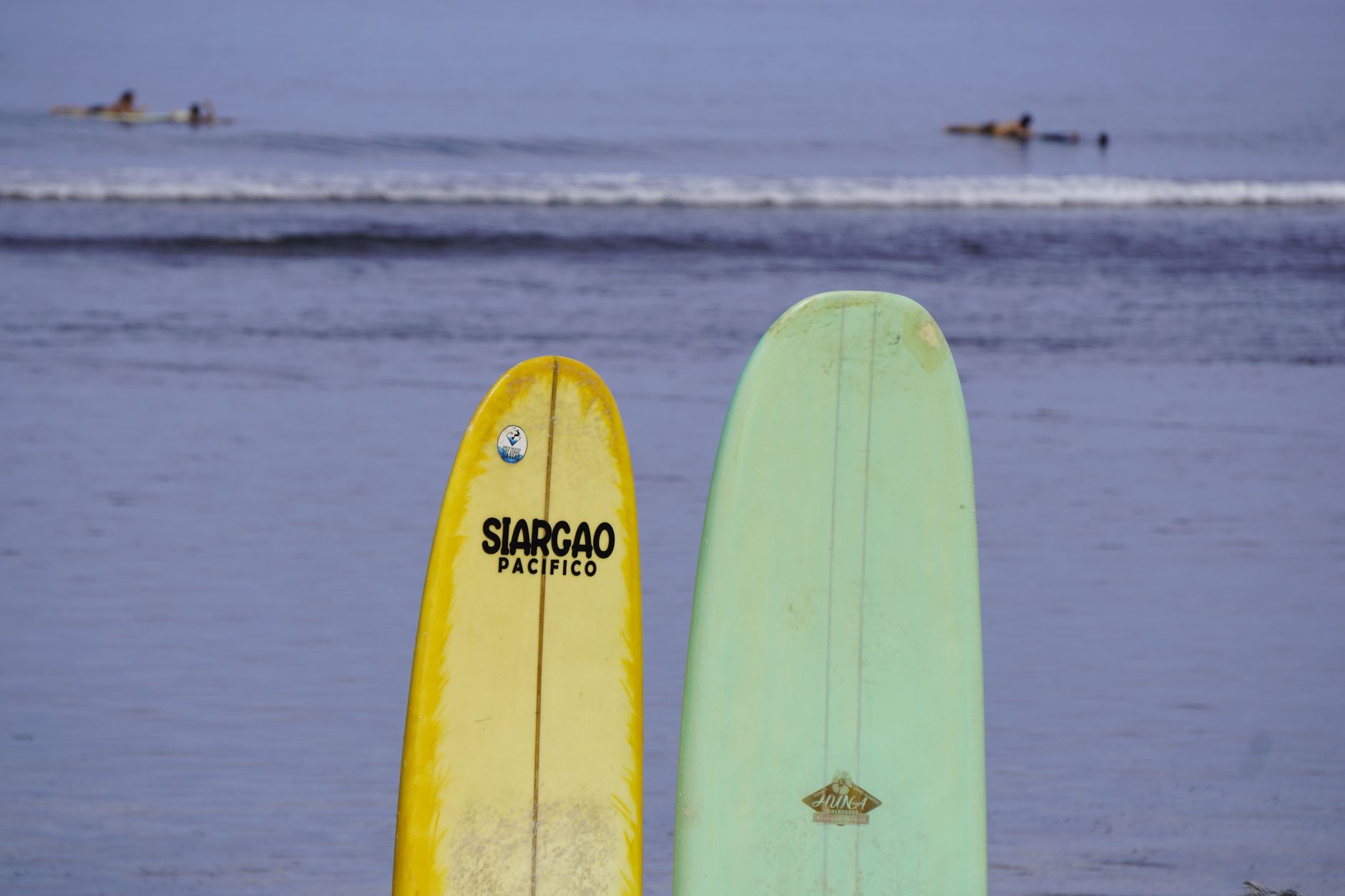
Give Siargao the longest block of the trip. Travellers who plan with Stippl stay here nearly five nights on average, the longest of any destination in the country and more than three times what they give Manila, and the reason is obvious the moment you arrive: it is a surf island with a real social scene rather than a beach with a bar on it.
Cloud 9 is the wave it is famous for, a heavy barrelling reef break that has hosted world-tour events and is not a beginner's wave. Jacking Horse and Secret Spot are where you actually learn. Off the board, rent a scooter for around €6 to €9 a day and ride the island: Sugba Lagoon is the one people rave about, and Naked Island off the coast is named for the fact that nothing grows on it at all.
The season trap, and it is the single most expensive mistake on this route. Siargao inverts the national calendar. Its dry season starts around March, its best surf runs August to November, and December to February is the peak of its rainy season with typhoon risk. A trip built around the national December to April dry season lands you here at exactly the wrong time of year. Either run the whole route February to April and accept Siargao is at the start of its dry season, or run it later and accept wetter Palawan. You cannot have both.
Sleep: General Luna for the bars, the restaurants and everyone else. Dapa and Pacifico are where to go if you want the quiet version of the same island.
Getting there: fly, from Cebu City in about an hour or from Manila in about two. The ferry exists, is indirect and takes around 12 hours, and almost nobody takes it. Book early: Siargao routes are the most price-sensitive in the country.
Siquijor

Siquijor is the island of magic, and the reputation is real enough that tourism here lagged for years while Bohol and Cebu boomed, purely because of the black-magic and faith-healer stories. What you actually get is a small, cheap, very safe island you can circle on a scooter in a day, with waterfalls, rope swings, centuries-old churches and caves in between.
It is also the island the sources recommend starting a Philippine trip on rather than finishing one, for the same reasons: small, easy, full of family-run places and almost impossible to get wrong. A full-day tricycle charter runs around €14 (₱1,000) if you would rather not ride.
Sleep: San Juan on the west coast, which is where the beach, the sunsets and most of the good places to stay are.
Getting there: OceanJet from Cebu City via Bohol, about five hours, or from Bohol direct in one and a half to three hours depending on the boat, for under €13. Book ahead, these sell out. The alternative is flying to Dumaguete and crossing in 45 minutes to two hours.
Moalboal
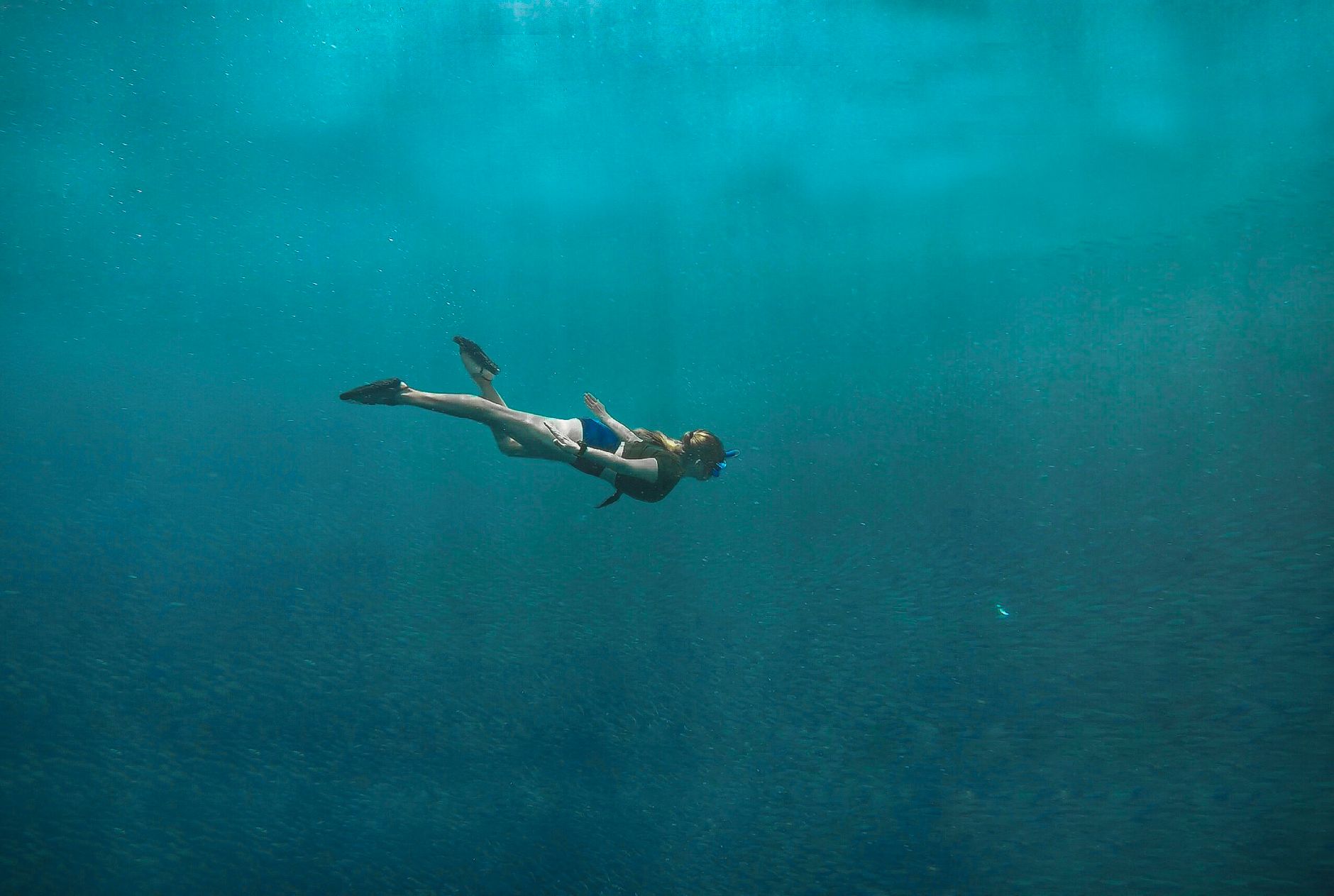
Moalboal ends the trip on the one experience that needs no boat and no booking. Hundreds of thousands of sardines shoal metres off Panagsama Beach, 365 days a year, and you can swim out to them from the sand with your own snorkel for the price of a small entry fee. There are only a handful of places on earth where that is true.
The other thing everyone does here is the canyoneering to Kawasan Falls at Badian next door, jumping, sliding and floating down a river gorge with drops escalating from three metres to seventeen. It is the most-sold day trip out of Cebu and it carries real risk that the marketing does not mention: the route was closed to the public until October 2023, access is still limited, and independent reviews raise the absence of trained first responders. Book an operator that supplies a helmet and a life vest, and treat the high jumps as optional, because they are.
Renting a bike and riding the coast road is the low-effort version of a day here, and it is a good last one.
Sleep: in Moalboal itself rather than in Cebu City. The city has no beach and this is 2.5 to 3.5 hours away, so basing in the city to day-trip here makes no sense.
Getting there: from Siquijor it is a ferry to Dumaguete, a tricycle to Sibulan, a short ferry to Liloan and a bus north, which is a full day. From Cebu City it is the Ceres bus from the South terminal, 2.5 to 3.5 hours, €2.50 to €3.50 (₱180 to ₱250), leaving every 30 to 60 minutes.
For the whole country in one place, see our Philippines guide (/discover/philippines).
Getting between the stops
Inter-island logistics are not a detail of a Philippines trip, they are the trip. Nearly every journey between island groups is a flight plus a boat plus a van rather than one hop, and almost everything routes through Manila or Cebu City.
| From | To | Best option | Time and cost |
|---|---|---|---|
| Manila | Coron | Flight, then a minivan into town | About 1h, several daily |
| Coron | El Nido | The 2 to 4 night expedition, or the fast ferry | 2 to 4 nights at €295 to €590, or 3.5 to 4h at about €26 |
| El Nido | Port Barton | Shared minivan down the coast road | 4 to 5h |
| Port Barton | Puerto Princesa | Shared minivan, straight to the airport | Half a day, sources give 2.5h to 4h |
| Puerto Princesa | Cebu City | Flight, direct daily | About 1h30 |
| Cebu City | Siargao | Flight | About 1h |
| Cebu City | Siquijor | OceanJet fast ferry via Bohol | About 5h |
| Cebu City | Moalboal | Ceres bus, South terminal, every 30 to 60 min | 2.5 to 3.5h, €2.50 to €3.50 (₱180 to ₱250) |
Three rules that will save you a day each. Book domestic flights months ahead: about €40 to €60 booked early against €110 to €120 or more last minute, and El Nido, Coron and Siargao sell out first. Build a buffer day either side of any boat leg, because a storm signal suspends sailings whatever the sky looks like. And be back in Manila at least ten hours before an international flight, because afternoon domestic flights are routinely delayed and the Siargao to Manila route is the most delay-prone in the country.
Grab works in Manila and Cebu City and nowhere on the islands, where it is back to agreeing a price with a tricycle driver. Boats, tricycles and vans are priced per vehicle rather than per person, so finding two other travellers at the pier halves your transport line.
Turn these stops into a route
Pick your favourites and Stippl orders them, adds travel times and builds the day-by-day.
What a month in the Philippines costs
Set your expectations against Southeast Asia rather than against Europe. The Philippines is cheap by global standards and meaningfully pricier than Thailand, Vietnam or Indonesia, for two reasons that both bite on a route like this one: the domestic flights are unavoidable, and good accommodation is genuinely scarce, so it prices like a scarce thing.
Budget
€19–47
dorm bed, carinderia plates, buses and jeepneys, free beaches and waterfalls
Mid-range
€55–100
private rooms, restaurant meals, island-hopping tours, some domestic flights
High-end
€75–115+
boutique hotels and resorts, private boats, diving, private transfers
The three things that blow a Philippines budget are the same three every time: not booking flights and beds in advance, travelling at Christmas or over Holy Week, and eating only Western food. The cheap layer here is genuinely cheap. A carinderia plate of rice and stew, chosen by pointing at the pots, costs a couple of euros, and the beaches, waterfalls and viewpoints are mostly free.
Track what you actually spend
Set a daily budget per country and log expenses in any currency while you travel.
Two costs to plan for that do not appear in any daily figure. The expedition is a single €295 to €590 line that lands in one week rather than spreading across the month. And environmental and terminal fees are charged constantly, typically a euro or two per site, mandatory and checked in El Nido and Coron, so carry small notes.
What we would change about this route
Cut Southern Leyte if the whale sharks are not the point. It is roughly four travel days for one experience, and those four days would buy you the whole of Bohol or a proper stretch on Bantayan.
Move Siquijor to the start. It is the island the sources recommend opening a Philippine trip on: small, cheap, safe, easy to ride, and a gentle landing after a long-haul flight. Ending on it means you meet the easiest island when you no longer need easy.
Give Siargao a week rather than five days, which is what our own data suggests people end up doing anyway, and it is the one stop on this route where the extra days genuinely change the experience rather than just extending it.
Add Bohol if you drop Leyte. It sits directly between Cebu City and Siquijor on this route, it is three ferry-free hours from where you already are, and it is the pick for the Chocolate Hills and Panglao's beaches. For where those beaches sit against the rest of the country, see our guide to the best beaches in the Philippines.
Practical tips for a month in the Philippines
Register for eTravel before you fly, and pay nothing for it. It is mandatory for every arrival, it takes about five minutes at etravel.gov.ph within the 72 hours before landing, and it costs zero. The Bureau of Immigration warns publicly about paid look-alike sites: if a site asks you for money, it is not the government one. Most nationalities then get 30 days visa-free, extendable to 59.
Carry cash, and withdraw the maximum. Cards work at large hotels and restaurants and almost nowhere else, and ATMs on small islands run dry or out of service. BPI machines allow around €278 (₱20,000) per withdrawal against roughly half that elsewhere, which spreads the fixed fee, but BPI is concentrated in the bigger cities.
Pack for the boats, not for the beach. A dry bag, water shoes for canyoneering and rocky boat landings, a rain poncho, a power bank, a head torch, a quick-dry towel and earplugs for the roosters and the karaoke. Bring your own snorkel set: it is cheaper than repeated rentals and it is what lets you swim the sardine run for free.
Do not drink the tap water anywhere, including Manila, and in El Nido be careful what your food is cooked in too.
Frequently asked questions about Philippines
It is enough for two regions done properly, which is what this route is. Three weeks covers two regions, two weeks buys one, and one week buys a single island cluster. Four weeks is still described as short by people who know the country well, because the travel days between island groups are long.
Palawan and the Visayas, in that order, which is the shape this route takes. Coron and El Nido for the lagoons and the diving, the multi-day expedition between them, then east to Siargao for surf and Siquijor and Moalboal for the easy end. Swap Southern Leyte for Bohol if you would rather have beaches than whale sharks.
Roughly €19 to €48 a day as a backpacker and €55 to €100 mid-range, excluding international flights, with the domestic flights and the Coron to El Nido expedition as the two lumpy extras. Booking flights months ahead is the single biggest lever: about €40 to €60 early against €110 to €120 or more last minute.
February to April, when almost the whole country is dry at once and the boats sail. May and November are the cheaper shoulders. Avoid August to October, the peak of the typhoon window. The one exception is Siargao, whose dry season starts around March and whose rainiest stretch is December to February.
Yes on the traveller trail. The realistic risks are weather, boats and traffic rather than crime: monitor forecasts, do not push a boatman who is hesitating, and wear a helmet on a scooter. The named exclusions are the Sulu Archipelago and the Zamboanga Peninsula.
Eight stops, thirty days, and one route that is honest about which of its legs are worth the travel time. Coron and El Nido are the reason people come, Siargao is the reason they stay longer than they planned, and Siquijor is the one everybody wishes they had done first.
Copy the stops into a Stippl trip and it orders them, adds the ferry and flight legs and builds the day-by-day around your dates, so the only thing left to argue about is how long you get on Siargao. Free forever.