
This guide puts the best months first, then goes month by month and island by island, with the typhoon season, the cheapest weeks and the best time for diving and surfing along the way.
Plan Philippines in Stippl
Day-by-day planning, stays and budget in one app, with every place from this guide already on the map.
Download the appThe best time to visit the Philippines, in short
Go between December and May, and aim for January to April if you can. February is the driest month of the year almost everywhere, and March and April are the hottest. May and November are the value picks: cheaper, quieter, and the sea is usually still calm.
The reason the answer changes by island is the wind. The Amihan, the northeast monsoon, blows from roughly November to April and brings the dry, slightly cooler months. The Habagat, the southwest monsoon, takes over from June to October and drops its rain on the west-facing coasts, which is why Palawan and Boracay's White Beach turn wet and rough in summer. The Pacific side works the other way round: Siargao is at its wettest in December and January, exactly when Palawan is perfect.
Philippines seasons explained
The cool dry season (December to February). Daytime highs sit around 30°C (86°F), January is the coolest month and February the driest. This is peak season for Palawan island hopping, and the Christmas and New Year fortnight is the busiest and most expensive of the year.
The hot dry season (March to May). Temperatures climb to 32 to 36°C (90 to 97°F) with plenty of humidity. The Chocolate Hills on Bohol turn brown, the northern rice terraces are at their greenest, and Holy Week (the week before Easter) fills every bus, boat and bed in the country.
The wet season (June to November). Rain here rarely means grey days on end. Think heavy afternoon downpours, rough seas and the odd cancelled boat. How much rain depends hugely on where you are: El Nido gets 14 mm in February and 480 mm in July, while Cebu sits in a rain shadow and only swings between 48 and 195 mm across the whole year. There's no month you can't travel in the Visayas, which is good to know if your dates are fixed.
Philippines weather month by month
| Month | Overall | Where it shines | Watch out for |
|---|---|---|---|
| January | Good | Palawan, the Visayas, Luzon | Siargao's wettest month, New Year crowds, Sinulog in Cebu |
| February | Best | Almost everywhere, the driest month | Siargao still wet |
| March | Best | Every island group; Siargao's dry season starts | Heat building, Chocolate Hills turning brown |
| April | Best | Every island group | The hottest month, Holy Week crowds |
| May | Good | Siargao, the Visayas, the rice terraces | Rain arrives abruptly in northern Palawan |
| June | OK | Siargao, Cebu, Bohol | Rain starts in Luzon and Palawan |
| July | Poor | Siargao, the Visayas | Palawan's wettest month, ferry cancellations begin |
| August | Poor | Siargao, the surf season starts | The rainiest month nationally, typhoon peak |
| September | Poor | Siargao surf | The most typhoon-prone month |
| October | OK | Siargao surf; the rest improves after mid month | Typhoon risk in the first half, Cebu's wettest month |
| November | Good | Palawan, the Visayas, Luzon, Boracay's clearest water | Typhoon tail in the east, rain returning to Siargao |
| December | Good | Palawan, the Visayas, Luzon | The most crowded and expensive weeks of the year |
Is May a good time to visit the Philippines?
Yes, with one caveat. May is a shoulder month: hot, greener, cheaper and still calm at sea in most places. It's one of Siargao's best months, and the rice terraces of northern Luzon look their best. The caveat is northern Palawan, where the rain arrives in one step: El Nido and Coron go from 38 mm in April to 198 mm in May. Book Palawan for early May and finish the trip in the Visayas.
Is October a good time to visit the Philippines?
For surfers, absolutely: October is peak swell on Siargao. Elsewhere it's a gamble that gets better as the month goes on, because typhoon risk falls after mid October. Cebu has its wettest month (still showers rather than whole days of rain), and Puerto Princesa records its highest rainfall of the year. Prices are low, so if you go, keep a buffer day for boats.
Is November a good time to visit the Philippines?
Yes, and it's one of the best value months of the year. Palawan is drying out and its seas are settling, Manila and Luzon turn dry, and Boracay often has its clearest water of the year once the Amihan wind returns. The Donsol whale sharks arrive too. On Siargao the surf is still good but the rain comes back hard, and the typhoon tail can still reach the east, so plan a spare day around any boat crossing.
The Philippines in January
January is one of the best months to go. The dry season has settled over Palawan, the Visayas and Luzon, it's the coolest month of the year (Manila's highs average about 29.5°C, or 85°F), and only the mountains of northern Luzon feel properly chilly. The one region to avoid is Siargao, where January is the wettest month of the year.
It's also a busy month, because the festivals stack up:
- 9 January: the Feast of the Black Nazarene in Quiapo, Manila, one of Asia's largest Catholic processions.
- Third weekend: Ati-Atihan in Kalibo on Panay, with face paint and street dancing, two hours from Boracay.
- Third Sunday: Sinulog in Cebu, the biggest festival in the Visayas. In 2027 it falls on 17 January.
- Fourth week: Dinagyang in Iloilo, with a river parade.
Best time to visit by island
The Philippines is too spread out for one national answer, so match your dates to the region rather than the other way round. Here's how the four main areas compare.
Best time to visit Palawan: El Nido, Coron and Puerto Princesa
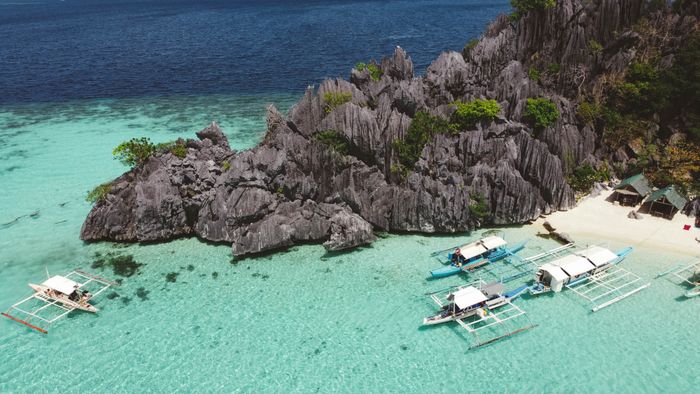
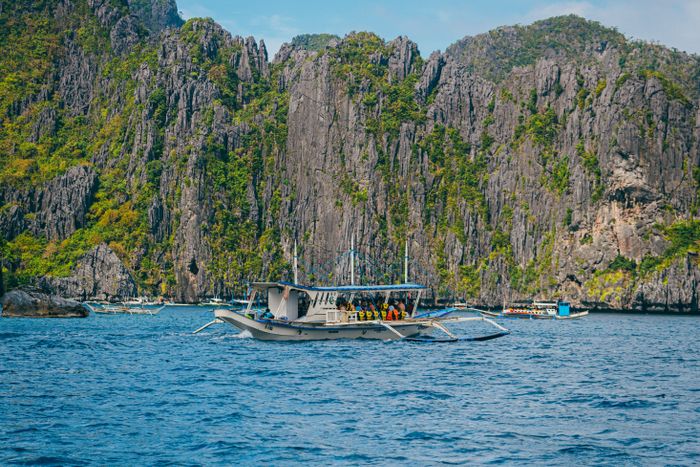
The best time to visit Palawan is December to April, with February and March the sweet spot for calm water and every boat tour running. Northern Palawan has the sharpest wet and dry contrast in the country: Coron and El Nido see 14 mm of rain in February against 480 mm in July, and from June to September tours get cancelled regularly.
Puerto Princesa is milder. Its wet season is real but gentle by Philippine standards, and its wettest month is October rather than July. The Underground River is capped at 900 visitors a day, so book it ahead in the dry season. If you're mainly here for the beaches too, our guide to the best beaches in the Philippines covers the Palawan ones.
Read more: things to do in El Nido
Visayas: Cebu, Bohol, Boracay and Siquijor
The central islands are the easiest to time, because there's no real monsoon switch. Cebu, Bohol and Siquijor sit in a rain shadow where the wettest month gets only three to four times the rain of the driest. February to May is the dry stretch with the best diving visibility, and June to November brings showers rather than a washout. Siquijor is the driest of the lot, with December to March as its core season.
On Bohol, the Chocolate Hills are brown from March to May and green the rest of the year, and plenty of travellers prefer them green. Boracay is the exception in the Visayas: White Beach faces west, so it's calm from November to April and wavy from June to October. Seasonal algae can appear on White Beach from roughly February to May, which is why November tends to have the clearest water.

For diving, the Visayas barely has an off season: the Moalboal sardine run happens every day of the year, and Malapascua is one of very few places on earth to dive with thresher sharks year round. Skip the whale shark feeding at Oslob, though. The sharks there are hand fed daily, and Donsol is the place to see them pass through naturally.
Read more: things to do in Cebu City
Siargao and Mindanao
Siargao runs the opposite calendar to the rest of the country. Its wettest months are December and January (more than 580 mm each), and its dry half runs roughly from April to September, with May, June and August the driest and calmest. The surf season follows the Pacific swell from August to November, while March to May brings the small, friendly waves that suit beginners.
That makes Siargao a great finale for a trip in late spring or summer, and the wrong island for a Christmas week. Typhoon Odette crossed the island in December 2021, and the rebuild is still visible.

Mainland Mindanao gets the least rain of anywhere in the country during the wet season. Parts of it do carry travel warnings, so check your own government's current travel advice before planning anything there beyond Siargao.
Read more: things to do on Siargao
Luzon and Manila
Luzon follows the textbook pattern most strongly. Manila gets 8 mm of rain in February and 486 mm in August, and in July and August street flooding is routine. December to April is the window, and for most travellers Manila is a one or two night gateway rather than a destination.
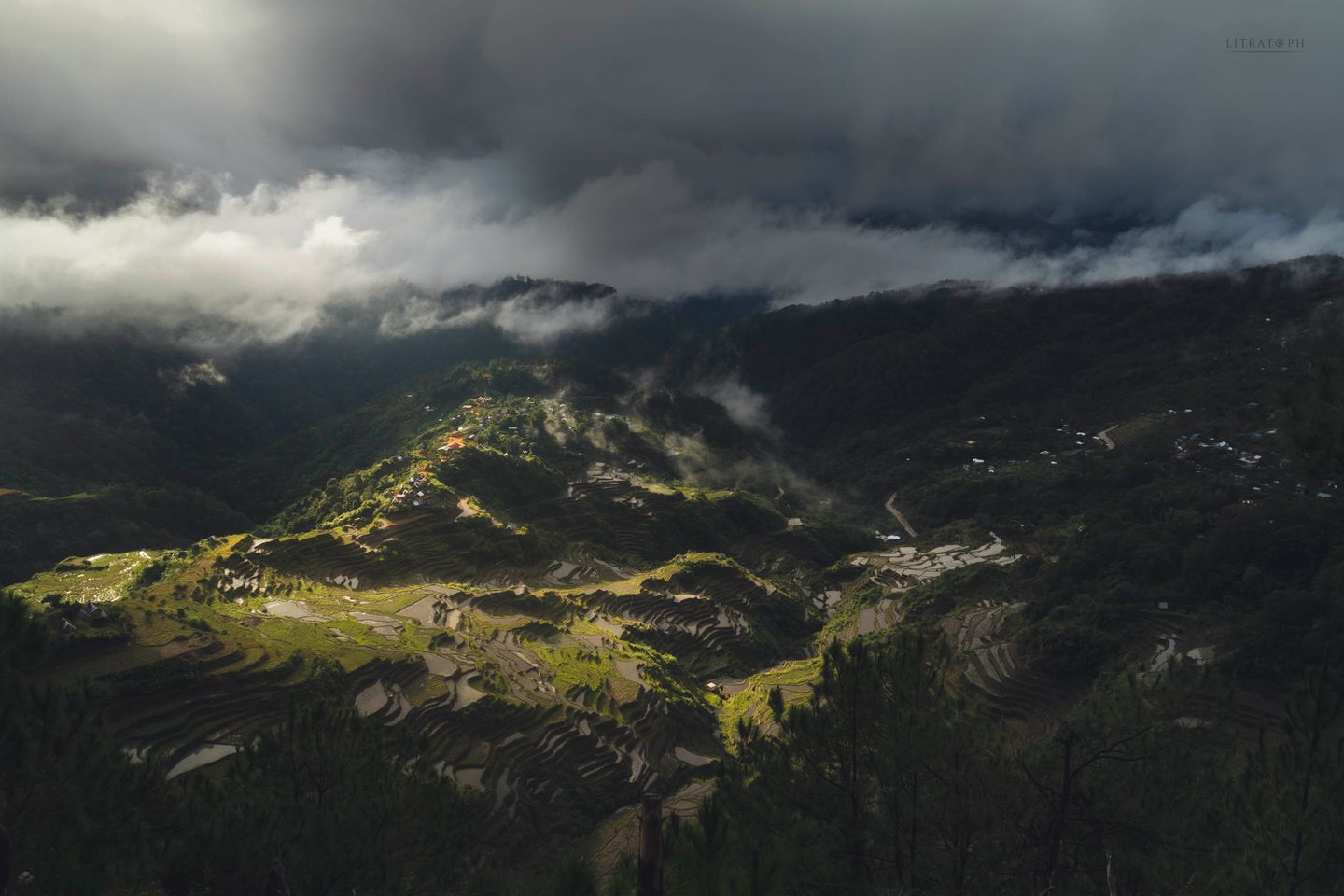
Up north, the Cordillera mountains around Banaue, Batad and Sagada are cool and dry from January to March, which is the time for trekking. The 2,000 year old rice terraces are at their greenest from March into June, once the first rains have fallen.
Philippines typhoon season
The Philippines sees around 19 to 20 typhoons a year. Plan on some risk from June to December, with the peak from August to October, and accept that a storm can turn up outside that window too. Even the sources disagree on the exact months, so treat it as a range rather than a fixed date.
Where they hit. The typhoon belt runs over Luzon, Bicol and the eastern Visayas, the coasts that face the Pacific. Palawan and most of Mindanao sit west or south of the main track and usually get only the edges.
When the south does get hit. Usually doesn't mean never. Typhoon Odette landed on Siargao on 16 December 2021 and also hit Bohol hard, which is why both islands still mark the date.
What it means for your trip. The real risk for a traveller is being stuck, not being hurt: the Coast Guard suspends ferries on a storm warning, and flights get cancelled with them. Build one or two buffer days into any route between August and December, and be back in Manila at least ten hours before an international flight.
Worst time to visit the Philippines
The worst time to visit the Philippines is August and September. August is the rainiest month nationally and the start of the typhoon peak, and September is the most typhoon-prone month of all. Palawan's boat tours are cancelled often, and Manila's streets flood.
If those are your only dates, you still have good options. Siargao has its driest month in August and the surf season is starting, and Cebu, Bohol and Siquijor get showers rather than storms. Just keep the route short and leave slack around every crossing.
The other times to think twice are about crowds rather than weather: Christmas and New Year, Chinese New Year and Holy Week. And for Siargao itself, December to February is its own worst season.
Cheapest time to visit the Philippines
The cheapest time to visit the Philippines is the wet season, from June to October, when prices and crowds drop the most. The smart compromise is May or November: you get most of the dry season weather at shoulder season prices, and the boats are much easier to book.
Wherever you go, avoid the three peaks: Christmas and New Year, Chinese New Year and Holy Week. Good accommodation is scarcer here than in Thailand or Bali, so the best small hotels sell out first. The biggest saving of all is booking domestic flights months ahead, which often costs less than half the last-minute fare, with the Siargao, El Nido and Coron routes selling out first. Boats and tricycles are priced per vehicle, so teaming up with other travellers cuts costs straight away. For daily budgets per travel style and a costed fortnight, see our breakdown of what a Philippines trip costs.
Best time for diving, surfing, island hopping and whale sharks
The best time to visit the Philippines for diving depends on what you want to see, and some of the best dives run all year:
| Activity | Best months | Where |
|---|---|---|
| Island hopping | December to April, calmest in February and March | El Nido, Coron |
| Wreck diving | December to April | Coron |
| Reef diving, best visibility | February to May | Moalboal, Panglao, Balicasag |
| Sardine run | All year | Moalboal |
| Thresher sharks | All year | Malapascua |
| Liveaboard diving | March to June | Tubbataha Reef |
| Surfing | August to November, beginners March to May | Siargao |
| Whale sharks | November to May | Donsol |
| Green rice terraces | March to June | Batad, Banaue |
Coron's wrecks are a Japanese supply fleet sunk in one air raid in September 1944, and several sit shallow enough to snorkel. In Moalboal you swim to the sardines straight from the beach, no boat needed.
How Stippl travellers plan the Philippines
Across the 64,180 trips that include the Philippines on Stippl, it's the eighth most planned country we see, and the planning pattern says a lot about how to time it. Ten places carry 79.4% of every stop travellers add, so for all its 7,000 islands, most people choose from a short list.
A typical stop lasts three nights, and almost a third of all stops are a single night: those are Manila and Cebu City, the gateways you land in between islands. The seasons show up clearly too. El Nido and Coron lose about a third of their travellers in July, while Manila barely notices the monsoon. That's the pattern to copy: let the season pick the islands, and let the gateways carry the short nights.
Plan your Philippines route around the season
Once you know your month, the route almost writes itself. In the Stippl itinerary planner you drop your stops on the map, set the nights for each, and see straight away whether the islands you picked are in season together.
A few things make a Philippines route work. Swap islands by season rather than fighting the weather: Palawan for December to April, Siargao for April to September, the Visayas for almost any month. Add a buffer day around every ferry, and give the gateway cities one night so the long hops stay calm. Then share the trip with your travel partner so you can both move stops around. Want a route to start from? Our two week island route runs from Cebu through Moalboal, Bohol and Siquijor to El Nido or Coron, with the nights for every stop.
Describe your trip, get a Philippines itinerary in seconds
Everything in this guide is already in Stippl. Tell the planner how long you have and what you like: it builds the route, the days and the travel times, and you edit whatever you want.
Not sure where to start? Our Philippines guide has every island on one page, with what to do and where to stay.
Frequently asked questions about Philippines
January to April are the most reliable months, with dry weather and calm seas on most islands. February is the driest month of the year, March and April are the hottest, and January and February feel the most comfortable.
The wet season from June to October has the lowest prices and the fewest crowds, and May and November give you most of the dry season weather for less. Avoid Christmas, New Year, Chinese New Year and Holy Week if you're watching the budget.
The main tourist islands such as Palawan, Bohol, Cebu and Siargao are considered safe with normal precautions. The bigger risk is the weather, so follow typhoon warnings, and check your government's current travel advice, especially for parts of Mindanao.
Yes. Palawan, the Visayas and Luzon are drying out, prices are lower than in December, and Boracay often has its clearest water. Siargao's surf is still good but its rain returns, and typhoons can still reach the east, so keep a buffer day.
January is usually the coolest month, but it stays warm on the coast, with highs around 29 to 30°C (84 to 86°F) in Manila. Only the mountains of northern Luzon feel properly cool.
Picked your month? Start a Stippl trip, add the islands that are in season, and share the route with whoever's coming along.