
Rotterdam
Rotterdam was bombed flat in 1940 and rebuilt as an architecture city rather than a canal city, with Europe's largest port along the river and the world's first open art store in a mirrored bowl. One or two nights, the water taxi as transport, the Depot instead of the closed museum, and a fraction of Amsterdam's visitors forty minutes away.
Rotterdam in a nutshell
Rotterdam: what to expect
124,000+ stops in the Netherlands have been planned on Stippl. Here is what they say about Rotterdam.
The Rotterdam stay is one night, two for the buildings, and the buildings are the reason. The Depot is a mirrored bowl beside the closed Boijmans museum and the first art store in the world that opens its entire collection, the Markthal's ceiling is the largest artwork in the country over an arch of apartments, the Cube Houses at Blaak are thirty-eight tilted homes on pillars with one open to visit, the Spido cruise is seventy-five minutes through a working port, and Fenix on Katendrecht is the migration museum in a harbour shed. Most travellers give Rotterdam 1 night on Stippl.
Rotterdam is the second Dutch city, and the one people add rather than swap. 58.8% of stops here run a single night, of everyone who plans it on Stippl, 27.82% of the trips it appears on carry no other Dutch stop, the lowest share of the three big cities, because most people reach it from Amsterdam, and 26.2% of its trips stay inside the Netherlands, more than double the national rate.
Sleep in the rebuilt centre or on Kop van Zuid, take the water taxi at least once, book any well-known restaurant ahead, and see the Depot rather than planning a Boijmans visit. Skip treating the Cube Houses as a museum complex, since thirty-seven of them are people's homes, and skip comparing the city to Amsterdam out loud, because the rivalry has a name and it is the dialling codes.
Plan Rotterdam in Stippl
Day-by-day planning, stays and budget in one app, with every place from this guide already on the map.
Download the appWho Rotterdam is for
Architecture travellers
Koolhaas, Piet Blom and Mecanoo all built here and the whole city is the exhibit, on 4.53% of Dutch stops on Stippl.
Repeat visitors
The standard second Dutch city and nothing like the first, with 27.82% of its Stippl trips carrying no other Dutch stop.
Families
Child-friendly museums, a zoo, a science centre and a wave pool, with short distances between them by metro.
Food travellers
Over a hundred and seventy nationalities, four food halls and prices below Amsterdam's, with the kapsalon invented here.
Budget travellers
The cheapest of the three big cities on rooms, meals, transport and tourist tax alike, with dorms from about twelve euros.
People Amsterdam wore out
The same country with a fraction of the visitors, and the city is noticeably proud of it.
Maybe not for you: travellers who came for canals and gabled houses, which is Delfshaven and nowhere else here; and anyone expecting a compact centre, because two sights can be a genuine walk apart and the metro is part of a normal day.
The best time to visit Rotterdam
Spring
April to May
King's Day, the marathon and the terraces opening, and the best value against the flower-season prices further north.
Summer
June to August
The city's own season, with North Sea Jazz, the Summer Carnival parade, the waterfront and the wave pool, and 51.5% of Stippl starts between June and September.
Autumn
September to October
Mild and quiet, with World Port Days opening the working harbour in early September and the museums the point anyway.
Winter
November to March
Wet and cheap, with the film festival in late January as the one reason the deepest off-season week is not cheap.
- Most travellers give Rotterdam 1 night on Stippl, and 58.8% of stops are exactly that. Two covers Blaak, the Depot and the waterfront; three makes it a base for Delft, The Hague and Kinderdijk.
- July is the busiest month on Stippl, and it is the North Sea Jazz month. The festival at Ahoy visibly moves hotel prices, so the July weekend is checked before the room is booked.
- The film festival takes late January. It runs into early February and is the reason the deepest off-season week is not the cheapest one in the city.
- The Summer Carnival parade fills the centre in late July. The Caribbean carnival is one of the largest street events in the country, and the streets along the route close for the day.
- Most travellers plan Rotterdam about 60 days ahead on Stippl, and 18.1% inside a fortnight. The shortest lead of the big three, because the city is added to an Amsterdam trip late rather than planned around.
- The Boijmans museum is closed for years. Its own site gives the end of the decade for reopening, and the Depot next door holds the entire collection, so the visit is planned there.
Add your Rotterdam dates and we'll flag the weather
Stippl shows the season, crowds and prices for every stop on your route.
Describe your trip, get a Rotterdam itinerary in seconds
Everything in this guide is already in Stippl. Tell the planner how long you have and what you like: it builds the route, the days and the travel times, and you edit whatever you want.
Things to do in Rotterdam
 Photo by micheile henderson via Unsplash
 Photo by Alex vd Slikke via Unsplash
 Photo by Adrien Milcent via Unsplash
The Depot Boijmans Van Beuningen
A mirrored bowl beside the closed museum and the first art store in the world to open its entire collection, over a hundred and fifty thousand objects in fourteen compartments.
The Markthal
The ceiling is the largest artwork in the Netherlands, over an arch containing two hundred and twenty-eight apartments, free and open daily and best seen from the square at dusk.
The Cube Houses at Blaak
Thirty-eight tilted houses on pillars by Piet Blom, almost all lived in, with one open as a museum house for a few euros.
The Euromast
A hundred and eighty-five metres with a glass floor that switches opaque, a full-circle view and Europe's highest abseil descending a hundred metres from it.
A harbour cruise with Spido
Seventy-five minutes through a working port that handles over four hundred million tonnes a year, and the only way to understand what the city actually does.
Fenix on Katendrecht
The migration museum in an old harbour shed, with the Tornado spiral staircase to a rooftop view and a maze of two thousand suitcases.
The neighbourhoods of Rotterdam
Centrum and Stadsdriehoek
The rebuilt core
The Markthal, the Cube Houses, Coolsingel and the Lijnbaan, all walkable from Blaak and Centraal, with the chains and the shopping in between. For first-timers.
Everything from the station on foot, but the least character of any district.
Cool District and Witte de Withstraat
The cultural strip
Galleries and bars along one street, with the Kunsthal and Het Nieuwe Instituut at one end and the nightlife at the other. For nightlife.
The bars and the galleries on one street, though loud until late.
Kop van Zuid
Towers on the water
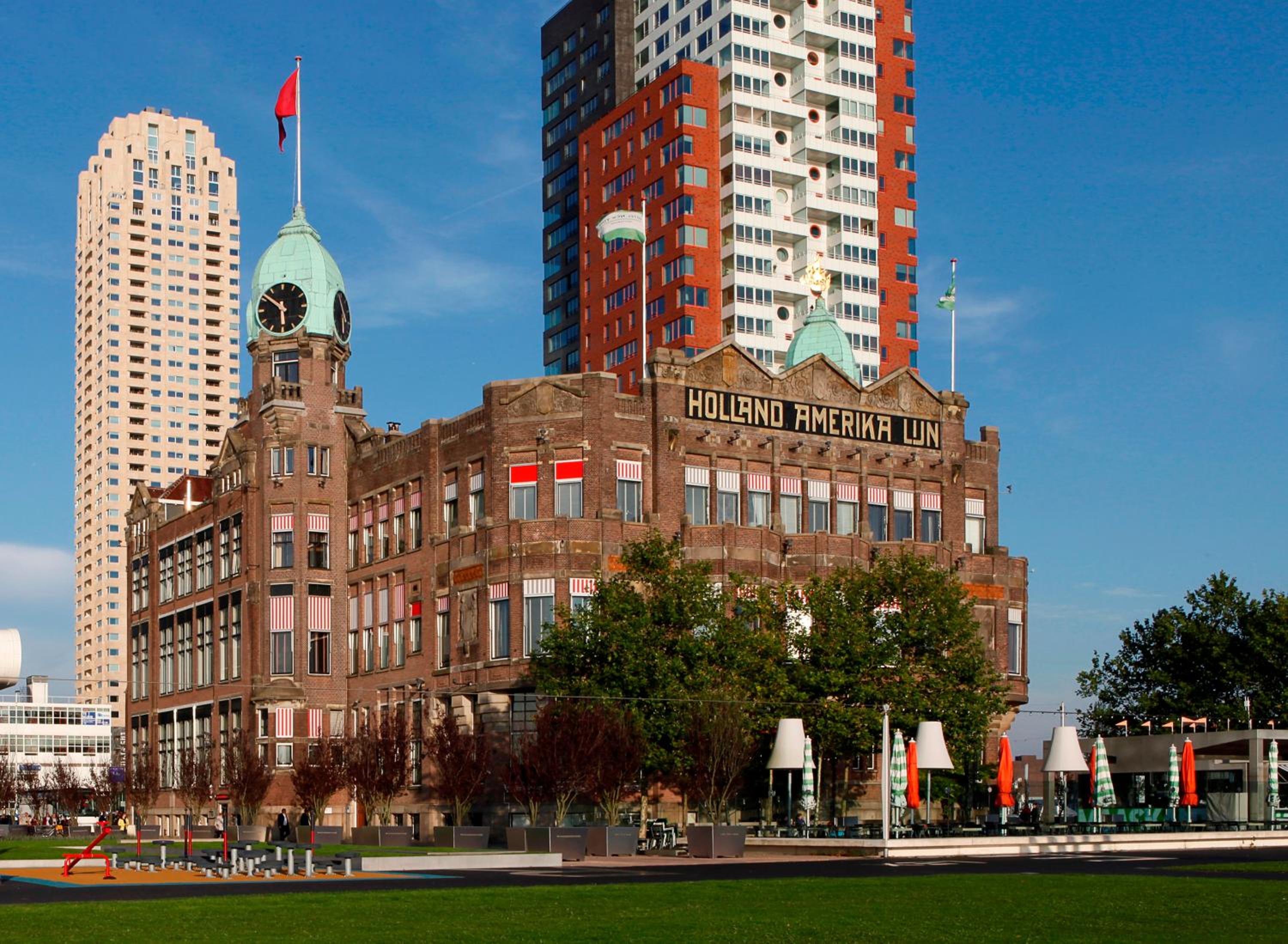
De Rotterdam, Hotel New York in the old Holland-America office and the Erasmus Bridge walk back into town, across the river from the centre. For architecture.
The skyline at the door and the bridge walk, but a water taxi or a tram to the centre.
Katendrecht
The food peninsula
The former docks turned the city's eating district, with Fenix, the photography museum and the Fenix Food Factory, across the Rijnhaven bridge. For repeat visitors.
The food hall and the museums, and a footbridge to the towers, though a way from the core.
Delfshaven
The pre-war survivor
Crooked seventeenth-century houses along a working harbour, the one district the bombing missed, with a brewery, quiet before eleven. For history.
The canals and gables the rest of the city lost, but a tram ride from everything else.
Rotterdam Noord
The independent side
Residential and independent, with Station Bergweg, the Hofbogen arches turned into bars and shops, and prices below the centre. For value.
Cheaper rooms and the best independent food, and ten minutes on the tram to the centre.
See every Rotterdam neighbourhood on one map
Save the areas you like and Stippl plots your days so you're not crossing the city twice.
Where to stay in Rotterdam
All the international chains are here and the character is in the conversions: a hotel inside the De Rotterdam tower, the former Holland-America Line head office, a hotel ship and a floating cabin, with the centre for convenience and Kop van Zuid for the view. Most travellers give Rotterdam 1 night on Stippl, and the rooms cost well under Amsterdam's on every line.
Centrum and Stadsdriehoek
Chains, design hotels and hostels around Blaak and Centraal, €40 to €200 a night.
Cool District and Witte de Withstraat
Boutique hotels and a few hostels on the strip, €60 to €180 a night.
Kop van Zuid
€120–230
Tower hotels and the Holland-America conversion on the water, €110 to €300 a night.
Katendrecht
€100–190
Loft hotels and the hotel ship in the old docks, €80 to €220 a night.
Delfshaven
€90–170
A handful of small hotels and guesthouses on the harbour, €70 to €160 a night.
Rotterdam Noord
€85–160
Apartments and budget hotels by the arches, €50 to €140 a night.


What to eat in Rotterdam
Fries, shawarma, melted cheese and salad in a foil tray, invented in Rotterdam
Crumbed, deep-fried beef ragout balls with mustard
Flatbread with curried chicken, potato and long bean, from the Surinamese community
Battered fried white fish with garlic sauce, from a stall
Two thin waffles pressed around caramel syrup
Filled pastry and sesame bread rings, from the Turkish community
Discover food spots in Stippl
Find restaurants and markets on the map, save them to your itinerary, works offline too.
Rotterdam customs and what not to do
Say what you mean
The city's self-image is blunt and practical, and directness is read as respect rather than rudeness, even more than elsewhere in the country.
The rivalry is a dialling code
010 is Rotterdam and 020 is Amsterdam, the comparison is a local sport, and agreement is not on offer.
The cubes are homes
Thirty-eight of the Cube Houses are people's houses and only one is open, so the balconies are not photographed from below.
A working city, not a museum
The city presents itself as the place that does the work, and it is noticeably proud of the absence of tourists.
Look up
The whole case rests on the buildings and almost all of it is above eye level, so the walk is slower than the map suggests.
Do
- Book Station Bergweg and any well-known restaurant ahead; walking in does not work
- Take the water taxi at least once; it is transport and it is fast
- Say what you mean; directness is read as respect
- Look up; the city's case is above eye level
Don't
- Treat the Cube Houses as a museum complex; only one is open
- Compare it to Amsterdam out loud and expect agreement
- Plan a Boijmans visit; the museum is closed for years and the Depot is the answer
What a Rotterdam trip costs
Budget
€55–85
A hostel dorm, the city card, the Markthal and street food, and the free architecture.
Mid-range
€90–140
A modest double room shared, a sit-down meal a day and two paid attractions.
High-end
€200+
A waterfront or design hotel, restaurant dinners and a harbour cruise.
Track what you actually spend
Set a daily budget per country and log expenses in any currency while you travel.
Fun facts about Rotterdam
The Markthal's ceiling is the largest artwork in the Netherlands. And the arch it covers contains 228 apartments, whose kitchen windows look down onto the food stalls.
The Witte Huis of 1898 was Europe's first steel-framed high-rise. At 43 metres the tallest building in Europe when built, and it survived the bombing that destroyed everything around it.
The Luchtsingel is a 390-metre yellow pedestrian bridge paid for by the public. People bought individual planks at 25 euros each and had their names put on them.
The Zalmhaven tower reached 215 metres in 2021, the tallest building in the Netherlands. It broke the Benelux record, and its bar on the fifty-seventh floor is the newer view of the city.
Three marathon world records have been set on the Rotterdam course. In 1985, 1988 and 1998, on a flat April route that starts and finishes on the Coolsingel.
26.2% of the trips carrying Rotterdam on Stippl stay inside the Netherlands. More than double the national rate, because the city is added to a Dutch trip rather than a European one.
Local tips for Rotterdam
The network is metro-led
Public transport is run by RET and led by the metro rather than Amsterdam's trams, with the trams, buses and ferries filling in between the stations.
The city card is the ticket
One card is the transport pass and the discount card in one, with unlimited public transport and at least a quarter off more than fifty attractions.
The water taxi is transport
The yellow boats cross the Maas on demand, they are fast, and they are the local answer to getting between the centre and the south bank.
Cycling is calmer here
The post-war street grid was built wide, so riding is easier than in Amsterdam, with the same warning about lanes and tram tracks plus a metro and fast roads.
No district to avoid
Rotterdam is a normal large European city, and the realistic loss is a phone or a bike rather than personal safety.
One night, and a short lead
58.8% of Stippl stops here are a single night and 18.1% are planned inside a fortnight, because the city is added late to an Amsterdam trip.
Rotterdam questions, answered
Two nights covers Blaak, the Depot and the waterfront, and three makes it a base for Delft, The Hague and Kinderdijk, though most travellers give Rotterdam 1 night on Stippl and 58.8% of stops are exactly that, because it is reached from Amsterdam and left the next day.
No. The museum has been closed for years and its own site gives the end of the decade for reopening, and what is open is the Depot next door, which holds the entire collection in fourteen storage compartments at five climates plus a roof garden, and is worth the visit on its own.
Yes, on every line: rooms, a budget meal, transport and the tourist tax, which is about half of Amsterdam's rate. 26.2% of Rotterdam trips on Stippl stay inside the Netherlands, more than double the national rate, and the saving is part of why the city is chosen as a base.
It is the standard second Dutch city and nothing like the first, and only 27.82% of the trips carrying Rotterdam carry no other Dutch stop, of everyone who plans it on Stippl, so most people do both. Put it into Stippl as the two nights after Amsterdam, then ask people who did the same in subreddits like r/Rotterdam what they would have skipped.
By waterbus, in well under an hour from the Erasmus Bridge pier, and a bike goes aboard. The nineteen windmills are free to walk among and ticketed to enter, and the return is the same boat or a cycle back along the river.
The Euromast at a hundred and eighty-five metres is the classic, with a glass floor and the abseil, and the bar on the fifty-seventh floor of the Zalmhaven tower, the tallest building in the country, is the newer one. The Erasmus Bridge at night is the free answer.
Every guide is written by the Stippl editors and checked against the trips our travellers actually plan. Spotted something out of date? Let us know.

Plan Rotterdam in Stippl
Day-by-day planning, stays and budget in one app, with every place from this guide already on the map.
Download the app