

Paraty
Paraty is the best-preserved colonial centre on the Brazilian coast, a UNESCO gastronomy city with seafood straight out of the bay and a cachaça tradition older than the country. Brazil's only fjord is a boat ride away.
Paraty in a nutshell
Paraty: what to expect
Our travellers have planned 71,000+ stops in Brazil on Stippl. That is where the numbers here come from.
Paraty survived because it was forgotten. Founded in 1667 as the sea end of the gold route from Minas Gerais, it was abandoned when the port moved to Rio, and the colonial centre stayed exactly as it was. The streets are car-free, paved in large rounded stones, and they flood at spring tides by design so the sea washes them clean. The town built four churches, one each for the rich, for women, for free people of colour and for the enslaved, and Santa Rita dates from 1722.
The longest Brazilian itineraries and the most domestic ones are the same trips, and Paraty is on both. Trips carrying it hold nearly twice the Brazilian stops of the national picture, and more of them stay inside the country than at any comparable destination: length and border-crossing turn out to be separate things. Three quarters of Paraty trips also carry Ilha Grande, which makes sense, because the two are one UNESCO property.
3 nights is what almost everyone plans, and the range barely moves. Two thirds of the stays here are two or three nights and nineteen in twenty are four or fewer, the tightest distribution we have measured anywhere. Take the schooner out into the bay and the jeep up to Cachoeira do Tobogã and an alembic. Skip Paraty if uneven ground is a problem for you, because the cobbles are boulders and the centre offers no alternative surface.
Plan Paraty in Stippl
Day-by-day planning, stays and budget in one app, with every place from this guide already on the map.
Download the appWho Paraty is for
Colonial-centre people
Paraty's is the best-preserved on the Brazilian coast, and it is the whole reason the town is on the map.
Eaters
A UNESCO Creative City of Gastronomy, seafood straight out of the bay, and a cachaça tradition older than the country.
Anyone doing Ilha Grande too
Three quarters of Paraty trips carry the island, and most give the town 3 nights before or after.
Walkers and jeep-tour takers
The Gold Trail, the waterfalls and Serra da Bocaina are all half-day trips out of town.
Maybe not for you: anyone planning a week, since half of everyone plans two or three nights and almost nobody plans more than four; anyone who cannot manage uneven ground, because the cobbles are rounded boulders; and beach holidays, as the bay and the islands are the water.
The best time to visit Paraty
Wet summer
December to March
Hot, humid and very wet, with the town at its most expensive and the cobbles flooded at spring tide. Carnaval's Bloco da Lama, the mud parade, is the local version.
Dry winter
June to September
Cooler, clearer and dry by local standards, with the walking trails to the beaches open and FLIP, the literary festival, filling the town for a week in July. The best time to be here.
- January is the month most travellers plan Brazil for on Stippl, and Paraty is planned about 94 days ahead. 13.9% of Paraty plans are made inside a fortnight, which works outside FLIP and the summer holidays and not in them.
- FLIP in July fills every pousada in the historic centre. The literary festival runs for a long weekend and the town is booked by the spring; the beaches are still empty that week, the streets are not.
- The historic centre floods on the spring tides by design. The streets were built to let the sea in and wash them; on a full-moon high tide the lower streets are under water for an hour, which is a photograph, not a problem.
- The boat trips to the islands and beaches run all year and stop for the weather. A rainy summer afternoon cancels the schooners; the mornings are the safer booking in the wet months.
Add your Paraty dates and we'll flag the weather
Stippl shows the season, crowds and prices for every stop on your route.
Describe your trip, get a Paraty itinerary in seconds
Everything in this guide is already in Stippl. Tell the planner how long you have and what you like: it builds the route, the days and the travel times, and you edit whatever you want.
Things to do in Paraty
The Centro Histórico at high water
Walk the cobbled streets at a spring-tide high water, when the sea comes in by design and the buildings double in the water. Free, and the tide table is on the tourist office door.
A schooner day on the bay
Take the schooner island to island with swimming and snorkelling stops and lunch aboard, about €20, from the pier at the edge of the old town. The morning departures have the flat water.
The waterfalls and the cachaça
Take the jeep tour to Cachoeira do Tobogã, where you slide down the rock, and finish at an alembic with a tasting, about €30. The rock slide is done sitting, whatever the locals do.
Saco do Mamanguá
Take a boat into Brazil's only fjord and climb the Pico do Pão de Açúcar, 425 metres above it, for the view back down the inlet, about €40 with the boat. A full day, and a guide for the climb.
The Caminho do Ouro
Walk the stone-paved colonial gold road up into the Serra da Bocaina as a half day, about €15 with the guide, or as a multi-day trek. The road the gold came down and the slaves went up.
Kayaking the mangroves
Paddle the bay and the mangrove channels from Praia do Pontal, about €10 an hour, best in the morning before the wind. The Jabaquara side is the quiet water.
The neighbourhoods of Paraty
Centro Histórico
Car-free grid, cobbles, churches
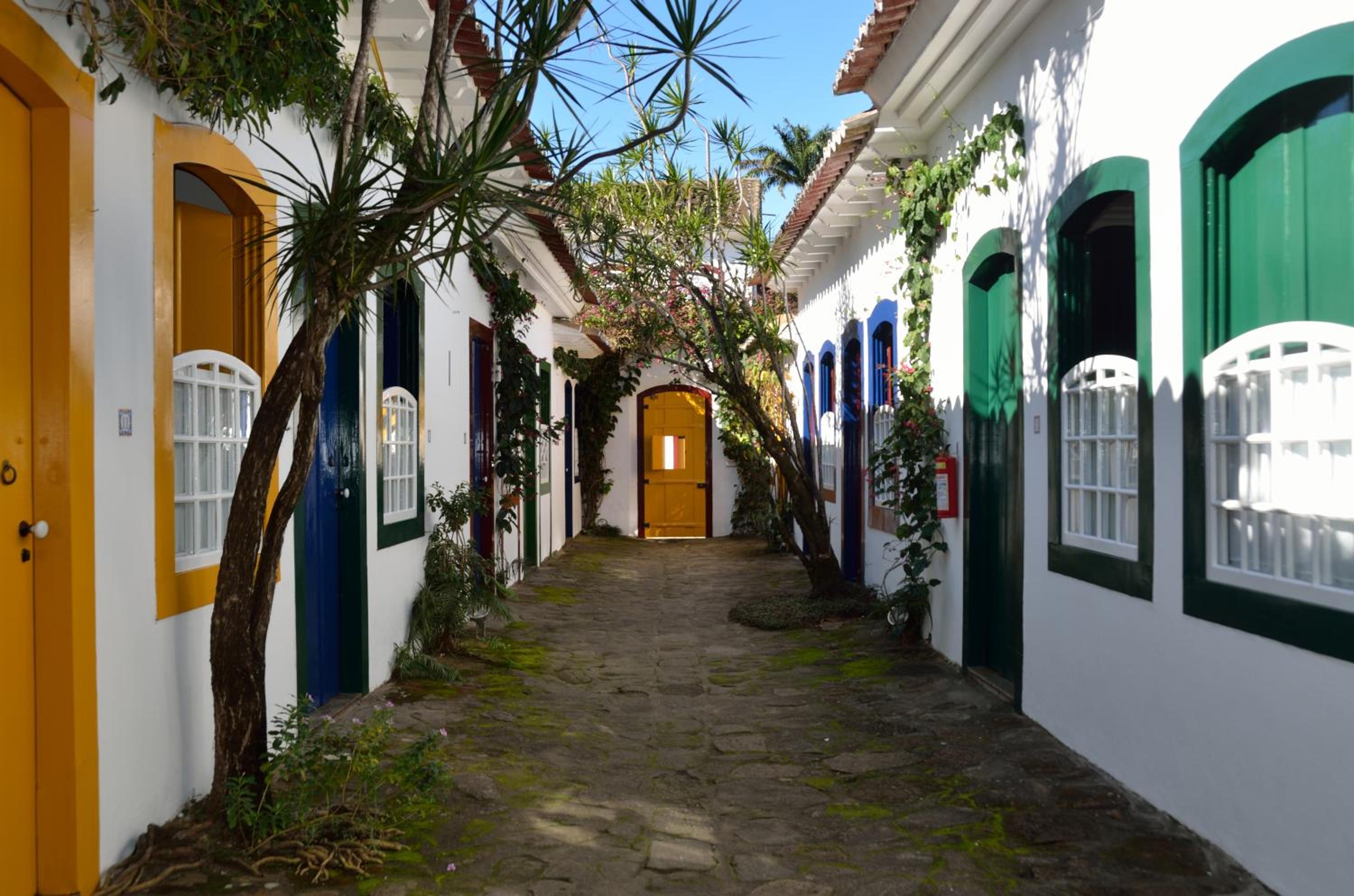
The car-free colonial grid: whitewashed houses with coloured shutters, four churches, the pier and every restaurant worth the trip, with pousadas in the old houses. For first visits; it floods at spring tide.
The prettiest streets on the coast from the door, and the cobbles and the tide.
The edge of the centre
Gardens, pools, easier walking
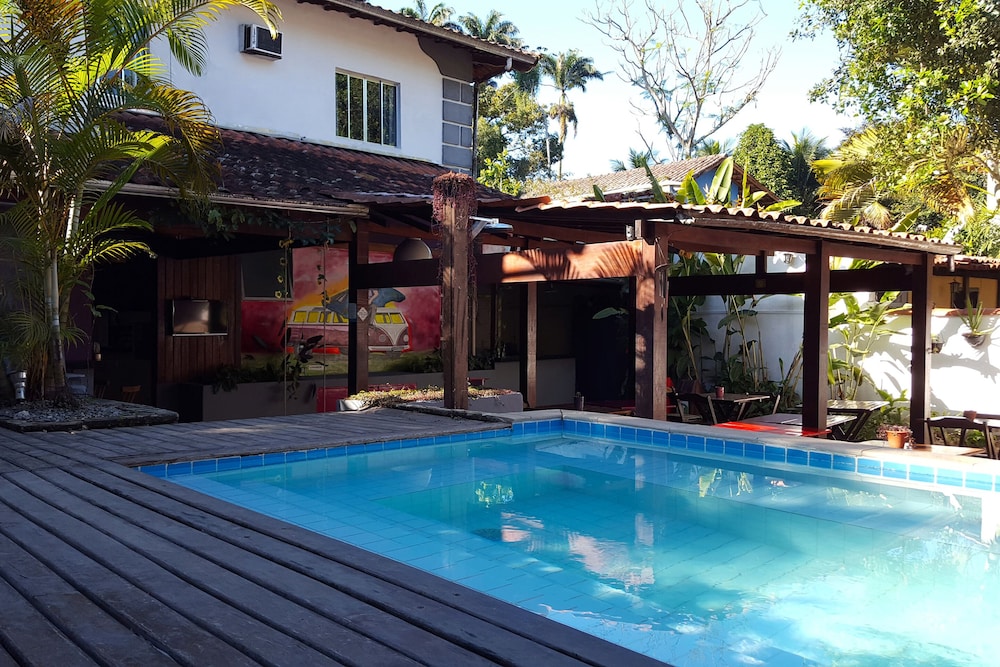
A few streets back from the cobbles: pousadas with gardens, pools and parking, easier walking, five minutes in. For families and comfort who want a car and a pool.
A pool and parking, and a walk to the old town.
Praia do Pontal
Town beach, beach bars
Across the river north of the centre: the town beach with the beach bars and the kayaks, and budget pousadas behind. For budget stays and the sunset from the bar.
The beach and the bars, and a bridge to cross for dinner.
Jabaquara
Calm, shallow, on foot
The second beach north again, still on foot from the centre, calmer and shallower with family pousadas. For families who want the water without a boat.
Calm water for children, and a twenty-minute walk to the centre.
The bay pousadas
Boat or road, quiet beaches
The bays south-east of town reached by road or boat, where the beach pousadas are, at Paraty-Mirim and beyond. For seclusion and for the beach at the door.
The bay beaches and quiet, and a boat or a drive for the town.
See every Paraty neighbourhood on one map
Save the areas you like and Stippl plots your days so you're not crossing the city twice.
Where to stay in Paraty
Stay in a pousada just outside the cobbles for a first visit: a garden, a pool, parking and easier walking for five minutes' extra distance, with the colonial centre and every restaurant a stroll away. Most people give Paraty 3 nights on Stippl. Book far ahead for FLIP week in July, for Carnival and for New Year.
Centro Histórico
Pousadas in colonial houses inside the car-free grid, €70 to €180, and a real hostel scene from €15 a bed.
The edge of the centre
Pousadas with gardens, pools and parking, €60 to €140, five minutes in on foot.
Praia do Pontal
Budget pousadas behind the town beach, €35 to €80, with the sunset from the bar.
Jabaquara
Family pousadas on the calmer second beach, €50 to €110, still walkable to the centre.
The bay pousadas
Beach pousadas reached by road or boat, €80 to €250, with the bay at the door.


What to eat in Paraty
Coconut-milk fish stew
Sugarcane spirit, distilled at six working artisanal alembics
Discover food spots in Stippl
Find restaurants and markets on the map, save them to your itinerary, works offline too.
Paraty customs and what not to do
The churches were segregated
Each was built for a class or a colour, and the guides tell it that way rather than glossing it; Santa Rita was for freed mixed-race people, Rosário for the enslaved.
Enslaved people built the road
The stone road above the town, the Caminho do Ouro, is their work; the walk up it with a guide is the history, and the waterfall jump is the postcard.
People live inside the listing
Caiçara, Quilombola and indigenous communities do and are part of why it was listed; the cachaça alambiques and the Guarani village visits are on their terms.
Nobody walks fast in Paraty
The cobbles decide the pace and the tide floods the streets at full moon; evenings are live music on terraces, not clubs, and the town is quiet by midnight.
Do
- Walk the historic centre at high tide for the flooded streets
- Take a schooner or a guided kayak for the bay
- Visit an alambique and buy the cachaça there
- Wear flat shoes with grip; the cobbles are rounded stone
Don't
- Drive into the historic centre; it is closed to cars
- Photograph the church interiors during mass
- Expect a beach in town; the beaches are by boat
- Plan a Monday around the churches; most are closed
What a Paraty trip costs
Budget
€39
Hostel dorm, prato feito or marmitex set plates, city buses and the occasional overnight coach, free beaches and free blocos.
Mid-range
€105
A pousada double with breakfast and air conditioning, restaurant meals, Ubers, one or two domestic flights, paid attractions.
High-end
€340
Beachfront hotels, private guides, a Pantanal lodge with full board and boat safaris, Noronha, camarote seats at Carnaval.
Track what you actually spend
Set a daily budget per country and log expenses in any currency while you travel.
Fun facts about Paraty
Paraty holds two separate UNESCO designations. World Heritage since 2019, shared with Ilha Grande, and Creative City of Gastronomy, for a town of about forty thousand people.
The historic centre was built to flood. It sits below the spring-tide line so the sea washes it clean at every full and new moon, and raised kerbs are how people cross.
Parati was once Brazilian shorthand for good cachaça. More than 250 colonial mills produced it here, and six artisanal alembics still work in the hills behind the town.
Paraty gets 3,407 mm of rain a year, nearly three times Rio's. January alone delivers 43% of Rio's annual total, which is why the waterfalls behind the town run all summer.
Brazil's only fjord is a boat ride from the pier. Saco do Mamanguá is an 8 km inlet between mountains, with a Caiçara village at its head and no road to it.
Paraty survived because it was abandoned. When the gold route was replaced and the port moved to Rio, the town was forgotten, and the colonial centre was left untouched until the 1950s.
The churches were segregated by class and colour. Separate churches were built for the wealthy, for women, for free people of colour and for the enslaved; Santa Rita, from 1722, is the oldest.
Local tips for Paraty
The coast road is the point
Both approaches end on the Rio to Santos road through the Atlantic Forest, four hours from either city. The bus is about €15; a car makes the beaches north and south reachable.
The hinge between two cities
Paraty sits almost exactly between Rio and São Paulo, which is why it is on so many routes. Angra, ninety minutes away, is the door to Ilha Grande; three quarters of Paraty travellers go on.
The town needs no transport
The centre is car-free and both beaches are walkable; the schooners leave from the pier at the edge of the old town. Leave the car at the guesthouse.
How long to stay
Most people give Paraty 3 nights on Stippl: the old town, a schooner day and the waterfalls with the cachaça. Book three months out; the town is small.
The cobbles are the hazard
Large, rounded, uneven and slippery when wet, and the streets flood on the spring tides by design. Proper shoes, not flip-flops.
Use indoor ATMs before ten
Most stop dispensing around ten at night. The town is comfortable to walk after dark, which is not what the same guides say about Rio or São Paulo.
Paraty questions, answered
As a pair with Ilha Grande, because most people do. Paraty carries 6.9% of everything planned in Brazil on Stippl, and Angra dos Reis, the ferry port for the island, is ninety minutes up the road. Put both into Stippl as one Costa Verde block out of Rio de Janeiro.
Three nights. 3 nights is the normal stay in the Paraty stops planned on Stippl, and the spread around it is tight. One day for the historic centre and the cachaca distilleries, one for a schooner around the bay, one for a waterfall or a beach.
A stay. Just 17.7% of the Paraty stops on Stippl come to one night, because the town is four hours from Rio de Janeiro and the best part of it, the bay and its islands, needs a boat day of its own. One night gets you a cobbled evening and nothing more.
Yes, on the full and new moon high tides, and it is by design. The colonial centre was laid out so the sea would run up the streets and wash them clean, and it still does exactly that. Check a tide table if you have a suitcase to wheel, and enjoy it if you do not.
Not really, and people do arrive expecting one. The town beaches are ordinary. What you come for is the bay: a scatter of islands, coves and clear water reached on a schooner or a small boat, and every beach worth the trip is a crossing away from the town.
Seafood, and moqueca above all, a fish stew of coconut milk, palm oil and coriander served in a clay pot. Then cachaca, because the town has working alembics you can visit and taste at, and what they make bears no relation to the stuff in a cheap caipirinha.
Every guide is written by the Stippl editors and checked against the trips our travellers actually plan. Spotted something out of date? Let us know.

Plan Paraty in Stippl
Day-by-day planning, stays and budget in one app, with every place from this guide already on the map.
Download the app