

Kanchanaburi
Kanchanaburi is the best-presented Second World War site in Southeast Asia, a morning from Bangkok at mainland prices. Ride the surviving railway along the cliff, then swim the seven tiers of Erawan Falls.
Kanchanaburi in a nutshell
Kanchanaburi: what to expect
We counted 1,756,000+ planned stops across Thailand on Stippl before writing this.
Kanchanaburi is a war memorial and a waterfall, and they need a day each. The steel bridge over the Khwae Yai takes twenty minutes and is where everyone starts. What is worth the journey is the two-hour train ride on the surviving stretch of the Death Railway to Nam Tok, along cliff edges and across the Wang Po viaduct built into the rock face, and Hellfire Pass, where an audio guide of survivor testimony walks you through the deepest cutting on the line. Most travellers give the town 2 nights on Stippl.
A fifth of people give Kanchanaburi one night, and the sights are spread over seventy kilometres of valley. 20.7% of Kanchanaburi stops planned on Stippl are a single night, while most take two. One night means the bridge and the war cemetery in town, or Erawan, and not both, because the falls take most of a day on their own.
Two nights is the shape: one for the railway and one for the water. Erawan Falls climbs seven tiers over about two kilometres beside the river, easy as far as the fifth and a scramble above it, and you swim in them, so get through the gate well before it shuts. The war cemetery at Don-Rak holds 6,982 Allied prisoners in rows the Commonwealth War Graves Commission still keeps. A raft house on the river is the one bed here that is an experience rather than a place to sleep.
Plan Kanchanaburi in Stippl
Day-by-day planning, stays and budget in one app, with every place from this guide already on the map.
Download the appWho Kanchanaburi is for
History-minded travellers
The densest and best-presented Second World War site in Southeast Asia, with two serious museums, a war cemetery and a rock cutting the prisoners cut by hand.
Anyone fleeing Bangkok
River, hills and national park, reachable in a morning from the capital, and most people give it 2 nights.
Overlanders across the centre
Kanchanaburi slots naturally with Ayutthaya and Sukhothai into a road or rail loop that avoids the islands entirely.
Waterfall and swimming people
Erawan's seven tiers are made for it, and swimming in them is the point rather than a transgression.
Budget travellers
A mainland town with mainland prices, sharply cheaper than anywhere on the coast.
Maybe not for you: travellers who want a beach; anyone with a single day, since the sights are spread out; visitors in March to May planning to walk to Erawan's top tier; and anyone hoping to see captive tigers, because that industry was shut down here for good.
The best time to visit Kanchanaburi
Cool and dry
November to February
Comfortable walking, waterfalls still carrying wet-season water, and the busiest weekends, because Thai visitors come too.
Hot
March to May
Inland central Thailand at its most extreme, the one time the Erawan walk turns punishing, and the falls run thinner before the rains.
Wet
June to October
Afternoon rain rather than all-day, the waterfalls at their fullest and the crowds at their thinnest, at the cost of slippery trails.
- Nothing here closes for the monsoon, unlike the islands. Kanchanaburi's seasons are about heat and water volume, not whether you can travel; the wet months are the ones with the falls at full flow.
- Erawan's upper tiers close after heavy rain, and the gate closes to new entries at 15:30 in every season. Arrive by noon to climb past tier five, and expect the top to be shut for a day or two after a storm.
- Kanchanaburi is planned about 92 days ahead on Stippl, longer than Thailand as a whole. It sits on the road or rail loop with Ayutthaya and Sukhothai, which people fix early.
- Anzac Day, 25 April, brings a dawn service to Hellfire Pass and fills the town. One of the two places outside Australia and New Zealand where the commemoration draws real numbers; book around it or for it.
- The River Kwai Bridge Week in late November to early December is the town's one large event. A sound-and-light festival at the bridge with special trains, and the riverside rooms go for it.
Add your Kanchanaburi dates and we'll flag the weather
Stippl shows the season, crowds and prices for every stop on your route.
Describe your trip, get a Kanchanaburi itinerary in seconds
Everything in this guide is already in Stippl. Tell the planner how long you have and what you like: it builds the route, the days and the travel times, and you edit whatever you want.
Things to do in Kanchanaburi
 Photo by Kirandeep Singh Walia via Pexels
 Photo by Evan Krause via Unsplash
The bridge over the Khwae Yai
Walk the steel spans the prisoners built, two of them post-war replacements after Allied bombing. Everyone starts here, it takes twenty minutes, and the train crosses it slowly enough to step aside.
The Death Railway to Nam Tok
Ride two hours on the surviving section, along the cliff edge and across the Wang Po viaduct built into the rock face, for about €3 in third class. The single most recommended thing here; sit on the left going out.
Hellfire Pass
Walk the deepest rock cutting on the line with the audio guide of survivor testimony from the Australian-funded museum above it, free and about ninety minutes. It is an hour from town and the best museum most visitors see in Thailand.
The war cemetery
Stand among the 6,982 Allied graves at Don Rak, mostly British, Australian and Dutch, in rows kept by the Commonwealth War Graves Commission. Free, in the middle of town, and quiet at any hour.
Erawan Falls, all seven tiers
Climb one and a half to two kilometres beside the water, easy to tier five and a scramble above it, and swim in the pools. About €8, an hour and a half from town by bus, and most of a day.
A night on a raft house
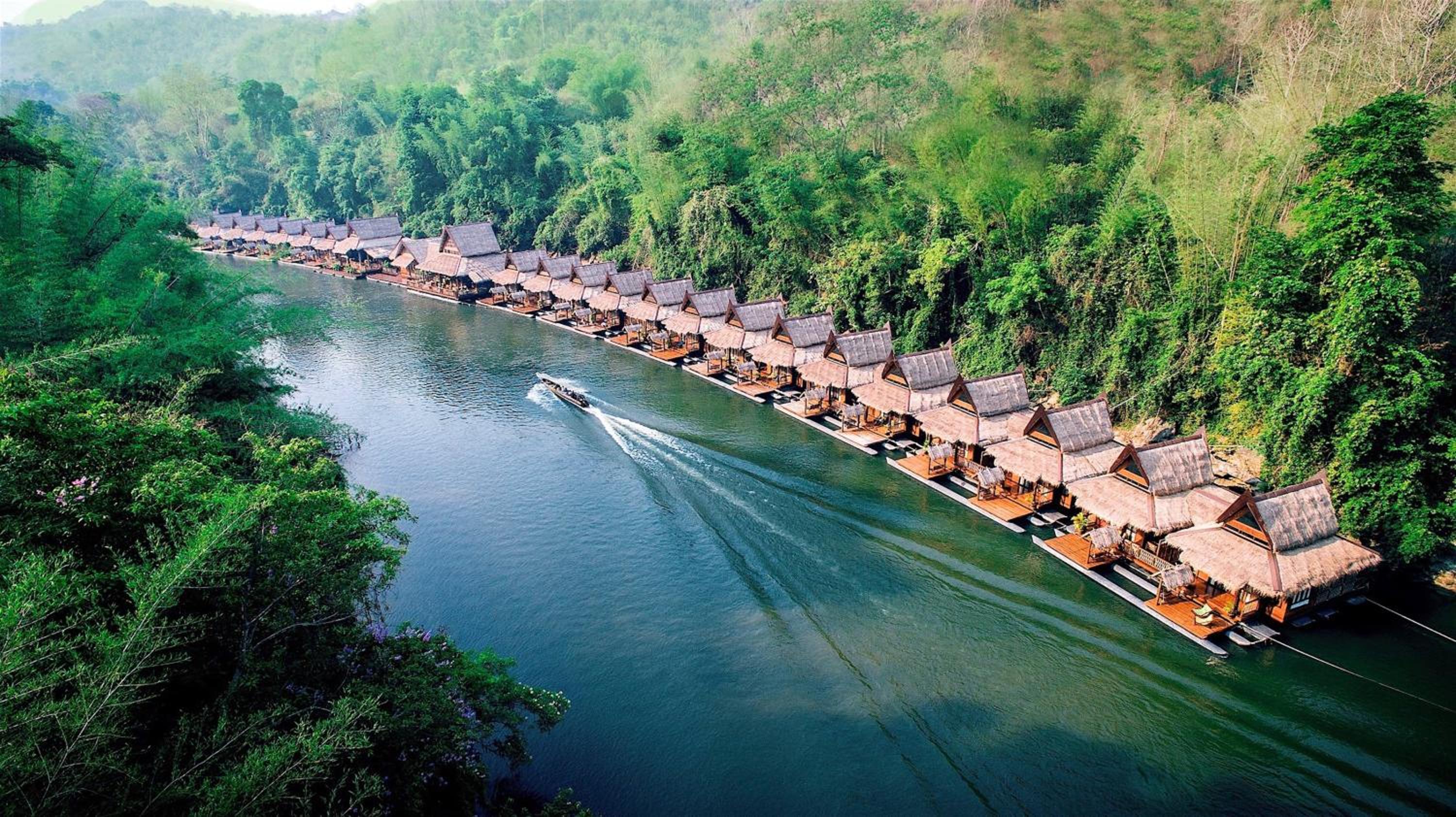
Sleep on a floating raft house on the river or the reservoir upstream, the one form of accommodation here that is an experience rather than a bed. From about €30 a night with meals; the ones without electricity are the point.
The neighbourhoods of Kanchanaburi
The riverfront
Guesthouses, raft houses, bars
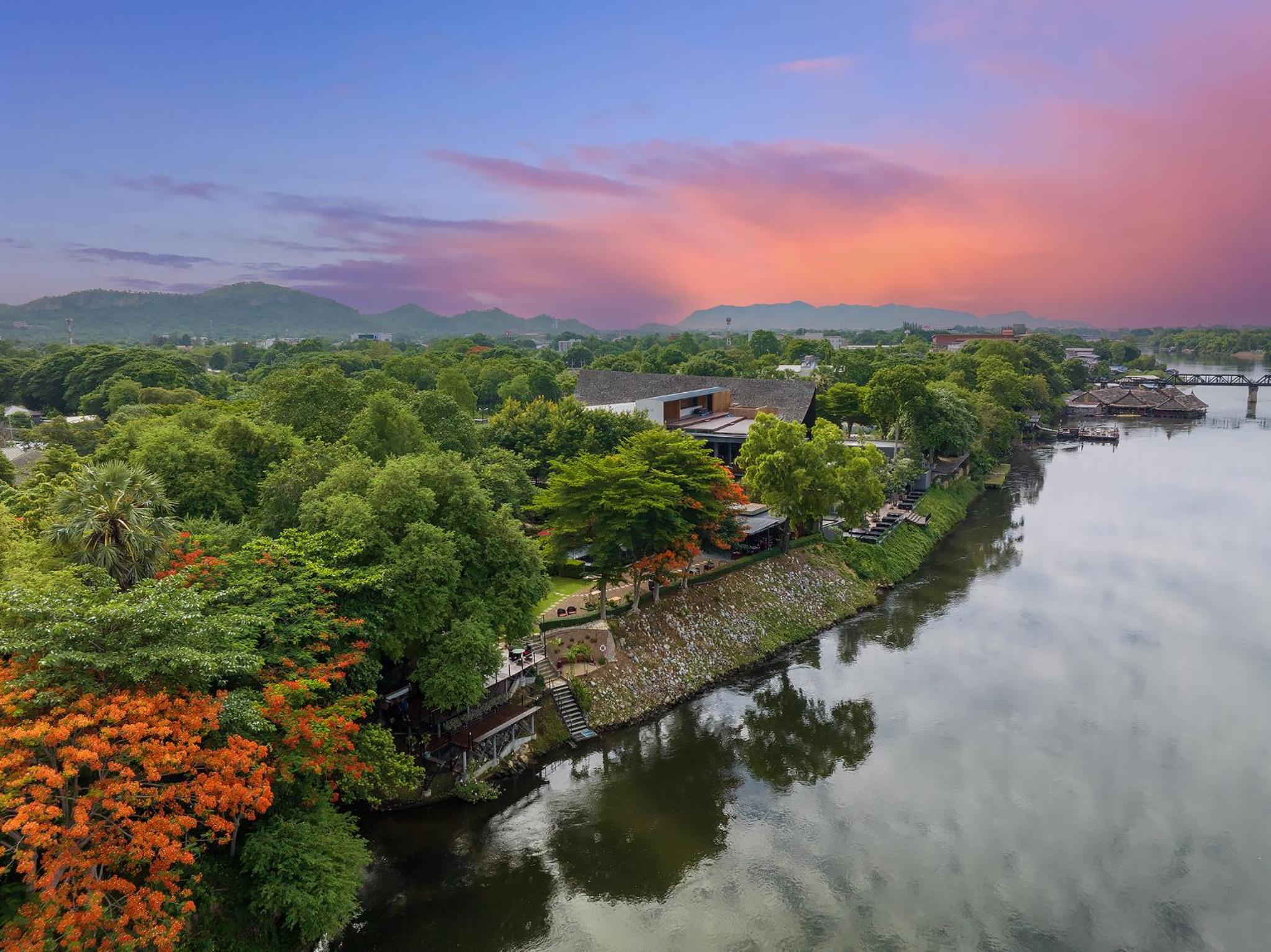
The traveller strip along Mae Nam Khwae road: guesthouses with raft-house frontages, bars, tour desks and the bridge within walking distance. For first visits and backpackers; it is where almost everyone sleeps.
Everything walkable and the river under your room, and floating discos on weekends.
Around the bridge
Busy by day, dead by night
The northern end built around the bridge itself, the Death Railway station and the souvenir rows. For a night close to the trains and the museums, and for anyone leaving on the morning service to Nam Tok.
The bridge and the train at the door, and nothing open after the tour buses leave.
Kanchanaburi town
Markets, museums, stations
The practical side: the bus and train stations, the markets, the war museums and the Commonwealth cemetery, a kilometre from the river strip. For history-led visits and for anyone who wants a Thai town rather than a traveller one.
The serious sites on foot, and a tuk-tuk to the river for the evening.
Upriver
Raft houses, waterfalls, silence
Raft houses and resorts an hour or more west along the river, near Erawan and Sai Yok and without much else around them. For couples and families who want the parks at the door and a night off the grid.
Erawan before the crowds and a night on the water, and nothing to do after dark.
See every Kanchanaburi neighbourhood on one map
Save the areas you like and Stippl plots your days so you're not crossing the city twice.
Where to stay in Kanchanaburi
Stay on the riverfront, on Mae Nam Khwae road, in a guesthouse with a raft-house frontage: the bridge, the bars and the tour desks are all a walk away. Most people give Kanchanaburi 2 nights on Stippl, one for the town and one for Erawan. Book ahead for Anzac Day in April and the November bridge festival; both fill the town.
The riverfront
Guesthouses and hostels on the water, dorms €5 to €10, raft rooms and doubles €15 to €45.
Around the bridge
Small hotels and guesthouses close to the trains, €20 to €50, quiet once the souvenir rows shut.
Kanchanaburi town
Plain hotels and family guesthouses near the stations, €12 to €35, a kilometre from the river.
Upriver
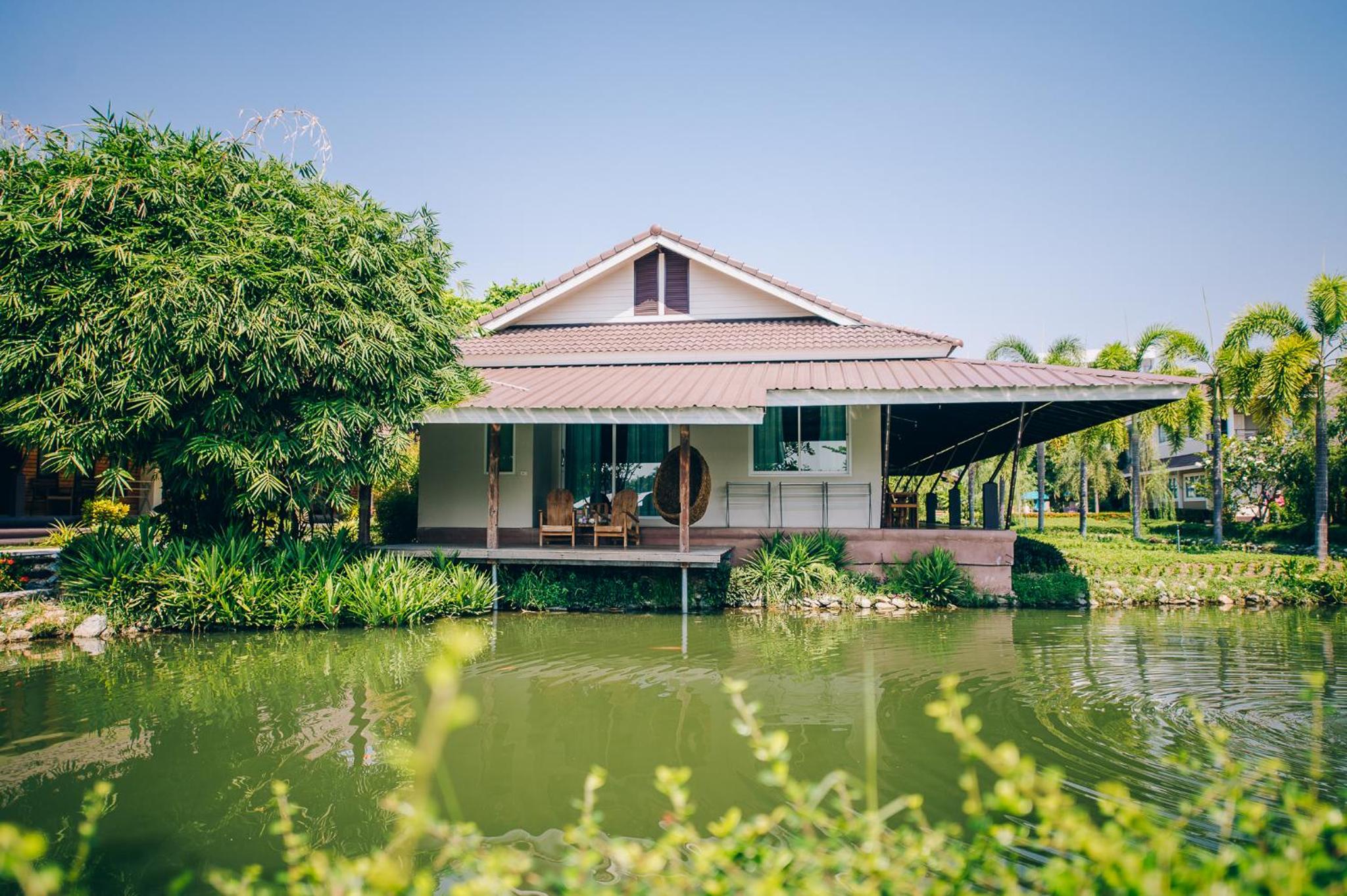
Floating raft houses, some without electricity, and river resorts, €40 to €150, near Erawan and Sai Yok.


What to eat in Kanchanaburi
Coconut-and-galangal chicken soup, milder than tom yum
Snakehead fish from the river, grilled or in curry, the local freshwater catch
Sour orange curry, a central-plains staple
Burmese-influenced cooking in the Mon community up north, distinct from central Thai
Discover food spots in Stippl
Find restaurants and markets on the map, save them to your itinerary, works offline too.
Kanchanaburi customs and what not to do
The war cemeteries are graves
The Commonwealth cemetery is an active place of remembrance where families still come; walk the paths, keep your voice down and do not pose on or over the headstones.
The Mon are their own people
The community around Sangkhlaburi has its own language, dress and Burmese-influenced Buddhism, and the dawn alms-giving there is a working ritual, not a show.
Japanese visitors come too
The museums are careful about the two sides of the railway's story, for their own reasons, and a visitor should be as careful in what they say out loud there.
Erawan closes its gate at 15:30
The seventh tier is a real climb: start early, carry your own water up and keep your bag closed on the trail, because the monkeys are practised.
Do
- Dress and behave at the cemeteries as you would at home
- Take the audio guide at Hellfire Pass; the walk means something different with it
- Carry cash for the park gate and start Erawan early
- Carry your own water up the falls
Don't
- Photograph yourself on or over the graves
- Leave a bag unattended on the Erawan trail
- Try the seventh tier in flip-flops, or in April
- Seek out captive-tiger attractions
What a Kanchanaburi trip costs
Budget
€15–25
Riverfront hostel or fan room, market and local food, bicycle, the town sights.
Mid-range
€40–70
Guesthouse or hotel with pool, restaurant meals, a scooter, Erawan by bus.
High-end
€100+
A raft house upriver with dinner and transfers, or a private car for the valley.
Track what you actually spend
Set a daily budget per country and log expenses in any currency while you travel.
Fun facts about Kanchanaburi
The river was renamed to match the film. Tourists arrived looking for the Kwai, and the stretch the bridge crosses, until then the Mae Klong, was redesignated Khwae Yai.
Two of the bridge's spans are angular replacements from 1945. Allied bombing took out the originals, and the curved spans either side of them are the ones the prisoners built.
The railway's death toll is often rendered as one death per sleeper laid. The memorial museums put the total above 100,000, of whom about 12,000 were Allied prisoners of war and the rest conscripted Asian labourers.
The Mon bridge at Sangkhlaburi is the longest handmade wooden bridge in Thailand. About 400 metres of teak across the reservoir, rebuilt by the village after floods took the middle out in 2013.
A submerged temple still breaks the surface of the Vajiralongkorn reservoir. The 1980s dam drowned it, and when the water drops in the dry season the tower reappears.
The steel bridge was the only one on the Thai section of the line. The rest of the railway's bridges were timber, which is why this one became the symbol and the film's subject.
Local tips for Kanchanaburi
The train is the point
The Bangkok service is slow and about three hours; the leg on to Nam Tok runs on the original Death Railway alignment and is the reason to take it. Arrive by minivan, ride from here.
In town you need wheels
The war cemetery, the museums and the bridge are spread across town rather than clustered. A bicycle for about €1.50 or a scooter for about €6 a day is the normal solution.
The valley is a day trip
Erawan, Hellfire Pass and Sai Yok are each a day out by bus, scooter, car or tour. The hourly Erawan bus is the only useful public option; check the last one back.
How long to stay
Most people give Kanchanaburi 2 nights on Stippl: the bridge, the cemetery and the railway on one day, Erawan or Hellfire Pass on the next.
Heat is the hazard
The province sits inland in the hottest part of Thailand, and the Erawan walk is a two-kilometre climb in humidity with no water sold past the entrance. Carry it, and go up before ten.
The top two tiers scramble
Levels one to five at Erawan are easy; six and seven are wet limestone with hands. The gate enforces the half past three cut-off and the trails close after heavy rain.
Kanchanaburi questions, answered
As two nights on the way somewhere rather than a return trip out of the capital. The train from Thonburi takes a few hours and the sights sit along a valley west of town rather than in it. Lay the days out in Stippl around the Erawan gate times. Then ask people who have ridden the line, in subreddits like r/ThailandTourism.
Badly. Only 3.83% of Kanchanaburi stops planned on Stippl carry no night, and the reason so few try is the geography: the war sites and Erawan Falls sit at opposite ends of seventy kilometres of valley. A day gets you the bridge and the cemetery, and nothing west of them.
The line Allied prisoners and conscripted labourers were forced to build during the war, of which one section still runs. Trains take about two hours from town to Nam Tok along cliff edges and over the Wang Po viaduct, cut into the rock face. Trips that include Kanchanaburi run 24 days on Stippl.
That it is a climb, that you swim in it, and that the gate shuts earlier than you expect. Seven tiers run about two kilometres up beside the river, easy to the fifth and a scramble above that. The gates close in the late afternoon with no entry in the last hour, and they take cash only.
On the river, and preferably on it. Raft houses are floating rooms tied to the bank and they are the one form of bed here that is an experience rather than a place to sleep. The town itself is small and walkable, and a bicycle or a scooter covers everything else in it.
Earlier than most of Thailand: travellers leave 92 days between planning a Kanchanaburi stop on Stippl and arriving, which is over three months. Raft houses are a small supply and the cool, dry window from November to February is short, so the two together push the decision forward.
Every guide is written by the Stippl editors and checked against the trips our travellers actually plan. Spotted something out of date? Let us know.

Plan Kanchanaburi in Stippl
Day-by-day planning, stays and budget in one app, with every place from this guide already on the map.
Download the app