

Ayutthaya
Ayutthaya is the densest field of Siamese ruins in Thailand, and you cycle it at first light with no gate and no tour in the way. Dorms from €7, and the train from Bangkok costs under a euro.
Ayutthaya in a nutshell
Ayutthaya: what to expect
This page is built on 1,756,000+ stops planned across Thailand on Stippl.
Ayutthaya is an old capital you see from a bicycle, and the hour you ride it matters more than which ticket you buy. The Buddha head grown into the strangler fig at Wat Mahathat is the image everyone comes for, the three chedis at Wat Phra Si Sanphet are the skyline of the central park, and Wat Chaiwatthanaram on the river is the one to keep back for the last hour of light. Most travellers give it 2 nights on Stippl.
Ayutthaya is written up as a Bangkok day trip and planned as an overnight. Only 13.25% of Ayutthaya stops planned on Stippl carry no night at all, while 44.3% carry one. Staying is what buys the two hours the coaches are not there, which is sunrise over the brick prangs and the ruins emptied out again in the evening.
One night is the version most people take and it is the right one. Arrive from Bangkok in the afternoon by train, hire a basket bike from the guesthouse, and ride the central park flat and early the next morning before the heat comes up. Keep the long-tail circuit of the island for the middle of the day, when river level is the coolest place to be, and carry on north from here rather than doubling back: 41.3% of travellers on Stippl go straight to Chiang Mai next.
Plan Ayutthaya in Stippl
Day-by-day planning, stays and budget in one app, with every place from this guide already on the map.
Download the appWho Ayutthaya is for
History buffs
The densest concentration of Siamese-era ruins in the country, with the whole story of capital, golden age, sack and abandonment still legible in the brick.
Cyclists and independents
Flat, compact, bikes from every guesthouse, and no gate or compulsory tour between you and the temples.
Budget travellers
Dorms from €7, a train from Bangkok for well under a euro, and several of the best sights free.
Day-trippers from Bangkok
Ayutthaya is the easiest big-reward escape from the capital, and most people who stay give it 2 nights rather than the day.
Photographers
Sunrise over the prangs, the Buddha head in the tree roots, and Wat Chaiwatthanaram at sunset are the three frames worth the timing.
Families with bike-happy kids
The ruins become a cycling outing, and children who are done with temples on foot tend to get a second wind on two wheels.
Maybe not for you: travellers already templed-out, since it is ruins upon ruins; nightlife seekers; and anyone visiting in the middle of the day in hot season without transport, because the heat between temples is the site's real filter.
The best time to visit Ayutthaya
Cool and dry
November to February
The season everyone points to: comfortable cycling, clear light on the brick, and peak coach traffic from Bangkok.
Hot
March to May
Mid-thirties and shadeless ruins; early morning and late afternoon stop being advice and become the only workable plan.
Rainy and flood watch
June to November
Afternoon downpours, then the Chao Phraya crest around mid-October that puts the riverside temples behind sandbags.
- Ayutthaya's riverside temples sit behind sandbags every September to November, and the 2011 floods submerged much of the historic city. In those months check the water level before a bike day, not the rain forecast.
- January is the month most travellers plan Ayutthaya for on Stippl, about 87 days ahead. Only 11.7% of plans are made inside a fortnight, less than the national rate; it is fixed early as the day out of Bangkok.
- Several major ruins are lit and open at night on Friday, Saturday, Sunday and public holidays, roughly 18:00 to 21:00. The overnighter's reward that day-trippers miss, and the coolest hour of the day to see them.
- Eight to ten in the morning beats both the heat and the tour buses. The coaches from Bangkok land from mid-morning; a guesthouse bike at first light has the park to itself.
Add your Ayutthaya dates and we'll flag the weather
Stippl shows the season, crowds and prices for every stop on your route.
Describe your trip, get a Ayutthaya itinerary in seconds
Everything in this guide is already in Stippl. Tell the planner how long you have and what you like: it builds the route, the days and the travel times, and you edit whatever you want.
Things to do in Ayutthaya
 Photo by Sergio García via Unsplash
 Photo by Rowan Heuvel via Unsplash
The ruins by bicycle at first light
Ride the flat streets between the brick prangs from seven, with a basket bike from the guesthouse and its temple map, before the heat and the coaches. The main temples charge about €1.30 each; a combined ticket is €6.
The Buddha head at Wat Mahathat
Find the sandstone head grown into a strangler fig's roots, Thailand's most photographed image, and then walk the full ruin field around it. Keep your head lower than the Buddha's for the photograph; the guards enforce it.
Wat Chaiwatthanaram at sunset
Go an hour before sundown to the riverside Khmer-style complex, the site's most beautiful, when the light comes across the water onto the prangs. About €1.30, and the opposite bank has the free view.
Wat Phra Si Sanphet
See the three bell-shaped chedis of the royal chapel inside the old palace grounds, the postcard skyline of the central park. About €1.30, and best in the first hour when the grass is still empty.
A longtail boat around the island
Take an hour's circuit of the river around the old city at eye level: stilt houses, washing jetties, fishermen and the waterside temples. About €15 for a private boat from the pier near the market, best in the late afternoon.
The reclining Buddhas
See the free thirty-seven-metre open-air giant at Wat Lokaya Sutha, sometimes draped in saffron, and the gold one inside working Wat Thammikarat. Both are on the western side of the island and on the bicycle loop.
The neighbourhoods of Ayutthaya
The island
Ruins between the guesthouses
The historical park woven through a living town: the headline ruins, the guesthouses, the night market and the bicycle rental, all inside the ring of rivers. For first visits and anyone cycling the ruins at dawn.
Wat Mahathat minutes from your bed, and a town that closes early.
Riverside west
Sunset ruins, flood edge
Wat Chaiwatthanaram's bank and Wat Phutthai Sawan across the water, the sunset side of the island and the edge that floods from September to November. For photographers and a quiet night with a river view.
The most beautiful ruin at sunset, and a bicycle ride to everything else.
Around the station
Cheap beds, early trains
The workaday strip across the Pa Sak river: cheap family guesthouses and a cross-river ferry to the island in two minutes. For budget travellers and anyone catching an early train or the Chiang Mai sleeper.
Steps from the platform, and a ferry to the ruins.
Off-island east
Golden Buddha, river prawns
Wat Yai Chai Mongkhon, Wat Phanan Choeng and the river-prawn restaurants along the bank, beyond comfortable cycling in the heat. For a car or a tuk-tuk day and for the lunch the town is known for.
The best temple and the best lunch, and a ride to reach either.
See every Ayutthaya neighbourhood on one map
Save the areas you like and Stippl plots your days so you're not crossing the city twice.
Where to stay in Ayutthaya
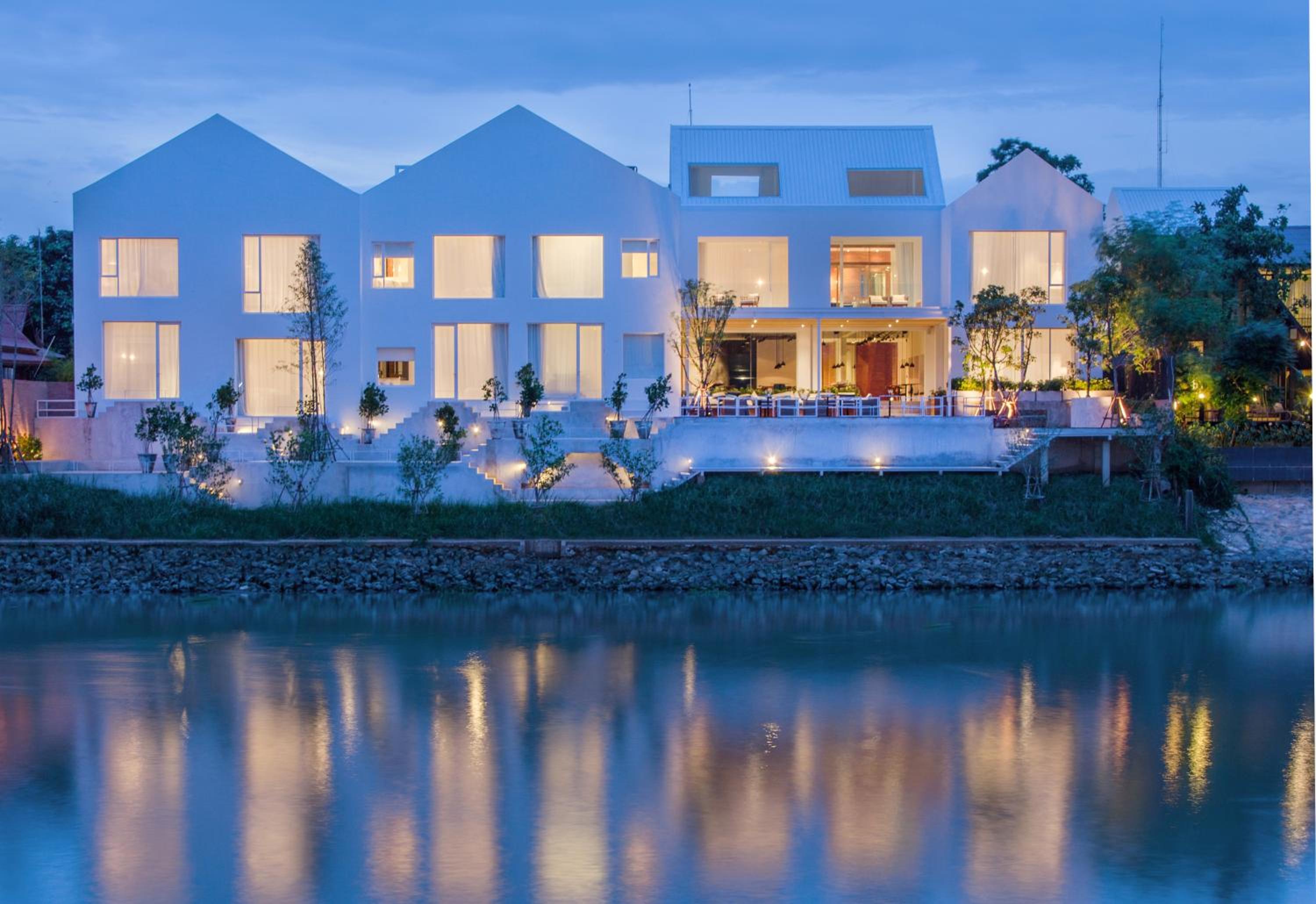
Sleep on the island. Any base inside the ring of rivers puts the main ruins within a bicycle ride, and most guesthouses lend or rent the bike. 44.3% of Ayutthaya stops planned on Stippl are a single night, which is enough for sunrise at the ruins before the Bangkok convoys arrive. Pick a place with a pool; the midday hours are for cooling off, not sightseeing.
The island
Family-run guesthouses, dorms €7 to €8 and doubles €10 to €17; mid-range places with a pool around €35.
Riverside west
Traditional-style villas and bungalows on the water, the top end of town, €60 to €150.
Around the station
Cheap family guesthouses, €10 to €25, handy for early trains and the sleeper north to Chiang Mai.
Off-island east
A scatter of riverside resorts and homestays, €30 to €80; you will want a car or tuk-tuk for everything.


What to eat in Ayutthaya
small, intense bowls of dark pork or beef broth, born on these canals
silk-thread candy floss rolled in thin roti, Ayutthaya's Muslim-heritage sweet
huge freshwater prawns split and grilled, the town's splurge meal
Discover food spots in Stippl
Find restaurants and markets on the map, save them to your itinerary, works offline too.
Ayutthaya customs and what not to do
A sacred site, not a museum
The ruins are still temples: shoulders and knees covered, and some gates lend or rent cover-ups. Wat Phanan Choeng and Wat Thammikarat have resident monks and worshippers.
Never climb on a Buddha
Sitting on or posing against a Buddha image or its platform is the single biggest local complaint about visitors, and the guards act on it.
Shoes and hats come off
Inside any temple building, ruined or active, both come off; carry them rather than leaving them at a doorway with no one watching.
The Buddha head needs care
Photograph the head in the tree roots at Wat Mahathat from a crouch; standing over it is disrespectful and staged photoshoots on the ruins are stopped.
Do
- Cycle early, rest at midday and return for the late light
- Carry water, sunscreen and a hat; the ruins have almost no shade
- Keep cash for the ticket windows, bike hire and stalls
Don't
- Ride the elephants; the welfare case is unambiguous
- Treat the site like a theme park; it is a working religious landscape
- Cycle the full ruin circuit through the midday heat in March or April
What a Ayutthaya trip costs
Backpacker
€15–25
Dorm bed, bicycle, street food, the combo temple ticket.
Mid-range
€35–60
Pool guesthouse, tuk-tuk hire for the hot hours, restaurant meals.
High-end
€80+
Riverside villa or boutique stay, private guide or Bangkok-based private tour.
Track what you actually spend
Set a daily budget per country and log expenses in any currency while you travel.
Fun facts about Ayutthaya
Around 1700 Ayutthaya was among the largest cities on earth. About a million people lived in a trading hub between India, China and the Indonesian islands, in the years before the Burmese sacked it.
Many of the site's Buddhas are headless because they were deliberately decapitated. After the sack of 1767 the statues were beheaded to strip the sacred sites of their power, and the heads were carried off or sold.
Nobody knows how the famous Buddha head got into the tree roots. The theories run from abandonment after the sack to a looter who could not lift it over the wall at Wat Mahathat.
Wat Phanan Choeng's great Buddha is older than the city itself. The temple dates to 1324, twenty-six years before Ayutthaya was founded, and legend says the statue wept when the city fell.
The old city was deliberately built as an island. Three rivers encircle the historic core, which made it defensible then and makes it compact enough to cycle now.
The historical park has been a UNESCO World Heritage Site since 1991. The listing covers 289 hectares of temple ruins, brick prangs and headless Buddhas spread across the old royal island.
Local tips for Ayutthaya
Third class is the classic way
About €0.50 from Bangkok on the ordinary trains, open windows, no reservation and it never sells out because standing is allowed. Ninety minutes on a good day.
Check the station, not the time
The cheapest ordinary trains still leave from Hua Lamphong; most rapid and express services use Krung Thep Aphiwat. Delays of half an hour out of Bangkok are routine, so build slack in.
The bicycle is the default
Rentals at the guesthouses run about €1.50 a day, usually with a temple map. Viable early and late and punishing in the middle of the day; a tuk-tuk by the hour is the heat-proof version.
How long to stay
Most people give Ayutthaya 2 nights on Stippl, and nearly half stay one or come for the day. A night gets you the ruins at first light and Wat Chaiwatthanaram at sunset.
Heat is the real injury
Shadeless brick and mid-thirties most of the year, and visitors who commit to a full day by bicycle anyway. Ride from seven to ten, rest, and ride again after four.
Skip the elephant rides
They operate openly at the park and the ethics are not a grey area. Climbing the ruins is prohibited and they are genuinely unstable; the flood season from September can close the low temples.
Ayutthaya questions, answered
An overnight, wherever the route allows it. The temples are flat and close together so the riding is easy, and the value sits in the hours either side of the coaches. Lay it into the route in Stippl between Bangkok and the north rather than as a return leg out of the capital. Then ask people who stayed, in subreddits like r/ThailandTourism.
Nearly always: 61.7% of travellers who plan Ayutthaya on Stippl arrive there directly from Bangkok. The train takes a couple of hours and costs very little, which is why it works as the first move out of the capital rather than as a detour bolted on later.
By bicycle, which is what the place is built for. The ruins sit on a flat island a few kilometres across and guesthouses hire out basket bikes by the day. A tuk-tuk is the sensible substitute in the middle of the afternoon, when the heat coming off the brick makes riding unpleasant.
Wat Mahathat for the Buddha head in the fig roots, Wat Phra Si Sanphet for the three chedis in the old palace grounds, and Wat Chaiwatthanaram on the riverbank at sunset. Add the free open-air reclining Buddha at Wat Lokaya Sutha and the working temple at Wat Phanan Choeng, which is full of worshippers rather than visitors.
It is close to an even split. 44.6% of Ayutthaya stops planned on Stippl are two nights and almost the same share are one. The second night buys a second morning, which people spend on the outlying temples and the boat circuit rather than on more of the central park.
September and October are flood-watch season on the rivers here, and the low-lying riverside sites are the ones affected. November to February is the settled window and the coolest one. Travellers leave 87 days between planning an Ayutthaya stop on Stippl and arriving, so the month is usually fixed long before the bike is.
Every guide is written by the Stippl editors and checked against the trips our travellers actually plan. Spotted something out of date? Let us know.

Plan Ayutthaya in Stippl
Day-by-day planning, stays and budget in one app, with every place from this guide already on the map.
Download the app