

Iquitos
Iquitos is the largest city on earth with no road to it, the front door of the Peruvian Amazon, reached by a flight from Lima or days on a river boat. Three or four nights: a night in town, a lodge upriver for the dolphins and the night walks, and Belén market by morning.
Iquitos in a nutshell
Iquitos: what to expect
Every figure here is drawn from 98,000+ stops planned in Peru on Stippl.
Three nights is the Iquitos shape: town, lodge, lodge, town. A lodge upriver gives dawn birds, monkeys at the canopy line, caiman by torchlight and pink dolphins mid-river, Belén market sells the jungle whole in a stilt-and-raft district that floats with the season, the malecón carries rubber-boom ironwork and the whole city on its evening walk, and the Amazon itself is the item everyone came for. Most travellers give Iquitos 3 nights on Stippl.
Iquitos is the climax of the trips it sits on, and the airlock between the flight and the forest. Iquitos closes 7.8% of the trips it appears on and opens only 2.8%, of everyone who plans it on Stippl, the latest position of any Peruvian stop, and 41.1% of stops run four nights or more, because the lodge is the point and the town is the staging night on either side of it.
Book the lodge tier rather than the hotel tier, since proximity, boat quality and guide ratio are what separate the products, take Belén with a guide in the morning, and treat the mosquito discipline as health policy. Skip the animal-selfie trade on the waterfront, because the sloths and anacondas offered for photos are wild-caught and die of it, and skip the cheapest tout at the airport, who is cutting a life jacket or a radio.
Plan Iquitos in Stippl
Day-by-day planning, stays and budget in one app, with every place from this guide already on the map.
Download the appWho Iquitos is for
Wildlife travellers
Pink river dolphins, sloths, macaws and the flooded-forest ecosystem: this is the accessible half of Peru's Amazon, with Manu held for the hardcore.
Trip-of-a-lifetime planners
Iquitos closes 7.8% of the trips it appears on, of everyone who plans it on Stippl, the latest position in Peru, because it is the finale.
Street-level travellers
Belén, the malecón and the motokar swarm make the city itself a full sensory day before the boat.
Lodge stayers
41.1% of Stippl stops here run four nights or more, because the lodge needs two and the town takes one on either side.
Brazil-bound travellers
The fast boat to the Leticia and Tabatinga tri-border runs daily, and more Iquitos trips carry Brazil than any other Peruvian stop's.
Night walkers
The forest's second shift of tarantulas, frogs and caiman eyes, on a night paddle or a walk with a torch, is what the lodge guides are for.
Maybe not for you: budget purists, because the lodge tier is the point and the flight is unavoidable; and comfort-first travellers in the sticky season, since the heat is total, the wildlife wakes at five and the mosquitoes come with the dusk.
The best time to visit Iquitos
High water
November to May
The rivers rise metres and float the boats into the flooded forest, with the canopy at eye level, the dolphins in the trees and the walks replaced by paddles.
Low water
June to October
The banks exposed, the trails open and the wildlife concentrated on the riverbanks and the beaches, with the driest and least sticky weeks in June and September.
The rainy peak
February to April
The heaviest rain of a year that rains in every month, with the afternoons washed out, Belén at its highest and the lodges quieter and cheaper.
The holiday weeks
July and late December
Fiestas Patrias and the year end fill the Lima flights and the better lodges with Peruvian demand, so the boat and the bed are fixed before the fare.
- Most travellers give Iquitos 3 nights on Stippl, and 41.1% of stops run four or more. Town, lodge, lodge, town is the shape, and the second lodge night is what makes the dolphins reliable.
- A typical Iquitos plan on Stippl is made 102 days ahead. The lodges with the best guide ratios take bookings months out, and the Lima flight is the other thing that moves in price.
- High water and low water are two different trips. November to May floats you into the forest, June to October walks you through it, and both are good, so the season is chosen for the trip wanted rather than the weather.
- Yellow fever is required here, not optional. The vaccination that the rest of Peru does not need is needed for the Amazon, and it is done ten days before the flight rather than at the airport.
- The mosquitoes keep to a schedule. Dusk and dawn are theirs, so the sleeves, the repellent and the net are part of the packing rather than an afterthought, and malaria prophylaxis is a doctor conversation for longer river time.
- September is the busiest month on Stippl, and it is low water. The trails are open and the banks are busy with wildlife, and the lodges are booked a few weeks ahead rather than months.
Add your Iquitos dates and we'll flag the weather
Stippl shows the season, crowds and prices for every stop on your route.
Describe your trip, get a Iquitos itinerary in seconds
Everything in this guide is already in Stippl. Tell the planner how long you have and what you like: it builds the route, the days and the travel times, and you edit whatever you want.
Things to do in Iquitos
A lodge stay upriver
The reason for the flight: dawn birds, monkeys at the canopy line, caiman by torchlight and pink dolphins mid-river, one to four hours by boat from town.
Belén market by morning
The Amazon's commerce raw and floating, with fruit that spoils by noon, river fish and things that once crawled, guided, early and unforgettable.
The malecón at dusk
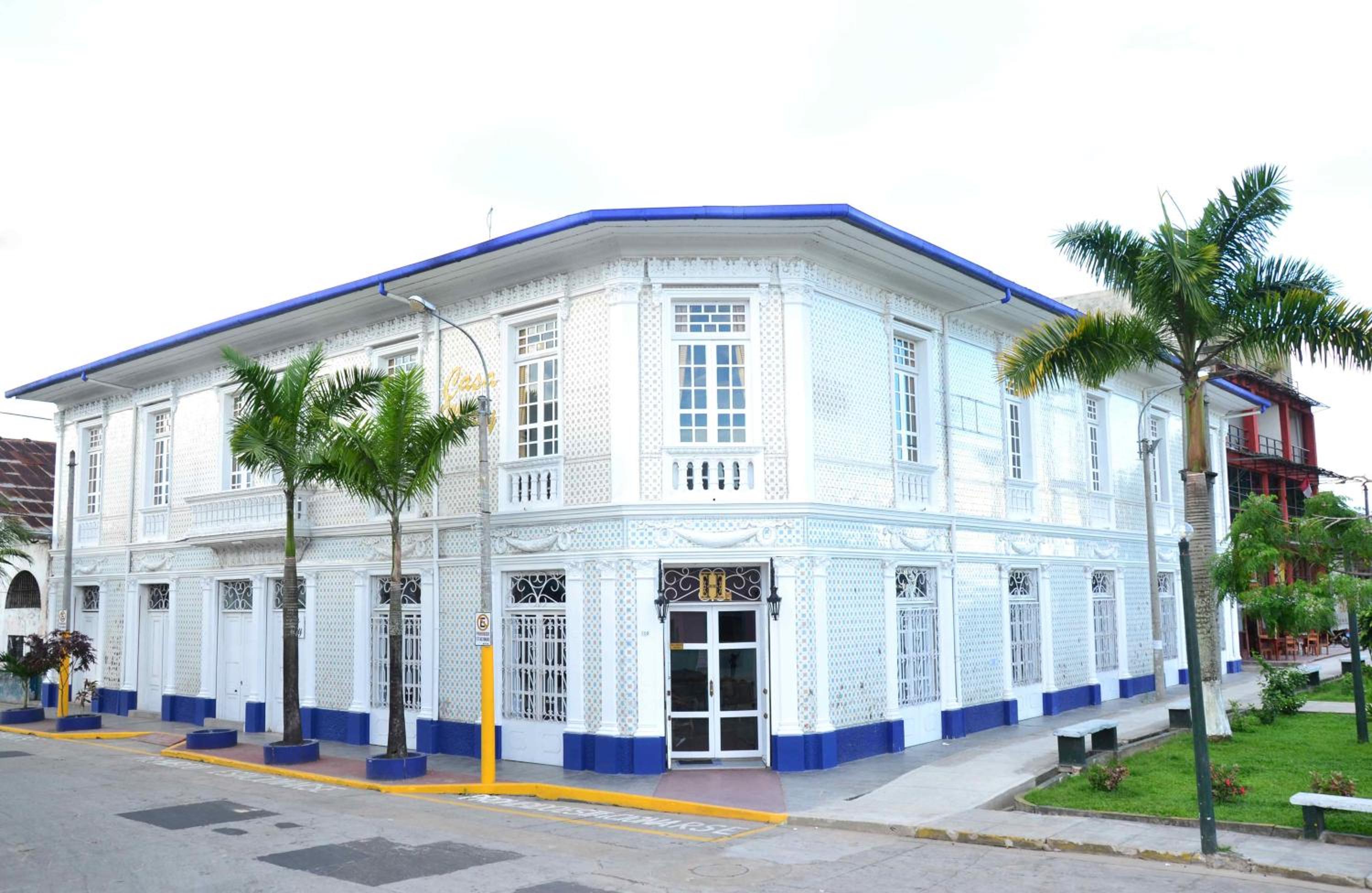
Rubber-boom ironwork, the river plain to the horizon and the whole city on its evening walk, with the iron house on the plaza behind it.
Pink dolphins at the river junctions
The boto surfacing where the waters meet, most reliably on the second morning from the lodge, and the local legends about it are half the guides' repertoire.
A night walk or a night paddle
The forest's second shift of tarantulas, frogs and caiman eyes in the torchlight, with the guide naming the sounds.
The Amazon itself
Standing on a moving boat on the world's greatest river is its own item, and everyone who has done it says so.
The areas of Iquitos
The malecón and the Plaza de Armas
The riverfront core
The promenade, the iron house, the cafes and every tour desk, where the evening paseo happens and the town's hotels are, a motokar from anything else. For everyone.
The evening walk and every desk within a few blocks, but the touts work the same streets.
Belén
The floating district
The stilt-and-raft neighbourhood and its market on the river's edge, the most vivid market in Peru, visited early, respectfully and with a guide. For a guided morning.
The most vivid market in Peru, and not a place to sleep or to walk after dark.
Bellavista-Nanay
The river port
The port district on the Nanay where the boats leave for the river beaches, the butterfly farm and the lodges downstream, with the fish restaurants along the bank. For a boat day.
The boats and the fish restaurants, though the district itself is a working port.
The upriver lodges
The main event
The actual Amazon, one to four hours by boat, with the monkeys, the pink dolphins, the canopy walkways and the night walks, the reason for the flight. For two nights at least.
The reason for the trip, but priced by guide ratio and boat quality rather than the bed.
See every Iquitos neighbourhood on one map
Save the areas you like and Stippl plots your days so you're not crossing the city twice.
Where to stay in Iquitos
The real choice is lodge tier rather than hotel tier, since proximity to the forest, boat quality and guide ratio are what separate the products, and the town bed is a staging night on either side of it. Most travellers give Iquitos 3 nights on Stippl, and the two in the lodge are the ones that count.
The malecón and the Plaza de Armas
Hotels and hostels on the riverfront blocks, €12 to €90 a night.
Belén
No visitor rooms to speak of; the nearest beds are on the plaza side, €12 to €40 a night.
Bellavista-Nanay
A few guesthouses by the port, €15 to €40 a night.
The upriver lodges
Full-board lodges with guided excursions, €60 to €170 a night and up.




What to eat in Iquitos
Rice, chicken and spices steamed in bijao leaf
Mashed plantain balls with smoked pork
The giant Amazon fish, grilled or in patarashca
River fish roasted in leaf over coals
The Amazon fruit canon, as juice everywhere
Grilled palm weevil skewers, for the willing
Discover food spots in Stippl
Find restaurants and markets on the map, save them to your itinerary, works offline too.
Iquitos customs and what not to do
Belén is a neighbourhood
The district is a working place rather than a set, so the visit asks before photographing, buys something and goes with a local guide.
Refuse the animal selfie
The sloths and anacondas offered for photos on the waterfront are wild-caught and die of it, and the ethical guides are blunt about it.
Ayahuasca is unregulated
The retreat trade is real and the quality runs from serious to dangerous, so anyone considering it researches the centre rather than the flyer.
The forest has hours
The wildlife wakes at five and the mosquitoes at dusk, and the lodge day is built around both rather than around a lie-in.
The river is the road
The lancha downriver runs on hammock decks over days rather than hours, and the town's rhythm follows the boats and the flights.
Motokars are the taxis
The three-wheelers swarm the streets and cost almost nothing, and the fare is agreed before the ride rather than at the end.
Do
- Book the lodge by guide ratio and boat quality
- Take Belén with a guide in the morning
- Get the yellow fever jab ten days before the flight
- Wear sleeves at dusk and sleep under the net
- Walk the malecón at dusk with the rest of the city
Don't
- Hold a sloth or an anaconda for a photo
- Take the cheapest tout's boat at the airport
- Walk the deep Belén district after dark
- Swim off the town waterfront
- Skip the repellent because the lodge has nets
What a Iquitos trip costs
Town only
€22–34
A hotel on the plaza side, market meals, the Belén tour and the malecón evenings.
Lodge standard
€60–130
A full-board lodge per night with guided excursions and the boat transfers.
Expedition tier
€170+
Pacaya-Samiria depth, small boats, naturalist guides, per night.
Track what you actually spend
Set a daily budget per country and log expenses in any currency while you travel.
Fun facts about Iquitos
Iquitos, home to 400,000 people, is the largest city on earth with no road. Air and river only, and first-timers keep not believing it until they look for the bus.
The rubber boom paid for the ironwork on the Iquitos malecón. Eiffel-attributed iron and Portuguese tiles went up, then the boom collapsed and left them on the riverfront.
Whole streets of Belén in Iquitos rise and fall metres with the river. The houses stand on stilts or on rafts that move with the water, and the season decides which.
The pink river dolphin around Iquitos is genuinely pink and genuinely a dolphin. The local legends about it seducing villagers are half the guides' repertoire.
Iquitos closes 7.8% of the Stippl trips it sits on. The latest position of any Peruvian stop, which is the data calling it the climax.
Iquitos was the capital of the world's rubber trade for two decades around 1900. The Iron House on the plaza was shipped in pieces from Europe and bolted together on the square.
Local tips for Iquitos
There is genuinely no road
Every itinerary is built around the flight, and the guides repeat it because first-timers keep not believing it.
The slow lancha, if patient
Hammock decks downriver toward the tri-border over days rather than hours, the option for anyone with the time and the patience.
Mosquito discipline is health
Repellent, sleeves at dusk and the yellow fever vaccination, with malaria prophylaxis a doctor conversation for longer river time.
Sun and heat are the daily risk
Equatorial ultraviolet plus river reflection, so the water bottle is refilled like it is a job and the hat stays on in the boat.
Belén wants a guide and the day
The market mornings are welcoming, the deep district after dark is not visitor terrain, and the guide knows the difference.
Three nights, at the end
Most travellers give Iquitos 3 nights on Stippl and it closes 7.8% of the trips it appears on, so the lodge is the finale rather than the warm-up.
Iquitos questions, answered
If the Amazon is on the list, this is its most accessible serious version, and the data is honest about who comes: Iquitos closes 7.8% of the trips it appears on, of everyone who plans it on Stippl, the latest position in Peru, because the people who fly here are ending on it rather than passing through.
Four if the budget allows: town, lodge, lodge, town. Most travellers give Iquitos 3 nights on Stippl and 41.1% of stops run four or more, and the second lodge night is what makes the dolphins and the night walk reliable rather than lucky.
Different trips, both good: November to May floats you into the flooded forest with the canopy at eye level, June to October walks you through it with the wildlife on the banks. September is the busiest month on Stippl and it is low water, so put the season into Stippl first and ask people who have done both in subreddits like r/peru.
The town, yes: market meals, motokars and the Belén tour cost very little. The Amazon only partly, since the budget lodges start around sixty euros a night all in and the flight is unavoidable, and the cheapest tout at the airport is cutting a life jacket or a radio rather than a margin.
With a guide, in the morning, yes, and it is the most vivid market in Peru, with the fruit that spoils by noon and the river fish laid out on the rafts. Photograph with permission, buy something, and leave the deep district alone after dark, which is not visitor terrain and every guide says so.
Yes. The fast boat to the Leticia and Tabatinga tri-border runs daily and the slow lancha takes days on a hammock deck, and more Iquitos trips on Stippl carry Brazil than any other Peruvian stop's, with only 25.9% staying inside Peru. The yellow fever certificate is checked at the border.
Every guide is written by the Stippl editors and checked against the trips our travellers actually plan. Spotted something out of date? Let us know.

Plan Iquitos in Stippl
Day-by-day planning, stays and budget in one app, with every place from this guide already on the map.
Download the app