 OceaniaNew Zealand
New Zealand
New Zealand is two islands joined by one ferry, a road trip by design, with the fiords, the volcanoes and the Great Walks reached by car and a country that runs on the opposite calendar. Two weeks for one island and three or four for both, the vehicle and the ferry booked first, and the border declared to the last apple.
Who it's for
Is this your trip?
When to visit
Dec–Feb for warmth and long days
Festivals
Worth planning around
Destinations
7 places
Food guide
Eat like a local
Not to miss
Essential experiences
Culture
Know before you go
Daily budget
€51–81 (NZD 100–160) budget · 200–320 mid · 450+ comfort
Practicalities
Visa, SIM & more
New ZealandNew Zealand in a nutshell
Where to go in New Zealand


Turn these stops into a New Zealand route
Pick your favourites and Stippl orders them, adds travel times and builds the day-by-day.
Plan your adventure in New Zealand
Our travel routes through New Zealand
New Zealand is loved by culture seekers and backpackers alike. We recommend several routes through this country, here they are in full!
7 nights1 week: one island, one base: Queenstown and Fiordland
Queenstown · Te Anau · Milford Sound
Milford Sound's waterfalls peak in spring; Queenstown and Wānaka offer adventure year-round except winter crowds.
7 nights1 week, the North Island short loop
Auckland · Coromandel Peninsula · Rotorua
Warm weather for Tongariro hiking and geothermal Rotorua; Auckland and Coromandel Peninsula at their best.
10 nights10 days: Auckland to Wellington, the standard North Island run
Auckland · Coromandel Peninsula · Rotorua
Spring through autumn warmth suits Tongariro, Rotorua, and Coromandel; Taupō's lakes and walks most pleasant.
12 nights12 days: Taranaki, the river and the Forgotten World
Wellington · Whanganui · Whanganui National Park
Whanganui River paddling and Taranaki hiking require stable, warm conditions; Waitomo suits all seasons.
13 nights10 days: the deep south, Queenstown to Christchurch
Queenstown · Te Anau · Milford Sound
Milford Sound, Stewart Island, and the Catlins demand fair weather; Moeraki and coastal drives safer in summer.
13 nights2 weeks: the North Island the long way, via the east coast
Auckland · Waitomo Caves · Rotorua
East-coast Napier and Tauranga need warmth; Tongariro hiking and geothermal areas peak in warmer months.
14 nights2 weeks, the North Island in full
Auckland · Waiheke Island · Coromandel Peninsula
Waiheke Island, Coromandel, and Tongariro all demand warm, settled weather; Waitomo Caves year-round but better without crowds.
14 nights2 weeks: winter, snow and hot pools
Christchurch · Mt Hutt · Lake Tekapo
Mt Hutt and Wānaka ski fields operate; Tekapo and Queenstown offer deepest snow and discounted mountain access.
15 nights2 weeks, the classic South Island loop from Christchurch
Christchurch · Lake Tekapo · Aoraki Mt Cook
Fiordland, West Coast glaciers, and Abel Tasman best in settled weather; Aoraki and Lake Tekapo avoid winter snow.
21 nights3 weeks: both islands, north first, ferry in the middle
Auckland · Coromandel Peninsula · Rotorua
Tongariro, Picton ferry, Kaikōura, Aoraki, and Milford Sound all require warm, settled conditions.
38 nights1 month: the full country, Auckland to Christchurch
Auckland · Bay of Islands · Coromandel Peninsula
Bay of Islands, Abel Tasman, Milford Sound, and Tongariro all need warmth; Christchurch ending avoids winter.
Updated August 2026 · 14 min read · Written by the Stippl editorsWe looked at how travellers actually plan New Zealand on Stippl, across 185,000+ planned stops in New Zealand.
New Zealand is planned as a road trip with a ferry in the middle, and most stops get 1 night. Auckland takes only 11.05% of every New Zealand stop planned on Stippl, the lowest gateway share in the region, because the country has no single base, and the named things are Milford Sound by boat or kayak, the Tongariro Alpine Crossing, the first commercial bungy at Kawarau Bridge, an evening in a living Māori village at Rotorua, the whales at Kaikōura and a day of a Great Walk. Queenstown, Christchurch, Wellington and Rotorua are the stops behind it.
New Zealand is a country people come for on its own, and one they move through fast. 50.4% of trips carrying New Zealand on Stippl carry nothing else, the highest single-country share in the region, 46.1% of stops are a single night, the highest in the region too, because the road trip stops somewhere new every day, and 45.7% of stops fall between November and February, the southern summer.
So pick one island for two weeks or both for four, book the vehicle and the Cook Strait ferry as soon as the dates are fixed, decide the Great Walk before the May release rather than after landing, and go north first so the South does not underwhelm what follows. Skip a non-self-contained van for freedom camping, since only the green warrant counts now, and skip the northern calendar, because December is midsummer here and July is deep winter.
Plan New Zealand in Stippl
Day-by-day planning, stays and budget in one app, with every place from this guide already on the map.
Download the appWho New Zealand is for
Road-trippers and campervanners
The country is built for it, with holiday parks, conservation campsites and freedom-camping spots on a road that rewards stopping wherever you like.
Trampers of every level
Twenty-minute boardwalk loops through to eleven Great Walks and a three-thousand-kilometre end-to-end trail, with nearly a thousand backcountry huts behind it.
Adventure-sport travellers
Commercial bungy was invented here, and Queenstown, Wānaka, Taupō and Rotorua concentrate skydiving, jet boating and canyoning within an hour of each other.
Wildlife travellers
Sperm whales and dusky dolphins at Kaikōura, albatross and penguins on the Otago Peninsula, seals almost everywhere and glow worms underground.
Skiers and snowboarders
The southern winter inverts everything: Queenstown and Wānaka are at their busiest from June to October while the rest of the country is in its low season.
Single-country travellers
50.4% of Stippl trips carrying New Zealand carry nothing else, the highest share in the region, because the flight is too long to add it to anything.
Summer travellers
45.7% of New Zealand stops on Stippl fall between November and February, the southern summer, when the walks are open and the days are longest.
Maybe not for you: travellers without a driving licence, limited to a slow bus network that reaches only the well-connected towns; anyone needing reliable internet, which fails across much of the South Island; and anyone on a tight budget in the summer peak.
The best time to visit New Zealand
Summer
December to February
The peak: the longest daylight, the warmest water, everything open and the highest prices for beds, tours, flights and vehicles, with the domestic holiday from late December into January.
Autumn
March to May
The quiet sweet spot, with March the month named best more than any other, April still working and May the cheapest and the deadest, caught between hiking and skiing.
Winter
June to August
The mirror season: low, wet and dark across most of the country and simultaneously the high season in the Southern Alps, where Queenstown and Wānaka fill with skiers.
Spring
September to November
Waterfalls at full volume, small crowds, discounted late skiing into October and rising rain, with snow still on the higher tracks into early December.
Great Walks season
Late October to the end of April
The window in which the huts are serviced, the bookings run and the tracks are walkable without alpine skills; outside it the same routes are alpine undertakings.
- Most stops in New Zealand get 1 night on Stippl, and 46.1% are a single night. The road trip moves every day, and two weeks does one island properly.
- 45.7% of New Zealand stops on Stippl fall between November and February. The southern summer and the peak for prices, against 22.4% in the winter months when the skiers take over the south.
- The ski season runs mid-June to October. Coronet Peak, the Remarkables, Cardrona, Treble Cone, Mount Hutt and the Ruapehu fields, snow depending, and the price map inverts around them.
- Matariki moves with the Māori lunar calendar. The national public holiday falls in late June or July, the only one not set by a fixed civil date, and the long weekend fills the domestic flights.
- Great Walk bookings open once a year in May. Staggered by track at half past nine in the morning New Zealand time, so the walk is decided before the release rather than after landing.
- The Cook Strait ferry is the constraint. Vehicle space is what sells out, and a campervan crossing between December and February needs months of notice rather than weeks.
Add your New Zealand dates and we'll flag the weather per stop
Stippl shows the season, crowds and prices for every place on your route.
Festivals, and when to avoid them
Waitangi Day
The national day, marked at the Waitangi Treaty Grounds in the Bay of Islands where the treaty was signed, with a public holiday and the Northland roads full. A reason to be in the Bay of Islands, with a room booked.
World Buskers Festival
Christchurch's city-wide street festival, annual, with the acts on the squares and the hotels busier than the rest of the summer. Nothing to avoid; a fortnight to be in the city.
Anzac Day
Dawn services and processions across the country, notably at the Auckland War Memorial Museum, and shops closed until early afternoon. A morning to attend rather than plan around.
Matariki
The Māori New Year, a national public holiday set by the lunar calendar, with festivals, dawn ceremonies and a long weekend that fills the domestic flights. Book the flights early, or stay put.
Queenstown Winter Festival
The Southern Alps' opening party for the ski season, with fireworks over the lake and the town at capacity. Come for it with a room booked months out, or ski elsewhere that week.
World of WearableArt
Wellington's costume-design show, drawing around sixty thousand people over three weeks and booking out the capital's hotels. Tickets months ahead, or Wellington the week after.
Toast Martinborough
Ten vineyards near Wellington on one Sunday, with tickets that sell out in a morning and the Wairarapa's beds gone with them. A reason to plan the wine day, or a day to avoid the valley.
Describe your trip, get a New Zealand itinerary in seconds
Everything in this guide is already in Stippl. Tell the planner how long you have and what you like: it builds the route, the days and the travel times, and you edit whatever you want.
Things to do in New Zealand
Milford Sound by boat or kayak
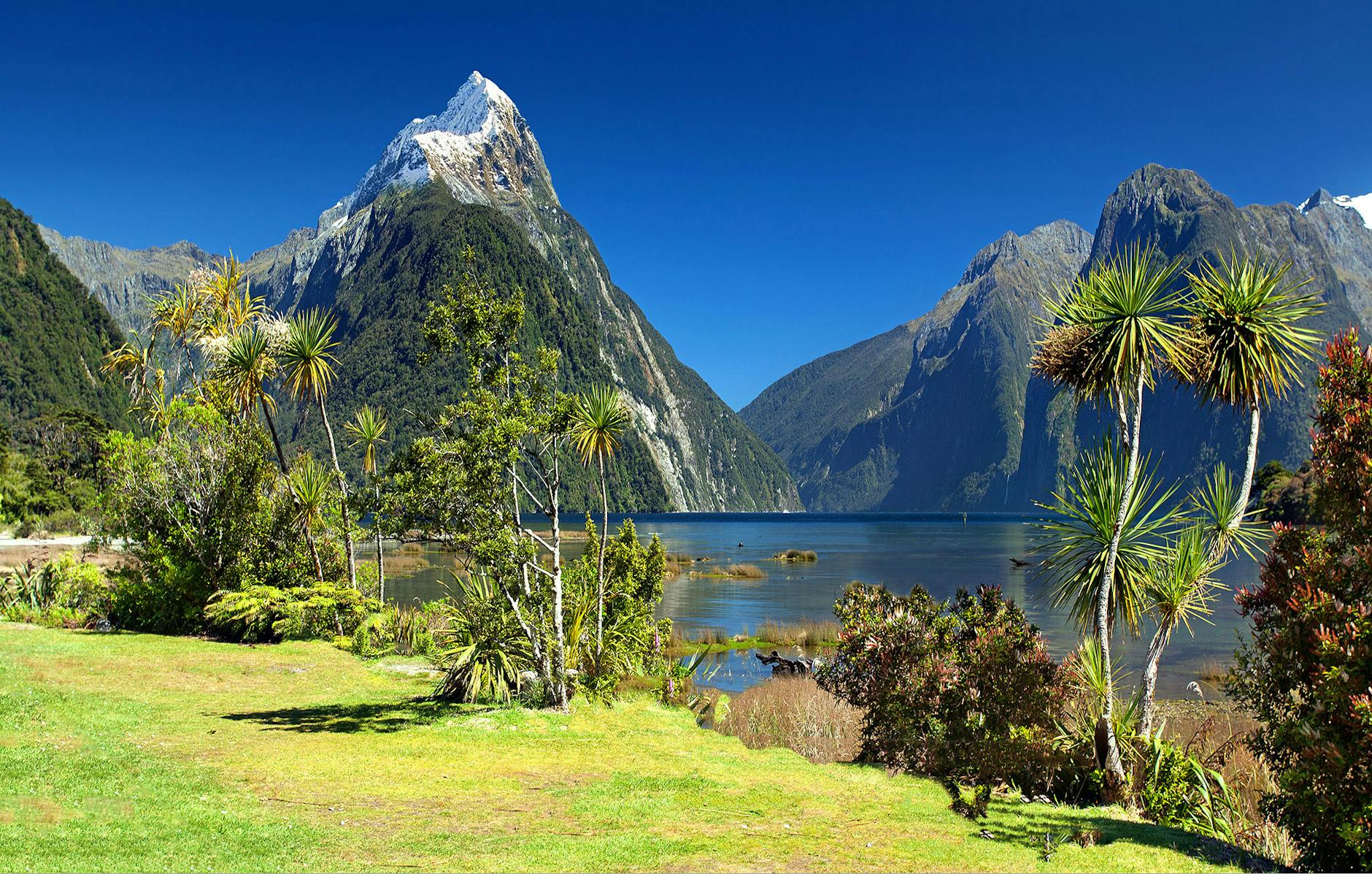
Sheer cliffs, Mitre Peak, fur seals and a resident dolphin pod in a fiord that takes around seven metres of rain a year, and rain is arguably the better weather for the waterfalls.
The Tongariro Alpine Crossing
Nineteen kilometres one way across an active volcanic zone in six to eight hours, past the Red Crater and the Emerald Lakes, with a shuttle because the start and finish are different.
The bungy at Kawarau Bridge
The world's first commercial bungy site, opened in 1988 and still operating near Queenstown, with the Nevis at a hundred and thirty-four metres the country's highest.
An evening in a living Māori village
Whakarewarewa in Rotorua is a functioning village on an active geothermal field where people cook in the steam, hosted by the people who live there.
Whales and dolphins at Kaikōura
Wild pods and no baiting, with a whale operator quoting a ninety-five percent sighting rate and a partial refund if none are seen, and both trips booked ahead.
A Great Walk, or a day of one
Eleven premier multi-day tracks from the Abel Tasman's beaches to the Milford's fiord valleys, with the day-walk version by water taxi or shuttle as the fallback.
What to eat in New Zealand
Crisp puff pastry around a stew-like filling and gravy; the national fast food and the cheapest decent hot meal
Meat and vegetables cooked in an earth oven, or over geothermal steam
The other staple, ordered by choosing the fish
The ubiquitous local combination, rare anywhere else
Espresso and micro-foam; New Zealand claims to have invented it, Australia disputes it, and drip coffee is essentially absent
Vanilla ice cream studded with honeycomb toffee
Meringue with cream and fruit; contested with Australia
Cocoa and cornflake biscuit under chocolate icing with a walnut
A burger with beetroot and a fried egg, sold even by the fast-food chains
Southland's short-season oyster, with its own festival
Sweet potato, and a staple rather than a novelty
Farm-raised salmon eaten raw at the lakeside where it is grown
Discover food spots in Stippl
Find restaurants and markets on the map, save them to your itinerary, works offline too.
New Zealand customs and what not to do
There is no national rulebook
Every marae has its own protocol, and the government's own advice to visitors is to ask the local people rather than apply anything read as a national rule.
A pōwhiri is not a performance
The formal welcome onto a marae runs through the call, the speeches and the hongi, and visitors arrive early, dress formally and bring koha in an envelope.
Tapu is a prohibition
A spiritual prohibition on what may be done, touched or approached, met at named places like the Green Lake near Rotorua long before any marae.
Living villages are homes
Ōhinemutu in Rotorua is free to walk through and lived in since about 1350, so you stay on the paths and do not photograph into the houses.
Te reo names are official
Aoraki, Piopiotahi, Rakiura and Kaikōura are the primary forms, and the macrons change the pronunciation rather than decorate it.
Leave no trace is civic
Cleaning boots at the trailhead stations, packing out rubbish and staying off fragile plants are closer to a civic value than a set of signs.
Do
- Ask the local people what their marae expects, rather than applying anything you read as a rule
- Bring koha in an envelope and turn your phone off before the pōwhiri starts
- Declare every food item, boot and tent peg at the border, and hand it over if asked
- Pull over when four or more vehicles are queued behind you
- Book the Cook Strait crossing as soon as your dates are fixed if you have a vehicle
Don't
- Treat a marae visit as a tourist attraction, or film without asking
- Swim, wade or touch the water at a site signed as tapu
- Camp in a non-self-contained vehicle outside designated sites
- Feed the kea; it is illegal, they are unafraid of people, and they bite
- Reuse the northern calendar; December is midsummer and July is deep winter
What a New Zealand trip costs
Budget
€51–81
A shared campervan or car, conservation and free campsites with a paid holiday park every few nights, all meals cooked and one paid activity a week.
Mid-range
€101–162
A rental car with motels, holiday-park cabins or hostel privates, a restaurant meal most days and a big-ticket activity most weeks.
High-end
€228+
Hotels and lodges, guided walks and cruises, helicopter and glacier flights and restaurant meals throughout.
Track what you actually spend
Set a daily budget per country and log expenses in any currency while you travel.
Visas, the ferry and getting around
Entry & visa
An NZeTA before travel
Visa-waiver nationals including the EU, the UK and the US must hold an electronic travel authority before boarding, bought with the visitor levy on the official app.
Money
New Zealand dollars, by card
Cards are accepted almost everywhere including the campsites, cash is rare, and the exchange happens at an ATM rather than at home.
Connectivity
A genuine weak point
Mobile coverage fails across much of the South Island and the national parks, so the maps are downloaded and the bookings made in town.
Getting around
Your own vehicle, and one ferry
Public transport will not reach the best places, a car or a campervan is the trip, and the Cook Strait ferry is booked as soon as the dates are fixed.
Health
ACC is not insurance
The national accident scheme covers accidents in the country and nothing else, so travel insurance still covers illness, repatriation and disrupted travel.
Water
Drinkable everywhere
Tap water is safe nationwide and singled out as exceptional in the South Island, so the bottle is refilled rather than bought.
Tipping
Not expected anywhere
Some restaurants add a service charge instead, and the tip-based walking tours are explicitly voluntary.
Power & plugs
Type I, 230 volts
The angled three-pin shared with Australia, so everyone outside Australia and the Pacific packs an adapter.
Language
English, and te reo alongside
Te reo Māori place names run in parallel with the English ones throughout, and a kia ora lands well everywhere.
Te reo worth knowing
Nobody expects you to speak the language, which is exactly why a handful of words goes so far.
kee-a OR-a
Hello, thanks, be well, the everyday greeting · kia ora
HAI-reh MY
Welcome, come in · haere mai
ow-teh-a-RO-a
New Zealand · Aotearoa
KAI
Food · kai
KO-ha
A gift, usually money in an envelope, given on a marae · koha
MA-rai
The communal meeting ground and its buildings · marae
FAH-reh-NOO-ee
The meeting house · wharenui
HONG-ee
The greeting made by pressing noses · hongi
POH-fee-ree
The formal welcome ceremony onto a marae · pōwhiri
TA-poo
Spiritual restriction, a prohibition rather than a suggestion · tapu
TAO-nga
A treasure, such as pounamu · taonga
POW-na-moo
Greenstone, the classic carved gift · pounamu
tramping
Multi-day hiking, hut to hut, in Kiwi English · tramping
New Zealand questions, answered
One week is one base with day trips, two weeks does one island properly, and three to four weeks covers both. Most stops in New Zealand get 1 night on Stippl and 46.1% are a single night, because the road trip moves on every morning.
South, unless the trip is about beaches: it has the dramatic nature and most of the celebrated hiking, and the North has the better beaches, the geothermal country and the Māori cultural heart. North first if both, split a third to two-thirds, because the South is spectacular enough that the North underwhelms if done second.
No, but a vehicle is, because public transport will not reach the best places. A car with motels and hostels works fine, a campervan unlocks free camping and cooking, and only a green-warrant vehicle with a fixed toilet counts as self-contained now. Put the route into Stippl before the vehicle, then ask people in subreddits like r/newzealand which company they would rent from again.
As soon as the dates are fixed if there is a vehicle, because vehicle space is the constraint and a campervan crossing between December and February needs months rather than weeks. Foot passengers can book late, and the crossing itself is three and a half hours.
The shoulders, March to May and September to November, with May the cheapest month and the one with least to do, caught between hiking and skiing. 45.7% of New Zealand stops on Stippl fall in the summer peak, and the prices for beds, vehicles and tours follow the crowd.
On its own, mostly: 50.4% of trips carrying New Zealand on Stippl carry nothing else, the highest single-country share in the region, because the flight is long enough that the country becomes the trip rather than a leg of one.
Every guide is written by the Stippl editors and checked against the trips our travellers actually plan. Spotted something out of date? Let us know.
Plan New Zealand in Stippl
Everything in this guide, ready to drop into your New Zealand route, with planning and bookings in one app.