

George Town
George Town is the UNESCO-listed capital of Penang and the city Malaysians themselves travel to eat in, with thousands of pre-war shophouses, a commissioned mural trail and a mosque, a Chinese temple, a Hindu temple and a church on one street. Three nights inside the heritage zone, a free shuttle round it, and December to February for the dry air.
George Town in a nutshell
George Town: what to expect
214,000+ stops in Malaysia have been planned on Stippl. Here is what they say about George Town.
Three nights in George Town, and the food is the reason every guide leads with. The hawker circuit is char koay teow, asam laksa, cendol and nasi kandar from four different stalls, the street-art trail is hundreds of murals inside a small radius with the Zacharevic originals among them, the Street of Harmony puts four faiths on one block, Kek Lok Si is the largest Buddhist temple in the country, and the clan jetties are stilt villages still lived in over the water. Most travellers give George Town 3 nights on Stippl.
George Town is the slow city of the peninsula, and the one nobody starts or ends on. 35.62% of stops here run exactly three nights, of everyone who plans it on Stippl, against two in Kuala Lumpur, only 1.73% are no night at all, less than half the capital's pass-through share, and the city opens just 1.94% of the trips it appears on, because it sits between the capital and Langkawi.
Stay inside the UNESCO zone, use the free shuttle that loops the heritage core, eat asam laksa at Ayer Itam on the way to Kek Lok Si, and come in December, January or February if you can choose. Skip planning George Town and Kuala Lumpur around the same dry season, since they are opposite and February is the only overlap, and skip expecting a beach from the heritage zone, because Batu Ferringhi is forty minutes away.
Plan George Town in Stippl
Day-by-day planning, stays and budget in one app, with every place from this guide already on the map.
Download the appWho George Town is for
Foodies above everyone else
George Town is the destination Malaysians themselves travel to eat in, and the city that gets 3 nights on Stippl against two for the capital.
Heritage travellers
A UNESCO core with thousands of intact pre-war shophouses and a colonial fort, all walkable and all flat.
Art-lovers
The commissioned mural trail is the best of its kind in the region, mapped, maintained and done on foot or by bicycle.
Slow travellers
35.62% of Stippl stops here run exactly three nights, and the city rewards every one of them.
People the capital underwhelmed
George Town is the counter-argument: the same four cultures at walking pace, with the food better and the traffic gone.
Families
The island adds beaches at Batu Ferringhi, a funicular up the hill and the smallest national park in the world to a compact city.
Maybe not for you: anyone in a hurry, and anyone who needs to swim from the city; the heritage zone has no beach, Batu Ferringhi is forty minutes away and a different kind of trip, and two nights only covers the murals and the food.
The best time to visit George Town
The dry window
December to February
The least rain of the year, clear air, and the peak season for a reason, with January the driest month of all.
The shoulder
March to July
Rising rain but still walkable, with the haze building from June and the afternoons wetter than the mornings.
The wet peak
August to October
The three wettest months, overlapping the worst of the smoke, and the heritage zone floods for an hour most afternoons.
The haze season
June to October
Driven by fires in Sumatra, which is closer to Penang than to anywhere else in peninsular Malaysia, so the island gets it first and worst.
- Most travellers give George Town 3 nights on Stippl, and 35.62% of stops are exactly that. Two covers the murals and the food; three adds Kek Lok Si, the hill and the jetties.
- December to February is the window, and it is the opposite of Kuala Lumpur's. The capital is driest from June to August, and February is the only month that works for both.
- Kek Lok Si is lit for a month at Chinese New Year. Thousands of lanterns from late January or February, with the temple packed after dark and the heritage zone's rooms gone weeks ahead.
- The Chingay parade balances flagpoles on the body. A procession said to be over two hundred years old, with the date varying, and the George Town Festival runs an arts programme in the zone each year.
- Only 1.73% of George Town stops on Stippl are no night at all. Less than half the capital's pass-through share, because nobody flies an hour to eat one meal.
- The haze hits Penang hardest. Sumatra is closer to the island than to anywhere else on the peninsula, and the pollutant index is the number to check between June and October.
Add your George Town dates and we'll flag the weather
Stippl shows the season, crowds and prices for every stop on your route.
Describe your trip, get a George Town itinerary in seconds
Everything in this guide is already in Stippl. Tell the planner how long you have and what you like: it builds the route, the days and the travel times, and you edit whatever you want.
Things to do in George Town
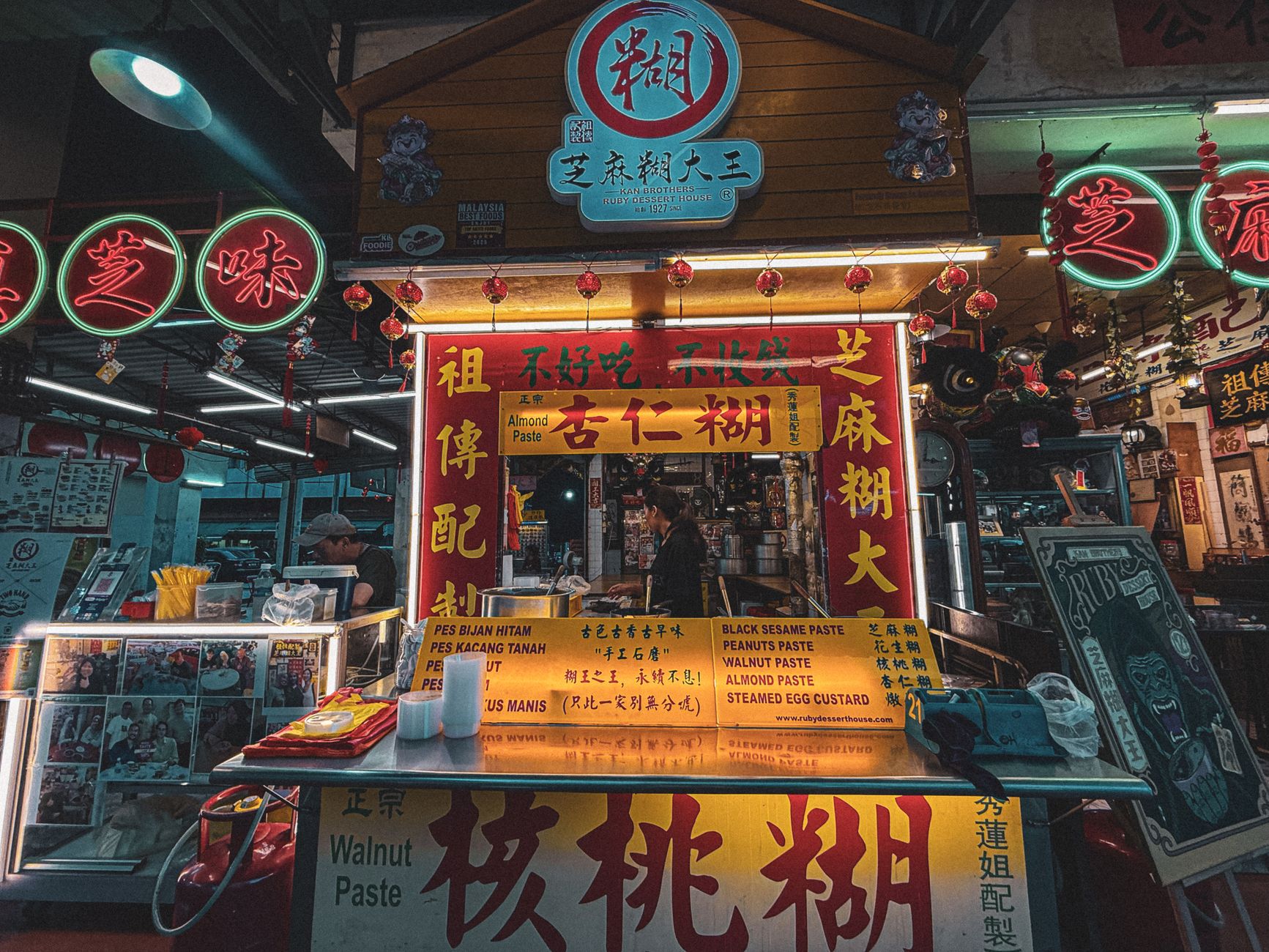 Photo by Sora kim Kim via Pexels
 Photo by ONG WEI via Unsplash
The street-art trail
Hundreds of murals in a small radius with the Zacharevic originals among them, downloadable as a map and best done on foot or by bicycle in the morning.
The hawker circuit
Char koay teow, asam laksa, cendol and nasi kandar, each from a different stall, which is how the city is actually eaten.
The Street of Harmony
A mosque, a Chinese temple, a Hindu temple and a church on one street, the clearest single expression of what George Town is.
Kek Lok Si
The largest Buddhist temple in Malaysia, with tiered pagodas in Chinese, Thai and Burmese styles under a thirty-metre bronze Guanyin, free to enter.
The clan jetties
Wooden stilt villages built over the water by Chinese clans and still inhabited, with Chew Jetty the one open to walk.
Penang Hill by funicular
The railway up to the ridge and the view back over the island and the strait, cooler by a few degrees at the top.
The neighbourhoods of George Town
The UNESCO heritage zone
The listed core
Shophouses, clan houses, museums and most of the street art, all walkable and all flat, inside the boundary the free shuttle loops. For first-timers.
Everything worth walking to inside one flat zone, but the rooms go first in the dry months.
Love Lane and Armenian Street
The guesthouse strip
Restored shophouses turned into small hotels, cafés and bars inside the heritage zone, where the murals are thickest. For art-lovers.
The murals and the cafés at the door, though the bars run late on Love Lane.
Little India
The Tamil blocks
A few dense blocks of Tamil music, garland stalls, sari shops and banana-leaf restaurants right beside the Chinese quarter. For eating.
Banana-leaf rice and the garland stalls, and the loudest few blocks in the zone.
The clan jetties
Weld Quay
Wooden stilt villages built out over the water by Chinese clans and still lived in, with Chew Jetty the one visitors walk. For history.
Chew Jetty over the water, but the others are homes and not a walk-through.
Ayer Itam
Inland and uphill
Where Kek Lok Si and the Penang Hill funicular are, plus the market the asam laksa comes from, a bus from the zone. For foodies.
Kek Lok Si, the funicular and the asam laksa, and a bus ride to get there.
Batu Ferringhi
The beach strip
The northern coast with the resorts, a night market and the island's swimming coast, forty minutes by bus from the zone. For families.
The island's swimming coast and the night market, though forty minutes from the food.
See every George Town neighbourhood on one map
Save the areas you like and Stippl plots your days so you're not crossing the city twice.
Where to stay in George Town
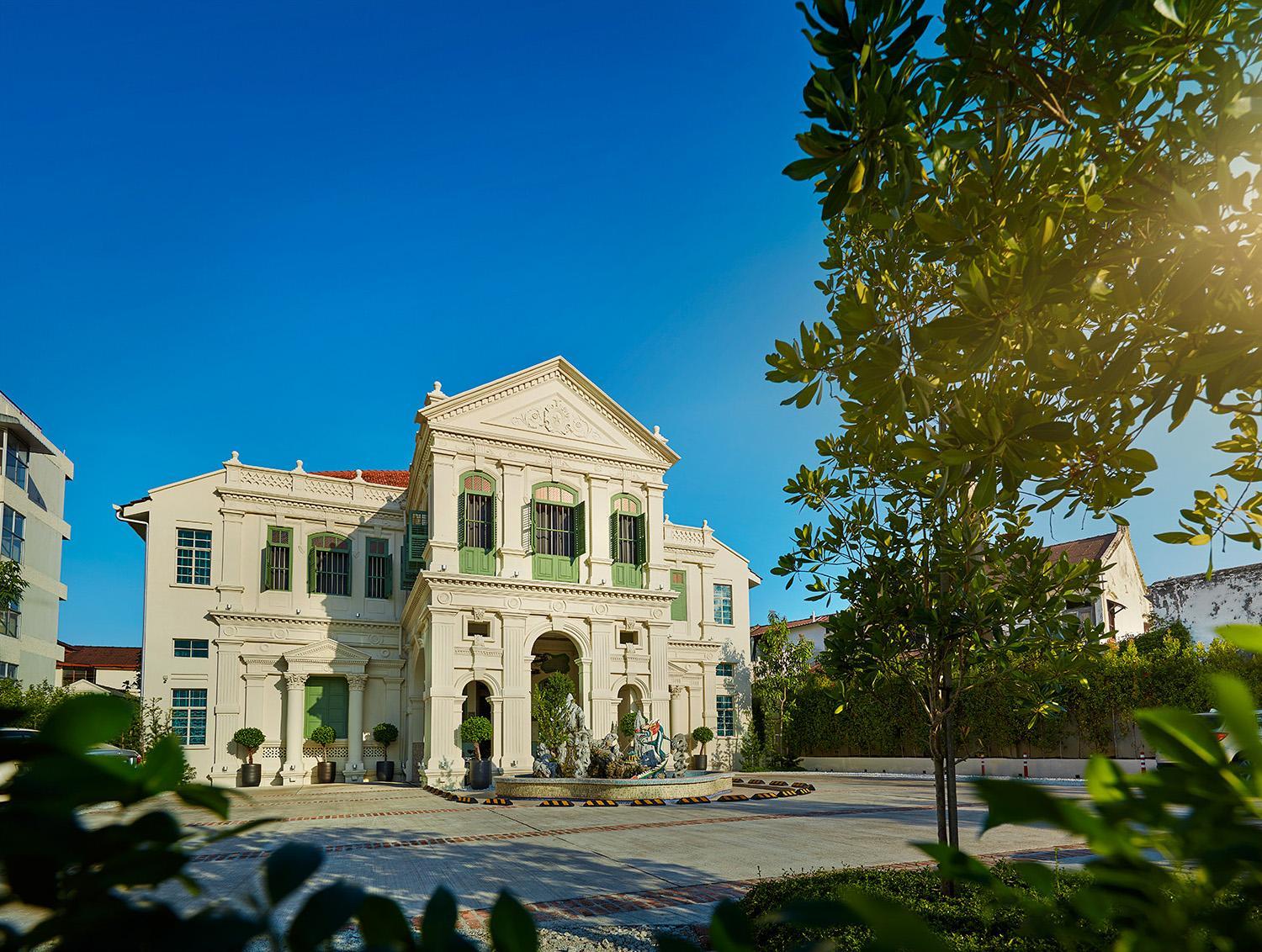
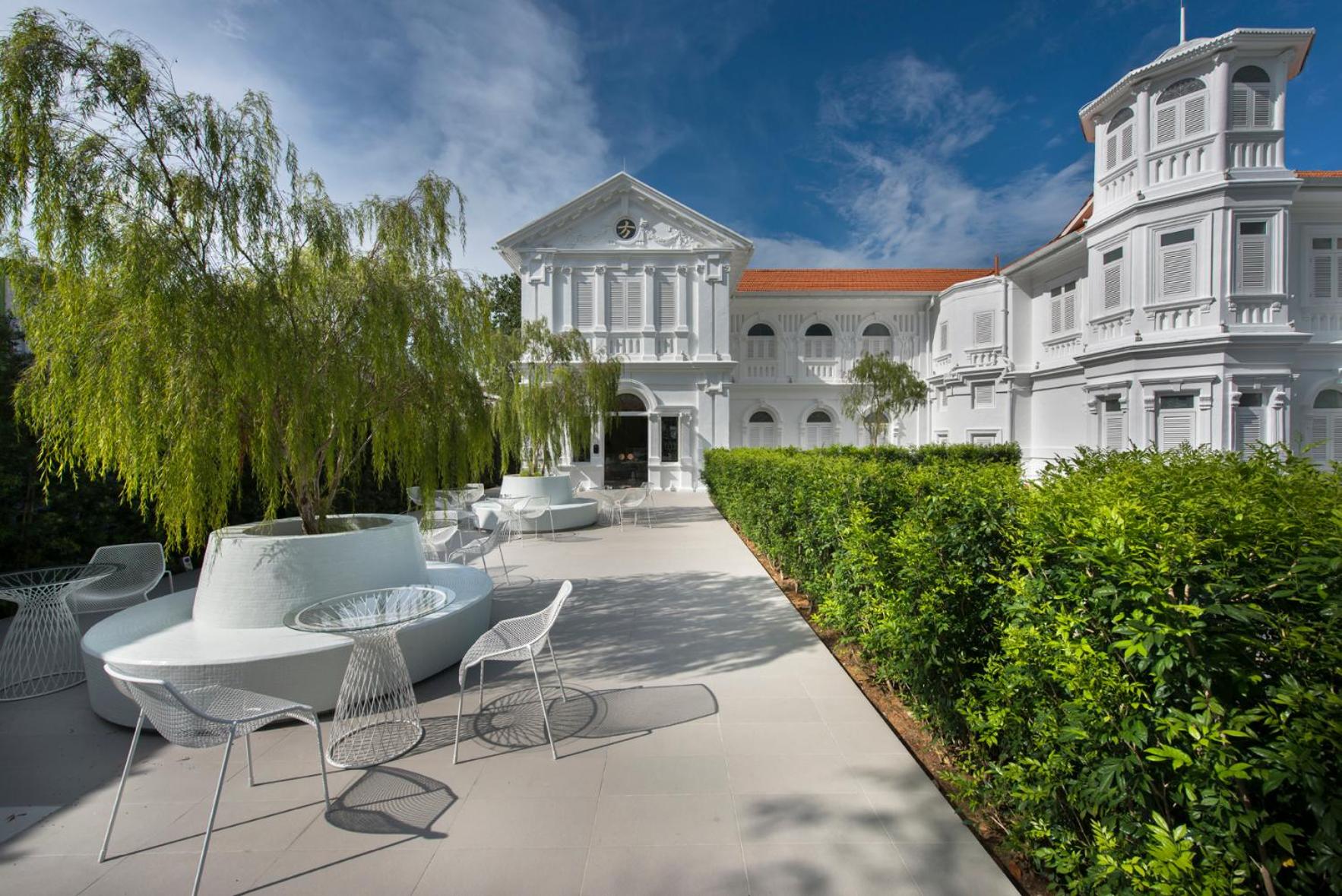
Stay inside the UNESCO zone, because everything worth walking to is inside it and the alternative is commuting into a city whose whole point is walkability; the restored shophouses on Love Lane and Armenian Street are the version everyone recommends. Most travellers give George Town 3 nights on Stippl, and the zone's beds go first in the dry window.
The UNESCO heritage zone
Hostels, shophouse guesthouses and heritage boutique hotels, €10 to €120 a night.
Love Lane and Armenian Street
Restored shophouses turned into small hotels and hostels, €12 to €90 a night.
Little India
Budget hotels and guesthouses in the Tamil blocks, €12 to €45 a night.
The clan jetties
A handful of homestays on the stilts, €20 to €50 a night.
Ayer Itam
Budget hotels near the temple and the funicular, €15 to €45 a night.
Batu Ferringhi
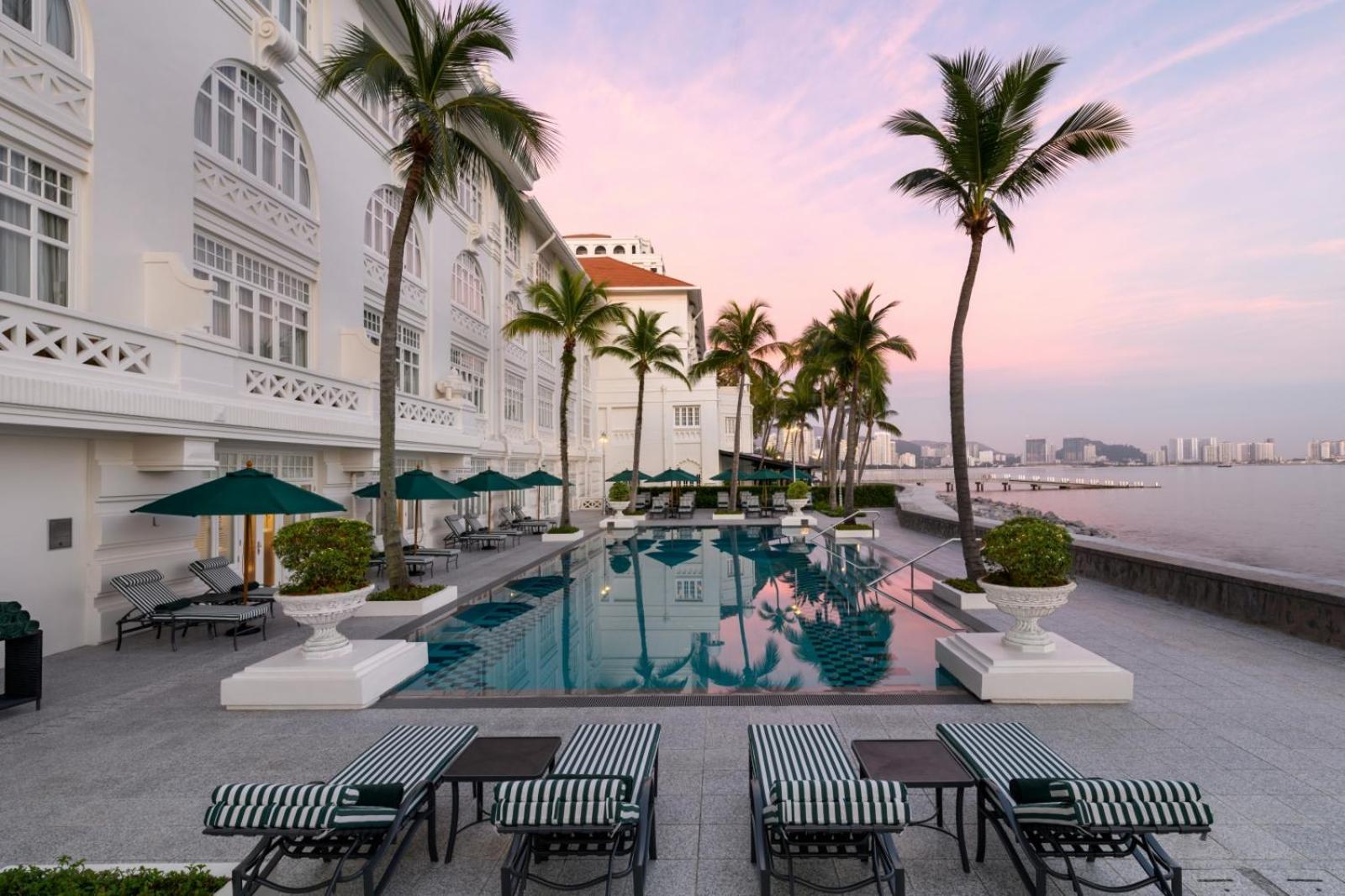
Beach resorts and apartments on the northern coast, €40 to €160 a night.


What to eat in George Town
Flat rice noodles seared in a wok with prawn, egg and Chinese sausage, the dish Penang is judged on
Sour tamarind-and-mackerel noodle soup: the Penang laksa, and nothing like the coconut kind
Rice with a poured mix of curries, an Indian-Muslim Penang invention
Shaved ice with pandan noodles, coconut milk and palm sugar
Fruit and fritters in a thick prawn-paste dressing: sweet, savoury and pungent at once
Prawn-and-pork noodle soup, the Penang version being the soup rather than the fried one
Discover food spots in Stippl
Find restaurants and markets on the map, save them to your itinerary, works offline too.
George Town customs and what not to do
Four cultures, one zone
Chinese clan houses, Tamil temples, Malay mosques and colonial churches within a few blocks, and George Town is where that is most visible in Malaysia.
The jetties are homes
People live on the clan jetties; Chew Jetty is the one that accepts visitors and the others are not a walk-through.
Shoulders and knees
The same rule as everywhere in the country, enforced at Kek Lok Si and the Kapitan Keling mosque, with robes lent at the door.
The murals are commissioned
Council-commissioned public work, which is why they are maintained and mapped rather than painted over; an installation, not graffiti.
One stall, one dish
Hawker stalls specialise and take pride in one thing, so a meal is ordered across several and eaten at a shared table.
Do
- Stay inside the UNESCO zone; the walkability is the reason to come
- Use the free shuttle; it loops the whole heritage core
- Eat asam laksa at Ayer Itam on the way to Kek Lok Si
- Come in December, January or February if you can choose
Don't
- Plan George Town and Kuala Lumpur around the same dry season; they are opposite
- Treat the clan jetties as an open attraction; only Chew Jetty is
- Expect a beach from the heritage zone; Batu Ferringhi is forty minutes away
What a George Town trip costs
Budget
€11–21
A heritage-zone hostel, hawker food, the free shuttle, free temples and murals.
Mid-range
€21–47
A restored-shophouse guesthouse, sit-down meals, Grab and the paid museums.
High-end
€74+
A heritage boutique hotel or a Batu Ferringhi resort, with private guiding.
Track what you actually spend
Set a daily budget per country and log expenses in any currency while you travel.
Fun facts about George Town
George Town was founded on 11 August 1786 by Francis Light. Named for George III, and the British East India Company's first settlement in the Malay states.
George Town's UNESCO listing of 2008 is shared with Melaka. The inscription covers both as the Historic Cities of the Straits of Malacca, not two separate entries.
Over 12,000 pre-war buildings survive in George Town. Among the most intact stocks of Chinese merchant shophouses anywhere in Asia, which is why the zone is walked rather than driven.
The murals of George Town were commissioned, not spontaneous. Ernest Zacharevic was hired by the council to paint the shophouse walls in 2012, and the trail grew from that.
Kek Lok Si above George Town is the largest Buddhist temple in Malaysia. Chinese, Thai and Burmese architecture under a 30-metre bronze Guanyin, lit with thousands of lanterns each Chinese New Year.
35.62% of stops in George Town on Stippl run exactly three nights. The strongest three-night mode in Malaysia, on the city people come to eat in.
Local tips for George Town
The free shuttle loops the core
It runs between the ferry terminal and the KOMTAR tower, which makes the listed zone effectively free to move around.
A ferry and two bridges
The island is joined to the mainland by the old ferry and two road bridges, and the pier is the country's busiest cruise terminal.
Fly one way, train the other
The flight from Kuala Lumpur takes about an hour against roughly four by train to Butterworth, which is why most itineraries fly one way.
The haze reaches Penang first
Sumatra is closer to the island than to anywhere else on the peninsula, and the pollutant index above a hundred is unhealthy.
Trishaws for the heat
Kitschy but useful for covering ground in the afternoon, with the price agreed before sitting down.
Three nights, mid-route
Only 1.94% of the Stippl trips George Town appears on start here and 2.99% end here, because it sits between the capital and Langkawi.
George Town questions, answered
Both names describe one trip: George Town is the UNESCO city and Penang the island around it, and travellers write one or the other and almost never both. Most travellers give George Town 3 nights on Stippl, and the island is what the third night is for.
Yes, and the mode is strong: 35.62% of stops here on Stippl are exactly three, against two in Kuala Lumpur. Two nights covers the murals and the food, and the third adds Kek Lok Si, the hill and the jetties without a Grab back and forth.
December, January or February, when the rain is lowest and the air is clear, with January the driest month. August to October is the wet peak overlapping the worst of the haze, and the island gets the Sumatran smoke before anywhere else on the peninsula.
Not straightforwardly: the capital is driest from June to August and George Town from December to February, and two months work for both, February above all and June as the runner-up. Put the two into Stippl in the order that puts each in its window, then ask people in subreddits like r/malaysia which they did first.
Not in the heritage zone. Batu Ferringhi on the north coast is forty minutes by bus and a separate kind of stay, with resorts and a night market rather than shophouses. Only 1.73% of stops here on Stippl are no night at all, and almost nobody comes for the sand.
Yes in the heritage core, and the free shuttle that loops it between the ferry terminal and the KOMTAR tower for the rest. Kek Lok Si, the funicular and Batu Ferringhi are a bus or a Grab away, and a bicycle does the mural trail before the heat.
Every guide is written by the Stippl editors and checked against the trips our travellers actually plan. Spotted something out of date? Let us know.

Plan George Town in Stippl
Day-by-day planning, stays and budget in one app, with every place from this guide already on the map.
Download the app