 EuropeIceland
Iceland
Iceland is one road around an island: waterfalls, glacier lagoons, black beaches and geothermal pools, nearly all free to walk into, joined by the Ring Road. Most stops get a single night, the whole country opens from mid-June to early September, and the car is the plan.
Who it's for
Is this your trip?
When to visit
Mid-June to early September for the whole country open
Festivals
Worth planning around
Destinations
16 places
Food guide
Eat like a local
Not to miss
Essential experiences
Culture
Know before you go
Daily budget
Camping and self-catering roughly ISK 10,000–15
Practicalities
Visa, SIM & more
IcelandIceland in a nutshell
Where to go in Iceland
 City
City Town
Town Town
Town Town
Town Town
Town Town
Town Natural feature
 Town
Town National park
 Natural feature
 Natural feature
 Natural feature
 Natural feature
 Natural feature
 Natural feature
 Natural feature
Turn these stops into a Iceland route
Pick your favourites and Stippl orders them, adds travel times and builds the day-by-day.
Plan your adventure in Iceland
Our travel routes through Iceland
Iceland is loved by culture seekers and backpackers alike. We recommend several routes through this country, here they are in full!
3 nights+3 days, Landmannalaugar and the highlands
Reykjavik · Landmannalaugar
F-roads to Landmannalaugar's colourful rhyolite peaks open late June but peak in July–August warmth.
4 nights+2 days: Westfjords insert, between Snæfellsnes and the north
Snaefellsnes Peninsula · Isafjordur · Akureyri
Ísafjörður roads are difficult and weather-prone; only reliably passable mid-summer.
5 nights5 days: Reykjavík base, winter-safe
Reykjavik · Golden Circle · Reykjavik
Golden Circle and geothermal hot springs are reliably accessible in winter when highland routes close.
5 nights5 days: the Diamond Circle, north only
Akureyri · Myvatn · Husavik
Northern lakes and waterfalls near Akureyri and Mývatn are best in summer; aurora visible September onward.
7 nights1 week: winter self-drive, south-west only
Reykjavik · Golden Circle · Vik
Ring Road to Vik stays open in winter; skip unreliable eastern and northern routes.
8 nights8 days: south Iceland in depth, the affordable classic
Reykjavik · Selfoss · Vik
South coast waterfalls and glaciers shine; Hofn is reachable and roads are stable outside winter storms.
10 nights10 days, the Ring Road at pace
Reykjavik · Snaefellsnes Peninsula · Akureyri
Full loop including Snæfellsnes and Mývatn requires all roads open; summer guarantees driveable highlands.
13 nights13 nights, anticlockwise campervan loop
Reykjavik · Thingvellir · Vik
Camping comfort and safe highland access; entire Ring Road from Egilsstaðir northward needs summer conditions.
14 nights14 days: full Ring Road clockwise plus the highlands (4×4, mid-June to September)
Blue Lagoon · Snaefellsnes Peninsula · Akureyri
Highlands and F-roads open mid-June; Blue Lagoon, Landmannalaugar, and Skaftafell demand peak summer access.
29 nights1 month, the whole island unhurried
Reykjavik · Golden Circle · South Iceland
Extended itinerary covering Ísafjörður, Landmannalaugar, and all highlands requires peak summer road access.
Updated August 2026 · 14 min read · Written by the Stippl editorsWe looked at how travellers actually plan Iceland on Stippl, across 72,000+ planned stops in Iceland.
Iceland is planned as one loop with a night at each stop, and most stops get 1 night. Reykjavík takes 17.5% of every Icelandic stop planned on Stippl, with Vík, Höfn and Akureyri behind it, and the named things are the Ring Road itself, a daily soak from the Blue Lagoon to a town pool, the hot river at Reykjadalur, a glacier walk on Vatnajökull, the Silfra fissure at Þingvellir and the icebergs at Jökulsárlón washing up on Diamond Beach. A typical Iceland trip runs 10 days on Stippl.
Iceland is a one-night country, and a country on its own. 73.5% of Icelandic stops planned on Stippl are a single night, the highest one-night share of any country we hold, 36.41% are no night at all, which is the waterfalls and the lagoons being driven past, and 66.8% of Iceland trips stay inside the country, which no other European destination on Stippl comes close to. August is the month most people plan for.
So hire the car at the airport, drive the loop in either direction with a bed booked at every stop, self-cater from Bónus and Krónan, and soak every day. Book the Blue Lagoon direct and the glacier walks ahead, because both cap their slots, and skip winter self-driving unless you have done ice before, since the roads and the daylight are the real risk rather than anything else on the island.
Plan Iceland in Stippl
Day-by-day planning, stays and budget in one app, with every place from this guide already on the map.
Download the appWho Iceland is for
Road-trippers
The whole country is organised around one loop with pull-offs, and a typical Iceland trip runs 10 days on Stippl, the Ring Road at a sane pace.
Hikers
From the short Laugahraun loop at Landmannalaugar to the 25-kilometre Fimmvörðuháls crossing and the 55-kilometre Laugavegur trek, all in the summer window.
Photographers
Kirkjufell, Vestrahorn, Jökulsárlón, Diamond Beach and the highland colours are the repeat subjects, and the low sun lasts for hours in shoulder season.
Campers and van travellers
Camping is the single biggest cost lever and the campsite network is dense and well equipped, with kitchens at most of them.
Solo travellers
One of the lowest crime rates in the world, one main road and a hostel network that makes it easy to meet people at every stop.
Families
Geothermal pools work as the reward after a walk, several natural pools are shallow enough for children, and Reykjavík has a weatherproof indoor circuit.
Iceland-only travellers
66.8% of Iceland trips on Stippl stay inside the country, so it is a whole holiday rather than a leg, and the flights are booked that way.
Maybe not for you: travellers who will not self-cater, because the food bill alone can double a budget; anyone without a driving licence, since there is no useful public transport outside Reykjavík; and inexperienced winter drivers, for whom the ice and the short days are a real risk.
The best time to visit Iceland
Summer
mid-June to early September
The only window in which the whole country is open: the F-roads, the highland huts, the highland buses and the long treks, with endless daylight, stable roads, peak prices and peak crowds.
Shoulder
May, and September into early October
The best balance of weather, price and quiet, with September adding the aurora while the roads are still easy and the campsites still open.
Winter
October to April
Frozen waterfalls, bigger icebergs, natural ice caves, snowmobiles and the aurora at roughly half the summer price for cars and beds, with about four hours of daylight around the solstice.
Midnight sun
May to July
Up to about twenty-one hours of usable light, night hikes practical in the north, and the aurora impossible because it never gets dark.
- August is the month most travellers plan Iceland for on Stippl, and September is second. The first is the peak for prices and beds, the second keeps the roads easy and adds the aurora, so the shoulder holds the value.
- Most travellers plan Iceland about 92 days ahead on Stippl, and 28.1% half a year out. The summer beds on the Ring Road sell out months ahead, and the glacier walks and the Blue Lagoon cap their slots.
- Most stops get 1 night on Stippl, and 73.5% are a single night. That is the loop's rhythm, one bed per stop, so the trip is built as a chain of bookings rather than a base.
- The highlands open in late June and close in September. The F-roads need a four-by-four by law, and the huts and the highland buses run on the same short calendar.
- The aurora season runs early September to mid-April. October to March is the core, and the trade is daylight: four hours of it around the solstice, so the winter loop is shorter or the trip is the south.
- The volcano is a regional question. The Reykjanes eruptions sit near Grindavík, the airport and the capital carry on, and the Blue Lagoon pauses when one starts, so safetravel.is is the morning check.
Add your Iceland dates and we'll flag the weather per stop
Stippl shows the season, crowds and prices for every place on your route.
Festivals, and when to avoid them
Þorrablót
The midwinter feast of fermented shark, head cheese and brennivín, a genuine ritual rather than a tourist show, held in halls and homes across the country. Worth asking a guesthouse about; nothing to avoid.
Secret Solstice
The music festival staged under the midnight sun in Reykjavík with stages running around the clock; the capital's beds tighten for the weekend. Book Reykjavík ahead, or be on the road that weekend.
Verslunarmannahelgi
The August bank holiday, when Icelanders travel at once and the Westman Islands' Þjóðhátíð fills the ferry; campsites and the south coast are at their fullest. Book everything, or take the following week.
Reykjavík Pride
One of the largest per-capita pride events anywhere, with tens of thousands in the capital and a parade down Laugavegur; the hotels fill and the mood is the best of the year. Come for it with a booking.
Iceland Airwaves
The country's best-known music festival, with emerging Icelandic acts across Reykjavík venues over three nights in the dark season. Book the capital ahead; the rest of the country is empty and cheap.
New Year's Eve
Reykjavík stages one of the largest public fireworks displays anywhere, bought by the public and set off by everyone at once; the city is full and the bonfires start at eight. Book a year ahead or watch from a hill.
Describe your trip, get a Iceland itinerary in seconds
Everything in this guide is already in Stippl. Tell the planner how long you have and what you like: it builds the route, the days and the travel times, and you edit whatever you want.
Things to do in Iceland
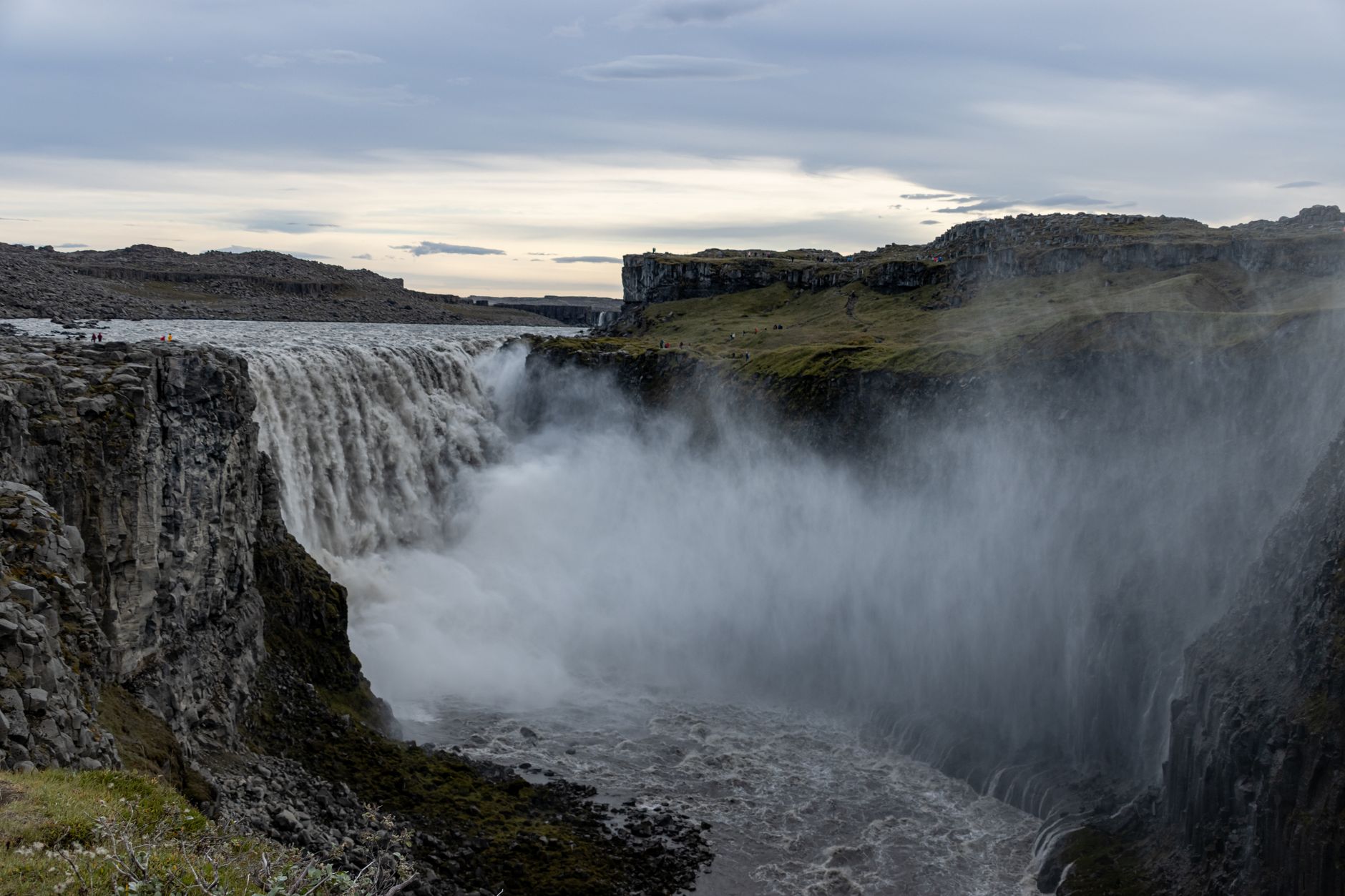
 Photo by Bingqi Huang via Unsplash
Drive the Ring Road
The loop is the trip, 1,332 kilometres around the island in either direction, with the south coast, the glacier lagoons and the north's geothermal fields on the way and a bed at every stop.
Soak, daily
From the flagship lagoons, the Blue Lagoon, Sky Lagoon, Mývatn Nature Baths, GeoSea and the Forest Lagoon, to the rustic natural pools at Hrunalaug and Landbrotalaug, to the town pool everywhere.
The Reykjadalur hot river
About an hour uphill through a steaming valley to a warm river you sit in, hotter the further upstream you go, the classic finish to a Golden Circle day.
A glacier walk
On Vatnajökull from Skaftafell or on Sólheimajökull near Vík, guided, crampons supplied, not strenuous and running all year, with Sólheimajökull the busier one for being closer to the capital.
Snorkel Silfra
At Þingvellir, the only place you can swim between two tectonic plates, in water of two to four degrees all year with a dry suit and effectively limitless visibility.
Jökulsárlón and Diamond Beach
Walk the lagoon shore for free among the icebergs and the seals, or take a zodiac or a summer kayak, and cross the road to where the ice washes back ashore on the black sand.
What to eat in Iceland
Thick cultured dairy, very high in protein; the default supermarket breakfast
Lamb-based hot dog ordered "with everything": fried and raw onion, mustard, ketchup, remoulade
Creamy fish and potato stew, the domestic comfort dish
Broth of lamb, root vegetables and herbs
Small lobster, served as soup or tails
Dense dark rye baked underground by geothermal heat for 24 hours
Cured Greenland shark, the adventurous item on any Þorrablót table
Tray-baked chocolate cake with coconut, the standard café slice
Icelandic cinnamon bun, the bakery staple
Discover food spots in Stippl
Find restaurants and markets on the map, save them to your itinerary, works offline too.
Icelandic customs and what not to do
First names for everyone
Icelanders are direct, egalitarian and informal, first names are used with strangers and the Prime Minister alike, and the handshake with eye contact is the greeting.
Bathing is an institution
Nearly every town has a geothermally heated public pool, usually outdoors, with a lap pool and warmer soaking pots, open all year in rain and snow and late into the evening.
Shower naked, with soap
Mandatory and non-negotiable at every public pool and geothermal bath before entering, with attendants who will send you back, and the swimsuit goes on after.
The hidden folk are respected
The huldufólk of Icelandic folklore retain genuine cultural respect, and roads and building projects have been rerouted to avoid disturbing reputed dwellings in the rocks.
Þetta reddast
It will all work out, the national phrase and a working philosophy in a country where the weather, the volcanoes and the roads are permanently unpredictable.
Nature rules are enforced
Viewpoints, paths and free hot springs get closed because visitors would not stay on the marked route, and the moss on the lava fields takes decades to regrow.
Do
- Shower naked, with soap, before entering any pool or hot spring
- Wear a swimsuit in the water; nudity is the shower rule, not the bathing norm
- Bring your own towel; rental costs extra even at some paid hot springs
- Take traction cleats off indoors, since they ruin floors
- Listen when an Icelander tells you something is dangerous
Don't
- Drive off marked roads and tracks; it is illegal, heavily fined and the scars last generations
- Stop on the highway or its shoulder for a photo; there are proper lay-bys
- Climb on the Sólheimasandur plane wreck, on icebergs or on the lava barriers near Grindavík
- Feed the Icelandic horses, and approach them slowly
- Pick up or displace rocks, and leave no trace at unsupervised hot springs
What an Iceland trip costs
Budget
€70–100
A campsite pitch or a tent, cooking from Bónus or Krónan, the free sights only and no paid tours.
Mid-range
€135–240
A campervan or a guesthouse, one restaurant meal a day and a handful of chosen tours.
High-end
€275–480
Hotels, restaurants throughout, guided glacier and lagoon experiences and a four-by-four.
Track what you actually spend
Set a daily budget per country and log expenses in any currency while you travel.
Visas, SIM cards and getting around
Entry & visa
Schengen, but not the EU
EU citizens use a national ID card, other passports get 90 days in any 180 across Schengen, and duty-free on arrival works because Iceland is outside the EU customs area.
Money
Near-cashless króna
Cards work essentially everywhere including remote farm stands and campsites, so there is little reason to withdraw króna; bring a card with a four-digit PIN for the unmanned petrol pumps.
Connectivity
Three networks, one dead zone
Síminn, Vodafone and Nova cover the Ring Road and the towns well, with real dead spots in the highlands and some fjords; EU residents roam on their own plan.
Getting around
A hire car, or capital tours
No useful public transport exists outside Reykjavík, so the trip is a hire car on the Ring Road, two-wheel drive in summer and a four-by-four by law on any F-road.
Health
112 for everything
One nationwide emergency number for police, fire, ambulance and search and rescue, non-emergency medical advice on 1770, and no vaccinations to arrange.
Water
Cold tap, never bottled
Cold tap water is safe everywhere with no boiling or filtering, so carry a refillable bottle; the hot tap smells of sulphur because it is geothermal, and that is normal.
Tipping
Not customary
Service is included, rounding up is welcome but never expected, and no guide-tipping figure exists that anyone agrees on.
Power & plugs
Type F, 230 volts
Both C and F plugs fit, so EU devices need no adapter and UK, US and Australian devices do; the supply is 230 volts at 50 hertz.
Language
Icelandic, and everyone's English
English is spoken fluently almost everywhere, Þ and ð are both a soft th, and the double L sits closer to tl, so Þingvellir lands near thing-vet-lir.
Icelandic worth knowing
Nobody expects you to speak the language, which is exactly why a handful of words goes so far.
HAH-loh
Hello · halló
GOH-than DIE-in
Good day · góðan daginn
tahk FIH-rir
Thank you · takk fyrir
FEER-ir-gev-thoo
Excuse me, or I'm sorry · fyrirgefðu
KVAR er
Where is…? · hvar er…?
skowl
Cheers · skál
THET-ta RED-ast
It will all work out, the national phrase · þetta reddast
SUND-lOYG
Swimming pool, the word on every town's sign · sundlaug
Iceland questions, answered
Five days covers Reykjavík, the Golden Circle and one big day trip, eight does the south coast properly, and the Ring Road wants ten as a floor. A typical Iceland trip runs 10 days on Stippl, so lay the loop out in Stippl with a bed at each stop, then show it to people who have driven it in subreddits like r/VisitingIceland.
Not for the Ring Road, the Golden Circle or the south coast in summer, where a two-wheel drive is fine. Yes, and by law, for any F-road into the highlands, and strongly advised in winter, when the ice and the wind make the responsible choice a tour from the capital for anyone who has not driven on snow.
One. Most stops get 1 night on Stippl and 73.5% are a single night, the highest one-night share of any country we hold, because the waterfalls and the lagoons are driven past on the way to the next bed and only the towns hold people longer.
Almost never, since 66.8% of Iceland trips on Stippl stay inside the country, far more than any other European destination, because the island is a whole holiday rather than a leg and the flights land and leave from the same airport.
Not in a vehicle. Sleeping in a campervan, a motorhome, a caravan or a roof tent outside a designated campsite is illegal under the Nature Conservation Act, and only conventional tents keep a narrow allowance on uncultivated land away from farms; the campsite network is dense enough that nobody needs to.
Among the lowest crime rates in the world, so the real risks are weather, water, geothermal ground and roads: wind that takes car doors off, sneaker waves on the black beaches, boiling ground off the boardwalks and ice on the winter roads. The morning ritual is road.is and vedur.is, and 112 covers everything.
Every guide is written by the Stippl editors and checked against the trips our travellers actually plan. Spotted something out of date? Let us know.

Plan Iceland in Stippl
Everything in this guide, ready to drop into your Iceland route, with planning and bookings in one app.