

Chongqing
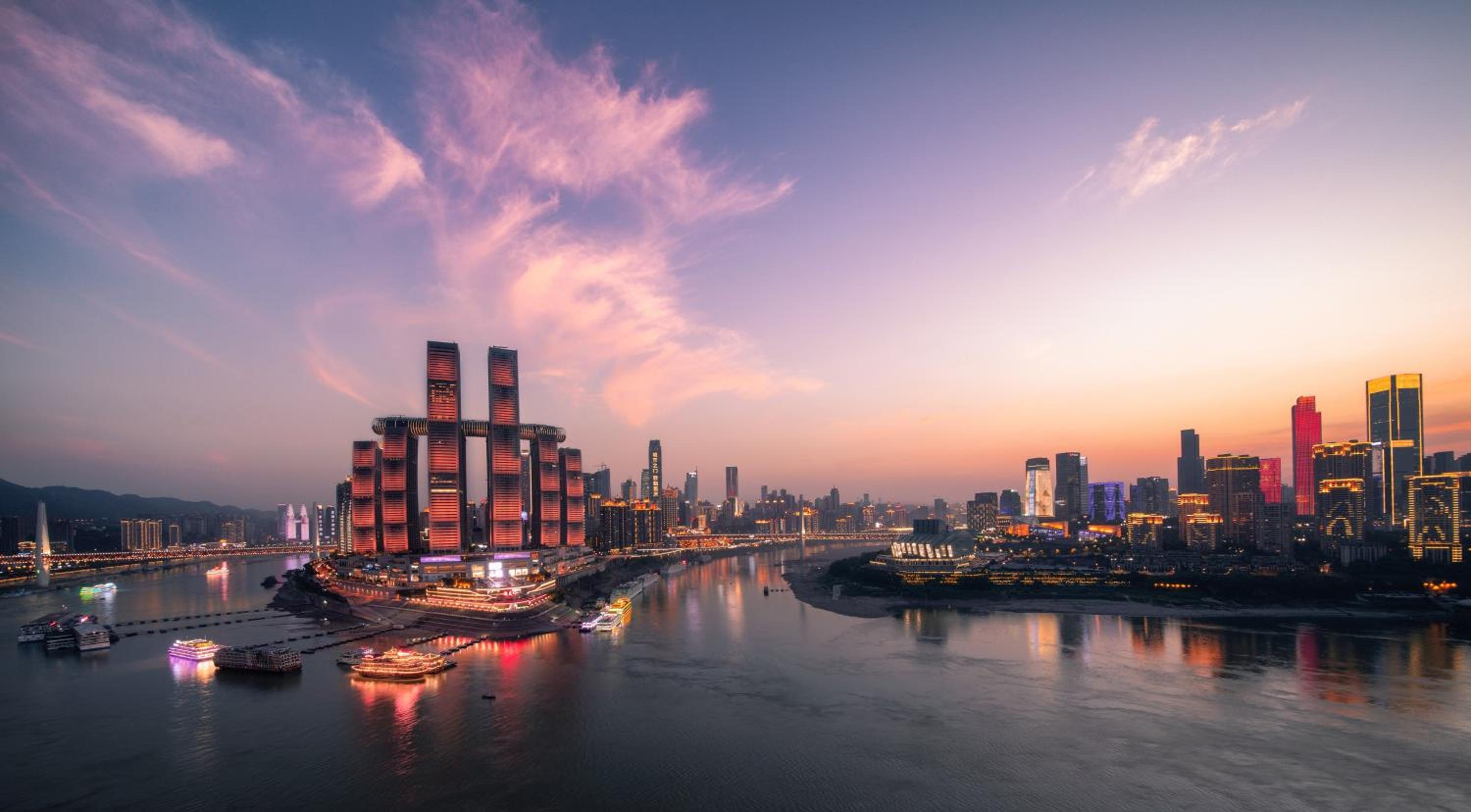
Chongqing is vertical, and that is the whole of it: a city built up and down cliffs where the Jialing meets the Yangtze, with a monorail through a tower block and hotpot invented on its docks. Three nights, the headline sights free, and the skyline from the far bank after dark.
Chongqing in a nutshell
Chongqing: what to expect
Every figure here is drawn from 113,000+ stops planned in China on Stippl.
Three nights in Chongqing make no sense in the best way, and that is the point. The old city sits on a peninsula where the Jialing runs into the Yangtze, built up and down cliffs rather than across a plain, so streets run over streets, escalators join districts and the Line 2 monorail passes through the middle of a residential tower at Liziba; Hongyadong's eleven storeys of stilted balconies light up orange over the river, the Yangtze cableway is a commuter crossing with the best view, and the nine-grid hotpot is the proof that the dish was born here. Most travellers give Chongqing 3 nights on Stippl.
Chongqing is an interior stop on a long China trip, and the stays here are among the country's longest. 56.70% of Chongqing stops planned on Stippl run to three nights or more, only 17.89% are a single night, and the city sits on 23.77% of N of Chinese trips, with Zhangjiajie, Chengdu and the river town of Furong its partners above the odds.
Sleep on the Jiefangbei peninsula for the centre or Nanbin Road for the view, book Hongyadong's free timed slot in the official mini-programme, and take the metro rather than trying to walk between altitudes. Skip Chongqing in July and August, when the temperature passes 35 degrees on steep wet steps, and skip the winter if the skyline is the point, because a hundred foggy days a year fall mostly between October and January.
Plan Chongqing in Stippl
Day-by-day planning, stays and budget in one app, with every place from this guide already on the map.
Download the appWho Chongqing is for
Anyone who came to eat
Chongqing is the hotpot city, the nine-grid pot is the local format, and the reason to come is the meal rather than a monument.
Lovers of cities that baffle
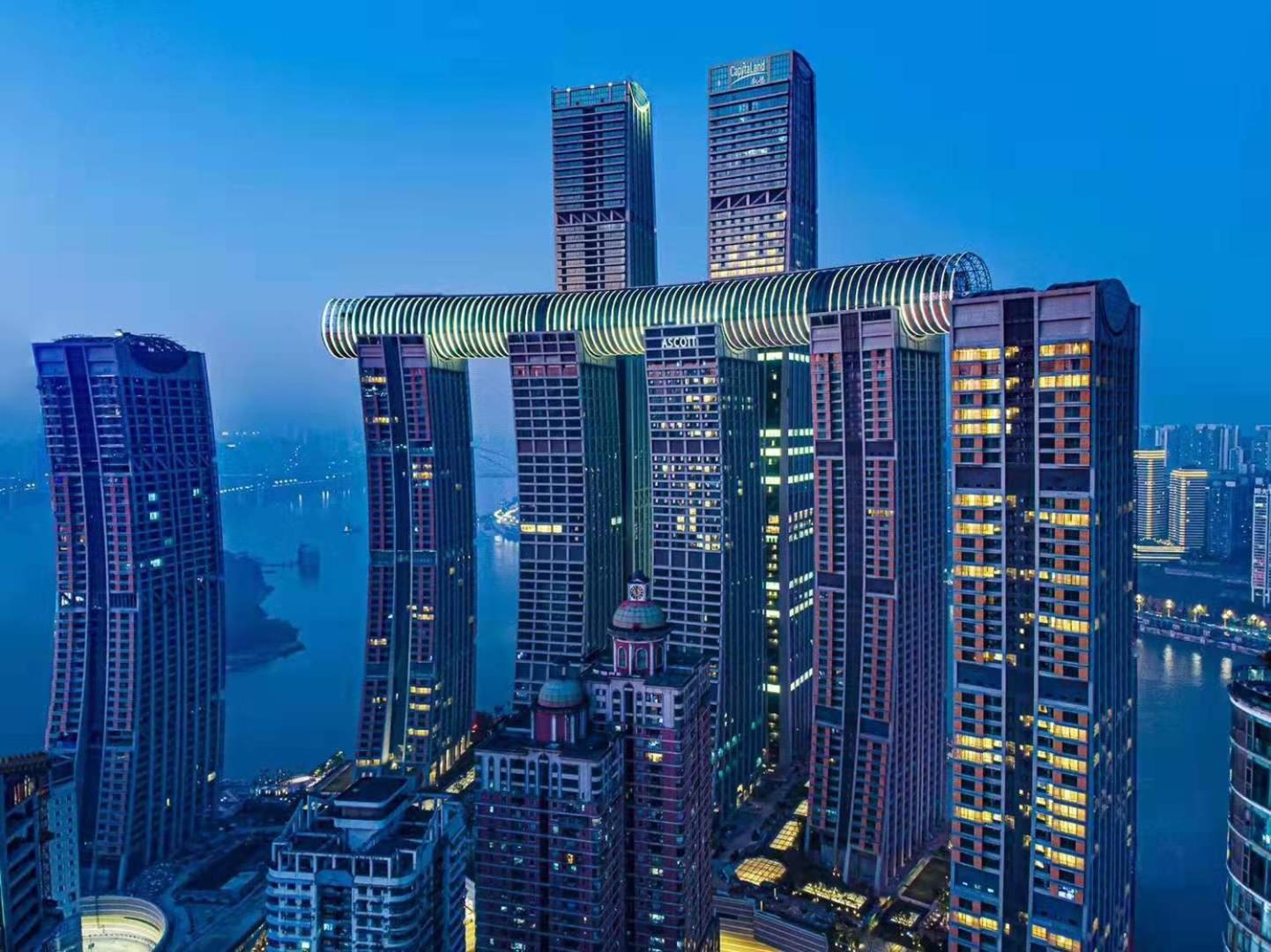
Escalators between districts, a monorail through a flat, streets stacked on streets and a crossing three storeys above the road it crosses.
Night photographers
The cliffside skyline after dark, from Nanbin Road across the river, is the city's whole case for itself.
Budget travellers
The headline sights are free, from Hongyadong to Liziba to the Three Gorges Museum, and the noodles cost under two euros.
Long-stay interior travellers
56.70% of Chongqing stops on Stippl run to three nights or more, on trips that carry about seven Chinese stops.
Zhangjiajie pairers
Chongqing sits on 23.77% of N of Chinese trips on Stippl, and Zhangjiajie is its strongest partner, a high-speed train east.
Maybe not for you: anyone who wants heritage, since the city was bombed flat in the war and rebuilt in the boom, with Ciqikou the exception; and anyone who needs sun, because a hundred foggy days a year fall mostly between October and January.
The best time to visit Chongqing
Spring
March to May
Warm, clearing after the winter fog and the best walking weather for a city of steps, with Labour Day week in early May the crowd to dodge at Hongyadong.
Summer
June to August
One of China's furnace cities, over 35 degrees on steep wet steps, with the hotpot somehow at its busiest and the metro the only sane way to move.
Autumn
September to November
The best of the year: the heat breaks, the skyline is clearest in September, and 11.9% of Chongqing plans on Stippl start in that one month, the year's peak.
The fog months
December to February
A hundred or more foggy days a year fall mostly here, with the skyline greyed out for days at a time, the cheapest rooms and the hotpot at its most justified.
- Most travellers give Chongqing 3 nights on Stippl, and only 17.89% of stops are a single night. The peninsula takes a day, Ciqikou and the cableway another, and the third is the skyline after dark from the far bank.
- Most travellers plan Chongqing about 103 days ahead on Stippl, and only 9.30% inside a fortnight. The trains release thirty days out and Hongyadong's free slots go days ahead in season.
- Golden Week in the first week of October fills Hongyadong and every train. The rest of October is the second-best month, so the trip moves a week.
- Chinese New Year lights the peninsula. The lantern displays over the river run for the fortnight and the hotpot houses reopen first, with the museums shut for the first days.
- The fog is the winter variable. It greys out the skyline for days and the air quality drops with it, so the night view is planned with a spare evening in autumn and abandoned in December.
- September is the peak on Stippl. 11.9% of Chongqing plans start in that one month against a December trough, because the heat has broken and the fog has not yet arrived.
Add your Chongqing dates and we'll flag the weather
Stippl shows the season, crowds and prices for every stop on your route.
Describe your trip, get a Chongqing itinerary in seconds
Everything in this guide is already in Stippl. Tell the planner how long you have and what you like: it builds the route, the days and the travel times, and you edit whatever you want.
Things to do in Chongqing


Nine-grid hotpot
The city's own format, one pot divided into nine squares so strangers sharing a table could each pay for their own, and the reason most people come; the divided mild-and-hot pot is a normal order.
Hongyadong after dark
Eleven storeys of stilted balconies lit orange over the Jialing, free on a timed slot booked in the official mini-programme, and best from the bridge across the river.
The Liziba monorail
Line 2 through the middle of a lived-in residential tower, seen from the viewing platform below or ridden from inside the train, and the whole attraction takes ten minutes.
The Yangtze River cableway
A working commuter crossing that happens to be the best view of the peninsula, for a metro fare, best in the last light.
Ciqikou Ancient Town
Ming and Qing lanes on the western edge, a preserved river port with snack stalls and mahua dough twists, and the closest thing to old Chongqing.
Nanbin Road after dark
The whole cliffside skyline from the far bank's river promenade, with the rooftop hotpot houses facing it, which is the city's case for itself in one look.
The neighbourhoods of Chongqing
Jiefangbei and Yuzhong
The central peninsula
The Liberation Monument, the towers, the hotpot houses and the densest streets in the city, with Hongyadong on its edge and the metro lines under it. For a first stay.
Everything walkable and most of the food, on the steepest and busiest ground in the city.
Hongyadong
The photograph
The cliff-face stilt complex beside Jiefangbei, restaurants and shops on eleven levels, the city's defining image after dark. For being inside the postcard.
Inside the image, but the crowds on the walkways every evening under the window.
Nanbin Road
The view back
The south-bank river promenade facing the skyline, with rooftop hotpot and the cleanest panorama of the cliffside centre. For the view.
The best view of the city, and a bridge or a cableway to get into it.
Jiangbei
The modern north bank
Malls, newer hotels and better rooms for the money, with the airport line running through it and the opera house on the point. For a quieter stay.
Better rooms for the price and the airport line, and a river between you and the peninsula.
Ciqikou
The old river port
Ming and Qing lanes on the western edge with snack stalls, teahouses and the mahua twists, a half day rather than a base. For old Chongqing.
The only old lanes in the city, and a long metro ride from the centre.
Liziba
Ten minutes
An ordinary residential block on the Jialing with a monorail through it, and the viewing platform the city built for the photograph. For the train through the building.
The train goes through the building, and that is the entire attraction.
See every Chongqing neighbourhood on one map
Save the areas you like and Stippl plots your days so you're not crossing the city twice.
Where to stay in Chongqing
Sleep on the Jiefangbei peninsula for the centre, on Nanbin Road for the view, or in Jiangbei for value, the three answers the city gives, and let the metro do the climbing between them. Most travellers give Chongqing 3 nights on Stippl and 56.70% of stops run to three or more, and a riverside room with the skyline is the one splurge the city rewards.
Jiefangbei and Yuzhong
€25–90
Hostels and business hotels in the towers, €20 to €120 a night.
Hongyadong
visit only
A few hotels inside and beside the complex, €50 to €160 a night, with the crowds below.
Nanbin Road
€30–100
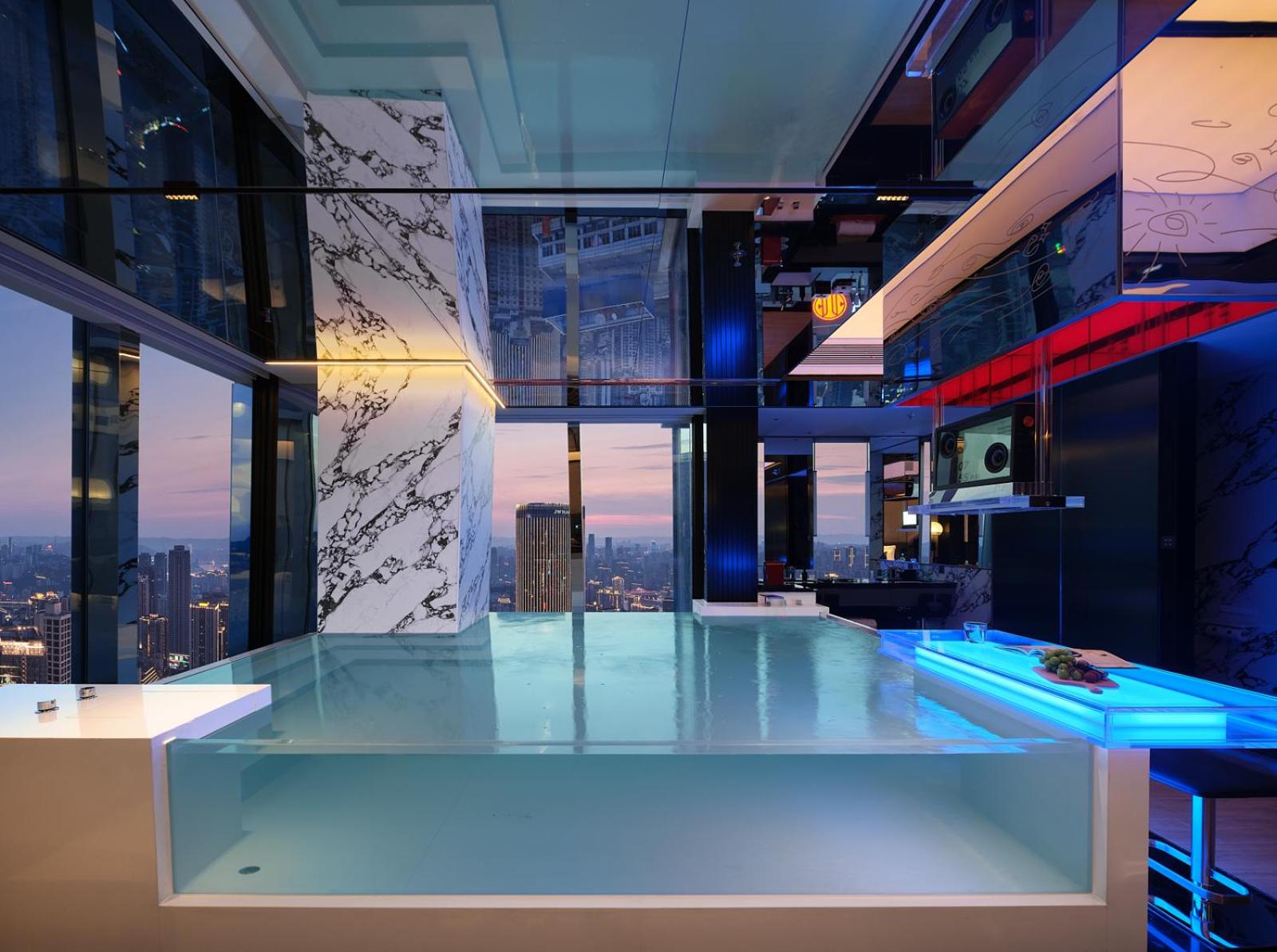
Riverside hotels with skyline views, €60 to €200 a night.
Jiangbei
€25–80
Newer chain hotels and apartments, €35 to €130 a night.
Ciqikou
€18–60
Guesthouses in the old lanes, €20 to €70 a night.
Liziba
visit only
Ordinary residential hotels near the monorail station, €25 to €80 a night.


What to eat in Chongqing
Nine-grid hotpot: one pot divided into nine squares, the local format
The city's breakfast: alkaline noodles in a chilli and pepper sauce
Fried chicken buried in a mound of dried chillies
Hot-and-sour sweet potato noodles, sold from stalls
Duck blood, tripe and vegetables in a numbing broth
Twisted fried dough, the Ciqikou souvenir snack
Discover food spots in Stippl
Find restaurants and markets on the map, save them to your itinerary, works offline too.
Chongqing customs and what not to do
Spice is local pride
And a test you are expected to fail cheerfully; the numbing heat is the point of the pot, and the locals enjoy watching it land.
The divided pot is normal
Asking for the yuanyang pot with a mild half is an ordinary order and not a loss of face, and the nine-grid pot has mild squares too.
Not Sichuan, since 1997
Chongqing people distinguish themselves from Sichuan after the split, and the hotpot claim is part of that; calling the city Sichuanese lands badly.
Payment is the apps
Alipay or WeChat Pay with a foreign card linked before the flight, at the noodle stall and the cableway alike.
Passport for everything
The trains, the hotel, the Three Gorges Museum and Hongyadong's slot are all tied to it.
Tipping is not done
Neither expected nor encouraged, at the rooftop hotpot houses as much as at a xiaomian counter.
Do
- Book Hongyadong's free timed slot in the official mini-programme
- Eat a small bowl of xiaomian for breakfast, standing
- Ride Line 2 through the Liziba building rather than only photographing it
- Take the cableway at dusk and walk Nanbin Road after dark
- Let the metro do the climbing; several lines are effectively lifts
Don't
- Try to walk between districts by the map; the map is flat and the city is not
- Come in July or August expecting to walk the steps at noon
- Plan the night view for December; the fog owns the winter
- Call Chongqing part of Sichuan
- Expect heritage; Ciqikou is the exception rather than the rule
What a Chongqing trip costs
Budget
€18–30
A hostel bed in Yuzhong, xiaomian breakfasts, the monorail, and the two headline sights, which are free.
Mid-range
€30–65
A private room downtown, a hotpot dinner with beer, the cableway and the museums, a Ciqikou half day.
High-end
€120+
A riverside hotel with a skyline view, taxis over a city where walking is vertical, the Nanbin Road hotpot houses.
Track what you actually spend
Set a daily budget per country and log expenses in any currency while you travel.
Fun facts about Chongqing
The nine-grid hotpot of Chongqing was invented so strangers could share a pot. A single pot divided into nine squares, created by river porters and street cooks, so each diner paid for their own section.
A metro line runs through a lived-in tower block at Liziba in Chongqing. Line 2's monorail passes through floors six to eight of a residential building, with the flats on either side.
Chongqing was split from Sichuan in 1997. The municipality it became administers an area the size of Austria, which is why its population figures vary by tens of millions.
Hongyadong in Chongqing is eleven storeys of stilt houses built into a cliff. A modern reconstruction of the old riverside style, lit orange every evening over the Jialing.
The fog gave Chongqing a hundred or more grey days a year. Mostly between October and January, which earned it the name of the Fog City before the skyline gave it a new one.
Ciqikou in Chongqing earned national intangible heritage status in 2022. The Ming and Qing river port on the western edge, with its mahua twists and teahouses, is the one old quarter the boom left.
Local tips for Chongqing
The metro is the only sane way
Several lines are effectively lifts between altitudes, and a crossing on the map can be three storeys above the road it crosses.
The cableway price wanders
Sources give the Yangtze crossing at about €3 to €4 each way, with a transport-card rate below that, and the queue at dusk is longer than the ride.
The rest is national
Rail booking thirty days ahead, the passport at every gate and the payment apps linked before the flight, exactly as everywhere else in China.
Terrain and heat, not crime
Steep wet steps, long drops and summer temperatures over 35 degrees are the hazards, and the city is safe for visitors otherwise.
Winter air is poor
The fog months bring the air quality down with them, and the skyline can vanish for days.
Three nights is the norm
Most travellers give Chongqing 3 nights on Stippl and 56.70% of stops run to three or more, so the peninsula, Ciqikou and the night view each get their evening.
Chongqing questions, answered
Most people give Chongqing 3 nights on Stippl and 56.70% of stops run to three or more, among the longest stays in China. One day for the peninsula and Hongyadong, one for Ciqikou and the cableway, and the third for the skyline from Nanbin Road after dark.
Yes, and the nine-grid pot is the local proof: one pot divided into nine squares, created by river porters so strangers sharing a table could each pay for their own. Chengdu is where the cuisine was codified, 75 minutes away by train, and most long trips carry both.
In the interior, between Chengdu and Zhangjiajie: only 5.4% of Chongqing trips start here, of everyone who plans it on Stippl, and Zhangjiajie is its strongest partner east. Put it into Stippl as three nights after Chengdu, then ask people who have done the loop, in subreddits like r/chinatravel, whether the Yangtze cruise earns its days.
It is free, but you must book a timed slot in the official mini-programme with the passport, and the evening slots go days ahead in season. The view from the bridge across the Jialing needs no ticket at all, and is the photograph anyway.
September and October, when the heat has broken and the fog has not yet arrived, and 11.9% of Chongqing plans on Stippl start in September alone. Not July or August, when the city passes 35 degrees on steep wet steps, and not December, when the skyline vanishes for days.
Both, if the trip allows: they are 75 minutes apart by high-speed rail, most long trips carry the pair, and they are opposite cities, one slow and flat with teahouses, the other vertical and loud with the skyline. If it must be one, Chengdu for the pandas and the pace, Chongqing for the hotpot and the view.
Every guide is written by the Stippl editors and checked against the trips our travellers actually plan. Spotted something out of date? Let us know.

Plan Chongqing in Stippl
Day-by-day planning, stays and budget in one app, with every place from this guide already on the map.
Download the app