

Durres
Durrës is a kilometres-long beach at Albanian prices with the largest Roman amphitheatre in the Balkans behind it, half an hour from Tirana. The Italy ferries dock here, and one night is the honest use of it.
Durres in a nutshell
Durres: what to expect
What follows sits on 93,000+ stops planned in Albania on Stippl.
Durrës was founded as Epidamnos around 627 BC and it is one of the oldest cities on the Adriatic. The Roman amphitheatre is the largest in the Balkans, built for about twenty thousand people, and it sits half-excavated among ordinary houses because the city grew over it and it was only found again in 1966. The Archaeological Museum holds the country's biggest collection, the Venetian tower anchors the surviving wall, and the beach strip south of the port is the busiest sand in Albania.
Durrës is the only Albanian coastal destination where most stays are a single night. Sarandë, Ksamil, Himarë and Vlorë all sit at two, and Durrës behaves like an inland transit town rather than the beach city it looks like on a map. It has exactly one real relationship, Vlorë up the coast, and one real opposite: Theth in the mountains, the single pairing in the country that reads below chance from both directions.
One night, taken between Tirana and the coast, which is what almost everyone does with it. The motorway takes thirty minutes and there is a train as well. Walk the Vollga at dusk when the whole city does, and swim off the rocks at Currila rather than on the strip if you want clearer water. Do not plan a Riviera holiday around Durrës, because the Ionian is a different trip, and do not come here in August looking for quiet.
Plan Durres in Stippl
Day-by-day planning, stays and budget in one app, with every place from this guide already on the map.
Download the appWho Durres is for
History travellers
The amphitheatre and the largest archaeological collection in the country are both here, and both are quiet outside summer.
Anyone breaking the road south
Most people give Durrës 1 night on the way to the coast, and that is the honest use of it.
Budget beach travellers
The strip is cheap and enormous, and the sand runs for kilometres in either direction.
Ferry passengers
The Italy boats dock here, so Durrës is the first or last night of a lot of Balkan trips.
Maybe not for you: anyone wanting a Riviera holiday, since the Ionian beaches are a different trip; and anyone wanting quiet in August, because this is the busiest beach in the country and it behaves like it.
The best time to visit Durres
Winter
November to March
Wet and mild, and the city keeps working as a port and a commuter town while the beach strip closes. Nothing here depends on the season except the sand.
Spring
April and May
Warm, dry and the beach still empty. The amphitheatre and the archaeological museum are best in these months, before the heat and before the crowd.
Summer
June to August
The busiest sand in Albania, with Tirana and Kosovo on the beach at weekends, and the sea warm from June. The northern strip is quieter than the southern one.
September
September
Warm sea, thinning crowds and the first proper rain of the autumn. For a beach stop it is the month to pick.
- July is the month most travellers plan Durrës for on Stippl, and Albania as a whole is planned only 58 days ahead. The beach hotels are the one part of the city that fills, and they fill with domestic weekenders first.
- Durrës is a ferry port before it is a beach. The Bari and Ancona boats run year-round and the summer schedule adds sailings; on a Friday in August the port road backs up and the crossing is worth booking ahead.
- The weekend crowd comes by car from Tirana. Saturday and Sunday from June to August put the capital on the sand; a midweek day in the same weeks has the same sea and half the people.
- The Roman amphitheatre sits in the middle of a residential block and has no shade. Visit before ten in summer; it is a twenty-minute site and the museum on the seafront is the better hour afterwards.
Add your Durres dates and we'll flag the weather
Stippl shows the season, crowds and prices for every stop on your route.
Describe your trip, get a Durres itinerary in seconds
Everything in this guide is already in Stippl. Tell the planner how long you have and what you like: it builds the route, the days and the travel times, and you edit whatever you want.
Things to do in Durres
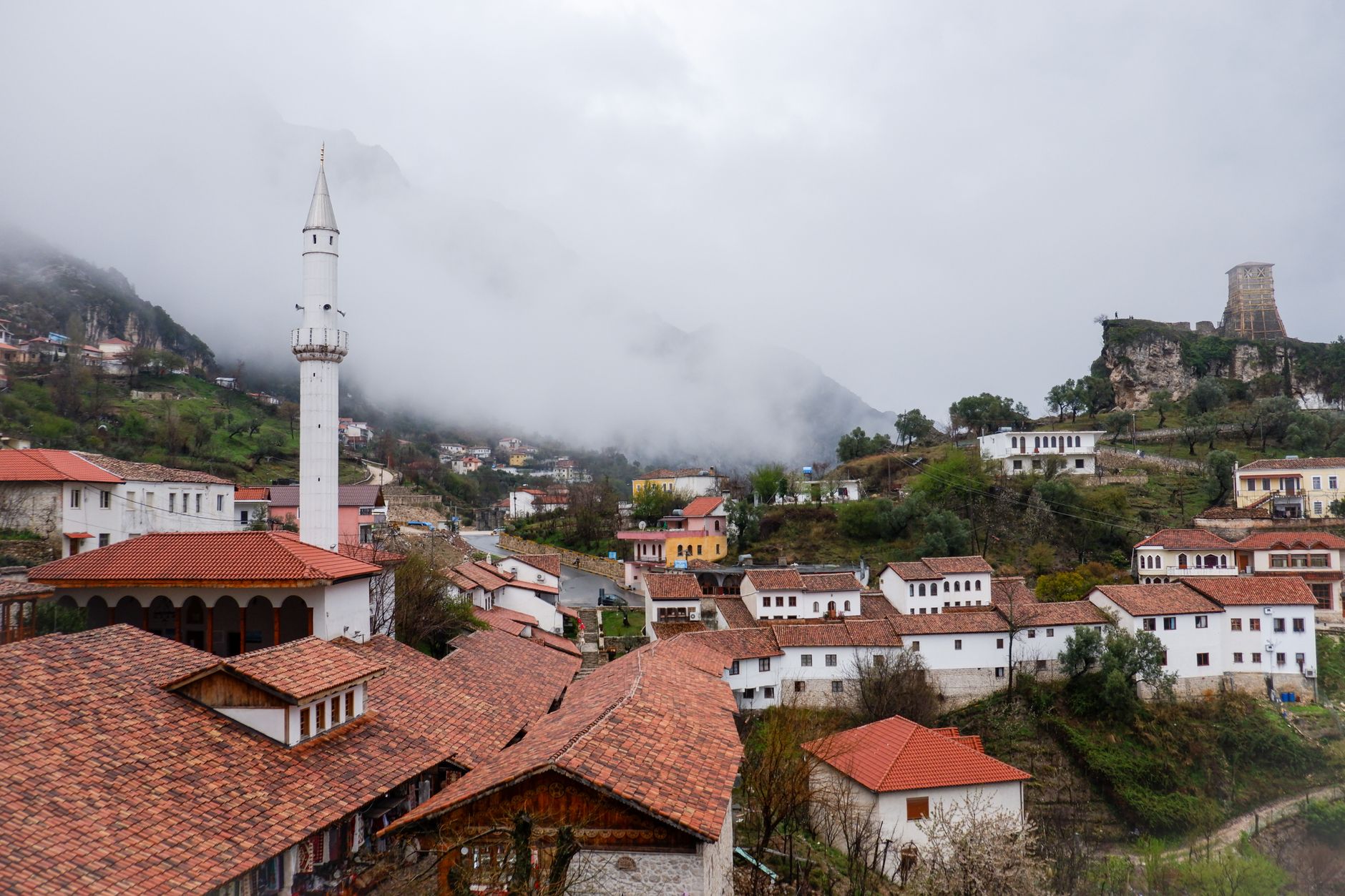 Photo by Eva Hamitaj via Pexels
The Roman amphitheatre
Walk the largest amphitheatre in the Balkans, built for twenty thousand in the second century and lost under the growing city until the 1960s, which is why houses still stand on part of it, about €3. Twenty minutes, before ten in summer.
The Archaeological Museum
Spend an hour with Albania's largest archaeological collection on the waterfront beside the Byzantine walls, about €3. Closed Mondays, and the Roman busts are the reason.
The Venetian Tower
Climb the round tower anchoring the surviving city wall, rebuilt by Venice in the fifteenth century and now partly a bar. A drink on top at sunset is the way to see it.
The Byzantine Forum
Stand in the circular colonnaded plaza of the fifth or sixth century, open and free in the middle of the street grid. Five minutes, on the way between the amphitheatre and the museum.
The Vollga at dusk
Walk the seafront promenade at the end of the day, when the whole city walks it, free. The bars and the ice cream stands run the length of it.
Swimming at Currila
Swim off the rocks at Currila at the northern end of the bay rather than on the strip, for clearer water and fewer people. Free, and the fish restaurants above it are the lunch.
The neighbourhoods of Durres
The old town
Amphitheatre, museum, tower
The historic core: the Roman amphitheatre embedded among residential blocks, the archaeological museum, the forum and the Venetian tower, with a few boutique hotels in the old streets. For history and for the city rather than the beach.
The ruins on foot, and a beach that is not the one to swim at.
The Vollga
Palms, cafés, the evening walk
The waterfront boulevard between the old town and the beach strip: palms, cafés, ice-cream counters and seafood restaurants, and the xhiro every evening, with hotels along it. For first visits and for the promenade.
The evening walk at the door, and the front's prices.
The beach strip
Kilometres of sand, hotel wall
Kilometres of sand south of the port behind a wall of hotels and beach bars, Albania's busiest beach and where almost all the accommodation is. For beach stays and families who want the sea and the sunbeds.
The sand at the door, and the busiest beach in the country in August.
Currila
Rocky coves, clearer water
The rocky coast north of the harbour where the water clears and deepens: clifftop restaurants, small coves and the city's more expensive hotels. For couples and swimmers who want the water rather than the sand.
Clear water and the quiet, and a taxi to the centre.
See every Durres neighbourhood on one map
Save the areas you like and Stippl plots your days so you're not crossing the city twice.
Where to stay in Durres
Stay in the old town for a first visit if the amphitheatre and the museum are why you came, and on the beach strip only if the beach is: almost all the rooms are there, family-run and variable. 52.9% of Durres stops planned on Stippl are a single night, the only Albanian coastal stop where that is true. For quiet and clear water, Currila is the better bay.
The old town
Hostels and a few guesthouses among the Roman remains, dorms €10 to €15 and rooms €25 to €50.
The Vollga
Mid-range hotels along the waterfront boulevard, €40 to €90, with the evening walk outside.
The beach strip
Family-run villas and mid-rise hotels behind the sand, €25 to €70, cheap and widely variable in quality.
Currila
The city's more expensive hotels on the rocky coast, €60 to €130, quieter and with clear water.


What to eat in Durres
Flaky filo pastry with spinach and cheese, meat and onion, or pumpkin
Adriatic seafood over pasta, reflecting the city's Italian influence
Adriatic fish soup
City ice-cream institution operating since the 1930s
Discover food spots in Stippl
Find restaurants and markets on the map, save them to your itinerary, works offline too.
Durres customs and what not to do
The xhiro is on the Vollga
The evening walk along the seafront is the city's fixed ritual and the promenade fills from seven; the restaurants along it expect you to sit late over one drink.
The amphitheatre is in a street
Roman Durrës sits under the modern city and the arena is entered from a residential lane; the houses around it are homes, so the noise and the photographs stay inside the fence.
The port is the city's job
Ferries to Bari and Ancona run from the middle of the front; the port area is working, the beach beside it is not for swimming, and the lorries have the road.
Dress for a city, not a resort
Beachwear on the sand at Golem and Plazhi i Durrësit; the centre, the mosque and the archaeological museum want a shirt and covered shoulders.
Do
- Walk the Vollga at sunset with everyone else
- Swim south at Golem, not off the port
- Buy the ferry ticket a day ahead in summer
- Visit the amphitheatre in the morning before the heat
Don't
- Expect a beach holiday from the city front
- Drive into the centre on a summer weekend; park and walk
- Plan around the port timetable without checking it; ferries slip by hours
- Photograph the port installations
What a Durres trip costs
Budget
€40–55
Dorm bed or basic guesthouse, buses and furgons, market food plus a €5–10 restaurant meal, free hikes and beaches.
Mid-range
€90–130
Private room or small hotel, a share of a hire car, restaurant meals, paid sunbeds, entry fees and a boat trip.
High-end
€200+
Boutique hotel or Riviera resort, private transfers or an automatic hire car, beach clubs, guided treks.
Track what you actually spend
Set a daily budget per country and log expenses in any currency while you travel.
Fun facts about Durres
The amphitheatre is the largest in the Balkans and was lost for centuries. The city built over it, and it was only rediscovered in the 1960s, which is why houses still stand on its rim.
Durrës was founded around 627 BC as Epidamnos. It became the Roman Dyrrachium and the western end of the Via Egnatia, so the road to Constantinople started here.
The pine forest behind the old beach was planted under communism. The regime put it there to hold the coastline against erosion, and the promenade now runs through it.
Albania's second city ranks tenth in planned stops on Stippl. It sits roughly level with Theth, a mountain village of a few hundred people, because the country is travelled by appeal rather than by population.
The amphitheatre held about 20,000 spectators. It was built in the second century and sits half-excavated among ordinary apartment blocks, with a chapel of Byzantine mosaics in one gallery.
Durrës is Albania's main port, with ferries to Bari and Ancona. It is thirty minutes from Tirana by motorway, which is why it is the one coastal stop taken between the capital and the Riviera.
Local tips for Durres
The easiest Tirana day trip
Thirty to forty minutes by road, about €2 by bus from the north terminal, and the old town is flat and compact, which none of Albania's other historic centres is.
The port runs to Italy
The Bari and Ancona ferries dock beside the old town, year-round with more sailings in summer, from about €50. On a Friday in August the port road backs up; book ahead.
Most people stay one night
52.9% of stops are a single night, the profile of a transit town rather than a beach one. The amphitheatre and the museum fill a morning; the beach fills the afternoon.
Swim at Currila
The strip's sand is crowded and the water off it is not the cleanest; Currila at the northern end is rocks and clearer water. Reef shoes, and the fish restaurants above it.
August crowds on the strip
The beach strip is full and the road behind it carries heavy summer traffic. A weekday in June or September has the same sea and half the people.
The 2019 earthquake left marks
Durrës sits in a seismically active area and some buildings still show the damage. The old town is flat and well lit and raises no other concern at any hour.
Durres questions, answered
Only if the timing suits it. Durres carries 3.74% of everything planned in Albania on Stippl, near the bottom of the list, because most routes head straight past it to the south. Put it into Stippl as a morning out of Tirana rather than a night of its own.
One, or none at all. Travellers planning Durres on Stippl give it 1 night, the only place on the Albanian coast where that is true, because the Riviera two hours further south is what people are actually driving towards.
Easily, and plenty do: 11.8% of Durres stops planned on Stippl are same-day. It is thirty to forty minutes by road from the capital, less than the wait for a bus heading anywhere further. Go for the amphitheatre and the sea air and be back for dinner.
For convenience and price, yes. For the water and the setting, no: the Riviera two hours south is a different sea entirely, clear where this is silty and backed by mountains rather than apartment blocks. Durres beach is where Tirana goes on a hot Sunday, and on those terms it works.
The largest in the Balkans, and only half dug out, so it sits in a hollow with apartment blocks looking down into it and a small Byzantine chapel with mosaics set into one wall. It takes half an hour to walk and it is the one thing here that nowhere else in Albania has.
They sit several kilometres apart, so decide before you book a bed. The old town has the amphitheatre, the museum and the Venetian tower and almost no sand; the beach strip is hotels and restaurants and almost no history. A taxi between the two is short and cheap.
Every guide is written by the Stippl editors and checked against the trips our travellers actually plan. Spotted something out of date? Let us know.
Plan Durres in Stippl
Day-by-day planning, stays and budget in one app, with every place from this guide already on the map.
Download the app