

Antigua Guatemala
Antigua Guatemala is the Spanish colonial capital of Central America until the earthquake of 1773, a UNESCO grid of cobbled streets under three volcanoes with its ruined churches left ruined, and the hinge the whole country turns on. Three nights, four with the Acatenango overnight, everything on foot in real shoes, and the airport shuttle straight here rather than a night in the capital.
Antigua Guatemala in a nutshell
Antigua Guatemala: what to expect
This is what 52,000+ planned stops in Guatemala on Stippl say about Antigua Guatemala.
Three nights in Antigua Guatemala, four with the volcano, and the grid walked end to end in twenty minutes. The Acatenango overnight is camping at 3,700 metres to watch Fuego erupt through the night, the Arco de Santa Catalina frames Agua beneath it before eight, Semana Santa lays sawdust carpets in the streets for the processions to destroy, Las Capuchinas has its circular tower of eighteen cells, La Merced is the yellow Baroque church with the finest façade in Central America, and Cerro de la Cruz at sunrise gives the grid with Agua behind it. Most travellers give Antigua Guatemala 3 nights on Stippl.
Antigua Guatemala is the hinge of every Guatemalan trip. The town is on 83.2% of the trips planned through Guatemala on Stippl, nearly twice the capital's share, it takes 21.8% of every Guatemalan stop, and only 1.84% of those stops are no night at all, because every shuttle on the standard circuit starts here and the airport is an hour away.
So take the airport shuttle straight here, sleep in the centro for a first stay, book the Acatenango overnight with a guided group and a spare day after it, and eat at the market rather than the Parque Central. Skip a night in the capital first, skip the volcano trails alone, since robberies have happened and the groups exist for a reason, and skip Semana Santa unless the room was booked months ago, because the town doubles its prices and fills.
Plan Antigua Guatemala in Stippl
Day-by-day planning, stays and budget in one app, with every place from this guide already on the map.
Download the appWho Antigua Guatemala is for
First-timers to Central America
A small, walkable, beautiful base with everything organised for visitors and a full range of onward shuttles, on 83.2% of Guatemalan trips on Stippl.
History and architecture people
Spanish Baroque as it was built and as the earthquakes left it, in one grid, with the ruins left open to the sky.
Adventure travellers
Acatenango leaves from here, and it is the reason a lot of people come to Guatemala at all.
Spanish learners
One of the cheapest and longest-established immersion towns anywhere, with homestays the norm and a week the unit.
Food travellers
The only place in the country with a developed restaurant and café scene, plus a market that has nothing to do with it.
Three-night stayers
Most travellers give Antigua Guatemala 3 nights on Stippl, and only 25.1% of stops are a single night.
Maybe not for you: anyone looking for an untouristed Guatemala, since this is the most visited town in the country and the prices reflect it; anyone with mobility difficulties, because the cobbles are severe; and anyone arriving at Semana Santa without a room.
The best time to visit Antigua Guatemala
The dry season
November to April
Clear mornings with all three volcanoes out, cold nights at 1,500 metres, and the Acatenango camp at its best and its coldest.
The wet season
May to October
Rain most afternoons and clear most mornings, the town green and half-empty, the rooms at their cheapest and the volcano often in cloud.
Semana Santa
Late March or April
The week the town fills for the processions and the carpets, moving with Easter, with rooms booked months ahead and prices doubled.
The canícula
Late July to early August
A short dry spell inside the wet season when the summer-holiday visitors come and the volcano climbs run again.
- Most travellers give Antigua Guatemala 3 nights on Stippl, and 25.1% of stops are a single night. Three covers the grid, the ruins and a day trip, and four is the Acatenango version with a day to recover.
- The Acatenango overnight is a dry-season climb. The camp sits at 3,700 metres, the nights fall below freezing, and in the wet season the cloud can hide Fuego entirely.
- Semana Santa doubles the prices and fills the town. The processions and the carpets are the biggest event in the country, and the room is booked months ahead or the week is avoided.
- Only 12.1% of trips carrying Antigua Guatemala on Stippl are planned inside a fortnight. The flights are long and the circuit is a fortnight, so the town is booked with the rest.
- The Day of the Dead kites fly an hour away. Sumpango and Santiago Sacatepéquez on 1 November, and the day trip fills every shuttle in town.
- The arch is empty before eight. The photograph with Agua framed under it belongs to the first hour of the morning, and by ten the street is full.
Add your Antigua Guatemala dates and we'll flag the weather
Stippl shows the season, crowds and prices for every stop on your route.
Describe your trip, get a Antigua Guatemala itinerary in seconds
Everything in this guide is already in Stippl. Tell the planner how long you have and what you like: it builds the route, the days and the travel times, and you edit whatever you want.
Things to do in Antigua Guatemala
The Acatenango overnight
Camping at around 3,700 metres to watch Fuego erupt through the night, the country's headline experience and the reason many people come at all.
The arch before eight
The Arco de Santa Catalina with Agua framed beneath it, photographed before the street fills and the shops open.
Semana Santa
The sawdust alfombras laid overnight in the streets for the processions to walk over and destroy, the largest Holy Week in the Americas.
Las Capuchinas
The convent ruins with the circular tower of eighteen cells around a central courtyard, roofless and open.
La Merced
The yellow Baroque church with the finest façade in Central America, and the fountain in the cloister behind it.
Cerro de la Cruz at sunrise
The hill above the town for the grid with Agua behind it, in the first light and before the heat.
The quarters of Antigua Guatemala
Centro Histórico
The colonial grid
The Parque Central, the cathedral ruins, La Merced and the arch, with everything within a ten-minute walk including the ruins and the best restaurants. For a first stay.
Everything within ten minutes, and you pay three times the market's prices for it.
Cerro de la Cruz and the north
The hill and the quiet streets
The viewpoint over the grid with Agua behind it, best in the early morning, and the calmer streets below it where the long-stayers rent. For second visits and longer stays.
Quiet and cheaper, and a hill between you and the centre after dark.
The western quarter
Where the town works
The municipal market, the bus terminal and the everyday streets, with the least touristed food in town and the chicken buses to the villages. For eating cheaply and moving on.
The cheapest food and the buses, and no colonial postcard.
Jocotenango
The next town north
The adjoining town a kilometre up the road, with the coffee estate, the cheaper long-stay rooms and the chicken bus into Antigua every few minutes. For a budget month.
Cheaper by half, and a bus or a walk from the grid after dark.
Ciudad Vieja and the villages on Agua
The slopes
The older capital site five kilometres south under Agua and the villages of San Juan del Obispo and Santa María, with the coffee farms and the volcano trailheads. For a quiet base with a car.
Quiet and green, and nothing within walking distance of the sights.
See every Antigua Guatemala neighbourhood on one map
Save the areas you like and Stippl plots your days so you're not crossing the city twice.
Where to stay in Antigua Guatemala
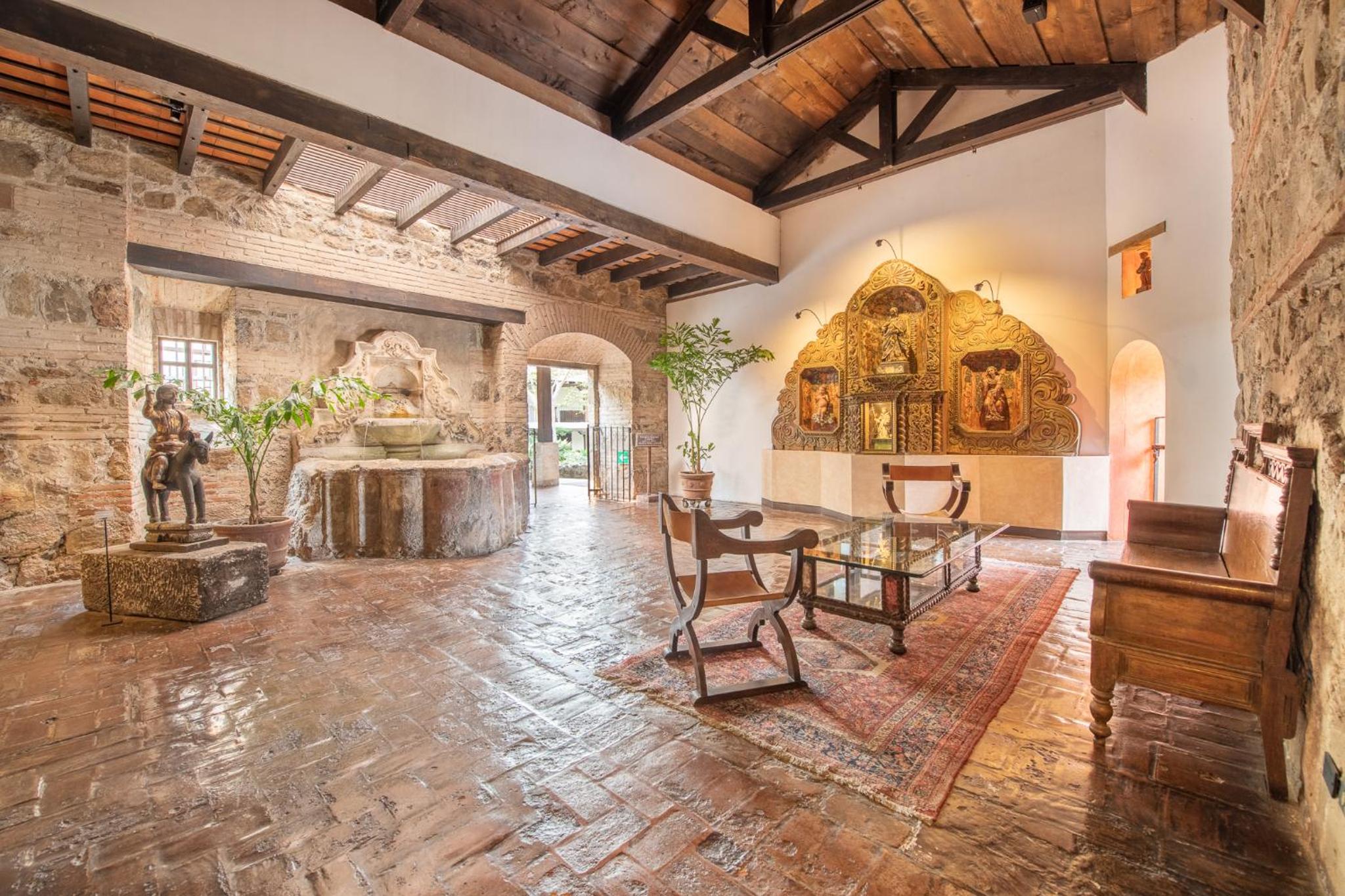
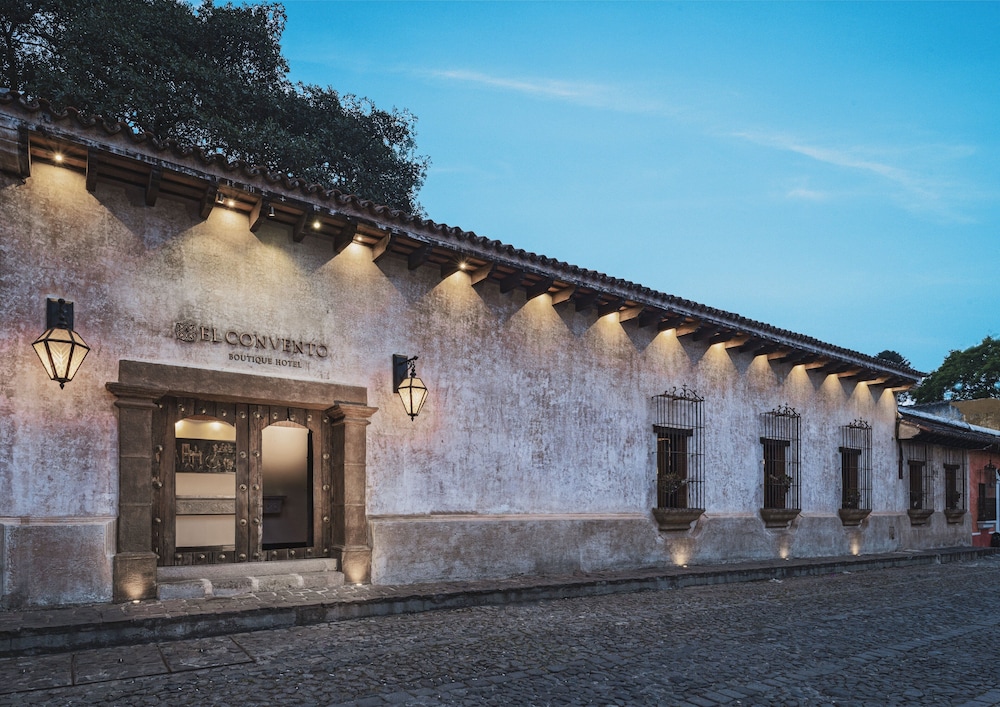
The country's only real boutique hotel scene, in restored colonial houses around the centre, and the hostels and homestays a few streets out. Most travellers give Antigua Guatemala 3 nights on Stippl, and the Spanish schools place students with families for a week at a time.
Centro Histórico
$$
Converted convents and boutique hotels on the grid, €60 to €250 a night.
Cerro de la Cruz and the north
Guesthouses and long-stay rooms below the hill, €20 to €70 a night.
The western quarter
Hostels and homestays near the market, €8 to €40 a night.
Jocotenango
Long-stay rooms and apartments up the road, €10 to €35 a night.
Ciudad Vieja and the villages on Agua
Coffee-farm lodges and village guesthouses, €30 to €120 a night.


What to eat in Antigua Guatemala
The national stew, thickened with toasted seeds
Stuffed peppers in tomato broth
Fried sweet plantain and black bean
Small tamales, the everyday snack
Single-origin from the surrounding farms
Not Guatemalan, and unavoidable here
Discover food spots in Stippl
Find restaurants and markets on the map, save them to your itinerary, works offline too.
Antigua Guatemala customs and what not to do
Ask before photographing
Antigua is touristed enough that this gets forgotten, and it matters as much here as anywhere in the highlands.
The carpets are walked over
The Semana Santa alfombras are destroyed deliberately by the procession, and stepping on one before it passes is a serious offence.
Churches are working buildings
La Merced and San Francisco are in use and not only ruins, and the shoulders and knees are covered inside.
Buenas is the greeting
Used constantly, on entering a shop, a comedor or a shuttle, and it opens every conversation.
Tipping is ten percent
In restaurants, and about €5 to €10 a person a day for a trek guide, handed over at the end.
Do
- Photograph the arch before eight, when the street is empty
- Book Acatenango with a guided group and a spare day after it
- Eat lunch at the market for a third of the Parque Central price
- Bring real shoes; the cobbles are the reason
Don't
- Walk a volcano trail without a group
- Step on a Semana Santa carpet before the procession
- Photograph anyone in traditional dress without asking
What an Antigua Guatemala trip costs
Budget
€22–35
A dorm bed, comedor lunches and walking the grid.
Mid-range
€52–86
A private room, a guided day trip and restaurant dinners.
High-end
€130+
A converted convent, private transfers and the better kitchens.
Track what you actually spend
Set a daily budget per country and log expenses in any currency while you travel.
Fun facts about Antigua Guatemala
Antigua Guatemala was the capital of Spanish Central America until the earthquake of 1773. The capital moved to what is now Guatemala City, and the ruins were left where they fell.
The Semana Santa carpets of Antigua Guatemala are made of dyed sawdust. Laid overnight and destroyed by the procession that walks over them within hours.
Las Capuchinas in Antigua Guatemala has a circular tower of eighteen nuns' cells. Around a central courtyard, and unlike anything else the order built in the Americas.
Fuego drops ash on Antigua Guatemala several times a year. One of four active volcanoes in the country, and the one the Acatenango camp is built to watch.
Antigua Guatemala has three volcanoes over the town: Agua, Fuego and Acatenango. Agua is the one under the arch, and Acatenango the one you sleep on.
Antigua Guatemala is on 83.2% of the Guatemalan trips planned on Stippl. The hinge of the circuit, and only 1.84% of its stops are no night at all.
Local tips for Antigua Guatemala
Everything is walked
The grid is twenty minutes end to end and the cobblestones are the reason to bring real shoes, since a twisted ankle is the commonest injury in town.
The shuttle hub of the country
Every onward leg on the standard circuit starts here, so the lake, Flores and the coast are booked from any agency on the grid the day before.
An hour from the airport
The shuttle takes about an hour and is the reason people skip the capital entirely, with the pickup arranged before landing.
Chicken buses from the market
To the surrounding villages, leaving from the western side and far cheaper than shuttles, and the way to Chichicastenango on a market day.
The safest town in the country
Patrolled by tourist police, and standard awareness on the grid after dark is the whole of the advice.
Volcano trails need a group
Armed robbery on Acatenango and Pacaya has happened, which is why guided groups are the norm rather than an upsell, and 25.1% of Stippl stops here are a single night, too short for the climb.
Antigua Guatemala questions, answered
Three is the number and four is the Acatenango version: most travellers give Antigua Guatemala 3 nights on Stippl, and one in ten stay longer than five, which is the Spanish-school week with a homestay and a volcano at the end of it.
Almost nobody does it. The airport shuttle takes an hour, Antigua Guatemala is on 83.2% of Guatemalan trips planned on Stippl, nearly twice the capital's share, and the capital's stops are more often no night at all than any other in the country.
It is the most recommended single experience in the country, and it is also cold, steep and at 3,700 metres. Put it into Stippl with a spare day after it, then ask people in subreddits like r/guatemala which company they climbed with.
Acatenango is an overnight and much harder, and Pacaya is a half-day and much easier, so they are different trips. Pacaya is the one for a short stay, a bad knee or a child, and Acatenango is the one people fly in for, with the cold and the altitude as the price.
The week before Easter, so late March or April, moving each year. Book months ahead or avoid the week entirely, because the rooms double, the grid is closed to traffic for the processions and the shuttles run late.
The most expensive town in Guatemala and still cheap by any outside standard, with a market lunch for a few euros and a converted convent for the price of a mid-range European hotel. Only 25.1% of Antigua Guatemala stops on Stippl are a single night, so the budget is planned for three.
Every guide is written by the Stippl editors and checked against the trips our travellers actually plan. Spotted something out of date? Let us know.

Plan Antigua Guatemala in Stippl
Day-by-day planning, stays and budget in one app, with every place from this guide already on the map.
Download the app