

Lake Atitlan
Lake Atitlan is a volcanic caldera at 1,562 metres ringed by three volcanoes and a dozen Maya villages, each with its own dress, its own weaving and often its own language, connected by boat rather than road. Three nights and often a week, the village chosen before the room, the crossings made in the calm of the morning, and the place on the circuit where people stop moving.
Lake Atitlan in a nutshell
Lake Atitlan: what to expect
52,000+ stops in Guatemala have been planned on Stippl. Here is what they say about Lake Atitlan.
The lanchas are the whole system on Lake Atitlan, and three nights is where the week begins. Village-hopping by boat is the way the lake is seen and the reason it takes days, the San Juan cooperatives weave the finest textiles on the lake, the Indian Nose sunrise hike puts the volcanoes in first light, San Pedro volcano is climbed from the village of the same name, the morning kayak goes out before the wind, and Santiago Atitlán holds the Maximón shrine, a cigar-smoking folk saint attended in a private house that changes each year. Most travellers give Lake Atitlan 3 nights on Stippl.
Lake Atitlan is where Guatemala's trips slow down. The lake is on 54.3% of the trips planned through the country on Stippl, only 13.7% of its stops are a single night, the lowest share of any Guatemalan stop, and one in ten travellers stay longer than seven nights, the longest stays in the country, because moving villages is a boat ride and the ones who like it stay a week.
So pick the village first and the room second, arrive at Panajachel and take the lancha, cross in the morning before the xocomil gets up, agree the fare before boarding, and ask before every photograph. Skip the afternoon crossings in a small boat, skip swimming without checking the bloom and the village, since sewage inflow is documented, and skip expecting a road to most of the villages, because there is none.
Plan Lake Atitlan in Stippl
Day-by-day planning, stays and budget in one app, with every place from this guide already on the map.
Download the appWho Lake Atitlan is for
Slow travellers
One in ten Stippl travellers stay longer than seven nights here, the longest stays in the country, and the lake rewards it.
Adventure travellers
Three volcanoes, kayaking, paragliding over the caldera and the Indian Nose sunrise hike, all from the villages.
Textile travellers
San Juan's natural-dye cooperatives are the best weaving on the lake and among the best in the country.
Retreat and wellness people
San Marcos has an established, if particular, scene of yoga, meditation and holistic retreats.
Budget travellers
San Pedro is among the cheapest places to stay for a week anywhere on the circuit, with Spanish schools and bars.
Three-night stayers
Most travellers give Lake Atitlan 3 nights on Stippl, and only 13.7% of stops are a single night.
Maybe not for you: anyone in a hurry, because village-hopping by boat eats a day; anyone who wants to swim without checking, since water quality is a live issue; and anyone expecting road access to most of the villages, because the lancha is the road.
The best time to visit Lake Atitlan
The dry season
November to April
Clear mornings with the volcanoes out, cold nights at 1,500 metres and strong sun by day, and the calm water before the afternoon wind.
The wet season
May to October
Rain most afternoons and clear most mornings, the hills green, the lake level rising and the rooms at their cheapest.
The canícula
Late July to early August
A short dry spell inside the wet season when the summer visitors come and the crossings are kind again.
Semana Santa
Late March or April
The lake's villages hold their own processions and the Guatemalan families arrive, with the rooms in San Pedro and Panajachel gone for the week.
- Most travellers give Lake Atitlan 3 nights on Stippl, and one in ten stay longer than seven. Three covers two villages and a hike, and a week is what the people who like it take.
- The xocomil gets up every afternoon. The wind crosses the lake almost daily and makes the crossings rough, so the boats between villages are taken in the morning.
- The last useful lancha runs in the early evening. Boats go when they fill and stop around dusk, so a dinner in another village is a night in another village.
- Only 1.89% of Lake Atitlan stops on Stippl are no night at all. The lowest pass-through share in the country, because a day trip from Antigua sees Panajachel and nothing else.
- Semana Santa fills the villages with Guatemalan families. The processions run in Santiago and San Pedro, and the rooms go a month ahead for the week.
- Chichicastenango market is a Thursday and Sunday day trip. An hour and a half by shuttle from Panajachel, and the largest indigenous market in Central America.
Add your Lake Atitlan dates and we'll flag the weather
Stippl shows the season, crowds and prices for every stop on your route.
Describe your trip, get a Lake Atitlan itinerary in seconds
Everything in this guide is already in Stippl. Tell the planner how long you have and what you like: it builds the route, the days and the travel times, and you edit whatever you want.
Things to do in Lake Atitlan
Village-hopping by lancha
The way the lake is seen and the reason it takes days rather than one, with each village a different dress, a different weaving and a different crowd.
The San Juan weaving cooperatives
Where the natural dyes are demonstrated on the spot and the work is genuinely fine, and the least party-shaped village on the lake.
The Indian Nose sunrise hike
Above the lake before dawn, with the three volcanoes catching first light and the whole caldera below, guided from San Pedro or San Juan.
Climbing San Pedro volcano
From the village of the same name, a steep morning through coffee and cloud forest to the crater rim, with a guide.
Kayaking before the xocomil
On the calm morning water from San Pedro or Santa Cruz, before the afternoon wind puts the small boats away.
Santiago Atitlán and Maximón
The largest and most traditional village, and the cigar-smoking folk saint attended in a private house that changes each year, visited with a guide and a donation.
The villages of Lake Atitlan
Panajachel
The road head
The boat dock and the shuttle stop, a working town with a tourist strip on Calle Santander, the ATMs and every lancha in the network. For arrivals and departures.
The logistics and the cash machines, and none of the lake's calm.
San Pedro La Laguna
The backpacker village
Spanish schools, bars and the cheapest beds on the lake, with the volcano climb and the kayaks from the dock. For long stays on a budget.
The cheapest week on the circuit, and the noisiest nights.
San Marcos La Laguna
The retreat village
Yoga, meditation and holistic retreats with a very particular crowd, the trampoline platform off the rocks and the quietest lakefront. For a retreat, or curiosity about one.
The calm and the platform, and a scene that sits awkwardly with the villages around it.
San Juan La Laguna
The weaving village
The natural-dye cooperatives and the painting galleries, tidy and least party-shaped, with the finest textile work on the lake. For textiles and day visits.
The best weaving and the quiet, with the fewest rooms and the earliest nights.
Santa Cruz La Laguna
The remote shore
Steep and almost roadless, with the lake's diving school and a shoreline reachable only by boat. For the lake and nothing else.
The lake and nothing else, which is the point and the limit.
Santiago Atitlán
The traditional town
The largest and most traditional village across the water, with the Maximón shrine and the most intact daily dress on the lake. For history.
The most Maya of the villages, and the fewest beds and boats.
See every Lake Atitlan neighbourhood on one map
Save the areas you like and Stippl plots your days so you're not crossing the city twice.
Where to stay in Lake Atitlan
Pick the village first and the room second, because the lake's character changes completely between San Pedro, San Marcos and Santa Cruz, and moving is a boat ride. Most travellers give Lake Atitlan 3 nights on Stippl, and the ones who stay a week rarely move village.
Panajachel
$
Hotels and guesthouses along Calle Santander, €15 to €80 a night.
San Pedro La Laguna
$
Hostels, homestays and cheap rooms above the dock, €6 to €40 a night.
San Marcos La Laguna
$
Retreat centres and garden guesthouses, €15 to €90 a night.
San Juan La Laguna
$
A handful of guesthouses in the lanes, €20 to €60 a night.
Santa Cruz La Laguna
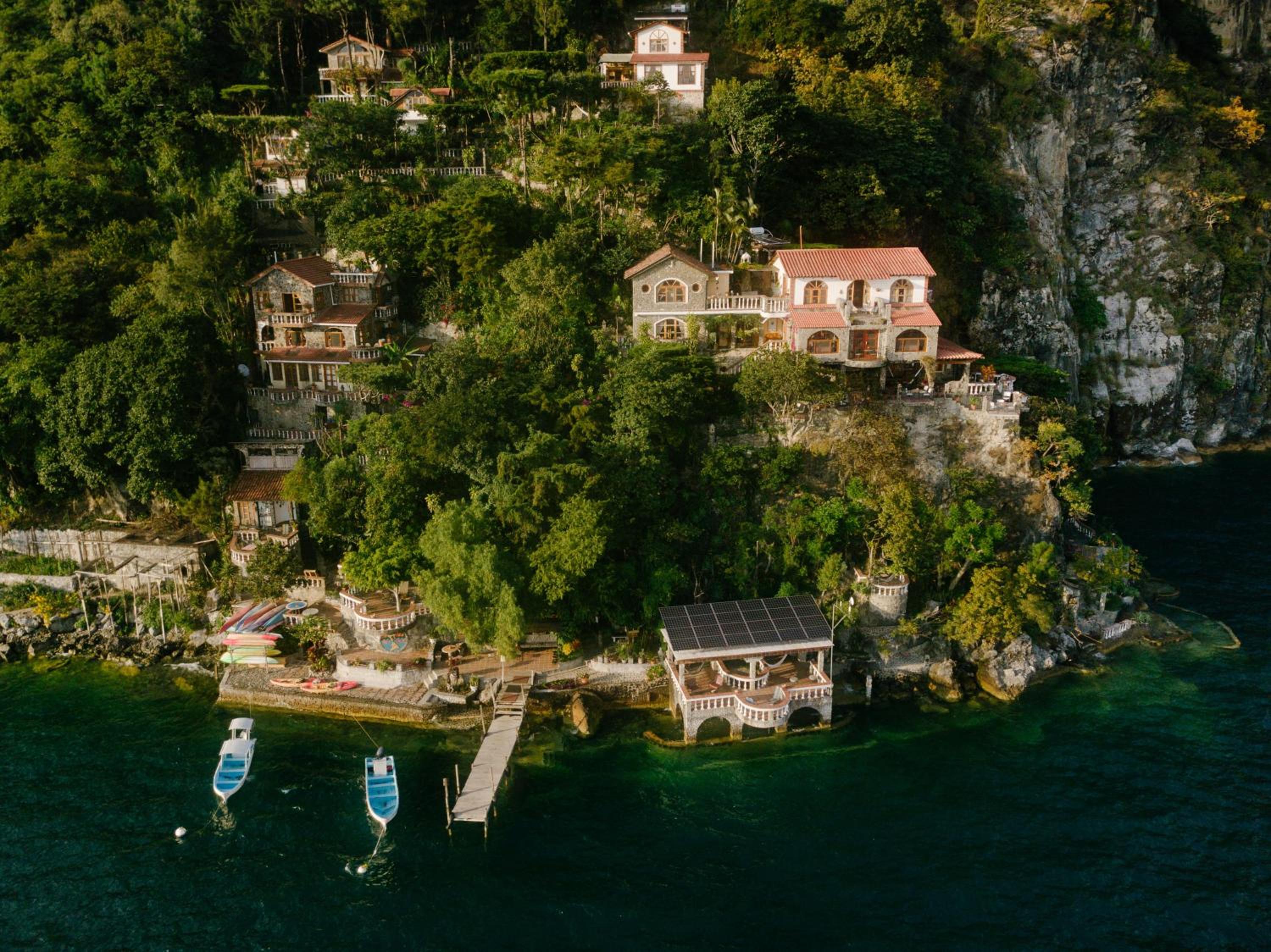
Lakefront lodges reached by boat, €25 to €150 a night.
Santiago Atitlán
$
A few hotels on the shore road, €20 to €70 a night.


What to eat in Lake Atitlan
The standard comedor plate, and most of the eating on the lake
The most developed scene in the country, following the retreat crowd
What the lake's long-stay travellers eat
Grown, roasted and brewed by the village cooperatives
Scarce on the lake, and worth knowing where it is
Discover food spots in Stippl
Find restaurants and markets on the map, save them to your itinerary, works offline too.
Lake Atitlan customs and what not to do
Ask before photographing
The lake's villages are among the most photographed and most traditional places in the country, and the two facts sit badly together.
Dress is daily wear
Each village's huipil pattern identifies it, and a woman in traditional dress is on her way to the market, not posing.
Maximón is a working shrine
A religious site in a private home, visited with a guide and a donation, and the cigars and the rum are offerings rather than a show.
Dress modestly in the villages
More than the lakefront suggests, and the retreat crowd's lakeside dress does not travel into the lanes.
The retreats sit awkwardly
San Marcos's scene and the Maya villages around it are two worlds, and the tension is felt on both sides.
Do
- Cross in the morning, before the xocomil
- Ask the fare before boarding, and pay what the locals pay
- Buy the weaving at the cooperative, from the woman who made it
- Take a guide to Maximón and to the volcano
Don't
- Photograph anyone in traditional dress without asking
- Swim without asking the village about the bloom
- Board an overloaded lancha in the afternoon wind
What a Lake Atitlan trip costs
Budget
€22–35
A dorm bed, comedor meals, and moving by chicken bus and lancha.
Mid-range
€52–86
A private room, guided day trips and restaurant dinners.
High-end
€130+
A lakefront lodge in Santa Cruz, private boats and the retreat centres.
Track what you actually spend
Set a daily budget per country and log expenses in any currency while you travel.
Fun facts about Lake Atitlan
Lake Atitlan fills a crater that blew out 84,000 years ago. At 1,562 metres, and ringed by three younger volcanoes that grew on its southern rim.
Each village on Lake Atitlan weaves a huipil that names where the wearer is from. The patterns are read across the lake the way a dialect is heard.
The Maximón effigy in Santiago Atitlán moves to a different household each year. Attended by a cofradía, and offered cigars, rum and cash by everyone who visits.
Three Maya languages are spoken around Lake Atitlan. Kaqchikel on the north shore, Tz'utujil in San Pedro and Santiago, and K'iche' in the hills above.
The xocomil wind crosses Lake Atitlan almost every afternoon. Its Kaqchikel name means the wind that carries away sin, and it puts the small boats away by three.
One in ten Stippl travellers stay longer than seven nights on Lake Atitlan. The longest stays in Guatemala, on 54.3% of the trips planned through the country.
Local tips for Lake Atitlan
The lanchas are the system
Boats go when they fill, most villages have no useful road, and the last useful crossing is early in the evening, so the day is planned around the dock.
Panajachel is the road head
The shuttles from Antigua arrive there, the ATMs are there, and everything else on the lake is by water from its dock.
Ask the fare before boarding
Fares are per crossing and foreigners are routinely quoted more than locals, so the price is asked on the dock and paid at the end.
Cross in the morning
Afternoon crossings in the xocomil are genuinely rough and the small boats take water over the bow, so the moves between villages are done before noon.
Check the water before swimming
Cyanobacteria blooms have affected the lake and untreated sewage from the towns is documented, so the village is asked before anyone goes in.
Three nights, or a week
Most travellers give Lake Atitlan 3 nights on Stippl, and the ones who like it stay a week in one village rather than moving.
Lake Atitlan questions, answered
Three is the number and a week is common: most travellers give Lake Atitlan 3 nights on Stippl, only 13.7% of stops are a single night, and one in ten stay longer than seven, the longest in the country. People who like it stay a week.
San Pedro for the cheapest week and the nightlife, San Marcos for retreats, San Juan for weaving, Santa Cruz for isolation and Panajachel for logistics. Put the village into Stippl before the room, then ask people in subreddits like r/guatemala which one they would not leave. Only 1.89% of Lake Atitlan stops on Stippl are no night at all, so the choice is made for three.
It is the most-asked question and the honest answer is that it depends on the bloom and the village. Cyanobacteria blooms have affected the lake and sewage inflow from the towns is documented, so the village is asked first and the deep water off Santa Cruz is the usual answer.
By lancha. Most villages have no useful road link, the boats go when they fill and stop in the early evening, and the fare is agreed on the dock. The afternoon wind makes the crossings rough, so the moves are made in the morning.
The afternoon wind, daily and year round, that crosses the lake from the south and makes the small boats take water. Cross in the morning, kayak before noon, and plan the return crossing for before it gets up.
People use it rather than stay in it: Lake Atitlan is on 54.3% of Guatemalan trips planned on Stippl and Panajachel's stops run shorter than anywhere else on the lake, with a one-night share nearly three times the lake's own. A night for an early shuttle or a cash machine, and the lancha to a real village in the morning.
Every guide is written by the Stippl editors and checked against the trips our travellers actually plan. Spotted something out of date? Let us know.

Plan Lake Atitlan in Stippl
Day-by-day planning, stays and budget in one app, with every place from this guide already on the map.
Download the app