
Hamburg
Hamburg is a working port you watch from a public ferry on a normal ticket, and a nightlife easier and earlier than Berlin's. A free plaza 37 metres up on the Elbphilharmonie, and the world's largest model railway.
Hamburg in a nutshell
Hamburg: what to expect
We read 194,000+ planned stops in Germany on Stippl to see how Hamburg really gets planned.
Hamburg gives you a working port to look at rather than a museum of one. Ferry 62 runs down the Elbe past the container terminals and the shipyards on an ordinary transport ticket, the Speicherstadt warehouses stand on timber piles above the canals, the Elbphilharmonie plaza is a free public deck high over the water, and Miniatur Wunderland is the paid attraction visitors rate highest. Two nights covers it, though only 5.5% of Hamburg stops ever run to four or more.
Hamburg is the one German anchor that does not push another away. Germany's two largest cities avoid each other's itineraries, and Hamburg avoids nobody: it sits easily on a Berlin route, and its own strongest partners are small and northern, Lübeck and Bremen far more than anywhere in the south. 18.1% of Hamburg stops get no night at all, which is what a city on a route looks like.
Two nights, and hang them off a northern loop. One night gets you the harbour or the Reeperbahn, not both, and the fish market only happens on a Sunday morning. Sleep in St Pauli for the noise, St Georg beside the station for the cheapest central beds, HafenCity if you want the Speicherstadt on your doorstep. Lübeck is forty-five minutes away and Bremen about an hour, and both belong on the same trip far more often than their size suggests.
Plan Hamburg in Stippl
Day-by-day planning, stays and budget in one app, with every place from this guide already on the map.
Download the appWho Hamburg is for
Maritime travellers
A working container port you can watch from a public ferry, a museum harbour, and a shipping history that is still the city's business.
Architecture travellers
The Speicherstadt, the Chilehaus and the Elbphilharmonie are three separate high points a century apart.
Nightlife travellers
The Reeperbahn is easier and less exclusive than Berlin's club scene, and it starts earlier.
Music travellers
The Elbphilharmonie's programme, and the Beatles' Hamburg years still marked on the ground.
Families
Miniatur Wunderland alone justifies a day, and the ferries are free entertainment on a normal ticket.
Weekenders from NL or DK
Close, well connected by rail, and comfortably done in two nights, though most give it 1.
Maybe not for you: travellers who want reliable sunshine. This is the wettest and greyest of Germany's three big cities, with rain spread evenly across the year.
The best time to visit Hamburg
Harbour summer
May to September
Ferries, the Elbe beaches at Oevelgönne and the city's outdoor programme, with the Hafengeburtstag in early May the busiest weekend of the year and the Reeperbahn Festival in September. There is no dry month; a raincoat comes anyway.
Grey season
October to March
Genuinely wet and dark, and the season the museums and the Elbphilharmonie carry. The Christmas markets run from late November to 23 December, with the Rathausmarkt the main one.
- July is the month most travellers plan Hamburg for on Stippl, and it carries a larger share of the year than any single month we hold for any destination. The winter is correspondingly thin; a July room is booked ahead and a February one is not.
- Hafengeburtstag in early May is the port's birthday: three days of ships and crowds along the Elbe. It is the busiest weekend of the Hamburg year, the harbour hotels fill and the Landungsbrücken are one crowd from Friday to Sunday.
- The Sunday fish market is a Saturday-night decision. It runs from five to half past nine from April to October and from seven in winter; the people who see it came straight from the Reeperbahn, and the ones who set an alarm mostly miss it.
- There is no dry month in Hamburg. December is the wettest and June is next, and even April, the driest, is a raincoat month; the harbour ferries and the Speicherstadt work in the rain and the Elbe beaches do not.
Add your Hamburg dates and we'll flag the weather
Stippl shows the season, crowds and prices for every stop on your route.
Describe your trip, get a Hamburg itinerary in seconds
Everything in this guide is already in Stippl. Tell the planner how long you have and what you like: it builds the route, the days and the travel times, and you edit whatever you want.
Things to do in Hamburg
Ferry 62 down the Elbe
Ride the ordinary public ferry from the Landungsbrücken past the container terminals and shipyards to Oevelgönne on a normal transport ticket, about €3.50. The cheapest harbour tour there is; sit on the upper deck.
The Speicherstadt at dusk
Walk the red brick warehouses on timber piles above the canals, a UNESCO site since 2015, free, and come back after dark when they are lit from the water. The Poggenmühlen bridge is the photograph.
The Elbphilharmonie Plaza
Ride the long escalator to the free public level thirty-seven metres up, with the harbour on one side and the city on the other. Book the free slot online in summer; the walk-up queue is an hour.
Miniatur Wunderland
Spend two or three hours in the largest model railway in the world, the paid attraction visitors rate highest, about €20. Book the time slot; weekends sell out days ahead.
Sunday at the fish market
Be there from five in summer, with a live band in the auction hall and a crowd that has not been to bed, free. A Saturday-night decision, not a Sunday-morning one; it closes at half past nine.
The Alster on foot
Walk the full seven-kilometre circuit of the outer lake through parkland inside the city, free, or take a boat from the Jungfernstieg for about €18. The Sunday afternoon of the city.
The neighbourhoods of Hamburg
Altstadt and HafenCity
Warehouses and water
The Speicherstadt, the Elbphilharmonie and the harbour on foot, with the new hotels in the docks and the old ones by the town hall. For first visits and for the port at the door.
The harbour and the concert hall on foot, and a district that empties at night.
St Pauli
Loud, late, unpretentious
The Reeperbahn, the Sunday fish market and the best cheap food, with hostels and hotels above the bars. For nightlife and for the Sunday market at dawn.
The best nights and the fish market, and the Reeperbahn's noise.
St Georg
Central and cheap
Beside the Hauptbahnhof and the Aussenalster, with the lowest central rates and the Lange Reihe's cafés. For budget travellers and for the trains.
The cheapest central beds and the station, and the streets behind it after dark.
Sternschanze
Alternative and small
Bars, independent shops and the Rote Flora inside a few streets, with small hotels and hostels. For younger travellers and for the evenings.
The best small bars, and the demonstrations on the square.
Altona and Ottensen
Village inside a city
Quiet streets, good markets and the Elbe path west, with apartments and family hotels. For longer stays and for a neighbourhood.
The quiet and the river path, and an S-Bahn to the centre.
See every Hamburg neighbourhood on one map
Save the areas you like and Stippl plots your days so you're not crossing the city twice.
Where to stay in Hamburg
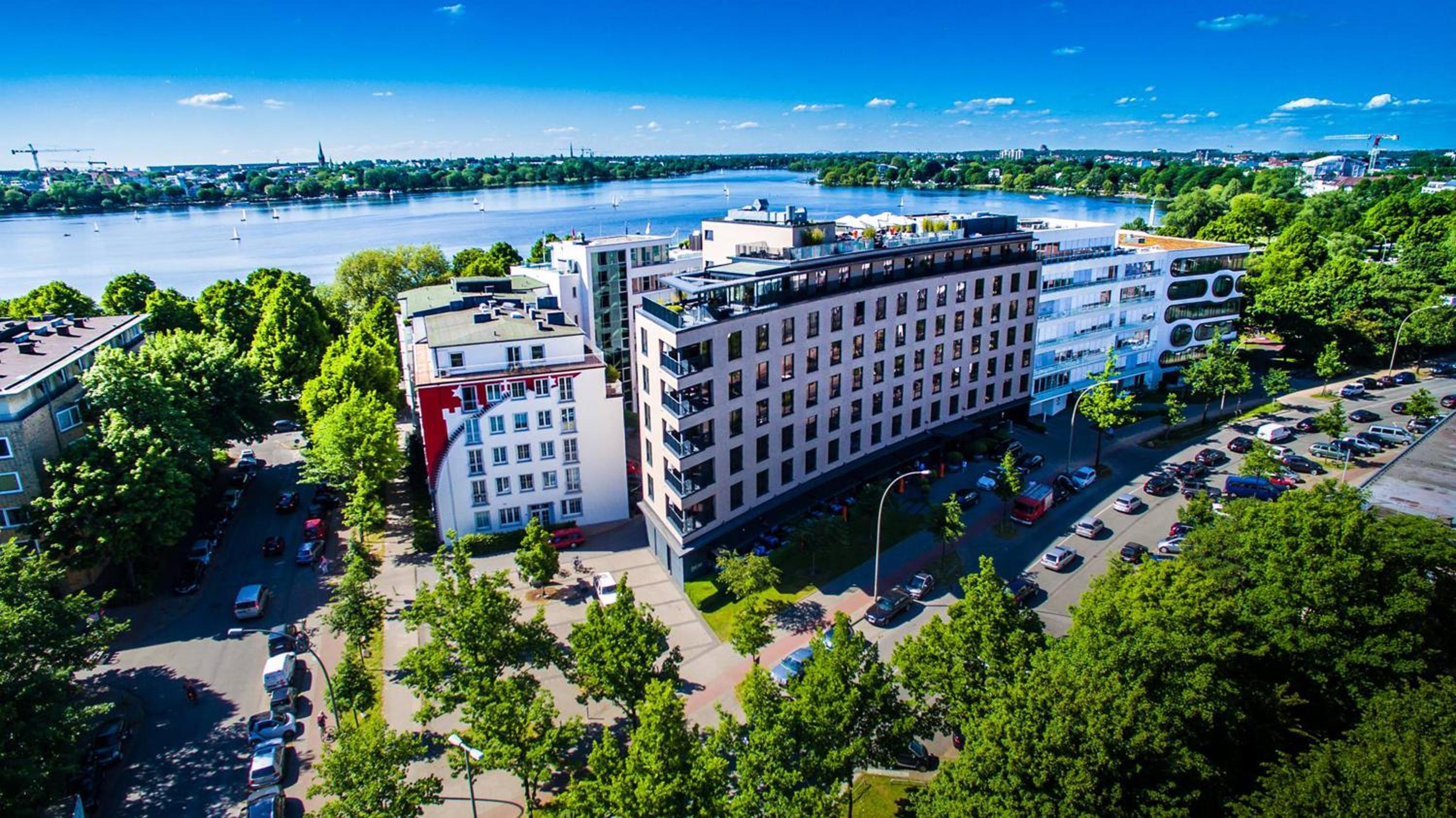
Stay in St Georg for a first visit: beside the main station and the Aussenalster, with the lowest central rates and the Lange Reihe's cafés, and the harbour fifteen minutes away on foot. 45.7% of Hamburg stops planned on Stippl are a single night, and two is what the city comfortably takes. Book ahead for the Hafengeburtstag in May and the Reeperbahn Festival in September.
Altstadt and HafenCity
€120–210
Design hotels in the converted docks and the old ones by the town hall, €140 to €300.
St Pauli
€90–160
Hostels above the bars €25 to €40 a bed and hotels, €90 to €180, loud until dawn at weekends.
St Georg
€70–130
The lowest central rates, €80 to €150, and the chains by the station.
Sternschanze
€85–150
Small hotels and hostels among the bars, €30 a bed to €150 a room.
Altona and Ottensen
€90–160
Apartments and family hotels on quiet streets, €90 to €170, with the Elbe path outside.


What to eat in Hamburg
Pickled herring, fried fish or prawns in a bread roll, eaten standing at the water
Corned beef, beetroot and potato mashed together, with a fried egg and a rollmop
A sweet-sour soup that traditionally contains no eel at all
A flattened cinnamon pastry, the local bakery signature
Red berry compote with cream or vanilla sauce, the northern dessert
The everyday cheap layer, as in every large German city
Discover food spots in Stippl
Find restaurants and markets on the map, save them to your itinerary, works offline too.
Hamburg customs and what not to do
Hanseatic reserve is real
The northern manner is cooler and more formal than the German average, and it warms slowly rather than not at all; small talk from a shopkeeper is not on offer.
Moin is the greeting, all day
It is not shorthand for morning and using it at any hour is correct; a Moin on entering a shop or a bar is the whole courtesy.
One street is not for all
Herbertstrasse on the Reeperbahn is screened at both ends and by long-standing local rule women and minors do not walk through it; the signs at each end say so.
The port is a workplace
The ferries, the docks and the fish market are working infrastructure that visitors are welcome on; behaving as if they are an attraction is the local irritation.
Do
- Say Moin
- Take the ferry with a normal day ticket instead of buying a harbour tour
- Book the Elbphilharmonie Plaza slot in advance if the day matters
- Carry a rain layer in every month of the year
Don't
- Walk through Herbertstrasse if you are a woman or under eighteen
- Expect small talk from shopkeepers
- Plan a Sunday shopping day; the fish market is the one exception
- Judge St Pauli by the Reeperbahn's reputation; it is a normal neighbourhood by daylight
What a Hamburg trip costs
Budget
€50–70
Hostel dorm, fish roll and market food, the ferries, walking the harbour.
Mid-range
€85–130
Three-star or apartment, a restaurant dinner, one paid attraction, a day ticket.
High-end
€200+
Four-star in HafenCity, a concert ticket, a proper harbour dinner.
Track what you actually spend
Set a daily budget per country and log expenses in any currency while you travel.
Fun facts about Hamburg
The Speicherstadt is the largest warehouse complex in the world on timber piles. The red-brick district was inscribed with the neighbouring Kontorhausviertel and the Chilehaus as a UNESCO World Heritage Site in 2015.
Hamburg counts around 2,500 bridges, more than any city in Europe. The figure is the city's own and depends on counting every culvert crossing, but it beats Venice and Amsterdam on any definition.
The Elbphilharmonie opened in 2017, six years late. The concert hall on top of an old cocoa warehouse cost about ten times its original budget, and the plaza at its waist is free to visit.
Two artificial lakes sit inside the city. The Binnenalster and the Aussenalster give Hamburg a second waterfront that is nothing like the harbour one, and the rowing clubs use it year-round.
The Reeperbahn is the longest concentrated stretch of nightlife in Germany. St Pauli's strip is a mainstream night out rather than a red-light detour, and the fish market on Sunday morning is where it ends.
The Beatles played Hamburg before they were famous. They played the clubs around the Reeperbahn between 1960 and 1962, and the square where they stood is now named after them.
Local tips for Hamburg
Buy the day ticket in the app
A day ticket is €8.20 at the machine and about €7.63 in the HVV app, the cheapest of the big German cities. The airport is inside the zone, 25 minutes on one S-Bahn line.
The ferries are transport
HADAG line 62 from Landungsbrücken runs down the Elbe past the docks to Oevelgönne on an ordinary ticket. It is the best harbour trip in the city and free on a day pass.
Most people stay one night
45.7% of stops are a single night, often between Berlin and Copenhagen. Two lets you add the Speicherstadt, Miniatur Wunderland and a Sunday Fischmarkt at dawn.
Book Miniatur Wunderland
It is the most visited attraction in the country and the queue without a timed ticket runs to hours. Book online for about €20 and pick a slot before ten or after six.
The Reeperbahn trap
Being invited into a club by someone on the street is how the inflated-bill stories start. St Pauli on a Friday or Saturday night is pickpockets and drunkenness, confined to a few streets.
The Elbe is not a promenade
The waterfront is unfenced in places and the river is tidal, fast and cold. Autumn and winter storm surges close the Elbe walkways and flood the Fischmarkt hall; it is normal here and announced.
Hamburg questions, answered
In the middle of one, usually. Only 34.9% of the trips that include Hamburg on Stippl have no other German stop, so it is normally a leg rather than the whole holiday, and it sits on Berlin routes far more readily than Munich ones. Sketch the order in Stippl before you book anything, then ask a local forum whether the gaps between stops are honest.
One night is what most people give it, and that is a night short. 45.7% of Hamburg stops on Stippl are a single night, the shortest of the three big German cities, so the port, the Speicherstadt and an evening on the Reeperbahn get compressed into an afternoon. Give it two.
Often yes. Hamburg opens the trip on 26.4% of the trips that include it on Stippl, and the airport is twenty-five minutes from the main station on one S-Bahn line, inside the normal fare zone. Neither Berlin nor Munich can say that, so arriving here takes less out of your first day.
Lübeck, at about forty-five minutes by train, or Bremen at roughly an hour. Both turn up attached to Hamburg trips far more often than their size alone would predict, and Lübeck is the one to pick if you want an intact medieval old town rather than another port. Either works as a half day if you leave early.
Usually not. The HADAG line 62 ferry from Landungsbrücken runs down the Elbe past the container terminals and the shipyards to Oevelgönne on an ordinary transport ticket, so a day pass already buys you the best trip on the water in Hamburg. What you give up is the commentary.
Yes, and busy rather than dangerous. St Pauli is Hamburg's nightlife quarter, so the realistic risks are pickpocketing in a crowd and a bar bill that arrives larger than you expected, both of which you avoid by watching your pockets and asking prices first. Violent trouble is rare and the streets stay populated late.
Every guide is written by the Stippl editors and checked against the trips our travellers actually plan. Spotted something out of date? Let us know.

Plan Hamburg in Stippl
Day-by-day planning, stays and budget in one app, with every place from this guide already on the map.
Download the app