EuropeGermany
Germany
Germany is the country you keep going back to without quite meaning to. A weekend of Christmas markets running since 1434, then Berlin's clubs and its Wall, then Riesling villages on a Moselle bend, then Alpine snow above 2,900 metres. Almost nobody does it in one go, and that is the point.
GermanyGermany in a nutshell
Where to go in Germany


Turn these stops into a Germany route
Pick your favourites and Stippl orders them, adds travel times and builds the day-by-day.
Routes that work
Germany itineraries, one week to three
Germany is loved by culture seekers and backpackers alike. We recommend several routes through this country, here they are in full!
5 nights5 nights, Dresden and Leipzig
Dresden · Leipzig
Dresden's riverside promenades and Leipzig's cultural venues reward spring warmth and autumn clarity without the cold that lingers in winter.
7 nights7 days: Bavaria Christmas markets, short version
Munich · Nuremberg · Regensburg
Nuremberg's renowned Christmas market and Munich's festive season compress the Bavarian experience into one efficient loop.
9 nights10 days, Bavaria and Baden-Württemberg Christmas markets
Munich · Regensburg · Nuremberg
Munich, Nuremberg, and Rothenburg's Christmas markets peak in December; Stuttgart adds Black Forest proximity before winter weather intensifies.
10 nights10 days, Bavaria by train
Munich · Rothenburg ob der Tauber · Wurzburg
Romantic Road towns like Rothenburg and Bamberg shine in mild weather; rail connections link Munich, Würzburg, and Nuremberg efficiently.
21 nights3 weeks, the country loop
Berlin · Dresden · Munich
Spring blooms and autumn colours span Berlin's museums, Dresden's baroque, Munich's beer halls, and Cologne's cathedral without summer crowds.
Updated August 2026 · 14 min read · Written by the Stippl editorsWe looked at how travellers actually plan Germany on Stippl, across 194,000+ planned stops in the country.
Germany rewards picking two or three themes and leaving the rest. Big cultural cities, intact medieval towns, the Bavarian Alps, the Black Forest, a cool northern coastline and a beer culture that changes character every couple of hundred kilometres: no single trip covers all of it. Three weeks does a country loop, ten days does Bavaria, and one city wants two to four nights. 20.9% of German stops get no night at all, which tells you how much of this country people see on the way to somewhere else.
Berlin and Munich do not belong to the same trip. The two biggest German cities turn up on the same itinerary less often than their sizes alone would predict, measured from both sides, and the country splits cleanly around them. Berlin pulls east to Dresden and Leipzig; Munich pulls south to Nuremberg, Füssen and the Alps. Almost nothing sits on both lists.
Pick a side, then give the cities more than a night. A Berlin trip runs east through Dresden, Leipzig and the Saxon sandstone; a Munich trip runs south through the beer halls, Neuschwanstein and the Zugspitze; a drive from the Netherlands or Belgium reaches the Moselle and the Eifel on a Friday evening. 46.4% of German trips start between June and August, so April, May and September buy you the same country with fewer people in it.
Plan Germany in Stippl
Day-by-day planning, stays and budget in one app, with every place from this guide already on the map.
Download the appWho Germany is for
History and memory travellers
The Third Reich, the Holocaust, the Cold War and the division of Berlin are physically legible across the country, from Dachau and Sachsenhausen to the Topographie des Terrors and the surviving Wall.
Christmas-market travellers
A season with real depth rather than a decoration, and a better one than London, Vienna, Prague or Strasbourg; you can do ten days of markets without seeing the same one twice.
Beer and festival travellers
Oktoberfest, Cannstatter Volksfest, Cologne Carnival, and beer halls and gardens working year-round with genuinely regional styles.
Families
Straightforward transport, well-equipped venues, near-universal children's discounts, free train travel for under-15s and family compartments on trains.
Weekenders who drive over
The Moselle, Eifel, Sauerland and Rhineland are all reachable after work on a Friday, with no flight, no luggage limit and no departure time.
Outdoor travellers
The Bavarian Alps, the Black Forest, Saxon Switzerland, the Eifel gorges and long-distance cycle routes like the EmsRadweg, with all four seasons in play.
Solo and solo-female travellers
Very safe, with low crime, logistics that never fight you, a hostel scene in every city, and 1 night per stop the norm.
Maybe not for you: sun-and-beach travellers, anyone who needs shops open seven days a week, and backpackers after a cheap Southeast-Asia-style trail: Germany is mid-priced and the small-town hostel scene is thin
The best time to visit Germany
Spring shoulder
April and May
The best weather of the year alongside autumn, everything open, and prices not yet at summer level.
Summer
June to August
Long days, beer gardens, open-air events and lake swimming; neither punishingly hot nor overrun, but the actual peak rainfall season.
Autumn shoulder
September and October
The best-value window: autumn colour, thinning crowds and the two biggest beer festivals, with the Eifel and Hunsrück forests at their best.
Christmas-market season
late November to 23 December
A travel season in its own right, with its own pricing and booking behaviour; one of the drier months, and snow when it comes is usually a dusting.
Deep winter
January and February
The cheapest travel of the year, and the only window the ski regions work, from the Sauerland hills to the Bavarian Alps.
- November is the month to avoid, not the cheap one. Hotels close for maintenance before the Christmas rush, so availability can be worse than in peak season; a December market trip wants booking by mid-September.
- Oktoberfest runs from the middle of September into the first days of October, and Munich books out months ahead. The window is fixed, the exact length changes yearly; check the official dates before you build a trip around it.
- The river and gorge regions close for winter. Burg Eltz is shut from 1 November to 1 April, and Cochem's chairlift, boat trips and leisure park all stop for the low season.
- Carnival's parades fall in February or March, not in November. The season opens on 11 November at 11:11 and ends the day before Ash Wednesday; Cologne is the one to plan for, and a costume is effectively compulsory.
- The national month band does not hold across the country. The Alps and the east run much colder, the south-west wine country is the mildest corner, and the north is the wettest; pick the region before the month.
Add your Germany dates and we'll flag the weather per stop
Stippl shows the season, crowds and prices for every place on your route.
Festivals, and when to avoid them
Carnival parades
Cologne, Düsseldorf and Mainz stage the parades on Rose Monday, with the street parties from the Thursday before. A costume is effectively compulsory, the cities book out, and the season formally opens on 11 November.
Hafengeburtstag
The port's birthday in Hamburg: three days of ships and crowds along the Elbe, and the busiest weekend of the Hamburg year. The harbour hotels fill.
Christopher Street Day
Berlin's Pride parade is one of Europe's largest and the weekend's beds are scarce. Book the weekend or come the week after.
Oktoberfest
Sixteen days on the Theresienwiese in Munich; entry is free, a tent table needs reserving months ahead and the whole city books out around it. Check the official dates before building a trip on them.
Cannstatter Volksfest
Stuttgart's version of Oktoberfest, a week longer and less crowded, with the same tents and the same booking logic on a smaller scale.
German Unity Day
A national public holiday: shops close nationwide and Berlin hosts the main festival at the Brandenburg Gate. Berlin's Festival of Lights runs the same fortnight, free and after dark.
Bremen Freimarkt
Germany's oldest fair, running since 1035, takes the Bürgerweide for seventeen days. Bremen's rooms tighten on the two weekends; the rest of the fortnight is fine.
Christmas markets
Every city runs one, and the ones people travel for, Nuremberg, Dresden and Munich's Marienplatz, fill their hotels on the Advent weekends. November before they open is the month to avoid: hotels close for maintenance and availability can be worse than in peak.
Describe your trip, get a Germany itinerary in seconds
Everything in this guide is already in Stippl. Tell the planner how long you have and what you like: it builds the route, the days and the travel times, and you edit whatever you want.
Things to do in Germany


Oktoberfest in Munich
Enter the grounds free and sit in tents seating up to ten thousand, in lederhosen and dirndl if you like, for sixteen days from mid September. Queue an hour before the ten o'clock opening because the tents stop admitting once full; weekday mornings are the quiet window.
The Christmas-market circuit
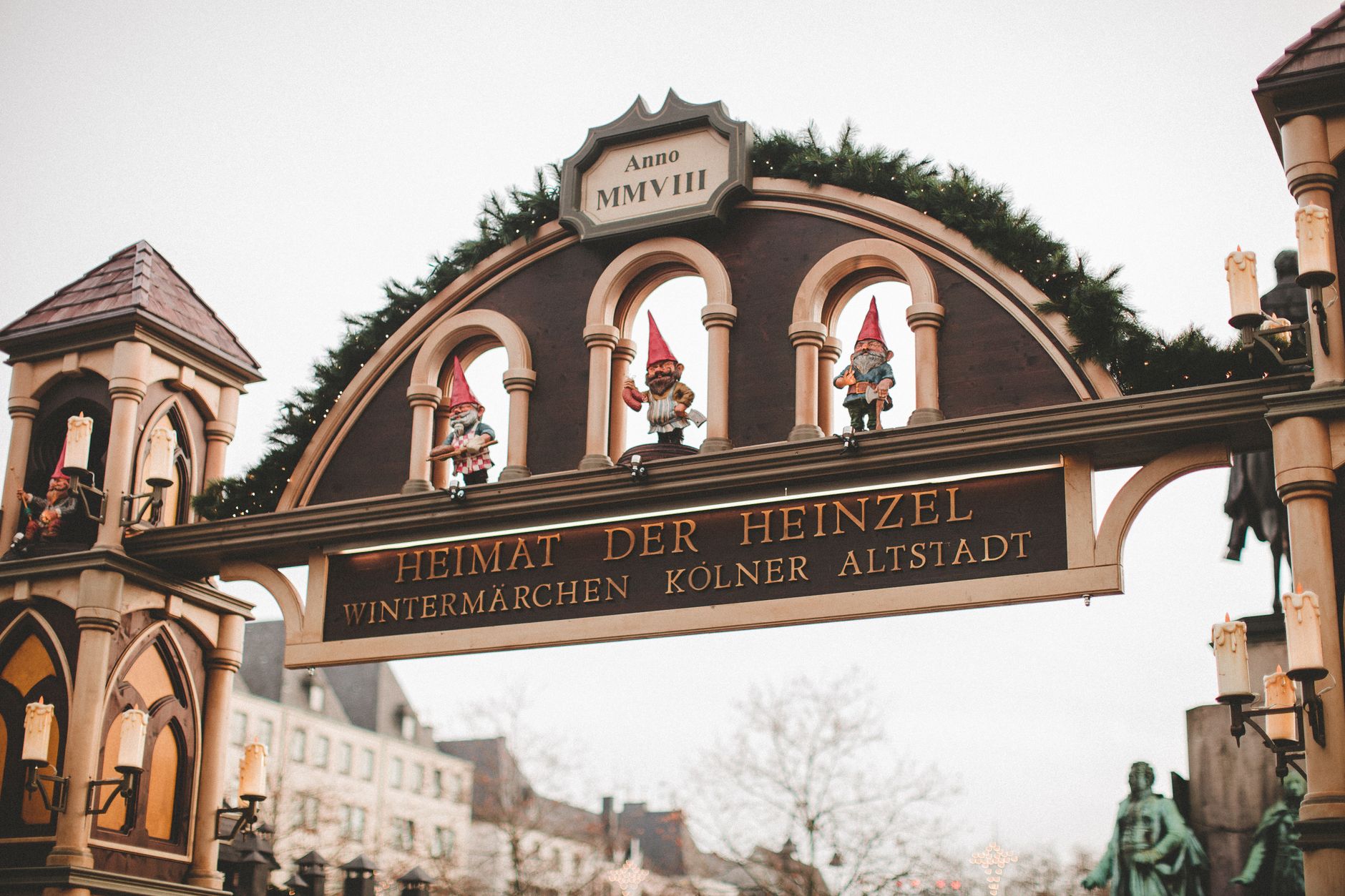
Take December as a season of its own: Dresden's Striezelmarkt dating to 1434, Nuremberg's Christkindlesmarkt, Stuttgart's three hundred stalls and Cologne's under the cathedral. Free to walk, about €4 for the Glühwein with the deposit mug, and the rooms are booked by September.
A beer garden, done properly
Take a litre in the Augustiner Keller's five thousand seats or the Chinesischer Turm in Munich's Englischer Garten, about €10, and bring your own bread and cheese to the self-service tables, which is the rule. Sunday afternoon is the tradition.
Neuschwanstein
Take the hourly train two hours from Munich to Füssen, the bus and the thirty-nine-minute walk to the Marienbrücke overlook for the castle that was the model for Disney's, about €21 for the timed tour. Book the tour weeks ahead; the walk-up tickets go by nine.
A concentration-camp memorial
Visit Dachau outside Munich or Sachsenhausen outside Berlin, free, with the audio guide for about €4; an obligation rather than an attraction, and the advice is to go early in the trip so it frames the rest. Three hours, and the train from the city.
Berlin's Wall trail
Walk the Bernauer Strasse memorial, the one that explains the thing, then the East Side Gallery, the one people photograph, free. A morning, and the documentation centre's tower is the viewpoint.

What to eat in Germany
breaded, fried pork or veal cutlet; nationwide, but Bavaria and Swabia own it
egg noodles baked with cheese and fried onions, from Bavaria through Swabia to the Black Forest
white veal-and-pork breakfast sausage, a Munich morning institution
roasted pork knuckle, the thing to order in a Bavarian beer hall
sliced sausage under curried tomato sauce, and Berlin's own
grilled meat in flatbread, invented in Berlin and best in Kreuzberg
doughy, salty lye-baked bread, standard in every Bavarian beer hall and garden
herring, mackerel, shrimp or pollock in a bread roll, eaten at Hamburg's Sunday fish market
kale with a smoked groat sausage, eaten in Lower Saxony from the first frost
deep onion tart with cream, egg and bacon, Swabian and best around Stuttgart
cherry, cream and kirsch layer cake, on its home ground in the Black Forest
dense buttery fruit bread, from Dresden's Striezelmarkt
salmon roasted on a board over an open flame, a Christmas-market stall staple
mulled wine under a burning rum-soaked sugar loaf, at Bavarian Christmas markets
almond confection, a Lübeck city industry since around 1800
Discover food spots in Stippl
Find restaurants and markets on the map, save them to your itinerary, works offline too.
German customs and what not to do
Carry cash, not just cards
Germany leans on cash far harder than the rest of Western Europe: plenty of places are cash-only, and foreign Visa, Mastercard and Amex cards are refused often enough to catch visitors out.
Sundays are shut
Retail and pharmacies close, with an emergency-pharmacy list posted on the door; anyone used to seven-day shopping plans Saturday for the food shop.
Blunt is not rude
Punctual, reserved and blunt is the national reputation and it is fair, but the frankness is cultural rather than unfriendly, and people warm up quickly once you speak to them.
Talk about the past, properly
The country puts its twentieth-century history on public display rather than hiding it, and engaging with it openly and in detail is the respectful way to travel here.
Bavaria is not Berlin
Regional rivalry is real and worth not stepping in: Bavaria and Munich are the traditional, wealthier, more conservative pole and Berlin is its opposite. Carnival regions each have their own call.
Carnival needs a costume
It is effectively compulsory at any Carnival event, large or small, and the season drinks heavily from early in the day, which is reason enough for some travellers to sit it out.
Do
- Carry cash, and expect card refusals in small shops, bakeries and bars
- Keep right on the autobahn unless you are actually overtaking
- Return your Glühwein mug for the deposit, or keep it deliberately as a souvenir
- Learn a few words of German; it matters most outside the cities and with older people
- Reserve the Reichstag dome, the Historic Green Vault and the ticketed Christmas markets weeks ahead
Don't
- Assume shops will be open on a Sunday, or a pharmacy after Saturday lunchtime
- Ride without a ticket on the honour system; inspections are random and the fine is many times the fare
- Turn up to a Carnival event without a costume
- Hire a car for the cities; it will mostly sit in a garage
- Plan a November trip assuming low season means easy booking
What a Germany trip costs
Budget
€32–70
Hostel dorm, bakery breakfasts and döner, regional day tickets, free walking tours, park beer.
Mid-range
€80–165
Private room or apartment, restaurant meals, ICE tickets booked ahead, museums and towers.
High-end
€190+
Hotels with parking, taxis or a hire car, guided tours, thermal spas and fine dining.
Track what you actually spend
Set a daily budget per country and log expenses in any currency while you travel.
Visas, SIM cards and getting around
Entry & visa
An ID card does it
EU citizens travel on a national ID card with no day limit. UK, US, Canadian and Australian passports get 90 days in any 180, counted across all of Schengen.
Money
Cash, more than you expect
The euro, but Germany leans on cash harder than the rest of Western Europe and foreign cards are refused often enough that carrying notes is the standing advice.
Connectivity
EU plans roam free
EU residents roam on their own plan. Everyone else buys an eSIM on arrival for about €0.50 to €2.50 a day, with no shop to find.
Getting around
Deutsche Bahn, or the motorway
Deutsche Bahn runs the trains and the city metros, with tickets at bahn.de. From the Netherlands and Belgium the question is which motorway: the Moselle and Eifel are weekend drives.
Health
EHIC, GHIC or insurance
EU residents carry the EHIC, UK residents the GHIC, everyone else travel insurance. Pharmacies handle minor ailments and shut on Sunday, with the emergency pharmacy listed on the door.
Water
Safe, so bring a bottle
Tap water is safe everywhere and among the best-controlled in the country. Carry a refillable bottle, because restaurant water can cost as much as a glass of wine.
Tipping
Round up, said aloud
Five to ten per cent is usual in restaurants and taxis, and it is said when paying rather than left on the table: name the total you want to pay.
Power & plugs
Schuko, the same as home
Sockets are type C and F at 230 V, the same Schuko standard as the Netherlands, so EU travellers need nothing. UK and US travellers need an adapter.
Language
German, English in the cities
German is the language. English is widely spoken in the cities and among younger people, much less in small towns and with older generations, so a few words carry weight.
German worth knowing
Nobody expects you to speak the language, which is exactly why a handful of words goes so far.
HAH-lo
Hello · Hallo
GOO-ten MOR-gen
Good morning · Guten Morgen
BIT-tuh
Please / you're welcome · Bitte
DAHN-kuh
Thank you · Danke
SHPREH-khen zee ENG-lish
Do you speak English? · Sprechen Sie Englisch?
ikh fair-SHTAY-uh nikht
I don't understand · Ich verstehe nicht
ikh BROW-khuh HIL-fuh
I need help · Ich brauche Hilfe
ine beer BIT-tuh
A beer, please · Ein Bier, bitte
KY-nuh PLAS-tik-TOO-tuh
No plastic bag · Keine Plastiktüte
vee feel KOS-tet dahs
How much does it cost? · Wie viel kostet das?
Germany questions, answered
With the shape of the trip, before any booking. Decide which two or three regions you want, then lay the stops out in Stippl and check what the days allow: 75,090 Germany trips have been planned on Stippl and almost none cover the country whole. Then ask people who have been, in subreddits like r/germany, and say how you travel: ten days, trains only, no early starts.
One, more often than not. Germany has the shortest stops we measure anywhere: 40.4% of the stops planned in Germany on Stippl are a single night, and few run past three. Give Berlin and Munich two nights each, Hamburg one, and treat Füssen, Rothenburg and the Rhine towns as places you sleep once and drive on from.
Yes, and most people do. Only 14.5% of the Germany trips planned on Stippl stay inside Germany, the lowest share of any country we hold, so Germany is usually one leg of a wider European route. Amsterdam, Prague, Vienna and Copenhagen all sit within a few hours by train.
Berlin if you want history, art and late nights; Munich if you want beer halls, the Alps and the castles. Travellers planning Germany on Stippl mostly choose rather than combine: the two turn up on the same itinerary less often than their sizes alone would predict. Berlin pulls Dresden and Leipzig; Munich pulls Nuremberg and Füssen.
No for the big German cities and the Christmas markets, which all work on trains. Yes, or close to it, for the Romantic Road, the Black Forest, the Moselle valley and the smaller Bavarian towns, where the bus timetable decides your day. If you drive, buy an Umweltplakette before you enter any big city centre.
Only if you are staying regional. It covers local and regional transport across Germany, including S-Bahn, U-Bahn, trams, buses and regional trains, but not the fast ICE, IC or EC services that make a Berlin to Munich hop bearable. A cross-country route is cheaper on advance long-distance tickets.
Every guide is written by the Stippl editors and checked against the trips our travellers actually plan. Spotted something out of date? Let us know.

Plan Germany in Stippl
Everything in this guide, ready to drop into your Germany route, with planning and bookings in one app.