

The short answer: April, May, late September and October. That's when Rome is warm without the July heat and the queues are below their peak. Funny enough, it's not when most people go: of the trips travellers plan to Rome with Stippl, July is the single busiest arrival month, and June to September takes 60% of them.
Plan Italy in Stippl
Day-by-day planning, stays and budget in one app, with every place from this guide already on the map.
Download the appSpring in Rome (March to May): the best time to visit

Spring is the season every guide agrees on, and for once the consensus is right. The days are long, the gardens open, and prices stay below peak until Easter week.
- Weather: an average of 11°C in March, 14°C in April and 18°C in May, with warm afternoons by late April.
- Crowds: building, but far from summer levels. The exception is Easter week, the busiest religious moment of the Roman year, when the Vatican is genuinely overwhelmed. In 2027 Easter Sunday falls on 28 March, so that crush lands at the very end of March rather than in April.
- Highlights: the Roman Forum and the Colosseum before the heat, the Orange Garden (Giardino degli Aranci) on the Aventine, the Villa Borghese park, and artichokes at their peak in the Jewish Ghetto, where carciofi alla giudia run from late January to early May.
Book the Borghese Gallery well ahead in spring: entry is €16 plus a compulsory €2 reservation, on two-hour slots with 360 people admitted at a time.
Summer in Rome (June to August): hot and busy

Summer is when most visitors come, and it shows. June is still workable if you start early. July and August are the hottest months, with average temperatures of 25°C that hide afternoons far hotter than that, and very little shade at the Forum.
- Weather: dry. August is actually the driest month of the year, so rain won't be the problem.
- Crowds: peak. The Trevi Fountain now charges €2 for the lower basin and caps it at 400 people at a time, which tells you how busy it gets.
- August: Ferragosto on 15 August is the holiday Roman businesses take their break around. Family-run restaurants, bakeries and small shops post chiuso per ferie on the door and close for a week or more either side of it.
- Highlights: Trastevere after dark, which is the densest concentration of eating and drinking in the city, and long lunches in the shuttered hours.
Plan the ticketed sights for opening time and keep the early afternoon for a cool room. The nasoni, Rome's cast-iron street fountains, run all day and the water is safe to drink, so bring a bottle.
Autumn in Rome (September to November): warm, then wet
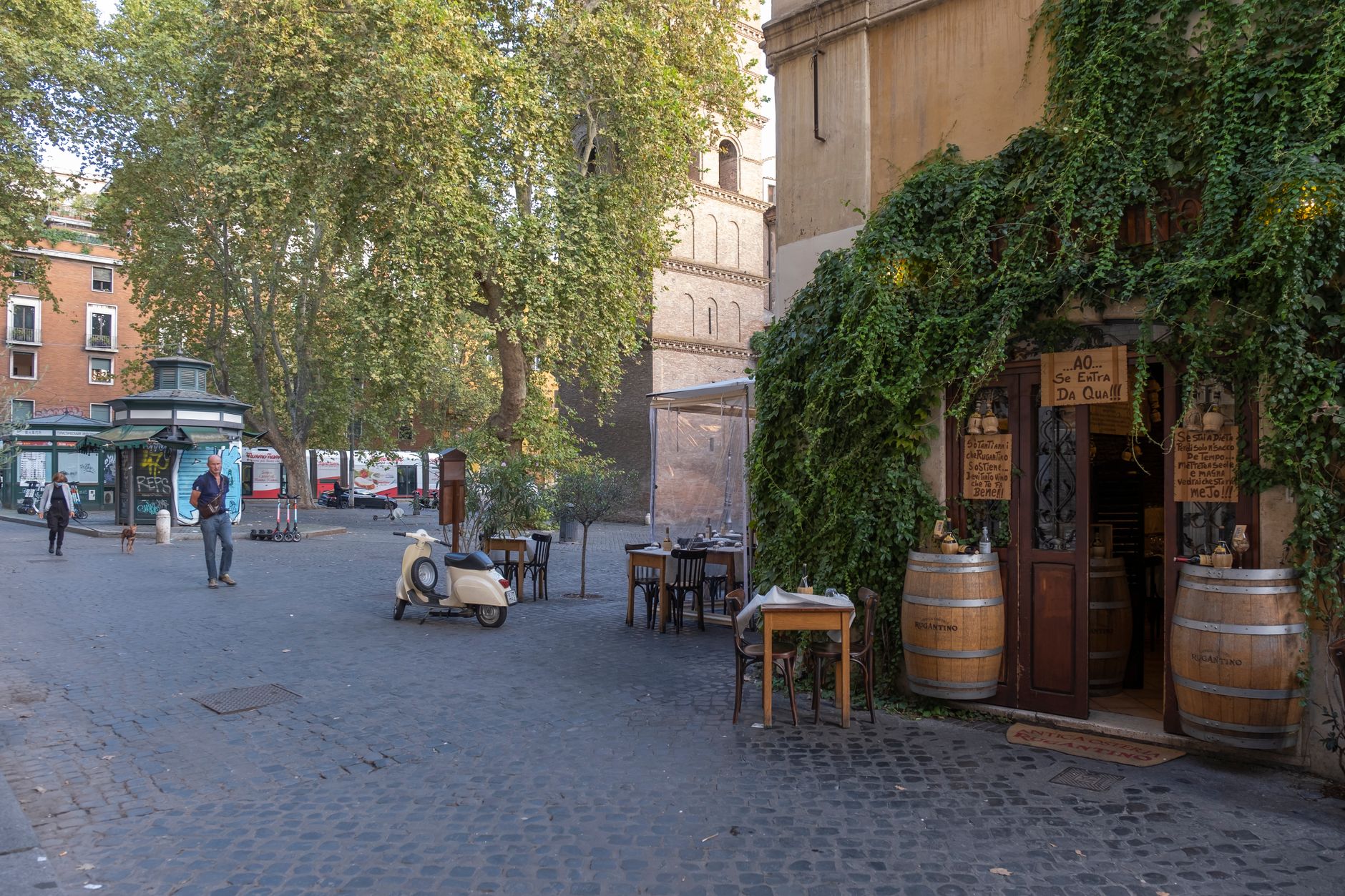
September and October are the second window, and a lot of Romans would say the better one. The heat breaks, the light goes golden, and the crowds thin from mid-September.
- Weather: an average of 22°C in September and 18°C in October, then 13°C in November. Rome's rain falls in autumn, not summer, and November is grey and wet.
- Crowds: thinning through October, low in November.
- Highlights: Monti and Campo de' Fiori without the summer crush, the Vatican Museums with shorter lines, and the first cool evenings in Trastevere.
Bring a light jacket and an umbrella from late October. And note that these are the busiest booking weeks for timed tickets, so the Colosseum window matters even more than in spring.
Winter in Rome (December to February): quiet and cheap
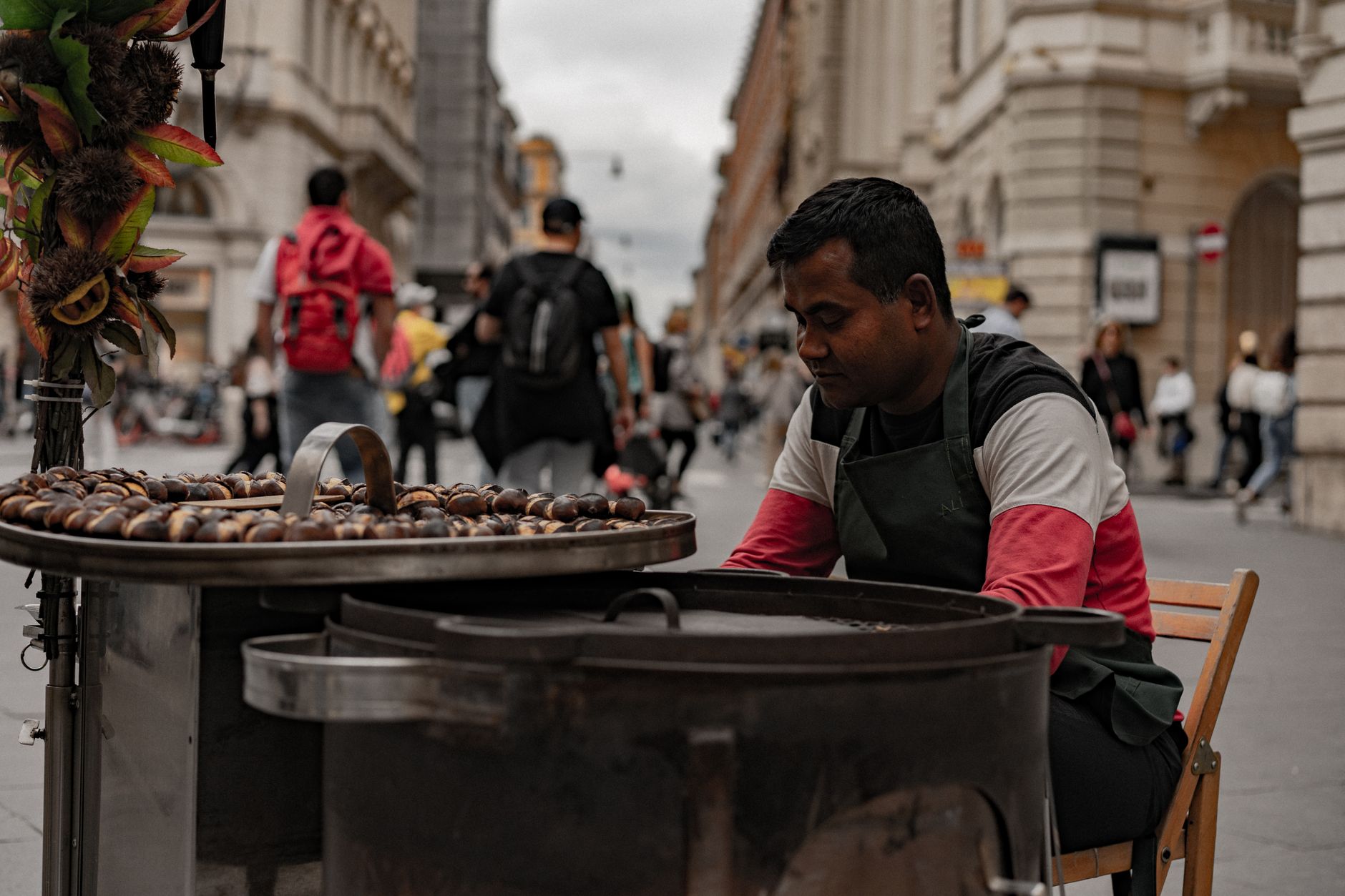
Winter is Rome's most underrated season. January and February bring the shortest queues of the year at the ticketed sites, and a city that belongs to Romans again.
- Weather: an average of 8°C in January, 9°C in February and December. Cold and often wet, but rarely freezing.
- Crowds: the lowest of the year, apart from Christmas and New Year.
- Highlights: Christmas in a Catholic capital is its own reason to come, roasted chestnuts on the street corners, the Capitoline Museums and the Galleria Borghese on a rainy afternoon, and artichoke season opening in the Ghetto from late January.
Pack layers and a proper coat for the evenings, and one more for churches, which stay cold inside even on sunny days.
Rome month by month
The seasons above are the broad picture. If you're choosing a week rather than a season, this is the detail: every month rated, with what changes it. Our Rome guide has the rest of the trip, from the neighbourhoods to what to eat.
January: coldest and quietest
About 8°C on average. Short queues, low prices, and the first Sunday of the month (3 January 2027) is a free-entry day at the Colosseum. Good for a museum-heavy city break.
February: cold, but the artichokes arrive
About 9°C. Often wet, but the sights are nearly empty and carciofi alla giudia are back on the menus in the Ghetto.
March: warming, and Easter lands at the end
About 11°C. Still uncrowded for most of the month, but in 2027 Holy Week runs up to Easter Sunday on 28 March and Easter Monday on 29 March, a public holiday. Book the last week early or avoid it.
April: the month everyone agrees on
About 14°C, long light, gardens open. Natale di Roma, the city's birthday, falls on Wednesday 21 April with events at the ancient sites, and Liberation Day on Sunday 25 April is a national holiday. Busy, but the best weather of spring.
May: warm without the heat
About 18°C and the longest evenings before summer. Labour Day falls on Saturday 1 May in 2027. Book rooms early: travellers who plan Rome with Stippl book about three months ahead on average.
June: hot, busy, still workable
About 22°C. Republic Day on Wednesday 2 June is a national holiday, and Tuesday 29 June is the feast of Saints Peter and Paul, a public holiday in Rome itself. Start sightseeing early.
July: the hottest month and the busiest
About 25°C on average, with far hotter afternoons. Rome is at its emptiest of Romans and fullest of visitors. It's also the month travellers most often plan to arrive.
August: Ferragosto and the half-shut city
About 25°C. Ferragosto on Sunday 15 August 2027 is the peak of the closures. If August is your only option, pick a hotel with air conditioning and plan around the morning.
September: the heat breaks
About 22°C. The crowds thin from mid-month and the light is at its best. Arguably the single best month of the year.
October: warm days, cool evenings
About 18°C. The last comfortable month, with rain starting towards the end. Monday 4 October is the feast of St Francis, a national holiday again since 2026.
November: the wettest stretch
About 13°C. Quiet, cheap and often grey. All Saints' Day on Monday 1 November makes it a long weekend for Italians.
December: Christmas in Rome
About 9°C. Cold and wet, but festive. Wednesday 8 December (the Immaculate Conception) is a public holiday, and so are 25 and 26 December.
Rome in 2027: dates to plan around
The 2025 Jubilee is over. It closed after more than 33 million pilgrims, and visitor levels have gone back to a normal season. The timed tickets it pushed along have stayed, though, and these are the dates that move crowds and prices in 2027:
| Date | What | What it means for you |
|---|---|---|
| 28 and 29 March | Easter Sunday and Easter Monday | The busiest week at the Vatican; rooms go months ahead |
| 21 April | Natale di Roma | Events at the Forum and the Circus Maximus |
| 25 April and 1 May | Liberation Day, Labour Day | Italian long weekends, busier trains |
| 2 June | Republic Day | National holiday, busier trains and museums |
| 29 June | Saints Peter and Paul | Rome's own holiday, many shops shut |
| 15 August | Ferragosto | Peak of the summer closures |
| 4 October | St Francis | National holiday, a long weekend for Romans |
| 1 November, 8 December | All Saints, Immaculate Conception | Quieter season, local holidays |
| 25 and 26 December | Christmas, St Stephen's | Christmas in a Catholic capital, many places closed |
Two free days are worth knowing. The Colosseum, Forum and Palatine are free on the first Sunday of every month, under Italy's Domenica al museo scheme, and the Vatican Museums are free on the last Sunday of the month, from 9 am with last entry at 12:30 pm and the halls closing at 2 pm. The Vatican skips it when that Sunday is Easter Sunday, 29 June, or 25, 26 or 31 December, which in 2027 rules out both March and December. Expect long queues on every free day: they save money, not time.
If Rome is the start of a longer Italy trip, the Italy guide covers the season for the rest of the country.
When to go to Rome, based on what you want
- For sightseeing in mild weather: April, May, late September or October.
- For the lowest prices and shortest queues: January and February. Rome's city tax still applies all year, €4 to €10 per person per night depending on the hotel class.
- For long evenings and nightlife: June, if you can live with the heat.
- For a festive city: December, around the Christmas holidays.
- For Rome plus Florence: the same shoulder months. Florence is on half of all Rome trips planned with Stippl, and it has the same best months. Our guide to the 20 best free things to do in Florence is the natural next stop.
Best time to go to Rome: how far ahead to book

Picking the month is half the job. In Rome the ticket dates decide the trip as much as the weather does, because everything worth seeing now runs on timed entry.
- Colosseum: €18 for the standard ticket covering the Forum and Palatine, €24 with the arena floor and underground. Slots go on sale 30 days before the date, on one official site only.
- Vatican Museums and the Sistine Chapel: €25 booked online, timed entry.
- Pantheon: €7 since 1 July 2026, no booking needed.
- Rooms: travellers who plan Rome with Stippl book about 94 days ahead on average, three weeks earlier than for Italy as a whole, and more than a quarter plan six months or more out.
So for a spring or autumn trip, book the room first, then set a reminder for the day the Colosseum window opens. Getting in is easy: the Leonardo Express runs from Fiumicino to Termini in about 32 minutes for €14. Heading north afterwards? Here's how to go from Rome to Venice, and our 20 Italy travel tips cover the rest of the country.
Frequently asked questions about Italy
April, May, late September and October. Temperatures average 14°C to 22°C, the summer crowds haven't arrived or have just left, and the gardens and terraces are at their best. Avoid August if you can: it is the hottest month and part of the city closes around Ferragosto.
April or September. April has the spring light and the artichokes, September has warm evenings and thinning crowds from mid-month. In 2027 Easter falls on 28 March, so April is free of the Holy Week crush.
January and February, apart from the New Year. The ticketed sights have their shortest queues of the year and hotel prices are at their lowest. November is quiet too, but it is the wettest stretch.
Only if it's your one chance. August averages 25°C with much hotter afternoons, the Forum has almost no shade, and around Ferragosto on 15 August many family-run restaurants and shops close for their holiday.
About three months for a room in spring or autumn, and earlier for Easter. The Colosseum only releases tickets 30 days ahead, so book that the day the window opens.
The best time to visit Rome is the one you can plan around the tickets. Pick your month, then plan your Rome trip in Stippl: add the Colosseum slot, the Vatican morning and the Trastevere dinner to one day-by-day plan, and share it with whoever is coming along.
Read more: things to do in Rome