

Gdansk
Gdansk is the Hanseatic amber port on the Baltic where the war began and where Solidarity started it ending, a rebuilt Flemish-fronted Long Market on the Motława with a shipyard on one side and the beach resort of Sopot on the other. Two nights, the only major Polish city with a sea, Malbork an hour away, and a summer season in a way no other Polish city has.
Gdansk in a nutshell
Gdansk: what to expect
We read 46,000+ planned stops in Poland on Stippl to see how Gdansk really gets planned.
Two nights in Gdansk, a day at Malbork, and the Baltic twenty-five minutes away. The Royal Way runs from the Golden Gate down Długa to Neptune's fountain and the Green Gate onto the river, the Solidarity Centre stands on the shipyard where the movement began, Westerplatte is where the war began and is reached by ferry, Malbork is the largest castle in the world by area and an hour away, St Mary's is among the largest brick churches anywhere, and the Motława waterfront with its crane is the walk at golden hour. Most travellers give Gdansk 2 nights on Stippl.
Gdansk is the city with the strongest day trips in Poland, and the one people combine. Malbork appears 72.53 times as often as expected on the trips that carry Gdansk on Stippl and Sopot 26.10 times, rates nothing else in the country matches, while only 32.1% of Gdansk trips carry no other Polish place, because the coast is added to Kraków or Warsaw rather than flown to alone.
So sleep in the Main City for the sights, ride the SKM to Sopot for the beach, give Malbork a full day and the Solidarity Centre a half, and come between June and September. Skip February, since the index here is the lowest of any Polish city, skip the souvenir-stall amber, because the synthetic is everywhere and Mariacka street is the workshops, and skip calling it Danzig, which carries the Free City and the occupation with it.
Plan Gdansk in Stippl
Day-by-day planning, stays and budget in one app, with every place from this guide already on the map.
Download the appWho Gdansk is for
History travellers
Two of the century's hinge moments happened here, at Westerplatte in 1939 and the shipyard in 1980, and both have serious museums.
First-timers wanting the coast
The only major Polish city on the sea, and the Tri-City puts a beach twenty-five minutes from the old town.
Summer travellers
The city has a season in a way no other Polish city does, with August the peak.
Day-trippers
Malbork appears 72.53 times as often as expected on Gdansk trips on Stippl, and Sopot, Gdynia, Hel and Toruń all sit within an hour or two.
Amber buyers
Eight centuries of the trade, and Mariacka street is still workshops rather than souvenir stalls.
Architecture people
Brick Gothic at a scale that only exists around the Baltic, with St Mary's among the largest brick churches in the world.
Maybe not for you: winter visits, because the February index here is the lowest of any Polish city measured and the sea wind is why; and anyone expecting an untouched old town, since this one was rebuilt like Warsaw's, Flemish fronts and all.
The best time to visit Gdansk
Early summer
June
Warm, long and light until eleven, the terraces on the Motława open and the beach at Sopot still uncrowded, and the month to take.
High summer
July and August
The peak for the whole Tri-City, with St Dominic's Fair filling the streets for three weeks, the Baltic briefly swimmable and the rooms at their dearest.
Early autumn
September
Warm days, the fair gone, the water at its warmest and the Long Market back to a manageable width, and the second window.
Winter
November to March
Cold, wet and windy off the sea, with the index for February the lowest of any Polish city and the Christmas market as the only reason to come.
- Most travellers give Gdansk 2 nights on Stippl, and 39.2% of stops are a single night. Two covers the Main City and the Solidarity Centre, and the third is Malbork or the beach.
- St Dominic's Fair takes over the streets for three weeks from late July. One of the largest open-air fairs in Europe, up to 750,000 visitors, and the rooms booked months ahead.
- Gdansk is planned about 65 days days ahead on Stippl, and 19.3% inside a fortnight. The shortest lead of the big four bar one, because it is the add-on to a trip already planned.
- The Westerplatte and Hel ferries run in season only. From the Motława quay, roughly May to September, and worth taking over the train for the arrival by water.
- Malbork is a full day and sells its routes. The main route and the grounds route are separate tickets, and the castle is an hour by train, so it takes the third day rather than an afternoon.
- August is the peak here on Stippl, above the Polish average. The most seasonal city in the country, so a July or August room is booked early and a June one is not.
Add your Gdansk dates and we'll flag the weather
Stippl shows the season, crowds and prices for every stop on your route.
Describe your trip, get a Gdansk itinerary in seconds
Everything in this guide is already in Stippl. Tell the planner how long you have and what you like: it builds the route, the days and the travel times, and you edit whatever you want.
Things to do in Gdansk
 Photo by Andrea Anastasakis via Unsplash
 Photo by Kevin Perez Camacho via Unsplash
 Photo by Teodor Skrebnev via Unsplash
The Long Market and the Royal Way
From the Golden Gate down Długa to Neptune's fountain and the Green Gate onto the river, the Flemish fronts rebuilt after the war.
The European Solidarity Centre
On the shipyard site, on the movement that started here in 1980 and the decade that followed, with the audio guide included.
Westerplatte
Where the war began at 04:47 on 1 September 1939, reached by ferry from the Motława in season, with the ruined barracks and the monument.
Malbork Castle
The largest castle in the world by land area, the Teutonic Knights' headquarters 58 kilometres away, and a full day with its routes sold separately.
St Mary's Church
Among the largest brick churches in the world, with room for 25,000 and a tower climb over the rooftops of the Main City.
The Motława waterfront
The medieval crane, the granary island and the quays, best at golden hour with the boats coming in.
The neighbourhoods of Gdansk
Main City
Photogenic and busy
The rebuilt Hanseatic core with the Royal Way from the Golden Gate down Długa to the Long Market, Neptune's fountain and the Green Gate onto the Motława. For a first visit.
Everything at the door, at the highest prices and the summer crowds.
Śródmieście
Practical
The modern centre with the main station, the mid-range hotels and the European Solidarity Centre on the shipyard site. For the station.
The trains and the SKM at the door, in a district with no charm of its own.
Wrzeszcz
Down to earth
The student and craft-beer district four kilometres north on the SKM, with independent pubs, international kitchens and the Forest Theatre in the valley park. For nights out.
Cheaper and livelier, and a train from the sights.
Old Town
Local and quieter
The actually older quarter with St Catherine's, the fifteenth-century Great Mill, the Old Town Hall, the market hall and the amber workshops. For a local base.
Quiet and real, though a ten-minute walk from the Long Market.
Oliwa
Tranquil and green
The garden suburb with the cathedral's eighteenth-century organ playing daily and one of northern Poland's best urban parks. For calm.
Green and calm, and the far end of the SKM from everything else.
Zaspa
Unexpected
A Soviet estate turned mural gallery, with over sixty large-scale murals across the concrete tower blocks, the first of them of Lech Wałęsa, who lived here. For a half day.
The most surprising walk in the city, and no reason to sleep there.
See every Gdansk neighbourhood on one map
Save the areas you like and Stippl plots your days so you're not crossing the city twice.
Where to stay in Gdansk
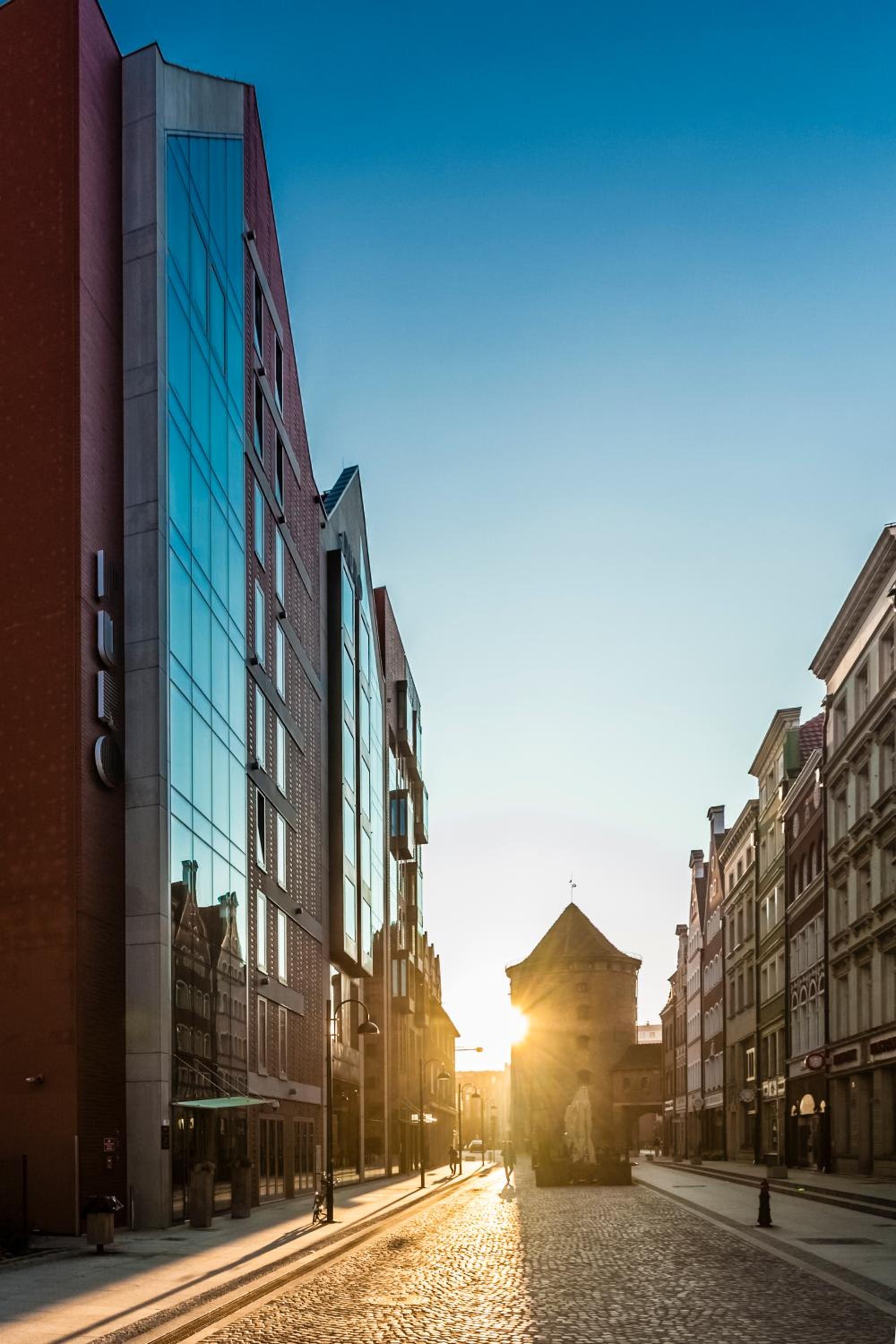
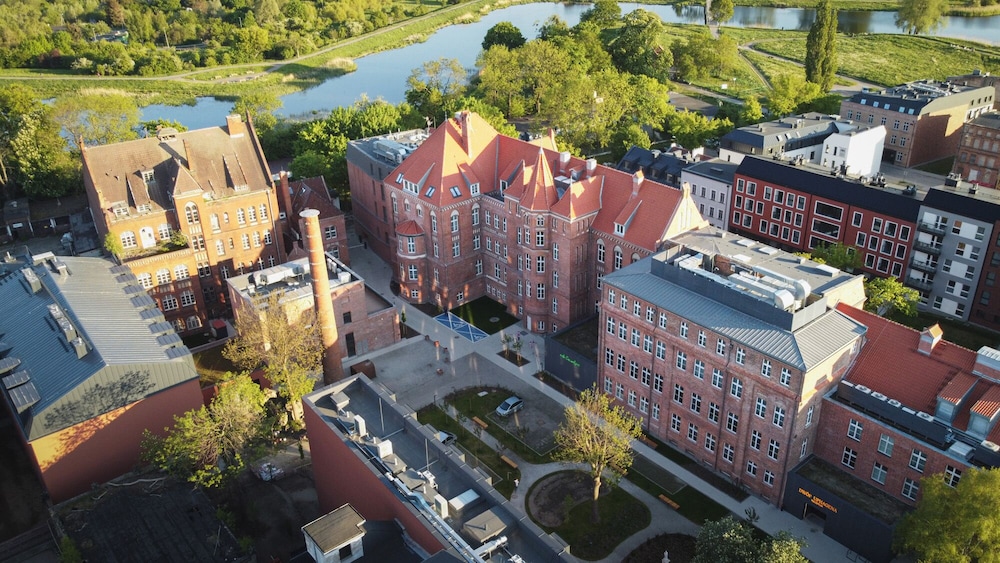
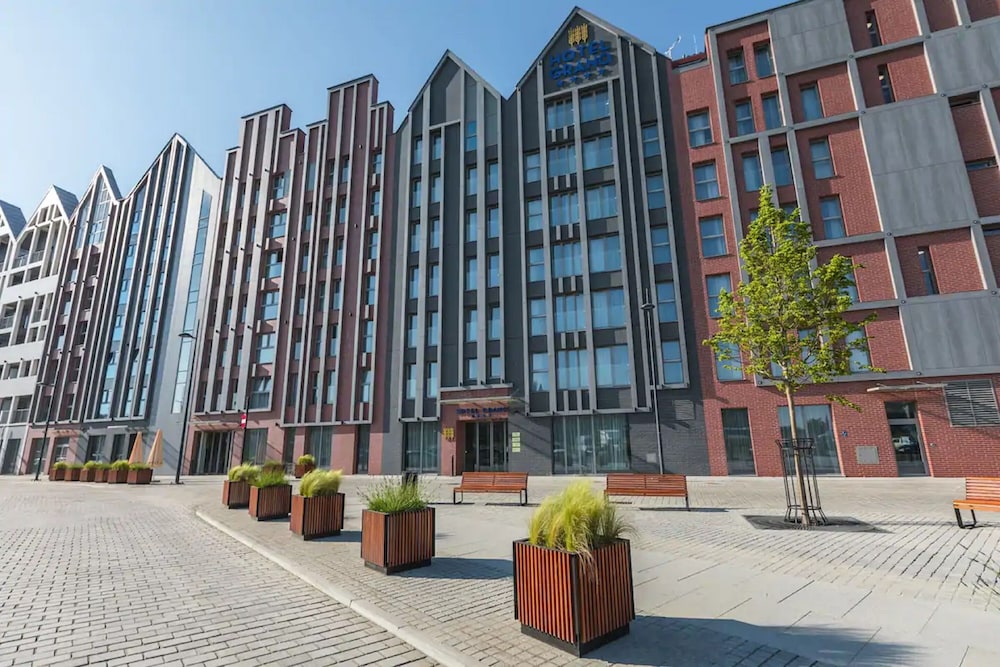
Main City for the sights, Śródmieście for the station and Sopot for the beach, and the SKM runs every few minutes between all three so the choice is about the evenings. Most travellers give Gdansk 2 nights on Stippl, and the summer rooms go early.
Main City
Hotels and apartments on and behind the Long Market, €50 to €180 a night.
Śródmieście
Chain hotels and hostels by the station, €25 to €110 a night.
Wrzeszcz
Apartments and hostels in the student district, €25 to €80 a night.
Old Town
Guesthouses and apartments in the older quarter, €40 to €110 a night.
Oliwa
Small hotels and apartments by the park, €40 to €100 a night.
Zaspa
Estate apartments among the murals, €30 to €60 a night.


What to eat in Gdansk
Cured or marinated, served with onion, cream or oil, and a shot beside it
Cod, flounder and herring, fried or grilled
Dumplings, as everywhere in Poland
A Gdańsk herbal liqueur with flakes of gold leaf in it, made here since 1598
Roast goose, a Pomeranian speciality, mostly in autumn
Discover food spots in Stippl
Find restaurants and markets on the map, save them to your itinerary, works offline too.
Gdansk customs and what not to do
Solidarity is living politics
Lech Wałęsa remains a contested figure in Poland and the shipyard's meaning is argued about, so it is treated as current rather than settled.
Poland's etiquette holds
Shoes off indoors, hospitality as a duty and care with the twentieth century in conversation with older people.
Danzig is not a neutral word
The German name is historically correct and carries the Free City and the occupation with it, and Poles say Gdansk.
Buy amber from the workshops
Synthetic amber is everywhere in the souvenir stalls, and Mariacka street's established workshops are the one consumer warning this city needs.
Herring comes with a shot
The Baltic herring is served with onion, cream or oil and a cold vodka beside it, and the two are ordered together.
Do
- Ride the SKM to Sopot for the beach and the pier
- Take the ferry to Westerplatte rather than the bus
- Give Malbork a full day and buy the main route
- Buy amber on Mariacka street, from a workshop with a name
Don't
- Call the city Danzig in conversation
- Treat the shipyard as settled history
- Buy amber from a stall without asking where it came from
What a Gdansk trip costs
Budget
€40–45
A hostel bed, milk bars and fish bars, the SKM and the free waterfront.
Mid-range
€90–110
A Main City apartment, restaurant dinners and two museums a day.
High-end
€250+
A Motława-front hotel, the serious kitchens and a car for the day trips.
Track what you actually spend
Set a daily budget per country and log expenses in any currency while you travel.
Fun facts about Gdansk
The Second World War began at Westerplatte in Gdansk at 04:47 on 1 September 1939. When the Schleswig-Holstein opened fire on the Polish garrison from the harbour.
Malbork near Gdansk is the largest castle in the world by land area. Over 143,000 square metres, begun by the Teutonic Knights in 1274 and their headquarters for a century and a half.
Goldwasser has been distilled in Gdansk since 1598 and still carries gold leaf. A herbal liqueur with real flakes floating in the bottle, sold in every shop on the Long Market.
St Dominic's Fair in Gdansk has run since 1260. One of the largest open-air fairs in Europe, with up to 750,000 visitors over three weeks each summer.
Zaspa in Gdansk holds over sixty large-scale murals on a Soviet-era estate. The first of them of Lech Wałęsa, who lived in one of the blocks.
Malbork appears 72.53 times as often as expected on Gdansk trips on Stippl. The strongest day-trip pairing anywhere in Poland, with Sopot the second.
Local tips for Gdansk
The SKM is the Tri-City's spine
The commuter line runs every few minutes between Gdansk, Sopot and Gdynia, and it is how the beach is twenty-five minutes from the Long Market.
The Main City is walked
End to end on foot, and the Motława waterfront is the walk, with the crane and the granary island at the end of it.
The ferries beat the train
Westerplatte and Hel are reached by boat from the Motława quay in season, and the arrival by water is worth the extra time.
Trams and buses cover the rest
Wrzeszcz and Oliwa are both on the SKM, and the trams reach Zaspa and the Solidarity Centre.
Pockets go on the Long Market
The market and the SKM in summer are the two places every guide names, and standard urban awareness is the whole of it.
Two nights, and rarely alone
Most travellers give Gdansk 2 nights on Stippl, and only 32.1% of its trips carry no other Polish place, so the coast is the add-on.
Gdansk questions, answered
For the Main City and the Solidarity Centre, yes: most travellers give Gdansk 2 nights on Stippl, and this is the Polish city most often combined with another. The third night is what fits Malbork or the beach.
More emphatically than anything else in Poland: Malbork appears 72.53 times as often as expected on the trips that carry Gdansk, of everyone who plans it on Stippl. It is a full day, an hour by train, and the main route is the ticket to buy.
June to September, and the city has a season in a way no other Polish city does. February is the weakest month here of any Polish city measured, because the wind off the Baltic is the whole story.
In August, briefly, and the Baltic is cold the rest of the year. Sopot's beach and pier are twenty-five minutes on the SKM, and the beach is a walk and a paddle rather than a swim for most people.
As the coast added to Kraków or Warsaw: only 32.1% of Gdansk trips on Stippl carry no other Polish place. Put the Pendolino from Warsaw into Stippl, then ask people in subreddits like r/poland whether they took Hel or Malbork with the spare day.
On Mariacka street, from the established workshops rather than the souvenir stalls, where synthetic amber is everywhere. A workshop with a name and a certificate is the version that holds, and the price difference between real and fake is smaller than the stalls suggest.
Every guide is written by the Stippl editors and checked against the trips our travellers actually plan. Spotted something out of date? Let us know.

Plan Gdansk in Stippl
Day-by-day planning, stays and budget in one app, with every place from this guide already on the map.
Download the app