AsiaIndia
India
India is a subcontinent rather than a country-sized trip, Mughal monuments, Rajput forts, the Ganges and the Himalaya in radically different regions with the distances as the constraint. Two to three weeks for one or two of them, October to March for almost everything, the e-visa applied for before the flight, and no tap water anywhere.
IndiaIndia in a nutshell
Where to go in India


Turn these stops into a India route
Pick your favourites and Stippl orders them, adds travel times and builds the day-by-day.
Plan your adventure in India
Our travel routes through India
India is loved by culture seekers and backpackers alike. We recommend several routes through this country, here they are in full!
6 nights1 week, the Golden Triangle
Delhi · Agra · Jaipur
Delhi's plains and Agra–Jaipur corridor have clear skies and moderate temperatures outside monsoon and summer heat.
9 nights10 days, Delhi and the yoga north
Delhi · Rishikesh
Rishikesh on the Ganges corridor is best October–March when water levels and temperatures suit meditation and yoga retreats.
9 nights12 days, the eastern gateway
Kolkata · Varanasi · Delhi
Kolkata and the Ganges corridor avoid monsoon and summer; October–March gives stable weather for both cities.
10 nights10 days, Mumbai and Goa
Mumbai · Goa
Goa's west coast is best November–February; December–February are peak tourist season with clear skies and calm seas.
10 nights2 weeks, the Mughal north and the Ganges
Delhi · Agra · Varanasi
Combines the Ganges corridor's best season with Delhi and Agra's dry months; Varanasi is clearest October–February.
14 nights2–3 weeks, the south loop
Chennai · Mahabalipuram · Tiruvannamalai
Tamil Nadu's Deccan region and Kerala's coast and backwaters are at their best November–February; dry and warm.
14 nights2 weeks, Golden Triangle and the Rajasthan loop
Delhi · Agra · Jaipur
Rajasthan's desert triangle of Jaipur, Jodhpur and Jaisalmer peaks October–March; Pushkar's camel fair falls in November.
15 nights3–4 weeks, the monsoon-season Himalaya
Delhi · Manali · Leh
Manali–Leh highway opens mid-May; Ladakh's high passes are passable June–August; monsoon clears northern routes.
23 nights3 weeks: north to south, the flagship Dutch route
Delhi · Agra · Jaipur
Golden Triangle and Rajasthan (Nov–Feb), Goa and west coast (Nov–Feb), south India and Kerala (Nov–Feb) align in peak season.
Updated September 2026 · 14 min read · Written by the Stippl editorsWe looked at how travellers actually plan India on Stippl, across 60,000+ planned stops in India.
Nobody plans India as a country; they plan one or two regions, and most stops get 2 nights. Delhi takes 14.18% of every Indian stop planned on Stippl and appears on 44.77% of N of the trips, and the named things are the Taj Mahal at opening, a sunrise boat on the Ganges at Varanasi, the burning ghats, an overnight camel safari from Jaisalmer, one long sleeper train and a Rishikesh retreat. Jaipur, Agra, Mumbai and Varanasi are the stops behind the gateway.
India is a short-lead country, and the shortest stays in the region. 32.51% created ≤14 days ahead of trips carrying India on Stippl are planned inside a fortnight, the highest last-minute share anywhere we measure, because the e-visa arrives in days and the trains are booked a week out, 41.10% of stops are a single night, the highest in Asia, because the Golden Triangle is a chain of two-night cities, and only 9.87% are no night at all.
So give one or two regions two to three weeks, apply for the e-visa between four days and four months before flying, book the long trains about a week ahead, and sequence Delhi outside the smog months. Skip the tap water, the ice and the raw salad everywhere, since the food rules cut the odds dramatically, and skip a ten-day first trip, because one fourteen-hour mountain drive has eaten two days of it before.
Plan India in Stippl
Day-by-day planning, stays and budget in one app, with every place from this guide already on the map.
Download the appWho India is for
Travellers who want a challenge
India rewards people who came for difficulty rather than comfort, and the culture shock is a feature of the trip rather than a flaw.
History and architecture people
Mughal tombs, Rajput forts, Dravidian temple complexes and the Vijayanagara ruins are all first-rank and all in different regions.
Spiritual travellers
Rishikesh is the yoga-retreat capital with the teacher trainings run as one intensive month, and Varanasi is the ritual centre of Hinduism.
Food-led travellers
Regional variation is the whole story, and the street food is frequently cheaper than self-catering and the reason to skip the hotel restaurant.
Budget and long-stay travellers
Long-stay costs in the smaller cities are among the lowest anywhere, and a dorm and a thali run under fifteen euros a day.
Late deciders
32.51% created ≤14 days ahead of Stippl trips carrying India are planned inside a fortnight, the highest share we measure, because the e-visa and the trains both move fast.
Chain travellers
41.10% of Indian stops on Stippl are a single night, the highest in Asia, because the north is done as a string of two-night cities by train.
Maybe not for you: anyone whose holiday model is comfort and cocktails; anyone on a tight schedule, since a ten-day first trip has lost two days to one mountain drive; and anyone with a low tolerance for noise, dirt, staring and constant attention.
The best time to visit India
The season
October to March
The comfortable window for almost the whole country, ten to thirty degrees on the northern plains, and also the most crowded and most expensive.
The pre-monsoon heat
April to June
Most of the country passes forty-three degrees and the plains peak around forty-five, when Indians go to the hill stations and Ladakh becomes the sensible choice.
The monsoon
June to October
Arriving and leaving on different dates by region, with the mountain views obscured, the southern beaches unusable and Goa's venues hibernating.
The Ladakh inversion
June to September
Ladakh and Spiti are dry high-altitude valleys in the rain shadow, so the monsoon months are their warmest, driest peak and the answer to fixed summer dates.
Delhi's smog season
October to February
A separate axis from the weather, when the capital's air is at its worst, and for some travellers the deciding one.
- Most stops in India get 2 nights on Stippl, and 41.10% are a single night. Two to three weeks covers one or two regions, and a typical trip carrying India runs about 13 days.
- Most travellers plan India about 37 days ahead on Stippl, and 32.51% created ≤14 days ahead inside a fortnight. The e-visa takes days and the trains open sixty days out, so the short lead works.
- Diwali is the nationwide peak. The festival of lights in autumn, with accommodation and trains full across the north and the security advice naming it for extra care.
- The hill stations sell out in the Indian summer. From April, when the plains pass forty degrees and the domestic holidays go up the mountains, and December to March is the northern high season.
- The tiger reserves close for the monsoon. Most core zones shut from June to October, and the park dates are checked directly because the guides do not carry them.
- Only 9.87% of Indian stops on Stippl are no night at all. Nothing here is crossed in a day, and even the transit cities take a bed.
Add your India dates and we'll flag the weather per stop
Stippl shows the season, crowds and prices for every place on your route.
Festivals, and when to avoid them
Diwali
The festival of lights, a nationwide peak for travel and accommodation with the trains full for a week either side, and the fireworks turning Delhi's air toxic. Book months ahead, or spend the week in the south.
Pushkar camel fair
An annual fair rated without equal, in a Rajasthan town that is meat-free and alcohol-free by religious rule, with the dunes full of traders and the rooms gone. A reason to plan Rajasthan around it, with a tent booked.
Republic Day
The parade down Delhi's ceremonial avenue and a national holiday named for extra care, with alcohol sales often banned on the day. A morning to watch on television rather than a reason to travel.
Holi
The colour festival marking spring, with Mathura and Vrindavan the ritual centres and Pushkar the backpacker version, bonfires the night before and the streets a riot by ten. Come for it with the old clothes on, or stay indoors until noon.
International Yoga Festival
Rishikesh's week of classes and teachers from around the world, booking out the ashram quarter weeks ahead. A reason to be in Rishikesh that week, or the week after.
Hemis festival
The masked parade at the Hemis monastery in Ladakh, one of the region's most sacred rituals and its busiest tourist moment, in the Ladakh summer. Worth the detour, with the Leh rooms booked.
Independence Day
A national holiday named for extra care, with the flag on the Red Fort and the alcohol sales often banned. Nothing to avoid; a day the monuments are full of families.
Describe your trip, get a India itinerary in seconds
Everything in this guide is already in Stippl. Tell the planner how long you have and what you like: it builds the route, the days and the travel times, and you edit whatever you want.
Things to do in India
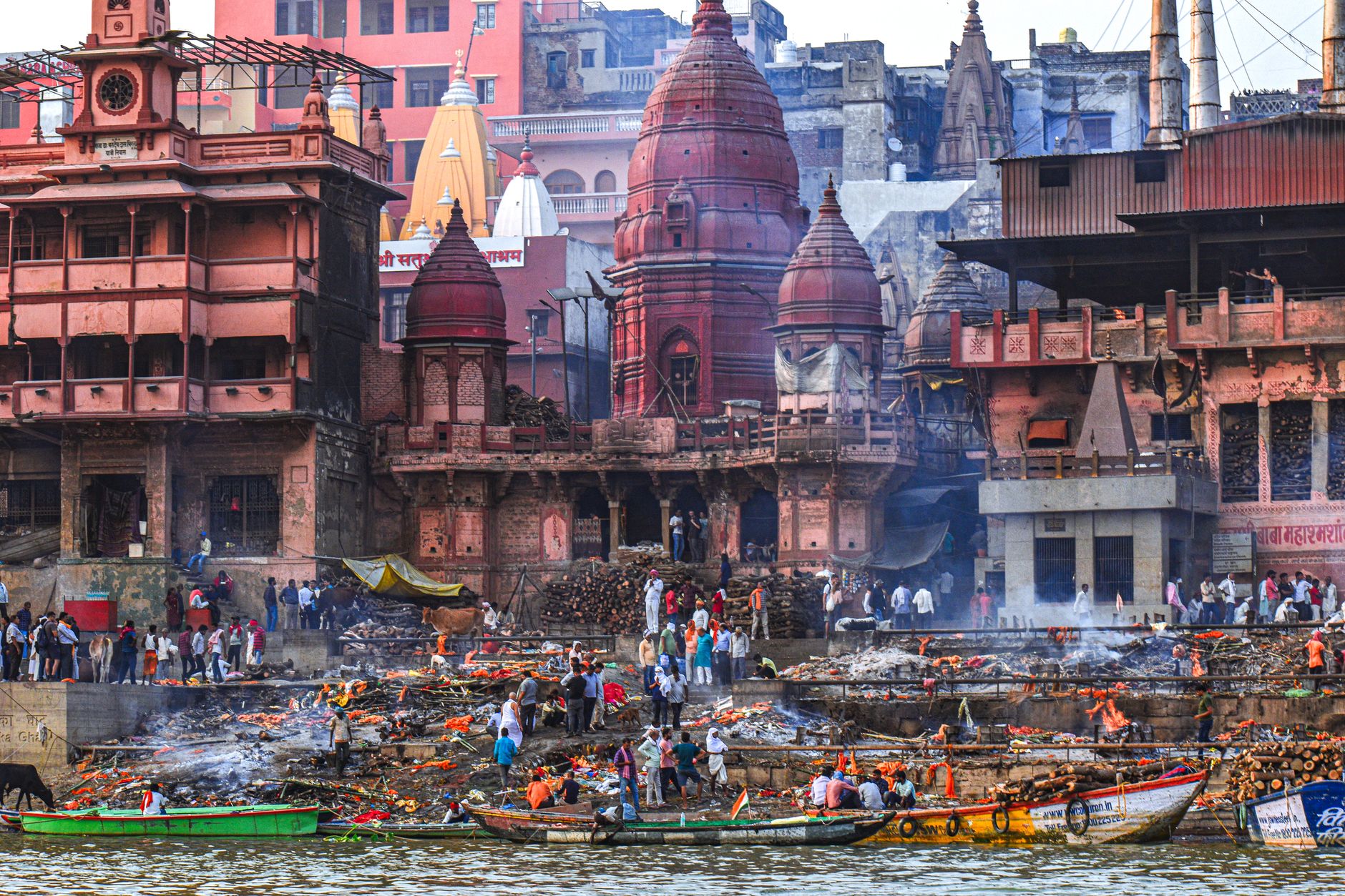 Photo by Tanmoy Pal via Pexels
 Photo by Animesh Srivastava via Pexels
The Taj Mahal at opening
The ticket booth is a kilometre from the gate and opens at six, the East gate suits foreign visitors, and the first hour is the only quiet one.
A sunrise boat on the Ganges
On the Varanasi ghats by half past five, an hour on the water past the bathing, the prayers and the cremations as the city wakes.
Standing at Manikarnika
Around three hundred bodies are cremated a day in Varanasi, each pyre burning about three hours, and watching is accepted while photography is not.
An overnight camel safari
Two days and a night in the Thar from Jaisalmer, sleeping under the stars or the glamping version with musicians and dinner on a dune.
One long sleeper train
Treated as non-negotiable rather than optional, with the vendors boarding and hopping off, families cooking once evening falls and the calmest rides in the south.
A Rishikesh retreat
Two to three days short, five to seven standard and a fortnight for immersion, with the teacher training one intensive month of six days a week.
What to eat in India
A composed plate of rice, breads and several small dishes, the value meal of the country
Fermented rice-and-lentil crêpe, usually with sambar and chutney, often on a banana leaf
Hollow crisp shell punctured and filled with cold spiced water, eaten whole in one bite
Mashed spiced tomato-and-vegetable mixture eaten with soft bread
Spiced potato fritter in a split bun with chutneys, Mumbai's signature snack
Layered spiced rice with meat or vegetables
Coconut-and-vinegar seafood curry with rice, the Goan daily staple
Spiced milk tea sold from street stalls everywhere, the drink of India
Deep-fried pastry stuffed with sweetened milk solids and nuts, eaten at Holi
Sweetened condensed milk, flavoured and frozen dense
Discover food spots in Stippl
Find restaurants and markets on the map, save them to your itinerary, works offline too.
Indian customs and what not to do
Dress is the first adjustment
Outside Goa's beaches, women default to trousers with shoulders and knees covered, and a scarf carried constantly doubles as temple cover.
Shoes off, sanctum closed
Shoes come off at every temple entrance, most Hindu temples have an inner sanctum non-believers may not enter, and photography is forbidden in most.
The photograph requests
People of all ages will ask constantly, a single session can draw a crowd and run fifteen minutes, and declining is fine.
Bargaining is expected
In markets and with rickshaw drivers, with prices starting high and dropping quickly, and the self-appointed guides at the ghats will also expect to be paid.
The head wobble is not a nod
A side-to-side tilt reads as okay or I have understood you, not as a firm yes.
The right hand does everything
Eating, giving and receiving, because the left is reserved for washing and is not used at the table.
Do
- Take your shoes off before entering a temple, a home and some cafés, and carry socks
- Use your right hand for eating, giving and receiving
- Say no clearly and repeatedly to boatmen, holy men and trinket sellers; a soft no is heard as an opening
- Agree the rickshaw price before getting in, and say up front that you will not be visiting any shops
- Carry a scarf, tissues, hand sanitiser and a head torch as standing equipment
Don't
- Photograph or film a cremation at the burning ghats; it is prohibited and enforced by the families
- Drink or brush your teeth with tap water, take ice, or eat raw salad
- Hand out money to beggars; goods, food or a school-run charity are the alternatives
- Ride the elephants at Amber Fort; the welfare investigations found them overworked and injured
- Photograph military sites, government buildings, airports or railway stations
What an India trip costs
Budget
€8.50–13
A dorm or a homestay bed, street food and thalis, trains and buses and no domestic flights.
Mid-range
€34–50
A private room in a good guesthouse or three-star, restaurant meals, taxis and the occasional driver, and one or two internal flights.
High-end
€130+
Heritage hotels and palace properties, a private car and driver throughout and guided days.
Track what you actually spend
Set a daily budget per country and log expenses in any currency while you travel.
Visas, rupees and getting around
Entry & visa
An e-visa, in advance
EU, UK and US passports all need the e-visa, applied for online between four days and four months before travel, and there is no visa on arrival.
Money
Rupees, counted in lakh
Cards work in the cities and cash everywhere else, with the commas falling every two digits above a thousand and the app wallets replacing cash fast.
Connectivity
A local SIM, with a passport
Cheap and useful, bought with a passport and a local address, and activation takes up to a day, so the airport counter is the answer.
Getting around
Sleeper trains, and the odd flight
The long-distance trains sell out and are booked about a week out, the foreign tourist quota is booked in person, and the flights do the subcontinent's distances.
Health
Malaria countrywide
The risk includes Mumbai and Delhi with only the high mountains excluded, the tablets are discussed with a clinic, and the food rules cut the stomach odds.
Water
Never from the tap
Sealed bottled or filtered and boiled, no ice of unknown origin, no raw salad, and least of all in Delhi.
Tipping
Small notes, everywhere
Hotel housekeeping about a euro a night, porters less per bag, ten percent in restaurants that do not add a service charge, and the guides tipped separately.
Power & plugs
Types C, D and M
The round two-pin works, the three-pin needs its own adapter, and the head torch covers the power cuts.
Language
Hindi, English and twenty more
English is an official language and works in the cities, the tourist trade and the trains, and a namaste and a shukriya land everywhere.
Hindi worth knowing
Nobody expects you to speak the language, which is exactly why a handful of words goes so far.
na-mas-TAY
Hello and goodbye, the respectful greeting · नमस्ते
SHUK-ri-ya
Thank you · शुक्रिया
DHAN-ya-vaad
Thank you, more formal · धन्यवाद
KIT-na hai
How much is it? · कितना है
MUJ-he … CHA-hi-ye
I would like … · मुझे … चाहिए
ba-HUT ACH-cha
Very good, excellent · बहुत अच्छा
ka-HAAN hai
Where is it? · कहाँ है
haan / na-HEEN
Yes / no · हाँ / नहीं
PAA-ni
Water · पानी
shaa-kaa-HAA-ri
Vegetarian · शाकाहारी
chai
Tea, the drink of the country · चाय
ne-HEEN CHA-hi-ye
I don't want it, to the sellers · नहीं चाहिए
JUL-lay
Hello and thank you, in Ladakhi · ཇུ་ལེ།
India questions, answered
Yes, and there is no visa on arrival: almost everyone applies for the e-visa online between four days and four months before travel, with a free arrival card in the last three days on top, and the e-visa restricts entry to the designated airports and seaports rather than the land borders. The fee moves with the season and the length.
More than you think: ten days is too short, and two to five weeks for one or two regions is the realistic range. Most stops in India get 2 nights on Stippl, and a typical trip carrying the country runs about 13 days.
October to March for almost the whole country, November to March for Goa and the south, and June to September only for Ladakh and Spiti, where the monsoon months are the peak. Put the region into Stippl before the dates, then ask people in subreddits like r/IndiaTravel which month they got the Golden Triangle right.
For most travellers it is a reason to sequence Delhi outside November to January rather than to avoid the country, and for anyone with asthma, heart disease or small children it is a reason to land elsewhere. Only 9.87% of Indian stops on Stippl are no night at all, and the capital is usually the first two.
About a week for the journey itself, because the long-distance trains sell out, with the general window sixty days and the foreign tourist quota booked in person at the station bureaux. 32.51% created ≤14 days ahead of trips carrying India on Stippl are planned inside a fortnight, and the trains are what that lead has to cover.
Assume some stomach trouble, and the food rules cut the odds dramatically: no tap water, no ice, no raw salad, moderate meat and probiotics beforehand, with one traveller eating street food for five months on those rules alone. Malaria risk is countrywide including the cities, and the tablets are a conversation with a clinic before the flight.
Every guide is written by the Stippl editors and checked against the trips our travellers actually plan. Spotted something out of date? Let us know.

Plan India in Stippl
Everything in this guide, ready to drop into your India route, with planning and bookings in one app.