

Santa Teresa
Santa Teresa is a surf beach the length of the town, sand-bottom for beginners at one end, with yoga studios and coworking for the people who stay a month. Sunset on the sand is a nightly event.
Santa Teresa in a nutshell
Santa Teresa: what to expect
Behind this are 87,000+ stops planned across Costa Rica on Stippl.
Santa Teresa is one unpaved road about four kilometres long, running behind four beaches in a row. Mal País, Playa Carmen, Playa Santa Teresa and Playa Hermosa sit south to north, with surf shops, yoga studios, boutiques and coworking spaces along the length of it. Hermosa is the sandy-bottomed beginner beach. The Mal País tide pools fill with warm and cold water at low tide, and Cabo Blanco at the tip of the peninsula was Costa Rica's first protected area, declared in 1963.
Santa Teresa is barely a Costa Rica trip at all. Fewer than half of the trips carrying it stay inside the country, the lowest share we measure here, and one in five also carries Mexico or Guatemala: this is a stop on an overland Central America run. It holds people longer than anywhere else too, with one stay in six running five nights or more, against one in twenty at the next destination.
Treat 3 nights as a floor, because getting here is a ferry and most of a day each way. Beginners want the dry months, when the wind blows offshore and the waves are smaller, and everyone else wants the green season swells. Skip it if you are watching money, because it is the most expensive town in the country, and skip it for wildlife, which is thinner here than anywhere else you will go.
Plan Santa Teresa in Stippl
Day-by-day planning, stays and budget in one app, with every place from this guide already on the map.
Download the appWho Santa Teresa is for
Surfers, in the right season
Beginners in the dry months, everyone else in the green, and the beach breaks run the whole length of the town.
People staying a while
Yoga studios, coworking spaces and weekly rates exist because the town is built for it, and 3 nights is only the start.
Central America overlanders
More than half of Santa Teresa's trips leave Costa Rica, which makes it a hinge rather than a destination for many.
Families and non-surfers
The Mal País tide pools fill at low tide with fish and urchins, Montezuma's waterfall is thirty minutes east, and Tortuga Island's white sand is a boat day.
Maybe not for you: short stops, since getting here costs the best part of a day each way; tight budgets, because this is the country's most expensive town; wildlife travellers, who should go to Cabo Blanco; and swimmers, because the currents that make the surf make the sea rough.
The best time to visit Santa Teresa
Dry season
December to April
Genuinely dry, which is unusual on this coast, with offshore winds, small clean surf and the town at its busiest and priciest. The beginner's surf window.
Green season
May to November
The southwest swells arrive, the surf gets bigger and the crowd thins out. Wet afternoons, dry mornings and the road in at its worst.
- January is the month most travellers plan Costa Rica for on Stippl, and Santa Teresa is planned about 65 days ahead, the shortest lead of the ten we cover. In the dry season that is a gamble: the town fills, and the good rooms go first.
- The two seasons suit opposite surfers. December to April brings offshore winds, cleaner faces and swells that can drop by more than half; May to November brings the southwest swells and the size, for people who came for it.
- The road into Santa Teresa is dirt and the green season turns it to mud. The drive from the ferry at Paquera takes longer than the map says in any month; from September to November a four-wheel drive is the difference between arriving and turning back.
- Christmas to New Year and Easter week sell out. The town's surf camps and villas price those fortnights separately and sell them by the autumn; the rest of the dry season is busy but bookable.
Add your Santa Teresa dates and we'll flag the weather
Stippl shows the season, crowds and prices for every stop on your route.
Describe your trip, get a Santa Teresa itinerary in seconds
Everything in this guide is already in Stippl. Tell the planner how long you have and what you like: it builds the route, the days and the travel times, and you edit whatever you want.
Things to do in Santa Teresa
 Photo by Luis Diego Aguilar via Unsplash
Learning to surf
Take a lesson at Playa Hermosa, with a sandy bottom and no rocks, about €45 for two hours, or surf Playa Carmen and Santa Teresa itself with the rest. Book in town or online; the good instructors fill in the dry season.
Yoga on the strip
Drop into a class at one of the open-air studios facing the sea, about €15, or a week-long retreat. Sunrise classes at seven are the ones with the view.
Sunset on the beach
Join the nightly event on the sand with the coconut sellers, the snack carts and the crowd. Free, and the beach bars at the Carmen end pour from five.
The Mal País tide pools
Sit in the warm and cold pools that fill the rocks at Playa Mar Azul at low tide, with the fish and urchins the last high tide brought in, free. Fifteen minutes south; check the tide table.
Montezuma
Take the unpaved hill road thirty minutes east to the smaller bohemian town, the three-tiered waterfall and a calmer beach, about €5 by shared taxi. A day, and the waterfall walk needs shoes.
Cabo Blanco
Walk the trail to the beach at the tip of the peninsula in Costa Rica's first protected area, established in 1963, about €12. Closed Mondays and Tuesdays, and the round trip is four hours.
The neighbourhoods of Santa Teresa
Playa Santa Teresa
The middle, busiest, main break
The middle and busiest stretch: most of the restaurants, most of the accommodation, the main surf beach and the most traffic on the road. For first visits and surfers.
The wave and the restaurants, and the dust of the road behind them.
Playa Hermosa
Sandiest, gentlest, beginner lessons
North of the centre: the sandiest and gentlest water, where the beginner surf lessons happen and the part being built on fastest. For beginners and families.
The easiest water, and a scooter for the town.
Playa Carmen
The southern end, bank, rockier
The southern end where the road from Cóbano meets the coast: quieter, a handful of good restaurants, the area's only bank and cash machine and a rockier beach. For quieter stays and for the cash machine.
The bank and the quiet, and rocks in the water.
Mal País
Separate village, tide pools
Four kilometres south: a separate village with its own restaurants, quieter and more residential, with the tide pools at Mar Azul. For long stays and for the tide pools at low water.
Village calm and the pools, and a scooter for the surf.
See every Santa Teresa neighbourhood on one map
Save the areas you like and Stippl plots your days so you're not crossing the city twice.
Where to stay in Santa Teresa
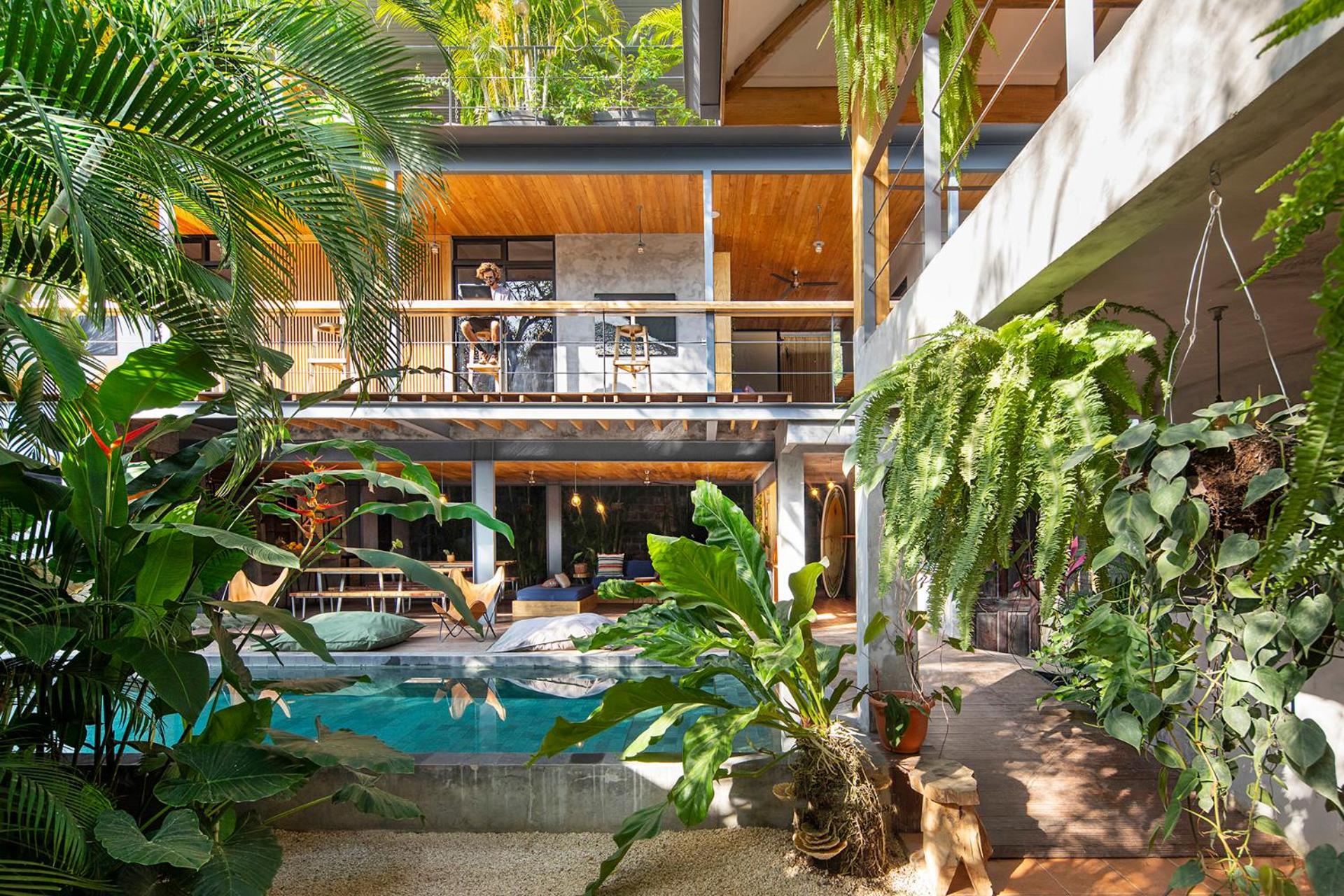
Stay on Playa Santa Teresa, just off the main road but not far off, because the hill starts quickly: most of the restaurants, the accommodation and the surf beach are on this middle stretch. Most people give Santa Teresa 3 nights on Stippl, and one in six stays five or longer. Book well ahead for the dry season, December to April.
Playa Santa Teresa
Surf hostels on the sand from €18 a bed, and boutique villas and small hotels, €100 to €300.
Playa Hermosa
Family cabinas and new villas near the beginner surf, €70 to €200, the fastest-built part of town.
Playa Carmen
Guesthouses and mid-range hotels at the quieter end, €60 to €150, near the only cash machine.
Mal País
Long-stay villas, campsites from €12 and hill hotels with infinity pools over the bay, €50 to €250.


What to eat in Santa Teresa
Acai or granola bowls, the town's signature morning food
Locally roasted coffee
An all-vegetarian menu built around the surf-and-yoga crowd
Italian-style pizza
Casual Italian dishes from a container-cluster food hall
Asian-inspired dishes
A drink on the sand at sunset
Discover food spots in Stippl
Find restaurants and markets on the map, save them to your itinerary, works offline too.
Santa Teresa customs and what not to do
The town runs on surf time
Early mornings in the water, an afternoon lull and sunset on the beach; dinner is early and the road is dark by seven, so the evening is where you are.
It is an international town
A large foreign resident and long-stay population shapes the food, the prices and the language you will hear; the Tico village is Cóbano, and usted still applies there.
Pick horse operators with care
The beach horses vary from well-kept to not; look at the animals before you pay, and choose the operator that walks them in the shade and rests them.
The dust is a fact of life
Everyone jokes about it and the road coats everything; a cloth for the camera, sunglasses on the bike, and the shirt you wear on the road is not the shirt for dinner.
Do
- Surf at dawn and rest at midday
- Fill up in Cóbano; there is no petrol station in town
- Carry cash; the one ATM is unreliable
- Look at the horses before you book a ride
Don't
- Swim where the surf is good; Playa Carmen has currents and rocks
- Walk alone late at night on the unlit road
- Ride an ATV without sunglasses and a helmet
- Expect Spanish on the strip; expect it in Cóbano
What a Santa Teresa trip costs
Budget
€47–75
Dorm bed or budget cabina, casual meals off the main road, a bicycle rather than an ATV, one paid activity every other day.
Mid-range
€105–170
Surf-town mid-range hotel, restaurant dinners, a surf lesson every few days, an ATV.
High-end
€300+
Boutique hotel or villa with a pool, private surf lessons and yoga, dining out nightly.
Track what you actually spend
Set a daily budget per country and log expenses in any currency while you travel.
Fun facts about Santa Teresa
Costa Rica's first protected area is at the end of this road. Cabo Blanco was established in 1963, before the national park system existed, at the tip of the peninsula past Mal País.
Santa Teresa is the most expensive town in Costa Rica. Four kilometres of dirt road with no petrol station and one cash machine, and the prices of a European resort.
February brings 11 mm of rain and October 417 mm. A 38-fold swing, the sharpest on the Pacific coast, which is why the dry season here is genuinely dry.
Santa Teresa has the longest stays in Costa Rica. On Stippl about one in six travellers stays five nights or more, against almost nobody at the tightest destinations inland.
Santa Teresa is barely a Costa Rica trip at all. More than half of the trips that carry it leave the country, and one in five also carries Mexico.
The strip is really four beaches in a row. From south to north Mal País, Playa Carmen, Playa Santa Teresa and Playa Hermosa, with Playa Manzanillo a further eight kilometres on.
Local tips for Santa Teresa
Clearance, not a 4x4
The road is partly unpaved the whole way in and through the town, so ground clearance matters more than four-wheel drive. Fill up in Cóbano: Santa Teresa has no petrol station.
Book the ferry ahead
Reserve the Puntarenas to Paquera crossing before you travel, about €25 with a car. If you have not collected the rental yet, put rental car in the plate field and correct it at the port.
A bicycle, not an ATV
A bike is the sensible way along the strip at about €8 a day, and an ATV is five times that on a dusty unlit road busy with motorbikes. Sunglasses either way.
How long to stay
Most people give Santa Teresa 3 nights on Stippl: surf lessons one morning, Montezuma waterfall the next, and a sunset on Playa Carmen every evening.
Surf beaches, not swimming
Playa Carmen has strong currents and rocks in the water, and the beaches generally are for surfing. Watch for urchins in the tide pools.
Carry cash
Do not rely on the one ATM working. Do not walk alone late at night either; the road home is unlit and the town has no street lighting to speak of.
Santa Teresa questions, answered
As a block at one end rather than a stop in the middle. Getting here is six hours from San Jose including the Puntarenas ferry, or a short flight to Cobano and a half-hour drive. Travellers planning it on Stippl book about 65 days out. Put the ferry times into Stippl.
Three nights at least. Travellers planning Santa Teresa on Stippl give it 3 nights, and given how long the journey in takes, anything less is not worth the ferry. The town is one dusty road along the beach and it works on you slowly.
It carries 5.0% of everything planned in Costa Rica on Stippl, which is a great deal for somewhere this awkward to reach. That is what a six-hour trip down a dirt road tells you: people who come have heard something specific about the surf, the sunsets or the food.
Not strictly, but ground clearance helps. The main road through town is unpaved and is either dust or ruts depending on the season, and the side tracks up to the hotels are steeper than they look. A small car manages in the dry months; in the wet, take the clearance.
All year, which is unusual. December to April is smaller and cleaner and suits beginners; May to November is bigger and more consistent and suits everyone else. The trade-off is rain, and the wet months are also when the town is emptiest and the rates come down.
Yes, and it has a reputation as the priciest town in Costa Rica, which takes some doing. Everything arrives by ferry or over a dirt road, and the crowd it draws can pay. Eat at the sodas rather than the beach clubs and it comes back to something reasonable.
Every guide is written by the Stippl editors and checked against the trips our travellers actually plan. Spotted something out of date? Let us know.

Plan Santa Teresa in Stippl
Day-by-day planning, stays and budget in one app, with every place from this guide already on the map.
Download the app