

Ghent
Ghent is a medieval city on Bruges' scale with a university inside it, one of the richest cities in northern Europe in 1300 and a working one now, with the Mystic Lamb hanging where it was painted and the students drinking on the canal steps. One night for most and two for the argument, cheaper than Bruges on identical assumptions, and the Gentse Feesten as the ten days that change everything.
Ghent in a nutshell
Ghent: what to expect
We read 62,000+ planned stops in Belgium on Stippl to see how Ghent really gets planned.
Ghent is the Flemish city that still belongs to its residents, and a night here is the case for it. The Mystic Lamb hangs in its own chapel in St Bavo's where it was painted, the Gravensteen is a moated castle in the middle of the city with a genuinely funny audio guide, the Graslei steps at dusk are free and what the locals do, Werregarenstraat is the sanctioned graffiti alley repainted daily, the Bij Sint-Jacobs flea market runs Friday to Sunday mornings, and the canal boat is forty minutes and cheaper than Bruges. Most travellers give Ghent 1 night on Stippl.
Half of everyone who plans Ghent also plans Bruges, and most of them sleep there. 25.2% of Ghent stops on Stippl are no night at all, the highest share in Belgium, and most of the rest a single night, because Bruges is 25 minutes away, while 24.5% of Ghent trips are Belgium alone, the highest of the four cities, because the people who choose Ghent are choosing Belgium.
So sleep in the Kuip for a first visit, sit on the Graslei steps like everyone else, eat in Patershol rather than the Korenmarkt, and take the tram from the station rather than assuming it is central. Skip Gentse Feesten week without a booking, since the centre is a festival for ten days, skip expecting Bruges' postcard density, because Ghent is a working city, and skip the Korenmarkt restaurants, which are where the coaches eat.
Plan Ghent in Stippl
Day-by-day planning, stays and budget in one app, with every place from this guide already on the map.
Download the appWho Ghent is for
Bruges-or-Ghent deciders
The guides argue for Ghent on price, crowds and authenticity, and the plans still choose Bruges, so this is the argument against the plans.
Budget travellers
A weekend costs about €70 a person less than Bruges on identical mid-range assumptions, and the students keep the rest of the prices down.
Art lovers
The Mystic Lamb in situ, plus the MSK and S.M.A.K. side by side in Citadelpark.
Eaters
Ghent has better food than Bruges, the student population is why it is affordable, and Patershol is the dining quarter.
Vegetarians
The most developed vegetarian scene in Flanders, with a weekly veggie day the city invented.
Belgium-only travellers
24.5% of Ghent trips on Stippl are Belgium alone, the highest of the four cities, because the people who choose Ghent are here for the country.
Maybe not for you: anyone who wants the single most photogenic medieval centre in Europe, because Bruges is prettier and every guide that prefers Ghent concedes it; and anyone arriving in Gentse Feesten week without a room.
The best time to visit Ghent
Shoulder
April to June, September
May and September specifically, for mild weather and fewer crowds, with the students in town and the terraces on the quays open.
Festival
July
The Gentse Feesten are ten days that transform the centre into a stage, and the single biggest planning consideration in the Ghent calendar.
Late summer
August
The students gone, the festival over and the city at its quietest in daylight, with the Graslei steps to yourself.
Winter
November to February
Quiet and cold, with the winter light festival every third year, the Christmas market on the squares and the museums as the plan.
- Most travellers give Ghent 1 night on Stippl, and 25.2% of stops are no night at all. The highest pass-through share in Belgium, because Bruges is 25 minutes away and most people sleep there instead.
- Ghent is less seasonal than the other three cities. The busiest month here on Stippl is July 16.2% of plans, below the country's peak, which is what a city with a resident population and a university looks like.
- The Gentse Feesten fill ten days in July. Free street arts across the whole centre with a million visitors, and the rooms gone months ahead or the city avoided for the week.
- The Altarpiece ticket is separate. St Bavo's is free and the chapel with the Mystic Lamb is not, and the timed slots go on busy weekends.
- The station is a tram ride from the centre. Gent-Sint-Pieters is a genuine distance out, and this leg is the one visitors get wrong on arrival.
- 24.6% of trips carrying Ghent on Stippl are planned inside a fortnight. The train from Brussels or Bruges is a morning's decision, and the room is the only thing that needs booking outside July.
Add your Ghent dates and we'll flag the weather
Stippl shows the season, crowds and prices for every stop on your route.
Describe your trip, get a Ghent itinerary in seconds
Everything in this guide is already in Stippl. Tell the planner how long you have and what you like: it builds the route, the days and the travel times, and you edit whatever you want.
Things to do in Ghent
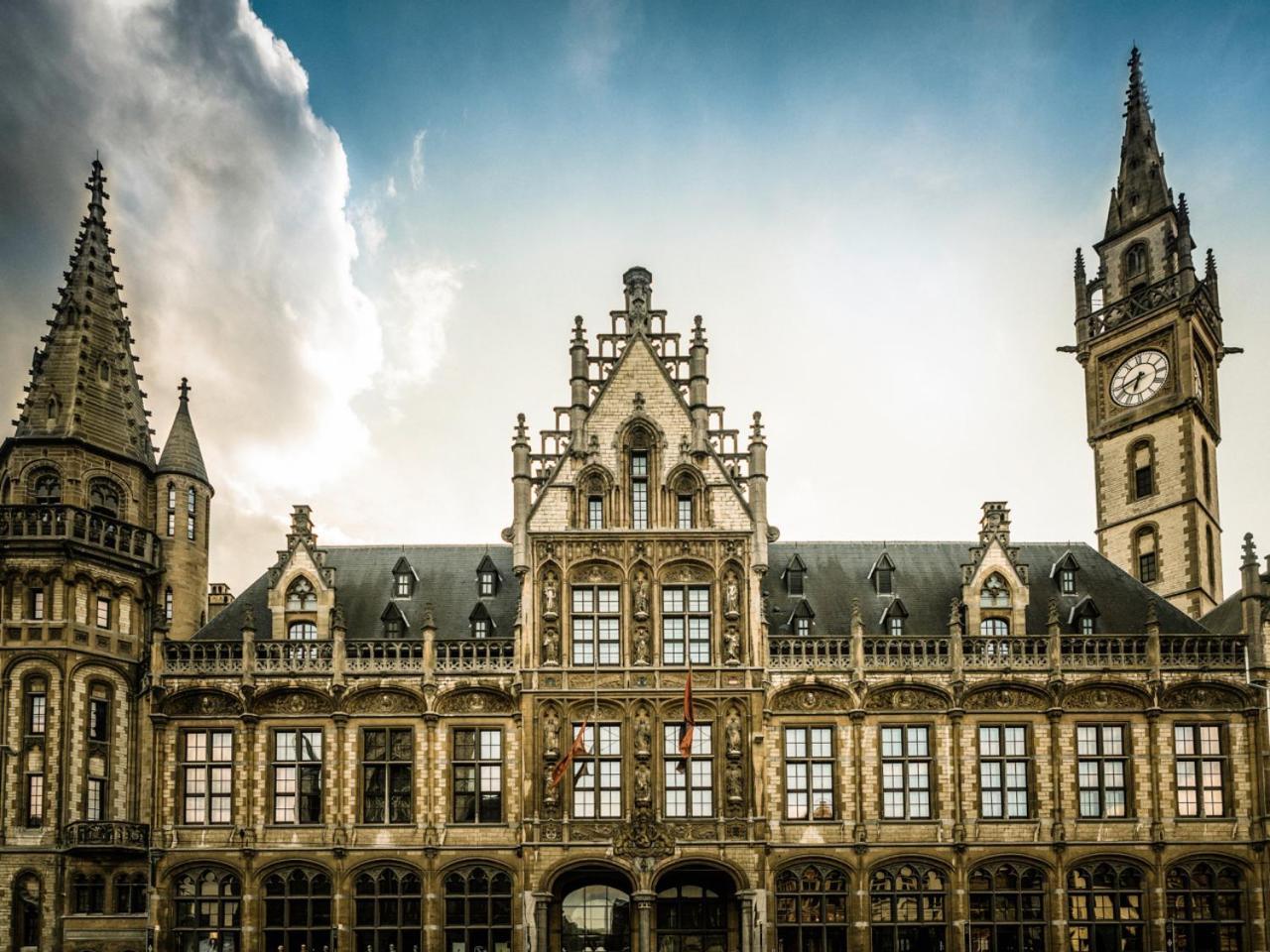
 Photo by Edoardo Colombo via Pexels
 Photo by ze k via Pexels
The Mystic Lamb
The Van Eyck brothers' altarpiece in its own chapel in St Bavo's, at eye level where it was painted, and the most stolen painting in history.
The Gravensteen
A moated castle in the middle of the city, completed in 1180, with an audio guide that is genuinely funny and the ramparts for the view.
The Graslei at dusk
Sitting on the canal steps with a coffee or a beer, which is free and is what the locals do, with the guild houses of the Korenlei facing.
Werregarenstraat
The sanctioned graffiti alley, repainted daily, and one of the most photographed open-air galleries in Belgium.
The Bij Sint-Jacobs flea market
Friday to Sunday mornings on the square and the streets around it, with the cafés open early for it.
A canal boat
Forty minutes, cheaper than Bruges, and the commentary is about the history rather than the gimmicks.
The quarters of Ghent
De Kuip and the Korenmarkt
The medieval bowl
The three towers, the quays and every major sight inside a ten-minute walk, with the Korenmarkt as the square the coaches eat on. For a first stay.
Everything at the door, and the restaurants on the square priced for it.
Patershol
The dining quarter
Eleventh-century lanes behind the castle, now snug bistros and brasseries in listed houses, with the floodlit Gravensteen at the end of the lane. For eating.
The best dinners in the city, and few rooms to sleep in afterwards.
Vrijdagmarkt and Bij Sint-Jacobs
The civic square
The liveliest part of the centre after dark and the flea-market streets around it, with the market Friday to Sunday mornings. For nightlife.
The bars and the market, and the noise until late at the weekend.
Werregarenstraat and the design quarter
The graffiti alley
Walls repainted daily by whoever turns up with a can, the Design Museum a street away and the concept stores between the two. For a second visit.
The alley and the shops, and a district with more to look at than to sleep in.
Citadelpark and Sint-Pieters
The museum quarter
Leafy, by the main station, with the MSK and S.M.A.K. next to each other and the easier arrivals. For a calmer base.
The museums and the station, and a tram from the medieval centre.
Prinsenhof
The quiet pocket
The residential streets where Charles V was born, with almshouses, canalside gardens, a brewery and almost no visitors at any hour. For longer stays.
Quiet and lovely, and nothing open after nine.
See every Ghent neighbourhood on one map
Save the areas you like and Stippl plots your days so you're not crossing the city twice.
Where to stay in Ghent
Patershol for the restaurants, the Graslei for the view and Portus Ganda for the newer hotels, and the centre is compact enough that the tram from the station is the only leg that matters. Most travellers give Ghent 1 night on Stippl, and the rooms run a third below Bruges.
De Kuip and the Korenmarkt
Hotels and hostels around the three towers, €40 to €160 a night.
Patershol
€€
A few boutique rooms in the listed lanes, €120 to €220 a night.
Vrijdagmarkt and Bij Sint-Jacobs
€€
Apartments and hostels around the square, €30 to €110 a night.
Werregarenstraat and the design quarter
Design hotels and apartments near the alley, €80 to €150 a night.
Citadelpark and Sint-Pieters
€€
Hotels by the station and the park, €70 to €130 a night.
Prinsenhof
€€
Guesthouses and apartments in the quiet streets, €70 to €120 a night.


What to eat in Ghent
Creamy chicken or fish stew, and Ghent's own dish
Twice-fried, in a cone
The student city's cheap midday meal, from about €6
Ghent's vegetarian scene is the most developed in Flanders
Cone-shaped raspberry sweet, a Ghent speciality sold from street carts
The full national range, at student prices
Discover food spots in Stippl
Find restaurants and markets on the map, save them to your itinerary, works offline too.
Ghent customs and what not to do
Dutch, and lived in
The central argument for Ghent over Bruges is that locals live in the centre, so the register is a working Flemish city rather than a museum.
Students set the tone
Cycling across medieval bridges, drinking on the canal steps and independent shops that exist for residents, and the prices follow them.
Every beer has its glass
The full national range at student prices, and the café pours each in its own without being asked.
The Graslei steps are shared
The canal steps are the city's living room in the evening, the bottles are taken away and the drop to the water has no rail.
The Altarpiece is a church
St Bavo's is a working cathedral, the chapel is quiet by rule, and the queue for the Lamb is a timed one.
Do
- Sit on the Graslei steps like everyone else
- Go to Patershol for dinner rather than the Korenmarkt
- Walk to the Vrijdagmarkt after dark
- Take the tram from Sint-Pieters into the centre
Don't
- Assume the station is in the centre; it is a tram ride
- Expect Bruges' postcard density; Ghent is a working city
- Turn up in Gentse Feesten week without a booking
What a Ghent trip costs
Budget
€80–110
A hostel or budget double, soup and frituur lunches, and the free churches and quays.
Mid-range
€130–160
A central double, restaurant dinners, the Gravensteen and the Altarpiece.
High-end
€250+
A boutique room in Patershol, the better kitchens and private guiding.
Track what you actually spend
Set a daily budget per country and log expenses in any currency while you travel.
Fun facts about Ghent
The Gravensteen in Ghent was completed in 1180 for the Counts of Flanders. They stayed until 1353, then it was the city mint, then a prison, then a cotton mill.
In November 1949, 138 students seized the Gravensteen in Ghent. They lowered the portcullis and barricaded the gates in what became known as the Battle of Gravensteen, over the price of beer.
Ghent's Belfry is 91 metres, and the city's three towers stand almost in a line. The Belfry, St Bavo's and St Nicholas, seen from the St Michael's bridge in one frame.
The Ghent Altarpiece was recovered from a salt mine in 1945. Stolen by Napoleon, confiscated by the Nazis, the most stolen painting in history, and one panel is still missing.
Ghent had roughly 50,000 people by 1300, comparable to Paris. On the back of the cloth trade, and the guild houses on the Graslei are what it bought.
25.2% of Ghent stops on Stippl are no night at all. The highest pass-through share in Belgium, because Bruges is 25 minutes away and most people sleep there.
Local tips for Ghent
Compact, walkable and cycled
The centre is walked end to end and the cycling infrastructure is excellent, with the city bikes at the station and the students on every bridge.
The station is a tram ride out
Gent-Sint-Pieters is a genuine distance from the centre, and this leg is the one visitors get wrong, so the tram is taken rather than the walk.
The crowds are Bruges' problem
Crowding is materially lower here, and the whole argument is that you can walk the Graslei and Patershol without being herded.
Care at the Feesten
Belgium's named pickpocket hotspots are the Brussels stations, and ordinary care belongs at the Gentse Feesten and the flea market, where the crowds are.
The steps drop to the water
The Graslei steps have no rail and the centre is uneven stone throughout, so the third beer on the quay is the one to watch.
One night, and rarely more
Most travellers give Ghent 1 night on Stippl, and 45.3% of stops are a single night, which is the evening on the quay and the morning at the Lamb.
Ghent questions, answered
The guides argue Ghent, on price, crowds and the fact that residents still live in the centre, and both concede Bruges is prettier. The plans choose Bruges by roughly three to two, and the people who choose Ghent tend to be here for Belgium: 24.5% of Ghent trips on Stippl are Belgium alone.
That is what most people do: half of everyone who plans Ghent also plans Bruges, and they are 25 minutes apart by train. Put Ghent into Stippl as the night and Bruges as the day, then ask people in subreddits like r/belgium which order they would take.
Yes, and every guide says so. The chapel with the Mystic Lamb is a separate timed ticket inside a free cathedral, the panels are at eye level where they were painted, and the restored colours are the reason to see it now rather than from a book.
About a third on the hotel double on identical mid-range assumptions, and the student city keeps the meals and the beer down with it, so a weekend here costs noticeably less than the same weekend in Bruges while the sights cost the same.
Ten days in the second half of July, free, and it takes over the whole centre with a million visitors. The busiest month here on Stippl is July 16.2% of plans, and the festival is why.
It gets one from most people and none from many: 25.2% of Ghent stops on Stippl are no night at all, the highest in Belgium, because Bruges is next door. The night buys the Graslei at dusk and Patershol for dinner, which are the two things the day-trippers miss.
Every guide is written by the Stippl editors and checked against the trips our travellers actually plan. Spotted something out of date? Let us know.

Plan Ghent in Stippl
Day-by-day planning, stays and budget in one app, with every place from this guide already on the map.
Download the app