 EuropeBelgium
Belgium
Belgium is four world-class cities inside a triangle a train crosses in under ninety minutes, with a language border down the middle, the Flemish Primitives hanging where they were painted and a beer glass designed for every one of 1,500 brews. A night or two a city, Brussels as the gateway, May, June or September, and the train for all of it.
BelgiumBelgium in a nutshell
Where to go in Belgium


Turn these stops into a Belgium route
Pick your favourites and Stippl orders them, adds travel times and builds the day-by-day.
Plan your adventure in Belgium
Our travel routes through Belgium
Belgium is loved by culture seekers and backpackers alike. We recommend several routes through this country, here they are in full!
3 nights3 days, the classic first weekend
Brussels · Ghent · Bruges
Three medieval centres within an hour of each other by train, in the shoulder months every source independently recommends.
3 nights3 days, the one our users actually plan
Brussels · Bruges · Ghent
The weekend our own data shows people actually plan; December works too, when the Brussels and Bruges Christmas markets are the reason to come.
5 nights5 days: the Flemish triangle, properly
Brussels · Antwerp · Ghent
Adds Antwerp, the city most often left out, and gives Bruges the second night that lets you see it once the day-trippers have gone.
7 nights7 days, the explore record's standard week
Brussels · Bruges · Ghent
The explore record's own week: two nights each in Brussels and Bruges, then Ghent, Antwerp and Leuven at a night apiece.
10 nights10 days, Flanders plus the Ardennes
Brussels · Ghent · Bruges
The only recipe that leaves Flanders, and the Ardennes half is an outdoor proposition that runs May to October and not outside it.
Updated September 2026 · 14 min read · Written by the Stippl editorsWe looked at how travellers actually plan Belgium on Stippl, across 62,000+ planned stops in Belgium.
Four cities, a night in each, and Brussels as the door: that is Belgium in the plans. Most stops get 1 night on Stippl, Brussels takes 40.3% of every Belgian stop because the trains from Paris, London and Amsterdam land there, and the named things are the Grand Place after dark, a canal boat in Bruges or Ghent, the Ghent Altarpiece in its own chapel, a Trappist brewery, the Last Post at the Menin Gate and a belfry climbed in Bruges or Ghent. The four cities together take 62.7% of the stops.
Nobody comes to Belgium only, and almost nobody plans it early. The typical trip carrying it visits 4 countries, only 10.7% of those trips are Belgium alone, and 20.8% of them are planned inside a fortnight, because the train from a neighbour is a morning's decision and nothing here needs booking but the room.
So sleep in one city and reach the other three by train, give Bruges and Ghent a night each and Antwerp the same, come in May, June, September or October, and check which language the room is using before speaking. Skip the car, since it is actively a problem in Brussels and the train reaches everything, skip July and August if the crowds matter, because the month curve is school holidays rather than weather, and skip French in Flanders or Dutch in Wallonia without asking first.
Plan Belgium in Stippl
Day-by-day planning, stays and budget in one app, with every place from this guide already on the map.
Download the appWho Belgium is for
First-timers wanting density
Four world-class cities in a country the size of a large county, so you sleep in one place and reach the other three by train inside an hour.
Beer drinkers
Over 1,500 distinct brews and a glass designed for each, including the Trappist ales brewed by monks that exist in only a handful of places on earth.
Flemish Primitives people
Van Eyck and Memling still hang where they were painted, with the Ghent Altarpiece in its own chapel in St Bavo's.
Anyone who eats
More Michelin stars per head than France and a chip shop on every corner, with the frituur and the tasting menu treated with the same seriousness.
Rail travellers on a wider run
Brussels is under two hours from Paris, London and Amsterdam, which is why Belgian trips on Stippl typically take in 4 countries.
Weekend breakers
Every one of the four cities works as two nights, and most stops in Belgium get 1 night on Stippl.
Maybe not for you: anyone wanting reliable sun or dramatic landscape without a car; and anyone expecting the country to fill two weeks on its own, because a fortnight here spends half of it in towns most visitors have never heard of.
The best time to visit Belgium
Shoulder
May to June, September to October
Mild, long daylight and the months every guide independently recommends, with the hotel rates below the summer and the canal boats running.
Peak
July and August
The warmest and busiest, the two months people plan most, with the Belgians themselves on holiday and Bruges at its fullest.
Christmas market season
Late November to early January
Winter Wonders in Brussels and the Bruges market are the winter draw, and Bruges accommodation is cheaper than in summer.
Ardennes outdoor season
May to October
The hiking and kayaking half of the country is a summer proposition only, and the one part that needs a car.
- Most stops in Belgium get 1 night on Stippl, and 21.0% are no night at all. The four cities are two-night cities in the guides and one-night cities in the plans, because the train makes the next one an hour away.
- The month curve is school holidays, not weather. July runs nearly six times February here, in a country whose sights are indoors and whose cities are best in the shoulder.
- The quietest month here on Stippl is February 3.50% of plans. The cheapest rooms in Bruges, the Christmas markets just gone, and the museums to yourself.
- 20.8% of Belgian trips on Stippl are planned inside a fortnight. The train from a neighbour is a morning's decision, and nothing here needs booking but the room.
- Brussels fills without warning. EU and NATO meetings take the hotels mid-week at any time of year, so the capital is booked earlier than the season suggests and the weekend is the cheap version.
- The Gentse Feesten takes over central Ghent for ten days in July. The single biggest planning impact in the Belgian calendar, and the rooms in Ghent are gone for it or cheap around it.
Add your Belgium dates and we'll flag the weather per stop
Stippl shows the season, crowds and prices for every place on your route.
Festivals, and when to avoid them
Christmas markets
Winter Wonders across the Grand Place and the Sainte-Catherine basin in Brussels, and the Bruges market on the Markt, the two that draw internationally. The one season Bruges is cheaper than summer.
Carnival of Binche
UNESCO-listed, with the masked Gilles in their ostrich-feather hats throwing oranges into the crowd on Shrove Tuesday. An hour from Brussels by train, and the oranges are not thrown back.
Brussels Jazz Weekend
Three days of free concerts on stages across the city, centred on the Grand Place. A reason to time a Brussels weekend, with no ticket to buy.
Gentse Feesten
Ten days of free street arts that take over central Ghent, with a million visitors and the squares turned into stages. Book the Ghent room months ahead, or sleep in Bruges and take the train in.
National Day
Parades and fireworks in Brussels, and the Royal Palace opens to the public from this date until late August. The one day of the year the palace is walked through for free.
Tomorrowland
The largest electronic music festival in the world, in Boom between Brussels and Antwerp, with the tickets gone within the hour in January. The two weekends the Antwerp rooms disappear.
Describe your trip, get a Belgium itinerary in seconds
Everything in this guide is already in Stippl. Tell the planner how long you have and what you like: it builds the route, the days and the travel times, and you edit whatever you want.
Things to do in Belgium
 Photo by Callum Parker via Unsplash
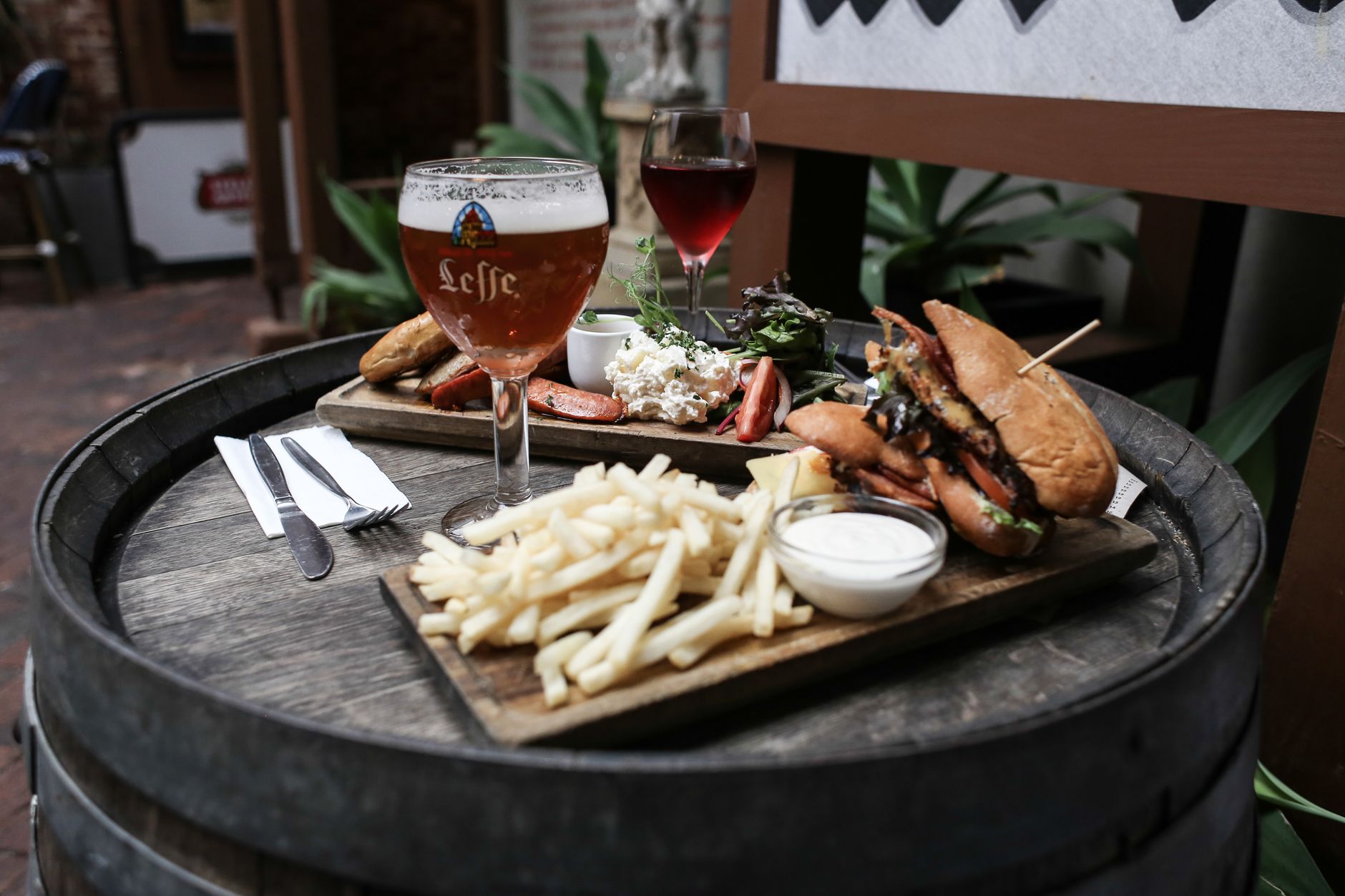 Photo by Rachel Claire via Pexels
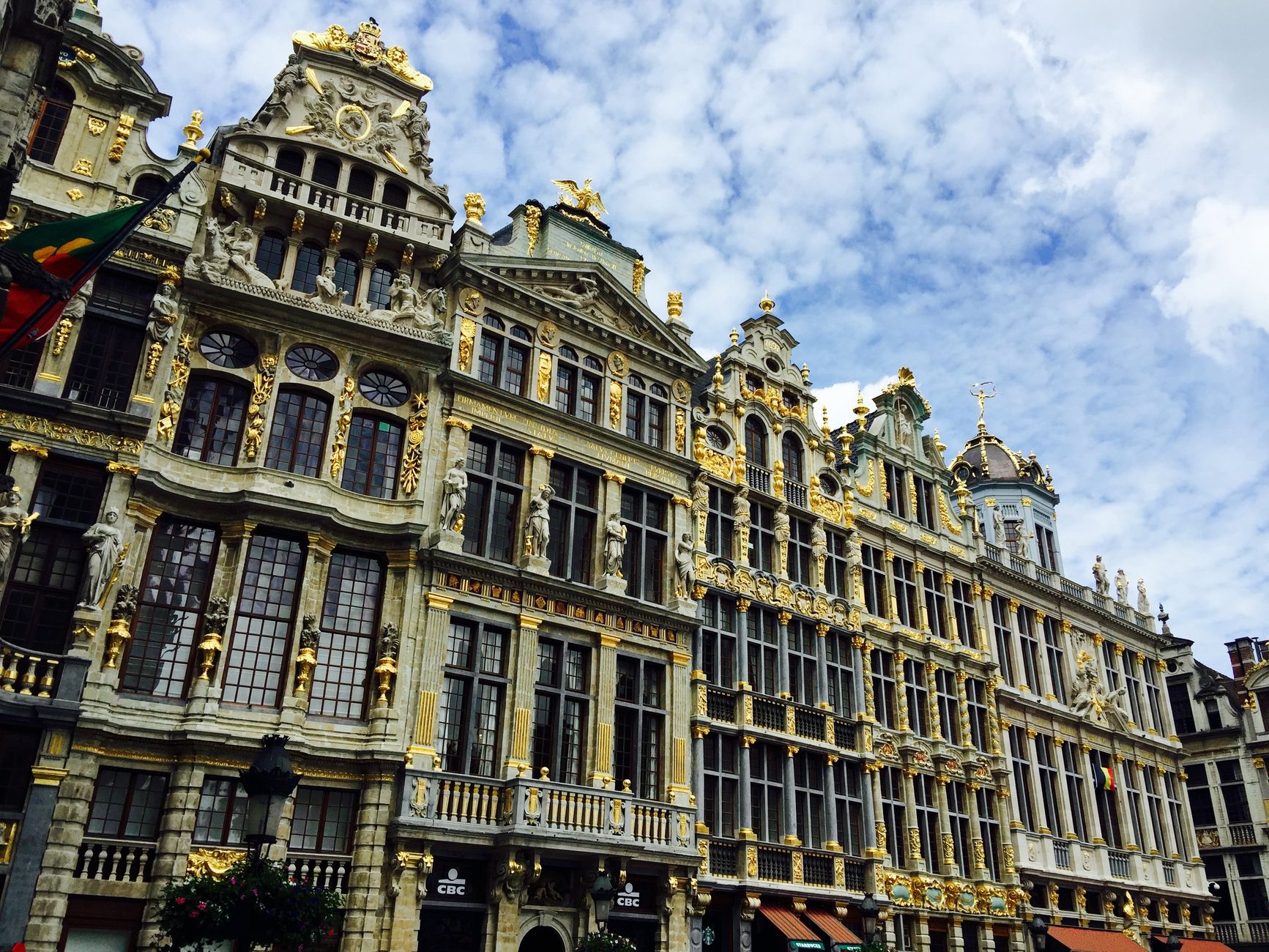
The Grand Place after dark
The guild houses lit and the square emptied of day visitors, and a different place from the one seen at noon.
A canal boat in Bruges or Ghent
Thirty minutes in Bruges, forty in Ghent and cheaper, and one of the two is treated as compulsory by every guide.
The Ghent Altarpiece
The Van Eyck brothers' panel installed in its own chapel in St Bavo's, where it was made, and the most stolen painting in history.
A Trappist brewery
Westmalle, Chimay and Rochefort all receive visitors, and the beer brewed inside a working abbey exists nowhere else.
The Menin Gate at Ypres
The Last Post sounded nightly since 1928, and the Flanders Fields cemeteries in the farmland around it.
A belfry climbed
Bruges' 366 steps or Ghent's 91 metres, and the choice between them is a real one.
What to eat in Belgium
Twice-fried potato in a paper cone with a sauce list
Mussels with fries, the country's set-piece dish
Two different things: the light rectangular Brussels and the dense sugared Liège
Beef stewed in dark beer
Creamy chicken or fish stew
Mashed potato worked through with vegetables
Chicory rolled in ham under béchamel
Filled chocolates, the Belgian sense of the word
Spiced caramelised biscuit
Beer brewed inside a working abbey
Discover food spots in Stippl
Find restaurants and markets on the map, save them to your itinerary, works offline too.
Belgian customs and what not to do
Brussels is French-first
Officially bilingual and functionally French, with some Dutch and English understood almost everywhere a visitor goes.
Modesty is the register
Belgians value punctuality and privacy, displays of wealth land badly, and dry humour and sarcasm are the normal mode.
Every beer has its glass
Using the wrong one is noticed, and this is not a tourist myth but how the pour works in every café in the country.
Gezelligheid is the word
The Flemish sense of warmth and convivial cosiness, and what a good café is measured against.
The language line is political
The most sensitive cultural issue in the country, and a visitor who asks which language a place uses is treated better than one who guesses.
Do
- Greet acquaintances with a single kiss on the cheek
- Queue, and expect others to
- Ask which language a place uses before assuming
- Walk the Grand Place twice, by day and after dark
Don't
- Speak French in Flanders or Dutch in Wallonia without checking
- Call the whole country Flemish, or the whole country French
- Expect to bargain anywhere
What a Belgium trip costs
Budget
€70
A hostel dorm, frituur and bakery meals, and the trains between cities.
Mid-range
€150
A central three-star double, restaurant dinners and the paid museums.
High-end
€300+
A boutique room in a historic centre, tasting menus and private guiding.
Track what you actually spend
Set a daily budget per country and log expenses in any currency while you travel.
Trains, languages and getting around
Entry & visa
Schengen, no visa
EU, EEA and Swiss passports and ID cards walk in, and UK, US, Canadian and Australian passports get ninety days in any 180 without a visa.
Money
Euro, cards everywhere
Cards and contactless are accepted almost everywhere, Bancontact ATMs are plentiful, and €20 to €50 in cash covers the frituren, the market stalls and the rural cafés.
Connectivity
EU roaming, or a €10 SIM
EU SIMs roam at domestic rates, and everyone else buys a prepaid tourist SIM from Proximus, Base or Orange for €10 to €20.
Getting around
The train, from the middle
NMBS reaches effectively every city, the four cities are all direct from Brussels inside an hour, and the car is only useful for the Ardennes.
Health
Excellent, and the EHIC
EU citizens carry the EHIC or GHIC, non-EU visitors need insurance, and no vaccinations are required.
Water
Safe from the tap
Everywhere in the country, and the restaurant will bring it if asked, though many charge for the bottle.
Tipping
Appreciated, never obligatory
Round up or leave €1 to €3 in a restaurant and €1 to €2 a night for housekeeping, and service is rarely added automatically.
Power & plugs
Type E, 230 V
The French-style socket with the earth pin, so European two-pin plugs fit and UK and US devices need an adapter.
Language
Dutch, French and German
Dutch in Flanders, French in Wallonia, German in the east and both in Brussels, with English widely understood everywhere a visitor goes.
Dutch and French worth knowing
Nobody expects you to speak the language, which is exactly why a handful of words goes so far.
dahnk oo vel / mehr-SEE
Thank you, Dutch then French · Dank u wel / Merci
als-too-BLEEFT / seel voo PLEH
Please · Alstublieft / S'il vous plaît
ex-koo-ZAYR / ex-koo-zay MWA
Excuse me · Excuseer / Excusez-moi
PROHST / sahn-TAY
Cheers · Proost / Santé
VAHR iss / oo EH
Where is …? · Waar is …? / Où est …?
ghoo-dun-DAKH / bon-ZHOOR
Good day · Goedendag / Bonjour
duh REH-kuh-ning / la-dee-SYON
The bill · De rekening / L'addition
een PINT-yuh / oon BYEHR
A beer · Een pintje / Une bière
SPRAYKT oo EN-gels / par-lay voo on-GLEH
Do you speak English? · Spreekt u Engels? / Parlez-vous anglais?
ghuh-ZEL-ligh
Cosy, convivial, the Flemish word to know · Gezellig
Belgium questions, answered
For the cities, yes: Brussels, Ghent and Bruges is the standard three-day weekend and every guide builds it, and most stops in Belgium get 1 night on Stippl, so three nights is three cities. It leaves out Antwerp and all of Wallonia.
The guides argue Ghent, on price, crowds and the fact that residents still live in the centre, and the plans choose Bruges roughly three times to Ghent's two. Put both into Stippl on consecutive nights, then ask people in subreddits like r/belgium which they would give the second night.
No, and in Brussels it is actively a problem, with a 30 km/h limit, congestion from seven to seven and expensive parking. The train reaches everything, the four cities are all under an hour from the capital, and a car is only useful for the Ardennes.
Dutch in Flanders, French in Wallonia, and either in Brussels though French is more common, with English widely understood everywhere. The line between them is the most sensitive issue in the country, so the room is asked before the visitor guesses.
Late November to early January in Brussels and Bruges, and the winter is the one season when Bruges is cheaper than summer. The quietest month here on Stippl is February 3.50% of plans, just after the markets close.
With them: the typical trip carrying Belgium on Stippl visits 4 countries and only 10.7% of those trips are Belgium alone, because Brussels is under two hours from Paris, London and Amsterdam by train, and the country is the hinge between them.
Every guide is written by the Stippl editors and checked against the trips our travellers actually plan. Spotted something out of date? Let us know.

Plan Belgium in Stippl
Everything in this guide, ready to drop into your Belgium route, with planning and bookings in one app.