
Brussels
Brussels is a capital three times over, of Belgium, of its own region and of the European institutions, a handful of extraordinary places inside an ordinary and sometimes scruffy city, walkable end to end in the historic core. One night for most and two for the Art Nouveau, the trains to Bruges, Ghent and Antwerp from the middle, and the Grand Place walked twice, by day and after dark.
Brussels in a nutshell
Brussels: what to expect
This is what 62,000+ planned stops in Belgium on Stippl say about Brussels.
A night in Brussels covers the centre, two add the Art Nouveau, and the Grand Place is seen after dark. The guild houses are lit and the square is a different place once the day trips leave, the chocolate walk runs through the Sablon past Marcolini, Wittamer and Neuhaus, the Royal Gallery of Saint-Hubert is an 1847 glazed arcade free to walk, Mont des Arts gives the postcard skyline, the Marolles flea market has run daily on Place du Jeu de Balle since 1873, and Horta's own house in Saint-Gilles is the UNESCO-listed museum of the Art Nouveau. Most travellers give Brussels 1 night on Stippl.
Brussels is the most planned Belgian stop and the least Belgian trip. The capital is on 60.3% of the trips planned through Belgium on Stippl, 20.7% of its stops are no night at all and 39.3% a single night, because the trains from Paris, London and Amsterdam land here and the day trips to Bruges, Ghent and Antwerp leave from the middle.
So sleep near the Grand Place and Central Station for a first visit, walk everything in the centre, take the tram out to Saint-Gilles for Horta, eat mussels in Sainte-Catherine, and book earlier than the season suggests. Skip the car, since the whole city is 30 km/h and the parking is punitive, skip Rue des Bouchers because the display looks impressive, and skip assuming Brussels is in Flanders, because it is its own region and French comes first.
Plan Brussels in Stippl
Day-by-day planning, stays and budget in one app, with every place from this guide already on the map.
Download the appWho Brussels is for
First-timers to Belgium
Everything is walkable and the trains leave from the middle, with Bruges, Ghent and Antwerp all under an hour from Central Station.
Beer drinkers
The deepest selection anywhere, with one central café holding the world record for the number of beers on its menu.
Chocolate buyers
Marcolini, Wittamer and Neuhaus are all within a few streets of each other in the Sablon, and the airport is the wrong place to buy.
Art Nouveau lovers
Horta's own house is a museum and his work is UNESCO-listed, in Saint-Gilles and Ixelles rather than the centre.
Budget weekenders
Hostels are good, plentiful and central, more than in the other three cities combined, and 39.3% of Stippl stops here are a single night.
Comic-strip readers
The Comic Strip Museum and the murals through the Marolles, in a country that takes the form seriously.
Maybe not for you: anyone expecting a beautiful city throughout, because Brussels is a handful of extraordinary places inside an ordinary and sometimes scruffy capital, and it is the one Belgian city where the day trips are the reason to stay.
The best time to visit Brussels
Shoulder
April to June, September to October
The months every guide names on temperature and on hotel rates, with the terraces out and the institutions sitting.
Peak
July and August
Busiest for tourists and emptiest of Belgians, with the institutions on holiday and the weekday hotel rates at their lowest.
Market season
Late November to early January
Winter Wonders runs across the Grand Place and the Sainte-Catherine basin, with the light show on the square every evening.
Congress season
Autumn and spring weekdays
EU and NATO meetings fill the hotels without warning, and the weekend is the cheap version of the capital.
- Most travellers give Brussels 1 night on Stippl, and 20.7% of stops are no night at all. The gateway shape, with the trains landing here and the day trips leaving from the middle.
- Brussels has the flattest summer of the four Belgian cities. July runs about four times February here against nearly six for the country, which is what a capital with year-round business traffic looks like.
- The hotels fill on weekdays without warning. EU and NATO meetings take the rooms mid-week at any time of year, so the capital is booked earlier than the season suggests.
- A begonia carpet fills the Grand Place in even Augusts. A carpet of begonias laid across the square for four days, biennial, and the square closed to walkers for it.
- 19.9% of trips carrying Brussels on Stippl are planned inside a fortnight. The train from Paris, London or Amsterdam is a morning's decision, and nothing here needs booking but the room.
- The busiest month here on Stippl is July 16.7% of plans. The Belgians are away and the tourists are in, and the weekday rates drop with the institutions.
Add your Brussels dates and we'll flag the weather
Stippl shows the season, crowds and prices for every stop on your route.
Describe your trip, get a Brussels itinerary in seconds
Everything in this guide is already in Stippl. Tell the planner how long you have and what you like: it builds the route, the days and the travel times, and you edit whatever you want.
Things to do in Brussels


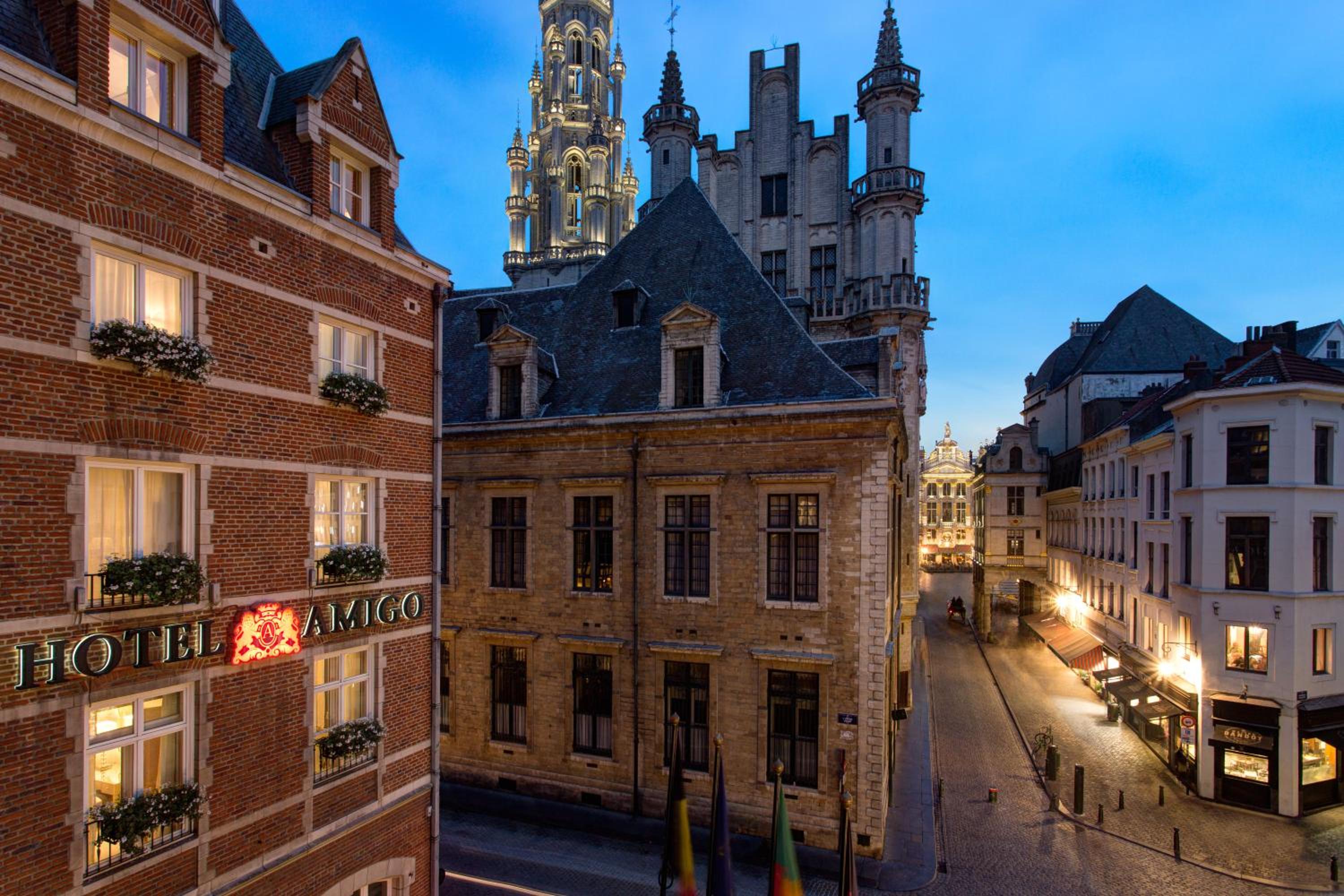
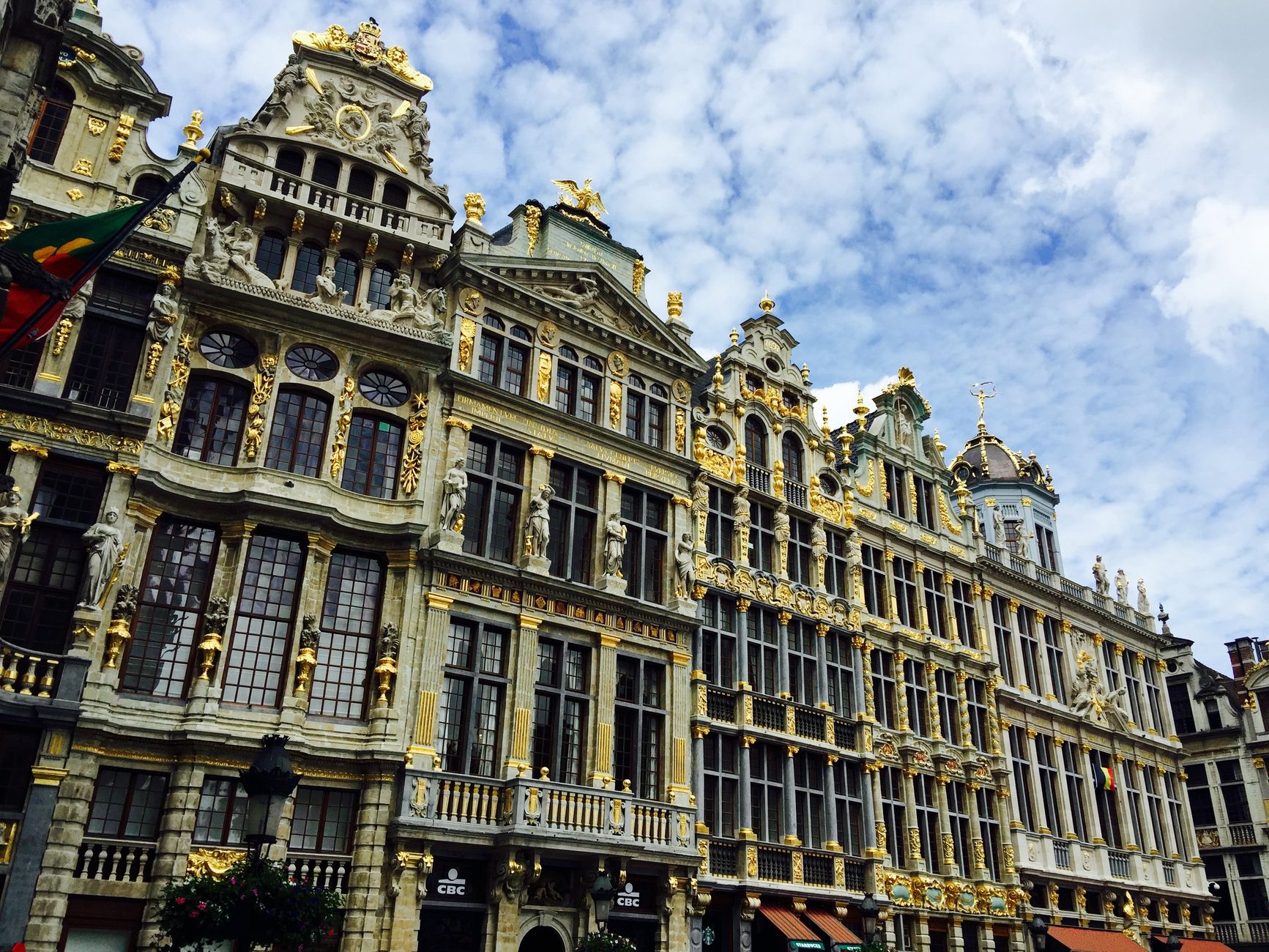
The Grand Place at night
The guild houses lit and the square a different place once the day trips leave, and the sound and light show on the façades in winter.
A chocolate walk through the Sablon
Marcolini, Wittamer and Neuhaus within a few streets of each other, and the antiques market under canvas on the square at the weekend.
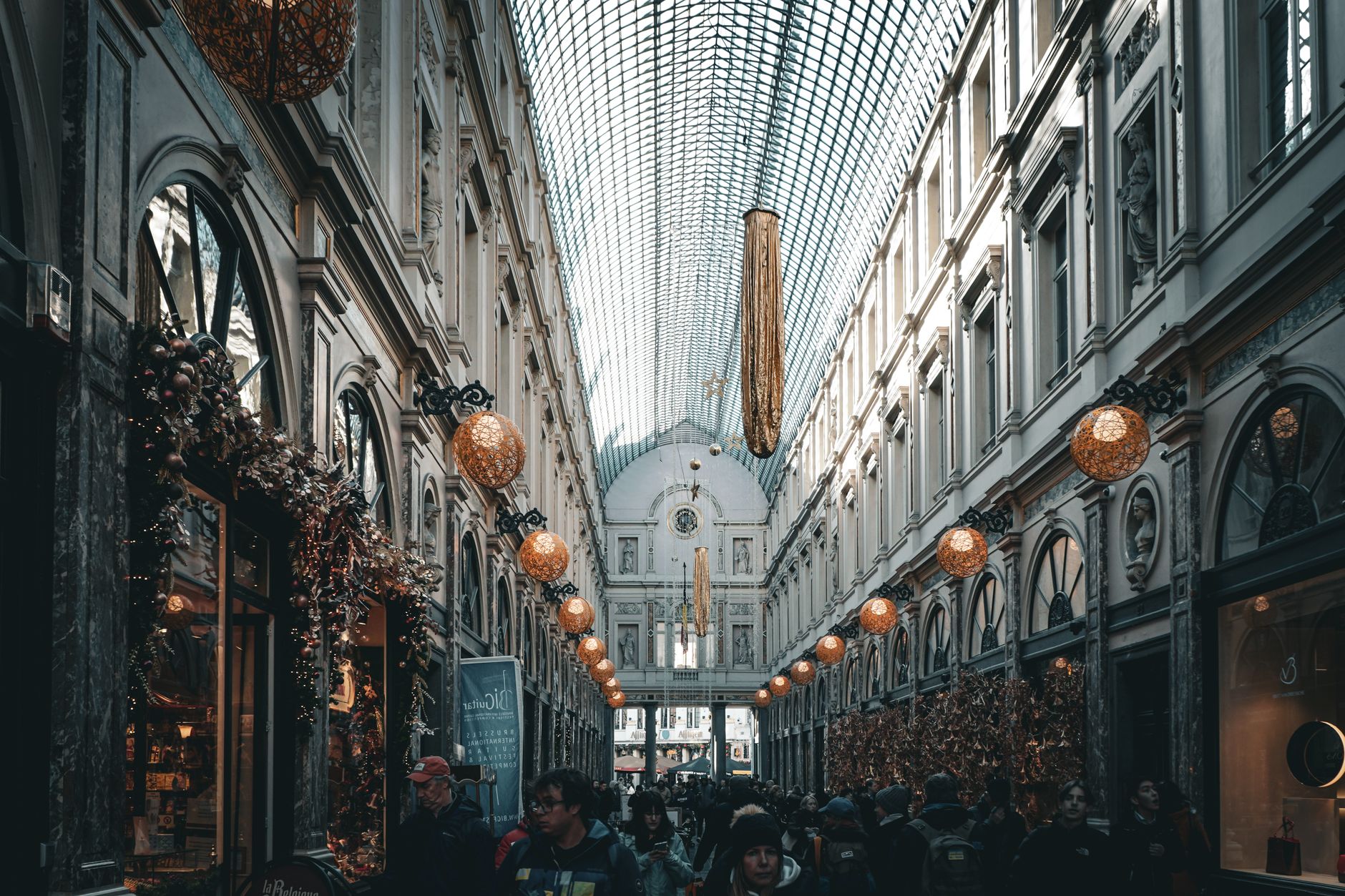
The Royal Gallery of Saint-Hubert
An 1847 glazed arcade, free to walk, with the chocolatiers, the bookshops and the 1939 cinema inside it.
Mont des Arts
The postcard view over the lower town from the steps, and a carillon with 24 bells that most visitors walk past.
The Marolles flea market
Daily on Place du Jeu de Balle since 1873, with the comic-strip murals on the way and the cafés around the square.
Horta's houses
The architect's own home and studio in Saint-Gilles, UNESCO-listed, and the Art Nouveau streets of Ixelles around it.
The neighbourhoods of Brussels
Grand Place and the Lower Town
The ceremonial centre
Guild houses, chocolatiers and frites stands around the square, with everything a first visit needs inside a ten-minute walk and the direct airport train. For a first stay.
Everything within ten minutes, at the highest prices and among the tour groups.
Sainte-Catherine and Dansaert
The dining quarter
The old inner harbour, now the seafood brasseries and the concept stores of the design streets, better value than the centre and genuinely lived in. For a second visit.
Better food and value, and a ten-minute walk to the square.
Sablon
The antiques quarter
Antique dealers, galleries and the best chocolatiers, with the market under canvas on Saturday and Sunday mornings. For a weekend with money.
The chocolate and the antiques, at Sablon prices and with few rooms.
Ixelles
The leafy south
Cosmopolitan and residential, with the twin lakes, Horta's houses, the best independent restaurants in the city and its LGBTQ centre. For longer stays.
The Art Nouveau and the restaurants, and a tram from the centre.
Saint-Gilles
The Art Nouveau townhouses
Students, cheap eating and the Horta Museum in the architect's own house, with rooms at a fraction of Grand Place prices. For a budget.
The Horta Museum and the prices, and a district that turns rough near the Midi station.
The European Quarter
The institutions
Institutional and monumental, quiet at weekends, with the Parlamentarium, the Cinquantenaire park and the museums under its arch. For business only.
The park and the parliament, and not a holiday base.
See every Brussels neighbourhood on one map
Save the areas you like and Stippl plots your days so you're not crossing the city twice.
Where to stay in Brussels
Near the Grand Place and Central Station for a first visit, because everything is walkable, the airport train is direct and the day trips leave from there. Most travellers give Brussels 1 night on Stippl, and the hotels are priced for the institutions rather than the tourists.
Grand Place and the Lower Town
Hostels and hotels within a few streets of the square, €25 to €200 a night.
Sainte-Catherine and Dansaert
€€
Boutique hotels and apartments by the old harbour, €70 to €180 a night.
Sablon
€€€
A few small hotels among the antique dealers, €120 to €250 a night.
Ixelles
€€
Apartments and townhouse hotels in the leafy streets, €60 to €150 a night.
Saint-Gilles
€
Hostels and budget rooms in the Art Nouveau blocks, €25 to €90 a night.
The European Quarter
Business hotels that empty at the weekend, €80 to €200 a night.


What to eat in Brussels
Twice fried, at 150°C then 190°C, in a cone with mayonnaise
Mussels and fries, the city's set-piece
Light, rectangular, eaten with toppings
Mashed potato worked through with vegetables, with sausage
Filled chocolates
Spontaneously fermented sour beer, a Brussels speciality
Discover food spots in Stippl
Find restaurants and markets on the map, save them to your itinerary, works offline too.
Brussels customs and what not to do
French first, but check
Brussels is officially bilingual and functionally French-speaking, Dutch is official and used, and English is understood almost everywhere a visitor goes.
The language line is political
The most sensitive cultural issue in the country, and the capital sits on it as its own region rather than as part of Flanders.
Every beer has its glass
Using the wrong one is noticed, and the café will pour the right one without being asked.
Modesty is the register
Punctuality and privacy are valued, displays of wealth land badly, and dry humour is the normal mode.
Rue des Bouchers is a sight
The restaurant street off the Grand Place is looked at rather than eaten in, and the mussels are in Sainte-Catherine.
Do
- Learn merci and dank u wel, and use whichever the room is using
- Walk the Grand Place twice, once by day and once after dark
- Buy chocolate in the Sablon rather than at the airport
- Book the hotel earlier than the season suggests
Don't
- Assume Brussels is in Flanders; it is its own region
- Drive into the centre
- Eat on Rue des Bouchers because the display looks impressive
What a Brussels trip costs
Budget
€70
A hostel dorm from about €25, bakery and frituur meals, and walking.
Mid-range
€150
A central three-star double, restaurant dinners and two or three paid sights.
High-end
€300+
A boutique room off the Grand Place, tasting menus and private guiding.
Track what you actually spend
Set a daily budget per country and log expenses in any currency while you travel.
Fun facts about Brussels
The Manneken Pis in Brussels is 55 centimetres tall and was installed in 1619. With a wardrobe of over a thousand costumes and twenty to thirty added a year.
Brussels also has a Jeanneke-Pis and a Zinneke Pis. A peeing girl in an alley off Rue des Bouchers and a peeing dog on Rue des Chartreux, both later and both loved less.
The Delirium Café in Brussels holds the record for the largest beer selection on sale. Over 2,000, on a menu that reads like a phone book, in an alley beside the Jeanneke.
Brussels Airport sells roughly 800 tonnes of chocolate a year. The biggest chocolate shop in the world by volume, and the wrong place to buy it.
The Place du Jeu de Balle flea market in Brussels has run daily since 1873. Every morning of the year in the Marolles, rain or shine, and best before nine.
Brussels takes 40.3% of every Belgian stop planned on Stippl. The gateway rather than the destination, and 20.7% of its stops are no night at all.
Local tips for Brussels
Walk the centre
The historic core needs nothing else, and the metro is for the outer districts, Horta and the European Quarter.
Do not bring a car
Thirty kilometres an hour across most of the city, congestion from seven in the morning to seven at night, high fines and expensive parking, so the car stays outside near a metro stop.
One STIB network
Metro, tram and bus share the ticket and run on time, with single, return and multi-journey fares.
Pockets go at the stations
Bruxelles-Midi, Gare du Nord and Schuman are the named places, along with the metro and the Amsterdam train, and the bag stays in front.
Some districts empty after dark
The area around the Nord and Midi stations, the Marolles and a few outer communes are named for after-dark care, and the centre itself is fine.
One night, and the trains out
Most travellers give Brussels 1 night on Stippl, and 39.3% of stops are a single night, because Bruges, Ghent and Antwerp are all under an hour from Central.
Brussels questions, answered
Two nights cover the centre comfortably, three add Ixelles and the Art Nouveau, and the plans give it less: most travellers give Brussels 1 night on Stippl, and 39.3% of stops are a single night, the gateway before the train to Bruges.
The guides are split and honest about it: Brussels is a handful of extraordinary places in an ordinary city. The plans overwhelmingly include it, on 60.3% of Belgian trips on Stippl, mostly for a night. Put the Grand Place after dark into Stippl, then ask people in subreddits like r/brussels which Sablon chocolatier they would send you to.
Every guide says you will be underwhelmed and every guide says go anyway. It is 55 centimetres tall, dates from 1619, has over a thousand costumes, and it is on the way to everything else, so the visit costs a minute and a photograph.
Sainte-Catherine, around the old harbour, rather than Rue des Bouchers, which is treated as a sight rather than a restaurant street. The brasseries on the basin are where the city itself eats them, and a kilo with frites and a beer is the standard order.
Yes, and earlier than the season suggests, because EU and NATO meetings fill the city mid-week without warning. 19.9% of trips carrying Brussels on Stippl are planned inside a fortnight, and those are the ones that find the hotels full.
No. It is its own region, officially bilingual and functionally French-first, sitting inside Flemish territory without being part of it, and the question is the most sensitive in the country, so the visitor who asks which language a room uses does better than the one who guesses.
Every guide is written by the Stippl editors and checked against the trips our travellers actually plan. Spotted something out of date? Let us know.
Plan Brussels in Stippl
Day-by-day planning, stays and budget in one app, with every place from this guide already on the map.
Download the app